המשנה בראש הפרק קובעת כמה אנשים עולים לתורה בכל יום. הכלל פשוט: ככל שקדושת היום עולה — מוסיפים עולה. מהיום הרגיל (שלושה) ועד שבת (שבעה).
| שני · חמישי · מנחה דשבת | 3 | יום רגיל |
| ראש חודש · חול המועד | 4 | מוסף, ואין ביטול מלאכה |
| יום טוב | 5 | איסור מלאכה (חוץ מאוכל נפש) |
| יום הכיפורים | 6 | איסור מלאכה בכרת |
| שבת | 7 | הקדושה הגבוהה ביותר |
הבסיס — שלושה עולים
ביום רגיל (שני, חמישי, ומנחה של שבת) עולים שלושה. זהו המספר היסודי — כנגד כהן, לוי וישראל, וכנגד תורה, נביאים וכתובים (מגילה כ״א ע״ב).
סולם הקדושה
ככל שהיום קדוש יותר, מוסיפים עולה: יום רגיל 3 → ראש חודש וחול המועד 4 → יום טוב 5 → יום הכיפורים 6 → שבת 7. כל מדרגה של איסור או קדושה נוספת ״מזכה״ עולה נוסף.
| שני · חמישי · מנחה דשבת | 3 | יום רגיל |
| ראש חודש · חול המועד | 4 | מוסף, ואין ביטול מלאכה |
| יום טוב | 5 | איסור מלאכה (חוץ מאוכל נפש) |
| יום הכיפורים | 6 | איסור מלאכה בכרת |
| שבת | 7 | הקדושה הגבוהה ביותר |
ראש חודש וחול המועד — ארבעה
יש בהם קרבן מוסף (תוספת קדושה), אך אין בהם איסור מלאכה. לכן ארבעה — אחד יותר מיום רגיל, אך פחות מיום טוב.
תענית צבור — שלושה, ולא ארבעה
הגמרא שואלת: תַּעֲנִית צִבּוּר בְּכַמָּה? אף שיש בה תפילת ״עננו״ — אין בה קרבן מוסף, ויש בה ביטול מלאכה לעם. לכן קוראים בה שלושה. ה״עננו״ לבדו אינו מעלה אותה לארבעה.
הכלל הגדול
זֶה הַכְּלָל: כֹּל שֶׁיֵּשׁ בּוֹ בִּיטּוּל מְלָאכָה לָעָם — כְּגוֹן תַּעֲנִית צִבּוּר וְתִשְׁעָה בְּאָב — קוֹרִין שְׁלֹשָׁה; וְשֶׁאֵין בּוֹ בִּיטּוּל מְלָאכָה — כְּגוֹן רָאשֵׁי חֳדָשִׁים וְחוּלּוֹ שֶׁל מוֹעֵד — קוֹרִין אַרְבָּעָה. הסימן: לא ה״תוספת״ קובעת, אלא ביטול המלאכה.
🎯 בחן את עצמך
5 שאלות על הסוגיה. לחץ על תשובה.
📋 הטבלה למעשה (שו״ע או״ח רפ״ב)
שני · חמישי · מנחה דשבת — 3. ראש חודש · חול המועד — 4. יום טוב — 5. יום הכיפורים — 6. שבת — 7. תענית צבור ותשעה באב — 3.
🪜 ראה את הסולם
בכל פעם שאתה נקרא לתורה, תזכור: המספר עצמו מספר על קדושת היום. הקדושה אינה מופשטת — היא נמדדת.
🛑 ביטול מלאכה
הסימן אינו ״כמה מתפללים״ אלא ״האם עוצרים לעבוד״. לפעמים מה שמרומם יום הוא דווקא מה שאנו עוצרים לעשות.
✦ כל מדרגה — עולה נוסף
ככל שמתקרבים, מוסיפים. גם בעבודת ה׳: כל מדרגת קדושה שמוסיפים — מזמינה ״עולה״ נוסף בלב.
שלום בית — הפה בבית
מָה אַתָּה מְלַחֵשׁ לִילָדֶיךָ? לְבֶן זוּגְךָ? גַּלֵּה כַּרְטִיס שָׁלוֹם בַּיִת.
כָּל הַפָּרָשִׁיּוֹת
כָּל שִׁעוּרֵי מ. יְהוּדָה חִימִי — מִבְּרֵאשִׁית עַד דְּבָרִים וְעַד חַגֵּי הַשָּׁנָה.
📚 כל הפרשיותספרים
חכמת התורה בפורמט תריילר — הוצאת גאולה.
פירוש חלומות
חָלַמְתָּ עַל אַיָּלָה? עַל אָרוֹן? בְּדֹק אֶת הַמַּשְׁמָעוּת לְפִי רב אלמולי.
🌙 פירוש חלומות
אֲנִי מַאֲשִׁים אֶת הָאֻמּוֹת
עדות נצחית מול מצפון העולם. ספר שמזעזע, מעורר ומשנה — בכוח הנבואי של עדי הדורות.
📕 לספרThe Mishnah at the head of the chapter sets how many are called up each day. The rule is simple: the greater the day's sanctity, the more readers we add — from an ordinary day (three) up to Shabbat (seven).
| Mon · Thu · Shabbat Mincha | 3 | Ordinary day |
| Rosh Chodesh · Chol HaMoed | 4 | Mussaf, and no work stoppage |
| Yom Tov | 5 | Work forbidden (except food prep) |
| Yom Kippur | 6 | Work forbidden, karet |
| Shabbat | 7 | The highest sanctity |
The Base — Three Readers
On an ordinary day (Monday, Thursday, and Shabbat Mincha) three are called up. This is the foundational number — corresponding to Kohen, Levi and Yisrael, and to Torah, Neviim and Ketuvim (Megillah 21b).
The Ladder of Sanctity
The holier the day, the more readers we add: ordinary 3 → Rosh Chodesh & Chol HaMoed 4 → Yom Tov 5 → Yom Kippur 6 → Shabbat 7. Each added level of prohibition or sanctity earns another reader.
| Mon · Thu · Shabbat Mincha | 3 | Ordinary day |
| Rosh Chodesh · Chol HaMoed | 4 | Mussaf, and no work stoppage |
| Yom Tov | 5 | Work forbidden (except food prep) |
| Yom Kippur | 6 | Work forbidden, karet |
| Shabbat | 7 | The highest sanctity |
Rosh Chodesh & Chol HaMoed — Four
They have a Mussaf offering (added sanctity), but no prohibition of work. Hence four — one more than an ordinary day, but fewer than a festival.
A Public Fast — Three, Not Four
The Gemara asks: "A public fast — how many?" Although it has the "Aneinu" prayer, it has no Mussaf offering, and it does have a cessation of work for the people. Therefore three are read. "Aneinu" alone does not raise it to four.
The Governing Principle
This is the rule: whatever has a cessation of work for the people — like a public fast and Tisha B'Av — three are read; and whatever has no cessation of work — like Rosh Chodesh and Chol HaMoed — four are read. The key: it is not the addition that decides, but the cessation of work.
🎯 Test yourself
5 questions on the sugya. Tap an answer.
📋 The practical table (Shulchan Aruch OH 282)
Mon · Thu · Shabbat Mincha — 3. Rosh Chodesh · Chol HaMoed — 4. Yom Tov — 5. Yom Kippur — 6. Shabbat — 7. Public fast and Tisha B Av — 3.
🪜 See the ladder
Each time you are called to the Torah, recall: the number itself speaks of the day sanctity. Holiness is not abstract — it is measured.
🛑 Cessation of work
The sign is not how many pray but do we stop to work. Sometimes what elevates a day is precisely what we cease to do.
✦ Each level — another reader
The closer we draw, the more we add. So too in serving God: each added level of sanctity invites another reader in the heart.
Shalom Bayit — The Mouth at Home
What do you whisper to your children? To your spouse? Reveal a Shalom Bayit card.
Gematria — Rav Menashe
Hidden connections in the names according to Rav Menashe zatsal.
🔢 Gematria CourseTorah Study
Dig deeper into the commentary of Rashi and the Zohar on the parashah of the week.
📝 Beith HamidrachAll Parashot
All shiurim of M. Yéhouda Himi — from Bereshit to Devarim and the festivals.
📚 All ParashotBooks
Torah wisdom in thriller format — Éditions Gueoula.
Dream Interpretation
Did you dream of a doe? Of an Ark? Check the meaning according to Rav Almoli.
🌙 Dreams
J'accuse les Nations
An eternal testimony before the conscience of the world. A book that shakes, awakens and transforms — with the prophetic force of history's witnesses.
📕 Discover the bookLa Michna en tête du perek fixe combien de personnes montent à la Torah chaque jour. La règle est simple : plus la sainteté du jour est grande, plus on ajoute de lecteurs — du jour ordinaire (trois) jusqu'à Chabbat (sept).
| Lundi · Jeudi · Min'ha de Chabbat | 3 | Jour ordinaire |
| Roch Hodech · Hol HaMoèd | 4 | Moussaf, et pas d'arrêt du travail |
| Yom Tov | 5 | Travail interdit (sauf préparation des aliments) |
| Yom Kippour | 6 | Travail interdit, karet |
| Chabbat | 7 | La sainteté la plus haute |
La base — trois lecteurs
Un jour ordinaire (lundi, jeudi, et Min'ha de Chabbat) on appelle trois personnes. C'est le nombre fondamental — face à Cohen, Lévi et Israël, et face à Torah, Neviim et Ketouvim (Meguila 21b).
L'échelle de la sainteté
Plus le jour est saint, plus on ajoute de lecteurs : ordinaire 3 → Roch Hodech et Hol HaMoèd 4 → Yom Tov 5 → Yom Kippour 6 → Chabbat 7. Chaque degré d'interdit ou de sainteté mérite un lecteur de plus.
| Lundi · Jeudi · Min'ha de Chabbat | 3 | Jour ordinaire |
| Roch Hodech · Hol HaMoèd | 4 | Moussaf, et pas d'arrêt du travail |
| Yom Tov | 5 | Travail interdit (sauf préparation des aliments) |
| Yom Kippour | 6 | Travail interdit, karet |
| Chabbat | 7 | La sainteté la plus haute |
Roch Hodech et Hol HaMoèd — quatre
Ils ont un korban Moussaf (sainteté ajoutée), mais pas d'interdit de travail. D'où quatre — un de plus qu'un jour ordinaire, mais moins qu'un Yom Tov.
Un jour de jeûne public — trois, pas quatre
La Guemara demande : « Un jeûne public — combien ? » Bien qu'il y ait la prière « Aneinou », il n'a pas de korban Moussaf, et il comporte un arrêt du travail pour le peuple. On y lit donc trois. Le « Aneinou » à lui seul ne l'élève pas à quatre.
La règle générale
Voici la règle : tout ce qui comporte un arrêt du travail pour le peuple — comme un jeûne public et Ticha BeAv — on y lit trois ; et ce qui ne comporte pas d'arrêt du travail — comme Roch Hodech et Hol HaMoèd — on y lit quatre. La clé : ce n'est pas l'ajout qui décide, mais l'arrêt du travail.
🎯 Teste-toi
5 questions sur la sugya. Clique une réponse.
📋 Le tableau pratique (Choulhan Aroukh OH 282)
Lundi · Jeudi · Min’ha de Chabbat — 3. Roch Hodech · Hol HaMoèd — 4. Yom Tov — 5. Yom Kippour — 6. Chabbat — 7. Jeûne public et Ticha BeAv — 3.
🪜 Vois l’échelle
Chaque fois que tu montes à la Torah, rappelle-toi : le nombre lui-même parle de la sainteté du jour. La sainteté n’est pas abstraite — elle se mesure.
🛑 L’arrêt du travail
Le signe n’est pas « combien prient » mais « s’arrête-t-on de travailler ». Parfois, ce qui élève un jour est précisément ce qu’on cesse de faire.
✦ Chaque degré — un lecteur de plus
Plus on s’approche, plus on ajoute. Dans le service de D.ieu aussi : chaque degré de sainteté ajouté invite un « lecteur » de plus dans le cœur.
Chalom Bayit — La bouche à la maison
Que chuchotes-tu à tes enfants ? À ton conjoint ? Découvre une carte Chalom Bayit.
Guématria — Rav Menaché
Connexions cachées dans les noms selon Rav Menaché zatsal.
🔢 Cours de guématriaÉtude Torah
Approfondis le commentaire de Rachi et le Zohar sur la paracha de la semaine.
📝 Beith HamidrachToutes les Parachiot
Tous les cours de M. Yéhouda Himi — de Béréchit à Devarim et les fêtes.
📚 Toutes les ParachiotLivres
La sagesse de la Torah en format thriller — Éditions Gueoula.
Interprétation des rêves
As-tu rêvé d’une biche ? D’une Arche ? Vérifie sa signification selon Rav Almoli.
🌙 RêvesBoîte à idées
Une idée, une remarque, une suggestion pour le site ? Partage-la avec nous.
💡 Boîte à idées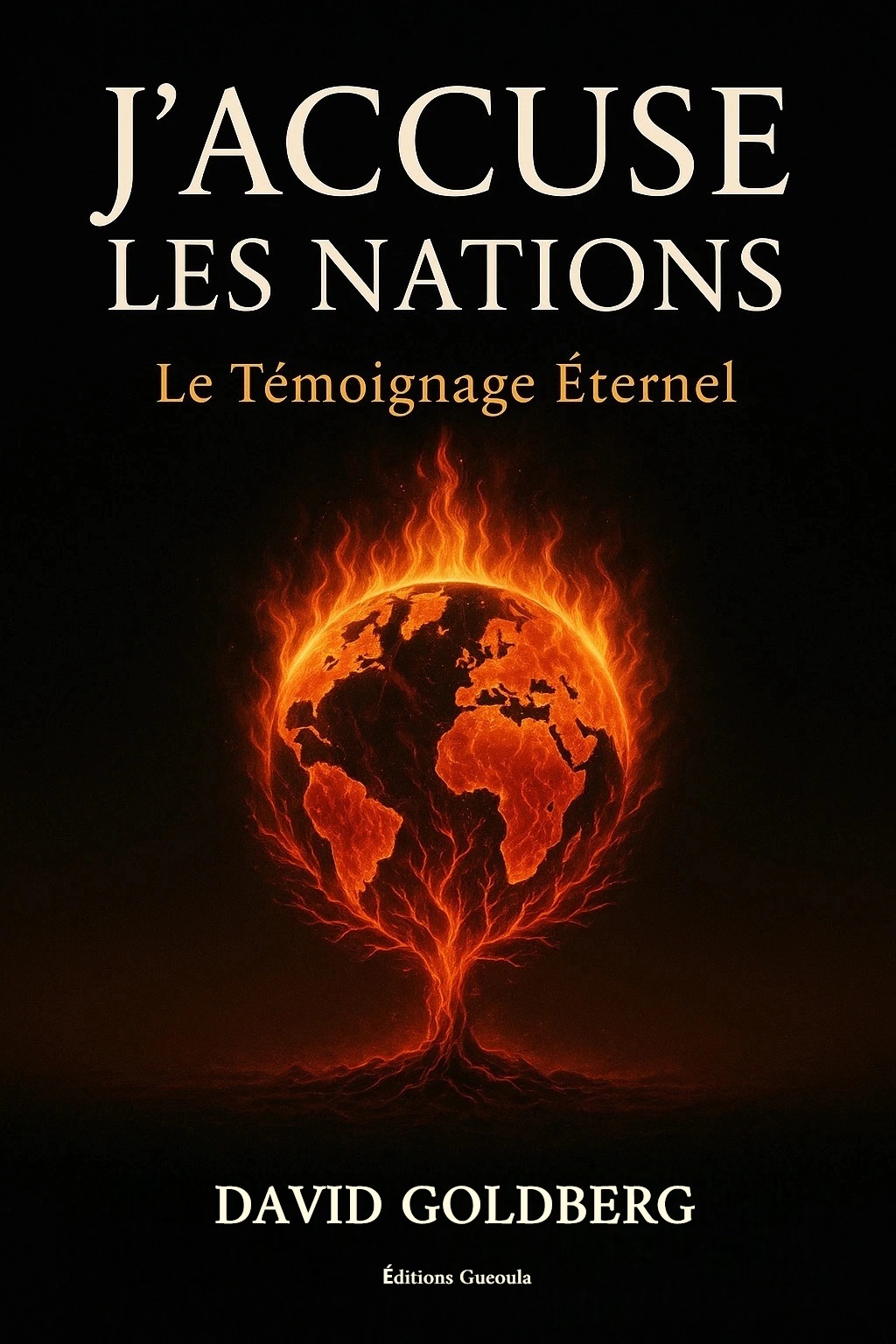
J'accuse les Nations
Un témoignage éternel devant la conscience du monde. Un livre qui dérange, qui éveille, qui transforme — avec la force prophétique des témoins de l'Histoire.
📕 Découvrir le livre