כ׳ בְּאִיָּר תשפ״ו — שָׁנָה וְחֹדֶשׁ אַחֲרֵי יְצִיאַת מִצְרַיִם. נַעֲלָה הֶעָנָן מֵעַל מִשְׁכַּן הָעֵדוּת. עַם יִשְׂרָאֵל מַתְחִיל סוֹף סוֹף לִנְסֹעַ מֵהַר סִינַי לְכִיוּן אֶרֶץ יִשְׂרָאֵל. אֲבָל הֵם בּוֹרְחִים — דֶּרֶךְ שְׁלוֹשֶׁת יָמִים. כְּתִינוֹקוֹת הַבּוֹרְחִים מִבֵּית הַסֵּפֶר.
וְיִתְרוֹ — מְסָרֵב לְבוֹא. מֹשֶׁה מַזְמִין אוֹתוֹ: "וְהָיִיתָ לָּנוּ לְעֵינָיִם". וְיִתְרוֹ עוֹנֶה לֹא. לָמָּה? מִתּוֹךְ אַהֲבָה לְעַם יִשְׂרָאֵל — שֶׁלֹּא יַעֲשׂוּ מִמֶּנּוּ קַל וָחֹמֶר לִשְׁלִילָה.
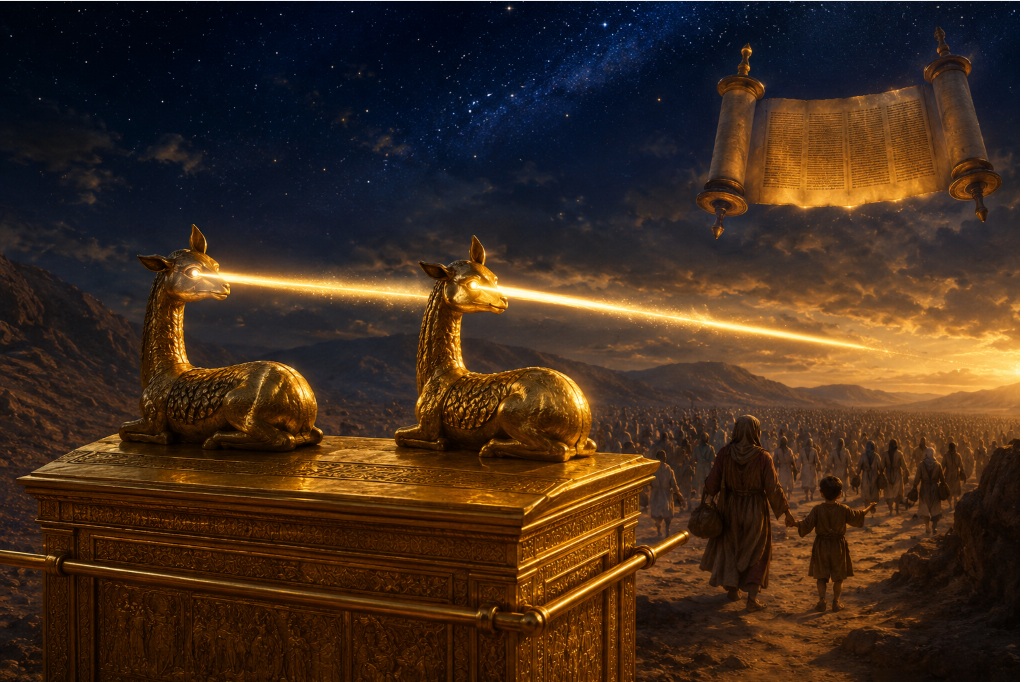
וְאָז — הַסּוּכְרִיָּה. שְׁנֵי פְּסוּקִים עִם שְׁנֵי נוּנִים הֲפוּכוֹת מִסָּבִיב. הַזֹּהַר מְגַלֶּה: הַנּוּנִים הָאֵלֶּה — צוּרַת אַיָּלָה שֶׁמַּחֲזִירָה אֶת פָּנֶיהָ אֲחוֹרָה. זוֹ הַשְּׁכִינָה. כְּמוֹ אֵם שֶׁהוֹלֶכֶת קָדִימָה בַּקַּנְיוֹן וּמִסְתּוֹבֶבֶת כָּל שְׁנִיָּה לִרְאוֹת מָה קוֹרֶה עִם הַיֶּלֶד. זֹאת הַהַשְׁגָּחָה הַפְּרָטִית עַל עַם יִשְׂרָאֵל בַּמִּדְבָּר.
בְּשִׁעוּר: מַתַי עַם יִשְׂרָאֵל יָצָא מֵהַר סִינַי · מַדּוּעַ יִתְרוֹ סֵרֵב · הַסּוֹד שֶׁל הַסֵּפֶר הַחֲמִישִׁי בַּתּוֹרָה · הַאַיָּלָה שֶׁמַּסְתַּכֶּלֶת אֲחוֹרָה · הַמַּשָּׁל שֶׁל הָאֵם בַּקַּנְיוֹן
📖 לקרוא את השיעור המלא ←בְּפָרָשַׁת בְּהַעֲלוֹתְךָ יֵשׁ הַרְבֵּה עִנְיָנִים. אַחֲרֵי שֶׁהַקָּדוֹשׁ בָּרוּךְ הוּא אוֹמֵר לְמֹשֶׁה לְצַוּוֹת לְאַהֲרֹן שֶׁיַּדְלִיק אֶת הַנֵּרוֹת, אַחַר כָּךְ יֵשׁ אֶת הָעִנְיָן שֶׁל הַלְוִיִּים, וְיֵשׁ גַּם אֶת הָעִנְיָן שֶׁל פֶּסַח שֵׁנִי — בְּמִי שֶׁהָיָה בְּדֶרֶךְ רְחוֹקָה וְלֹא טָהוֹר.
וְלִקְרַאת הָאֶמְצַע שֶׁל הַפָּרָשָׁה, מְתָאֶרֶת לָנוּ הַתּוֹרָה אֶת הָעִנְיָן שֶׁל "וּבְיוֹם הָקִים אֶת הַמִּשְׁכָּן, כִּסָּה הֶעָנָן אֶת הַמִּשְׁכָּן".
הֶעָנָן עוֹלֶה — יוֹדְעִים שֶׁצָּרִיךְ לִנְסֹעַ. הֶעָנָן עוֹצֵר — יוֹדְעִים שֶׁצָּרִיךְ לְהִתְכּוֹנֵן. "עַל פִּי ה' יִסָּעוּ וְעַל פִּי ה' יַחֲנוּ".
וְאַחַר כָּךְ — "וַיְדַבֵּר ה' אֶל מֹשֶׁה, עֲשֵׂה לְךָ שְׁתֵּי חֲצוֹצְרוֹת כֶּסֶף". אֵיךְ יוֹדְעִים מָתַי מַתְחִילִים לָזוּז? צְרִיכִים לִתְקוֹעַ בַּחֲצוֹצְרוֹת.
בּוֹאוּ נֶחְשֹׁב. עַם יִשְׂרָאֵל יָצָא מִמִּצְרַיִם בְּט"ו בְּנִיסָן, מָקַט בַּחֲצוֹת, הָלַךְ שִׁשָּׁה יָמִים, בְּיוֹם הַשְּׁבִיעִי קְרִיעַת יַם סוּף, הָלְכוּ עוֹד כַּמָּה יָמִים — סַךְ הַכֹּל 49 יוֹם מִיְּצִיאַת מִצְרַיִם עַד הַר סִינַי. בְּיוֹם הַחֲמִשִּׁים — קִבְּלוּ אֶת הַתּוֹרָה.
וְאָז — מֹשֶׁה רַבֵּנוּ עוֹלֶה, יוֹרֵד, חֵטְא הָעֵגֶל, עוֹלֶה, מִתְפַּלֵּל עֲלֵיהֶם, יוֹרֵד, עוֹלֶה, יוֹרֵד, יוֹם הַכִּפּוּרִים, וּבָאִים הַלּוּחוֹת הַשְּׁנִיִּים. מִיָּד מַתְחִילִים לְהָכִין אֶת הַמִּשְׁכָּן, וּבְ-א' בְּנִיסָן הוּקַם הַמִּשְׁכָּן. הַשָּׁנָה עָבְרָה. חֲנֻכַּת הַמִּשְׁכָּן, הַנְּשִׂיאִים מְבִיאִים קָרְבָּנוֹת, פֶּסַח רִאשׁוֹן בַּמִּדְבָּר, וְהַפְּקוּדִים.
לָכֵן הַפָּרָשָׁה הַזֹּאת הִיא יְקַף שֶׁל פָּרָשׁוֹת הַמַּסָּעוֹת. עַד פֹּה, הָיָה הָעִנְיָן שֶׁל הִתְאַרְגְּנוּת. וּמִכָּאן — מַתְחִיל כָּל הָעִנְיָן שֶׁל הַמַּסָּעוֹת, וְאַחַר כָּךְ — שִׁלּוּחַ הַמְּרַגְּלִים וְהִתְעַכְּבוּת בַּמִּדְבָּר 38 שָׁנָה.
דַּקָּה לִפְנֵי שֶׁמַּתְחִילִים לְתָאֵר לָנוּ אֶת הַנְּסִיעָה — יֵשׁ שִׂיחָה. שִׂיחָה בֵּין מֹשֶׁה לְיִתְרוֹ.
מֵאֵיפֹה הִגִּיעַ יִתְרוֹ? אִם אַתֶּם זוֹכְרִים, בְּפָרָשַׁת יִתְרוֹ בְּסֵפֶר שְׁמוֹת — כָּתוּב שָׁם שֶׁהוּא הָלַךְ הַבַּיְתָה. הוּא חָזַר הַבַּיְתָה. אֲבָל לִפְנֵי מַעֲמַד הַר סִינַי, יִתְרוֹ עָזַב אֶת הַמָּקוֹם — וְלָכֵן הוּא לֹא הָיָה בְּמַעֲמַד הַר סִינַי. גַּם צִפּוֹרָה לֹא הָיְתָה בְּמַעֲמַד הַר סִינַי. וְעַכְשָׁו הוּא חוֹזֵר לְבִקּוּר.
מֹשֶׁה רַבֵּנוּ מַצִּיעַ לוֹ: "בּוֹא תִּצְטָרֵף אֵלֵינוּ וְנִכָּנֵס לָאָרֶץ — מַגִּיעַ לְךָ, לָמָּה לֹא?". שִׂימוּ לֵב מָה הַתְּשׁוּבָה.
מְסָרֵב. לָמָּה?
וְהוּא אוֹמֵר: "אַל נָא תַּעֲזֹב אֹתָנוּ, כִּי עַל כֵּן יָדַעְתָּ חֲנֹתֵנוּ בַּמִּדְבָּר, וְהָיִיתָ לָּנוּ לְעֵינָיִם". אַתָּה מַכִּיר אֶת כָּל הַנִּסִּים שֶׁהָיוּ לָנוּ. אַתָּה כְּבָר יוֹדֵעַ מָה זֶה עַם יִשְׂרָאֵל.
• פֵּרוּשׁ אֶחָד — לְשׁוֹן עָבָר: כְּמוֹ שֶׁאַתָּה רָאִיתָ, אַתָּה תָּעִיד אֵיזֶה נִסִּים רָאִיתָ.
• פֵּרוּשׁ שֵׁנִי — לְשׁוֹן עָתִיד: כָּל דָּבָר וְדָבָר שֶׁיִּתְעַלֵּם מֵהָעֵינַיִם, תִּהְיֶה מֵאִיר עֵינֵינוּ — אֲנַחְנוּ צְרִיכִים אוֹתְךָ בְּתוֹר יוֹעֵץ.
• דָּבָר אַחֵר — שֶׁתִּהְיֶה חָבִיב עָלֵינוּ כְּגַלְגַּל עֵינֵינוּ.
אַחֲרֵי כָּל הַמַּחְמָאוֹת הָאֵלֶּה — אוֹמֵר מֹשֶׁה: "וְהָיָה כִּי תֵלֵךְ עִמָּנוּ, וְהָיָה הַטּוֹב הַהוּא אֲשֶׁר יֵיטִיב ה' עִמָּנוּ וְהֵטַבְנוּ לָךְ". אֲפִילוּ תְּקַבֵּל חֵלֶק בְּאֶרֶץ יִשְׂרָאֵל. וַאֲנַחְנוּ יוֹדְעִים שֶׁהַקֵּינִי — שֶׁזֶּה בְּעֶצֶם יִתְרוֹ — קִבְּלוּ נַחֲלָה לְיַד יְרִיחוֹ.
צָרִיךְ לְהַגִּיד שֶׁיִּתְרוֹ הָיָה צַדִּיק. הַתּוֹרָה מְשַׁבַּחַת אוֹתוֹ. כָּל פַּעַם שֶׁהַתּוֹרָה אוֹמֶרֶת "יִתְרוֹ — יִתְרוֹ חֹתֵן מֹשֶׁה". כְּבָר אֲנַחְנוּ יוֹדְעִים שֶׁהוּא חֹתֵן מֹשֶׁה — אֲבָל הַתּוֹרָה כָּל פַּעַם תַּגִּיד "יִתְרוֹ חֹתֵן מֹשֶׁה". וְקִבֵּל פָּרָשָׁה עַל שְׁמוֹ. הוּא הָיָה כֹּהֵן מִדְיָן, בָּקִיא בְּכָל הַדָּתוֹת — וְעָזַב אֶת הַכֹּל וְהִצְטָרֵף לֶאֱמוּנַת יִשְׂרָאֵל.
אִם כֵּן — מָה הַסּוֹד שֶׁל הָעִנְיָן? לָמָּה הוּא לֹא מִצְטָרֵף?
לָמָּה? תְּתָאֲרוּ לָכֶם מָה קוֹרֶה אִם יִתְרוֹ הָיָה מִצְטָרֵף לְמַחֲנֵה יִשְׂרָאֵל. כָּל פַּעַם שֶׁהָיוּ בְּנֵי יִשְׂרָאֵל חוֹטְאִים — הָיָה יוֹצֵא קִטְרוּג בַּשָּׁמַיִם: "תִּתְבַּיְּשׁוּ לָכֶם. הָאָדָם הַזֶּה, יִתְרוֹ, הָיָה כֹּהֵן מִדְיָן — עָזַב אֶת כָּל הַדָּתוֹת כְּדֵי לְהִצְטָרֵף לְעַם יִשְׂרָאֵל. וְהוּא לֹא עָמַד בְּמַעֲמַד הַר סִינַי. וְאַתֶּם, שֶׁהֱיִיתֶם בְּמַעֲמַד הַר סִינַי — נִפְתְּחוּ לָכֶם שִׁבְעָה רְקִיעִים, רְאִיתֶם עַד כִּסֵּא הַכָּבוֹד, שְׁמַעְתֶּם אֶת הַקָּדוֹשׁ בָּרוּךְ הוּא מְדַבֵּר אִתְּכֶם — וְאַתֶּם עוֹשִׂים שְׁטֻיּוֹת?"
תִּרְאוּ אֶת הַגּוֹי הַזֶּה שֶׁהִתְגַּיֵּר. לַמְרוֹת שֶׁהוּא הִתְגַּיֵּר — עַל דָּבָר אֶחָד הוּא לֹא מְוַתֵּר: עַל אֶרֶץ מוֹלַדְתּוֹ. וּלְאָן אַתֶּם הוֹלְכִים עַכְשָׁו? לְאֶרֶץ יִשְׂרָאֵל. לַחֲזֹר לְאֶרֶץ מוֹלַדְתְּכֶם — שֶׁזֶּה אֶרֶץ כְּנַעַן.
עַכְשָׁו — נִפְתַּח לָכֶם סוּכְרִיָּה מֵהַזֹּהַר. כְּדֵי שֶׁתָּבִינוּ אֶת הַסּוּכְרִיָּה, אַתֶּם צְרִיכִים לָדַעַת שֶׁמִּיָּד אַחֲרֵי שִׂיחַת מֹשֶׁה וְיִתְרוֹ כָּתוּב:
וְאָז יֵשׁ שְׁנֵי פְּסוּקִים מְפֻרְסָמִים מְאוֹד בַּתּוֹרָה:
כַּמָּה חוּמָשִׁים יֵשׁ לָנוּ בַּתּוֹרָה? יֵשׁ לָנוּ שִׁבְעָה:
- 1️⃣ בְּרֵאשִׁית
- 2️⃣ שְׁמוֹת
- 3️⃣ וַיִּקְרָא
- 4️⃣ בְּמִדְבָּר — מִפֶּרֶק א' עַד הַפָּסוּק "וַעֲנַן ה' עֲלֵיהֶם יוֹמָם בְּנָסְעָם מִן הַמַּחֲנֶה"
- 5️⃣ חוּמָשׁ חֲמִישִׁי — רַק שְׁנֵי פְּסוּקִים: "וַיְהִי בִּנְסֹעַ הָאָרוֹן" + "וּבְנֻחֹה יֹאמַר"
- 6️⃣ חוּמָשׁ שִׁשִּׁי — מִפָּסוּק "וַיְהִי הָעָם כְּמִתְאֹנְנִים" עַד סוֹף סֵפֶר בְּמִדְבָּר
- 7️⃣ סֵפֶר דְּבָרִים
שֶׁבְּסֵפֶר תּוֹרָה
זֹאת הִיא הֲלָכָה לְמֹשֶׁה מִסִּינַי — שֶׁבְּסֵפֶר תּוֹרָה צְרִיכִים לִהְיוֹת שְׁתֵּי נוּנִים כָּאֵלֶּה. לָמָּה? חַזַ"ל אוֹמְרִים — כְּדֵי לְהַפְרִיד בֵּין פֻּרְעָנוּת לְפֻרְעָנוּת.
מָה הַפֻּרְעָנוּת שֶׁבָּאָה מִיָּד אַחֲרֵי שְׁתֵּי הַנּוּנִים? "וַיְהִי הָעָם כְּמִתְאֹנְנִים רַע בְּאָזְנֵי ה'" — זֶה הָעִנְיָן שֶׁל קִבְרוֹת הַתַּאֲוָה.
אֶלָּא — מָה הָיְתָה הַפֻּרְעָנוּת לִפְנֵי? שֶׁכָּתוּב "וַיִּסְעוּ מֵהַר ה' דֶּרֶךְ שְׁלֹשֶׁת יָמִים". זוֹ פֻּרְעָנוּת!
אֵיךְ זֶה פֻּרְעָנוּת? הַמִּדְרָשׁ אוֹמֵר — כְּתִינוֹקוֹת הַבּוֹרְחִים מִבֵּית הַסֵּפֶר.
וְעַכְשָׁו, שֶׁפִּתְאֹם הַקָּדוֹשׁ בָּרוּךְ הוּא אוֹמֵר לָהֶם: "טוֹב, נוֹסְעִים?" — וְהֵם הָלְכוּ דֶּרֶךְ שְׁלֹשֶׁת יָמִים, כְּלוֹמַר בִּמְהִירוּת פִּי שָׁלוֹשׁ מֵהַמְּהִירוּת הָרְגִילָה.
וְעַכְשָׁו — הַסּוּכְרִיָּה.
אֲנִי רוֹצֶה שֶׁתְּדַמְיְנוּ אֶת הָאֲרוֹן בְּרִית ה'. הָאָרוֹן מְרֻבָּע, נָכוֹן? תְּדַמְיְנוּ אֶת עַם יִשְׂרָאֵל וְאֶת הָאָרוֹן. תְּדַמְיְנוּ שֶׁיֵּשׁ פֹּה מִקְּדִימָה — נוּן. וּמֵאָחוֹר — נוּן.
כְּמוֹ שֶׁל הַמֶּרְצֶדֶס יֵשׁ אֶת הַסֶּמֶל, הַיָּגוּאָר. תְּדַמְיְנוּ כְּאִילּוּ שֶׁיֵּשׁ עוֹד נוּן כְּמוֹ יָגוּאָר כָּאן עַל הָאָרוֹן וְעוֹד נוּן אֶחָד שָׁם. וְתְדַמְיְנוּ שֶׁהַנּוּן הַזֹּאת — זוֹ צוּרָה שֶׁל אַיָּלָה.
רַק מָה — תְּדַמְיְנוּ שֶׁשָּׂמִים שְׁתֵּי אַיָּלוֹת עַל הָאָרוֹן. הִנֵּה אַיָּלָה אַחַת, הִנֵּה הַשְּׁנִיָּה. אֲבָל מָה הַהֶבְדֵּל בֵּין הָאַיָּלָה הָרְגִילָה לָאַיָּלוֹת שֶׁנִּמְצָאוֹת עַל הָאָרוֹן? הָרֹאשׁ שֶׁלָּהֶן לֹא קָדִימָה כְּמוֹ נוֹרְמָלִי. זֶה כְּאִילּוּ שֶׁהָאַיָּלָה רוֹבֶצֶת, יוֹשֶׁבֶת עַל הָאָרוֹן, וְהִיא מִסְתּוֹבֶבֶת עִם הַפָּנִים שֶׁלָּהּ אֲחוֹרָה.
מַבִּיטָה אֲחוֹרָה
נוֹסֵעַ קָדִימָה
מַבִּיטָה אֲחוֹרָה
שֶׁרוֹאִים אֶת הַצּוּרָה הַזּוֹ — מְבִינִים שֶׁזֶּה שְׁנֵי נוּנִים הֲפוּכִים. לָכֵן זֶה לֹא כְּמוֹ סוֹגְרַיִם. אַתֶּם רוֹאִים — הַנּוּן הָפוּךְ, וְאַיָּלָה הֲפוּכָה. זוֹ אַיָּלָה שֶׁיּוֹשֶׁבֶת עַל הָרַגְלַיִם, עַל הַבֶּטֶן, וְעִם הָרֹאשׁ הִיא מִסְתַּכֶּלֶת אֲחוֹרָה.
ק"ל) וְעַל דָּא כַּד אֲרוֹנָא הֲוָה נָטֵל, מֹשֶׁה אָמַר: קוּמָה ה', לֹא תִּשְׁבּוֹק זִילוֹן, אַהֲדַר אַנְפָּךְ לְגַבָּן, וְכֵדֵין נוּ"ן אִתְהֲדַר לְגַוַּיְיהוּ כְּגַוְונָא דָא ⌐ ⌐ — כְּמַאן דְּמַהֲדַר.
זֹאת אוֹמֶרֶת — הַשְּׁכִינָה שֶׁהִיא כִּבְיָכוֹל הָאַיָּלָה עִם הַפָּנִים קָדִימָה, כְּשֶׁהֵם מַתְחִילִים לִנְסֹעַ — הִיא מְסַבֶּבֶת אֶת הַפָּנִים כְּלַפֵּי עַם יִשְׂרָאֵל וּמַמְשִׁיכָה לְהַשְׁגִּיחַ. לִרְאוֹת שֶׁהַכֹּל בְּסֵדֶר.
אִם הוּא בְּסֵדֶר. לֹא בְּסֵדֶר. אִם הוּא עֲדַיִן אֲחוֹרָה. הוּא לֹא נָפַל. חָסֵר לוֹ מַשֶּׁהוּ.
בָּרוּךְ הַשֵּׁם לְעוֹלָם — אָמֵן וְאָמֵן.
🎯 חידון — בְּהַעֲלוֹתְךָ ב׳
חמש שאלות לבדוק אם תפסת את ליבת השיעור. אין ציון רע — רק הזדמנות להעמיק.
סיימת! 🎉
שלום בית — הפה בבית
מָה אַתָּה מְלַחֵשׁ לִילָדֶיךָ? לְבֶן זוּגְךָ? גַּלֵּה כַּרְטִיס שָׁלוֹם בַּיִת.
כָּל הַפָּרָשִׁיּוֹת
כָּל שִׁעוּרֵי מ. יְהוּדָה חִימִי — מִבְּרֵאשִׁית עַד דְּבָרִים וְעַד חַגֵּי הַשָּׁנָה.
📚 כל הפרשיותספרים
חכמת התורה בפורמט תריילר — הוצאת גאולה.
פירוש חלומות
חָלַמְתָּ עַל אַיָּלָה? עַל אָרוֹן? בְּדֹק אֶת הַמַּשְׁמָעוּת לְפִי רב אלמולי.
🌙 פירוש חלומותשׁוּתָפֵי הַגְּאֻלָּה
כָּל דַּף, כָּל תַּרְגּוּם — נִבְנֶה עַל אַהֲבַת הַתּוֹרָה. אַתֶּם הַשֻּׁתָּפִים שֶׁלָּנוּ.
💛 רוצה להיות שותף
שומרי הסדק
סוד עתיק התגלה. ארבעים ותשע שערים נפתחים. השער החמישים מסתתר ברגע אחד — ורגע זה כבר כאן.
📕 קבל את הספר חינם
20 Iyar 5786 — one year and one month after the Exodus. The cloud lifted from over the Mishkan of the Testimony. The people of Israel finally start moving from Mount Sinai toward the Land of Israel. But they flee — a three-day journey. Like schoolchildren fleeing the classroom.
And Yitro — refuses to come. Moshe invites him: "And you shall be eyes for us." Yitro answers no. Why? Out of love for the people of Israel — so they will not be used as a kal vahomer (a fortiori argument) against him in the negative.
And then — the sweet. Two verses framed by two inverted Nuns. The Zohar reveals: these Nuns are the shape of a doe turning her face backward. This is the Shekhinah. Like a mother walking ahead in the mall and turning every second to see what's happening with her child. This is the personal Divine Providence over the people of Israel in the desert.
Inside: when Israel left Mount Sinai · why Yitro refused · the secret of the fifth book of the Torah · the doe who looks backward · the parable of the mother in the mall
📖 Read the full shiur →Parashat Behaalotcha has many subjects. After the Holy One tells Moshe to command Aharon to light the lamps, then we have the matter of the Levites, and also the matter of Pesach Sheni — for one who was on a distant road and impure.
Toward the middle of the parashah, the Torah describes for us: "On the day the Mishkan was set up, the cloud covered the Mishkan."
The cloud rises — they know they must travel. The cloud stops — they know they must prepare. "By the mouth of G-d they shall journey, and by the mouth of G-d they shall camp."
And then: "And G-d spoke to Moshe, make for yourself two silver trumpets." How do they know when to start moving? They must blow the trumpets.
Let us count. The people of Israel left Egypt on the 15th of Nissan, after midnight, walked six days, on the seventh day the Splitting of the Sea, walked a few more days — in total 49 days from the Exodus to Mount Sinai. On the fiftieth day — they received the Torah.
Then Moshe Rabbenu goes up, comes down, sin of the Golden Calf, goes up, prays for them, comes down, goes up, comes down, Yom Kippur, and the second Tablets come. Immediately they begin preparing the Mishkan, and on the 1st of Nissan the Mishkan was erected. A year has passed. Inauguration of the Mishkan, the princes bring offerings, first Pesach in the desert, and the counting.
Therefore this parashah is the threshold of the journey-parashot. Until here, the matter of organizing. And from here — the matter of the journeys begins, and afterward — the sending of the spies and the 38-year delay in the desert.
A moment before the description of the journey begins — there is a conversation. A conversation between Moshe and Yitro.
Where did Yitro come from? If you remember, in parashat Yitro in Sefer Shemot — it is written there that he went home. He returned home. But before the giving of the Torah at Mount Sinai, Yitro left the place — and therefore he was not at the giving of the Torah. Tzipporah also was not at the giving of the Torah. And now he comes back for a visit.
Moshe Rabbenu suggests to him: "Come, join us, and let us enter the Land — you deserve it, why not?". Pay attention to the answer.
He refuses. Why?
And he says: "Please do not leave us, for you know our camping in the desert, and you shall be eyes for us." You know all the miracles we have had. You already know what the people of Israel are.
• One explanation — past tense: just as you saw, you shall testify about the miracles you witnessed.
• Second explanation — future tense: anything that escapes our eyes, you shall enlighten our eyes — we need you as an advisor.
• Another interpretation — that you shall be precious to us like the apple of our eye.
After all these compliments — Moshe says: "And it shall be, if you go with us, the good that G-d will do for us we will do for you." You will even receive a portion in the Land of Israel. And we know that the Kenites — who are essentially Yitro — received an inheritance near Yericho.
We must say that Yitro was a tsaddik. The Torah praises him. Every time the Torah says "Yitro — Yitro, Moshe's father-in-law." We already know he is Moshe's father-in-law — but the Torah every time will say "Yitro, Moshe's father-in-law." And he received a parashah named after him. He was a priest of Midian, expert in all religions — and he left everything and joined the faith of Israel.
If so — what is the secret of the matter? Why does he not join?
Why? Imagine what happens if Yitro joins the camp of Israel. Every time the children of Israel sin — an accusation would go out in Heaven: "Shame on you. This man, Yitro, was a priest of Midian — he left all religions to join the people of Israel. And he was not at the giving of the Torah. And you, who were at the giving of the Torah — the seven heavens were opened to you, you saw up to the Throne of Glory, you heard the Holy One Himself speaking to you — and you do foolish things?"
Look at this gentile who converted. Even though he converted — on one thing he does not give up: on his land of birth. And where are you going now? To the Land of Israel. To return to your land of birth — which is the Land of Canaan.
Now — let us open for you a sweet from the Zohar. To understand the sweet, you need to know that immediately after the conversation between Moshe and Yitro, it is written:
And then there are two very famous verses in the Torah:
How many books are there in the Torah? We have seven:
- 1️⃣ Bereshit (Genesis)
- 2️⃣ Shemot (Exodus)
- 3️⃣ Vayikra (Leviticus)
- 4️⃣ Bamidbar (Numbers) — from chapter 1 up to the verse "and the cloud of G-d was over them by day when they journeyed from the camp"
- 5️⃣ Fifth book — only two verses: "And it was when the Ark traveled" + "And when it rested he said"
- 6️⃣ Sixth book — from the verse "And the people were as complainers" until the end of the book of Bamidbar
- 7️⃣ The book of Devarim
in the Torah scroll
This is a halakhah of Moshe from Sinai — that in a Torah scroll there must be two such Nuns. Why? Hazal say — in order to separate between calamity and calamity.
What is the calamity that comes immediately after the two Nuns? "And the people were as complainers, evil in the ears of G-d" — this is the matter of Kivrot HaTaavah (the graves of craving).
Rather — what was the calamity before? That it is written "and they journeyed from the mountain of G-d a three-day journey." This is a calamity!
How is this a calamity? The Midrash says — like schoolchildren fleeing the classroom.
And now, when suddenly the Holy One says to them: "Good, are we traveling?" — and they went a three-day journey, meaning at triple the normal speed.
And now — the sweet.
I want you to imagine the Ark of the Covenant of G-d. The Ark is square, right? Imagine the people of Israel and the Ark. Imagine that there is a Nun in front and a Nun behind.
Like a Mercedes has its symbol, the Jaguar. Imagine as if there is another Nun like a Jaguar here on the Ark and another Nun there. And imagine that this Nun — is the shape of a doe.
Just imagine they place two does on the Ark. Here is one doe, here is the second. But what is the difference between the regular doe and the does that are on the Ark? Their head is not forward as normal. It is as if the doe is crouching, sitting on the Ark, and she turns her face backward.
looking back
travels forward
looking back
When you see this shape — you understand it is two inverted Nuns. That is why it is not like brackets. You see — an inverted Nun, an inverted doe. This is a doe sitting on its legs, on its belly, and with its head she looks backward.
ק"ל) וְעַל דָּא כַּד אֲרוֹנָא הֲוָה נָטֵל, מֹשֶׁה אָמַר: קוּמָה ה', לֹא תִּשְׁבּוֹק זִילוֹן, אַהֲדַר אַנְפָּךְ לְגַבָּן, וְכֵדֵין נוּ"ן אִתְהֲדַר לְגַוַּיְיהוּ כְּגַוְונָא דָא ⌐ ⌐ — כְּמַאן דְּמַהֲדַר.
That is — the Shekhinah, who is so to speak the doe with the face forward, when they start traveling — She turns Her face toward the people of Israel and continues to watch over them. To see that everything is all right.
If he is all right. Not all right. If he is still behind. He did not fall. Something is missing.
Blessed be G-d forever — Amen and Amen.
🎯 Quiz — Behaalotcha II
Five questions to check if you grasped the heart of the shiur. No bad score — just a chance to go deeper.
You're done! 🎉
Shalom Bayit — The Mouth at Home
What do you whisper to your children? To your spouse? Reveal a Shalom Bayit card.
Gematria — Rav Menashe
Hidden connections in the names according to Rav Menashe zatsal.
🔢 Gematria CourseTorah Study
Dig deeper into the commentary of Rashi and the Zohar on the parashah of the week.
📝 Beith HamidrachAll Parashot
All shiurim of M. Yéhouda Himi — from Bereshit to Devarim and the festivals.
📚 All ParashotBooks
Torah wisdom in thriller format — Éditions Gueoula.
Dream Interpretation
Did you dream of a doe? Of an Ark? Check the meaning according to Rav Almoli.
🌙 DreamsPartners of the Redemption
Every page, every translation — built on Torah love. You are our partners.
💛 Become a Partner
Guardians of the Rift
An ancient secret has surfaced. Forty-nine gates have opened. The fiftieth hides in a single moment — and that moment is here.
📕 Get the Free Book
20 Iyar 5786 — un an et un mois après la sortie d’Égypte. La nuée s’élève au-dessus du Michkan du Témoignage. Le peuple d’Israël commence enfin à voyager du mont Sinaï vers la Terre d’Israël. Mais ils fuient — un voyage de trois jours. Comme des écoliers qui s’enfuient de la classe.
Et Yitro — refuse de venir. Moché l’invite : « Tu seras pour nous comme des yeux. » Yitro répond non. Pourquoi ? Par amour pour le peuple d’Israël — pour qu’ils ne soient pas utilisés comme kal va’hômer (argument a fortiori) contre lui dans le négatif.
Et alors — la sucrerie. Deux versets encadrés par deux Noun inversés. Le Zohar révèle : ces Noun sont la forme d’une biche qui retourne son visage en arrière. C’est la Chekhina. Comme une mère qui marche en avant dans le centre commercial et qui se retourne à chaque seconde pour voir ce qui se passe avec son enfant. Voilà la Providence personnelle (hachga’ha pratit) sur le peuple d’Israël dans le désert.
Dans ce shiour : quand Israël a quitté le Sinaï · pourquoi Yitro a refusé · le secret du cinquième livre de la Torah · la biche qui regarde en arrière · le machal de la mère au centre commercial
📖 Lire le shiour complet →La paracha Béha’alotékha a beaucoup de sujets. Après que le Saint, béni soit-Il ait dit à Moché d’ordonner à Aharon d’allumer les bougies, vient ensuite l’affaire des Lévites, puis l’affaire de Pessa’h Cheni — pour celui qui était en chemin lointain et impur.
Vers le milieu de la paracha, la Torah nous décrit : « Le jour où le Michkan fut dressé, la nuée couvrit le Michkan. »
La nuée s’élève — ils savent qu’il faut voyager. La nuée s’arrête — ils savent qu’il faut se préparer. « Sur l’ordre de Hachem ils voyageront, et sur l’ordre de Hachem ils camperont. »
Ensuite : « Et Hachem parla à Moché, fais-toi deux trompettes d’argent. » Comment savent-ils quand commencer à bouger ? Il faut sonner des trompettes.
Calculons. Le peuple d’Israël est sorti d’Égypte le 15 Nissan, après minuit, a marché six jours, le septième jour l’ouverture de la mer Rouge, ils ont marché encore quelques jours — en tout 49 jours de la sortie d’Égypte jusqu’au mont Sinaï. Le cinquantième jour — ils ont reçu la Torah.
Et alors Moché Rabbénou monte, descend, faute du Veau d’or, monte, prie pour eux, descend, monte, descend, Yom Kippour, et arrivent les secondes Tables. Immédiatement ils commencent à préparer le Michkan, et le 1er Nissan le Michkan est dressé. Une année est passée. Inauguration du Michkan, les Nessiim apportent des offrandes, premier Pessa’h dans le désert, et les recensements.
C’est pourquoi cette paracha est le seuil des parachiot des voyages. Jusqu’ici, c’était l’affaire de l’organisation. Et à partir d’ici — commence toute l’affaire des voyages, et après — l’envoi des explorateurs et le retard de 38 ans dans le désert.
Une minute avant que ne commence la description du voyage — il y a une conversation. Une conversation entre Moché et Yitro.
D’où Yitro est-il venu ? Si vous vous souvenez, dans la paracha Yitro dans le Séfer Chémot — il est écrit là qu’il est rentré chez lui. Il est rentré chez lui. Mais avant le don de la Torah au mont Sinaï, Yitro a quitté les lieux — et donc il n’était pas au don de la Torah. Tsippora non plus n’était pas au don de la Torah. Et maintenant il revient pour une visite.
Moché Rabbénou lui propose : « Viens, rejoins-nous et entrons dans la Terre — tu le mérites, pourquoi pas ? ». Soyez attentifs à la réponse.
Il refuse. Pourquoi ?
Et il dit : « Ne nous quitte pas, je te prie, car tu connais nos campements dans le désert, et tu seras pour nous comme des yeux. » Tu connais tous les miracles que nous avons eus. Tu sais déjà ce qu’est le peuple d’Israël.
• Une explication — au passé : comme tu as vu, tu témoigneras des miracles que tu as vus.
• Deuxième explication — au futur : tout ce qui échappera à nos yeux, tu éclaireras nos yeux — nous avons besoin de toi comme conseiller.
• Autre interprétation — que tu sois précieux pour nous comme la prunelle de nos yeux.
Après tous ces compliments — Moché dit : « Et il sera, si tu vas avec nous, le bien que Hachem nous fera, nous te le ferons aussi. » Tu recevras même une part en Terre d’Israël. Et nous savons que les Kéniens — qui sont essentiellement Yitro — ont reçu un héritage près de Yérikho.
Il faut dire que Yitro était un tsaddik. La Torah le loue. Chaque fois que la Torah dit « Yitro — Yitro, beau-père de Moché. » Nous savons déjà qu’il est le beau-père de Moché — mais la Torah, à chaque fois, dira « Yitro, beau-père de Moché. » Et il a reçu une paracha à son nom. Il était prêtre de Midian, expert en toutes les religions — et il a tout abandonné pour rejoindre la foi d’Israël.
Si oui — quel est le secret de l’affaire ? Pourquoi ne se joint-il pas ?
Pourquoi ? Imaginez ce qui se passe si Yitro rejoint le camp d’Israël. Chaque fois que les enfants d’Israël fauteront — une accusation sortirait dans le Ciel : « Honte à vous. Cet homme, Yitro, était prêtre de Midian — il a quitté toutes les religions pour rejoindre le peuple d’Israël. Et il n’était pas au don de la Torah. Et vous, qui étiez au don de la Torah — les sept cieux se sont ouverts pour vous, vous avez vu jusqu’au Trône de Gloire, vous avez entendu le Saint, béni soit-Il vous parler — et vous faites des bêtises ? »
Voyez ce non-Juif qui s’est converti. Même après sa conversion — sur une chose il ne renonce pas : sur sa terre natale. Et où allez-vous maintenant ? Vers la Terre d’Israël. Pour revenir à votre terre natale — qui est la terre de Canaï.
Maintenant — nous allons vous ouvrir une sucrerie du Zohar. Pour comprendre la sucrerie, vous devez savoir qu’immédiatement après la conversation entre Moché et Yitro, il est écrit :
Et puis il y a deux versets très célèbres dans la Torah :
Combien y a-t-il de livres dans la Torah ? Il y en a sept :
- 1️⃣ Béréchit (Genèse)
- 2️⃣ Chémot (Exode)
- 3️⃣ Vayikra (Lévitique)
- 4️⃣ Bamidbar (Nombres) — du chapitre 1 jusqu’au verset « et la nuée de Hachem était sur eux le jour quand ils voyageaient depuis le camp »
- 5️⃣ Cinquième livre — uniquement deux versets : « Et ce fut quand l’Arche voyageait » + « Et quand elle se posait, il disait »
- 6️⃣ Sixième livre — du verset « Et le peuple fut comme des plaignants » jusqu’à la fin du livre de Bamidbar
- 7️⃣ Le livre de Devarim
dans le Sefer Torah
C’est une halakha de Moché du Sinaï — que dans un Sefer Torah il doit y avoir deux Noun ainsi. Pourquoi ? ’Hazal disent — afin de séparer entre punition et punition (poura’not).
Quelle est la punition qui vient immédiatement après les deux Noun ? « Et le peuple fut comme des plaignants, mal aux oreilles de Hachem » — c’est l’affaire de Kivrot Hata’ava (les tombes du désir).
Mais — quelle était la punition avant ? Qu’il est écrit « et ils voyagèrent depuis la montagne de Hachem un voyage de trois jours. » C’est une punition !
Comment est-ce une punition ? Le Midrach dit — comme des écoliers qui s’enfuient de la classe.
Et maintenant, alors que soudain le Saint, béni soit-Il leur dit : « Bien, on voyage ? » — et ils sont allés un voyage de trois jours, c’est-à-dire au triple de la vitesse normale.
Et maintenant — la sucrerie.
Je veux que vous imaginiez l’Arche de l’Alliance de Hachem. L’Arche est carrée, n’est-ce pas ? Imaginez le peuple d’Israël et l’Arche. Imaginez qu’il y a un Noun devant et un Noun derrière.
Comme la Mercedes a son sigle, le Jaguar. Imaginez comme s’il y avait un autre Noun comme un Jaguar ici sur l’Arche et un autre Noun là. Et imaginez que ce Noun — c’est la forme d’une biche.
Imaginez seulement qu’on place deux biches sur l’Arche. Voici une biche, voici la deuxième. Mais quelle est la différence entre la biche habituelle et les biches qui sont sur l’Arche ? Leur tête n’est pas en avant comme normalement. C’est comme si la biche était accroupie, assise sur l’Arche, et qu’elle tournait son visage en arrière.
regardant en arrière
voyage en avant
regardant en arrière
Quand on voit cette forme — on comprend que ce sont deux Noun inversés. C’est pourquoi ce ne sont pas comme des parenthèses. Vous voyez — un Noun inversé, une biche inversée. C’est une biche assise sur ses pattes, sur le ventre, et avec la tête elle regarde en arrière.
ק"ל) וְעַל דָּא כַּד אֲרוֹנָא הֲוָה נָטֵל, מֹשֶׁה אָמַר: קוּמָה ה', לֹא תִּשְׁבּוֹק זִילוֹן, אַהֲדַר אַנְפָּךְ לְגַבָּן, וְכֵדֵין נוּ"ן אִתְהֲדַר לְגַוַּיְיהוּ כְּגַוְונָא דָא ⌐ ⌐ — כְּמַאן דְּמַהֲדַר.
C’est-à-dire — la Chekhina, qui est comme la biche avec le visage en avant, quand ils commencent à voyager — Elle retourne son visage vers le peuple d’Israël et continue à veiller sur lui. Pour voir que tout va bien.
S’il va bien. S’il ne va pas bien. S’il est encore en arrière. Il n’est pas tombé. Il lui manque quelque chose.
Béni soit Hachem à jamais — Amen et Amen.
🎯 Quiz — Béha’alotékha II
Cinq questions pour vérifier si tu as saisi le cœur du shiour. Pas de mauvaise note — juste une chance d’aller plus loin.
Terminé ! 🎉
Chalom Bayit — La bouche à la maison
Que chuchotes-tu à tes enfants ? À ton conjoint ? Découvre une carte Chalom Bayit.
Guématria — Rav Menaché
Connexions cachées dans les noms selon Rav Menaché zatsal.
🔢 Cours de guématriaÉtude Torah
Approfondis le commentaire de Rachi et le Zohar sur la paracha de la semaine.
📝 Beith HamidrachToutes les Parachiot
Tous les cours de M. Yéhouda Himi — de Béréchit à Devarim et les fêtes.
📚 Toutes les ParachiotLivres
La sagesse de la Torah en format thriller — Éditions Gueoula.
Interprétation des rêves
As-tu rêvé d’une biche ? D’une Arche ? Vérifie sa signification selon Rav Almoli.
🌙 RêvesPartenaires de la Rédemption
Chaque page, chaque traduction — construits sur l’amour de la Torah. Vous êtes nos partenaires.
💛 Je veux être partenaire

Les Gardiens de la Faille
Un secret ancien refait surface. Quarante-neuf portes se sont ouvertes. La cinquantième se cache dans un seul instant — et cet instant est arrivé.
📕 Récupérer le livre gratuit