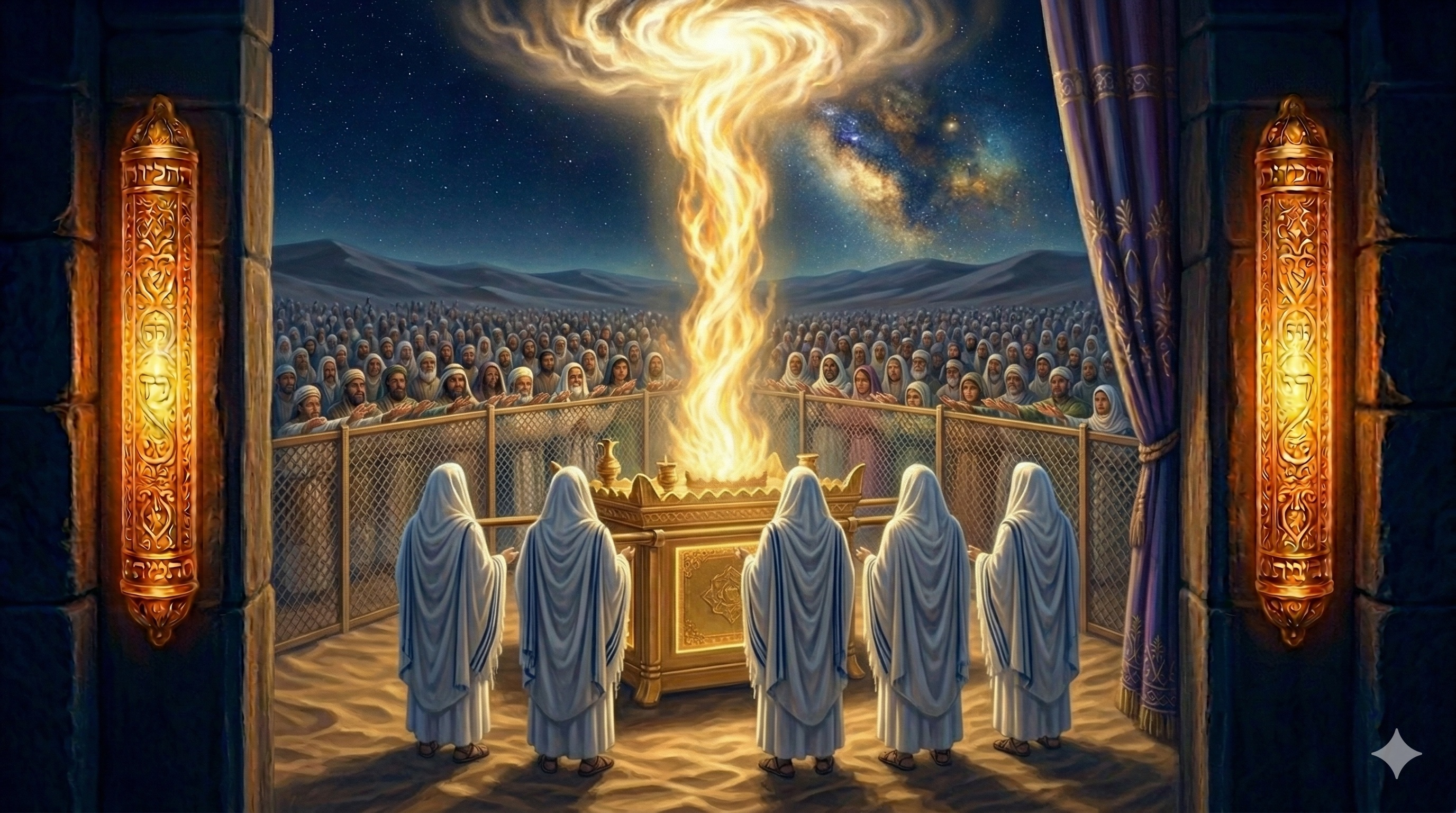
מדוע שינה משה רבנו את סדר המזוזות? ומה הקשר לביאת המשיח?
על פי שיעורו של מ. יהודה חימי
בפרשת בא, הקב"ה אמר למשה: תנו על המזוזות ואחר כך על המשקוף. משה העביר הלאה את ההוראה בסדר הפוך. מי נתן לו את הסמכות לשנות את דברי הקב"ה? התשובה לשאלה הזאת חושפת את אחד הסודות הגדולים של הגאולה — ולמה בדיוק ענוותנותם של משה ואהרן היא המפתח לביאת המשיח.
א השאלה הגדולה — מדוע שינה משה את סדר המזוזות?
הקב"ה אמר "מזוזות ואחר כך משקוף" — משה אמר לעם "משקוף ואחר כך מזוזות". מי נתן למשה את הסמכות לשנות את דברי הקב"ה?
בפרשת בא, כשהקב"ה מצווה את משה להקריב את הפסח ולנגוע בדם, הפסוק אומר:
הקב"ה אמר: מזוזות, ואחר כך משקוף. משה הפך את הסדר: משקוף, ואחר כך מזוזות. שאלה מובנת: מאיפה לקח משה רבנו את הכוח לשנות ממה שהקב"ה אמר?
ב משה ואהרן — שניהם שווים
כיצד ייתכן ששני בני אדם שונים לחלוטין — בגיל, בניסיון, בתפקיד — יהיו שווים לחלוטין?
בפרשת שמות, כשהתורה מונה את היוחסין, יש שני פסוקים סמוכים:
הוּא מֹשֶׁה וְאַהֲרֹן ... הוּא אַהֲרֹן וּמֹשֶׁה שמות ו:כו-כז
רשי אומר: מלמד ששניהם שווים היו. אבל איך יכול להיות שני בני אדם שווים? משה גדל בארמון, אהרן היה עם העם — גיל שונה, ניסיון שונה, תכונות שונות. כיצד "שווים"?
⭐ האפשרות היחידה לומר על שני בני אדם שהם שווים — אם שניהם נמצאים באפס המוחלט. כשאדם מחשיב את עצמו לאפס, לכלום — אפס שווה לאפס. רק שם שניים יכולים להיות שווים לחלוטין.
הראיה הטובה ביותר: כשהתלוננו עליהם, משה ואהרן אמרו — וְנַחְנוּ מָה (שמות טז:ז). לא "אנחנו" — אפילו האלף הפותחת נעדרת. "ונחנו" — בלי האלף של הגדולה. "מה" בעברית — כלום, שום דבר. ברגע שהם מחשיבים את עצמם לכלום, הם שווים.
ג ענוותנותו של אהרן — פרשת שמיני
ביום השמיני למילואין — יום חנוכת המשכן — למה אהרן לא ניגש מאליו לעשות את העבודה?
ביום השמיני — א' ניסן — הוקם המשכן. משה קרא לאהרן לבוא ולהקריב, אבל הפסוק אומר:
רשי שואל: מדוע צריך להגיד לאהרן "קרב אל המזבח"? הרי הוא הכהן הגדול, מי אם לא הוא יקרב? ורשי עונה: שהיה אהרן בוש וירא לגשת.
אהרן לקח על עצמו את האחריות לחטא העגל. למרות שהעגל "יצא מאליו" — אהרן הרגיש שהוא אשם. ומאז חטא העגל, הוא רדוף במחשבה: אולי אני לא ראוי להיות כהן גדול בבית ה'.
משה רבנו אמר לו: לָמָּה אַתָּה בוֹשׁ? לְכָךְ נִבְחַרְתָּ! — ודווקא בגלל שאתה בוש, נבחרת להיות זה שיקריב את הקורבן.
אבל הדרמה לא נגמרה. אהרן הקריב את כל הקורבנות — ועדיין לא ירדה השכינה. הוא חשב: יודע אני שכעס הקב"ה עליי, ובשבילי לא ירדה שכינה לישראל. אז משה נכנס יחד עם אהרן לאוהל מועד, ביקשו רחמים — וירדה השכינה לישראל.
⬥ ראו איזו מידת ענוה: אהרן, שהוא שווה למשה לפי התורה, בכל זאת מחשיב את עצמו כל הזמן כמי שאינו ראוי. ועל כך אמר לו משה: לכך נבחרת — הענוה שלך היא בדיוק הסיבה שאתה ראוי.
ד מדרש — המשיח עומד על גג בית המקדש
אם המשיח עצמו בא ומכריז "הגיע זמן גאולתכם" — מדוע הוא צריך להביא ראיה על ידי האור? כלומר, מדוע יש ספק?
שנו רבותינו: בשעה שמלך המשיח נגלה, בא ועומד על גגו של בית המקדש. ומשמיע להם לישראל ואומר: עניים, הגיע זמן גאולתכם! ואם אתם מאמינים — ראו את האור שזורח עליכם. שנאמר: "קוּמִי אוֹרִי כִּי בָא אוֹרֵךְ" (ישעיהו ס:א).
השאלה חזקה: המשיח בכבודו ובעצמו עומד שם ומכריז. מדוע הוא צריך להביא ראיה נוספת? אם הוא כבר שם — זה עצמו הראיה!
⭐ התשובה טמונה במילה אחת: עניים. כיוון שעם ישראל, מתוך ענוותנותו, לא מאמין שהוא ראוי לגאולה. הוא אומר לעצמו: "הדור שלנו? עם כל החסרונות שלנו? לא מגיע לנו משיח." — הענוה הזאת, ולא כלום אחר, היא בדיוק הסיבה שהגיע זמן גאולתם.
ממי למדנו את זה? מאהרן. אהרן אמר: אני בוש. ומשה רבנו אמר לו: לכך נבחרת — דווקא בגלל שאתה בוש, נבחרת. כך גם לנו: דווקא בגלל שאנחנו מרגישים לא ראויים — הגיע זמן גאולתנו.
ה התשובה — המזוזות, המשקוף וסוד הגאולה
כעת אפשר לענות: מדוע שינה משה את הסדר? מה מסמלים המזוזות ומה מסמל המשקוף?
הרמז פשוט וגאוני:
המזוזות — הן משה ואהרן. כמו שמזוזות מחזיקות את הבית, כך משה ואהרן החזיקו את עם ישראל במצרים — תמכו בהם, עמדו לידם.
המשקוף — הוא הקב"ה. כמו שכתוב בדברים: "הַשְׁקִיפָה מִמְּעוֹן קָדְשְׁךָ מִן הַשָּׁמַיִם" (דברים כו:טו) — משקף מלמעלה.
הקב"ה רצה לפרגן למשה ואהרן. לכן אמר: תנו קודם כל על המזוזות — בזכות מנהיגיכם אתם יוצאים ממצרים!
⬥ אבל משה ואהרן, מתוך ענוותנותם, לא מסוגלים להיות לפני הקב"ה. לכן משה לקח לעצמו את הסמכות לשנות ואמר לעם: קודם כל על המשקוף — הקב"ה קודם! ורק אחר כך על המזוזות — אנחנו. שוב ושוב רואים: הענוה של משה ואהרן היא שנותנת להם את הכוח הגדול ביותר.
⭐ כשנגיע לדרגת ענוה אמיתית — שנאמר "אנחנו עושים את המקסימום, אבל אנחנו לא ראויים, ואנחנו מקבלים את הגאולה בחסד" — בעזרת השם יבוא המשיח בקרוב, בניסן הזה, בבי"א.
📅 פעולות לימים אלו — פסח תשפ"ו
ערב פסח
כשמזים את הדם על המזוזות בלילה הסדר — חשוב: הקב"ה קודם (המשקוף), אחר כך אני (המזוזות). כך עשה משה.
ליל הסדר
כשאומרים "עבדים היינו" — תרגישו שאתם עדיין לא ראויים. דווקא ה"ענוה" הזאת היא ה-הגדה — הגדת המשיח.
חול המועד
קרא בפרשת בו את שני הפסוקים: "מזוזות ואחר כך משקוף" של הקב"ה, ו"משקוף ואחר כך מזוזות" של משה. תרגיש את הענוה שמאחורי השינוי.
שבת שמיני
קרא ויקרא ט:ז — "קרב אל המזבח". תרגיש את הבושה של אהרן ואת תשובת משה: לכך נבחרת. זה גם עלייך.
כל יום
בכל תפילה — תרגיש: אני לא ראוי. ודווקא הרגשה זו היא שמקרבת אותך לקב"ה. ונחנו מה — זה הסוד.
להמשך הלמידה
🏠
שלום בית
20 קומות. שאלה אחת לכל קלף. ללא תשובות — רק מראות. לחץ לגלות קלף שלום בית חדש.
📖
כל הפרשיות
שיעורים נוספים על פרשות ויקרא, בא, שמיני ועוד — כולם בעברית, אנגלית וצרפתית.
The Humility of Aaron — What Is the Condition for Redemption?
Why did Moses change the order of the doorposts? And what is the connection to the coming of Mashiah?
Based on the teaching of M. Yéhouda Himi
In Parashat Bo, God told Moses: put blood on the doorposts, then on the lintel. Moses passed the instruction on in reverse order. Who gave him the authority to change God's own word? The answer to this question reveals one of the greatest secrets of the Redemption — and why the humility of Moses and Aaron is the very key to the coming of Mashiah.
1 The Great Question — Why Did Moses Reverse the Order?
God said "doorposts first, then lintel" — Moses told the people "lintel first, then doorposts." Who gave Moses the authority to change God's instruction?
In Parashat Bo, when God commands Moses about the Passover offering and the blood, the verse says:
God said: doorposts first, then lintel. Moses reversed it: lintel first, then doorposts. The question is clear: where did Moses get the right to change the word of God?
2 Moses and Aaron — They Were Equal
How can two completely different people — different in age, experience, and role — be absolutely equal?
In Parashat Shemot, two consecutive verses list the genealogy:
Rashi says: "This teaches that they were equal." But how can two people be equal? Moses grew up in Pharaoh's palace; Aaron was with the people throughout. Different ages, different experiences, different qualities. How are they "equal"?
⭐ The only way to say two people are equal is if both stand at absolute zero. When a person considers himself nothing — zero equals zero. Only there can two people be completely equal.
The best proof: when the people complained against them, Moses and Aaron said — וְנַחְנוּ מָה (Shemot 16:7) — not "and we" (אנחנו) but without even the opening Alef. What are we? — Nothing. The moment they consider themselves as nothing, they become equal.
3 The Humility of Aaron — Parashat Shemini
On the eighth day — the inauguration of the Mishkan — why didn't Aaron approach the altar on his own?
On the eighth day — Rosh Chodesh Nissan — the Mishkan was inaugurated. Moses called Aaron to come and offer, but the verse says:
Rashi asks: why does Moses need to say "approach the altar" to the High Priest? And Rashi answers: "Because Aaron was ashamed and afraid to approach."
Aaron had taken responsibility for the sin of the Golden Calf. Even though it had "come out on its own," Aaron felt guilty. From that day on, he was haunted by the thought: perhaps I am not worthy to be the High Priest in God's Sanctuary.
Moses said to him: "Why are you ashamed? For this you were chosen!" — Precisely because you are ashamed, you were chosen to offer this sacrifice.
But the drama continued. Aaron performed all the offerings — and still the Divine Presence did not descend. He thought: "I know that God is angry with me — it is because of me that the Shechina has not come down." So Moses and Aaron entered the Tent of Meeting together, prayed for mercy — and the Shechina descended.
⬥ See what level of humility: Aaron, who is Torah's equal to Moses, constantly considers himself unworthy. And Moses says to him: for this you were chosen — your humility is precisely why you are worthy.
4 The Midrash — Mashiah on the Roof of the Temple
If Mashiah himself appears and announces "the time of your redemption has come" — why does he need to offer proof through the light? Why would there be any doubt?
Our Sages taught: When King Mashiah is revealed, he comes and stands on the roof of the Temple. He calls out to Israel and says: "Humble ones — the time of your redemption has come!" And if you believe — look at the light shining upon you. As it says: "Arise, shine, for your light has come" (Isaiah 60:1).
The question is strong: Mashiah himself is standing there and proclaiming it. Why does he need additional proof? His very presence is the proof!
⭐ The answer lies in one word: humble ones (עניים). Because the Jewish people, out of humility, do not believe they deserve the Redemption. They say to themselves: "Our generation? With all our flaws? We don't deserve Mashiah." — That very humility, and nothing else, is precisely the reason the time of their redemption has come.
Who taught us this? Aaron. Aaron said: I am ashamed. And Moses said: for this you were chosen — precisely because you are ashamed, you were chosen. And so with us: precisely because we feel unworthy — the time of our redemption has arrived.
5 The Answer — Doorposts, Lintel, and the Secret of Redemption
Now we can answer: why did Moses reverse the order? What do the doorposts symbolize, and what does the lintel symbolize?
The hint is simple and brilliant:
The doorposts (mezuzot) — represent Moses and Aaron. Just as doorposts hold up a house, Moses and Aaron held up the Jewish people in Egypt — supporting them, standing by them.
The lintel (mashkof) — represents God. As it is written: "Look down (hashkifah) from Your holy dwelling, from heaven" (Devarim 26:15) — the lintel looks down from above.
God wanted to honor Moses and Aaron. So He said: put blood on the doorposts first — it is thanks to your leaders that you are leaving Egypt!
⬥ But Moses and Aaron, in their humility, could not put themselves before God. So Moses took it upon himself to reverse the order, telling the people: the lintel first — God comes first! And only then the doorposts — us. Again and again we see: the humility of Moses and Aaron is what gives them their greatest power.
⭐ When we reach genuine humility — saying "we do our best, but we are not worthy, and we receive redemption as an act of grace" — with God's help, Mashiah will come soon, this Nissan, amen and amen.
📅 Actions for These Days — Pessah 5786
Erev Pessah
When you think about the blood on the doorposts — remember: God first (the lintel), then us (the doorposts). That is what Moses did.
Seder Night
When you say "we were slaves" — feel that you are still not entirely worthy. That very humility is the Haggadah — the proclamation of Mashiah.
Chol HaMoed
Read the two verses in Bo: God's order (doorposts then lintel) and Moses' order (lintel then doorposts). Feel the humility behind the change.
Shabbat Shemini
Read Vayikra 9:7 — "Approach the altar." Feel Aaron's shame and Moses' answer: for this you were chosen. That is for you too.
Every Day
In every prayer — feel: I am not fully worthy. That very feeling is what draws you closer to God. What are we? — That is the secret.
Continue Learning
🏠
Chalom Bayit
20 floors. One question per card. No answers — only mirrors. Click to discover a new Chalom Bayit card.
📖
All Parashiot
More shiurim on Parashat Bo, Vayikra, Shemini and more — in Hebrew, English and French.
L'Humilité d'Aharon — Quelle est la Condition de la Rédemption ?
Pourquoi Moïse a-t-il changé l'ordre des mezouzot ? Et quel est le lien avec la venue du Mashiah ?
D'après l'enseignement de M. Yéhouda Himi
Dans la paracha Bo, D.ieu a dit à Moïse : mettez le sang sur les mezouzot, puis sur le linteau. Moïse a transmis l'instruction dans l'ordre inverse. Qui lui a donné le droit de changer la parole de D.ieu ? La réponse à cette question révèle l'un des plus grands secrets de la Rédemption — et pourquoi l'humilité de Moïse et d'Aharon est précisément la clé de la venue du Mashiah.
1 La Grande Question — Pourquoi Moïse a-t-il inversé l'ordre ?
D.ieu a dit « mezouzot d'abord, puis linteau » — Moïse a dit au peuple « linteau d'abord, puis mezouzot ». Qui a donné à Moïse le droit de changer la parole de D.ieu ?
Dans la paracha Bo, quand D.ieu ordonne à Moïse l'offrande du Pessa'h et l'application du sang, le verset dit :
D.ieu a dit : mezouzot d'abord, puis linteau. Moïse a inversé : linteau d'abord, puis mezouzot. La question est claire : d'où Moïse tient-il le droit de changer la parole de D.ieu ?
2 Moïse et Aharon — Ils Étaient Égaux
Comment deux personnes totalement différentes — par l'âge, l'expérience, le rôle — peuvent-elles être absolument égales ?
Dans la paracha Shemot, deux versets consécutifs énumèrent la généalogie :
Rachi dit : « Cela enseigne qu'ils étaient égaux. » Mais comment deux personnes peuvent-elles être égales ? Moïse a grandi dans le palais, Aharon était avec le peuple. Âges différents, expériences différentes. Comment sont-ils « égaux » ?
⭐ La seule façon de dire que deux personnes sont égales, c'est si les deux se tiennent au zéro absolu. Quand on se considère comme rien — zéro égale zéro. C'est là seulement que deux personnes peuvent être complètement égales.
La meilleure preuve : quand le peuple se plaignit contre eux, Moïse et Aharon dirent — וְנַחְנוּ מָה — non pas « et nous » (אנחנו) mais sans même l'Aleph initial. Que sommes-nous ? — Rien. Du moment qu'ils se considèrent comme rien, ils sont égaux.
3 L'Humilité d'Aharon — Paracha Shemini
Le huitième jour — l'inauguration du Michkan — pourquoi Aharon ne s'est-il pas approché de lui-même de l'autel ?
Le huitième jour — Rosh Hodesh Nissan — le Michkan fut inauguré. Moïse appela Aharon à venir offrir, mais le verset dit :
Rachi demande : pourquoi Moses doit-il dire à Aharon « approche-toi de l'autel » ? Et Rachi répond : « Car Aharon avait honte et craignait de s'approcher. »
Aharon s'était chargé de la responsabilité du péché du Veau d'Or. Même si le veau « était sorti tout seul », Aharon se sentait coupable. Depuis lors, il était hanté par la pensée : peut-être ne suis-je pas digne d'être Grand Prêtre dans la Maison de D.ieu.
Moïse lui dit : « Pourquoi as-tu honte ? C'est pour cela que tu as été choisi ! » — Précisément parce que tu as honte, tu as été choisi pour offrir ce sacrifice.
Mais le drame continua. Aharon accomplit toutes les offrandes — et la Présence Divine ne descendit toujours pas. Il pensa : « Je sais que D.ieu est irrité contre moi — c'est à cause de moi que la Chekhina ne descend pas sur Israël. » Alors Moïse et Aharon entrèrent ensemble dans la Tente d'Assignation, implorèrent la miséricorde — et la Chekhina descendit.
⬥ Voyez quel niveau d'humilité : Aharon, que la Torah égale à Moïse, se considère constamment indigne. Et Moïse lui dit : c'est pour cela que tu as été choisi — ton humilité est précisément la raison pour laquelle tu es digne.
4 Le Midrash — Le Mashiah sur le Toit du Temple
Si le Mashiah lui-même vient et proclame « le temps de votre rédemption est arrivé » — pourquoi doit-il apporter une preuve par la lumière ? Pourquoi y aurait-il un doute ?
Nos Maîtres enseignèrent : Quand le roi Mashiah sera révélé, il viendra et se tiendra sur le toit du Temple. Il s'adressera à Israël et dira : « Humbles, le temps de votre rédemption est arrivé ! » Si vous croyez — regardez la lumière qui brille sur vous. Comme il est dit : « Lève-toi, brille, car ta lumière est venue » (Isaïe 60:1).
La question est forte : le Mashiah en personne est là et le proclame. Pourquoi aurait-il besoin de preuve supplémentaire ? Sa présence même est la preuve !
⭐ La réponse tient en un seul mot : humbles (עניים). Parce que le peuple juif, par son humilité, ne croit pas mériter la Rédemption. Il se dit : « Notre génération ? Avec tous nos manques ? Nous ne méritons pas le Mashiah. » — Cette humilité même, et rien d'autre, est précisément la raison pour laquelle le temps de leur rédemption est arrivé.
Qui nous a appris cela ? Aharon. Aharon a dit : j'ai honte. Et Moïse lui a dit : c'est pour cela que tu as été choisi — précisément parce que tu as honte, tu as été choisi. Ainsi pour nous : précisément parce que nous nous sentons indignes — le temps de notre rédemption est arrivé.
5 La Réponse — Mezouzot, Linteau et le Secret de la Rédemption
Maintenant nous pouvons répondre : pourquoi Moïse a-t-il inversé l'ordre ? Que symbolisent les mezouzot et que symbolise le linteau ?
L'allusion est simple et géniale :
Les mezouzot — représentent Moïse et Aharon. Tout comme les mezouzot soutiennent une maison, Moïse et Aharon ont soutenu le peuple juif en Égypte — ils les ont épaulés, tenus debout.
Le linteau (machkouf) — représente D.ieu. Comme il est écrit : « Regarde (hachkifah) depuis Ta demeure sainte, depuis les cieux » (Devarim 26:15) — le linteau regarde de haut.
D.ieu voulait honorer Moïse et Aharon. Il dit donc : mettez le sang sur les mezouzot d'abord — c'est grâce à vos dirigeants que vous sortez d'Égypte !
⬥ Mais Moïse et Aharon, dans leur humilité, ne pouvaient pas se mettre avant D.ieu. Moïse a donc pris sur lui d'inverser l'ordre, disant au peuple : le linteau d'abord — D.ieu passe avant ! Et seulement ensuite les mezouzot — nous. Encore et encore on voit : c'est l'humilité de Moïse et Aharon qui leur donne leur plus grande force.
⭐ Quand nous atteindrons une véritable humilité — en disant « nous faisons de notre mieux, mais nous ne sommes pas dignes, et nous recevons la rédemption comme un acte de grâce » — avec l'aide de D.ieu, Mashiah viendra bientôt, en Nissan, amen et amen.
📅 Actions pour Ces Jours — Pessah 5786
Erev Pessah
En pensant au sang sur les mezouzot — rappelle-toi : D.ieu d'abord (le linteau), puis nous (les mezouzot). C'est ce qu'a fait Moïse.
Nuit du Séder
Quand tu dis « nous étions esclaves » — ressens que tu n'es pas encore tout à fait digne. Cette humilité même est la Haggadah — la proclamation du Mashiah.
Hol Hamoéd
Lis les deux versets dans Bo : l'ordre de D.ieu (mezouzot puis linteau) et l'ordre de Moïse (linteau puis mezouzot). Ressens l'humilité derrière le changement.
Chabbat Shemini
Lis Vayikra 9:7 — « Approche-toi de l'autel. » Ressens la honte d'Aharon et la réponse de Moïse : c'est pour cela que tu as été choisi. C'est pour toi aussi.
Chaque jour
Dans chaque prière — ressens : je ne suis pas pleinement digne. Ce ressenti même est ce qui te rapproche de D.ieu. Que sommes-nous ? — C'est le secret.
Pour Aller Plus Loin
🏠
Chalom Bayit
20 étages. Une question par carte. Aucune réponse — seulement des miroirs. Clique pour découvrir une nouvelle carte Chalom Bayit.
📖
Toutes les Parachiot
D'autres shiourim sur Bo, Vayikra, Shemini et plus encore — en hébreu, anglais et français.
בשעה שמלך המשיח נגלה, בא ועומד על גגו של בית המקדש ומשמיע לישראל: עניים, הגיע זמן גאולתכם! אם אתם מאמינים — ראו באורי שזורח עליכם. שנאמר: קומי אורי כי בא אורך.
השאלה פשוטה: אם המשיח עצמו עומד שם — מדוע צריך ראיה? ואם יש ספק — מה מסמלת אותה מילה אחת: "עניים"? התשובה היא שעם ישראל, מתוך ענוותנותו, אומר לעצמו: לא מגיע לנו. הדור שלנו — לא ראוי. ודווקא הענוה הזאת היא הסיבה שהגיע זמן גאולתם.
ממי למדנו את זה? מאהרן. ביום חנוכת המשכן, אהרן לא ניגש מאליו לעשות את העבודה. שהיה אהרן בוש וירא לגשת — הוא חשש שבגלל חטא העגל, הוא לא ראוי להיות כהן גדול. ומשה רבנו אמר לו: לכך נבחרת — דווקא בגלל שאתה בוש, נבחרת.
ברוך ה' לעולם, אמן ואמן.
שבת שמיני — סוד המזוזות והמשקוף
פרשת בא ושמיני · פסח תשפ"ו
הקב"ה אמר בפרשת בא: תנו על המזוזות ואחר כך על המשקוף. אבל משה רבנו הפך את הסדר ואמר לעם: תשימו קודם כל על המשקוף, ואחר כך על המזוזות. מי נתן לו את הסמכות לשנות?
הרמז: המזוזות — משה ואהרן. כמו שמזוזות מחזיקות את הבית, משה ואהרן החזיקו את עם ישראל במצרים. המשקוף — הקב"ה, כמו "השקיפה ממעון קדשך מן השמים" — משקף מלמעלה.
הקב"ה רצה לפרגן: שימו קודם כל על המזוזות — בזכות מנהיגיכם אתם יוצאים. אבל משה ואהרן, מתוך ענוותנותם, הפכו: קודם כל הקב"ה. עוד פעם ועוד פעם — הענוה של משה ואהרן היא שמקנה להם את הכוח הגדול ביותר.
ברוך ה' לעולם, אמן ואמן.
Seder Night — The Humility of Aaron and the Condition for Redemption
Parashat Bo & Shemini · Pessah 5786 · M. Yéhouda Himi
When King Mashiah is revealed, he comes and stands on the roof of the Temple and calls out to Israel: "Humble ones — the time of your redemption has come!" If you believe — see the light that shines upon you. As it says: "Arise, shine, for your light has come."
The question is simple: if Mashiah himself stands there — why does he need proof? And if there is doubt — what does that one word "humble ones" tell us? The answer is that the Jewish people, in their humility, say to themselves: we don't deserve it. Our generation — not worthy. And that very humility is precisely the reason their redemption has arrived.
Who taught us this? Aaron. On the day the Mishkan was inaugurated, Aaron did not approach on his own. He was ashamed and afraid to approach — he feared that because of the Golden Calf, he was unworthy to be the High Priest. And Moses said to him: for this you were chosen — precisely because you are ashamed, you were chosen.
Blessed is God forever, amen and amen.
Shabbat Shemini — The Secret of the Doorposts and the Lintel
Parashat Bo & Shemini · Pessah 5786
God said in Parashat Bo: put blood on the doorposts, then on the lintel. But Moses reversed the order and told the people: put it on the lintel first, then on the doorposts. Who gave him authority to change God's words?
The clue: the doorposts (mezuzot) represent Moses and Aaron. Just as doorposts hold up a house, Moses and Aaron held up the Jewish people in Egypt. The lintel (mashkof) represents God — as in "look down (hashkifah) from Your holy dwelling in heaven."
God wanted to honor them: put the doorposts first — it is thanks to your leaders that you leave Egypt. But Moses and Aaron, in their humility, reversed it: God first. Again and again — the humility of Moses and Aaron is what gives them their greatest power.
Blessed is God forever, amen and amen.
Nuit du Séder — L'Humilité d'Aharon et la Condition de la Rédemption
Paracha Bo et Shemini · Pessah 5786 · M. Yéhouda Himi
Quand le roi Mashiah se révélera, il viendra se tenir sur le toit du Temple et s'adressera à Israël : « Humbles — le temps de votre rédemption est arrivé ! » Si vous croyez — regardez la lumière qui brille sur vous. Comme il est dit : « Lève-toi, brille, car ta lumière est venue. »
La question est simple : si le Mashiah lui-même est là — pourquoi a-t-il besoin de preuve ? Et s'il y a un doute — que nous dit ce seul mot « humbles » ? La réponse est que le peuple juif, dans son humilité, se dit : nous ne le méritons pas. Notre génération — pas digne. Et cette humilité même est précisément la raison pour laquelle leur rédemption est arrivée.
Qui nous a appris cela ? Aharon. Le jour de l'inauguration du Michkan, Aharon ne s'est pas approché de lui-même. Il avait honte et craignait de s'approcher — il craignait qu'à cause du péché du Veau d'Or, il ne soit pas digne d'être Grand Prêtre. Et Moïse lui dit : c'est pour cela que tu as été choisi — précisément parce que tu as honte, tu as été choisi.
Béni soit D.ieu à jamais, amen et amen.
Chabbat Shemini — Le Secret des Mezouzot et du Linteau
Paracha Bo et Shemini · Pessah 5786
D.ieu a dit dans la paracha Bo : mettez le sang sur les mezouzot, puis sur le linteau. Mais Moïse a inversé l'ordre et dit au peuple : mettez-le d'abord sur le linteau, puis sur les mezouzot. Qui lui a donné le droit de changer les paroles de D.ieu ?
L'allusion : les mezouzot représentent Moïse et Aharon. Tout comme les mezouzot soutiennent une maison, Moïse et Aharon ont soutenu le peuple juif en Égypte. Le linteau (machkouf) représente D.ieu — comme dans « regarde (hachkifah) depuis Ta demeure sainte dans les cieux. »
D.ieu voulait les honorer : mettez les mezouzot d'abord — c'est grâce à vos dirigeants que vous sortez d'Égypte. Mais Moïse et Aharon, dans leur humilité, ont inversé : D.ieu d'abord. Encore et encore — c'est l'humilité de Moïse et Aharon qui leur confère leur plus grande force.
Béni soit D.ieu à jamais, amen et amen.
פסח תשפ"ו — ענוותנותו של אהרן ומה התנאי לגאולה
שיעור מ. יהודה חימי · פרשת בא ושמיני
א — השאלה: מדוע שינה משה את סדר המזוזות?
• הקב"ה: "מזוזות ואחר כך משקוף" (שמות יב:ז)
• משה: "משקוף ואחר כך מזוזות" (שמות יב:כב)
• מי נתן לו את הסמכות לשנות?
ב — משה ואהרן שווים
• "הוא משה ואהרן / הוא אהרן ומשה" — רשי: שניהם שווים היו
• כיצד? אפס = אפס — כששניהם מחשיבים עצמם לכלום
• "ונחנו מה" — בלי האלף של גדולה
ג — ענוותנותו של אהרן — פרשת שמיני
• "קרב אל המזבח" — שהיה אהרן בוש וירא לגשת
• משה: לכך נבחרת — הענוה היא הסיבה לבחירה
• אהרן חשב: בגללי לא ירדה שכינה — משה נכנס עמו, ביקשו רחמים
ד — מדרש: משיח עומד על גג בית המקדש
• "עניים, הגיע זמן גאולתכם" — מדוע צריך ראיה?
• המילה "עניים" = הענוה עצמה היא הסיבה לגאולה
• ממי למדנו? מאהרן: אני בוש → לכך נבחרת
ה — סוד המזוזות והמשקוף
• מזוזות = משה ואהרן (מחזיקים את עם ישראל)
• משקוף = הקב"ה ("השקיפה ממעון קדשך מן השמיים")
• הקב"ה: שימו מזוזות קודם (כבוד המנהיגים). משה: הפך → הקב"ה קודם
Pessah 5786 — The Humility of Aaron and the Condition for Redemption
Shiur by M. Yéhouda Himi · Parashat Bo & Shemini
1 — The Question: Why Did Moses Reverse the Order?
• God: "doorposts then lintel" (Shemot 12:7)
• Moses: "lintel then doorposts" (Shemot 12:22)
• Who gave him the authority to change it?
2 — Moses and Aaron Were Equal
• "He is Moses and Aaron / He is Aaron and Moses" — Rashi: they were equal
• How? Zero = zero — when both consider themselves nothing
• "What are we?" — without the Aleph of greatness
3 — The Humility of Aaron — Parashat Shemini
• "Approach the altar" — Aaron was ashamed and afraid
• Moses: for this you were chosen — humility is the reason for the choice
• Aaron thought: it is my fault the Shechina hasn't descended — Moses entered with him
4 — Midrash: Mashiah on the Roof of the Temple
• "Humble ones — your redemption has come" — why does he need proof?
• The word "humble ones" = humility itself is the reason for redemption
• Who taught us this? Aaron: I am ashamed → for this you were chosen
5 — The Secret of the Doorposts and the Lintel
• Doorposts = Moses & Aaron (holding up the Jewish people)
• Lintel = God ("look down from Your holy dwelling in heaven")
• God: doorposts first (honor for the leaders). Moses reversed it: God first
Pessah 5786 — L'Humilité d'Aharon et la Condition de la Rédemption
Cours de M. Yéhouda Himi · Paracha Bo et Shemini
1 — La Question : Pourquoi Moïse a-t-il inversé l'ordre ?
• D.ieu : « mezouzot puis linteau » (Shemot 12:7)
• Moïse : « linteau puis mezouzot » (Shemot 12:22)
• Qui lui a donné le droit de changer ?
2 — Moïse et Aharon Étaient Égaux
• Rachi : ils étaient égaux — zéro = zéro quand les deux se considèrent comme rien
• « Que sommes-nous ? » — sans l'Aleph de la grandeur
3 — L'Humilité d'Aharon — Paracha Shemini
• « Approche-toi de l'autel » — Aharon avait honte et craignait de s'approcher
• Moïse : c'est pour cela que tu as été choisi — l'humilité est la raison du choix
• Aharon pensait : c'est ma faute si la Chekhina ne descend pas — Moïse entra avec lui
4 — Le Midrash : Mashiah sur le Toit du Temple
• « Humbles — votre rédemption est arrivée » — pourquoi a-t-il besoin de preuve ?
• Le mot « humbles » = l'humilité elle-même est la raison de la rédemption
• Qui nous l'a appris ? Aharon : j'ai honte → c'est pour cela que tu as été choisi
5 — Le Secret des Mezouzot et du Linteau
• Mezouzot = Moïse et Aharon (ils soutiennent le peuple juif)
• Linteau = D.ieu (« regarde depuis Ta demeure sainte dans les cieux »)
• D.ieu : mezouzot d'abord (honneur aux dirigeants). Moïse a inversé : D.ieu d'abord