מדוע ספר ויקרא הוא הבראשית החדש? ומה קרה לנשמה שם — בתוך הבטן?
על פי שיעורו של מ. יהודה חימי
למה "אישה כי תזריע" בא אחרי פרשת שמיני? מה הקשר בין ספר ויקרא למעשה בראשית? ולמה בוכה תינוק כשהוא נולד — האמת שמאחורי הדמעות. שלושה נושאים: ספר ויקרא כהבראשית החדש, ברית מילה ביום השמיני, והסוד הגדול של הנשמה בבטן האם.
א למה "אישה כי תזריע" אחרי שמיני?
רבי שמלאי שואל: מדוע קדמה התורה את עניינֵי הבהמה חיה ועוף לעניינֵי האדם? הרי האדם הוא נזר הבריאה!
אִשָּׁה כִּי תַזְרִיעַ וְיָלְדָה זָכָר ויקרא יב:ב
רש"י עומד על השאלה הזאת ומביא את דברי רבי שמלאי: "כשם שיצירתו של אדם אחר כל בהמה חיה ועוף במעשה בראשית — כך תורתו נתפרשה אחר תורת בהמה חיה ועוף."
האדם הוא הנברא האחרון בששת ימי הבריאה. לא בגלל שהוא פחות חשוב — אלא דווקא בגלל שהוא הכי חשוב. הקב"ה הכין לו את הכל מראש, כמו אדם שמכין את השולחן לפני שהאורח הנכבד מגיע.
כמו שהקב"ה הכין את הכל לפני שברא את האדם — כך התורה מכינה את הכל (בהמה, חיה, עוף, טומאה וטהרה) לפני שמגיעה לדיני הלידה ודיני האדם.
ב ספר ויקרא — הבראשית החדש
מה הייתה כוונת הקב"ה כשברא את העולם? ומדוע ספר ויקרא הוא בעצם ספר בראשית החדש?
הקב"ה ברא את העולם בשישה ימים. מטרתו: "דירה בתחתונים" — להוריד את השכינה לעולם. ואכן, ביום השישי נברא אדם, וירדה השכינה. אלא מה? האדם חטא — ובכל חטא גדול, השכינה התרוממה רקיע אחד.
אדם חטא → רקיע א'. קין רצח → רקיע ב'. דור אנוש, דור המבול, דור הפלגה, נמרוד, סדום → עד שהשכינה הסתלקה לשבעת הרקיעים. ואז שבעה צדיקים הורידו אותה בחזרה: אברהם, יצחק, יעקב, לוי, קהת, עמרם — ומשה בן עמרם הורידה סופית.
וַיִּשְׁכֹּן כְּבוֹד ה' עַל הַר סִינַי שמות כד:טז
השכינה חזרה לארץ. אמר הקב"ה: לא ייתכן לפספס שוב. "תבנו משכן" — מקום קבוע שאפשר להכניס אליו את השכינה.
ג המשכן = שחזור מעשה בראשית
מה הקשר בין בנין המשכן לבין בריאת שמיים וארץ? ומה אנחנו מבינים מכך על ספר ויקרא?
בסוף ספר שמות, כשנגמר בנין המשכן, הפסוקים מדהימים בדמיון שלהם לפסוקי הבריאה:
⭐ המשכן הוא שחזור מעשה בראשית. אנחנו נמצאים ביום השישי החדש של הבריאה — ומה נברא ביום השישי? האדם. לכן פותח ספר ויקרא ב"ויקרא אל משה" — ומיד: "אָדָם כִּי יַקְרִיב מִכֶּם." הזוהר אומר: מדוע "אדם" ולא "איש" או "נשיא"? כי עכשיו, עם חנוכת המשכן, חזרנו למעשה בראשית.
מדוע יש לנו חמישה חומשים ולא שלושה? ומה שינה את התוכנית המקורית של הקב"ה?
לולא חטא המרגלים, היינו נכנסים לארץ ישראל ישירות אחרי ספר ויקרא. לא היה ספר במדבר. לא היה ספר דברים. רק בראשית, שמות, ויקרא — ואז ישראל. הפסוק האחרון בספר ויקרא מעיד: "אֵלֶּה הַמִּצְוֹת אֲשֶׁר צִוָּה ה' אֶת מֹשֶׁה אֶל בְּנֵי יִשְׂרָאֵל בְּהַר סִינָי" — מהר סיני ישר לארץ ישראל.
ספר ויקרא הוא הספר שאיתו היו צריכים להיכנס לארץ. הוא הסוף המקורי של התורה. שני ספרים שלמים — במדבר ודברים — נוספו רק בגלל חטא המרגלים.
⭐ ולכן ה"תוכחה" מופיעה פעמיים: פרשת בחוקותי (ויקרא) — לקראת הכניסה המתוכננת לארץ. פרשת כי תבוא (דברים) — לקראת הכניסה בפועל, אחרי 38 שנה במדבר. התוכחה השנייה חזרה כדי לרענן את זיכרון עם ישראל לפני הכניסה המאוחרת.
ה ברית מילה — למה ביום השמיני?
אם לפי הזוהר הקדוש הנשמה היהודית נכנסת לתינוק רק ביום הברית — למה לחכות שמונה ימים? מדוע לא לקדש אותו מיד?
מבחינה רפואית: הרופאים גילו — בנס מדעי שרק הקב"ה יכול לתכנן — כי רק ביום השמיני מתגבש בגוף האדם החומר הגורם לקרישת הדם. לפני יום זה, כריתה עלולה לגרום לדימום מסוכן. הקב"ה, שברא אותנו, ידע זאת מראש.
מבחינה רוחנית: כדי שבהכרח יעבור על התינוק שבת אחת לפני הברית. השבת נותנת לו "בוסטר" — תוספת כוח רוחנית — כדי שיוכל לעמוד בכל מה שיצטרך להתמודד איתו בחייו.
ו הוולד בבטן אמו — הסוד הגדול
מה קורה בתוך הבטן? ומה מרגיש התינוק כשהוא נולד — ולמה הוא באמת בוכה?
דרש רבי שמלאי יסוד מרעיש:
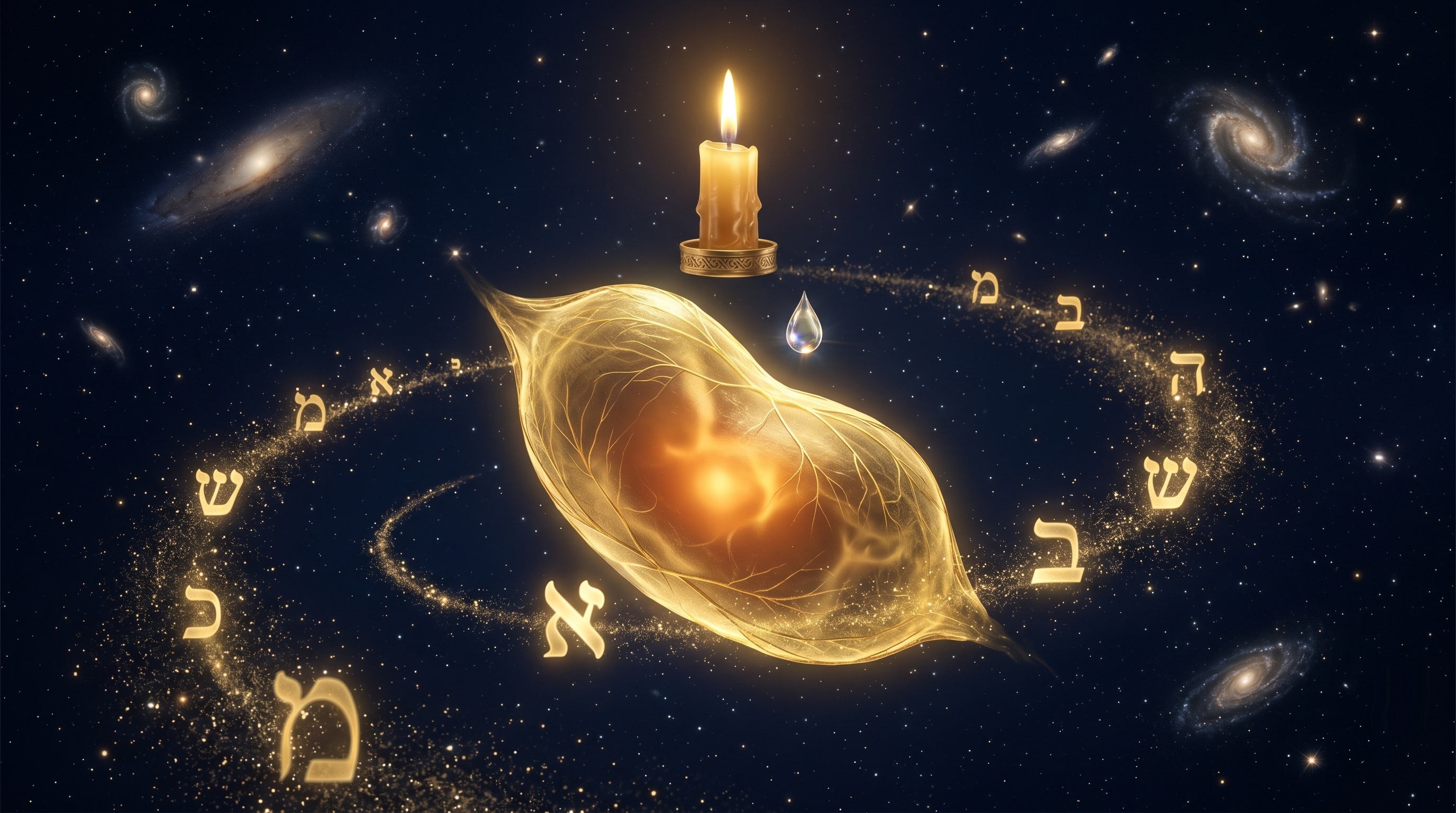
🔷 כשהוולד נמצא בתוך בטן אמו — הוא דומה לפנקס מקופל, ראשו בין ברכיו. אוכל ממה שאמו אוכלת, שותה ממה שאמו שותה. ונר דלוק לו על ראשו — וצופה ומביט מסוף העולם ועד סופו. ומלמדים אותו את כל התורה כולה.
ואין לך ימים שאדם שרוי בטובה יותר מאותם הימים.
הרגע הכי טוב בחייך — הוא כשהיית בבטן. אבל כשיוצא לאוויר העולם — בא מלאך וסותר על פיו — ומשכחו את כל התורה כולה.
⭐ התינוק בוכה לא מפני שהאור מסנוור אותו. הוא בוכה כי הוא עצוב ומתאבל — על הרגע שבו נלקח ממנו כל העושר, כל הידיעה, כל העונג. הוא מאבד הכל תוך שניות.
ז שלום זכר — למה אוכלים חומוס?
מדוע עורכים "שלום זכר" בליל שישי לפני הברית? ומדוע אוכלים שם ארבס וחומוס — מאכלי אבלים?
"שלום זכר" אינו "שלום לך, ילד זכר." המשמעות האמיתית: שלום = תנחומים. זכר = תזכור. אנחנו מנחמים את התינוק האבל ואומרים לו: אל תיאש. מה שהמלאך לקח ממך — תוכל להשיג מחדש.
לכן אוכלים מאכלים עגולים ומאכלי אבלים — הגלגל חוזר. כמו שמנחמים אבל ממש. ומי מנחם את האבל? "השבת תנחמנו." לכן הברית ביום השמיני — כדי שיעבור שבת אחת קודם לכן.
⭐ הסוד הגדול: כל אדם שלומד תורה בחייו — אינו לומד משהו חדש. הוא זוכר. הוא משחזר את מה שידע בבטן. הקרן שם — הנר שהאיר לו על ראשו — עדיין שם, קבורה עמוק. לימוד תורה הוא לא רכישה — הוא גאולת העצמי.
ח 📅 תוכנית השבוע — פרשת תזריע
יום ראשון
קרא ויקרא יב:א–ח. שאל את עצמך: מה ה"נר" שדלק עליך בילדות? מה ידעת אז שנראה לך כאילו איבדת?
יום שני
חשוב על המשכן כעולם חדש. איפה ה"משכן" שלך — המקום שבו אתה מרגיש שהשכינה נוכחת בחייך?
יום שלישי
קרא את הפסוקים האחרונים של ספר ויקרא. שאל: מה היו חייך נראים אם לא הייתה "חטאת המרגלים" שלך — הפעם שנרתעת מלהיכנס?
יום רביעי
היום, כשאתה לומד תורה — אמור לעצמך: "אני לא לומד משהו חדש. אני זוכר." שנייה אחת של מחשבה הזאת — משנה הכל.
יום חמישי
חשוב על תינוק שנולד לאחרונה בסביבתך. הוא ידע הכל. הוא בוכה על השכחה. מה שמגיע לו — הוא ניחום.
ליל שישי — ערב שבת
לפני כניסת שבת — קח שנייה: "ריבונו של עולם, בוא נזכור ביחד. שבת זאת תנחם את מה שאיבדתי — ותחזיר לי מה שאיבדתי."
שַׁבָּת
בבית הכנסת בשמיעת קריאת תזריע — עצור ברגע "אישה כי תזריע וילדה". מאחורי כל לידה — נשמה שיצאה ממרומים ובחרה לבוא. כולל שלך.
להמשך הלימוד
🏠
שלום בית
20 קומות. שאלה אחת לכרטיס. אין תשובות — רק מראות. לחץ לגלות כרטיס שלום בית חדש.
🔢
גימטריה — הנר שעל הראש
מה סוד הנר שדולק על ראש הוולד? גלה את הקשרים הנסתרים לפי הרב מנשה זצ"ל.
ליל שישי · פרשת תזריע תשפ"ו · על פי שיעורו של מ. יהודה חימי
זה הסוד של פרשת תזריע. רבי שמלאי מגלה: כשהוולד בתוך הבטן, נר דלוק לו על ראשו, וצופה מסוף העולם ועד סופו, ומלמדים אותו את כל התורה כולה. ואין לך ימים שאדם שרוי בטובה יותר. אבל כשהוא יוצא לעולם — בא מלאך וסותר על פיו — ומשכח את הכל. התינוק בוכה לא מהאור. הוא בוכה על מה שאיבד.
ולכן הברית ביום השמיני — כדי שיעבור עליו שבת אחת. "השבת תנחמנו." ולכן בשלום זכר אוכלים מאכלים עגולים, מאכלי אבלים — ומנחמים אותו: אתה תזכור. הלמוד שתלמד אינו חדש. הוא שחזור. כל תורה שתלמד — גאולת עצמך היא.
בשבת זו — נכנסים לשבת עם מחשבה אחת: כל תורה שאני לומד — אני זוכר. שבת שלום.
ויקרא — הבראשית החדש
שחרית שבת · פרשת תזריע · מ. יהודה חימי
ספר ויקרא הוא ספר בראשית החדש. בסוף ספר שמות, כשהמשכן הושלם, הפסוקים זהים לפסוקי הבריאה: "ותכל כל עבודת המשכן" כמו "ויכולו השמים והארץ." "ויברך אותם משה" כמו "ויברך אלוקים." אנחנו ביום השישי החדש — ומה נברא ביום השישי? האדם.
לכן ספר ויקרא פותח ב"ויקרא אל משה" — ומיד: "אדם כי יקריב." ספר ויקרא אינו רק ספר חוקים — הוא דף חדש בהיסטוריה. ואנחנו — הילדים שנולדו לתוך השכחה — הגענו לעולם כדי לפתוח דף חדש. שבת שלום ומבורך.
Parashat Tazria · 5786
Born Into Forgetting
Why is Vayikra the new Genesis? What does a soul experience in the womb — and why does a newborn cry?
Based on the shiur of M. Yéhouda Himi
Why does Parashat Tazria follow Shemini? What is the connection between Sefer Vayikra and the Creation of the world? And what is the real reason a newborn cries — not the light in the delivery room, but something far deeper. Three themes: Vayikra as the new Genesis, brit mila on the eighth day, and the great secret of the soul inside the womb.
1 Why Does “When a Woman Gives Birth” Follow Shemini?
Rabbi Shmlai asks: why does the Torah address the laws of animals, beasts, and birds before the laws of the human being? Isn’t the human being the crown of Creation?
When a woman gives birth to a male child Leviticus 12:2
Rashi cites Rabbi Shmlai’s answer: “Just as the creation of the human being came after all the animals, beasts, and birds in the six days of Creation — so too, the laws of the human being are taught after the laws of animals, beasts, and birds.”
The human being is the last creature of the six days. Not because he is less important — precisely because he is the most important. G-d prepared everything first, as a host prepares the table before the honored guest arrives.
Just as G-d prepared the entire world before creating the human being — so the Torah prepares everything (animals, birds, purity and impurity) before arriving at the laws of birth and human life.
2 Sefer Vayikra — The New Genesis
What was G-d’s original intention when He created the world? And why is Sefer Vayikra, in reality, a new Book of Genesis?
G-d created the world in six days. His goal: to bring the Divine Presence — the Shekhina — down into the world below. On the sixth day, the human being was created, and the Shekhina descended. But then the human being sinned — and with each great sin, the Shekhina rose one heaven higher.
Adam sinned → Heaven 1. Cain murdered → Heaven 2. The generation of Enosh, the Flood, Babel, Nimrod, Sodom → until the Shekhina had withdrawn to the seventh heaven. Then seven righteous men brought her back, one heaven at a time: Abraham, Isaac, Jacob, Levi, Kehat, Amram — and Moses, son of Amram, brought her down for good.
And the glory of G-d rested upon Mount Sinai Exodus 24:16
The Shekhina had returned to earth. G-d declared: this must never be lost again. “Build a Mishkan” — a permanent dwelling that can always hold the Divine Presence.
3 The Tabernacle = A Recreation of the World
What is the connection between the construction of the Mishkan and the creation of heaven and earth? And what does this teach us about Sefer Vayikra?
At the end of Sefer Shemot, when the Mishkan was completed, the verses are astonishingly parallel to the verses of Creation:
“And all the work of the Mishkan was completed” ↔ “And the heaven and earth were completed”
“And the children of Israel did everything that G-d had commanded” ↔ “And G-d made”
⭐ The Mishkan is a recreation of the world. We are standing at a new sixth day of Creation — and what was created on the sixth day? The human being. That is why Sefer Vayikra opens: “And He called to Moses” — and immediately: “Adam — a person — who brings an offering.” The Zohar explains: why Adam and not ish or nasi? Because with the inauguration of the Mishkan, we have returned to Genesis.
And He called to Moses, and G-d spoke to him from the Tent of Meeting, saying Leviticus 1:1
4 Three Books Would Have Been Enough
Why do we have five books of the Torah and not three? What changed G-d’s original plan?
Had it not been for the sin of the spies, Israel would have entered the Land directly after Sefer Vayikra. There would be no Sefer Bamidbar. No Sefer Devarim. Only Bereshit, Shemot, Vayikra — and then Israel enters the Land. The final verse of Vayikra confirms it: “These are the commandments that G-d commanded Moses to the children of Israel at Mount Sinai” — from Sinai, straight to the Land.
Sefer Vayikra was the book with which Israel was supposed to enter the Land. It was the original ending of the Torah. Two entire books — Bamidbar and Devarim — were added only because of the sin of the spies.
⭐ That is why the “Reproof” appears twice: Parashat Bechukotai (Vayikra) — for the planned entry into the Land. Parashat Ki Tavo (Devarim) — for the actual entry, forty years later. The second reproof was a reminder, because the generation that would enter was not the generation that heard the first one.
5 Brit Mila — Why on the Eighth Day?
If, according to the holy Zohar, the Jewish soul only enters the child on the day of the brit — why wait eight days? Why not perform the brit immediately and sanctify the child at once?
And on the eighth day, the flesh of his foreskin shall be circumcised Leviticus 12:3
Medically: Doctors have discovered — in a fact only the Creator could have engineered — that it is only on the eighth day that the human body produces the clotting substance that allows a wound to heal safely. Before that day, circumcision can be life-threatening.
Spiritually: So that the child must pass through one Shabbat before entering the covenant. Shabbat gives him a “booster” — a dose of spiritual strength — so that he can face everything life will demand of him.
6 The Child in the Womb — The Great Secret
What happens inside the womb? And what does a newborn child truly feel when it is born — and why does it really cry?
Rabbi Shmlai taught a breathtaking principle:
🔷 While the child is inside its mother’s womb, it resembles a folded parchment, its head between its knees. It eats what its mother eats. It drinks what its mother drinks. And a candle burns above its head — and it gazes and sees from one end of the world to the other. And it is taught the entire Torah.
There are no days in which a person dwells in greater goodness than those days.
The greatest moment of your existence was when you were in the womb. But when the child emerges into the world — an angel comes and strikes its lips — and it forgets everything. All the Torah. All the vision. All the joy.
⭐ The child cries not because the light blinds it. The child cries because it is grieving — mourning the moment when everything was taken from it in an instant. All that wealth, all that knowledge, all that closeness to G-d — gone.
7 Shalom Zakhar — Why Chickpeas?
Why is a “Shalom Zakhar” held on Friday night before the brit? And why are chickpeas and round foods served — the traditional food of mourners?
“Shalom Zakhar” does not mean “hello, male child.” Its true meaning: Shalom = consolation. Zakhar = you will remember. We are consoling the grieving child and telling him: do not despair. What the angel took from you — you can reclaim.
That is why we eat round foods — the wheel turns. That is why we eat mourner’s food. Because the child is in mourning. And who consoles a mourner? “Shabbat will console you.” That is why the brit is on the eighth day — so the child passes one Shabbat first, and receives consolation.
⭐ The great secret: every person who studies Torah in their lifetime is not learning something new. They are remembering. They are recovering what they knew in the womb. The flame that burned above their head is still there, buried deep. Torah study is not acquisition — it is self-redemption.
8 📅 Weekly Program — Parashat Tazria
Sunday
Read Leviticus 12:1–8. Ask yourself: what is the “candle” that once burned above your head? What did you know as a child that seems lost?
Monday
Think of the Mishkan as a new world. Where is your personal “Mishkan” — the place where you feel the Divine Presence is real?
Tuesday
Read the final verses of Sefer Vayikra. Ask: what would your life have looked like without your own “spy sin” — the moment you held back from entering?
Wednesday
Today, when you study Torah — say to yourself: “I am not learning something new. I am remembering.” One second with that thought changes everything.
Thursday
Think of a baby born recently near you. That child once knew everything. Its crying is grief, not fear. What it needs — is consolation.
Friday Night
Before Shabbat, take one moment: “Master of the Universe, let us remember together. This Shabbat — let it console what I have lost, and return what was taken from me.”
Shabbat
During the Torah reading of Tazria in the Beith Haknesset — pause at the words “When a woman gives birth.” Behind every birth — a soul that descended from on high and chose to come. Including yours.
Go Further
🏠
Shalom Bayit
20 levels. One question per card. No answers — only mirrors. Click to discover a new Shalom Bayit card.
🔢
Gematria — The Candle Above
What is the secret of the candle that burns above the soul in the womb? Hidden connections according to Rav Ménashé zatsal.
Friday Night · Parashat Tazria 5786 · Based on the shiur of M. Yéhouda Himi
That is the secret of Parashat Tazria. The Midrash reveals: while the child is in the womb, a candle burns above its head. It sees from one end of the world to the other. It is taught the entire Torah. “There are no days in which a person dwells in greater goodness than those days.” But when it emerges into the world — an angel strikes its lips — and it forgets everything. The child does not cry because of the light. It cries because of what it has lost.
That is why brit mila is on the eighth day: so that the child passes one Shabbat first. “Shabbat will console you.” That is why at a Shalom Zakhar we eat round foods — mourner’s food, for the wheel turns — and we whisper to the child: do not cry. What was taken from you, you can reclaim. Every Torah you will learn is not new knowledge. It is memory. It is self-redemption.
This Shabbat, let us enter with one thought: every time I study Torah — I am remembering. Good Shabbat.
Vayikra — The New Genesis
Shabbat Morning · Parashat Tazria · M. Yéhouda Himi
Sefer Vayikra is the new Book of Genesis. When the Mishkan was completed at the end of Exodus, the verses echo Creation itself: “And all the work of the Mishkan was completed” mirrors “And the heaven and earth were completed.” “And Moses blessed them” mirrors “And G-d blessed.” We stand at a new sixth day of Creation. And what was created on the sixth day? The human being.
That is why Vayikra opens: “And He called to Moses.” This book is not only a code of laws — it is a new chapter in human history. And we, children born into forgetting, arrived in this world to open a new page. Shabbat Shalom.
Paracha Tazria · 5786
Né dans l’Oubli
Pourquoi Vayikra est-il la nouvelle Genèse ? Et que vit l’âme dans le ventre maternel ?
D’après le cours de M. Yéhouda Himi
Pourquoi la paracha Tazria suit-elle chémini ? Quel est le lien entre le livre de Vayikra et la Création du monde ? Et pourquoi un nouveau-né pleure-t-il — pas à cause de la lumière, mais pour une raison bien plus profonde. Trois thèmes : Vayikra comme nouvelle Genèse, la brit mila au huitième jour, et le grand secret de l’âme dans le ventre maternel.
1 Pourquoi « Quand une femme enfante » après Chémini ?
Rabbi Chmlai demande : pourquoi la Torah a-t-elle placé les lois des animaux avant celles de l’être humain ? L’homme n’est-il pas la couronne de la Création ?
אִשָּׁה כִּי תַזְרִיעַ וְיָלְדָה זָכָר — Quand une femme enfante un garçon Lévitique 12:2
Rachi cite la réponse de Rabbi Chmlai : « De même que la création de l’homme est venue après toutes les bêtes, les animaux et les oiseaux dans les six jours de la Création — de même sa Torah est enseignée après la Torah des animaux. »
L’homme est la dernière créature des six jours. Non parce qu’il est moins important — mais justement parce qu’il est le plus important. D.ieu a tout préparé à l’avance, comme un hôte qui dresse la table avant l’arrivée de l’invité d’honneur.
De même que D.ieu a tout préparé avant de créer l’être humain — de même la Torah prépare tout (animaux, purity, impurity) avant d’arriver aux lois de la naissance et de la vie humaine.
2 Sefer Vayikra — La Nouvelle Genèse
Quelle était l’intention originelle de D.ieu en créant le monde ? Et pourquoi le livre de Vayikra est-il en réalité un nouveau livre de la Genèse ?
D.ieu a créé le monde en six jours. Son but : faire descendre la Chekhina — la Présence Divine — dans le monde d’en bas. Au sixième jour, l’homme fut créé et la Chekhina descendit. Mais l’homme pécha — et à chaque grande faute, la Chekhina monta d’un ciel.
Adam pécha → Ciel 1. Caïn tua → Ciel 2. La génération d’Enoch, le Déluge, Babel, Nimrod, Sodome → jusqu’à ce que la Chekhina se soit retirée au septième ciel. Puis sept justes la firent redescendre, un ciel à la fois : Abraham, Isaac, Jacob, Lévi, Kehat, Amram — et Moché, fils d’Amram, la fit descendre définitivement.
וַיִּשְׁכֹּן כְּבוֹד ה' עַל הַר סִינַי — Et la gloire de D.ieu résida sur le Mont Sinaï Exode 24:16
La Chekhina était revenue sur terre. D.ieu déclara : cela ne peut plus jamais se perdre. « Construisez un Michkan » — un lieu permanent pour accueillir la Présence Divine.
3 Le Michkan = Une Recréation du Monde
Quel est le lien entre la construction du Michkan et la Création des cieux et de la terre ? Et qu’est-ce que cela nous révèle sur le livre de Vayikra ?
À la fin du livre de l’Exode, quand le Michkan fut achevé, les versets sont étonnamment parallèles à ceux de la Création :
« Et toute l’œuvre du Michkan fut achevée » ↔ « Et les cieux et la terre furent achevés »
« Et les fils d’Israël firent tout ce que D.ieu avait ordonné » ↔ « Et D.ieu fit »
« Et Moché les bénit » ↔ « Et D.ieu bénit le septième jour »
⭐ Le Michkan est une recréation du monde. Nous nous trouvons à un nouveau sixième jour de la Création — et qu’a-t-on créé le sixième jour ? L’homme. C’est pourquoi le livre de Vayikra s’ouvre sur « Et Il appela Moché » — et immédiatement : « Adam — un homme — qui offre un sacrifice. » Le Zohar explique : pourquoi Adam et pas ich ? Parce qu’avec la consécration du Michkan, nous sommes revenus à la Genèse.
Pourquoi avons-nous cinq livres de la Torah et non trois ? Qu’est-ce qui a modifié le plan originel de D.ieu ?
N’eût été la faute des espions, Israël serait entré en Terre d’Israël directement après le livre de Vayikra. Pas de Bamidbar. Pas de Devarim. Seulement Beréchit, Chémot, Vayikra — et l’entrée en Israël. Le dernier verset de Vayikra le confirme : « Ce sont là les commandements que D.ieu ordonna à Moché aux fils d’Israël sur le Mont Sinaï » — du Sinaï directement en Israël.
Le livre de Vayikra est le livre avec lequel Israël était censé entrer en Terre promise. C’était la fin originelle de la Torah. Deux livres entiers — Bamidbar et Devarim — n’ont été ajoutés qu’à cause de la faute des espions.
⭐ C’est pourquoi la « Tocheha » apparaît deux fois : la paracha Beh’oukotai (Vayikra) — pour l’entrée en Terre planifiée. La paracha Ki Tavo (Devarim) — pour l’entrée effective, quarante ans plus tard. La deuxième récapétition était nécessaire car la génération qui allait entrer n’était pas celle qui avait entendu la première.
5 La Brit Mila — Pourquoi le Huitième Jour ?
Si, selon le Zohar Hakadoch, l’âme juive n’entre dans l’enfant qu’au jour de la brit — pourquoi attendre huit jours ? Pourquoi ne pas le sanctifier immédiatement ?
וּבַיּוֹם הַשְּׁמִינִי יִמּוֹל בְּשַׂר עָרְלָתוֹ — Le huitième jour, la chair de son prépuce sera circoncise Lévitique 12:3
Médicalement : Les médecins ont découvert — dans un fait que seul le Créateur pouvait concevoir — que c’est uniquement au huitième jour que le corps humain produit la substance coagulante permettant à une plaie de guérir sans danger. Avant ce jour, la circoncision peut être fatale.
Spirituellement : Pour que l’enfant passe obligatoirement un Chabbat avant son entrée dans l’Alliance. Le Chabbat lui donne un « booster » — une force spirituelle supplémentaire — pour faire face à tout ce que la vie exigera de lui.
6 L’Enfant dans le Ventre — Le Grand Secret
Que se passe-t-il dans le ventre maternel ? Et que ressent réellement le nouveau-né — et pourquoi pleure-t-il vraiment ?
Rabbi Chmlai a enseigné un principe bouleversant :
🔷 Tant que l’enfant est dans le ventre de sa mère, il ressemble à un parchemin plié, sa tête entre ses genoux. Il mange de ce que mange sa mère, boit de ce que boit sa mère. Et un flambeau brûle au-dessus de sa tête — et il contemple et voit d’un bout du monde à l’autre. Et on lui enseigne toute la Torah.
Il n’y a pas de jours où l’être humain se trouve dans un plus grand bien que ces jours-là.
Le plus beau moment de votre existence, c’était dans le ventre. Mais quand l’enfant sort au monde — un ange touche ses lèvres — et lui fait tout oublier. Toute la Torah. Toute la vision. Toute la joie.
⭐ L’enfant ne pleure pas parce que la lumière l’éblouit. Il pleure parce qu’il est en deuil — il porte le deuil du moment où tout lui a été pris en une seconde. Toute cette richesse, toute cette connaissance, toute cette proximité de D.ieu — disparue.
7 Chalom Zakhar — Pourquoi des Pois Chiches ?
Pourquoi organise-t-on un « Chalom Zakhar » le vendredi soir avant la brit ? Et pourquoi sert-on des pois chiches et des aliments ronds — les aliments traditionnels du deuil ?
« Chalom Zakhar » ne signifie pas « bonjour, enfant mâle. » Son sens véritable : Chalom = consolation. Zakhar = tu te souviendras. Nous consolons l’enfant en deuil et lui disons : ne désespère pas. Ce que l’ange t’a pris — tu peux le retrouver.
C’est pourquoi on mange des aliments ronds — la roue tourne. C’est pourquoi on mange des aliments de deuil. Parce que l’enfant est en deuil. Et qui console un endeuillé ? « Le Chabbat vous consolera. » C’est pourquoi la brit est au huitième jour — pour que l’enfant passe d’abord un Chabbat, et reçoive cette consolation.
⭐ Le grand secret : toute personne qui étudie la Torah dans sa vie n’apprend pas quelque chose de nouveau. Elle se souvient. Elle recélèbre ce qu’elle connaissait dans le ventre. La flamme qui brillait au-dessus de sa tête est toujours là, enfoui profondément. L’étude de la Torah n’est pas une acquisition — c’est une rédemption de soi.
8 📅 Programme de la Semaine — Paracha Tazria
Dimanche
Lis Lévitique 12:1–8. Demande-toi : quel est le « flambeau » qui brillait au-dessus de toi dans l’enfance ? Qu’est-ce que tu savais alors et qui semble perdu ?
Lundi
Pense au Michkan comme à un nouveau monde. Où est ton « Michkan » personnel — le lieu où tu sens réellement la Présence Divine ?
Mardi
Lis les derniers versets du livre de Vayikra. Demande-toi : à quoi ressemblerait ta vie sans ta propre « faute des espions » — le moment où tu as hésité à entrer ?
Mercredi
Aujourd’hui, quand tu étudies la Torah — dis-toi : « Je n’apprends pas quelque chose de nouveau. Je me souviens. » Une seconde avec cette pensée change tout.
Jeudi
Pense à un bébé né récemment dans ton entourage. Cet enfant savait tout. Ses pleurs sont un deuil, pas une peur. Ce qu’il lui faut — c’est une consolation.
Vendredi soir
Avant la Kabalat Chabbat, prends un moment : « Maître du monde, souvenons-nous ensemble. Que ce Chabbat console ce que j’ai perdu — et me rende ce qu’on m’a pris. »
Chabbat
Pendant la lecture de Tazria au Beith Haknesset — arrête-toi aux mots « Quand une femme enfante. » Derrière chaque naissance — une âme qui a descendu d’en haut et a choisi de venir. Y compris la tiênne.
Approfondir
🏠
Chalom Bayit
20 niveaux. Une question par carte. Pas de réponses — seulement des miroirs. Clique pour découvrir une nouvelle carte.
🔢
Guimatria — Le Flambeau au-dessus
Quel est le secret du flambeau qui brûle sur la tête de l’âme ? Découvre les connexions cachées selon Rav Ménashé zatsal.
Vendredi soir · Paracha Tazria 5786 · D’après le chiour de M. Yéhouda Himi
Tel est le secret de la paracha Tazria. Le Midrach révèle : tant que l’enfant est dans le ventre, un flambeau brûle au-dessus de sa tête. Il contemple d’un bout du monde à l’autre. On lui enseigne toute la Torah. « Il n’y a pas de jours où l’être humain se trouve dans un plus grand bien que ces jours-là. » Mais quand il sort au monde — un ange touche ses lèvres — et lui fait tout oublier. L’enfant ne pleure pas à cause de la lumière. Il pleure sur ce qu’il vient de perdre.
C’est pourquoi la brit mila a lieu au huitième jour : pour que l’enfant passe d’abord un Chabbat. « Le Chabbat te consolera. » C’est pourquoi au Chalom Zakhar on mange des aliments ronds, des aliments de deuil — et on murmure à l’enfant : ne pleure pas. Ce qu’on t’a pris, tu peux le retrouver. Chaque Torah que tu apprendras n’est pas un enseignement nouveau. C’est un souvenir. C’est une rédemption de toi-même.
Ce Chabbat, entrons avec une seule pensée : chaque fois que j’étudie la Torah — je me souviens. Chabbat Chalom.
Vayikra — La Nouvelle Genèse
Chabbat matin · Paracha Tazria · M. Yéhouda Himi
Le livre de Vayikra est le nouveau livre de la Genèse. Quand le Michkan fut achevé à la fin du livre de l’Exode, les versets font écho à la Création : « Et toute l’œuvre du Michkan fut achevée » reflète « Et les cieux et la terre furent achevés. » « Et Moché les bénit » reflète « Et D.ieu bénit. » Nous nous trouvons à un nouveau sixième jour de la Création. Et qu’a-t-on créé le sixième jour ? L’être humain.
C’est pourquoi Vayikra s’ouvre sur « Et Il appela Moché. » Ce livre n’est pas seulement un code de lois — c’est un nouveau commencement pour l’humanité. Et nous, enfants nés dans l’oubli, sommes venus au monde pour ouvrir une nouvelle page. Chabbat Chalom ou Mevorakh.