בס״ד
Paracha Vayigash • וַיִּגַּשׁ

L'Annulation de l'Ego et la Descente de la Shékhina

Analyse complète de la Paracha Vayigash : la diplomatie de Yéhouda, l'unité retrouvée des 12 tribus, la descente de la Shékhina en Égypte et le parallèle avec le Kohen Gadol à Yom Kippour. Selon l'enseignement de Monsieur יהודה חימי (Yéhouda Himi).

Introduction : Hanoukkah et la Lumière Primordiale

Cette étude a été donnée à la sortie de Hanoukkah, le 8ème jour. Le lien avec notre paracha est profond.

Au commencement, il est écrit : « Véhaaretz haïta tohou vavohou véhoshekh al pnei tehom » — La terre était chaos et confusion, et les ténèbres couvraient l'abîme.

Nos Sages enseignent que ce verset fait allusion aux quatre exils :

Tohou — L'exil de Babylone

Vohou — L'exil de Médie-Perse (le mot « vayavhilou » rappelant Haman)

Véhoshekh — L'exil de Grèce, qui chercha à « obscurcir les yeux d'Israël »

Al pnei tehom — L'exil de Rome, dont nous souffrons encore aujourd'hui

Mais immédiatement après vient la consolation : « Vérouah Elokim mérahefet al pnei hamaïm » — L'esprit de D.ieu planait sur les eaux. C'est l'esprit du Machia'h qui chassera les ténèbres.

1. Les 36 Bougies et les 36 Heures

La Lumière Cachée de la Création

L'une des décrets des Grecs était d'interdire l'étude de la Torah. Contre cela, Hachem nous a donné chaque année à Hanoukkah les étincelles de la Or Haganouz, la lumière cachée.

Combien de temps cette lumière primordiale a-t-elle brillé dans le monde ? 36 heures.

La lumière fut créée le premier jour. Adam fut créé le sixième jour, le matin. Du lever du soleil (זריחה) jusqu'au coucher du soleil (שקיעה) = 12 heures. Puis tout le Shabbat, le soleil ne s'est pas couché — la première obscurité n'arriva qu'à la sortie du Shabbat, soit 24 heures supplémentaires. Total : 12 + 24 = 36 heures.

Adam prit peur devant les ténèbres. Hachem lui montra deux pierres, il les frotta et créa le feu. C'est pourquoi nous récitons à la sortie du Shabbat : « Boré meorei haesh ».

Combien de bougies allumons-nous à Hanoukkah au total ? 1+2+3+4+5+6+7+8 = 36 (sans compter le shamash). Ces 36 bougies correspondent aux 36 heures de lumière primordiale. Nous puisons dans cette lumière cachée, car « Ner mitsva véTorah or » — La bougie est le commandement et la Torah est la lumière.

2. La Diplomatie de Yéhouda

Un Cours Magistral de Négociation

« Vayigash élav Yéhouda vayomer bi adoni yédaber na avdekha davar béoznei adoni véal yihar apekha béavdekha ki kamokha kéPharô »

Yéhouda s'approcha de lui et dit : « De grâce, mon seigneur, que ton serviteur puisse dire un mot aux oreilles de mon seigneur, et que ta colère ne s'enflamme pas contre ton serviteur, car tu es comme Pharaon. »

Nous assistons ici à une leçon de diplomatie. Comment Yéhouda approche-t-il Yossef ? Il joue sur un double registre.

Rappel linguistique : Dans la Torah, « vayédaber » est un langage dur, tandis que « vayomer » est un langage doux.

La preuve ? « Haazinou hashamaïm vaadabéra » — Écoutez, cieux, et je parlerai (fort, car les cieux sont loin). « Vétishma haaretz imrei fi » — Et que la terre entende les paroles de ma bouche (doucement, car elle est proche).

3. Le Jeu des Contrastes

Caresse et Gifle, Gifle et Caresse

Observons le jeu subtil de Yéhouda :

« Vayigash » — Il s'approcha. Le Onkelos traduit « vékarev » — il s'est rapproché. Mais on entend aussi « krav » — combat ! Le Baal Hatourim enseigne : « Vayigash élav Yéhouda » a la même guematria que « pour combattre Yossef », et une autre guematria équivalente à « pour l'apaiser ».

« Vayomer » — langage doux

« Bi adoni » — suppliant

« Yédaber » — langage dur !

« Avdekha » — ton serviteur (soumis)

« Béoznei adoni » — aux oreilles de mon seigneur = il entre dans son espace personnel, à portée zéro !

Quand quelqu'un vient te parler « à l'oreille », il pénètre dans tes quatre coudées, c'est presque une menace. Yéhouda s'approche de Yossef à bout portant tout en disant « je suis ton serviteur » — gifle et caresse alternées.

4. « Ki Kamokha KéPharô » — Le Double Message

Compliment ou Menace ?

« Car tu es comme Pharaon » — Comment comprendre cette phrase ?

En surface : un compliment — « Tu es pour moi aussi important que Pharaon ».

Le message caché selon le Midrash :

« Tout comme je peux éliminer Pharaon, je peux t'éliminer toi aussi. Je vous liquide tous les deux si nécessaire ! »

Toute la conversation de Yéhouda oscille entre douceur et fermeté, soumission et menace. C'est cette tension qui finalement brise Yossef.

5. Ce qui Brise Yossef

L'Unité Retrouvée des Frères

Yéhouda raconte qu'il s'est porté garant de Binyamin auprès de leur père : « Pen éré bara asher yimtsa et avi » — « De peur que je ne voie le malheur qui atteindrait mon père. »

Qu'est-ce qui brise Yossef à cet instant précis ?

Il entend pour la première fois que Yéhouda, le roi de la famille de Léa, s'est porté garant pour Binyamin, qui appartient à la famille de Ra'hel — le propre frère de Yossef !

Autrefois, les frères « ne pouvaient pas lui parler en paix » (vélo yakhélou dabéro léshalom). Ils l'avaient jeté dans un puits. Maintenant, tous les frères, sous la direction de Yéhouda, refusent de rentrer sans Binyamin.

C'est le tikoun — la réparation ! Yossef comprend que les frères ont fait leur téchouva. Ce qui avait été détruit est maintenant reconstruit.

6. La Question Centrale

Pourquoi Faire Sortir les Égyptiens ?

« Vélo yakol Yossef léhitapek lékhol hanitsavim alav vayikra hotsiou khol ish méalaï » — Yossef ne put se contenir devant tous ceux qui se tenaient près de lui, et il cria : « Faites sortir tout le monde de chez moi ! »

Le Midrash explique : il ne voulait pas que les Égyptiens voient ses frères dans leur honte au moment de la révélation.

Mais alors surgit une difficulté :

« Vayiten et kolo bivkhi vayishméou Mitsraïm vayishma beit Parô »

Il éleva sa voix en pleurant, et les Égyptiens entendirent, et la maison de Pharaon entendit.

Question : Si les Égyptiens ont tout entendu de l'extérieur, à quoi servait de les faire sortir ? Les murs du palais, comme dans les palais orientaux, étaient fins comme du papier de riz !

7. La Première Réunion des 12 Frères

Le Moment Tant Attendu

Réfléchissons bien : jusqu'à cet instant, les 12 frères n'avaient jamais été réunis ensemble depuis la vente de Yossef !

Lors de la première descente : tous les frères sauf Binyamin. Yossef garde Shimon en otage. À la deuxième descente : les frères reviennent avec Binyamin, mais Shimon est encore en prison.

C'est maintenant, après que Shimon a été libéré et que Binyamin est présent, que pour la première fois depuis des décennies, les 12 fils de Yaakov sont réunis au même endroit !

Yossef sait que c'est le moment unique pour accomplir quelque chose de capital.

8. Le Nom Divin et les 12 Tribus

Les 12 Permutations du Nom

Nous savons que le Nom ineffable י-ה-ו-ה possède 12 permutations (combinaisons des 4 lettres). Chaque permutation correspond à l'une des 12 tribus d'Israël.

Yossef comprend que cette réunion est l'occasion de faire descendre la Shékhina en Égypte !

Car souvenons-nous : Yaakov Avinou avait peur de descendre en Égypte. Hachem lui dit : « Al tira méréda Mitsraïma, Anokhi éred imkha » — N'aie pas peur de descendre en Égypte, Moi Je descendrai avec toi.

Yaakov craignait que la Shékhina ne puisse pas les accompagner dans ce lieu de tumah (impureté). Comment faire descendre la Shékhina dans un lieu impur ? Il faut des conditions spéciales.

9. Pourquoi la Shékhina ne Descend Pas

L'Obstacle de l'Impureté

La Shékhina ne descend pas dans un lieu de toumah. L'Égypte était le summum de l'impureté — « ervat haarets », la nudité de la terre.

Pourtant, c'était un mal nécessaire. Sans la descente en Égypte, pas de formation du peuple, pas de sortie d'Égypte, pas de don de la Torah.

Yossef dit aux Égyptiens de sortir : « Hotsiou khol ish méalaï »

Ce n'était pas seulement pour épargner la honte des frères — c'était pour éliminer la toumah égyptienne de la pièce afin que la Shékhina puisse descendre !

10. Le Parallèle avec le Kohen Gadol

« Vékhol adam lo yihyé béohel moéd »

Dans la Paracha A'harei Mot, concernant le service du Kohen Gadol à Yom Kippour, il est écrit :

« Vékhol adam lo yihyé béohel moéd bévoo lékaper bakodesh ad tséto »

Aucun homme ne sera dans la Tente d'Assignation quand il viendra faire l'expiation dans le Saint, jusqu'à sa sortie.

Mais attendez ! Si « aucun homme » ne doit être présent, comment le Kohen Gadol lui-même peut-il y être ? Le Kohen est bien un homme !

La réponse : Le Kohen Gadol doit entrer dans un état où il annule complètement son ego. Il n'est plus un « homme » au sens ordinaire — il est devenu un pur véhicule pour le service divin.

C'est pourquoi il se prépare 7 jours avant Yom Kippour, pour annuler toute pensée personnelle. S'il conservait la moindre trace d'ego, la Shékhina le consumerait !

11. Le Double Sens du Verset

« Vélo amad ish ito »

Relisons notre verset avec attention. Il y a une apparente redondance :

« Vélo yakol Yossef léhitapek... vayikra hotsiou khol ish méalaï » — Faites sortir tout homme de chez moi.

« Vélo amad ish ito béhitvada Yossef el é'hav » — Et aucun homme ne se tint avec lui quand Yossef se fit reconnaître à ses frères.

« Hotsiou khol ish » = Les Égyptiens sont sortis (élimination de la toumah extérieure)

« Vélo amad ish ito » = Même parmi les frères, personne ne « se tenait » comme un « ish », un homme avec un ego. Ils ont annulé leur propre existence !

Comme le Kohen Gadol qui entre dans le Saint des Saints en ayant annulé son être, les 12 frères, à cet instant, ont effacé leur ego pour permettre à la Shékhina de descendre.

12. L'Union Parfaite

Les 12 Tribus Unies pour la Shékhina

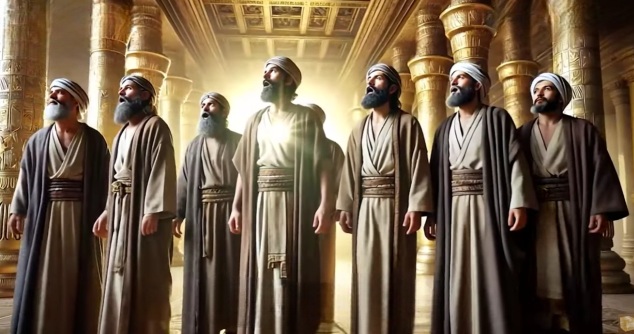
Imaginez la scène : les 12 frères, représentant les 12 permutations du Nom divin, se tenant ensemble, ayant annulé leur individualité.

À cet instant précis, ils effectuent un yi'houd (unification) et font descendre la Shékhina en terre d'Égypte !

C'est grâce à ce moment que la Shékhina put accompagner Israël durant les 210 ans d'exil égyptien, les protégeant jusqu'à la sortie avec un « grand butin ».

13. La Condition de la Présence Divine

L'Annulation de l'Ego — Hier et Aujourd'hui

Ce que nous apprenons de cette paracha est fondamental :

La Shékhina ne peut résider que là où l'ego est annulé. Tant qu'il y a de l'orgueil, de la division, des querelles entre frères — la Présence divine ne peut pas demeurer pleinement.

Les frères ont dû accomplir leur tikoun (la téchouva de la vente de Yossef), puis annuler leur ego personnel, pour mériter la descente de la Shékhina.

C'est un message pour toutes les générations : l'unité du peuple d'Israël et l'effacement de l'ego sont les conditions pour que la Shékhina réside parmi nous.

Baroukh Hachem léolam, Amen véAmen !

🎯 6 Actions Pratiques de la Paracha Vayigash

1️⃣ Annuler son Ego

Comme les frères devant la Shékhina, travaille chaque jour à diminuer ton orgueil. La Présence divine ne réside que dans un cœur humble. Commence par reconnaître tes erreurs sans te justifier.

2️⃣ Œuvrer pour l'Unité

Les 12 tribus devaient être unies pour faire descendre la Shékhina. Cherche activement à réconcilier, à créer des ponts entre les gens. Évite la médisance qui divise.

3️⃣ Prendre Responsabilité

Yéhouda s'est porté garant pour Binyamin. Engage-toi pour les autres, prends des responsabilités pour ta communauté, ta famille. Sois un « arev » — un garant.

4️⃣ Réparer le Passé

Les frères ont fait leur tikoun de la vente de Yossef. Y a-t-il une relation brisée que tu dois réparer ? Une injustice passée à corriger ? C'est le moment d'agir.

5️⃣ Puiser dans la Lumière

Les 36 bougies de Hanoukkah correspondent aux 36 heures de lumière primordiale. Étudie la Torah régulièrement — c'est ainsi que tu attires cette lumière cachée dans ta vie.

6️⃣ Diplomatie et Sagesse

Apprends de Yéhouda l'art de la négociation équilibrée. Dans tes conflits, sache alterner fermeté et douceur. Ne sois ni trop agressif ni trop soumis — trouve le juste milieu.

Paracha Vayigash • וַיִּגַּשׁ

The Annulment of the Ego and the Descent of the Shekhinah

Complete analysis of Paracha Vayigash: Yehuda's diplomacy, the restored unity of the 12 tribes, the descent of the Shekhinah to Egypt, and the parallel with the Kohen Gadol on Yom Kippur. According to the teaching of Mr. יהודה חימי (Yehuda Himi).

Introduction: Hanukkah and the Primordial Light

This study was given at the conclusion of Hanukkah, on the 8th day. The connection to our parasha is profound.

In the beginning, it is written: "Veha'aretz hayeta tohu vavohu vechoshekh al pnei tehom" — The earth was chaos and confusion, and darkness covered the abyss.

Our Sages teach that this verse alludes to the four exiles:

Tohu — The Babylonian exile

Vohu — The Persian-Median exile (the word "vayavhilu" recalls Haman)

Vechoshekh — The Greek exile, which sought to "darken the eyes of Israel"

Al pnei tehom — The Roman exile, from which we still suffer today

But immediately after comes the consolation: "Veruach Elokim merachefet al pnei hamayim" — The spirit of G-d hovered over the waters. This is the spirit of Mashiach that will dispel the darkness.

1. The 36 Candles and the 36 Hours

The Hidden Light of Creation

One of the Greek decrees was to forbid Torah study. Against this, Hashem gave us each year at Hanukkah the sparks of the Or Haganuz, the hidden light.

How long did this primordial light shine in the world? 36 hours.

Light was created on the first day. Adam was created on the sixth day, in the morning. From sunrise (זריחה) until sunset (שקיעה) = 12 hours. Then throughout Shabbat, the sun did not set — the first darkness only came at the end of Shabbat, adding 24 more hours. Total: 12 + 24 = 36 hours.

Adam became frightened by the darkness. Hashem showed him two stones, he rubbed them together and created fire. This is why we recite at the end of Shabbat: "Borei meorei ha'esh".

How many candles do we light on Hanukkah in total? 1+2+3+4+5+6+7+8 = 36 (not counting the shamash). These 36 candles correspond to the 36 hours of primordial light. We draw from this hidden light, for "Ner mitzvah veTorah or" — The candle is the commandment and the Torah is the light.

2. Yehuda's Diplomacy

A Masterclass in Negotiation

"Vayigash elav Yehuda vayomer bi adoni yedaber na avdecha davar be'oznei adoni ve'al yichar apecha be'avdecha ki kamocha keParo"

Yehuda approached him and said: "Please, my lord, let your servant speak a word in my lord's ears, and let not your anger burn against your servant, for you are like Pharaoh."

We witness here a lesson in diplomacy. How does Yehuda approach Yosef? He plays on a double register.

Linguistic reminder: In the Torah, "vayedaber" is harsh language, while "vayomer" is soft language.

The proof? "Ha'azinu hashamayim va'adabera" — Give ear, heavens, and I will speak (loudly, for the heavens are far). "Vetishma ha'aretz imrei fi" — And let the earth hear the words of my mouth (softly, for it is near).

3. The Play of Contrasts

Caress and Slap, Slap and Caress

Observe Yehuda's subtle game:

"Vayigash" — He approached. Onkelos translates "vekarev" — he came closer. But we also hear "krav" — battle! The Baal Haturim teaches: "Vayigash elav Yehuda" has the same gematria as "to fight with Yosef," and another gematria equivalent to "to appease him."

"Vayomer" — soft language

"Bi adoni" — supplicating

"Yedaber" — harsh language!

"Avdecha" — your servant (submissive)

"Be'oznei adoni" — in my lord's ears = he enters his personal space, at point-blank range!

When someone comes to speak "in your ear," they penetrate your four cubits — it's almost a threat. Yehuda approaches Yosef at point-blank range while saying "I am your servant" — alternating slap and caress.

4. "Ki Kamocha KeParo" — The Double Message

Compliment or Threat?

"For you are like Pharaoh" — How do we understand this phrase?

On the surface: a compliment — "You are as important to me as Pharaoh."

The hidden message according to the Midrash:

"Just as I can eliminate Pharaoh, I can eliminate you too. I'll liquidate both of you if necessary!"

Yehuda's entire conversation oscillates between gentleness and firmness, submission and threat. It is this tension that finally breaks Yosef.

5. What Breaks Yosef

The Restored Unity of the Brothers

Yehuda recounts that he guaranteed Binyamin's safety to their father: "Pen ereh bara asher yimtsa et avi" — "Lest I see the evil that would befall my father."

What breaks Yosef at this precise moment?

He hears for the first time that Yehuda, the king of Leah's family, has guaranteed Binyamin, who belongs to Rachel's family — Yosef's own brother!

Once, the brothers "could not speak peacefully with him" (velo yachelu dabro leshalom). They had thrown him into a pit. Now, all the brothers, under Yehuda's leadership, refuse to return without Binyamin.

This is the tikkun — the repair! Yosef understands that the brothers have done their teshuva. What was destroyed is now rebuilt.

6. The Central Question

Why Send the Egyptians Out?

"Velo yachol Yosef lehit'apek lechol hanitzavim alav vayikra hotzi'u chol ish me'alai" — Yosef could not contain himself before all who stood by him, and he cried: "Send everyone away from me!"

The Midrash explains: he did not want the Egyptians to see his brothers in their shame at the moment of revelation.

But then a difficulty arises:

"Vayiten et kolo bivchi vayishme'u Mitzrayim vayishma beit Paro"

He raised his voice in weeping, and the Egyptians heard, and Pharaoh's house heard.

Question: If the Egyptians heard everything from outside, what was the point of sending them out? The palace walls, like Oriental palaces, were thin as rice paper!

7. The First Reunion of the 12 Brothers

The Long-Awaited Moment

Let us reflect carefully: until this moment, the 12 brothers had never been reunited since Yosef's sale!

During the first descent: all the brothers except Binyamin. Yosef keeps Shimon as hostage. On the second descent: the brothers return with Binyamin, but Shimon is still in prison.

It is now, after Shimon has been freed and Binyamin is present, that for the first time in decades, the 12 sons of Yaakov are gathered in the same place!

Yosef knows this is the unique moment to accomplish something crucial.

8. The Divine Name and the 12 Tribes

The 12 Permutations of the Name

We know that the ineffable Name י-ה-ו-ה has 12 permutations (combinations of the 4 letters). Each permutation corresponds to one of the 12 tribes of Israel.

Yosef understands that this reunion is the opportunity to bring down the Shekhinah to Egypt!

For let us remember: Yaakov Avinu was afraid to descend to Egypt. Hashem told him: "Al tira mereda Mitzrayma, Anochi ered imcha" — Do not fear to descend to Egypt, I will go down with you.

Yaakov feared that the Shekhinah could not accompany them to this place of tumah (impurity). How can the Shekhinah descend to an impure place? Special conditions are required.

9. Why the Shekhinah Does Not Descend

The Obstacle of Impurity

The Shekhinah does not descend to a place of tumah. Egypt was the epitome of impurity — "ervat ha'aretz," the nakedness of the land.

Yet it was a necessary evil. Without the descent to Egypt, no formation of the people, no Exodus, no giving of the Torah.

Yosef tells the Egyptians to leave: "Hotzi'u chol ish me'alai"

This was not just to spare the brothers' shame — it was to eliminate the Egyptian tumah from the room so that the Shekhinah could descend!

10. The Parallel with the Kohen Gadol

"Vechol adam lo yihyeh be'Ohel Moed"

In Parashat Acharei Mot, concerning the Kohen Gadol's service on Yom Kippur, it is written:

"Vechol adam lo yihyeh be'Ohel Moed bevo'o lechaper bakodesh ad tzeito"

No person shall be in the Tent of Meeting when he comes to make atonement in the Holy Place, until his departure.

But wait! If "no person" should be present, how can the Kohen Gadol himself be there? The Kohen is certainly a person!

The answer: The Kohen Gadol must enter in a state where he has completely annulled his ego. He is no longer a "person" in the ordinary sense — he has become a pure vessel for divine service.

This is why he prepares for 7 days before Yom Kippur, to annul all personal thought. If he retained the slightest trace of ego, the Shekhinah would consume him!

11. The Double Meaning of the Verse

"Velo amad ish ito"

Let us reread our verse carefully. There is an apparent redundancy:

"Velo yachol Yosef lehit'apek... vayikra hotzi'u chol ish me'alai" — Send every man away from me.

"Velo amad ish ito behitvada Yosef el echav" — And no man stood with him when Yosef made himself known to his brothers.

"Hotzi'u chol ish" = The Egyptians went out (elimination of external tumah)

"Velo amad ish ito" = Even among the brothers, no one "stood" as an "ish," a person with an ego. They annulled their own existence!

Like the Kohen Gadol who enters the Holy of Holies having annulled his being, the 12 brothers, at that moment, erased their egos to allow the Shekhinah to descend.

12. The Perfect Union

The 12 Tribes United for the Shekhinah

Imagine the scene: the 12 brothers, representing the 12 permutations of the Divine Name, standing together, having annulled their individuality.

At that precise moment, they perform a yichud (unification) and bring down the Shekhinah to the land of Egypt!

It is thanks to this moment that the Shekhinah could accompany Israel during the 210 years of Egyptian exile, protecting them until the exodus with "great wealth."

13. The Condition for Divine Presence

The Annulment of the Ego — Then and Now

What we learn from this parasha is fundamental:

The Shekhinah can only dwell where the ego is annulled. As long as there is pride, division, quarrels between brothers — the Divine Presence cannot fully reside.

The brothers had to accomplish their tikkun (the teshuva for selling Yosef), then annul their personal ego, to merit the descent of the Shekhinah.

This is a message for all generations: the unity of the people of Israel and the effacement of the ego are the conditions for the Shekhinah to dwell among us.

Baruch Hashem le'olam, Amen ve'Amen!

🎯 6 Practical Actions from Paracha Vayigash

1️⃣ Annul Your Ego

Like the brothers before the Shekhinah, work each day to diminish your pride. The Divine Presence only dwells in a humble heart. Start by acknowledging your mistakes without justifying yourself.

2️⃣ Work for Unity

The 12 tribes had to be united to bring down the Shekhinah. Actively seek to reconcile, to build bridges between people. Avoid gossip that divides.

3️⃣ Take Responsibility

Yehuda guaranteed Binyamin's safety. Commit to others, take responsibilities for your community, your family. Be an "arev" — a guarantor.

4️⃣ Repair the Past

The brothers made their tikkun for selling Yosef. Is there a broken relationship you need to repair? A past injustice to correct? Now is the time to act.

5️⃣ Draw from the Light

The 36 Hanukkah candles correspond to the 36 hours of primordial light. Study Torah regularly — this is how you draw this hidden light into your life.

6️⃣ Diplomacy and Wisdom

Learn from Yehuda the art of balanced negotiation. In your conflicts, know how to alternate firmness and gentleness. Be neither too aggressive nor too submissive — find the middle ground.

פרשת ויגש • Paracha Vayigash

ביטול האגו וירידת השכינה

ניתוח מקיף של פרשת ויגש: הדיפלומטיה של יהודה, האחדות המחודשת של 12 השבטים, ירידת השכינה למצרים, וההקבלה לכהן הגדול ביום הכיפורים. על פי שיעורו של מר יהודה חימי.

הקדמה: חנוכה והאור הגנוז

השיעור הזה נמסר במוצאי חנוכה, ביום השמיני. הקשר לפרשתנו עמוק.

בראשית נאמר: « והארץ היתה תהו ובהו וחשך על פני תהום »

חז"ל מלמדים שהפסוק הזה רומז לארבע הגלויות:

תהו — גלות בבל

בהו — גלות מדי-פרס (המילה « ויבהילו » מזכירה את המן)

וחשך — גלות יוון, שביקשו « להחשיך עיניהם של ישראל »

על פני תהום — גלות רומי, שאנו סובלים ממנה עד היום

אבל מיד אחרי זה באה הנחמה: « ורוח אלקים מרחפת על פני המים » — זו רוחו של משיח שתגרש את החושך.

1. 36 הנרות ו-36 השעות

האור הגנוז של הבריאה

אחת מגזירות היוונים הייתה לאסור לימוד תורה. כנגד זה, ה' נתן לנו בכל שנה בחנוכה את ניצוצות האור הגנוז.

כמה זמן האיר האור הגנוז בעולם? 36 שעות.

האור נברא ביום הראשון. אדם נברא ביום השישי, בבוקר. מזריחת השמש עד שקיעתה = 12 שעות. ואז כל השבת לא שקעה השמש — החושך הראשון הגיע רק במוצאי שבת, עוד 24 שעות. סה"כ: 12 + 24 = 36 שעות.

אדם הראשון נבהל מהחושך. הקב"ה הראה לו שתי אבנים, הוא שפשף אותן ויצר אש. לכן אנו מברכים במוצאי שבת: « בורא מאורי האש ».

כמה נרות מדליקים בחנוכה בסך הכל? 1+2+3+4+5+6+7+8 = 36 (בלי השמש). 36 הנרות האלה כנגד 36 שעות האור הגנוז. אנו שואבים מהאור הגנוז, כי « כי נר מצוה ותורה אור ».

2. הדיפלומטיה של יהודה

שיעור אמן במשא ומתן

« ויגש אליו יהודה ויאמר בי אדני ידבר נא עבדך דבר באזני אדני ואל יחר אפך בעבדך כי כמוך כפרעה »

אנו עדים כאן לשיעור בדיפלומטיה. איך יהודה ניגש ליוסף? הוא משחק על שני רגיסטרים.

תזכורת לשונית: בתורה, « וידבר » הוא לשון קשה, בעוד « ויאמר » הוא לשון רכה.

ההוכחה? « האזינו השמים ואדברה » — תקשיבו שמים, ואני אדבר (בקול, כי השמים רחוקים). « ותשמע הארץ אמרי פי » — ותשמע הארץ דברי פי (בשקט, כי היא קרובה).

3. משחק הניגודים

סטירה וליטוף, ליטוף וסטירה

נתבונן במשחק העדין של יהודה:

« ויגש » — הוא התקרב. אונקלוס מתרגם « וקרב » — הוא התקרב. אבל שומעים גם « קרב » — מלחמה! בעל הטורים מלמד: « ויגש אליו יהודה » בגימטריה כמו « להלחם עם יוסף », וגימטריה אחרת שווה ל« להתפייס ».

« ויאמר » — לשון רכה

« בי אדני » — מתחנן

« ידבר » — לשון קשה!

« עבדך » — עבדך (נכנע)

« באזני אדני » — באוזני אדוני = הוא נכנס למרחב האישי שלו, לטווח אפס!

כשמישהו בא לדבר « באוזן », הוא פורץ לתוך ארבע האמות שלך — זה כמעט איום. יהודה מתקרב ליוסף לטווח אפס תוך כדי שהוא אומר « אני עבדך » — סטירה וליטוף לסירוגין.

4. « כי כמוך כפרעה » — המסר הכפול

מחמאה או איום?

« כי כמוך כפרעה » — איך מבינים את המשפט הזה?

על פני השטח: מחמאה — « אתה בשבילי חשוב כמו פרעה ».

המסר הנסתר לפי המדרש:

« כמו שאני יכול לחסל את פרעה, אני יכול לחסל גם אותך. אני גומר את שניכם אם צריך! »

כל השיחה של יהודה נעה בין רכות לתקיפות, כניעה ואיום. המתח הזה הוא שבסופו של דבר שובר את יוסף.

5. מה שובר את יוסף

האחדות המחודשת של האחים

יהודה מספר שהוא ערב לבנימין אצל אביהם: « פן אראה ברע אשר ימצא את אבי »

מה שובר את יוסף ברגע המדויק הזה?

הוא שומע לראשונה שיהודה, המלך של משפחת לאה, ערב לבנימין, ששייך למשפחת רחל — אחיו של יוסף!

פעם, האחים « לא יכלו דברו לשלום ». הם זרקו אותו לבור. עכשיו, כל האחים, בהנהגת יהודה, מסרבים לחזור בלי בנימין.

זה התיקון! יוסף מבין שהאחים עשו תשובה. מה שנהרס עכשיו נבנה מחדש.

6. השאלה המרכזית

למה להוציא את המצרים?

« ולא יכל יוסף להתאפק לכל הנצבים עליו ויקרא הוציאו כל איש מעלי »

המדרש מסביר: הוא לא רצה שהמצרים יראו את אחיו בבושתם ברגע ההתוודעות.

אבל אז מתעוררת קושיה:

« ויתן את קלו בבכי וישמעו מצרים וישמע בית פרעה »

הוא נתן קולו בבכי, והמצרים שמעו, ובית פרעה שמע.

שאלה: אם המצרים שמעו הכל מבחוץ, מה הטעם להוציא אותם? קירות הארמון, כמו ארמונות מזרחיים, היו דקים כנייר אורז!

7. הפגישה הראשונה של 12 האחים

הרגע המיוחל

נחשוב היטב: עד הרגע הזה, 12 האחים מעולם לא התאחדו יחד מאז מכירת יוסף!

בירידה הראשונה: כל האחים חוץ מבנימין. יוסף משאיר את שמעון כערובה. בירידה השנייה: האחים חוזרים עם בנימין, אבל שמעון עדיין בכלא.

עכשיו, אחרי ששמעון שוחרר ובנימין נוכח, לראשונה מזה עשרות שנים, 12 בני יעקב מאוחדים באותו מקום!

יוסף יודע שזה הרגע הייחודי להשיג משהו קריטי.

8. שם ה' ו-12 השבטים

12 צירופי השם

אנו יודעים ששם הוי"ה י-ה-ו-ה יש לו 12 צירופים (קומבינציות של 4 האותיות). כל צירוף מקביל לאחד מ-12 שבטי ישראל.

יוסף מבין שהאיחוד הזה הוא ההזדמנות להוריד את השכינה למצרים!

כי נזכור: יעקב אבינו פחד לרדת למצרים. ה' אמר לו: « אל תירא מרדה מצרימה, אנכי ארד עמך »

יעקב חשש שהשכינה לא תוכל ללוות אותם למקום של טומאה. איך מורידים שכינה למקום טמא? צריך תנאים מיוחדים.

9. למה השכינה לא יורדת

המכשול של הטומאה

השכינה לא יורדת למקום של טומאה. מצרים הייתה שיא הטומאה — « ערות הארץ ».

ובכל זאת, זה היה הכרח. בלי הירידה למצרים, אין היווצרות העם, אין יציאת מצרים, אין מתן תורה.

יוסף אומר למצרים לצאת: « הוציאו כל איש מעלי »

זה לא היה רק כדי לחסוך את בושת האחים — זה היה כדי לסלק את הטומאה המצרית מהחדר כדי שהשכינה תוכל לרדת!

10. ההקבלה לכהן הגדול

« וכל אדם לא יהיה באהל מועד »

בפרשת אחרי מות, לגבי עבודת הכהן הגדול ביום הכיפורים, כתוב:

« וכל אדם לא יהיה באהל מועד בבאו לכפר בקדש עד צאתו »

אבל רגע! אם « כל אדם » לא יהיה, איך הכהן הגדול עצמו יכול להיות שם? הכהן הוא בוודאי אדם!

התשובה: הכהן הגדול חייב להיכנס במצב שבו הוא ביטל לגמרי את האגו שלו. הוא כבר לא « אדם » במובן הרגיל — הוא הפך לכלי טהור לעבודת ה'.

לכן הוא מתכונן 7 ימים לפני יום הכיפורים, לבטל כל מחשבה אישית. אם היה נשאר בו שמץ של אגו, השכינה הייתה שורפת אותו!

11. המשמעות הכפולה של הפסוק

« ולא עמד איש אתו »

נקרא שוב את הפסוק בעיון. יש כפילות לכאורה:

« ולא יכל יוסף להתאפק... ויקרא הוציאו כל איש מעלי »

« ולא עמד איש אתו בהתודע יוסף אל אחיו »

« הוציאו כל איש » = המצרים יצאו (סילוק הטומאה החיצונית)

« ולא עמד איש אתו » = גם בין האחים, אף אחד לא « עמד » כ« איש », כאדם עם אגו. הם ביטלו את עצמם!

כמו הכהן הגדול שנכנס לקודש הקודשים כשהוא מבטל את עצמו, 12 האחים, באותו רגע, מחקו את האגו שלהם כדי לאפשר לשכינה לרדת.

12. האיחוד המושלם

12 השבטים מאוחדים למען השכינה

דמיינו את הסצנה: 12 האחים, המייצגים את 12 צירופי שם ה', עומדים יחד, מבטלים את האינדיבידואליות שלהם.

באותו רגע מדויק, הם עושים יחוד ומורידים את השכינה לארץ מצרים!

בזכות הרגע הזה, השכינה יכלה ללוות את ישראל במשך 210 שנות הגלות המצרית, ולהגן עליהם עד היציאה ב« רכוש גדול ».

13. התנאי לנוכחות האלוקית

ביטול האגו — אז והיום

מה שאנו לומדים מהפרשה הזו הוא יסודי:

השכינה יכולה לשכון רק במקום שבו האגו מבוטל. כל עוד יש גאווה, פילוג, מריבות בין אחים — השכינה לא יכולה לשכון במלואה.

האחים היו צריכים לעשות את התיקון שלהם (תשובה על מכירת יוסף), ואז לבטל את האגו האישי, כדי לזכות בירידת השכינה.

זו הודעה לכל הדורות: אחדות עם ישראל וביטול האגו הם התנאים לכך שהשכינה תשכון בינינו.

ברוך ה' לעולם אמן ואמן!

🎯 6 פעולות מעשיות מפרשת ויגש

1️⃣ לבטל את האגו

כמו האחים לפני השכינה, עבוד כל יום להקטין את הגאווה שלך. השכינה שורה רק בלב עניו. התחל בלהודות בטעויות בלי להצטדק.

2️⃣ לפעול למען האחדות

12 השבטים היו צריכים להתאחד כדי להוריד את השכינה. חפש באופן פעיל לפייס, לבנות גשרים בין אנשים. הימנע מלשון הרע שמפלג.

3️⃣ לקחת אחריות

יהודה ערב לבנימין. התחייב למען אחרים, קח אחריות על הקהילה שלך, המשפחה שלך. היה « ערב ».

4️⃣ לתקן את העבר

האחים עשו את התיקון שלהם על מכירת יוסף. האם יש מערכת יחסים שבורה שאתה צריך לתקן? עוול מהעבר לתקן? זה הזמן לפעול.

5️⃣ לשאוב מהאור

36 נרות חנוכה מקבילים ל-36 שעות האור הגנוז. למד תורה באופן קבוע — כך אתה מושך את האור הגנוז הזה לחייך.

6️⃣ דיפלומטיה וחכמה

למד מיהודה את אמנות המשא ומתן המאוזן. בסכסוכים שלך, דע לסרוג בין תקיפות לרכות. אל תהיה תוקפני מדי ולא כנוע מדי — מצא את האמצע.