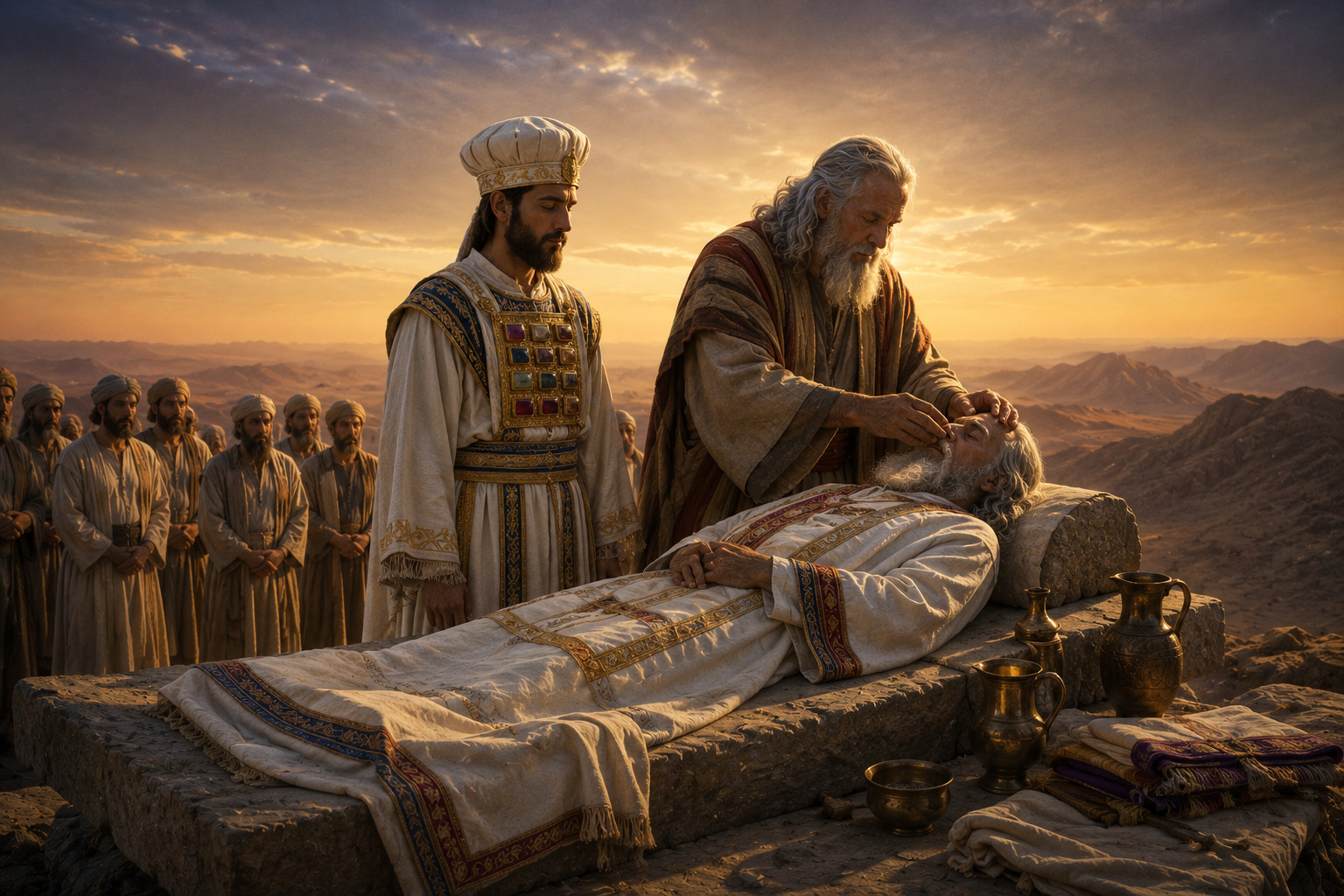
אַהֲרֹן נִפְטָר בְּהֹר הָהָר, וְהַתּוֹרָה מְסַפֶּרֶת זֹאת פַּעֲמַיִם: בְּחֻקַּת — בְּלִי תַּאֲרִיךְ, וּבְמַסְעֵי — עִם הַתַּאֲרִיךְ הַמְּדֻיָּק: רֹאשׁ חֹדֶשׁ אָב, שְׁנַת הָאַרְבָּעִים.
אַהֲרֹן הוּא הַיָּחִיד בַּחֻמָּשׁ שֶׁתַּאֲרִיךְ פְּטִירָתוֹ נֶאֱמַר בְּפֵרוּשׁ — אֲפִלּוּ מֹשֶׁה רַק בְּרֶמֶז (ז׳ אֲדָר). וּפָרָשַׁת מַסְעֵי נִקְרֵאת תָּמִיד סָמוּךְ לְיוֹם הַזִּכָּרוֹן שֶׁלּוֹ.
רֹאשׁ חֹדֶשׁ אָב — וְהָרֶמֶז: אַהֲרֹן “אוֹהֵב שָׁלוֹם וְרוֹדֵף שָׁלוֹם”, וּתְרוּפָתוֹ הִיא הַתִּקּוּן לְשִׂנְאַת חִנָּם שֶׁבִּגְלָלָהּ חָרַב הַמִּקְדָּשׁ.
עִנְיַן פְּטִירַת אַהֲרֹן מוֹפִיעַ פַּעֲמַיִם בְּסֵפֶר בְּמִדְבָּר: פַּעַם אַחַת בְּפָרָשָׁתֵנוּ, חֻקַּת — שָׁם מְסֻפָּר עַל פְּטִירָתוֹ; וְשׁוּב בְּפָרָשַׁת מַסְעֵי, בְּתוֹךְ רְשִׁימַת הַמַּסָּעוֹת. הַחֲזָרָה הַזֹּאת אֵינָהּ מִקְרִית.
מֹשֶׁה מַעֲלֶה אֶת אַהֲרֹן וְאֶת אֶלְעָזָר בְּנוֹ אֶל הֹר הָהָר, עַל גְּבוּל אֱדוֹם. שָׁם נִפְטָר אַהֲרֹן, “וַיִּבְכּוּ אֶת אַהֲרֹן שְׁלֹשִׁים יוֹם כֹּל בֵּית יִשְׂרָאֵל”. אַךְ כָּאן, בְּחֻקַּת — אֵין תַּאֲרִיךְ.
הַחֹדֶשׁ הַחֲמִישִׁי לְפִי הַתּוֹרָה (נִיסָן רִאשׁוֹן) הוּא אָב — וּבְאֶחָד לַחֹדֶשׁ, הֲרֵי זֶה רֹאשׁ חֹדֶשׁ אָב. הַמְּיֻחָד: אַהֲרֹן הוּא הַיָּחִיד מִכָּל הַדְּמֻיּוֹת בַּחֻמָּשׁ שֶׁנֶּאֱמַר בְּפֵרוּשׁ תַּאֲרִיךְ פְּטִירָתוֹ — לֹא הָאָבוֹת, לֹא יוֹסֵף, וַאֲפִלּוּ מֹשֶׁה רַק בְּרֶמֶז.
פָּרָשַׁת מַטּוֹת-מַסְעֵי נִקְרֵאת תָּמִיד בְּשַׁבָּת הַסְּמוּכָה לְרֹאשׁ חֹדֶשׁ אָב. לָכֵן הַתּוֹרָה חוֹזֶרֶת עַל פְּטִירַת אַהֲרֹן בְּמַסְעֵי — כְּדֵי שֶׁבְּשַׁבָּת הַסְּמוּכָה לְיוֹם פְּטִירָתוֹ נְדַבֵּר בְּעִנְיָנוֹ. זוֹ הַהַזְכָּרָה שֶׁלּוֹ.
הֵיכָן קוֹרְאִים עַל מֹשֶׁה סָמוּךְ לְיוֹם פְּטִירָתוֹ (ז׳ אֲדָר)? בְּפָרָשַׁת תְּצַוֶּה — וְדַוְקָא בָּהּ שֵׁם מֹשֶׁה אֵינוֹ מוֹפִיעַ כְּלָל, הַפָּרָשָׁה הַיְּחִידָה מֵאָז לֵדָתוֹ. הַמִּדְרָשׁ: מִשּׁוּם שֶׁאָמַר “מְחֵנִי נָא מִסִּפְרְךָ אֲשֶׁר כָּתָבְתָּ”.
קֻשְׁיָה: מֹשֶׁה אָמַר “מְחֵנִי” בְּכִי תִשָּׂא, שֶׁאַחֲרֵי תְּצַוֶּה. הַיִּשּׁוּב: “מִסִּפְרְךָ” — מֵהַסֵּפֶר שֶׁמִּסְפָּרוֹ כ׳ (עֶשְׂרִים), וּתְצַוֶּה הִיא הַפָּרָשָׁה הָעֶשְׂרִים מִבְּרֵאשִׁית. וְהַשָּׂכָר מִדָּה כְּנֶגֶד מִדָּה: דַּוְקָא בִּגְלַל הֶעְדֵּר שְׁמוֹ, כָּל דַּרְשָׁן בָּעוֹלָם שׁוֹאֵל “לָמָּה אֵין כָּאן מֹשֶׁה?” — וּמַזְכִּיר אוֹתוֹ סָמוּךְ לְיוֹם פְּטִירָתוֹ. הַהֶעְדֵּר הוּא הַהַזְכָּרָה הַגְּדוֹלָה בְּיוֹתֵר.
הַמִּקְדָּשׁ הַשֵּׁנִי חָרַב בְּתִשְׁעָה בְּאָב בִּגְלַל שִׂנְאַת חִנָּם. אַהֲרֹן — אוֹהֵב שָׁלוֹם וְרוֹדֵף שָׁלוֹם, מְקָרֵב לַתּוֹרָה. יוֹם פְּטִירָתוֹ בְּרֹאשׁ הַחֹדֶשׁ מַזְכִּיר לָנוּ אֶת הַתְּרוּפָה: דֶּרֶךְ אַהֲרֹן הִיא הַתִּקּוּן לַשִּׂנְאָה. כְּבָר בְּרֹאשׁ חֹדֶשׁ אָב מַתְחִיל הַתִּקּוּן שֶׁיָּבִיא אֶת הַמִּקְדָּשׁ הַשְּׁלִישִׁי — וְאָב יֵהָפֵךְ לְחַג.
לִכְאוֹרָה אִי אֶפְשָׁר: כְּדֵי לְהַלְבִּישׁ אֶת הַחֹשֶׁן עַל אֶלְעָזָר, צָרִיךְ שֶׁיִּהְיֶה כְּבָר לָבוּשׁ מִתַּחַת. הָרַמְבַּ״ן (יַלְקוּט שִׁמְעוֹנִי): נֵס — מִתַּחַת לִבְגָדָיו כְּבָר הִתְלַבֵּשׁ אַהֲרֹן בְּבִגְדֵי שְׁכִינָה, מוּכָן לָעוֹלָם הַבָּא. שִׁיטָה שְׁנִיָּה: אַהֲרֹן בִּשְׁמוֹנָה בְּגָדִים (גָּמַר הָעֲבוֹדָה) וְאֶלְעָזָר בְּאַרְבָּעָה — מֹשֶׁה רַק הֶעֱבִיר אֶת אַרְבַּעַת הַבְּגָדִים הַמְּיֻחָדִים (מְעִיל, אֵפוֹד, חֹשֶׁן, צִיץ). וְהַמְּעִיל הָאָרֹךְ אֵינוֹ בְּעָיָה — מְמֵילָא צָרִיךְ לְהַגִּיעַ לָרִצְפָּה (פַּעֲמוֹן וְרִמּוֹן). נִשְׁמָתוֹ נֶאֶסְפָה בִּשְׁלֵמוּת.
🎯 בְּחַן אֶת עַצְמְךָ
חֲמֵשׁ שְׁאֵלוֹת עַל הַשִּׁעוּר
🎯 הַתּוֹצָאָה שֶׁלְּךָ
📨 קַבֵּל אֶת הַשִּׁעוּר הַשְּׁבוּעִי בַּמֵּייל🕊️ דֶּרֶךְ אַהֲרֹן
הֱוֵי מִתַּלְמִידָיו שֶׁל אַהֲרֹן — רְדֹף שָׁלוֹם וְקָרֵב לֵב אֶל לֵב.
❤️ אַהֲבַת חִנָּם
נַגֵּד אֶת חֻרְבַּן הַמִּקְדָּשׁ — בְּמַעֲשֶׂה אֶחָד שֶׁל אַהֲבַת חִנָּם הַשָּׁבוּעַ.
🗓️ זֵכֶר צַדִּיק
סָמוּךְ לְרֹאשׁ חֹדֶשׁ אָב — לְמַד מַשֶּׁהוּ עַל אַהֲרֹן הַכֹּהֵן.
✨ צִפִּיָּה לַמִּקְדָּשׁ
חַזֵּק אֶת הַתִּקְוָה שֶׁאָב יֵהָפֵךְ לְחַג — בְּבִנְיַן הַמִּקְדָּשׁ הַשְּׁלִישִׁי.
שלום בית — הפה בבית
מָה אַתָּה מְלַחֵשׁ לִילָדֶיךָ? לְבֶן זוּגְךָ? גַּלֵּה כַּרְטִיס שָׁלוֹם בַּיִת.
כָּל הַפָּרָשִׁיּוֹת
כָּל שִׁעוּרֵי מ. יְהוּדָה חִימִי — מִבְּרֵאשִׁית עַד דְּבָרִים וְעַד חַגֵּי הַשָּׁנָה.
📚 כל הפרשיותספרים
חכמת התורה בפורמט תריילר — הוצאת גאולה.
פירוש חלומות
חָלַמְתָּ עַל אַיָּלָה? עַל אָרוֹן? בְּדֹק אֶת הַמַּשְׁמָעוּת לְפִי רב אלמולי.
🌙 פירוש חלומות
אֲנִי מַאֲשִׁים אֶת הָאֻמּוֹת
הַמְּזִמּוֹת הַמְּסֻכָּנוֹת בְּיוֹתֵר הֵן אֵלּוּ שֶׁאֵינְךָ רוֹאֶה. אֱמֶת קְבוּרָה, כֹּחוֹת הַמְבַקְּשִׁים לְהַשְׁתִּיקָהּ — וְאִישׁ אֶחָד מוּל הָאֻמּוֹת.
📕 לקריאת הספר · ₪36.90
Aaron dies at Mount Hor, and the Torah tells it twice: in Chukat — with no date, and in Massei — with the exact date: Rosh Chodesh Av, the fortieth year.
Aaron is the only figure in the Chumash whose date of death is stated explicitly — even Moses only by a hint (7 Adar). And Parashat Massei is always read close to his yahrzeit.
Rosh Chodesh Av — and the hint: Aaron “loved peace and pursued peace,” and his way is the remedy for the baseless hatred that destroyed the Temple.
The passing of Aaron appears twice in the book of Bamidbar: once in our parasha, Chukat — where his death is told; and again in Parashat Massei, within the list of journeys. This repetition is no accident.
Moses brings Aaron and his son Elazar up Mount Hor, on the border of Edom. There Aaron passes, and “all the house of Israel wept for Aaron thirty days.” Yet here, in Chukat — there is no date.
The fifth month (counting Nissan as first) is Av — and the first of the month is Rosh Chodesh Av. What is remarkable: Aaron is the only figure in the whole Chumash whose date of death is stated outright — not the patriarchs, not Yosef, and even Moses only by a hint.
Parashat Matot-Massei is always read on the Shabbat near Rosh Chodesh Av. So the Torah repeats Aaron’s death in Massei — so that on the Shabbat closest to the day of his passing, we speak of him. That is his remembrance.
Where do we read of Moses near the day of his passing (7 Adar)? In Parashat Tetzaveh — and there, of all places, Moses’ name does not appear, the only parasha since his birth. The midrash: because he said, “Erase me from Your book that You have written.”
A difficulty: Moses said “erase me” in Ki Tisa, which comes after Tetzaveh. The resolution: “from Your book” hints at the book numbered kaf (twenty) — and Tetzaveh is the twentieth parasha from Bereshit. The reward, measure for measure: precisely because his name is absent, every darshan in the world asks “why is Moses missing here?” — and so mentions him near his yahrzeit. The absence is the greatest remembrance of all.
The Second Temple was destroyed on the Ninth of Av because of baseless hatred. Aaron loved peace, pursued peace, and brought people close to Torah. His passing at the start of the month reminds us of the remedy: Aaron’s way is the repair for that hatred. Already on Rosh Chodesh Av the tikkun begins that will bring the Third Temple — and turn Av into a festival.
Seemingly impossible: to place the breastplate on Elazar, he must already be dressed beneath. The Ramban (citing Yalkut Shimoni): a miracle — beneath his garments Aaron was already clothed in “garments of the Shechina,” ready for the World to Come. A second approach: Aaron wore the eight garments (having finished the service) and Elazar four — Moses simply transferred the four special ones (robe, ephod, breastplate, tzitz). The long robe is no problem — it must reach the floor anyway (the bells and pomegranates). His soul was gathered in wholeness.
🎯 Test Yourself
Five questions on the shiur
🎯 Your Result
📨 Get the weekly shiur by email🕊️ The Way of Aaron
Be of the disciples of Aaron — pursue peace and bring heart close to heart.
❤️ Baseless Love
Counter the Temple’s destruction — with one act of baseless love this week.
🗓️ Remembering a Tzaddik
Near Rosh Chodesh Av — learn something about Aaron the Kohen.
✨ Awaiting the Temple
Strengthen the hope that Av will become a festival — with the Third Temple.
Shalom Bayit — The Mouth at Home
What do you whisper to your children? To your spouse? Reveal a Shalom Bayit card.
Gematria — Rav Menashe
Hidden connections in the names according to Rav Menashe zatsal.
🔢 Gematria CourseTorah Study
Dig deeper into the commentary of Rashi and the Zohar on the parashah of the week.
📝 Beith HamidrachAll Parashot
All shiurim of M. Yéhouda Himi — from Bereshit to Devarim and the festivals.
📚 All ParashotBooks
Torah wisdom in thriller format — Éditions Gueoula.
Dream Interpretation
Did you dream of a doe? Of an Ark? Check the meaning according to Rav Almoli.
🌙 Dreams
J’accuse the Nations
The most dangerous plots are the ones you never see coming. A buried truth, powers that want it silenced — and one man standing against the nations.
📕 Read the Book · $9.90
Aharon meurt au mont Hor, et la Torah le raconte deux fois : dans Houkat — sans date, et dans Massei — avec la date exacte : Roch ‘Hodech Av, la quarantième année.
Aharon est le seul personnage du ‘Houmach dont la date de pétira est donnée explicitement — même Moché ne l’est que par allusion (7 Adar). Et la paracha Massei se lit toujours près de son yahrzeit.
Roch ‘Hodech Av — et l’allusion : Aharon « aimait la paix et poursuivait la paix », et sa voie est le remède à la haine gratuite qui détruisit le Temple.
La pétira d’Aharon apparaît deux fois dans le livre de Bamidbar : une fois dans notre paracha, Houkat — où sa mort est racontée ; et de nouveau dans la paracha Massei, au sein de la liste des étapes. Cette répétition n’est pas un hasard.
Moché fait monter Aharon et son fils Elazar au mont Hor, à la frontière d’Édom. Là, Aharon s’éteint, et « toute la maison d’Israël pleura Aharon trente jours ». Mais ici, dans Houkat — pas de date.
Le cinquième mois (Nissan étant le premier) est Av — et le premier du mois, c’est Roch ‘Hodech Av. Ce qui est remarquable : Aharon est le seul personnage de tout le ‘Houmach dont la date de mort est donnée explicitement — ni les patriarches, ni Yossef, et même Moché seulement par allusion.
La paracha Matot-Massei se lit toujours le Chabbat proche de Roch ‘Hodech Av. La Torah répète donc la pétira d’Aharon dans Massei — afin que le Chabbat le plus proche du jour de sa disparition, on parle de lui. C’est sa hazkara.
Où lit-on Moché près du jour de sa pétira (7 Adar) ? Dans la paracha Tetsavé — et là, justement, le nom de Moché n’apparaît pas, la seule paracha depuis sa naissance. Le midrach : parce qu’il a dit « efface-moi de Ton livre que Tu as écrit ».
Une difficulté : Moché dit « efface-moi » dans Ki Tissa, qui vient après Tetsavé. La résolution : « de Ton livre » fait allusion au livre numéroté khaf (vingt) — et Tetsavé est la vingtième paracha depuis Béréchit. La récompense, mesure pour mesure : c’est précisément parce que son nom est absent que chaque darchan au monde demande « pourquoi Moché manque-t-il ici ? » — et le mentionne ainsi près de son yahrzeit. L’absence est la plus grande des hazkarot.
Le second Temple fut détruit le neuf Av à cause de la haine gratuite. Aharon aimait la paix, la poursuivait, et rapprochait de la Torah. Sa pétira au début du mois nous rappelle le remède : la voie d’Aharon est la réparation de cette haine. Dès Roch ‘Hodech Av commence le tikoun qui amènera le troisième Temple — et fera d’Av une fête.
En apparence impossible : pour poser le pectoral sur Elazar, il faut qu’il soit déjà vêtu en dessous. Le Ramban (citant le Yalkout Chimoni) : un miracle — sous ses habits, Aharon était déjà revêtu de « vêtements de la Chékhina », prêt pour le Monde à Venir. Une seconde approche : Aharon portait les huit vêtements (le service achevé) et Elazar quatre — Moché ne transféra que les quatre spéciaux (méïl, éphod, pectoral, tsits). Le méïl long n’est pas un problème — il doit de toute façon toucher le sol (les clochettes et grenades). Son âme fut recueillie dans la plénitude.
🎯 Teste-toi
Cinq questions sur le chiour
🎯 Ton résultat
📨 Reçois le chiour hebdomadaire par email🕊️ La voie d’Aharon
Sois des disciples d’Aharon — poursuis la paix et rapproche les cœurs.
❤️ L’amour gratuit
Contre la destruction du Temple — par un acte d’amour gratuit cette semaine.
🗓️ Mémoire d’un tsaddik
Près de Roch ‘Hodech Av — apprends quelque chose sur Aharon le Cohen.
✨ Attendre le Temple
Renforce l’espoir qu’Av devienne une fête — avec le troisième Temple.
Chalom Bayit — La bouche à la maison
Que chuchotes-tu à tes enfants ? À ton conjoint ? Découvre une carte Chalom Bayit.
Guématria — Rav Menaché
Connexions cachées dans les noms selon Rav Menaché zatsal.
🔢 Cours de guématriaÉtude Torah
Approfondis le commentaire de Rachi et le Zohar sur la paracha de la semaine.
📝 Beith HamidrachToutes les Parachiot
Tous les cours de M. Yéhouda Himi — de Béréchit à Devarim et les fêtes.
📚 Toutes les ParachiotLivres
La sagesse de la Torah en format thriller — Éditions Gueoula.
Interprétation des rêves
As-tu rêvé d’une biche ? D’une Arche ? Vérifie sa signification selon Rav Almoli.
🌙 RêvesBoîte à idées
Une idée, une remarque, une suggestion pour le site ? Partage-la avec nous.
💡 Boîte à idées

J’accuse les Nations
Les complots les plus dangereux sont ceux qu’on ne voit pas venir. Une vérité enfouie, des puissances qui veulent l’étouffer — et un homme seul face aux nations.
📕 Lire le livre · 9,90 €