
The humblest man who ever lived would not forgive Korah — he even begged God not to accept the rebels’ prayer. First answer: when Datan and Aviram called Egypt “a land flowing with milk and honey” and accused Moses of never bringing them to the Land, they spurned God Himself. The verb na’atzu appears only twice in the Torah — here and at the sin of the spies. To refuse the Land is to reject God; Moses was fighting God’s war, not defending his ego.
Second answer reaches back to the beginning: משה (345) minus קרח (308) = 37 = הבל, Abel. Moses carried the soul of Abel; Cain’s broken soul was repaired across three lifetimes — Nefesh in the Egyptian buried in the sand, Ruach in Yitro “the Kenite” who returns Tzipporah, Neshama in Korah himself. The proof it worked: the sons of Korah did not die — they became the Temple singers of the Psalms.
📖 Read the full shiurWhy the Genealogy Stops at Levi
The Torah opens: “Korah son of Yitzhar, son of Kehat, son of Levi.” Usually it names a man and his father and stops. Here it already climbed up to Levi — so why not finish with “son of Yaakov”? Why deliberately omit Yaakov?
Rashi answers: Yaakov asked not to be mentioned. In his blessing to Shimon and Levi he said, “let my soul not enter their council, let my honor not be united with their assembly.” With ruach ha-kodesh he foresaw Korah’s assembly — vayikahalu al Moshe — and asked that his name not be attached to this strife.
The omission is itself the teaching: a tzaddik wants no part of a quarrel — not even his own great-grandson’s. Korah descends from Levi, but Yaakov pulls his name out of the lineage of dispute.
בְּסֹדָם אַל תָּבֹא נַפְשִׁי בִּקְהָלָם אַל תֵּחַד כְּבֹדִי · Bereshit 49:6
Korah’s Claim — and Moses Falls on His Face
What was Korah’s actual argument? It sounds almost pious. Why does it deserve such a response?
Korah and his assembly confront Moshe and Aharon: “Rav lakhem — you take too much! The whole community is holy, all of them, and God is among them. Why then do you raise yourselves above the congregation of God?” His proof is strong: God Himself said “you shall be to Me a kingdom of priests and a holy nation.” And Moses heard, and fell on his face.
The claim is seductive: “we are all holy, all equal.” But equality of holiness does not erase God’s appointment. Moshe never sought leadership — he argued with God at the burning bush. Aharon never asked to be Kohen Gadol. The choice was God’s alone.
✦ To rebel against the appointment is to rebel against the One who appointed. That is the crack hidden beneath the holy-sounding words.
רַב לָכֶם כִּי כָל הָעֵדָה כֻּלָּם קְדֹשִׁים וּבְתוֹכָם ה’ · Bamidbar 16:3
The Words That Broke Him — “Milk and Honey”
Moses stays patient through the whole confrontation — until one sentence. What words finally made him burn with anger, vayichar le-Moshe me’od?
Moses summons Datan and Aviram. They refuse: “We will not come up! Is it a small thing that you brought us up from a land flowing with milk and honey to kill us in the wilderness? … You have not even brought us to a land flowing with milk and honey.” Read it twice: they call Egypt “a land flowing with milk and honey” — the phrase reserved everywhere for the Land of Israel — and they deny the true Land was ever the goal. At that point Moses can bear it no longer.
Complain about food, water, meat — all forgivable. But to crown Egypt with the title of the Holy Land, and to erase Israel as the destination — that is something else entirely.
✦ Moses says it plainly: ki ni’atzu ha-anashim et Hashem — these men have spurned God. The verb na’atzu appears only twice in the whole Torah: here, and at the sin of the spies. To refuse the Land is to spurn God. This is Answer One: Moses is not defending himself — he is fighting God’s war.
הַמְעַט כִּי הֶעֱלִיתָנוּ מֵאֶרֶץ זָבַת חָלָב וּדְבַשׁ · Bamidbar 16:13
Answer Two — Subtract Korah from Moses
There is a second, deeper answer — hidden in a startling calculation. What remains when you subtract Korah from Moses?
משה in gematria = 345 (mem 40, shin 300, hei 5). קרח = 308 (kuf 100, resh 200, het 8 — written without a vav in the Torah). 345 − 308 = 37. And 37 is the gematria of הבל — Abel (hei 5, bet 2, lamed 30). Remove Korah from Moses, and what is left is Abel.
This is the hidden foundation of the whole episode. To understand why Moses behaves as he does, we must travel all the way back — to the very first murder in human history.
Moses is a gilgul — a reincarnation — of Hevel, Abel. The hint is in his very name: מ.ש.ה — Moshe, Shet, Hevel: the soul of Abel passed through Shet, and then into Moshe.
Cain and Abel — the Sealed Verse
The Torah never states why Cain rose up and killed Abel. “And it came to pass when they were in the field…” — and then, the murder. Over what did they fight?
The verse is sealed: “Cain spoke to Abel his brother; and it came to pass when they were in the field, that Cain rose up against Abel his brother and killed him.” What did Cain say? The Torah does not tell us. The Midrash fills the silence: they fought over isqei isha — a matter of a woman.
One Midrash: Abel was born with two twin sisters, Cain with one. Cain came to Abel: “I am the firstborn — give me one of yours; the firstborn takes a double portion.” Abel refused: “the two born with me stay with me.” Over this Cain rose and killed him — and seized one sister by force.
✦ The murder shattered Cain on every level — his Nefesh, his Ruach, and his Neshama were all damaged. All three would one day need repair.
וַיָּקָם קַיִן אֶל הֶבֶל אָחִיו וַיַּהַרְגֵהוּ · Bereshit 4:8
Tikkun, Level One — the Egyptian in the Sand
Where do Cain and Abel first meet again, lifetimes later? And how does Moses begin the repair?
In Egypt. “He saw an Egyptian striking a Hebrew, one of his brothers.” The Nefesh of Cain had reincarnated into that Egyptian. Moses strikes him down and hides him in the sand — vayitmenehu ba-chol. With this act, the Nefesh of Cain is repaired.
The hint is in the very words spoken to Cain at the first murder: “the voice of your brother’s blood cries to Me from the ground — the ground that opened its mouth to take your brother’s blood from your hand.” Earth and blood — and now Moses takes the Egyptian and conceals him in the earth.
וַיַּךְ אֶת הַמִּצְרִי וַיִּטְמְנֵהוּ בַּחוֹל · Shemot 2:12
Tikkun, Level Two — Yitro Returns Tzipporah
The Ruach of Cain leaves the Egyptian. Where does it go — and how is the second wound healed?
It passes into Yitro — called Yitro ha-Kini. Listen to the name: Ké-ni, the root of Kayin, Cain. Yitro carried sparks of Cain. And what does Yitro do? “He gave Tzipporah his daughter to Moses” as a wife. Cain (Yitro) returns to Abel (Moses) the woman he once seized by force. The theft of the first murder is undone.
Each meeting repairs a piece of the original crime: the murder (the Egyptian) and the woman taken by force (Tzipporah restored). Two levels healed; one still remains.
✦ The Ruach finds its tikkun not through violence but through restoration — Yitro freely gives what Cain once stole.
וַיִּתֵּן אֶת צִפֹּרָה בִתּוֹ לְמֹשֶׁה · Shemot 2:21
Tikkun, Level Three — Korah, and the Sons Who Sang
Where did the damaged Neshama of Cain reincarnate? And why does this explain everything Moses does?
Into Korah. Korah took the soul-spark of Cain, felt it strengthen him, and thought: “now I will overcome you, Abel” — that is, Moses. But Moses sees the opportunity: “this is my chance to repair him completely.” So he prays — not from ego, but the very opposite — “turn not to their offering,” and goes all the way: he asks that the earth open its mouth and swallow Korah. Vatiftach ha-aretz et piha — the very same expression as Abel’s blood: “the ground that opened its mouth.” Through this, the Neshama is repaired.
How do we know the tikkun succeeded? U-vnei Korach lo metu — the sons of Korah did not die. As they fell, they did teshuva in their hearts; a ledge of rock rose for them within the abyss; later they emerged — and became Levites, the singers in the Temple. Ten Psalms are theirs: “A song, a psalm, for the sons of Korah.”
✦ The Gemara (Berakhot) tells of an Arab who led a sage to the place where the rebels were swallowed: “put your ear to the ground and hear what they cry” — Moshe emet ve-torato emet, Moses is true and his Torah is true. This is Answer Two: Moses had no personal grievance. The opposite — he fought to the very end precisely to redeem Cain and lift him to a better world, through the sons of Korah.
וַתִּפְתַּח הָאָרֶץ אֶת פִּיהָ וַתִּבְלַע אֹתָם · Bamidbar 16:32 · וּבְנֵי קֹרַח לֹא מֵתוּ · Bamidbar 26:11
🎯 Test Yourself
5 questions on the shiur. Tap an answer.
🔥 “Rav lakhem” in reverse
When you feel “they take too much,” ask first: was this role actually given to them by Heaven? Honor one appointment you’ve been resenting.
🏜️ Stop crowning your Egypt
Name one past comfort you mythologize. This week, refuse it a single sentence of false praise.
🔁 Repair, don’t destroy
Like Moses with Cain, pick one relationship you could “win” — and instead restore it. Return what was taken.
🎶 The song of the sons of Korah
Find one buried failure and write the single line of the “psalm” it taught you. Keep it where you’ll see it.
Shalom Bayit — The Mouth at Home
What do you whisper to your children? To your spouse? Reveal a Shalom Bayit card.
Gematria — Rav Menashe
Hidden connections in the names according to Rav Menashe zatsal.
🔢 Gematria CourseTorah Study
Dig deeper into the commentary of Rashi and the Zohar on the parashah of the week.
📝 Beith HamidrachAll Parashot
All shiurim of M. Yéhouda Himi — from Bereshit to Devarim and the festivals.
📚 All ParashotBooks
Torah wisdom in thriller format — Éditions Gueoula.
Dream Interpretation
Did you dream of a doe? Of an Ark? Check the meaning according to Rav Almoli.
🌙 Dreams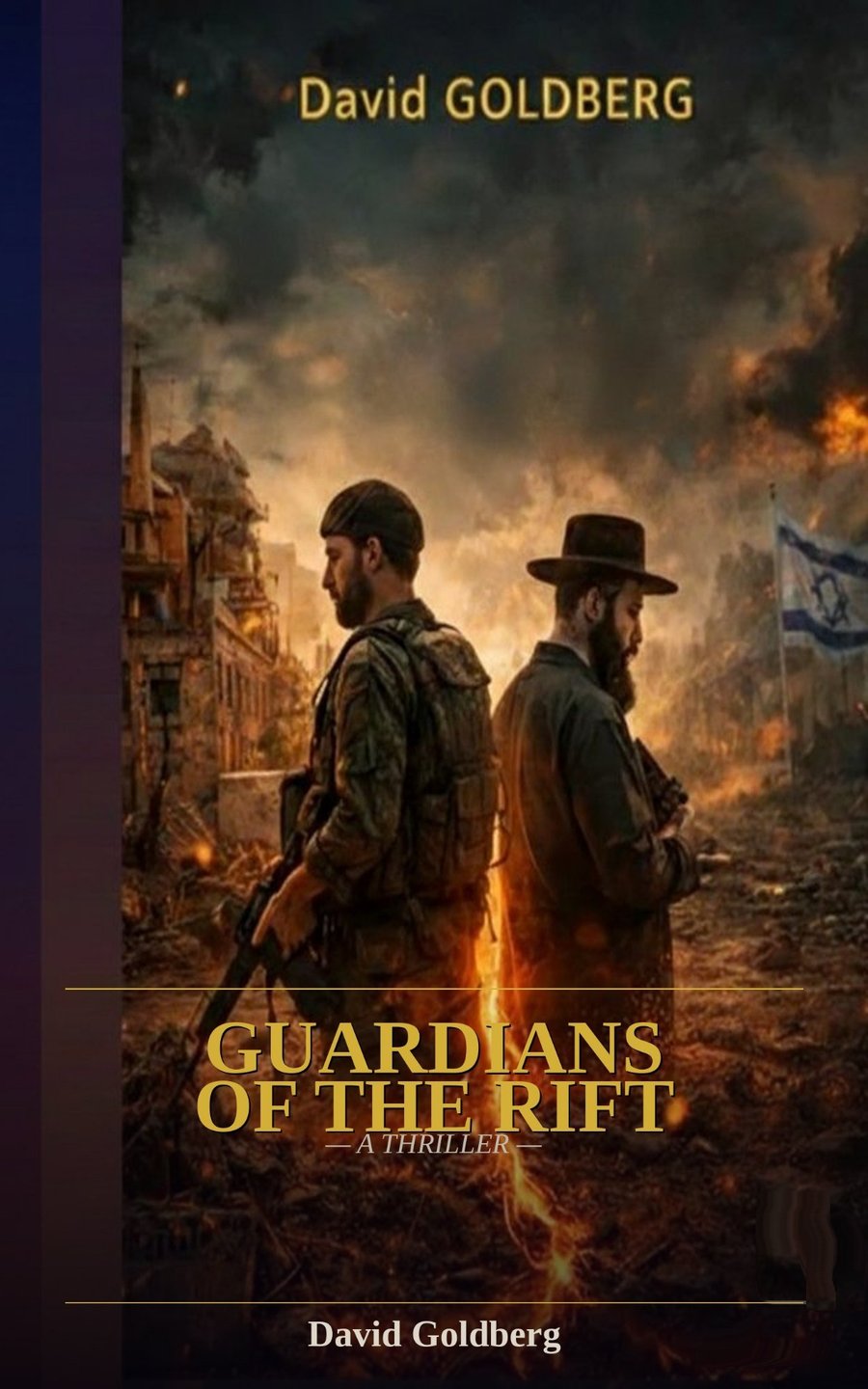
Guardians of the Rift
Forty-nine gates open — the fiftieth hides in a single moment. An ancient secret resurfaces, and one man stands between the rift and the world. Drawn from Talmud and Kabbalah.
📖 Read the free excerpt · Book $9.90