
Korah’s name is a scandal hiding in plain sight: it first belongs to a chief of Esau (Bereshit 36). How could Levi let his grandson carry an Esau name? Because of shma garim — a name shapes a destiny (Berakhot). And every name has two sides: a holy one and a dark one.
“Korah” means shorn — stripped of the hair the Torah calls the body’s excess, the very thing the Levites must shave (Bamidbar 8). On its holy side it means purity and modesty. But this Korah turned to the other side. The gematria of Esau (עשו = 376) equals shalom, peace — yet Esau looks like peace and hates it. That trait rode the name into Korah, whose rebellion began the moment his hair was shaved. The chiddush: every name has two faces, and we have the free will to choose which one we live.
📖 Read the full shiurThe Scandalous Name
“Korah son of Yitzhar, son of Kehat, son of Levi.” How could Levi — a son of Yaakov — agree, as a grandfather, that his grandson be named Korah? Open the Torah and find where the name first appears.
It appears first among the chiefs of Esau: “These are the chiefs of the sons of Esau … chief Korah.” Then, at the brit, vayikra shemo be-Yisrael — Korah. Levi knew exactly who Esau was, and what could come from his house. So how could he allow it?
A name is not decoration. Levi, who lived in Torah, would never hand his grandson a name worn by Esau’s line — unless he saw something deeper hidden inside it.
אֵלֶּה אַלּוּפֵי בְנֵי עֵשָׂו … אַלּוּף קֹרַח · Bereshit 36:16 · וַיִּקַּח קֹרַח בֶּן יִצְהָר בֶּן קְהָת בֶּן לֵוִי · Bamidbar 16:1
Shma Garim — a Name Shapes a Destiny
Is a name only a label — or does it carry power over a life?
The Gemara (Berakhot) teaches shma garim — the name causes. “Go and see the works of God, who set shamot in the earth”: do not read shamot (desolations) but shemot (names). Call a child Nimrod and he will rebel — yimrod. The name shapes the mazal. That is why naming a Jewish child is a weighty act.
✦ The name is the first decree spoken over a life. Choose it as you would choose a road — because it becomes one.
לְכוּ חֲזוּ מִפְעֲלוֹת ה׳ אֲשֶׁר שָׂם שַׁמּוֹת בָּאָרֶץ · Tehillim 46:9
Every Name Has Two Sides
If a name shapes a destiny, does a “good” name guarantee a good life — and a “dangerous” one, ruin?
No. Every name has two sides: the holy side and the sitra achra, the other side. Take the first name of all — Adam. From one side, adameh la-Elyon: “I will resemble the Most High,” a being made a little lower than the angels, in the image of God. From the other side, afar min ha-adamah: dust of the earth. The same word — adamah — holds both. Every name is like this.
A name is a vessel that can hold light or darkness. The vessel does not decide; the person does.
What Esau Intended
Why would Esau, of all people, reach for the name “Korah”? What was he hoping for?
Chazal reveal his thought: “I am entirely se’ir — covered in hair, and hair is dinim, harsh judgments. My brother Yaakov is ish chalak, smooth — less hair, fewer judgments, more peace.” Yaakov is the very aspect of shalom: in the priestly blessing, the third and crowning line — “may God lift His face to you and grant you peace” — belongs to Yaakov. So Esau said: let at least one son be Korah — from kore’ach, shorn — stripped of the harshness, so that perhaps peace might come from him, like my brother.
✦ Hair and nails are called the body’s excess: they grow back, we cut them away. To be “shorn” is to be freed of excess. Even Esau dreamed, for one son, of that freedom.
יִשָּׂא ה׳ פָּנָיו אֵלֶיךָ וְיָשֵׂם לְךָ שָׁלוֹם · Bamidbar 6:26
What Levi Saw
Esau’s hope was one thing. What did Levi see, that let him accept the name?
With ruach ha-kodesh, Levi foresaw that God would one day command the Levites to shave away all their hair: “take the Levites … and purify them … and pass a razor over all their flesh” (Bamidbar 8). To shave the hair is to remove the dinim, the excess. On its holy side, “Korah” means exactly this — shorn of the superfluous, a sign of tzniut, of purity. Levi saw a Levite name of holiness.
The same blade that strips away excess can crown a man with purity. Levi named his grandson for the holy edge of the blade.
וְהֶעֱבִירוּ תַעַר עַל כָּל בְּשָׂרָם וְכִבְּסוּ בִגְדֵיהֶם וְהִטֶּהָרוּ · Bamidbar 8:7
A Rebellion Born from a Haircut
The name held a holy side. So why did this Korah fall to the other?
Strikingly, his whole quarrel with Moses began with the shaving itself. The Midrash tells it almost as comedy: when God commanded Moses to purify the Levites and shave all their hair, Moses did so — beginning with their leader, Korah. Picture them: no eyebrows, no hair at all. Korah walks out unrecognizable; people ask, “who did this to you?” “Moses,” he says — “and not only that: he lifted me by my hands and feet, waved me about, and declared me pure.” His wife saw him and mocked: “you look like a baby — he waved you like a baby.” The mockery lit the fire.
✦ Korah was meant to be “shorn” — pure, modest, holy. But his character was the reverse: he was ta’av mamon, greedy, “rich as Korah,” and refused to part with the excess. He would not be shorn within. So the holy name slid to its dark side.
Esau = 376 = Peace
Here is the deepest twist. What is the gematria of Esau — and why does it explain everything?
Esau is written in the Torah עשו = 376 (ayin 70, shin 300, vav 6). And שלום, peace, = 376 (shin 300, lamed 30, vav 6, final mem 40). Esau equals peace. But how? Yaakov is peace; Esau merely carries the gematria of peace while being its sitra achra. Esau looks like peace and hates it — ein tocho ke-baro, his inside is not like his outside. The proof: Esau’s performance before Yitzhak, asking “father, how does one tithe straw? how does one tithe salt?” — playing the scrupulous son, though straw and salt are exempt from tithes. Outwardly pious, inwardly a rasha.
✦ This is the trait that rode the name into Korah: a hatred of peace dressed as a claim for peace. “Are we not all holy?” sounds like unity — but its root is Esau’s counterfeit shalom. When Moses tried to draw Korah close, he answered lo na’aleh — “we will not come up.” Shma garim: the name had already implanted the other side.
עֵשָׂו (70 · 300 · 6) = 376 · שָׁלוֹם (300 · 30 · 6 · 40) = 376
The Chiddush — Two Faces, and Free Will
So is a child’s fate sealed by the name a parent chooses?
There is no prophecy today — yet one spark of it remains. At the brit, when the mohel asks the father and vayikra shemo be-Yisrael, a micro-prophecy passes through the father: the name speaks something of the child’s destiny. Sometimes parents plan one name and another comes out at the brit — that is the hand of Heaven, which already knows. A counter-example is Betzalel — be-tzel El, “in the shadow of God” — a name that placed in him the gift of ruach ha-kodesh. But none of this is a sealed decree. The chiddush of the shiur: every name has two sides, and we hold the free will to channel our life toward one or the other. Some names a parent should not give — for that, one consults a rav.
✦ Two brothers in one womb reveal the whole pattern. Who is the true firstborn — the one born first, or conceived first? Rashi’s image: drop two marbles into a tube; the last one in rolls out first. Yaakov was conceived first; Esau emerged first only because he entered last. From Adam, humanity split into two branches — Cain (man of the soil → Esau, man of the field) and Abel (the shepherd → Yaakov, dweller in tents). And Abel returns: מ.ש.ה — Moshe, Shet, Hevel — the soul of Abel, through Shet, into Moses. Which is exactly where the companion shiur begins.
🎯 Test Yourself
5 questions on the shiur. Tap an answer.
🔤 Reclaim your name
Learn the holy root of your own name; write its highest meaning and keep it where you’ll see it.
✂️ Shave the excess
Name one “extra” you cling to — a possession, a grudge, a need to be seen — and remove it this week.
🕊️ Real peace, not counterfeit
Find one argument you could “win” and choose reconciliation over victory instead.
👶 The naming moment
If you name or bless a child, choose the root with care — and consult a rav for the weight of the name.
Shalom Bayit — The Mouth at Home
What do you whisper to your children? To your spouse? Reveal a Shalom Bayit card.
Gematria — Rav Menashe
Hidden connections in the names according to Rav Menashe zatsal.
🔢 Gematria CourseTorah Study
Dig deeper into the commentary of Rashi and the Zohar on the parashah of the week.
📝 Beith HamidrachAll Parashot
All shiurim of M. Yéhouda Himi — from Bereshit to Devarim and the festivals.
📚 All ParashotBooks
Torah wisdom in thriller format — Éditions Gueoula.
Dream Interpretation
Did you dream of a doe? Of an Ark? Check the meaning according to Rav Almoli.
🌙 Dreams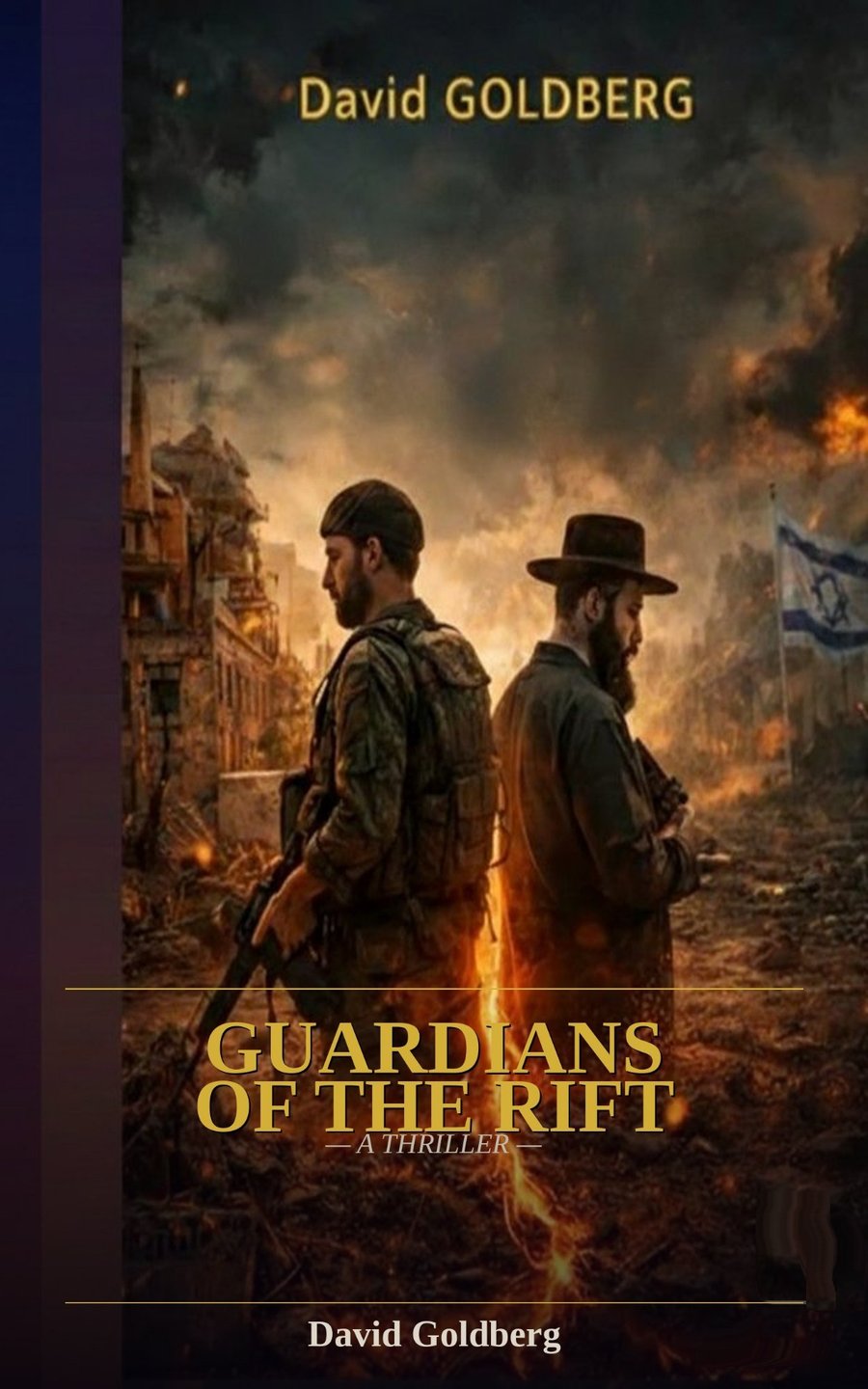
Guardians of the Rift
Forty-nine gates open — the fiftieth hides in a single moment. An ancient secret resurfaces, and one man stands between the rift and the world. Drawn from Talmud and Kabbalah.
📖 Read the free excerpt · Book $9.90