"Behaalotcha et ha-nerot" — when you raise the lamps. Not "when you light." Because no one lights a flame — they raise it. The Kohen does not press the wick to the fire. He caresses it. Until the flame rises by itself. This is the foundation of all education.
Aharon was heartbroken. The 12 princes brought offerings to inaugurate the Mishkan — and his tribe was not invited. Hashem comforts him: "Yours is greater than theirs — you light and tend the lamps." An eternal promise.
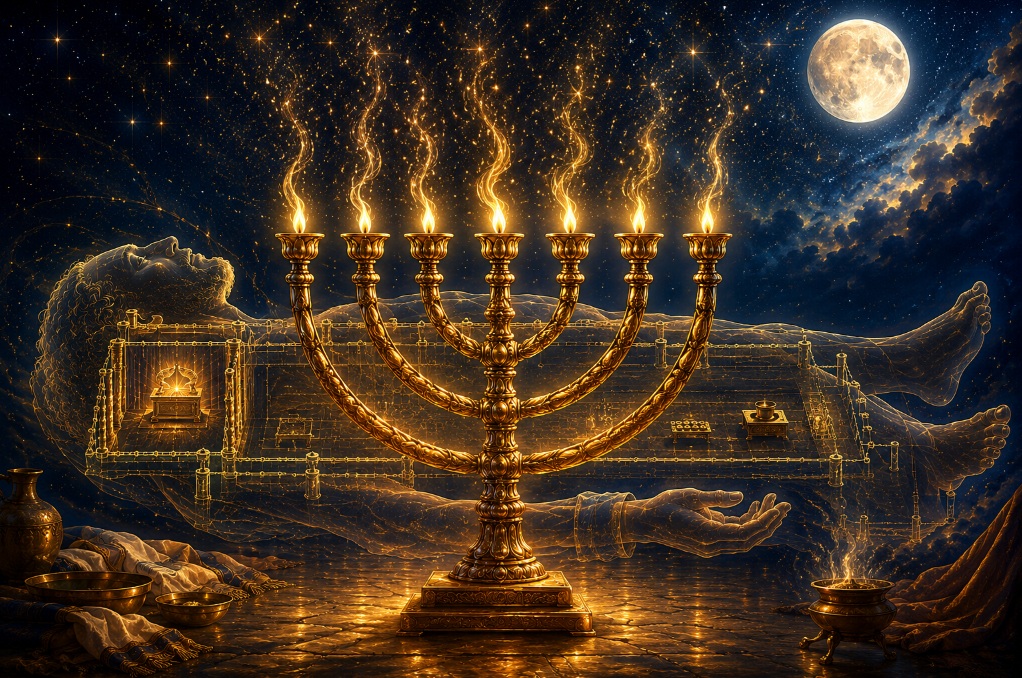
The Mishkan as the body of man. The Ark = the brain. The Table = the mouth. The Menorah = the eyes. The soul. When Moshe must build the Menorah — he says "I do not know how." But he knew how to make the cherubim and trumpets, which are far more complex! Why? Because the Menorah is the soul — and only Hashem breathes a soul. "Throw the gold into the fire — it makes itself."
In the shiur: the secret of "Behaalotcha" · the eternal promise to Aharon · the Mishkan as a body · why Moshe could not make the Menorah · Hanukkah as the continuation of Aharon's service · resurrection of the Temple
📖 Read the full shiur →"Behaalotcha" — Not to Light, but to Raise
The Torah opens: "Speak to Aharon and say to him: when you raise the lamps (be-haalotcha et ha-nerot), toward the face of the Menorah the seven lamps shall give light."
Famous question: why "be-haalotcha"? It should say "be-hadlikcha" — when you light. We light lamps, we don't raise them.
Two explanations. First: "Because the flame rises" — language of ascension. You must light until the flame rises on its own. Second: "A step (maalah) was before the Menorah" — stairs upon which the Kohen would stand and tend the lamps.
Zoom in to the exact point where the Kohen touches the wick. What do you see? He does not press the lamp against the wick. He caresses. A motion of raising, of stroking, until the fire catches by itself.
A great principle in education:
If you want to light up your child — to make him love Torah, ethics, anything good — do not press. Caress. Praise. Lift him up. In Moroccan Arabic they say "kbar bih" ("make him grow"). And then the fire rises by itself.
Aharon's Heartbreak
Rashi asks: why is the Menorah passage juxtaposed with the princes' offerings? Because when Aharon saw the chanukat ha-nesi'im, he was heartbroken.
End of the previous parasha: at the inauguration of the Mishkan, from the 1st of Nissan to the 12th, the princes brought offerings — one per day, twelve days. And Aharon says to himself: "Wait — I'm also a tribe! I'm the Kohen Gadol! Why didn't they call me to cut the ribbon?"
He does not say "why them and not me" — he says "why them, and also not me." It is not jealousy. It is a real sense of exclusion. Aharon, the lover of peace, the seeker of peace — he feels skipped.
Hashem tells him: "By your life — yours is greater than theirs. You light and tend the lamps."
Here is the chiddush: why does Rashi place this comment specifically on the word "be-haalotcha"? Because Hashem is demonstrating in Himself the very principle! You see a person whose spirit is low? Raise him. Caress. Praise. "Yours is greater than theirs" — that is the fire that rises by itself.
An Eternal Promise — What Exactly?
The princes brought offerings — twelve days, then it was over. "Thank you, Nachshon ben Aminadav. Thank you to all the tribes." But Aharon? "You light and tend the lamps — always."
Not a twelve-day thing. Every day, all year. And even more — an eternal promise: the fire will never go out. Even if the Mishkan is hidden. Even if the First Temple is destroyed. Even the Second. The fire does not go out.
The Mishkan as the Body of Man
Imagine a man lying on the floor. Lay him over the floor plan of the Mishkan. Look from above. What do you see?
- The head = the Holy of Holies. Inside it, the Ark of the Covenant — the skull. The two tablets within = the two hemispheres of the brain. The two cherubim spreading their wings above = the two ears.
- The mouth = the Table. Upon which sits the Golden Altar = the incense (the breath).
- The eyes = the Menorah. Seven lamps = seven openings in the face (two eyes, two ears, two nostrils, mouth).
- The chest and belly = the courtyard. The altar of burnt offerings consumes the offerings = the stomach. The basin = circumcision (covenant).
- The acacia wood beams = the human skeleton. The goat-skin coverings above = the skin.
If the Mishkan is a body — what is the Menorah? Since it corresponds to the eyes, and "The candle of Hashem is the soul of man"... The Menorah is the soul of the Mishkan.
"I Don't Know How" — Moshe and the Menorah
Hashem tells Moshe: "Hammered work shall you make the Menorah (mikshah)." And Moshe answers: "I don't know how to make it."
Wait — Moshe Rabbenu? The man who built the entire Mishkan? He doesn't know?
Now consider: there are two other "mikshah" objects in the Mishkan:
1. The silver trumpets — also "mikshah." Far more complex! They had to be made from a single block, with holes, and they had to play music. Moshe never said "I don't know."
2. The cherubim — golden, mikshah. They were a boy and a girl, with detailed faces, with feathers on the wings. A nightmare of precision! Yet Moshe said nothing.
So why specifically with the Menorah did Moshe get stuck?
Because the Menorah is the soul. And Moshe is telling Hashem: "I know how to make a body. I do not know how to make a soul. That belongs to You. Just as You breathed life into Adam's nostrils — I want You to breathe the soul into the Mishkan."
Hashem says: "Understood. Take the gold. Throw it into the fire. It will make itself."
Moshe's Hidden Plan
But why did Moshe want Hashem to do it personally? He could have learned the technique! What's the deeper plan?
Moshe sees the future — he knows the First Temple will be destroyed. And the Second. Only the Third — "The Temple of Hashem, established by Your hands" — will be eternal.
If the Mishkan is a body, then the destruction of the Temple is like the death of a man. But what happens when a person dies? "The spirit returns to G-d who gave it." The soul does not vanish. It returns to its Source — and waits for the resurrection.
This is Moshe's brilliant move. "I am drawing You, Master of the Universe, into the building of the Mishkan itself. You are the one making the Menorah — You are the one inserting the soul. So when the body of the Temple is destroyed, Your soul — the soul You placed inside — returns to You. And waits. And resurrects with the Third Temple. You committed."
This is the deeper meaning of "You light and tend the lamps." Eternal. The Menorah Moshe made — say the Sages — is hidden under the Temple Mount. It will serve the Kohen Gadol in the Third Temple. What Moshe made — is sealed in eternity.
Hanukkah — The Continuation of the Promise
Look — how does the Torah hint that this is all true?
Which parasha do we read in the Torah during Hanukkah? The parasha of the princes! The very passage in which Aharon was heartbroken.
What's the connection? The inauguration of the Mishkan was on the 1st of Nissan. The Hasmonean Hanukkah on the 25th of Kislev. They are months apart!
Rather — it's a reminder. We light the Hanukkah lamps by the power of Hashem's promise to Aharon. "You light and tend the lamps" — eternally.
And more. When you stand on Hanukkah and light — you must feel that you are a Kohen Gadol. "You shall be for Me a kingdom of priests." All of you — priests. Each one of us — in miniature — continues the work of Aharon in the Mishkan.
And until when will the lighting continue? Until the resurrection. Aharon HaKohen will rise, and walk — in priestly garments — to the Third Temple, and light the Menorah there. This is the fire that never goes out.
🎯 Test yourself
5 questions on the shiur. Click an answer to see the explanation.
Result
🕯️ This week — don't press, caress
Someone around you is "heartbroken" — a spouse, a child, a colleague. Don't give advice. Don't correct. Praise. Find one word that lifts them — as Hashem said to Aharon: "Yours is greater than theirs."
🔥 At Shabbat candle lighting — remember
You stand in the place of Aharon HaKohen. The fire you light — is part of the eternal fire of the Temple. "You light and tend the lamps" — through you.
💛 What can't you do?
Moshe understood that some things only Hashem can do. What in your life are you trying to control, when you cannot? Hand it to Hashem. Say: "Throw it into the fire — it will make itself."
📿 Remind yourself — every day
The fire within you — "The candle of Hashem is the soul of man" — is a Menorah. It is the soul of your "Mishkan." The tired flame, you raise it — not by pressing. Caress. Lift. Praise yourself.
🏛️ The last act
Aharon will rise at the resurrection. He will walk — in priestly garments — to the Third Temple. And there he will light the Menorah. Every time you light a Shabbat or Hanukkah candle — you take part in this work.
Shalom Bayit — The Mouth at Home
What do you whisper to your children? To your spouse? Reveal a Shalom Bayit card.
Gematria — Rav Menashe
Hidden connections in the names according to Rav Menashe zatsal.
🔢 Gematria CourseTorah Study
Dig deeper into the commentary of Rashi and the Zohar on the parashah of the week.
📝 Beith HamidrachAll Parashot
All shiurim of M. Yéhouda Himi — from Bereshit to Devarim and the festivals.
📚 All ParashotBooks
Torah wisdom in thriller format — Éditions Gueoula.
Dream Interpretation
Did you dream of a doe? Of an Ark? Check the meaning according to Rav Almoli.
🌙 DreamsPartners of the Redemption
Every page, every translation — built on Torah love. You are our partners.
💛 Become a Partner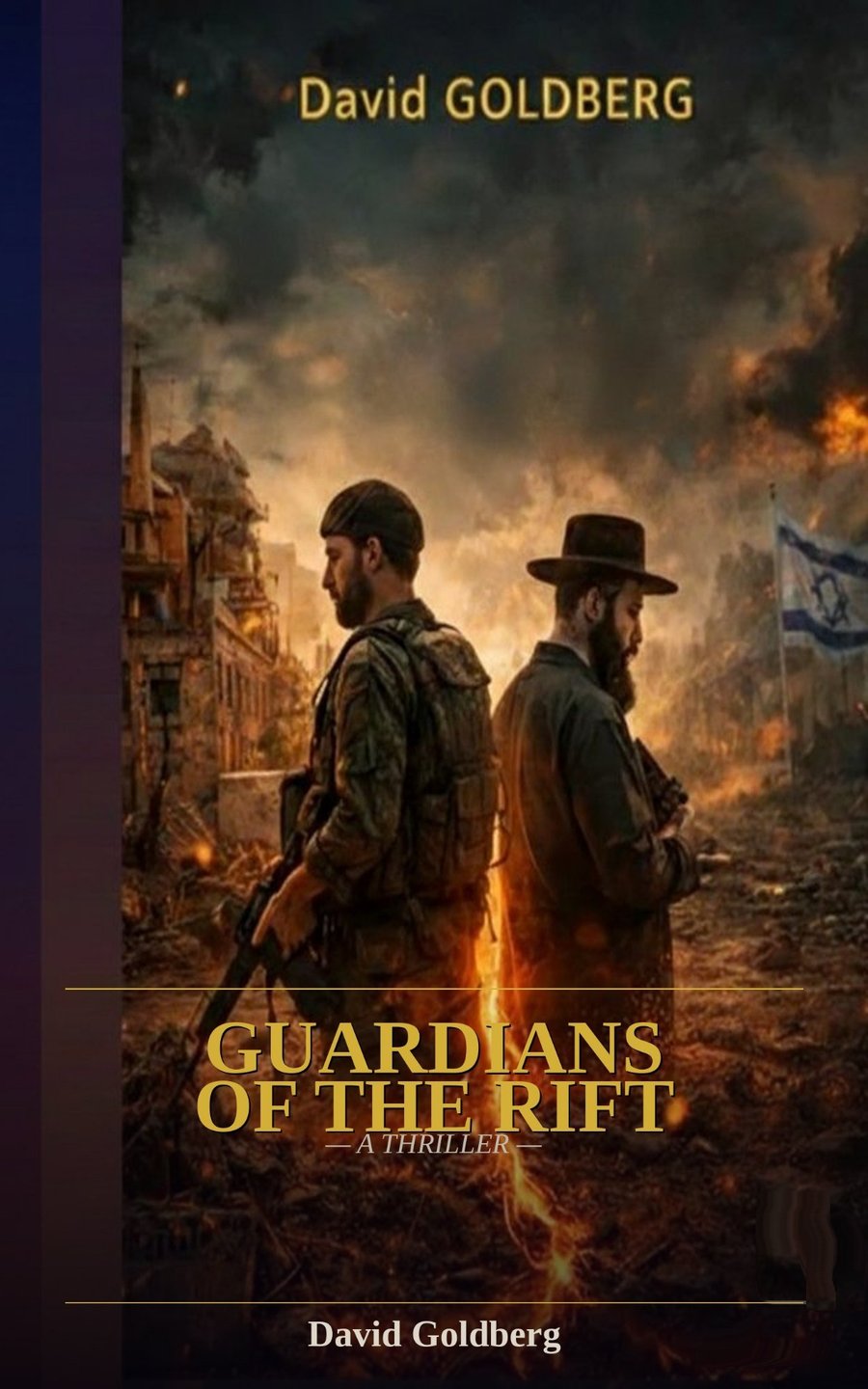
Guardians of the Rift
Forty-nine gates open — the fiftieth hides in a single moment. An ancient secret resurfaces, and one man stands between the rift and the world. Drawn from Talmud and Kabbalah.
📖 Read the free excerpt · Book $9.90