
Yonatan ben Uziel on the Korban Pesach: at the first Pesach the Clouds of Glory carried Israel to the site of the Temple in Jerusalem, they offered the Pesach there, were carried back to Egypt — and that same night ate it in Egypt.
Why the round-trip? Like the fetus taught the whole Torah and then made to forget — to build the foundation. So Israel received a "first dose" of the Shechinah — strength to face the serpent, scorpion and viper (the initials spell "smoke") of the desert.
Matot ↔ Massei: fixity vs movement. A Jew needs a firm foundation (forbidden is forbidden) — and upon it, to debate, be stringent or lenient. Unity, not uniformity (the efod stones vs the choshen stones).
"These are the journeys of Israel" — the initials A-M-B-Y = the four exiles (Edom, Madai, Bavel, Yavan), set against the four letters of the Name — and the hope: "He brings a redeemer… for His Name's sake, with love."
Two questions: (1) Why the parasha of vows here? Because of proximity — the end of Pinchas deals with the festivals, "apart from your vows"; and it is on the festival that a person vows. (2) Why to the heads of the tribes? The law of vows applies to all Israel.
The holy Ohr HaChaim teaches: Hashem did not want it written openly that anyone may annul a vow or oath — lest people belittle them: "I will vow and retract at once."
The word creates. To promise and to fulfill — this is what gives a person his worth.
A recurring problem: people buy a mitzvah on Shabbat (an aliyah to the Torah) — and do not pay. Two in Bavel: "These black clouds, full of water — why does no rain come?" The other answered: because of those who promise and do not give.
Sometimes what matters is the exit: Egypt is a place of crushing labor, the 49 gates of impurity — "just let me get out of here, no matter where." The emphasis is on "their departures," and "their journeys" (where to) matters less.
And sometimes "their journeys by their departures" — the destination is what matters, no matter where I came from. "The house of Yaakov left Beer Sheva... and he went to Charan" — he wants to reach Charan, so why mention "from Beer Sheva"? This shows: the departure, too, has meaning — yet it does not nullify the destination.
The first Korban Pesach was brought in Egypt: on the 10th of the month a lamb is taken per father's house, on the 14th it is offered, and on the night of Pesach — "your loins girded, your shoes on your feet and your staff in your hand" — eaten until midnight, and at midnight "I shall pass through and strike every firstborn in the land of Egypt."
Some read it spiritually (the Zohar): when they offered the Pesach in Egypt, their souls bonded with the Shechinah in Jerusalem and received a first illumination from it; by its power they returned, ate the Pesach, stood at the foot of Sinai and received the Torah, and afterward entered the Land.
And if not — let them simply offer the Pesach in Egypt and eat it in Egypt. What is this whole round-trip for? To understand, we turn to a well-known parable.
The fetus in its mother's womb — a candle burns over its head and an angel teaches it the entire Torah; and before it emerges, the angel strikes it upon the mouth and makes it forget everything it learned.
Man is made of matter, dust of the earth — his soul cannot contain the Torah in the ordinary way. A parable: a gentile who studies Torah may know the information, but not the wisdom of the Torah — for he lacks the soul within the Torah, its very spirituality.
Israel in Egypt is like a fetus — a nation in the 49 gates of impurity. To bring them straight to Sinai? No way they could absorb it. So the Holy One "leaps" them to Har HaMoriah, where the Shechinah dwells, and they receive a first dose, an infusion of the Shechinah into their souls — then return to Egypt.
In the pairing of the names there is an opposition: Matot (from mateh, a staff) — firm, standing, immovable; Massei — movement, travel. So too Nitzavim ↔ Vayelech: "standing" and "going." This is the secret of the Jew — both aspects.
In the garments of the Kohen Gadol there are two kinds of stones. The efod stones — only two stones, six names on each according to their generations (each stone enfolds six tribes), borne by Aharon upon his shoulders = the whole, unity. The choshen stones — twelve stones of different colors = the individual.
Why did Ezra the Scribe arrange that Matot-Massei always be read in Bein HaMetzarim (the Three Weeks)? (The first Shabbat is Pinchas, the middle one Matot-Massei, and the parasha before Tisha B'Av is always "These are the words" — Devarim.) Corresponding to the three haftarot of rebuke, in which the motif "Eicha" (How?) appears:
And Matot-Massei always falls in the middle, at the heart of Bein HaMetzarim. What did Ezra wish to teach us by this?
The Mishna (Sanhedrin, Chapter Chelek) lists those who "have no share in the World to Come" — Doeg the Edomite, Bilaam, Gehazi and Achitophel. Yet the Gemara: "the expounders of hidden meanings said" — that in the end they merited it.
The answer: reading "these are the journeys" is reading of the journeys of exile. The first verse — "These are the journeys of the children of Israel" — has the initials A-M-B-Y — the root of the four exiles from the exodus until the building of the Temple: Edom (A) · Madai (M) · Bavel (B) · Yavan (Y).
Want to go deeper into the secret of prayer? To the Amida study page →
Result
Shalom Bayit — Unity, Not Uniformity
Unity at home begins with honoring a differing view. Reveal a Shalom Bayit card.
Gematria — Rav Ménaché
Shalom, Mashiah, Yisamech — secrets of the letters by Rav Ménaché zatsal.
🔢 Gematria CourseAll Parashot
All shiurim of M. Yéhouda Himi — from Bereshit to Devarim and the festivals.
📚 All ParashotBooks
Torah wisdom in thriller format — Éditions Gueoula.
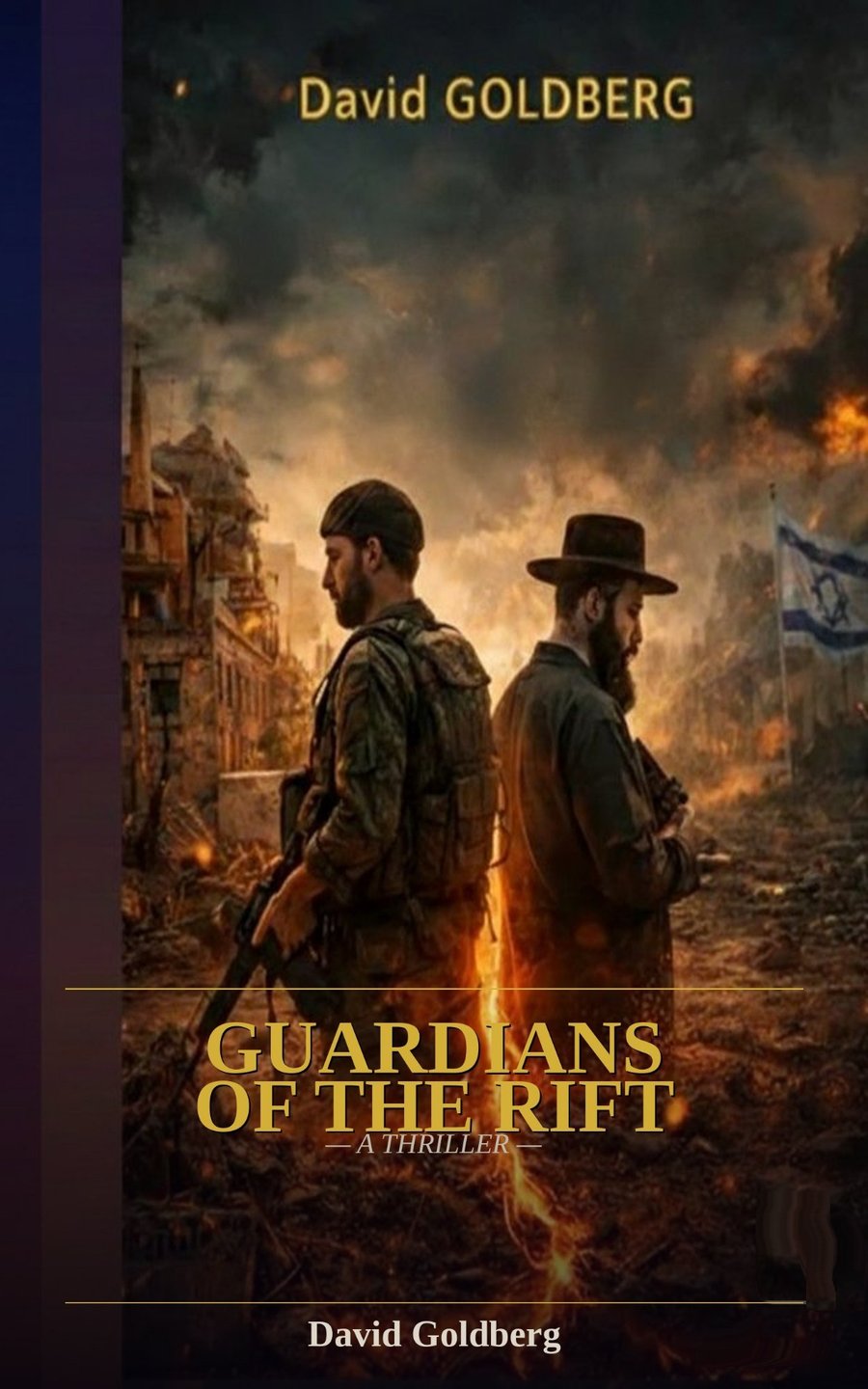
Guardians of the Rift
Forty-nine gates open — the fiftieth hides in a single moment. An ancient secret resurfaces, and one man stands between the rift and the world. Drawn from Talmud and Kabbalah.
📖 Read the free excerpt · Book $9.90