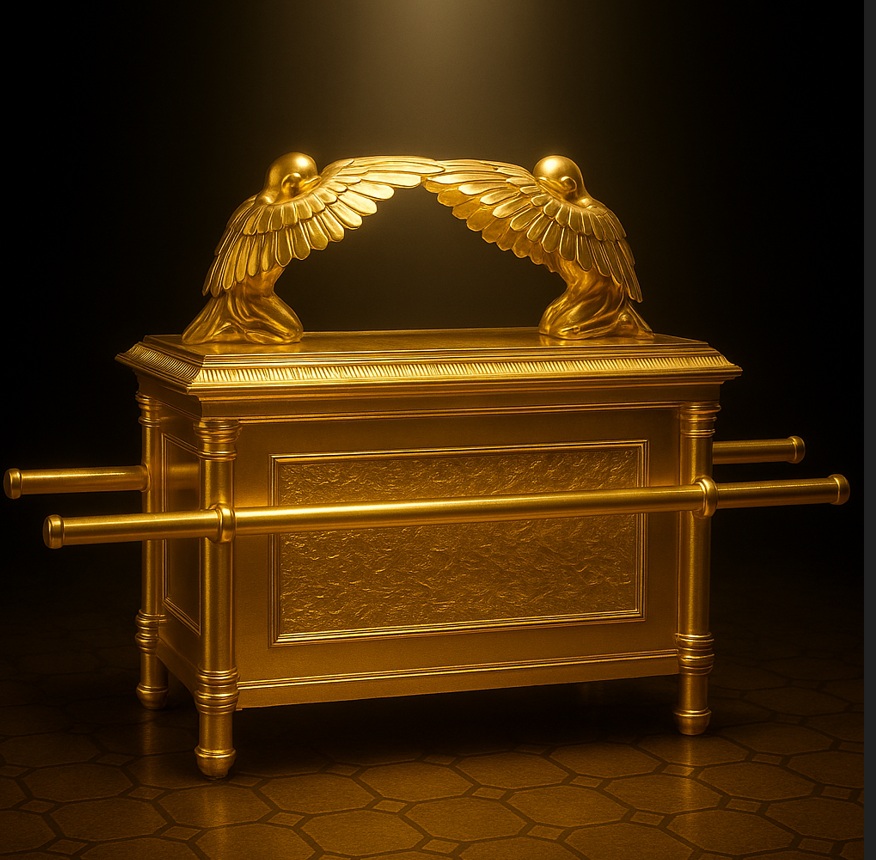
The Three Arks
Parashat Noach · The Three Arks · Sefer Bereshit · 5786
From punishment to redemption: Noah, Moses and the Ark of the Covenant
The Three Arks
A shiur by M. Yéhouda Himi
🎙️
🎙 Listen to the shiur
The Three Arks
⬇ Download the recording
From punishment to redemption: Noah, Moses and the Ark of the Covenant
A shiur by M. Yéhouda Himi · The Three Arks · Sefer Bereshit · 5785

The Torah holds three arks (תיבות) — Noah, Moses, the Ark of the Covenant — all coated "inside and out," yet each with a different material.

Noah, a silent tzadik, is coated in pitch inside and out: a measure-for-measure punishment for not fighting for his generation over 120 years.

Moses has clay inside so he won't suffer the odor — for he will become the one who fights for his people; מי נח = מחני: Moses is Noah's gilgul, repaired.

At the Golden Calf, Moses shatters the Tablets and lowers himself to the people's level; HaShem admits he was right: "heheyitani bidvarekha."

The Ark of the Covenant, pure gold inside and out, is the completed tikun; today our ark is the Sefer Torah, each word wrapped in the Infinite Light.

📖 Full Text
1 Introduction: The Torah of the Arks

The Torah presents three arks (תיבות) that look alike, yet whose differences hold the whole secret of Israel's redemption: Noah's ark that saved humanity from the Flood, Moses's ark that carried him on the Nile, and the Ark of the Covenant that held the Tablets of the Law.

All three share one striking trait: they are coated inside and outside (מבית ומחוץ). But the real question is: with what is each one coated? The answer reveals the entire process of the Jewish people's repair.

The reading key Noah: pitch inside and out. Moses: clay inside, pitch outside. The Ark of the Covenant: pure gold inside and out. These three coatings tell one story rising from darkness toward light.
2 Noah's Ark: the silent tzadik
וְכָפַרְתָּ אֹתָהּ מִבַּיִת וּמִחוּץ בַּכֹּפֶרBereshit 6:14

"And you shall coat it inside and outside with pitch." Pitch on the outside is obvious: to make the ark watertight during the Flood. But why did HaShem command coating the inside too? For an entire year Noah would breathe the acrid, suffocating smell of זפת.

The Torah calls Noah "איש צדיק תמים היה בדורותיו" — a righteous man in his generations. Rashi notes: relative to his corrupt generation. So what was his fault? For 120 years he built the ark yet never tried to bring his generation to teshuva. A passive tzadik, saving only himself.

Measure for measure The pitch smell within was meant to remind Noah, every moment of that year: "You did not fight for these people now drowning outside." The inside constantly recalls the outside.
3 Moses's Ark: the protected tzadik
וַתִּקַּח־לוֹ תֵּבַת גֹּמֶא וַתַּחְמְרָה בַחֵמָר וּבַזָּפֶתShemot 2:3

"She took a basket of rushes and coated it with clay (חמר) and pitch (זפת)." Here the order reverses: clay inside, pitch outside. Rashi explains: why clay inside? So that this tzadik would not smell the foul odor of pitch.

Moses at three months was already recognized as a tzadik: "וַתֵּרֶא אֹתוֹ כִּי־טוֹב הוּא" — she saw that he was good, a bearer of the hidden light (אור הגנוז).

The great question If the Torah also calls Noah "איש צדיק," why wasn't he spared the odor, with clay inside as for Moses? Because Moses would become the one who FIGHTS for his people — and Noah did not.
4 The secret of gilgul: Moses is Noah repaired
כִּי־מֵי נֹחַ זֹאת לִיYeshayahu 54:9

In Noah's Haftarah the prophet does not say "the Flood" (מבול) but "the waters of Noah" (מי נח). Why this odd phrase? Rav Himi unveils the parallel: Noah in the ark surrounded by the Flood, 120 years, not fighting; Moses in the basket surrounded by the Nile, 120 years of life, fighting and saving his people.

מי נח = מחני The letters of מי נח (the waters of Noah), rearranged, spell מחני (blot me out)! It is Moses's cry: "וְאִם־אַיִן מְחֵנִי נָא מִסִּפְרְךָ" — "if not, blot me out of Your book" (Shemot 32:32). The message: I am not Noah! I will not stay silent — blot me out first.

The Arizal teaches that the souls of the Flood generation were reincarnated in the 600,000 who went down to Egypt. That is why Pharaoh casts the boys into the Nile: the sin came through water, the tikun had to come through water. And Moses Rabbenu is the gilgul of Noah, come to repair what Noah left undone.

5 The Golden Calf and the broken Tablets

After the giving of the Torah, the people sin with the Golden Calf. Why? So that Moses could pour out all his resources and show how far his love reaches. HaShem offers him: "הַנִּיחָה לִּי... וְאֶעֱשֶׂה אוֹתְךָ לְגוֹי גָּדוֹל" — "Let Me consume them, and I will make of you a great nation" (Shemot 32:10).

Moses grasps the trap of the 50/50 reckoning: half the people sinned, but Moses alone is worth all of Israel. Judgment could tip toward destruction. So he performs the impossible.

וָאֶתְפֹּשׂ בִּשְׁנֵי הַלֻּחֹת וָאַשְׁלִכֵם מֵעַל שְׁתֵּי יָדָי וָאֲשַׁבְּרֵם לְעֵינֵיכֶםDevarim 9:17

He shatters the Tablets. Yet the Gemara teaches: one who breaks things in anger is like an idolater. Moses deliberately places himself on the same level as the people and says: "Now I am like them — if You would destroy them, begin with me." This is the ultimate act of love, the exact opposite of Noah's silence.

"אָמַר רַבִּי יוֹחָנָן: מִנַּיִן שֶׁחָזַר הַקָּדוֹשׁ בָּרוּךְ הוּא וְהוֹדָה לוֹ לְמֹשֶׁה... סָלַחְתִּי כִּדְבָרֶיךָ" — HaShem admits Moses was right, and tells him: "הֶחֱיִיתַנִי בִּדְבָרֶיךָ" — "by your words you have given Me life" (Berakhot 32a)."
6 The Ark of the Covenant: pure gold, tikun complete
וְצִפִּיתָ אֹתוֹ זָהָב טָהוֹר מִבַּיִת וּמִחוּץ תְּצַפֶּנּוּShemot 25:11

"You shall overlay it with pure gold, inside and outside." After the Torah was given at Sinai, the people were purified within and without, restored to Adam's level before the sin. The Ark is a "sandwich": gold, acacia wood, gold.

The three stages Pitch inside and out (a lost generation, a silent tzadik) → clay inside, pitch outside (Israel in Egypt, the tzadik begins to fight) → pure gold inside and out (the tikun is absolute). No more pitch, no more clay — only the gold of holiness.
7 Our ark today: the Sefer Torah
Where is our ark? We no longer have Noah's ark, nor Moses's; the Ark of the Covenant is hidden. What protects us from the modern "flood"?

The Hebrew word תיבה means both "ark" AND "word." In prayer we bless the Torah "בִּזְכוּת... וְתֵבוֹתָיו" — by the merit of its word-arks. The first verse has seven תיבות. Our words of Torah are our arks.

Before the scribe writes, the parchment is all white: it is the אור אין סוף, the Infinite Light. The first black letter is like the צמצום, the contraction. Each black word then remains surrounded by white — inside and out: "כָּל תֵּבָה וְתֵבָה בַּתּוֹרָה מְצֻפָּה בְּאוֹר אֵין סוֹף." This is the equivalent of זהב טהור מבית ומחוץ.

Become a Moses, not a Noah Enter your Torah-ark each day, even fifteen minutes. Find your "50/50": whom can you save? Be ready to "break your Tablets" for a brother, to say מחני נא in your prayer. Do not be a spectator of the flood — fight for your people.

🎯 Test yourself

Five questions. Click an answer.

1
Why does HaShem command coating Noah's ark with pitch on the inside too?
Measure for measure: the inner smell constantly recalls those drowning outside.
2
How does Moses's ark's coating differ?
Shemot 2:3: חמר inside so the tzadik would not breathe the foul odor, זפת outside.
3
What does rearranging the letters of מי נח reveal?
מי נח = מחני: Moses's cry "blot me out of Your book," the opposite of Noah's silence.
4
Why does Moses shatter the Tablets according to the shiur?
By "sinning" like the people, Moses defeats the 50/50 reckoning and sacrifices himself to save them.
5
What is "our ark" today according to Rav Himi?
תיבה means both word and ark; each black word is surrounded by white, the אור אין סוף, like pure gold inside and out.

Result

📅 Seven-day programme — Parashat Noah
Sunday
Sunday: Study the introduction — the three תיבות and the "מבית ומחוץ" principle. Locate Bereshit 6:14, Shemot 2:3, Shemot 25:11.
Monday
Monday: Delve into Noah's fault — the silent tzadik, the 120 years, pitch inside and out as measure-for-measure punishment.
Tuesday
Tuesday: Study Moses's ark — clay inside, the protected tzadik, and the great question: why not Noah?
Wednesday
Wednesday: The secret of gilgul — מי נח = מחני; the Arizal's teaching on the Flood souls reincarnated in Egypt.
Thursday
Thursday: The Golden Calf and broken Tablets — the 50/50 reckoning, Moses's act, and "סלחתי כדבריך" / "החייתני בדבריך" (Berakhot 32a).
Friday
Friday: The Ark of the Covenant and the three stages of tikun; prepare a dvar Torah for the Shabbat table.
Shabbat
Shabbat: Share the teaching with family — become a Moses, not a Noah; choose one concrete action for those around you.
Four Practical Steps
🏠

Shalom Bayit — The Mouth at Home

My covenant of peace — peace begins at home. Reveal a Shalom Bayit card.

🔢

Gematria — Rav Ménaché

Shalom, Mashiah, Yisamech — secrets of the letters by Rav Ménaché zatsal.

🔢 Gematria Course
📝

Torah Study

Dig deeper into the Baal HaTurim and Rashi on Parashat Devarim.

📝 Beith Hamidrach
📚

All Parashot

All shiurim of M. Yéhouda Himi — from Bereshit to Devarim and the festivals.

📚 All Parashot
📕

Books

Torah wisdom in thriller format — Éditions Gueoula.
🌙

Dream Interpretation

Did you dream? Check the meaning according to Rav Almoli.

🌙 Dreams
🎬

Videos

Video shiurim on the festivals, the Menorah and the secrets of the Mishkan.

🎬 Videos
💡

Idea Box

An idea, a remark, a suggestion for the site? Share it with us.

💡 Idea Box
🤝

Maasser

Give your Maasser and take part in spreading Torah.

🤝 Maasser
📨 Get the Weekly Shiur
Every week, straight to your inbox. No spam. One-click unsubscribe.
🕯️ Dedicate This Shiur
Dedicate this shiur for the days of Bein HaMetzarim — in memory, for healing or for success.
🧱 Wall of Dedications →
Guardians of the Rift

Guardians of the Rift

A spiritual thriller · David Goldberg

Forty-nine gates open — the fiftieth hides in a single moment. An ancient secret resurfaces, and one man stands between the rift and the world. Drawn from Talmud and Kabbalah.

📖 Read the free excerpt · Book $9.90