Lag BaOmer et RaShBI : les 5 codes cachés qui révèlent le secret du Zohar · Fêtes · 5786
Pourquoi le nom de RaShBI est-il caché dans la sortie d'Égypte ? Pourquoi « Lag BaOmer » a-t-il la même guématria que « Moché » ? Le Zohar n'est pas une curiosité kabbalistique : c'est le système d'exploitation de la délivrance finale.
Lag BaOmer et RaShBI : les 5 codes cachés qui révèlent le secret du Zohar
D'après l'enseignement de M. Yéhouda Himi
Pourquoi le nom de RaShBI est-il caché dans la sortie d'Égypte ? Pourquoi « Lag BaOmer » a-t-il la même guématria que « Moché » ? Le Zohar n'est pas une curiosité kabbalistique : c'est le système d'exploitation de la délivrance finale.
D'après l'enseignement de M. Yéhouda Himi · Lag BaOmer et RaShBI : les 5 codes cachés qui révèlent le secret du Zohar · Fêtes · 5785
Lag BaOmer, 33e jour du Omer, marque la hilloula de Rabbi Shimon bar Yochai, révélateur du Zohar.
RaShBI vécut 13 ans caché dans une grotte avec son fils, recevant les secrets les plus profonds de la Création.
Cinq codes guématriques relient RaShBI à Moché, à la sortie d'Égypte et au premier verset de la Torah.
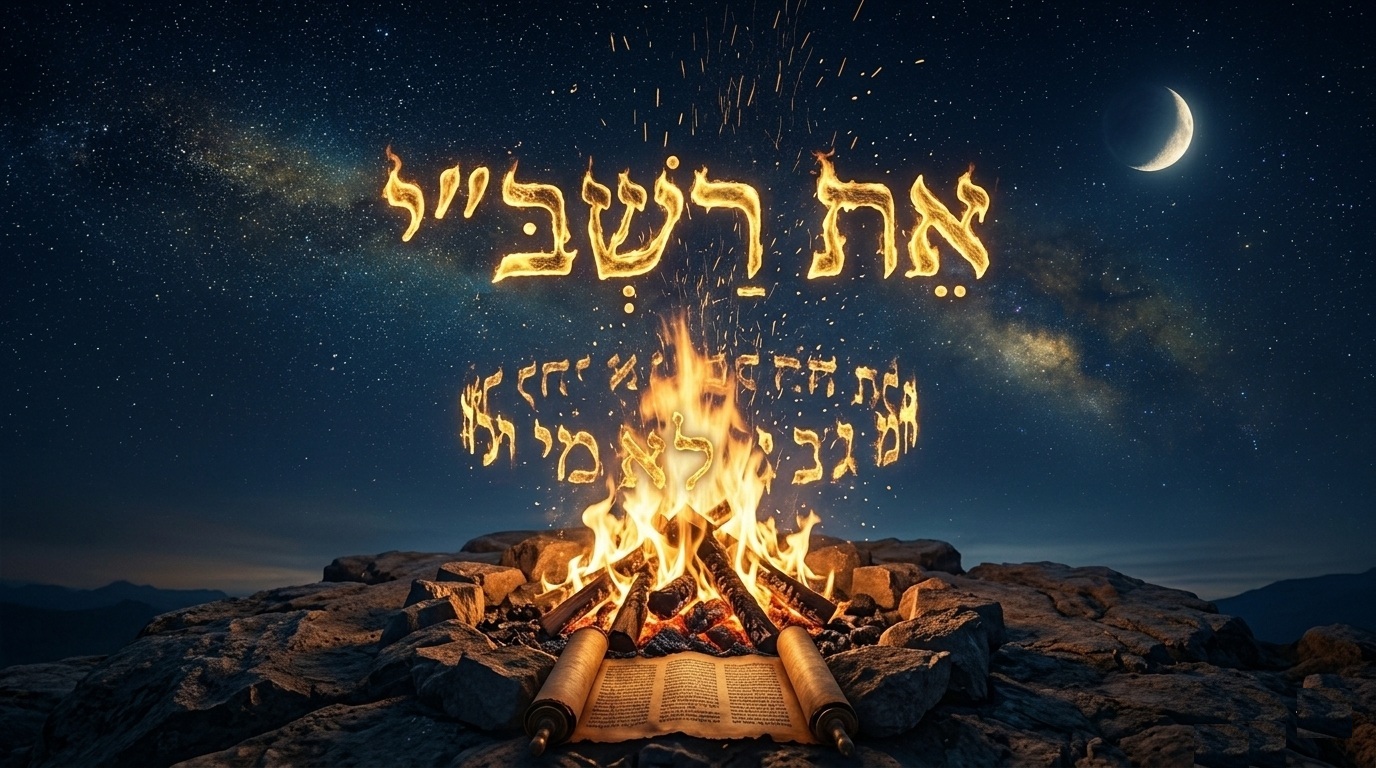
Les feux de Lag BaOmer manifestent Hod chébéHod, la « voix qui taille les flammes » du vendredi soir.
Le feu n'est pas un lieu : on peut honorer RaShBI n'importe où, par une bougie et une page de Zohar.
Lag BaOmer est le 33e jour du décompte du Omer entre Pessah et Chavouot. Le nom lui-même indique la date : les lettres hébraïques lamed (30) et guimel (3) forment le nombre 33. Ce jour marque la hilloula — l'anniversaire du décès — de Rabbi Shimon bar Yochai (RaShBI), le Tana du IIe siècle qui a révélé le Zohar.
Partout dans le monde, les juifs célèbrent ce jour en allumant des feux de joie (medurot), en étudiant la Torah toute la nuit, et en se rendant sur la tombe de RaShBI à Méron, dans le nord d'Israël. Mais derrière ces feux se cache quelque chose de plus profond : un code qui relie le tout premier verset de la Torah, Béréchit, à la délivrance à venir.
2 Qui était Rabbi Shimon bar Yochai ?
Né en Terre d'Israël au IIe siècle, Rabbi Shimon bar Yochai fut un élève de Rabbi Akiva et l'un des Tanaïm les plus influents de la Michna. Après avoir critiqué publiquement le pouvoir romain, il fut condamné à mort et s'enfuit avec son fils Rabbi Éléazar dans une grotte près de Péki'in.
Pendant treize ans, ils survécurent grâce à l'eau d'une source et aux fruits d'un caroubier qui poussa miraculeusement à l'entrée de la grotte. Enfouis dans le sable jusqu'au cou, ils étudièrent la Torah jour et nuit. C'est durant ces treize années que RaShBI reçut les secrets les plus profonds de la Création — compilés plus tard dans le Zohar, le texte fondateur de la Kabbale.
RaShBI est considéré comme une étincelle de Moché Rabbénou. Tout comme Moché donna à Israël la Torah écrite au Sinaï, RaShBI donna à Israël la Torah intérieure — la même révélation, restée cachée jusqu'à ce que sa génération soit prête à la recevoir.
3 Deux codes : de la sortie d'Égypte à Moché
Code 1 · « Berosh galei » — RaShBI caché dans la sortie d'Égypte Lorsque les enfants d'Israël sortirent d'Égypte, la Torah dit qu'ils sortirent beyad rama — à main levée (Chemot 14:8). Onkelos traduit : berosh galei — ouvertement révélés, la tête haute. Or, à l'intérieur même des lettres de « berosh galei » se cache le nom RaShBI (ר-ש-ב-י). Et le mot « galei » signifie lui-même révélation. La délivrance d'Égypte porte en elle la semence de la délivrance finale — et cette semence porte le nom de Rabbi Shimon bar Yochai.
בְּיָד רָמָה — « à main levée / ouvertement » (traduction d'Onkelos : berosh galei).Chemot 14:8
Code 2 · « Lag BaOmer » = « Moché » = 345 Le Hatam Sofer rapporte cette guématria. « Lag BaOmer » écrit sans vav (ל-ג ב-ע-מ-ר) = 30+3+2+70+40+200 = 345. « Moché » (משה) = 40+300+5 = 345. Le même nombre. Lag BaOmer n'est pas seulement le jour du décès de RaShBI — c'est le jour où Moché revient dans le monde à travers lui, par la révélation du Zohar.
לג בעמר = 345 = משה — RaShBI est une étincelle de Moché Rabbénou. Même guématria. Même feu. Un autre chapitre de la même âme.
4 Deux codes de plus : Yochaï et Béréchit
Code 3 · Les lettres finales de « Ki lo tishakach » forment Yochaï Dans le traité Chabbat 138b, les Sages déclarent que la Torah sera oubliée d'Israël. RaShBI se lève et s'écrie : « À D.ieu ne plaise ! » Il apporte la preuve : Ki lo tishakach mipi zar'o — « elle ne sera pas oubliée de la bouche de sa descendance » (Devarim 31:21). En lisant la dernière lettre de chaque mot : י-א-ח-י-ו. En les réarrangeant : Yochaï — le père de RaShBI. La promesse que la Torah ne sera jamais oubliée est scellée par la descendance de Yochaï. Par RaShBI lui-même.
כִּי לֹא תִשָּׁכַח מִפִּי זַרְעוֹ — « elle ne sera pas oubliée de la bouche de sa descendance ».Devarim 31:21
Code 4 · « Béréchit » se réarrange en « Et RaShBI » Le premier mot de la Torah — בְּרֵאשִׁית — six lettres : ב-ר-א-ש-י-ת. Réarrangées : אֵת רַשְׁבִּ״י — « Et RaShBI ». Voici maintenant la preuve par la guématria :
בראשית ברא אלהים = 1 202 · כי לא תשכח מפי זרעו = 1 202 — le même nombre. Les deux versets racontent la même histoire : D.ieu a créé le monde et RaShBI dans le même acte. Pas d'univers sans Torah. Pas de Torah sans RaShBI.
5 Le cinquième code et le feu du Hod chébéHod
Code 5 · « Shimon bar Yochi » = « Chabbat » = 702 Dans le Talmud, le nom de RaShBI est écrit sans alef : « Shimon bar Yochi ». Calcul : Shimon (466) + bar (202) + Yochi (34) = 702. Calculons maintenant « Chabbat » (שבת) : 300+2+400 = 702. RaShBI est le Chabbat en forme humaine. C'est pourquoi lui seul, parmi tous les tsadikim, est honoré par un feu de joie plutôt que par une simple bougie. Car les bougies de Chabbat multipliées mille fois deviennent la medura de Méron.
Lag BaOmer tombe toujours le cinquième jour de la cinquième semaine du décompte du Omer. En comptant depuis 'Hessed, la cinquième Séfira est Hod. Le cinquième jour de la semaine de Hod est Hod chébéHod — Hod dans Hod, le point le plus concentré de cet attribut.
קוֹל ה' חֹצֵב לַהֲבוֹת אֵשׁ — « La voix de D.ieu taille des flammes de feu » — récité chaque vendredi soir. Hod chébéHod = la voix qui taille les flammes. C'est cela, Lag BaOmer. C'est cela, la medura de Méron.Tehilim 29:7
Les feux de joie ne sont pas symboliques. Ils sont la manifestation physique de Hod chébéHod perçant dans le monde. Chaque étincelle qui jaillit d'un feu de Lag BaOmer est un fragment de Hod illuminant une âme individuelle.
6 Questions fréquentes
Pourquoi certains garçons font-ils leur première coupe de cheveux (upshérin) à Lag BaOmer ? Pendant la période du Omer, on évite traditionnellement de se couper les cheveux, en signe de deuil pour les 24 000 élèves de Rabbi Akiva morts d'une épidémie avant Lag BaOmer. L'épidémie s'arrêta le 33e jour. Beaucoup de familles amènent leur fils de trois ans à Méron pour sa première coupe de cheveux, marquant son entrée dans l'étude de la Torah.
Faut-il être à Méron pour célébrer Lag BaOmer ? Non. Comme l'explique l'enseignement : lorsqu'un grand feu est contenu, des étincelles se dispersent et allument des centaines de petits feux ailleurs. Allumez une bougie à la mémoire de RaShBI chez vous. Étudiez une page de Zohar, même en traduction. Dites : « pour le mérite du saint Tana, Rabbi Shimon bar Yochai. » Le feu n'est pas un lieu — le feu est le cœur.
Quelle est la différence entre Pessah Chéni et Lag BaOmer ? Pessah Chéni (14 Iyar) est le « second Pessah » — un jour de rattrapage pour ceux qui n'avaient pu apporter l'offrande pascale. Lag BaOmer (18 Iyar) survient quatre jours plus tard et commémore RaShBI. Les deux sont distincts, bien que tombant tous deux pendant la période du Omer.
Le Zohar est-il accepté par toutes les autorités séfarades ? Oui. Le Zohar est un texte fondateur de la tradition séfarade, central dans les décisions du Choulhan Aroukh (Maran Rabbi Yossef Karo, lui-même auteur d'ouvrages kabbalistiques), et continuellement étudié dans les batei midrach séfarades. Le 'Hazon Ovadia et le Yalkout Yossef font tous deux référence à des sources kabbalistiques lorsqu'elles influencent la pratique halakhique.
Pourquoi allume-t-on des feux de joie à Lag BaOmer plutôt qu'une simple bougie ? Parce que RaShBI, dont le nom équivaut en guématria à Chabbat (702), est honoré par la multiplication du feu : les bougies de Chabbat multipliées mille fois deviennent la grande medura de Méron, manifestation physique de Hod chébéHod.
🎯 Teste-toi
Cinq questions. Clique sur une réponse.
1
Que signifie littéralement le nom « Lag BaOmer » ?
Les lettres lamed (30) et guimel (3) forment le nombre 33 — le jour lui-même.
2
Quel est le lien de guématria entre « Lag BaOmer » et « Moché » ?
« Lag BaOmer » (sans vav) et « Moché » valent tous deux 345, selon le Hatam Sofer.
3
Selon le code 3, quel nom est formé par les dernières lettres de « Ki lo tishakach mipi zar'o » ?
Les dernières lettres de chaque mot (י-א-ח-י-ו) se réarrangent en Yochaï, le père de RaShBI.
4
En quoi « Béréchit » se transforme-t-il une fois réarrangé ?
Les six lettres de בראשית se réarrangent en את רשב״י — « Et RaShBI ».
5
Pourquoi allume-t-on des feux de joie, et non de simples bougies, pour RaShBI ?
« Shimon bar Yochi » et « Chabbat » valent tous deux 702 en guématria — RaShBI est le Chabbat en forme humaine, honoré par un feu multiplié.
Résultat
📅 Programme de 7 jours vers Lag BaOmer
Dimanche
Jour 1 : Lisez le récit des 13 années de RaShBI dans la grotte de Péki'in, et notez ce que « cacher pour révéler » évoque pour vous.
Lundi
Jour 2 : Calculez vous-même la guématria de « Lag BaOmer » et de « Moché » — vérifiez les 345.
Mardi
Jour 3 : Étudiez le verset Béyad Rama (Chemot 14:8) et cherchez-y les lettres de RaShBI.
Mercredi
Jour 4 : Apprenez une page de Zohar, même en traduction, « pour le mérite du saint Tana. »
Jeudi
Jour 5 : Préparez une bougie ou un petit feu à allumer en mémoire de RaShBI, même sans aller à Méron.
Vendredi
Jour 6 : Relisez Tehilim 29 (Mizmor LeDavid) vendredi soir et repérez le verset « Kol Hashem chotsev lahavot ech ».
Chabbat
Jour 7 (Lag BaOmer) : Allumez votre feu ou bougie, étudiez les 5 codes en famille, et dites : « pour le mérite du saint Tana, Rabbi Shimon bar Yochai. »
Quatre étapes pratiques
🏠
Chalom Bayit — La bouche à la maison
Mon alliance de paix — la paix commence à la maison. Découvre une carte Chalom Bayit.
🔢
Guématria — Rav Menaché
Connexions cachées dans les noms selon Rav Menaché zatsal.
Chaque semaine, directement dans votre boîte. Sans spam. Désinscription en un clic.
🕯️ Dédier ce cours
Dédie ce cours pour les jours de Bein HaMetsarim — à la mémoire, pour la guérison ou la réussite.
Les Gardiens de la Faille
Un thriller mystique · David Goldberg
Quarante-neuf portes s'ouvrent — la cinquantième se cache dans un seul instant. Un secret ancien resurgit, et un homme se dresse entre la faille et le monde. Puisé dans le Talmud et la Kabbale.