פרשת צו · שבת הגדול · תשפ"ו
שני כיוונים של יציאת מצרים
לצאת ממצרים — ולהוציא את מצרים ממך
על פי שיעורו של מר יהודה חימי
מדוע ישראל קשרו את השה לדורבן המיטה ארבעה ימים? למה המצרים שנאו דווקא את הרואה צון — שהיו אמורים להיות כוהניהם הגדולים? ומה ההבדל בין גלות לגאולה — תשובה בצורה של אות אחת.
א שלושה טעמים לשם ״שבת הגדול״
השבת לפני פסח נקראת שבת הגדול. אבל למה? הרי ״שבת״ היא מין נקבה בעברית — אז הייתה צריכה להיקרא ״השבת הגדולה״. מדוע אנחנו אומרים ״שבת הגדול״ — לשון זכר?
לשאלה הדקדוקית הזאת, כמו גם לשם עצמו, יש שלושה טעמים:
טעם א — ההלכה: הגדול שבקהילה — רב הבית כנסת — עולה למפטיר וקורא את ההפטרה של שבת זו. ״הגדול״ — על שם הגדול שבקהל.
טעם ב — ההפטרה עצמה: הפסוק האחרון בהפטרה אומר: ״הִנֵּה אָנֹכִי שֹׁלֵחַ לָכֶם אֵת אֵלִיָּה הַנָּבִיא — לִפְנֵי בּוֹא יוֹם ה' הַגָּדוֹל וְהַנּוֹרָא.״ שבת הגדול — על שם ״יום ה' הגדול״. לכן לשון זכר: הגדול של הפסוק.
הִנֵּה אָנֹכִי שֹׁלֵחַ לָכֶם אֵת אֵלִיָּה הַנָּבִיא — לִפְנֵי בּוֹא יוֹם ה' הַגָּדוֹל וְהַנּוֹרָא מלאכי ג:כג
מה הוא ״יום ה' הגדול״? אחרי מלחמת גוג ומגוג, כמו שכתוב ביחזקאל — יהיה יום ה' שבו הוא נשפט עם כל הגויים, והגאולה השלמה תתגלה. ובניסן נגאלו — בניסן עתידין ליגאל. ולכן השבת הזאת, ערב ניסן, נושאת את שם הגאולה הסופית.
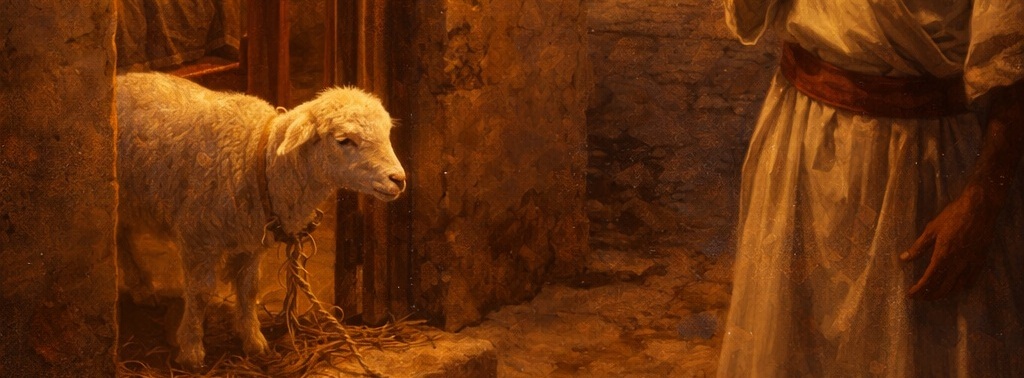
טעם ג — הנס הגדול: בשבת שלפני יציאת מצרים, צוה הקדוש ברוך הוא לעם ישראל: לכו לשוק, קנו שה מהמצרים — האלוהים שלהם — וקשרו אותו לדורבן המיטה ארבעה ימים. שבת הגדול — על שם הנס הגדול שנעשה אז.
⬥ גם השנה, שבת הגדול יוצא ביום י' בניסן — בדיוק כמו ביציאת מצרים. ומשבת זו עד ערב פסח — בדיוק ארבעה ימים, כמו אז.
ב הנס הגדול — ארבעה ימים עם השה
מדוע דווקא ארבעה ימים? אפשר היה לומר לישראל: ביום י"ד בניסן שחטו את השה. מה הצורך בכל הסיפור של ארבעה ימי קשירה?
לשאלה זו שני טעמים:
טעם א — בדיקת שלמות: קרבן פסח צריך להיות שה ללא שום מום ופגם. לכן קושרים אותו ארבעה ימים ובודקים כל יום שהוא כשר ושלם — שלא נפסל, שאין בו מום.
טעם ב — מסירות נפש: המצרי הולך ברחוב ושומע את האלוהים שלו — השה — קשור לדורבן המיטה של השכן היהודי ובוכה. ארבעה ימים המצרי יודע ורואה — ועוד ארבעה ימים שוחטים את האלוהים שלו. והוא לא יכול לעשות כלום.
זה הנס: לא שהם לא ניסו לפגוע — אלא שהיד האלוקית עצרה אותם. ובכך נבנתה האמונה של עם ישראל — הם ראו שהקדוש ברוך הוא מגן עליהם בתוך לב ליבה של מצרים.
⬥ ולמה עוד? כי ארבעה ימי חיים עם השה הזה — כשרואים שהוא ישן, בוכה, עושה על עצמו — מלמדים את ישראל בעצמם: ״זה מה שהם עבדו?!״ זה הכנה מהותית ליציאה ממצרים הנפשית.
ג תועבת מצרים כל רואה צון — עצת יוסף לאחיו
כשיוסף מביא את יעקב ואחיו למצרים, הוא נותן להם עצה: תגידו לפרעה שאתם ״אנשי מקנה״ — כי ״תועבת מצרים כל רועה צון״. אבל זה הפוך על הפוך! אם האלוהים של מצרים הוא השה — אז הרועה צון הוא ה״כהן גדול״ שלהם! מדוע לשנוא אותו?
העצה של יוסף לאחיו הייתה מחושבת:
כִּי-תוֹעֲבַת מִצְרַיִם כָּל-רֹעֵה צֹאן בראשית מו:לד
יוסף אומר: אם תגידו שאתם רועי צון — פרעה ישלח אתכם לגור בארץ גושן, רחוק מהארמון. ולמה זה חשוב? כי יוסף פחד מהתבוללות. הוא עמד בניסיון של אשת פוטיפר, אבל פחד שאחיו יתפתו לחיי הארמון עם המצריות. ארץ גושן = בידוד = שמירת הזהות.
אבל חוזרת השאלה: למה המצרים שונאים את רועי הצון?
תשובה מדהימה: הרועה הוא היחיד שיודע את האמת על האלוהים של המצרים. כשעושים תהלוכה לכבוד השה — מקלחים אותו, שמים עליו תכשיטים, כולם משתחווים לו. אבל הרועה שחוזר איתו לדיר יודע: השה בוכה, עושה צרכים, ריח רע, סתם בהמה. הוא יודע שהאלוהים שלהם הוא אבסורד.
ולכן המצרים שונאים את הרועה — כי הוא תמיד צוחק עליהם, ויודע שהמלך-אלוהים שלהם זה טמטום.
⬥ יוסף ידע: תגידו שאתם רועי צון — בטוח ירחיקו אתכם. כי אתם הראשונים שיחשפו את בגדי האימפריה הדתית שלהם.
ד שני כיוונים של יציאת מצרים
אחרי שהבנו את עניין השה — למה באמת צריך לקשור אותו ארבעה ימים? מה בדיוק הקדוש ברוך הוא רצה שיקרה לעם ישראל בארבעה הימים האלה?
ליציאת מצרים יש שני כיוונים:
כיוון א — לצאת ממצרים: לצאת פיזית מארץ מצרים. להיות חופשי מהעבדות.
כיוון ב — להוציא את מצרים ממך: 210 שנות עבדות השאירו רשמים עמוקים. ראית כל החיים שלך תהלוכות לכבוד השה. ספגת לתוכך — בלי לשים לב — שהשה הוא משהו גדול. יציאת מצרים פיזית לא מספיקה אם בראשך אתה עדיין עבד.
ולכן: ארבעה ימים עם השה בבית. תתבונן בו. תראה מה הוא. ואחרי ארבעה ימים — תשחט אותו, תמרח את הדם על המזוזה. לא קרה לך כלום. והמצרים שבתוכך — יצאו.
ועוד ראיה: לאחר קריעת ים סוף — כתוב ״וַיַּרְא יִשְׂרָאֵל אֶת-הַיָּד הַגְּדֹלָה אֲשֶׁר עָשָׂה ה' בְּמִצְרַיִם.״ הקדוש ברוך הוא פלט את גופות המצרים לחוף הים. למה? כי כל עוד ישראל לא ראו את המצרים מתים בחוף — הייתה להם מחשבה: ״אולי הם ירדפו אחרינו עוד.״ רק כשראו את הגופה — ידעו: גם מצרים יצא מאיתנו.
⬥ ״וַיַּאֲמִינוּ בַּה' וּבְמֹשֶׁה עַבְדּוֹ״ — זה בא רק אחרי שראו את הגופות. הראיה הפיזית השלימה את היציאה הנפשית.
ה מצרים מינייטורה — כל מצר בחיים
״בכל דור ודור חייב אדם לראות את עצמו כאילו הוא יצא ממצרים.״ אבל מה הכוונה המעשית? אני לא חי בימות פרעה!
המילה מצרים באה מהשורש מצר — מקום צר, מצוקה. כל רגע בחיים שבו אדם מרגיש לחוץ, צר לו, לא שולט — זה מצרים מינייטורה.
פספסת את האוטובוס — הצרות הקטנה שיש לך באותו רגע, זה מצרים.
הלכת לקופת חולים ואמרו לך ״הרופא הלך״ — הצר שיש לך, זה מצרים.
כל מקום שאתה מרגיש שאתה לא בשליטה, שחסר לך, שצר לך — זה מצר, זה מצרים.
ומה עושים? אותו דבר שעשינו ביציאת מצרים:
תגיד לעצמך: ״אם עברנו את פרעה — נעבור גם את זה.״
הקדוש ברוך הוא הביא אותך לנקודה הזאת — והוא גם יודע לגאול אותך ממנה. כל המצרים הקטנים שלנו הם הזדמנויות לראות שהוא גואל אותנו בכל יום.
כל החיים שלנו זה המתח בין גלות לגאולה.
ו גאולה וגלות — האות א' עושה את כל ההבדל
מה ההבדל בין גלות לגאולה? תשובה: אות אחת. מה האות? ומה היא אומרת?
גלות ↔ גאולה — הבדל של אות אחת
←
גְּאֻלָּה · Redemption
ג-א-ל-ה
האות א' — אלופו של עולם — היא כל ההבדל
מה זה האות א'? אלופו של עולם. הוא אחד, יחיד ומיוחד. הוא עושה את ההבדל בין גלות לגאולה.
אם אנחנו נחיה תמיד בתודעה שהקדוש ברוך הוא איתנו — אנחנו תמיד נהיה בגאולה. ברגע שמוציאים את הא' — נשארים בגלות. הא' היא הגאולה.
בניסן נגאלו — בניסן עתידין ליגאל.
בניסן הזה, בעזרת השם, נגאל גאולה שלמה. שבת שלום ופסח כשר ושמח.
📅 תוכנית שבועית — שבת הגדול
ראשון
קרא את הפסוק: ״הנה אנכי שולח לכם את אליה הנביא לפני בוא יום ה' הגדול.״ שאל: איזה ״יום גדול״ אני מצפה לו בחיים שלי? מה אני עושה כדי להתכונן אליו?
שני
חשוב על השה שהיה קשור לדורבן המיטה. ארבעה ימים לראות שהאלוהים של מצרים הוא בהמה. מה ה״שה״ שלך — מה בחיים שלך אתה מתייחס אליו כאל גדול ממה שהוא באמת?
שלישי
חשוב על עצת יוסף לאחיו: הישאר רחוק מהאווירה שמסוכנת לך רוחנית. מה המקום, הסביבה, האנשים שאתה צריך לשמור עליהם מרחק כדי להישאר אתה?
רביעי
שני כיוונים: לצאת ממצרים ולהוציא את מצרים ממך. מה ה״מצרים״ הפנימי שלך שעוד לא יצא? תן לו שם קונקרטי אחד.
חמישי
מצרים = מצר. חשוב על שלושה ״מצרים מינייטורה״ שעברת השבוע. כיצד היית מגיב אם היית זוכר שעברנו את פרעה?
שישי
גלות / גאולה — אות א'. בין לפני ארוחת שישי לבין ארוחת שישי עצמה — הכנס את ה-א' ברגע אחד. איך? תאמר: ״ברוך השם, הוא איתי בארוחה הזאת.״
שבת
בשבת הגדול הזאת — עם הסדר הקרב — חשוב: מה אני רוצה לצאת ממנו השנה? מה ה״מצרים״ שאני רוצה להשאיר מאחור בפסח תשפ"ו?
להמשך הלמידה
🔁
שיעורי צו הקודמים
השיעורים הקודמים על פרשת צו: ברית מילה וזכות ארץ ישראל, ולמה לא הקריבו קרבנות 38 שנה.
📖 צו — שיעור א׳
🕯
שבת הגדול — הגדה של פסח
ובדמיך חיי — דם מילה ודם פסח. גלה את סוד שני הדמים שבזכותם נגאלו ישראל.
📖 צו — שיעור ב׳
🎓לימוד תורה
רוצה להעמיק בגאולה וגלות? בית המדרש שלנו מציע שיעורים על קבלה ומידות.
📝 לבית המדרש
🌿כל הפרשיות
ספר ויקרא: ספר הקרבן, הקדושה, והגאולה הפנימית. גלה שיעורים נוספים.
📖 כל הפרשיות
Parashat Tzav · Shabbat HaGadol · 5786
Two Directions of the Exodus
Leaving Egypt — and getting Egypt out of yourself
Based on the teaching of Mr. Yéhouda Himi
Why did Israel keep the lamb tied for four days before Pesach? Why did Egyptians despise shepherds — who should have been their high priests? And what is the single letter that separates exile from redemption?
1 Three Reasons for the Name "Shabbat HaGadol"
The Shabbat before Pesach is called Shabbat HaGadol — the Great Shabbat. But "Shabbat" is feminine in Hebrew, so it should be "HaGedola." Why the masculine "HaGadol"?
Three reasons, each pointing to a different kind of greatness:
Reason 1 — The Halacha: The "gadol" — the senior leader of the Beit Haknesset — ascends to the maftir and reads the Haftara on this Shabbat. HaGadol = the great man of the community.
Reason 2 — The Haftara itself: The final verse of the Haftara reads: "Behold, I will send you Eliyahu the prophet — before the coming of the great and awe-inspiring day of God." Shabbat HaGadol — named after "Yom Hashem HaGadol." The masculine form follows the word "Yom" (day, masculine).
הִנֵּה אָנֹכִי שֹׁלֵחַ לָכֶם אֵת אֵלִיָּה הַנָּבִיא — לִפְנֵי בּוֹא יוֹם ה' הַגָּדוֹל וְהַנּוֹרָא Malachi 3:23
What is "the great day of God"? After the war of Gog and Magog, as written in Yechezkel, comes a day when God judges all the nations — and complete redemption arrives. In Nissan they were redeemed; in Nissan they will be redeemed again.
Reason 3 — The Great Miracle: On the Shabbat before the Exodus, God commanded Israel: go to the Egyptian marketplace, buy a lamb — their god — and tie it to your bedpost for four days. Shabbat HaGadol is named for this great miracle.
⬥ This year too, Shabbat HaGadol falls on the 10th of Nissan — exactly as it did in Egypt. And from this Shabbat to Erev Pesach — exactly four days, just as then.
2 The Great Miracle — Four Days with the Lamb
Why specifically four days? God could have simply said: on the 14th of Nissan, slaughter the lamb. What was the purpose of four days of tying it to the bedpost?
Reason 1 — Checking for blemishes: The Korban Pesach must be completely unblemished. Four days of daily inspection ensure the animal remains valid and flawless.
Reason 2 — Mesirut nefesh: The Egyptian walks down the street and hears their god — the lamb — crying, tied to the bedpost of the Jewish neighbor. Four days the Egyptian knows: in four days they will slaughter his deity. And he can do nothing.
That is the miracle: not that no Egyptian tried to act — but that the Divine hand held them back. And through this, the faith of Israel was forged. They saw that God protected them in the very heart of Egypt.
⬥ And a deeper reason: Four days of living with the lamb — watching it sleep, cry, relieve itself — taught Israel from within: "This is what they worshipped?!" This was essential preparation for the inner exodus from Egypt.
3 The Egyptian Abomination of Shepherds — Yosef's Advice
When Yosef brings his father and brothers to Egypt, he gives them a strategic tip: tell Pharaoh you are "men of livestock" — because "every shepherd is an abomination to the Egyptians." But this is completely backwards! If the Egyptian god is the lamb, then shepherds should be their high priests! Why the hatred?
כִּי-תוֹעֲבַת מִצְרַיִם כָּל-רֹעֵה צֹאן Bereishit 46:34
Yosef's advice was carefully calculated: if you say you are shepherds, Pharaoh will send you to live in the land of Goshen, far from the palace. Why does this matter? Yosef feared assimilation. He himself withstood the test of Potiphar's wife — but he feared his brothers would be drawn into palace life and lose their identity. Goshen = isolation = preservation.
But the question returns: why do Egyptians truly hate shepherds?
Stunning answer: the shepherd is the only one who knows the truth about the Egyptian deity. During the parade honoring the lamb — it is bathed, adorned with jewelry, and everyone prostrates themselves. But the shepherd who returns with it to the pen sees everything: it cries, it relieves itself, it smells, it is just an animal. He knows their god is an absurdity.
The Egyptians hate the shepherd because he always smirks at them — knowing that their magnificent, sacred deity is just livestock.
⬥ Yosef knew: say you are shepherds — they will certainly exile you to the margins. Because you are the first to expose the nakedness of their religious empire.
4 Two Directions of the Exodus
Now that we understand the lamb — why exactly did God want Israel to tie it for four days? What was supposed to happen to them during those four days?
The Exodus from Egypt has two directions:
Direction 1 — Leaving Egypt: The physical departure. Freedom from slavery.
Direction 2 — Getting Egypt out of you: Two hundred and ten years of slavery left deep impressions. You saw the lamb-processions your whole life. You absorbed — without realizing — that the lamb is something great. Leaving Egypt physically is not enough if your mind is still enslaved.
Therefore: four days with the lamb in your home. Watch it. See what it is. After four days — slaughter it, smear the blood on the doorpost. Nothing happened to you. And the Egypt within you — departs.
Further proof: after the splitting of the sea — it is written: "And Israel saw the great hand that God had performed in Egypt." God caused the bodies of the Egyptian soldiers to wash up on the shore. Why? Because as long as Israel did not see the Egyptians dead on the shore — there remained the thought: "Maybe they will pursue us again." Only when they saw the bodies did they know: Egypt has left us too.
⬥ "And they believed in God and in Moses His servant" — this came only after seeing the bodies. The physical sight completed the inner exodus.
5 Egypt in Miniature — Every Constraint in Life
"In every generation, a person is obligated to see himself as if he personally left Egypt." But what is the practical meaning? I am not living in the time of Pharaoh!
The word Mitzraim (Egypt) comes from the root metzar — a narrow place, a constraint. Every moment in life where a person feels pressured, trapped, not in control — that is Egypt in miniature.
You missed the bus — the frustration you feel at that moment, that is Egypt.
You went to the clinic and they told you the doctor left — the tightness you feel, that is Egypt.
Every place where you feel out of control, lacking, constrained — that is metzar, that is Mitzraim.
What do you do? The same thing we did at the Exodus:
Tell yourself: "If we got through Pharaoh — we will get through this too."
God brought you to this point — and He knows how to redeem you from it. All our small Egypts are opportunities to see that He redeems us every single day.
Our entire life is the tension between exile and redemption.
6 Geula and Galut — The Alef Makes All the Difference
What is the difference between exile (Galut) and redemption (Geula)? Answer: one letter. Which letter? And what does it say?
GALUT ↔ GEULA — One Letter Apart
The Alef — Aluf Shel Olam (Master of the World) — makes all the difference
What is the Alef? Aluf Shel Olam — the Master of the Universe. He is One, unique, singular. He is what makes the difference between exile and redemption.
If we live with constant awareness that God is with us — we are always in redemption. The moment the Alef is removed — we remain in exile. The Alef is the redemption.
In Nissan they were redeemed — in Nissan they will be redeemed again.
This Nissan, with God's help, may we be redeemed with a complete redemption. Shabbat Shalom and Chag Kasher veSame'ach.
📅 Weekly Plan — Shabbat HaGadol
Sunday
Read: "Before the coming of the great and awe-inspiring day of God." Ask: what great "day" am I hoping for in my own life? What am I doing to prepare for it?
Monday
Think about the lamb tied to the bedpost. Four days of seeing their god is just an animal. What is the "lamb" in your life — something you treat as far greater than it truly is?
Tuesday
Reflect on Yosef's advice to his brothers: stay far from the environment that endangers you spiritually. What place, atmosphere, or circle of people do you need distance from to remain authentically yourself?
Wednesday
Two directions: leaving Egypt and getting Egypt out of you. What is the internal "Egypt" that has not yet left? Give it one concrete name.
Thursday
Mitzraim = metzar. Identify three "miniature Egypts" you experienced this week. How would you have responded if you remembered that we got through Pharaoh?
Friday
Galut / Geula — the Alef. Between preparing for Shabbat dinner and sitting down to eat, insert one Alef-moment. How? Say: "Thank God — He is with me at this table."
Shabbat
On this Shabbat HaGadol, with the Seder approaching: what do I want to leave behind this year? What is the "Egypt" I want to exit in Pesach 5786?
Continue Learning
🔁Previous Tzav Shiurim
The previous Tzav shiurim: brit milah and our right to the Land of Israel, and why Israel brought no korbanot for 38 years.
📖 Tzav — Shiur 1
🕯Shabbat HaGadol & Haggadah
The two bloods — brit milah and Korban Pesach. Discover the secret of "By your bloods, live."
📖 Tzav — Shiur 2
🎓Torah Study
Want to go deeper into Geula and Galut? Our Beit Midrash offers shiurim on Kabbalah and character.
📝 Beit Midrash
💛Partner in Redemption
Every shiur, every translation, every page — built from love of Torah. You are a partner in Geula.
💛 I want to be a partner
Paracha Tsav · Chabbat HaGadol · 5786
Deux Directions de la Sortie d'Égypte
Sortir d'Égypte — et faire sortir l'Égypte de soi
D'après l'enseignement de M. Yéhouda Himi
Pourquoi Israël a-t-il gardé l'agneau attaché au lit pendant quatre jours ? Pourquoi les Égyptiens haïssaient-ils les bergers — qui auraient dû être leurs grands prêtres ? Et quelle est l'unique lettre qui sépare l'exil de la rédemption ?
1 Trois Raisons pour le Nom « Chabbat HaGadol »
Le Chabbat avant Pessah s'appelle Chabbat HaGadol — le Grand Chabbat. Mais « Chabbat » est féminin en hébreu — il devrait donc s'appeler « HaGedola ». Pourquoi le masculin « HaGadol » ?
Raison 1 — La Halakha : Le « gadol » — le grand de la communauté, le rav — monte au maftir et lit la Haftara de ce Chabbat. HaGadol = le grand homme de la communauté.
Raison 2 — La Haftara elle-même : Le dernier verset de la Haftara dit : « Voici que Je vous enverrai Élie le prophète — avant la venue du grand et redoutable jour de D.ieu. » Chabbat HaGadol — nommé d'après « Yom Hachem HaGadol ». Le masculin suit le mot « Yom » (jour, masculin).
הִנֵּה אָנֹכִי שֹׁלֵחַ לָכֶם אֵת אֵלִיָּה הַנָּבִיא — לִפְנֵי בּוֹא יוֹם ה' הַגָּדוֹל וְהַנּוֹרָא Malachie 3:23
Qu'est-ce que « le grand jour de D.ieu » ? Après la guerre de Gog et Magog, comme écrit dans Yéhézkel, viendra un jour où D.ieu jugera toutes les nations — et la rédemption complète se révélera. En Nissan ils ont été rachetés ; en Nissan ils seront à nouveau rachetés.
Raison 3 — Le Grand Miracle : Le Chabbat précédant la Sortie d'Égypte, D.ieu ordonna à Israël : allez au marché, achetez un agneau — leur dieu — et attachez-le au pied du lit pendant quatre jours. Chabbat HaGadol est nommé d'après ce grand miracle.
⬥ Cette année aussi, Chabbat HaGadol tombe le 10 Nissan — exactement comme en Égypte. Et de ce Chabbat à la veille de Pessah — exactement quatre jours, comme alors.
2 Le Grand Miracle — Quatre Jours avec l'Agneau
Pourquoi précisément quatre jours ? D.ieu aurait pu simplement dire : le 14 Nissan, égorgez l'agneau. Quel était l'objectif des quatre jours d'attache ?
Raison 1 — Vérification des défauts : Le Korban Pessah doit être un agneau parfaitement sans défaut. Quatre jours d'inspection quotidienne garantissent que l'animal reste valide et sans tare.
Raison 2 — Mesirat nefech : L'Égyptien passe dans la rue et entend son dieu — l'agneau — pleurer, attaché au pied du lit du voisin juif. Quatre jours l'Égyptien sait : dans quatre jours on égorge son dieu. Et il ne peut rien faire.
C'est là le miracle : non pas qu'ils n'aient pas essayé d'agir — mais que la main divine les a retenus. Et c'est ainsi que la foi d'Israël a été forgée.
⬥ Et une raison plus profonde : Quatre jours de vie avec l'agneau — le voir dormir, pleurer, faire ses besoins — ont appris à Israël de l'intérieur : « C'est ça qu'ils adoraient ?! » Une préparation essentielle à la sortie intérieure d'Égypte.
3 L'Abomination des Bergers — Le Conseil de Yossef
Quand Yossef amène son père et ses frères en Égypte, il leur donne un conseil stratégique : dites à Pharaon que vous êtes « des hommes de bétail » — car « tout berger est une abomination pour les Égyptiens ». Mais c'est totalement à l'envers ! Si le dieu égyptien est l'agneau, le berger devrait être leur grand prêtre ! Pourquoi cette haine ?
כִּי-תוֹעֲבַת מִצְרַיִם כָּל-רֹעֵה צֹאן Béréchit 46:34
Le conseil de Yossef était calculé : si vous dites que vous êtes bergers, Pharaon vous enverra habiter en terre de Goshen, loin du palais. Pourquoi est-ce important ? Yossef craignait l'assimilation. Il avait lui-même résisté à l'épreuve de la femme de Putiphar — mais il craignait que ses frères soient tentés par la vie de palais. Goshen = isolement = préservation de l'identité.
Mais la question revient : pourquoi les Égyptiens haïssent-ils vraiment les bergers ?
Réponse stupéfiante : le berger est le seul qui connaît la vérité sur le dieu égyptien. Lors de la procession en l'honneur de l'agneau — on le baigne, on lui met des bijoux, tout le monde se prosterne. Mais le berger qui rentre avec lui à l'étable voit tout : il pleure, il fait ses besoins, il pue — c'est juste un animal. Il sait que leur dieu est une absurdité.
Les Égyptiens haïssent le berger parce qu'il se moque toujours d'eux — sachant que leur divinité majestueuse n'est que du bétail.
⬥ Yossef savait : dites que vous êtes bergers — ils vous éloigneront à coup sûr. Car vous êtes les premiers à exposer la nudité de leur empire religieux.
4 Deux Directions de la Sortie d'Égypte
Maintenant que nous comprenons l'agneau — pourquoi D.ieu voulait-il exactement qu'Israël l'attache quatre jours ? Que devait-il se passer pendant ces quatre jours ?
Direction 1 — Sortir d'Égypte : Le départ physique. La liberté de l'esclavage.
Direction 2 — Faire sortir l'Égypte de soi : Deux cent dix ans d'esclavage ont laissé des empreintes profondes. Toute ta vie tu as vu les processions en l'honneur de l'agneau. Tu as absorbé — sans t'en rendre compte — que l'agneau est quelque chose de grand. Sortir d'Égypte physiquement ne suffit pas si ton esprit est encore esclave.
Donc : quatre jours avec l'agneau chez toi. Observe-le. Vois ce qu'il est. Après quatre jours — égorge-le, mets le sang sur le montant de la porte. Il ne t'est rien arrivé. Et l'Égypte en toi — est sortie.
Preuve supplémentaire : après la division de la mer, il est écrit : « Et Israël vit la grande main que D.ieu avait accomplie contre l'Égypte. » D.ieu fit rejeter les corps des soldats égyptiens sur le rivage. Pourquoi ? Parce que tant qu'Israël ne vit pas les Égyptiens morts sur la plage — il subsistait la pensée : « Peut-être vont-ils nous poursuivre. » Ce n'est qu'en voyant les corps qu'ils surent : l'Égypte nous a aussi quittés.
⬥ « Et ils crurent en D.ieu et en Moïse Son serviteur » — cela ne vint qu'après avoir vu les corps. La vue physique complétait la sortie intérieure.
5 L'Égypte en Miniature — Chaque Contrainte dans la Vie
« À chaque génération, l'homme est tenu de se voir comme s'il était lui-même sorti d'Égypte. » Mais quelle est la signification pratique ? Je ne vis pas à l'époque de Pharaon !
Le mot Mitsraïm (Égypte) vient de la racine metssar — un lieu étroit, une contrainte. Chaque moment dans la vie où l'on se sent oppressé, coincé, sans contrôle — c'est l'Égypte en miniature.
Tu as raté le bus — la frustration de ce moment, c'est l'Égypte.
Tu es allé à la clinique et on t'a dit « le médecin est parti » — la tension que tu ressens, c'est l'Égypte.
Partout où tu te sens sans contrôle, où il te manque quelque chose, où tu es à l'étroit — c'est un metssar, c'est Mitsraïm.
Que fait-on ? La même chose qu'à la Sortie d'Égypte :
Dis-toi : « Si nous avons traversé Pharaon — nous traverserons cela aussi. »
D.ieu t'a amené à ce point — et Il sait aussi t'en délivrer. Tous nos petits Égypte sont des occasions de voir qu'Il nous rachète chaque jour.
Toute notre vie est la tension entre l'exil et la rédemption.
6 Gueula et Galout — L'Alef Fait Toute la Différence
Quelle est la différence entre l'exil (Galout) et la rédemption (Gueula) ? Réponse : une seule lettre. Laquelle ? Et que dit-elle ?
GALOUT ↔ GUEULA — Une seule lettre de différence
L'Alef — Aluf Chel Olam (Maître du Monde) — fait toute la différence
Qu'est-ce que l'Alef ? Aluf Chel Olam — le Maître de l'Univers. Il est Un, unique, singulier. C'est Lui qui fait la différence entre l'exil et la rédemption.
Si nous vivons avec la conscience constante que D.ieu est avec nous — nous sommes toujours dans la rédemption. Dès qu'on retire l'Alef — on reste dans l'exil. L'Alef, c'est la rédemption.
En Nissan ils ont été rachetés — en Nissan ils seront à nouveau rachetés.
En ce Nissan, avec l'aide de D.ieu, puissions-nous être rachetés d'une rédemption complète. Chabbat Chalom et Pessah Cachère vesSaméa'h.
📅 Programme de la Semaine — Chabbat HaGadol
Dimanche
Lisez : « Avant la venue du grand et redoutable jour de D.ieu. » Demandez-vous : quel grand « jour » est-ce que j'espère dans ma vie ? Que fais-je pour m'y préparer ?
Lundi
Pensez à l'agneau attaché au pied du lit. Quatre jours à voir que le dieu des Égyptiens n'est qu'une bête. Quel est votre « agneau » — quelque chose que vous traitez comme bien plus grand qu'il ne l'est ?
Mardi
Réfléchissez au conseil de Yossef : restez loin de l'environnement qui vous met en danger spirituellement. Quel lieu, quelle atmosphère, quels cercles vous éloignent de vous-même ?
Mercredi
Deux directions : sortir d'Égypte et faire sortir l'Égypte de soi. Quel est l'« Égypte » intérieur qui n'est pas encore sorti ? Donnez-lui un nom concret.
Jeudi
Mitsraïm = metssar. Identifiez trois « Égyptes en miniature » vécus cette semaine. Comment auriez-vous réagi en vous souvenant que nous avons traversé Pharaon ?
Vendredi
Galout / Gueula — l'Alef. Entre la préparation du dîner de Chabbat et le repas lui-même, insérez un moment-Alef. Comment ? Dites : « Barukh Hachem — Il est avec moi à cette table. »
Chabbat
En ce Chabbat HaGadol, à l'approche du Séder : qu'est-ce que je veux quitter cette année ? Quel est l'« Égypte » que je veux laisser derrière moi à Pessah 5786 ?
Continuer l'Apprentissage
🔁Cours Précédents sur Tsav
Les cours précédents : brit milah et notre droit sur la Terre d'Israël, et pourquoi Israël n'a pas offert de korbanot pendant 38 ans.
📖 Tsav — Cours 1
🕯Chabbat HaGadol & Haggada
Les deux sangs — brit milah et Korban Pessah. Découvrez le secret de « Par tes sangs, vis. »
📖 Tsav — Cours 2
🎓Étude de la Torah
Vous voulez approfondir Gueula et Galout ? Notre Beit Midrach propose des cours sur la Kabbale et les midot.
📝 Beit Midrach
💛Partenaire de la Rédemption
Chaque cours, chaque traduction, chaque page — bâtis par amour de la Torah. Vous êtes partenaire de la Gueula.
💛 Je veux être partenaire