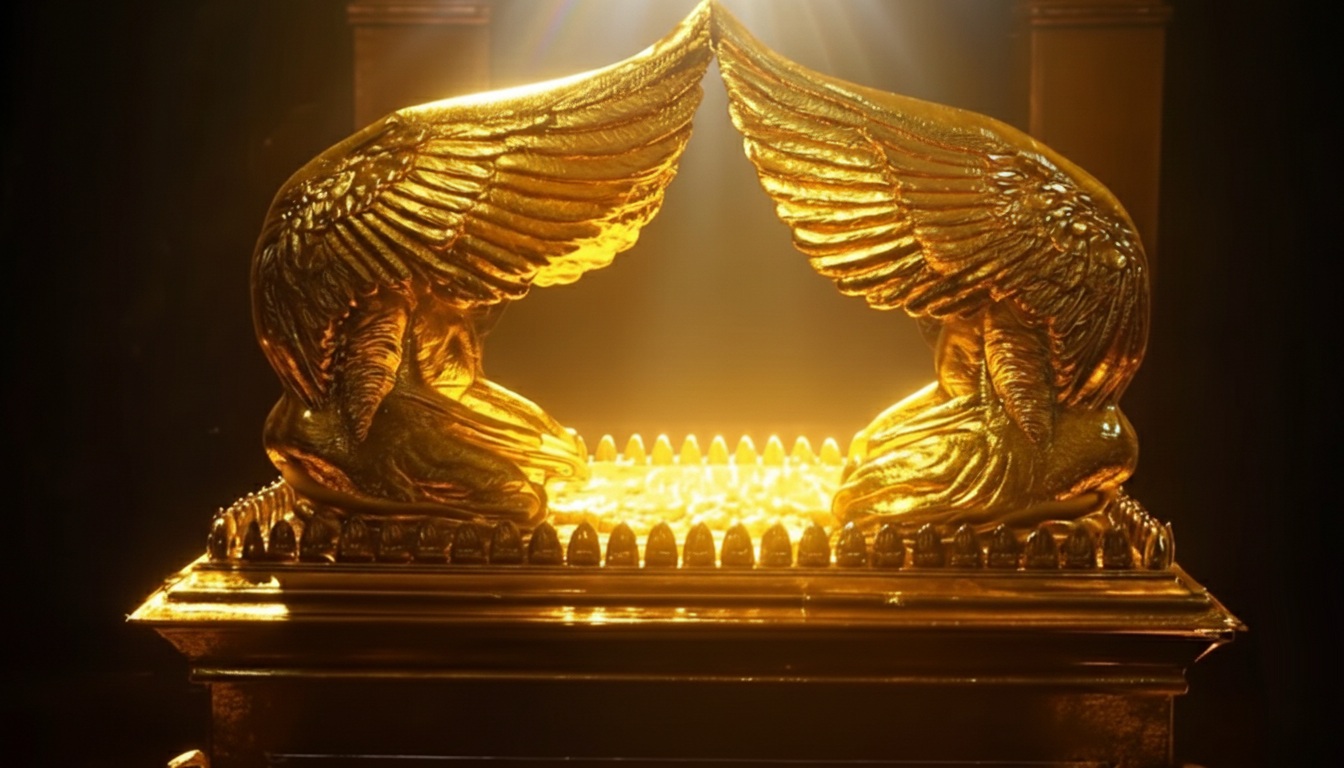
וְעָשׂוּ אֲרוֹן עֲצֵי שִׁטִּים

Le Secret du Aron — Humilité, Mesures Brisées et Trésor Caché

The Secret of the Aron — Humility, Broken Measures and Hidden Treasure

סוד הארון — ענווה, מידות שבורות ואוצר גנוז

Enseignement de M. Yéhouda Himi • Paracha Térouma (2) Teaching by M. Yehuda Himi • Parashat Teruma (2) שיעור מאת מ. יהודה חימי • פרשת תרומה (2)

א. Du Ta'hash au Aron — Le fil conducteur de l'Anava

Nous continuons, avec l'aide de Hachem, sur la Paracha Térouma. Aujourd'hui nous allons parler du Aron (l'Arche). Et tout cela dans le contexte du même principe fondamental : pour que Hakadoch Baroukh Hou fasse résider Sa Chékhina au sein du peuple d'Israël, comme il est écrit :

וְעָשׂוּ לִי מִקְדָּשׁ וְשָׁכַנְתִּי בְּתוֹכָם

« Ils Me feront un sanctuaire et Je résiderai en eux » — à l'intérieur des cœurs du peuple d'Israël

Il faut qu'il y ait un fondement d'Anava (humilité). Pourquoi ? Parce que Hakadoch Baroukh Hou dit : « Je ne réside pas dans un lieu où il y a de l'orgueil. » Là où il y a de la Gaava (orgueil), Hakadoch Baroukh Hou dit : « Je m'en vais, Je ne suis pas capable d'être dans un lieu où il y a de l'orgueil. »

Car il est dit : « Hachem Malakh Guéout Lavéch » — l'orgueil appartient exclusivement à Hakadoch Baroukh Hou. Si un homme pense pouvoir se comporter avec orgueil, alors la Chékhina se retire.

Rappel du début de la semaine : Nous avions parlé des Orot Té'hashim. Nous avions dit que le Ta'hash est coloré, appelé « Sass Gouna » — il se réjouit de ses couleurs. Mais 'Has véChalila, cela ne signifie pas que Yaakov — qui correspond au Michkan, qui correspond au 3ᵉ Beit HaMikdach — serait dans l'orgueil !

Il se réjouit de ses couleurs — qui sont les couleurs qui font Yaakov ? Ce sont Avraham et Yits'hak ! Yaakov Avinou dit en réalité : « Dans mon humilité, je ne vaux rien par moi-même. Si je n'ai pas mon père Yits'hak et mon grand-père Avraham, je n'ai rien. »

Ainsi, les Orot Té'hashim qui recouvrent le Michkan — cette couleur qu'on voit en permanence de l'extérieur — disent en réalité : Anava, Anava, Anava.

C'est sur ce même fondement que nous allons maintenant prendre le Aron et en parler.

ב. Pourquoi le nom « Aron » ? — La lumière divine + « Véassou » au pluriel

Tout d'abord, pourquoi l'Arche s'appelle-t-elle « Aron » ? Nous sommes habitués à ce mot, mais pourquoi l'Arche du Beit HaMikdach et du Michkan s'appelle-t-elle ainsi ?

🔷 LE MOT « ARON » CONTIENT LE MOT « OR » (LUMIÈRE) 🔷

Le Aron capte la Lumière divine et connecte cette Lumière divine avec la Terre. C'est pourquoi au-dessus du Aron se trouvent les Krouvim (Chérubins), et la Chékhina réside entre les deux Krouvim. La Lumière divine parlait à Moché Rabbénou depuis l'espace entre les deux Krouvim.

Le point de connexion entre la Lumière divine supérieure, le Michkan et le peuple d'Israël — c'est le Aron. C'est pourquoi, en Lachon HaKodech (la langue sainte), on l'appelle « Aron » : parce qu'il capte la Lumière divine qui descend dans le monde.

Une particularité unique : La Torah dit :

וְעָשׂוּ אֲרוֹן עֲצֵי שִׁטִּים

« Et ils feront une Arche en bois d'acacia » (Chémot 25:10)

Partout ailleurs, il est écrit « Véassita » (et tu feras) — au singulier. Véassita le Choul'han, Véassita la Ménorah, Véassita ceci, Véassita cela. Le seul Kéli (ustensile) pour lequel il est écrit « Véassou » — au pluriel — c'est le Aron.

Pourquoi le pluriel spécifiquement pour le Aron ?

Voyons d'abord ce qu'il y a à l'intérieur du Aron : les Lou'hot HaBrit, c'est-à-dire la Torah. Hakadoch Baroukh Hou veut dire à Moché que le Aron — qui représente la Torah — tout le monde y a participé.

🏛️ הארון
Le Aron
כֶּתֶר תּוֹרָה
🍽️ השולחן
Le Choul'han
כֶּתֶר מַלְכוּת
🔥 המזבח
Le Mizbéa'h
כֶּתֶר כְּהוּנָּה

Nous savons ce qui est écrit dans la Michna (Massékhet Avot) : « Trois couronnes (Kétarim) existent : Kéter Torah, Kéter Malkout et Kéter Kéhouna, et le Kéter Chem Tov s'élève au-dessus de toutes. »

Kéter Kéhouna — la couronne du sacerdoce : les Cohanim l'ont prise, c'est héréditaire, de génération en génération.

Kéter Malkout — la couronne de la royauté : c'est le lignage. Si tu n'es pas de la lignée de David, tu n'as pas de royauté.

Mais Kéter Torah n'a été donnée à personne en particulier — elle a été donnée à tout le peuple d'Israël. Et quiconque veut venir étudier, qu'il vienne et qu'il étudie !

C'est pourquoi le Aron symbolise la connexion de tout le peuple d'Israël, et tous peuvent y accéder. C'est pour cela que le commandement est au pluriel : « Véassou » — il y a de la place pour tout le peuple d'Israël.

ג. Les mesures brisées — Toujours des moitiés

Ensuite, la Torah nous donne les dimensions du Aron :

אַמָּתַיִם וָחֵצִי אָרְכּוֹ וְאַמָּה וָחֵצִי רָחְבּוֹ וְאַמָּה וָחֵצִי קֹמָתוֹ

« Deux coudées et demie sa longueur, une coudée et demie sa largeur, et une coudée et demie sa hauteur » (Chémot 25:10)

Ici aussi le Aron est unique parmi tous les Kélim : dans tous les autres ustensiles du Michkan, il y a des mesures entières et des mesures en moitiés. Mais dans le Aron : la longueur — moitié, la largeur — moitié, la hauteur — moitié. Toutes les mesures sont brisées !

Le Aron n'est pas si grand que cela. Mais ce qui est remarquable, c'est que toutes ses dimensions sont brisées — tout est cassé, demi, demi, demi.

C'est encore le même message : si nous avons dit que le Aron représente la Torah, alors si tu veux acquérir la Torah, tu dois toujours te sentir à moitié. Encore et toujours, nous revenons à l'Anava — ressens-toi comme étant à moitié, incomplet.

ד. Le centre de la Torah — Daroch Darach et la Vav du Ga'hon

Où la Torah nous illustre-t-elle ce concept de « moitié » de manière encore plus frappante ?

Nous avons le Séfer Vayikra — c'est le 'Houmach du milieu, le troisième livre sur cinq. Et naturellement, c'est là que nous trouvons les points médians de la Torah : la moitié en mots, la moitié en lettres et la moitié en versets.

Lettres dans la Torah : 304 805

Mots dans la Torah : 79 976

Versets dans la Torah : 5 846

La moitié de la Torah en mots :

79 976 est un nombre pair. Où tombe la moitié ? Dans la Paracha Chémini, après l'épisode de Nadav et Avihou, il est écrit :

וְאֵת שְׂעִיר הַחַטָּאת דָּרֹשׁ דָּרַשׁ מֹשֶׁה

« Et le bouc expiatoire — Daroch Darach Moché » (Vayikra 10:16)

Exactement entre le mot « Daroch » et le mot « Darach » se situe la moitié de la Torah en mots. De Béréchit jusqu'à « Daroch » — une moitié. De « Darach » jusqu'à « Léeiné Kol Israël » — l'autre moitié.

La Torah a délibérément visé ces mots pour que la moitié tombe exactement là. Le message : si tu te considères comme un grand Talmid 'Hakham, que tu as déjà « Darach » (investigué, étudié) — eh bien, maintenant Droch ! (continue à investiguer !). Tu es toujours à moitié.

🔷 TALMID 'HAKHAM — ET NON RAV 'HAKHAM 🔷

C'est pourquoi un érudit en Torah n'est pas appelé « Rav 'Hakham » (maître sage), mais « Talmid 'Hakham » (élève sage). Ce qui le rend sage, c'est qu'il se considère comme un élève — il dit toujours : « J'ai encore à apprendre, encore à apprendre, encore à apprendre. » Celui qui pense être déjà sage — c'est le plus grand sot, car la Torah est infinie.

La moitié de la Torah en lettres :

304 805 est un nombre impair. Il y a donc une lettre qui se trouve exactement au milieu, avec le même nombre de lettres de chaque côté. Cette lettre doit porter tout le poids de la Torah — elle doit donc être extrêmement humble.

Quelle est cette lettre ? Dans la Paracha Chémini encore, parmi les lois sur les animaux impurs, à propos du serpent :

וְכֹל הוֹלֵךְ עַל גָּחוֹן

« Et tout ce qui marche sur son ventre (Ga'hon) » — c'est le serpent (Vayikra 11:42)

La lettre Vav du mot « Ga'hon » (גָּחוֹן) est une Vav Rabati — une lettre agrandie. C'est elle qui constitue le milieu exact de la Torah en lettres.

Nous savons que dans la Torah il y a des lettres agrandies (comme le Beit de Béréchit) et des lettres rapetissées (comme le Aleph de Vayikra).

Mais attention — ne sois pas TROP humble !

La Torah a dit « Daroch Darach » — sois toujours à moitié. Mais n'exagère pas l'humilité au point de jouer la comédie, comme si tu étais très humble en marchant courbé comme un serpent.

Où est le danger ? Regarde la Vav : quand elle se courbe, vue de côté, elle ressemble à un serpent cobra. C'est-à-dire que celui qui fait semblant d'être extrêmement humble, il marche courbé comme un serpent — mais c'est un serpent. Quand il se redresse, il mord comme un serpent.

C'est pour cela que la Vav est « Rabati » (agrandie) : il faut être dans l'Anava, mais pas trop.

En tout cas, le Aron a été fait avec des moitiés, moitiés, moitiés — pour briser la Midda de la Gaava (l'orgueil) et marcher dans l'Anava.

ה. Or à l'intérieur et à l'extérieur — Tokho kéBaro

La Torah poursuit et dit :

וְצִפִּיתָ אֹתוֹ זָהָב טָהוֹר מִבַּיִת וּמִחוּץ תְּצַפֶּנּוּ

« Tu le recouvriras d'or pur, de l'intérieur et de l'extérieur tu le recouvriras » (Chémot 25:11)

D'accord, il faut le recouvrir d'or à l'extérieur — on va y placer les Lou'hot HaBrit, c'est logique. Mais pourquoi faut-il aussi le recouvrir d'or à l'intérieur ? Et qu'y a-t-il au milieu ?

Betsalel a fabriqué trois arches emboîtées — comme le jeu des cubes gigognes. Une petite arche en or, une arche en bois un peu plus grande, puis une grande arche en or. On emboîte l'une dans l'autre : la grande en or contient celle en bois, qui contient la petite en or. Résultat : un Aron recouvert d'or à l'intérieur et à l'extérieur, avec du bois d'acacia au milieu.

La question : Je comprends l'or à l'extérieur. Mais pourquoi l'or aussi à l'intérieur ? Quand vous voyez les menuisiers fabriquer une armoire : à l'extérieur c'est du beau Formica, mais à l'intérieur c'est du MDF ordinaire — personne ne voit l'intérieur !

La réponse : Si le Aron correspond aux Talmidé 'Hakhamim (ceux qui portent la Torah), alors il faut que Tokho kéBaro — que l'intérieur soit comme l'extérieur. Tout comme il est en or à l'extérieur, il faut qu'à l'intérieur il ait aussi un cœur en or. Et pas qu'en apparence il semble être un grand Talmid 'Hakham, humble et modeste, mais qu'à l'intérieur… Hachem nous en préserve !

Mais alors, pourquoi le bois au milieu ? Pourquoi ne pas faire un Aron entièrement en or, en une seule coulée ? Ce n'est pas l'or qui manquait au peuple d'Israël — ils avaient le butin de la mer, le butin d'Égypte ! Ils sont venus au Veau d'or et ont donné sans compter. Il n'y avait pas de problème de budget !

Voyons la contradiction entre le bois et l'or :

L'or est le matériau le plus précieux dans la nature. Le bois est un matériau simple.

L'or est Domem (inanimé, inerte). Le bois est Tsoméa'h (végétal, qui pousse).

🔷 LA COMBINAISON PARFAITE 🔷

C'est exactement la combinaison que nous exigeons d'un Juif : d'un côté, qu'il soit solide, ancré, stable et constant — comme l'inanimé, comme l'or. « Je ne bouge pas de ma position. » De l'autre côté, qu'il y ait en lui de la croissance — toujours apprendre, étudier, grandir dans la Torah.

C'est-à-dire : ne pas perdre ses valeurs — c'est l'extérieur, je marche sur une seule voie. Mais être suffisamment un homme de l'intérieur pour dire : il faut aussi écouter, débattre, apprendre.

C'est ce que nous voyons dans la Halakha : On peut débattre — Beit Hillel contre Beit Chammaï — et à la fin on sait ce qu'est la Halakha. L'extérieur est fixe. Mais à l'intérieur, on peut discuter, apprendre, féconder les idées et croître. C'est la combinaison juste du Talmid 'Hakham.

ו. L'équilibre Or / Bois — Le Rav qui priait en secret

Mais il y a encore un point important. Quand je dis « Talmid 'Hakham », c'est moi, c'est toi, c'est nous tous. C'est-à-dire un bon Juif. Ce bon Juif représente Hakadoch Baroukh Hou dans le monde.

C'est pourquoi on dit qu'un Talmid 'Hakham qui a une tache sur son vêtement est passible de mort. Il faut être habillé proprement, dignement, en ordre — pourquoi ? Parce que sinon les gens diront : « Regardez ces gens-là ! » C'est un 'Hiloul Hachem (profanation du Nom divin). Nous représentons Hakadoch Baroukh Hou dans le monde — nous devons aussi paraître comme des fils de Roi.

C'est l'or à l'extérieur.

Mais à l'intérieur, nous devons être dans la simplicité — c'est le bois. À l'intérieur nous sommes simples, mais vers l'extérieur nous devons paraître des fils de Roi.

C'est en permanence ce jeu, cet équilibre de l'être : d'un côté je dois être dans l'audace sainte (Azout diKédoucha), de l'autre dans l'Anava.

Quelle est la solution ?

Très simple : quand nous sommes face à Hakadoch Baroukh Hou — nous sommes dans l'Anava. Quand nous sommes face aux hommes, et que quelqu'un s'oppose à la voie que Hakadoch Baroukh Hou amène dans le monde — là, je dois être davantage dans l'audace, le courage.

L'histoire du Rav : Il y avait un Rav qui avait l'habitude de réprimander sa communauté : « Vous n'êtes pas en ordre, vous êtes ceci, vous êtes cela ! » — très en colère, très sévère.

On lui demanda : « Comment peux-tu être si en colère tout le temps ? »

Il répondit : « Je vois les problèmes. Mais quand je me retourne pour manger (en privé), je prie pour eux, pour que Hachem leur donne Sa miséricorde. »

C'est-à-dire : il y a un endroit où il faut être dans l'or, et un endroit où il faut être dans le bois. Et l'équilibre est entre les deux.

Le Michkan dans son ensemble illustre ce principe : à l'intérieur — dans le Kodech HaKodachim — le Aron, or ; la Kaporet, or ; les Krouvim, or. On sort : la Ménorah, or, Mikcha. Le Choul'han, les garnitures en or. Le Mizbéa'h HaKétoret, or.

Mais qu'est-ce qui recouvre tout cet ensemble de l'extérieur ? Les peaux de chèvres. Puis les Orot Té'hashim.

Nous voyons encore une fois : le point intérieur est très très élevé, mais du côté extérieur, nous émettons de la simplicité. C'est le fondement qui traverse toute la construction.

ז. Le contenu du Aron — Le trésor caché sous le Har HaBayit

Il est fascinant de savoir ce qu'il y avait à l'intérieur du Aron :

📜 Lou'hot HaBrit = Les Tables de l'Alliance — les secondes Lou'hot intactes
💔 Chivré Lou'hot = Les fragments des premières Tables que Moché a brisées (« Achèr Chibarta »)
🌸 Maté Aharon = Le bâton d'Aharon qui a fleuri et produit des amandes (lors de la révolte de Kora'h)
🏺 Tsintsénet HaMan = Le récipient de Manne conservé en souvenir
📖 Séfer Torah de Moché = Le tout premier Séfer Torah originel écrit par Moché Rabbénou lui-même

Certains disent que le Séfer Torah n'était pas à l'intérieur du Aron (difficile de tout y faire rentrer), mais qu'il y avait une tablette (un support) à côté du Aron, sur laquelle était posé le Séfer Torah de Moché Rabbénou.

Par ailleurs, à certaines époques, on sortait les fragments des premières Lou'hot pour partir en guerre — mais nous n'entrerons pas plus en détail ici.

🔑 LE RAMBAM — HILKHOT BEIT HABÉ'HIRA 🔑

Selon le Rambam dans les Hilkhot Beit HaBé'hira, tous ces objets sacrés sont cachés en sous-sol, dans des Matmouniyot (chambres souterraines) que Chlomo HaMélekh a fait construire sous le Har HaBayit.

Chlomo HaMélekh a vu par le Roua'h HaKodech (inspiration divine) que le Beit HaMikdach allait être détruit. Il n'a pas pris de risque : il a creusé des souterrains sous le Har HaBayit et y a déposé le Aron et tout ce qui a été mentionné.

Ainsi, lorsque les Babyloniens sont venus, ils ont pris tous les ustensiles du Beit Hachem — ils ont tout emporté. Mais ils n'ont pas pris la Ménorah authentique fabriquée sous la direction de Moché Rabbénou (comme nous le lisons dans notre Paracha), ni le Aron, ni tout ce que j'ai expliqué — car tout cela était caché en dessous.

Au Beit HaMikdach Chéni (Second Temple) : il n'y avait plus de Aron dans le Kodech HaKodachim. Il n'y avait que la Even HaChétiya (la Pierre de Fondation).

Dans la Massékhèt Yoma, lorsque le Cohen HaGadol accomplissait le service de Yom Kippour : au Premier Temple, il posait l'encens entre les Badim (barres) du Aron. Au Second Temple, il le posait sur la Even HaChétiya. Pendant toute la splendeur du Second Temple — il n'y avait pas de Aron.

L'histoire du Cohen dans la Guémara : Un Cohen qui apportait du bois pour le Mizbéa'h — sa hache est tombée. Quand il est descendu la chercher, il a atteint cet endroit (les chambres souterraines). Il est remonté et a voulu raconter ce qu'il avait vu… Cela apparaît dans la Guémara.

Le Aron HaBrit n'est NI en Éthiopie, NI au Vatican, NI nulle part ailleurs.

Le Aron HaBrit, avec l'aide de Hachem, se trouve sous le Har HaBayit.

Et quand viendra le Machia'h, on découvrira l'entrée de ces Matmouniyot.

Il y a un récit intéressant sur le Rav Getz (recherchez sur YouTube « Rav Getz »). Dans les années 1980, il est arrivé à un endroit qui se trouvait devant ces Matmouniyot — mais on a scellé l'accès.

Le jour où tout cela sera dévoilé, d'un seul coup, le monde entier verra que tout ce qui est écrit dans la Torah est vérité :

תּוֹרָתֵנוּ תּוֹרַת אֱמֶת — מֹשֶׁה אֱמֶת וְתוֹרָתוֹ אֱמֶת

Notre Torah est Torah de vérité — Moché est vérité et sa Torah est vérité.

שֶׁנִּזְכֶּה לָזֶה בְּעֶזְרַת ה׳ — בִּמְהֵרָה בְיָמֵינוּ אָמֵן

🎯 9 Actions inspirées par cet enseignement

🕎

Cultiver l'Anava au quotidien

Les mesures du Aron sont toutes brisées — moitié, moitié, moitié. Le Aron nous enseigne que pour acquérir la Torah, il faut toujours se sentir incomplet. Cette semaine, prenons le temps de méditer sur nos propres « moitiés » : qu'est-ce que je n'ai pas encore appris ? Quels domaines de la Torah me restent à explorer ?

📚 Approfondir l'étude
👑

Kéter Torah — La couronne pour tous

Le Aron est le seul Kéli au pluriel : « Véassou ». La couronne de la Torah n'appartient ni aux Cohanim ni aux Rois — elle est accessible à tout le peuple d'Israël. Cette semaine, encourageons quelqu'un qui pense ne pas être « fait » pour l'étude de Torah. Rappelons-lui : Kol haRotsé Lavo — qu'il vienne !

⚖️ Étudier la Halakha
🪞

Tokho kéBaro — L'intérieur comme l'extérieur

Le Aron est en or à l'intérieur ET à l'extérieur. Un Talmid 'Hakham doit être le même dedans et dehors. Pas une belle façade avec un intérieur vide. Cette semaine, posons-nous la question sincère : est-ce que mon comportement en privé est à la hauteur de mon image en public ?

📖 Découvrir les livres
📱

Partager le secret du Aron

Le Aron contient « Or » — la Lumière divine. Diffusons cette lumière ! Envoyons cet enseignement sur le Aron, l'Anava et le trésor caché à quelqu'un qui a besoin d'un éclairage nouveau dans sa vie. Chaque partage est une étincelle de la Lumière du Aron qui se propage.

📱 Partager sur WhatsApp
🎬

Daroch Darach — Toujours investiguer

Le centre de la Torah tombe sur « Daroch Darach ». Même si tu as déjà étudié (Darach), il faut continuer à investiguer (Droch) ! Regardons les vidéos d'enseignement pour approfondir notre compréhension. La Torah est infinie — il y a toujours une couche de plus à découvrir.

🎬 Regarder les vidéos
🌾

La Paracha de la Manne

La Tsintsénet HaMan était dans le Aron. La Manne — preuve que la Parnassa vient d'En-Haut — était conservée aux côtés des Lou'hot HaBrit. Cela nous enseigne que la subsistance et la Torah sont liées. Comme Hachem a nourri Israël dans le désert, Il pourvoit à nos besoins quand nous étudions Sa Torah.

🌾 Lire Parashat Hamane
🧭

Le trésor attend sous le Har HaBayit

Le Rambam enseigne que le Aron est caché sous le Har HaBayit. Chlomo HaMélekh a prévu des chambres souterraines. Le Aron, les Lou'hot, le Maté Aharon, la Manne, le Séfer Torah de Moché — tout est là, intact. Quand le Machia'h viendra, le monde entier verra que la Torah est vérité !

🧭 Explorer notre identité
❤️

Soutenir la diffusion de la Torah

Or à l'extérieur, bois à l'intérieur — mais toujours grandir. Chaque don permet de diffuser ces enseignements profonds sur les secrets de la Torah dans le monde entier. Comme le Aron qui porte la Torah pour tout Israël, votre soutien porte la lumière de la Torah jusqu'aux quatre coins du monde.

❤️ Faire un don
💬

Une question ? Écrivez-nous

Comme le Rav de l'histoire — en apparence ferme, en secret miséricordieux. L'équilibre entre l'or et le bois, l'audace et l'humilité, c'est le chemin de toute une vie. Si vous avez des questions sur cet enseignement ou sur votre parcours spirituel, nous sommes là pour vous accompagner avec bienveillance.

💬 Nous contacter

📅 Plan d'Action Hebdomadaire

Dimanche : Méditer sur les mesures brisées du Aron — où en suis-je dans mon Anava ? Me sentir « moitié » pour grandir

Lundi : Travailler le Tokho kéBaro — que mon intérieur soit aussi beau que mon extérieur. Être authentique

Mardi : Raconter à un enfant l'histoire de Daroch Darach — le milieu de la Torah nous dit de toujours continuer à apprendre

Mercredi : Être fils de Roi à l'extérieur (or) et simple à l'intérieur (bois) — soigner notre apparence en tant que représentants de Hachem

Jeudi : Partager l'enseignement sur le trésor caché sous le Har HaBayit — renforcer l'Émouna en la vérité de la Torah

Vendredi : Allumer les bougies de Chabbat en pensant au mot « Aron » qui contient « Or » (lumière) — la Lumière divine qui descend

Chabbat : Étudier Parachat Térouma en famille et partager les trois couronnes — Kéter Torah est accessible à chacun d'entre nous !

🕊️ La Leçon Finale

וְעָשׂוּ אֲרוֹן עֲצֵי שִׁטִּים — אַמָּתַיִם וָחֵצִי... וָחֵצִי... וָחֵצִי

Le Aron porte la Torah. Ses mesures sont toutes brisées — car celui qui veut acquérir la Torah doit toujours se sentir à moitié, dans l'Anava. Attention cependant : pas trop d'humilité, comme le serpent dont la Vav du « Ga'hon » est au centre des lettres.

L'or à l'intérieur et à l'extérieur enseigne le Tokho kéBaro — être le même dedans et dehors. Le bois au milieu enseigne la croissance permanente. Et tout ce trésor sacré — Lou'hot, Manne, Maté Aharon, Séfer Torah de Moché — attend sous le Har HaBayit, pour le jour où Moché Émèt véTorato Émèt.

בִּמְהֵרָה בְיָמֵינוּ אָמֵן

Que le Aron HaBrit soit dévoilé avec l'arrivée du Machia'h — et que le monde entier reconnaisse la vérité de la Torah !

בָּרוּךְ ה׳ לְעוֹלָם אָמֵן וְאָמֵן

Que le Aron HaBrit, caché sous le Har HaBayit,
soit dévoilé avec la venue du Machia'h !

בִּמְהֵרָה בְיָמֵינוּ אָמֵן

א. From the Tachash to the Aron — The Thread of Anava

We continue, with Hashem's help, on Parashat Teruma. Today we will speak about the Aron (the Ark). And all of this in the context of the same fundamental principle: for HaKadosh Baruch Hu to make His Shechina dwell within the people of Israel, as it is written:

וְעָשׂוּ לִי מִקְדָּשׁ וְשָׁכַנְתִּי בְּתוֹכָם

"They shall make Me a sanctuary and I will dwell among them" — inside the hearts of the people of Israel

There must be a foundation of Anava (humility). Why? Because HaKadosh Baruch Hu says: "I do not dwell in a place where there is arrogance." Where there is Gaava (pride), HaKadosh Baruch Hu says: "I leave, I cannot be in a place where there is arrogance."

For it is said: "Hashem Malach Ge'ut Lavesh" — pride belongs exclusively to HaKadosh Baruch Hu. If a person thinks he can conduct himself with arrogance, then the Shechina withdraws.

Recap from earlier this week: We spoke about the Orot Techashim. We said that the Tachash is colorful, called "Sas Gona" — it rejoices in its colors. But Chas veShalom, this does not mean that Yaakov — who corresponds to the Mishkan, who corresponds to the 3rd Beit HaMikdash — would be in arrogance!

He rejoices in his colors — who are the colors that make Yaakov? They are Avraham and Yitzchak! Yaakov Avinu is actually saying: "In my humility, I am worth nothing by myself. If I don't have my father Yitzchak and my grandfather Avraham, I have nothing."

Thus, the Orot Techashim that cover the Mishkan — the color we constantly see from the outside — actually say: Anava, Anava, Anava.

It is upon this same foundation that we will now take the Aron and discuss it.

ב. Why the Name "Aron"? — Divine Light + "Ve'asu" in the Plural

First of all, why is the Ark called "Aron"? We are used to this word, but why is the Ark of the Beit HaMikdash and the Mishkan called this?

🔷 THE WORD "ARON" CONTAINS THE WORD "OR" (LIGHT) 🔷

The Aron captures the Divine Light and connects this Divine Light with the Earth. This is why above the Aron are the Keruvim (Cherubim), and the Shechina dwells between the two Keruvim. The Divine Light spoke to Moshe Rabbeinu from the space between the two Keruvim.

The point of connection between the upper Divine Light, the Mishkan and the people of Israel — is the Aron. This is why, in Lashon HaKodesh (the holy tongue), it is called "Aron": because it captures the Divine Light that descends into the world.

A unique feature: The Torah says:

וְעָשׂוּ אֲרוֹן עֲצֵי שִׁטִּים

"And they shall make an Ark of acacia wood" (Shemot 25:10)

Everywhere else, it is written "Ve'asita" (and you shall make) — in the singular. Ve'asita the Shulchan, Ve'asita the Menorah, Ve'asita this, Ve'asita that. The only Keli (utensil) for which it is written "Ve'asu" — in the plural — is the Aron.

Why the plural specifically for the Aron?

Let us first see what is inside the Aron: the Luchot HaBrit, meaning the Torah. HaKadosh Baruch Hu wants to tell Moshe that the Aron — which represents the Torah — everyone participated in it.

🏛️ הארון
The Aron
כֶּתֶר תּוֹרָה
🍽️ השולחן
The Shulchan
כֶּתֶר מַלְכוּת
🔥 המזבח
The Mizbe'ach
כֶּתֶר כְּהוּנָּה

We know what is written in the Mishna (Massechet Avot): "Three crowns (Ketarim) exist: Keter Torah, Keter Malchut and Keter Kehuna, and the Keter Shem Tov rises above them all."

Keter Kehuna — the crown of priesthood: the Kohanim took it, it is hereditary, from generation to generation.

Keter Malchut — the crown of royalty: it is lineage. If you are not from the line of David, you have no kingship.

But Keter Torah was not given to anyone in particular — it was given to all the people of Israel. And whoever wants to come and study, let him come and study!

This is why the Aron symbolizes the connection of all the people of Israel, and everyone can access it. That is why the command is in the plural: "Ve'asu" — there is room for all the people of Israel.

ג. The Broken Measures — Always Halves

Then the Torah gives us the dimensions of the Aron:

אַמָּתַיִם וָחֵצִי אָרְכּוֹ וְאַמָּה וָחֵצִי רָחְבּוֹ וְאַמָּה וָחֵצִי קֹמָתוֹ

"Two and a half cubits its length, a cubit and a half its width, and a cubit and a half its height" (Shemot 25:10)

Here too the Aron is unique among all the Kelim: in all the other utensils of the Mishkan, there are whole measures and half measures. But in the Aron: the length — half, the width — half, the height — half. All the measures are broken!

The Aron is not that large. But what is remarkable is that all its dimensions are broken — everything is fractured, half, half, half.

This is the same message again: if we said that the Aron represents the Torah, then if you want to acquire Torah, you must always feel like a half. Again and again, we return to Anava — feel yourself as being half, incomplete.

ד. The Center of the Torah — Darosh Darash and the Vav of Gachon

Where does the Torah illustrate this concept of "half" even more strikingly?

We have Sefer Vayikra — it is the middle Chumash, the third book out of five. And naturally, that is where we find the midpoints of the Torah: the halfway point in words, in letters, and in verses.

Letters in the Torah: 304,805

Words in the Torah: 79,976

Verses in the Torah: 5,846

The halfway point of the Torah in words:

79,976 is an even number. Where does the halfway point fall? In Parashat Shemini, after the episode of Nadav and Avihu, it is written:

וְאֵת שְׂעִיר הַחַטָּאת דָּרֹשׁ דָּרַשׁ מֹשֶׁה

"And the sin-offering goat — Darosh Darash Moshe" (Vayikra 10:16)

Exactly between the word "Darosh" and the word "Darash" lies the halfway point of the Torah in words. From Bereshit to "Darosh" — one half. From "Darash" to "Le'einei Kol Yisrael" — the other half.

The Torah deliberately aimed for these words so that the midpoint would fall exactly there. The message: if you consider yourself a great Talmid Chacham, that you have already "Darash" (investigated, studied) — well, now Drosh! (keep investigating!). You are always at the halfway point.

🔷 TALMID CHACHAM — NOT RAV CHACHAM 🔷

This is why a Torah scholar is not called "Rav Chacham" (master sage), but "Talmid Chacham" (student sage). What makes him wise is that he considers himself a student — he always says: "I still have more to learn, more to learn, more to learn." Whoever thinks he is already wise — he is the greatest fool, because the Torah is infinite.

The halfway point of the Torah in letters:

304,805 is an odd number. There is therefore one letter that sits exactly in the middle, with the same number of letters on each side. This letter must bear the entire weight of the Torah — it must therefore be extremely humble.

Which letter is it? In Parashat Shemini again, among the laws of impure animals, concerning the serpent:

וְכֹל הוֹלֵךְ עַל גָּחוֹן

"And everything that goes on its belly (Gachon)" — this is the serpent (Vayikra 11:42)

The letter Vav of the word "Gachon" (גָּחוֹן) is a Vav Rabati — an enlarged letter. It constitutes the exact middle of the Torah in letters.

We know that in the Torah there are enlarged letters (like the Bet of Bereshit) and small letters (like the Aleph of Vayikra).

But beware — do not be TOO humble!

The Torah said "Darosh Darash" — always be at the halfway point. But do not exaggerate humility to the point of playacting, as if you were extremely humble while walking bent over like a serpent.

Where is the danger? Look at the Vav: when it curves, seen from the side, it looks like a cobra snake. That is to say, someone who pretends to be extremely humble walks bent like a snake — but he is a snake. When he straightens up, he bites like a snake.

This is why the Vav is "Rabati" (enlarged): one must be in Anava, but not too much.

In any case, the Aron was made with halves, halves, halves — to break the Midda of Gaava (pride) and walk in Anava.

ה. Gold Inside and Outside — Tocho keBaro

The Torah continues and says:

וְצִפִּיתָ אֹתוֹ זָהָב טָהוֹר מִבַּיִת וּמִחוּץ תְּצַפֶּנּוּ

"You shall overlay it with pure gold, from the inside and from the outside you shall overlay it" (Shemot 25:11)

Fine, cover it with gold on the outside — the Luchot HaBrit will be placed there, it makes sense. But why must it also be covered with gold on the inside? And what is in the middle?

Betzalel made three nested arks — like nesting cubes. A small golden ark, a wooden ark slightly larger, then a large golden ark. One is placed inside the other: the large golden one contains the wooden one, which contains the small golden one. Result: an Aron covered in gold inside and outside, with acacia wood in the middle.

The question: I understand gold on the outside. But why gold on the inside too? When you see carpenters making a wardrobe: on the outside it's beautiful Formica, but inside it's ordinary MDF — nobody sees the inside!

The answer: If the Aron corresponds to Talmidei Chachamim (those who carry the Torah), then it must be Tocho keBaro — the inside must be like the outside. Just as it is gold on the outside, inside there must also be a heart of gold. Not just appearing to be a great Talmid Chacham, humble and modest, while on the inside… Hashem protect us!

But then, why the wood in the middle? Why not make an Aron entirely of gold, in a single casting? It's not as if the people of Israel lacked gold — they had the spoils of the sea, the spoils of Egypt! They came to the Golden Calf and gave without counting. There was no budget problem!

Let us see the contrast between wood and gold:

Gold is the most precious material in nature. Wood is a simple material.

Gold is Domem (inanimate, inert). Wood is Tzome'ach (vegetable, growing).

🔷 THE PERFECT COMBINATION 🔷

This is exactly the combination we demand of a Jew: on one hand, to be solid, rooted, stable and consistent — like the inanimate, like gold. "I do not move from my position." On the other hand, that there be within him growth — always learning, studying, growing in Torah.

That is: do not lose your values — this is the exterior, I walk on one path. But be sufficiently a person of the interior to say: one must also listen, debate, learn.

This is what we see in Halacha: One can debate — Beit Hillel against Beit Shammai — and in the end we know what the Halacha is. The exterior is fixed. But on the inside, one can discuss, learn, cross-fertilize ideas and grow. This is the correct combination of a Talmid Chacham.

ו. The Balance of Gold / Wood — The Rav Who Prayed in Secret

But there is one more important point. When I say "Talmid Chacham," I mean me, you, all of us. That is to say, a good Jew. This good Jew represents HaKadosh Baruch Hu in the world.

This is why it is said that a Talmid Chacham who has a stain on his garment is liable to death. One must be dressed cleanly, with dignity, in order — why? Because otherwise people will say: "Look at these people!" It is a Chilul Hashem (desecration of the Name). We represent HaKadosh Baruch Hu in the world — we must also look like children of the King.

This is the gold on the outside.

But on the inside, we must be in simplicity — that is the wood. Inside we are simple, but outwardly we must appear as children of the King.

This is constantly the interplay, this balance of being: on one side I must be in holy boldness (Azut diKedusha), on the other in Anava.

What is the solution?

Very simple: when we face HaKadosh Baruch Hu — we are in Anava. When we face other people, and someone opposes the path that HaKadosh Baruch Hu brings into the world — there I must be more in boldness, in courage.

The story of the Rav: There was a Rav who used to rebuke his community: "You are not in order, you are this, you are that!" — very angry, very strict.

He was asked: "How can you be so angry all the time?"

He answered: "I see the problems. But when I turn around to eat (in private), I pray for them, that Hashem should give them His mercy."

That is: there is a place where one must be in gold, and a place where one must be in wood. And the balance is between the two.

The Mishkan as a whole illustrates this principle: inside — in the Kodesh HaKodashim — the Aron, gold; the Kaporet, gold; the Keruvim, gold. We go out: the Menorah, gold, Miksha. The Shulchan, the gold ornaments. The Mizbe'ach HaKetoret, gold.

But what covers this entire structure from the outside? Goat skins. Then the Orot Techashim.

We see once again: the inner point is very very elevated, but from the outside, we project simplicity. This is the foundation that runs through the entire construction.

ז. The Contents of the Aron — The Treasure Hidden Under Har HaBayit

It is fascinating to know what was inside the Aron:

📜 Luchot HaBrit = The Tablets of the Covenant — the second Luchot, intact
💔 Shivrei Luchot = The fragments of the first Tablets that Moshe broke ("Asher Shibarta")
🌸 Mateh Aharon = Aharon's staff that bloomed and produced almonds (during the rebellion of Korach)
🏺 Tzintzenet HaMan = The jar of Manna preserved as a memorial
📖 Sefer Torah of Moshe = The very first original Sefer Torah written by Moshe Rabbeinu himself

Some say that the Sefer Torah was not inside the Aron itself (difficult to fit everything in), but that there was a shelf (a support) next to the Aron, on which the Sefer Torah of Moshe Rabbeinu was placed.

Additionally, at certain times, the fragments of the first Luchot were taken out to go to war — but we will not go into more detail here.

🔑 THE RAMBAM — HILCHOT BEIT HABECHIRA 🔑

According to the Rambam in Hilchot Beit HaBechira, all these sacred objects are hidden underground, in Matmoniyot (underground chambers) that Shlomo HaMelech had built beneath Har HaBayit.

Shlomo HaMelech saw through Ruach HaKodesh (divine inspiration) that the Beit HaMikdash would be destroyed. He did not take chances: he dug underground chambers beneath Har HaBayit and deposited the Aron and everything mentioned there.

Thus, when the Babylonians came, they took all the vessels of Beit Hashem — they took everything. But they did not take the authentic Menorah made under the direction of Moshe Rabbeinu (as we read in our Parasha), nor the Aron, nor everything I explained — because all of that was hidden below.

In the Beit HaMikdash Sheni (Second Temple): there was no longer an Aron in the Kodesh HaKodashim. There was only the Even HaShetiya (the Foundation Stone).

In Massechet Yoma, when the Kohen HaGadol performed the Yom Kippur service: in the First Temple, he would place the incense between the Badim (poles) of the Aron. In the Second Temple, he placed it on the Even HaShetiya. Throughout all the splendor of the Second Temple — there was no Aron.

The story of the Kohen in the Gemara: A Kohen who was bringing wood for the Mizbe'ach — his axe fell. When he went down to retrieve it, he reached that place (the underground chambers). He came back up and wanted to tell what he had seen… This appears in the Gemara.

The Aron HaBrit is NOT in Ethiopia, NOT in the Vatican, NOT anywhere else.

The Aron HaBrit, with Hashem's help, is located beneath Har HaBayit.

And when Mashiach comes, the entrance to these Matmoniyot will be discovered.

There is an interesting account about Rav Getz (search on YouTube "Rav Getz"). In the 1980s, he reached a spot that was in front of these Matmoniyot — but the access was sealed.

The day all of this is revealed, in one stroke, the entire world will see that everything written in the Torah is truth:

תּוֹרָתֵנוּ תּוֹרַת אֱמֶת — מֹשֶׁה אֱמֶת וְתוֹרָתוֹ אֱמֶת

Our Torah is the Torah of truth — Moshe is truth and his Torah is truth.

שֶׁנִּזְכֶּה לָזֶה בְּעֶזְרַת ה׳ — בִּמְהֵרָה בְיָמֵינוּ אָמֵן

🎯 9 Actions Inspired by This Teaching

🕎

Cultivate Daily Anava

The Aron's measures are all broken — half, half, half. The Aron teaches us that to acquire Torah, one must always feel incomplete. This week, let us take time to meditate on our own "halves": what have I not yet learned? What areas of Torah remain for me to explore?

📚 Deepen Your Study
👑

Keter Torah — The Crown for All

The Aron is the only Keli in the plural: "Ve'asu." The crown of Torah belongs neither to the Kohanim nor to the Kings — it is accessible to all Israel. This week, let us encourage someone who thinks they are not "made" for Torah study. Remind them: Kol HaRotzeh Lavo — let them come!

⚖️ Study Halacha
🪞

Tocho keBaro — Inside Like the Outside

The Aron is gold on the inside AND outside. A Talmid Chacham must be the same within and without. Not a beautiful facade with an empty interior. This week, let us honestly ask ourselves: is my behavior in private up to the standard of my public image?

📖 Discover the Books
📱

Share the Secret of the Aron

The Aron contains "Or" — Divine Light. Let us spread this light! Send this teaching about the Aron, Anava and the hidden treasure to someone who needs a new illumination in their life. Each share is a spark of the Aron's Light being spread.

📱 Share on WhatsApp
🎬

Darosh Darash — Always Investigate

The center of Torah falls on "Darosh Darash." Even if you have already studied (Darash), you must keep investigating (Drosh)! Watch the teaching videos to deepen your understanding. The Torah is infinite — there is always one more layer to discover.

🎬 Watch Videos
🌾

The Parasha of the Manna

The Tzintzenet HaMan was inside the Aron. The Manna — proof that sustenance comes from Above — was preserved alongside the Luchot HaBrit. This teaches us that livelihood and Torah are linked. As Hashem fed Israel in the desert, He provides for our needs when we study His Torah.

🌾 Read Parashat Haman
🧭

The Treasure Awaits Under Har HaBayit

The Rambam teaches that the Aron is hidden under Har HaBayit. Shlomo HaMelech prepared underground chambers. The Aron, the Luchot, the Mateh Aharon, the Manna, Moshe's Sefer Torah — everything is there, intact. When Mashiach comes, the entire world will see that the Torah is truth!

🧭 Explore Our Identity
❤️

Support the Spreading of Torah

Gold on the outside, wood on the inside — but always growing. Every donation helps spread these profound teachings on the secrets of the Torah throughout the entire world. Like the Aron that carries the Torah for all Israel, your support carries the light of Torah to the four corners of the world.

❤️ Make a Donation
💬

Questions? Write to Us

Like the Rav in the story — outwardly firm, secretly merciful. The balance between gold and wood, boldness and humility, is the path of a lifetime. If you have questions about this teaching or about your spiritual journey, we are here to accompany you with kindness.

💬 Contact Us

📅 Weekly Action Plan

Sunday: Meditate on the broken measures of the Aron — where am I in my Anava? Feel like "half" in order to grow

Monday: Work on Tocho keBaro — let my inside be as beautiful as my outside. Be authentic

Tuesday: Tell a child the story of Darosh Darash — the center of Torah tells us to always keep learning

Wednesday: Be a child of the King on the outside (gold) and simple on the inside (wood) — take care of our appearance as representatives of Hashem

Thursday: Share the teaching about the treasure hidden under Har HaBayit — strengthen Emuna in the truth of the Torah

Friday: Light Shabbat candles thinking of the word "Aron" which contains "Or" (light) — the Divine Light that descends

Shabbat: Study Parashat Teruma with the family and share the three crowns — Keter Torah is accessible to each and every one of us!

🕊️ The Final Lesson

וְעָשׂוּ אֲרוֹן עֲצֵי שִׁטִּים — אַמָּתַיִם וָחֵצִי... וָחֵצִי... וָחֵצִי

The Aron carries the Torah. Its measures are all broken — because whoever wants to acquire the Torah must always feel at the halfway point, in Anava. But be careful: not too much humility, like the serpent whose Vav of "Gachon" is at the center of the letters.

Gold on the inside and outside teaches Tocho keBaro — be the same within and without. Wood in the middle teaches permanent growth. And the entire sacred treasure — Luchot, Manna, Mateh Aharon, Sefer Torah of Moshe — waits beneath Har HaBayit, for the day when Moshe Emet veTorato Emet.

בִּמְהֵרָה בְיָמֵינוּ אָמֵן

May the Aron HaBrit be revealed with the coming of Mashiach — and may the entire world recognize the truth of the Torah!

בָּרוּךְ ה׳ לְעוֹלָם אָמֵן וְאָמֵן

May the Aron HaBrit, hidden beneath Har HaBayit,
be revealed with the coming of Mashiach!

בִּמְהֵרָה בְיָמֵינוּ אָמֵן

א. מעורות התחשים לארון — חוט השני של הענווה

בעזרת השם נמשיך בעניין של פרשת תרומה. היום נדבר על הארון. והכל בהקשר לאותו רעיון יסודי: כדי שהקב״ה ישרה את שכינתו בעם ישראל, כמו שכתוב:

וְעָשׂוּ לִי מִקְדָּשׁ וְשָׁכַנְתִּי בְּתוֹכָם

בתוך הלבבות של עם ישראל

צריך שיהיה יסוד של ענווה. למה? כי הקב״ה אומר: « אין אני דר במקום שיש גאווה. » במקום שיש גאווה, הקב״ה אומר: « אני הולך מכאן, אני לא מסוגל להיות במקום שיש גאווה. »

שנאמר: « ה׳ מלך גאות לבש » — הגאווה היא אך ורק של הקב״ה. ואם אדם חושב שיוכל להתנהל בגאווה, אז השכינה מסתלקת.

תזכורת מתחילת השבוע: דיברנו על עורות תחשים. אמרנו שהתחש הוא צבעוני, נקרא « שש גוונא » — שש ומתפאר בגוונים שלו. אבל חס וחלילה לא התכוונו שיעקב — שהוא כנגד המשכן, שהוא כנגד בית המקדש השלישי — שהוא יהיה בגאווה!

הוא מתפאר בגוונים שלו — מי הם הגוונים שעושים את יעקב? זה אברהם ויצחק! יעקב אבינו אומר בעצם: « בענווה שלי, אני מעצמי לא שווה כלום. אם אין לי את אבא יצחק ואין לי סבא אברהם, אין לי כלום. »

יוצא שעורות התחשים שמכסים את המשכן — זה הצבע שאנחנו רואים כל הזמן מבחוץ — בעצם אומרים: ענווה, ענווה, ענווה.

באותו יסוד בואו ניקח עכשיו את הארון ונדבר עליו.

ב. למה נקרא « ארון »? — אור אלוקי + « ועשו » בלשון רבים

קודם כל, למה הארון נקרא « ארון »? אנחנו רגילים עם המילה, אבל למה הארון בבית המקדש ובמשכן נקרא כך?

🔷 במילה « ארון » יש את המילה « אור » 🔷

הארון תופס את האור האלוקי ומחבר את האור האלוקי עם הארץ. ולכן מעל הארון יש לנו את הכרובים, והשכינה נמצאת בין שני הכרובים. האור האלוקי היה מדבר עם משה רבנו מבין שני הכרובים.

נקודת החיבור בין האור האלוקי העליון, המשכן ועם ישראל — זה הארון. ולכן בלשון הקודש הוא נקרא « ארון » : כי הוא לוכד את האור האלוקי שיורד לעולם.

ייחוד מיוחד: התורה אומרת:

וְעָשׂוּ אֲרוֹן עֲצֵי שִׁטִּים

« ועשו ארון עצי שיטים » (שמות כה:י)

בכל המקומות האחרים כתוב « ועשית » — בלשון יחיד. ועשית שולחן, ועשית מנורה, ועשית זה, ועשית זה. הכלי היחיד שנאמר בו « ועשו » — בלשון רבים — זה הארון.

למה דווקא בארון לשון רבים?

בואו נראה מה יש בתוך הארון: לוחות הברית, כלומר התורה. הקב״ה רוצה לומר למשה שבארון — שזה התורה — כולם השתתפו.

🏛️ הארון
כֶּתֶר תּוֹרָה
🍽️ השולחן
כֶּתֶר מַלְכוּת
🔥 המזבח
כֶּתֶר כְּהוּנָּה

אנחנו יודעים מה שכתוב במסכת אבות: « שלושה כתרים הם: כתר תורה, כתר מלכות וכתר כהונה, וכתר שם טוב עולה על גביהם. »

כתר כהונה — לקחו אותו הכהנים, אין מה לעשות, זה עובר מדור לדור.

כתר מלכות — ייחוס. אם אתה לא משושלת דוד, אין לך מלכות.

אבל כתר תורה לא ניתן לאף אחד באופן אישי — זה ניתן לכל עם ישראל. וכל הרוצה לבוא ליטול, יבוא ויטול!

לכן הארון מסמל את החיבור של כל עם ישראל, וכולם יכולים לזכות בו. לכן הציווי בלשון רבים: « ועשו » — יש מקום לכל עם ישראל.

ג. המידות השבורות — תמיד חצאים

אחר כך התורה נותנת לנו את מידות הארון:

אַמָּתַיִם וָחֵצִי אָרְכּוֹ וְאַמָּה וָחֵצִי רָחְבּוֹ וְאַמָּה וָחֵצִי קֹמָתוֹ

« אמתיים וחצי אורכו ואמה וחצי רוחבו ואמה וחצי קומתו » (שמות כה:י)

גם פה הארון מיוחד בכל הכלים: בכל הכלים יש מידות שלמות ויש מידות חצאים. אבל בארון: האורך — חצי, הרוחב — חצי, הגובה — חצי. כל המידות שבורות!

הארון לא כזה גדול. אבל מה שמיוחד בו — כל המידות שלו שבורות. הכל שבור, חצי, חצי, חצי.

זה עוד הפעם אותו מסר: אם אמרנו שהארון זה תורה, אז אם אתה רוצה לקנות תורה, תמיד תרגיש חצי. שוב ושוב, אנחנו יורדים לענווה — תרגיש חצי, לא שלם.

ד. אמצע התורה — דרוש דרש והוי״ו של גחון

ואיפה בעצם התורה ממחישה לנו את זה יותר?

יש לנו את ספר ויקרא — זה החומש האמצעי, השלישי מתוך חמישה. ומן הסתם, שם נפגוש איפה זה חצי התורה במילים, באותיות ובפסוקים.

אותיות בתורה: 304,805

מילים בתורה: 79,976

פסוקים בתורה: 5,846

חצי התורה במילים:

79,976 מספר זוגי. איפה זה החצי? בפרשת שמיני, אחרי שהיה את העניין של נדב ואביהוא, כתוב:

וְאֵת שְׂעִיר הַחַטָּאת דָּרֹשׁ דָּרַשׁ מֹשֶׁה

(ויקרא י:טז)

בדיוק במרווח בין המילה « דרוש » למילה « דרש » נמצא חצי התורה במילים. מבראשית עד « דרוש » — חצי. מ« דרש » עד « לעיני כל ישראל » — חצי.

התורה כיוונה את זה שדווקא במילים האלה זה יהיה חצי התורה. המסר: אם אתה חושב את עצמך תלמיד חכם גדול, שכבר « דרשת » (למדת, חקרת) — עכשיו דרוש! (תמשיך לחקור!). תמיד אתה בחצי.

🔷 תלמיד חכם — ולא רב חכם 🔷

לכן תלמיד חכם לא נקרא « רב חכם » אלא « תלמיד חכם ». מה עושה אותו חכם? שהוא מבחינת תלמיד — שהוא כל הזמן אומר: « יש לי עוד מה ללמוד, עוד מה ללמוד, עוד מה ללמוד. » מי שחושב שהוא כבר חכם — הוא התיפש הכי גדול, כי אין סוף לתורה.

חצי התורה באותיות:

304,805 מספר אי-זוגי. יש אות אחת שנמצאת בדיוק באמצע, עם אותו מספר אותיות מכל צד. האות הזאת צריכה לשאת את כל המשקל של התורה — היא צריכה להיות מאוד מאוד ענווה.

איזו אות? בפרשת שמיני עוד פעם, במאכלות אסורים, על הנחש:

וְכֹל הוֹלֵךְ עַל גָּחוֹן

שזה הנחש (ויקרא יא:מב)

האות וי״ו של המילה « גחון » (גָּחוֹן) היא וי״ו רבתי — אות גדולה. היא אמצע התורה באותיות.

אנחנו יודעים שבתורה יש אותיות גדולות (כמו הבי״ת של בראשית) ויש אותיות קטנות (כמו האל״ף של ויקרא).

אבל — אל תהיה יותר מדי ענוו!

התורה אמרה « דרוש דרש » — תהיה תמיד בחצי. אבל אל תגזים בענווה עד שתשחק אותה כאילו אתה ענוו מאוד והולך שחוח כמו נחש.

איפה הסכנה? תסתכל על הוי״ו: כשהיא מסתלקפת, אתה מסתכל עליה מהצד — זה נראה כמו נחש קוברה. כלומר, הוא הולך כמו נחש, כאילו שחוח, אבל הוא נחש. כשהוא מסתלקף, הוא נושך כמו נחש.

לכן הוי״ו היא « רבתי » (גדולה): צריך להיות בענווה, אבל לא יותר מדי.

בכל מקרה, את הארון עשו חצי, חצי, חצי — כדי לשבור את מידת הגאווה וללכת בענווה.

ה. זהב מבית ומחוץ — תוכו כברו

ממשיכה התורה ואומרת:

וְצִפִּיתָ אֹתוֹ זָהָב טָהוֹר מִבַּיִת וּמִחוּץ תְּצַפֶּנּוּ

(שמות כה:יא)

הבנתי, ברור, למה לצפות מבחוץ זהב — שם הולכים לשים את לוחות הברית. אבל בשביל מה לצפות גם מבפנים זהב? ומה יש באמצע?

בצלאל עשה שלושה ארונות — כמו המשחק קוביות. ארון אחד מזהב קטן, ארון אחד מעץ גדול קצת יותר, ואחר כך ארון מזהב גדול יותר. מלבישים אחד בתוך השני: הקובייה הגדולה מזהב, בתוכה את הקובייה מהעץ, ובתוך העץ את הקובייה מזהב. וככה קיבלנו ארון מצופה זהב מבית ומחוץ, ובפנים יש בו עצי שיטים.

השאלה: הבנתי למה לצפות מבחוץ. בשביל מה לצפות גם מבפנים? אם אתם רואים הנגרים — כשהם עושים ארון, בחוץ שמים פורמייקה יפה, בפנים זה MDF רגיל — מי רואה מבפנים?

התשובה: אם הארון הוא כנגד תלמידי חכמים שלומדים תורה, צריך שיהיה תוכו כברו. כמו שהוא זהב מבחוץ, שמבפנים גם כן יהיה לו לב זהב. ולא שכלפי חוצה הוא תלמיד חכם גדול, ענוו וצנוע, אבל מבפנים השם יעזור!

אז בשביל מה העץ באמצע? בשביל מה אני צריך את עצי השיטים באמצע? בגלל שזה יקר? לא! לא חסר זהב לעם ישראל — ביזת הים, ביזת מצרים! באים לעגל ונותנים, כסף לא נחשב להם. אז מה הבעיה לעשות ארון שכולו זהב, יציקה אחת?

בואו נראה את הניגודיות בין העץ לזהב:

זהב — החומר הכי יקר בטבע. עץ — חומר פשוט.

זהבדומם. עץצומח.

🔷 השילוב המושלם 🔷

זה בעצם מה שאנחנו דורשים מיהודי: שמצד אחד הוא יהיה יצוק, עם בסיס, איתן ועקבי — כמו דומם, כמו זהב. « אני לא זז מהעמדה שלי. » מצד שני, שיהיה בתוכו גם צמיחה — כל הזמן ללמוד ולגדול בתורה.

כלומר: לא לאבד את הערכים — זה החיצוני, שאני הולך בדרך אחת. אבל להיות מספיק גם איש מבפנים — להקשיב, להתווכח, ללמוד.

זה מה שאנחנו רואים בהלכה: אתה יכול להתווכח — בית הלל כנגד בית שמאי — ובסוף יודעים מה ההלכה. החיצוני קבוע. אבל מבפנים אפשר לדבר, ללמוד, להפרות ולצמוח. זה השילוב הנכון של תלמיד חכם.

ו. האיזון זהב / עץ — הרב שהתפלל בסתר

אבל יש עוד נקודה חשובה. כשאני אומר « תלמיד חכם » — זה אני, אתה, כולנו. כלומר, יהודי טוב. יהודי טוב מייצג את הקב״ה בעולם.

ולכן אומרים שתלמיד חכם שנמצא רבב על בגדו — חייב מיתה. צריך להיות לבוש, נקי, מסודר — למה? כי אם לא, אז יגידו: « תראו את האלה! » זה חילול ה׳. אנחנו מייצגים את הקב״ה בעולם — צריכים גם להיראות כבנים של מלך.

זה זהב מבחוץ.

אבל מבפנים אנחנו צריכים להיות בפשטות — זה העץ. בפנים אנחנו פשוטים, אבל כלפי חוץ אנחנו צריכים להיראות בנים של מלך.

וזה כל הזמן המשחק הזה, משחק האדם: איך שמצד אחד אני צריך להיות בעזות דקדושה, מצד שני להיות בענווה.

מה הפתרון?

מאוד פשוט: כשאנחנו כלפי הקב״ה — אנחנו בענווה. כשאנחנו כלפי בני אדם, וכשמישהו מתנגד לדרך שהקב״ה מביא בעולם — שם אני צריך להיות יותר בעזות, יותר באומץ.

הסיפור על הרב: היה רב שהיה מוכיח את הקהל: « ואתם לא בסדר, ואתם זה, ואתם זה! » — עצבני מאוד, קפדני מאוד.

שאלו אותו: « איך אתה כזה עצבני כל הזמן? »

הוא ענה: « אני רואה את הדקדוק. אבל כשאני מסתובב לאכול (בפרטיות), אני מתפלל עליהם שהשם יתן להם ברחמים. »

כלומר: יש מקום שצריך להיות בזהב, ויש מקום שצריך להיות מבחינת עץ. והמשחק הוא בין שניהם.

המשכן בכללותו ממחיש את העיקרון הזה: בתוכו, בקודש הקודשים — ארון, זהב; כפורת, זהב; כרובים, זהב. יוצאים החוצה — מנורה, זהב, מקשה. השולחן, מסגרת זהב, מסגרת הכתורת. מזבח הקטורת, זהב.

אבל מה מכסה את כל האוהל הזה מבחוץ? עורות עיזים. ואז עורות תחשים.

אנחנו רואים עוד הפעם: הנקודה הפנימית היא מאוד מאוד גבוהה, אבל מצד חיצוני אנחנו משדרים פשטות. זה היסוד שהולך לאורך כל הדרך.

ז. מה היה בתוך הארון — האוצר הגנוז מתחת להר הבית

מעניין מאוד לדעת מה היה בתוך הארון:

📜 לוחות הברית = הלוחות השניים השלמים
💔 שברי לוחות = השברים של הלוחות הראשונים שמשה שיבר (« אשר שיברת »)
🌸 מטה אהרון = המטה של אהרון שפרח וציץ והגמיד שקדים (בוויכוח עם קורח)
🏺 צנצנת המן = כלי המן ששמרו לזיכרון
📖 ספר תורה של משה = ספר התורה הראשון המקורי שמשה רבנו כתב

ויש אומרים שספר התורה לא היה בתוך הארון עצמו (קשה להכניס את כל הדברים), אלא שהיה מדף לארון, שעליו שמו את ספר התורה של משה רבנו.

בנוסף, בתקופות מסוימות היו מוציאים את שברי הלוחות ויוצאים למלחמה — לא ניכנס לזה יותר מדי.

🔑 הרמב״ם — הלכות בית הבחירה 🔑

לפי הרמב״ם בהלכות בית הבחירה, כל הדברים האלה גנוזים בתחתיות, במטמוניות (חדרים תת-קרקעיים) שעשה שלמה המלך מתחת להר הבית.

שלמה המלך ראה ברוח הקודש שהבית הולך להיחרב. הוא לא לקח צ׳אנס — עשה מטמוניות, כלומר חדרים תת-קרקעיים מתחת להר הבית, ושם שם את הארון ואת כל מה שהוזכר.

וכשבאו הבבלים — לקחו את כל כלי בית ה׳, את הכל הם לקחו. אבל לא לקחו את המנורה האותנטית שעשה משה רבנו (כמו שאנחנו קוראים בפרשה), ולא את הארון וכל מה שהסברתי — כי הכל היה טמון למטה.

בבית המקדש השני: כבר לא היה ארון בקודש הקודשים. היתה רק אבן השתייה.

במסכת יומא, כשהכהן הגדול עושה את העבודה ביום הכיפורים: בבית ראשון היה מניח את הקטורת מבין הבדים של הארון. בבית שני היה מניח אותה על אבן השתייה. כל התפארת של בית שני — לא היה שם ארון.

הסיפור בגמרא: כהן אחד שהלך להביא עצים למזבח — הגרזן שלו נפל. כשירד למטה, הוא הגיע לאותו מקום (החדרים התת-קרקעיים). עלה למעלה ורצה לספר מה שראה… זה מופיע בגמרא.

ארון הברית לא באתיופיה, לא בוותיקן, ולא בשום מקום אחר.

ארון הברית, בעזרת השם, נמצא מתחת להר הבית.

וכשיבוא משיח, נגלה את הפתח של המטמוניות.

יש סיפור מעניין על הרב גץ (חפשו ביוטיוב « הרב גץ »). בשנות ה-80, הוא הגיע למקום שלפניו יש את המטמוניות האלה — וסתמו את הכניסה.

ביום שכל הדברים האלה ייגלו, במכה אחת כל העולם כולו יראה שכל מה שכתוב בתורה הוא אמת:

תּוֹרָתֵנוּ תּוֹרַת אֱמֶת — מֹשֶׁה אֱמֶת וְתוֹרָתוֹ אֱמֶת

שֶׁנִּזְכֶּה לָזֶה בְּעֶזְרַת ה׳ — בִּמְהֵרָה בְיָמֵינוּ אָמֵן

🎯 9 פעולות בהשראת השיעור

🕎

לטפח ענווה יומיומית

מידות הארון כולן שבורות — חצי, חצי, חצי. הארון מלמד אותנו שכדי לקנות תורה, צריך תמיד להרגיש חצי, לא שלם. השבוע, ניקח זמן להתבונן ב« חצאים » שלנו: מה עוד לא למדתי? אילו תחומים בתורה עדיין נשארו לי לגלות?

📚 להעמיק בלימוד
👑

כתר תורה — הכתר לכולם

הארון הוא הכלי היחיד בלשון רבים: « ועשו ». כתר תורה לא שייך לכהנים ולא למלכים — הוא נגיש לכל עם ישראל. השבוע, נעודד מישהו שחושב שהוא לא « מתאים » ללימוד תורה. נזכיר לו: כל הרוצה לבוא ליטול — יבוא ויטול!

⚖️ ללמוד הלכה
🪞

תוכו כברו — הפנים כמו החוץ

הארון מצופה זהב מבפנים וגם מבחוץ. תלמיד חכם צריך להיות אותו דבר בפנים ובחוץ. לא חזית יפה עם תוכן ריק. השבוע, נשאל את עצמנו בכנות: האם ההתנהגות שלי בפרטיות עומדת בגובה הדימוי שלי בציבור?

📖 לגלות את הספרים
📱

לשתף את סוד הארון

בארון יש « אור » — אור אלוקי. נפיץ את האור! נשלח את השיעור הזה על הארון, הענווה והאוצר הגנוז למישהו שצריך הארה חדשה בחייו. כל שיתוף הוא ניצוץ מאור הארון שמתפשט.

📱 שיתוף בוואטסאפ
🎬

דרוש דרש — תמיד לחקור

אמצע התורה נופל על « דרוש דרש ». גם אם כבר למדת (דרשת), צריך להמשיך לחקור (דרוש)! נצפה בסרטוני ההוראה כדי להעמיק את ההבנה שלנו. התורה אינסופית — תמיד יש שכבה נוספת לגלות.

🎬 לצפות בסרטונים
🌾

פרשת המן

צנצנת המן היתה בתוך הארון. המן — הוכחה שהפרנסה מלמעלה — נשמר לצד לוחות הברית. זה מלמד אותנו שהפרנסה והתורה קשורות זו בזו. כמו שהקב״ה הזין את ישראל במדבר, הוא מפרנס אותנו כשאנחנו לומדים תורתו.

🌾 לקרוא פרשת המן
🧭

האוצר מחכה מתחת להר הבית

הרמב״ם מלמד שהארון גנוז מתחת להר הבית. שלמה המלך הכין מטמוניות תת-קרקעיות. הארון, הלוחות, מטה אהרון, המן, ספר התורה של משה — הכל שם, שלם. כשיבוא המשיח, כל העולם יראה שהתורה אמת!

🧭 לחקור את הזהות
❤️

לתמוך בהפצת התורה

זהב מבחוץ, עץ מבפנים — אבל תמיד לצמוח. כל תרומה מאפשרת להפיץ את השיעורים העמוקים על סודות התורה בכל העולם. כמו הארון שנושא את התורה לכל ישראל, התמיכה שלכם נושאת את אור התורה לארבע כנפות תבל.

❤️ לתרום
💬

שאלות? כתבו לנו

כמו הרב מהסיפור — כלפי חוץ תקיף, בסתר רחמן. האיזון בין הזהב לעץ, בין העזות לענווה, זו דרך של חיים שלמים. אם יש לכם שאלות על השיעור הזה או על המסע הרוחני שלכם, אנחנו כאן ללוות אתכם בחום.

💬 צור קשר

📅 תכנית פעולה שבועית

יום ראשון: להתבונן במידות השבורות של הארון — איפה אני בענווה שלי? להרגיש « חצי » כדי לגדול

יום שני: לעבוד על תוכו כברו — שהפנים שלי יהיה יפה כמו החוץ. להיות אותנטי

יום שלישי: לספר לילד את הסיפור של דרוש דרש — אמצע התורה אומר לנו תמיד להמשיך ללמוד

יום רביעי: להיות בן מלך בחוץ (זהב) ופשוט בפנים (עץ) — לשמור על המראה שלנו כנציגי ה׳

יום חמישי: לשתף את השיעור על האוצר הגנוז מתחת להר הבית — לחזק את האמונה באמיתות התורה

יום שישי: להדליק נרות שבת ולחשוב על המילה « ארון » שיש בה « אור » — האור האלוקי שיורד

שבת: ללמוד פרשת תרומה עם המשפחה ולשתף את שלושת הכתרים — כתר תורה נגיש לכל אחד ואחד!

🕊️ הלקח הסופי

וְעָשׂוּ אֲרוֹן עֲצֵי שִׁטִּים — אַמָּתַיִם וָחֵצִי... וָחֵצִי... וָחֵצִי

הארון נושא את התורה. מידותיו כולן שבורות — כי מי שרוצה לקנות תורה חייב תמיד להרגיש בחצי, בענווה. אבל זהירות: לא יותר מדי ענווה, כמו הנחש שהוי״ו של « גחון » נמצאת באמצע האותיות.

זהב מבית ומחוץ מלמד תוכו כברו — להיות אותו דבר בפנים ובחוץ. עץ באמצע מלמד צמיחה מתמדת. וכל האוצר הקדוש — לוחות, מן, מטה אהרון, ספר תורה של משה — מחכה מתחת להר הבית, ליום שבו משה אמת ותורתו אמת.

בִּמְהֵרָה בְיָמֵינוּ אָמֵן

שארון הברית ייגלה עם ביאת המשיח — ושכל העולם כולו יכיר באמיתות התורה!

בָּרוּךְ ה׳ לְעוֹלָם אָמֵן וְאָמֵן

שארון הברית, הגנוז מתחת להר הבית,
ייגלה עם ביאת המשיח!

בִּמְהֵרָה בְיָמֵינוּ אָמֵן