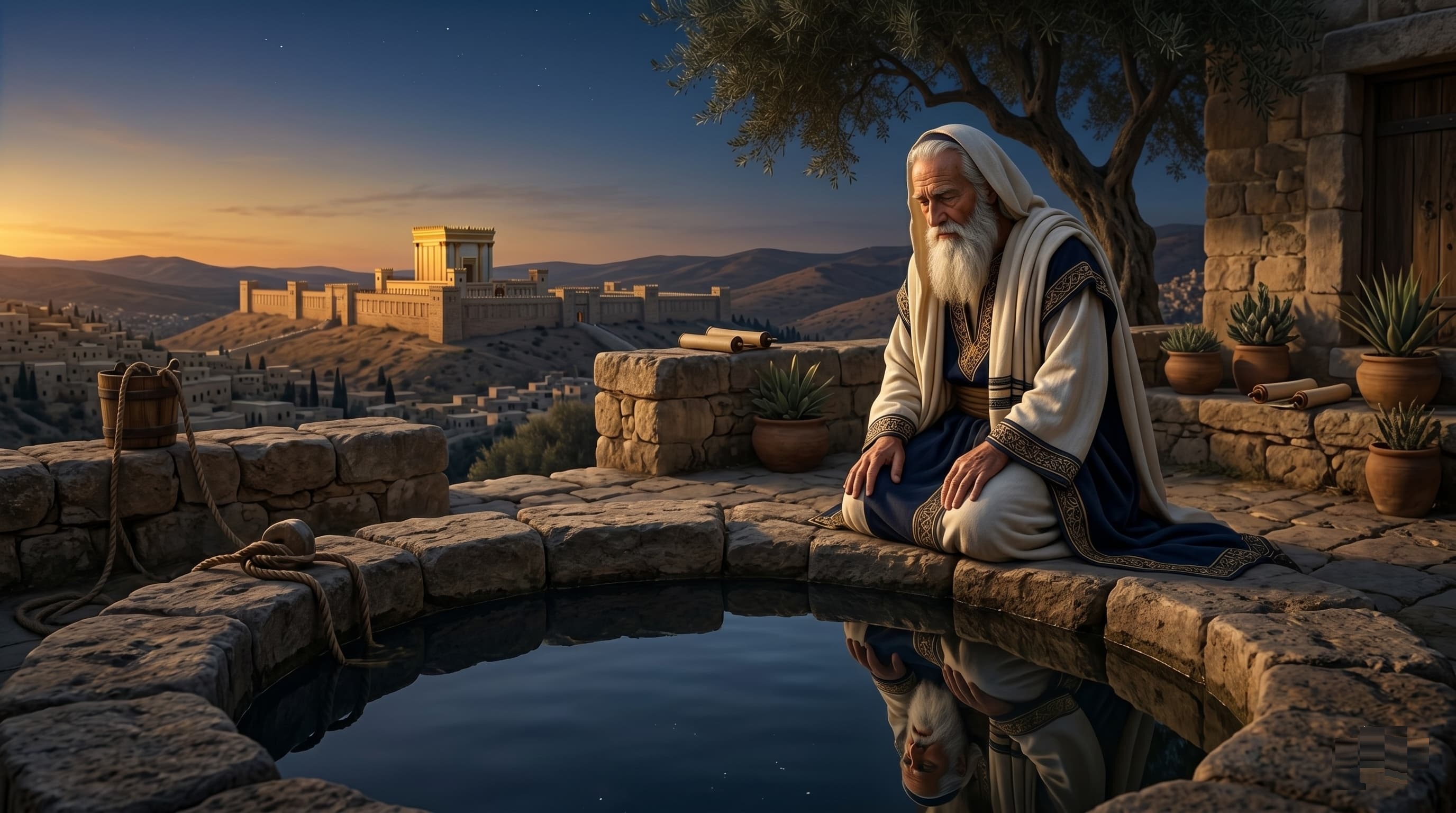
Why Chapter 3 hits hard

Chapter 3 is where Pirkei Avot stops being polite. Akavia opens with three blunt questions about mortality. Rabbi Akiva closes with a tree analogy that decides who survives every storm. In between: judgment, accountability, the ledger, and the table. This chapter is read at shul during the Omer — and it asks every person who hears it: where are your roots?

Pourquoi le chapitre 3 frappe fort

Le chapitre 3 est l'endroit où les Pirké Avot cessent d'être polis. Akavia ouvre par trois questions brutes sur la mortalité. Rabbi Akiva ferme par une analogie d'arbre qui décide qui survit à chaque tempête. Entre les deux : jugement, responsabilité, registre, et table. Ce chapitre est lu au Beith Haknesset pendant le Omer — et il demande à chaque personne qui l'entend : où sont tes racines ?

למה פרק ג׳ פוגע חזק

פרק ג׳ הוא המקום שבו פרקי אבות מפסיקים להיות מנומסים. עקביא פותח בשלוש שאלות חדות על תמותה. רבי עקיבא חותם במשל עץ שמחליט מי שורד כל סערה. בינתיים: דין, אחריות, פנקס, ושולחן. הפרק הזה נקרא בבית הכנסת בימי הספירה — והוא שואל כל מי ששומע אותו: איפה השורשים שלך?

Avot 3:1
🔗
עֲקַבְיָא בֶן מַהֲלַלְאֵל אוֹמֵר, הִסְתַּכֵּל בִּשְׁלשָׁה דְבָרִים וְאִי אַתָּה בָא לִידֵי עֲבֵרָה. דַּע מֵאַיִן בָּאתָ, וּלְאָן אַתָּה הוֹלֵךְ, וְלִפְנֵי מִי אַתָּה עָתִיד לִתֵּן דִּין וְחֶשְׁבּוֹן. מֵאַיִן בָּאתָ, מִטִּפָּה סְרוּחָה, וּלְאָן אַתָּה הוֹלֵךְ, לִמְקוֹם עָפָר רִמָּה וְתוֹלֵעָה. וְלִפְנֵי מִי אַתָּה עָתִיד לִתֵּן דִּין וְחֶשְׁבּוֹן, לִפְנֵי מֶלֶךְ מַלְכֵי הַמְּלָכִים הַקָּדוֹשׁ בָּרוּךְ הוּא.

Akavia ben Mahalalel said: Look at three things and you will not come to sin. Know where you came from, where you are going, and before whom you will give an accounting. From where did you come? From a putrid drop. Where are you going? To a place of dust, worm and maggot. Before whom will you give an accounting? Before the King of kings, the Holy One, blessed be He.

Dracha

Akavia refused an honor that would cost him his integrity — they offered him Av Beit Din if he retracted certain rulings. He said no, and the Sages put him under nidui. He died unbroken. The man who knows where he came from, where he's going, and before whom he stands at the end doesn't trade his soul for a chair. Three questions, vaccine against pride, despair, and self-deception. Recite them once a day for a month. Watch what changes.

Akavia ben Mahalalel dit : Regarde trois choses et tu ne viendras pas à la faute. Sache d'où tu viens, où tu vas, et devant qui tu rendras des comptes. D'où viens-tu ? D'une goutte putride. Où vas-tu ? Vers la poussière, les vers et les larves. Devant qui rendras-tu des comptes ? Devant le Roi des rois, le Saint, béni soit-Il.

Dracha

Akavia a refusé un honneur qui lui coûtait son intégrité — on lui proposait d'être Av Beith Din s'il renonçait à certaines de ses positions. Il a dit non, et les Sages l'ont mis en nidouï. Il est mort intact. L'homme qui sait d'où il vient, où il va, et devant qui il se tiendra à la fin ne troque pas son âme pour une chaise. Trois questions, vaccin contre l'orgueil, le désespoir et le mensonge à soi-même. Récite-les une fois par jour pendant un mois. Regarde ce qui change.

עֲקַבְיָא בֶן מַהֲלַלְאֵל אוֹמֵר, הִסְתַּכֵּל בִּשְׁלשָׁה דְבָרִים וְאִי אַתָּה בָא לִידֵי עֲבֵרָה. דַּע מֵאַיִן בָּאתָ, וּלְאָן אַתָּה הוֹלֵךְ, וְלִפְנֵי מִי אַתָּה עָתִיד לִתֵּן דִּין וְחֶשְׁבּוֹן. מֵאַיִן בָּאתָ, מִטִּפָּה סְרוּחָה, וּלְאָן אַתָּה הוֹלֵךְ, לִמְקוֹם עָפָר רִמָּה וְתוֹלֵעָה. וְלִפְנֵי מִי אַתָּה עָתִיד לִתֵּן דִּין וְחֶשְׁבּוֹן, לִפְנֵי מֶלֶךְ מַלְכֵי הַמְּלָכִים הַקָּדוֹשׁ בָּרוּךְ הוּא.

דרשה

עקביא סירב לכבוד שעלה לו ביושרו — הציעו לו להיות אב בית דין אם יחזור ממחלוקותיו. אמר לא, וחכמים נידוהו. מת שלם. אדם שיודע מאין בא, לאן הולך, ולפני מי יעמוד בסוף — לא מחליף נשמה בכיסא. שלוש שאלות, חיסון נגד גאווה, ייאוש ושקר עצמי. אמור אותן פעם ביום במשך חודש. ראה מה משתנה.

Avot 3:2
🔗
רַבִּי חֲנִינָא סְגַן הַכֹּהֲנִים אוֹמֵר, הֱוֵי מִתְפַּלֵּל בִּשְׁלוֹמָהּ שֶׁל מַלְכוּת, שֶׁאִלְמָלֵא מוֹרָאָהּ, אִישׁ אֶת רֵעֵהוּ חַיִּים בְּלָעוֹ. רַבִּי חֲנִינָא בֶן תְּרַדְיוֹן אוֹמֵר, שְׁנַיִם שֶׁיּוֹשְׁבִין וְאֵין בֵּינֵיהֶן דִּבְרֵי תוֹרָה, הֲרֵי זֶה מוֹשַׁב לֵצִים, שֶׁנֶּאֱמַר וּבְמוֹשַׁב לֵצִים לֹא יָשָׁב. אֲבָל שְׁנַיִם שֶׁיּוֹשְׁבִין וְיֵשׁ בֵּינֵיהֶם דִּבְרֵי תוֹרָה, שְׁכִינָה שְׁרוּיָה בֵינֵיהֶם.

Rabbi Hanina, Deputy of the Priests, said: Pray for the welfare of the government — for were it not for the fear of it, men would swallow each other alive. Rabbi Hanina ben Tradyon said: When two sit together with no words of Torah between them — that is a seat of scoffers. But two who sit together with words of Torah between them — the Shechina rests between them.

Dracha

Rabbi Hanina ben Tradyon was burned at the stake by the Romans, wrapped in a Torah scroll. As the flames rose, his students asked what he saw. He answered: 'The parchment burns, but the letters fly free.' That's what Torah does — even in a hostile room. Two with Torah have the Shechina between them. The Romans could burn the body. They couldn't interrupt the conversation. And his colleague, Hanina the Deputy Cohen, knew the same — pray for the regime, because order from above keeps men from devouring each other from below.

Rabbi Hanina, adjoint des Cohanim, dit : Prie pour le bien-être du gouvernement — car sans la crainte de lui, les hommes s'avaleraient vivants les uns les autres. Rabbi Hanina ben Tradyon dit : Quand deux s'assoient sans paroles de Torah entre eux — c'est un siège de moqueurs. Mais deux qui s'assoient avec des paroles de Torah entre eux — la Chékhina y réside.

Dracha

Rabbi Hanina ben Tradyon a été brûlé vif par les Romains, enveloppé dans un rouleau de Torah. Quand les flammes montaient, ses élèves lui demandèrent ce qu'il voyait. Il répondit : « Le parchemin brûle, mais les lettres s'envolent libres. » C'est ce que fait la Torah — même quand la pièce est hostile. Deux avec Torah ont la Chékhina entre eux. Les Romains pouvaient brûler le corps. Ils ne pouvaient pas interrompre la conversation. Et son collègue, Hanina l'adjoint des Cohanim, savait la même chose — prie pour le régime, car l'ordre venant d'en haut empêche les hommes de se dévorer d'en bas.

רַבִּי חֲנִינָא סְגַן הַכֹּהֲנִים אוֹמֵר, הֱוֵי מִתְפַּלֵּל בִּשְׁלוֹמָהּ שֶׁל מַלְכוּת, שֶׁאִלְמָלֵא מוֹרָאָהּ, אִישׁ אֶת רֵעֵהוּ חַיִּים בְּלָעוֹ. רַבִּי חֲנִינָא בֶן תְּרַדְיוֹן אוֹמֵר, שְׁנַיִם שֶׁיּוֹשְׁבִין וְאֵין בֵּינֵיהֶן דִּבְרֵי תוֹרָה, הֲרֵי זֶה מוֹשַׁב לֵצִים, שֶׁנֶּאֱמַר וּבְמוֹשַׁב לֵצִים לֹא יָשָׁב. אֲבָל שְׁנַיִם שֶׁיּוֹשְׁבִין וְיֵשׁ בֵּינֵיהֶם דִּבְרֵי תוֹרָה, שְׁכִינָה שְׁרוּיָה בֵינֵיהֶם.

דרשה

רבי חנינא בן תרדיון נשרף על המוקד על ידי הרומאים, עטוף בספר תורה. כשעלו הלהבות, שאלו תלמידיו מה הוא רואה. ענה: 'הקלף נשרף, אבל האותיות פורחות חופשיות.' זה מה שעושה התורה — גם בחדר עוין. שניים עם תורה — השכינה ביניהם. הרומאים יכלו לשרוף את הגוף. לא יכלו לקטוע את השיחה. וחברו, חנינא סגן הכוהנים, ידע את אותו דבר — התפלל לשלום השלטון, כי הסדר מלמעלה מונע מבני אדם לטרוף זה את זה מלמטה.

Avot 3:3
🔗
רַבִּי שִׁמְעוֹן אוֹמֵר, שְׁלשָׁה שֶׁאָכְלוּ עַל שֻׁלְחָן אֶחָד וְלֹא אָמְרוּ עָלָיו דִּבְרֵי תוֹרָה, כְּאִלּוּ אָכְלוּ מִזִּבְחֵי מֵתִים, שֶׁנֶּאֱמַר כִּי כָּל שֻׁלְחָנוֹת מָלְאוּ קִיא צֹאָה בְּלִי מָקוֹם. אֲבָל שְׁלשָׁה שֶׁאָכְלוּ עַל שֻׁלְחָן אֶחָד וְאָמְרוּ עָלָיו דִּבְרֵי תוֹרָה, כְּאִלּוּ אָכְלוּ מִשֻּׁלְחָנוֹ שֶׁל מָקוֹם בָּרוּךְ הוּא.

Rabbi Shimon said: Three who eat at the same table without words of Torah — it is as if they ate from sacrifices to dead idols. But three who eat at the same table with words of Torah — it is as if they ate from the table of God, blessed be He.

Dracha

The most important room in your house is the dining table. Rabbi Shimon bar Yochai — who hid for thirteen years in a cave with his son to escape Roman execution — knew that meals are spiritual junctures. Empty conversation transforms food into idol-worship. Words of Torah transform food into communion. The same fork. The same chicken. Two completely different meals. Friday night Kiddush is the masterstroke: Torah at the start, Torah throughout, the family table becomes God's table.

Rabbi Shimon dit : Trois qui mangent à une même table sans paroles de Torah — c'est comme s'ils avaient mangé de sacrifices à des idoles mortes. Mais trois qui mangent à une même table avec des paroles de Torah — c'est comme s'ils avaient mangé de la table de D.ieu, béni soit-Il.

Dracha

La pièce la plus importante de ta maison, c'est la table à manger. Rabbi Shimon bar Yo'haï — qui s'est caché treize ans dans une grotte avec son fils pour échapper à l'exécution romaine — savait que les repas sont des carrefours spirituels. Les conversations vides transforment la nourriture en idolâtrie. Les paroles de Torah la transforment en communion. La même fourchette. Le même poulet. Deux repas totalement différents. Le Kiddouch du vendredi soir est le coup de maître : Torah au début, Torah partout, la table familiale devient la table de D.ieu.

רַבִּי שִׁמְעוֹן אוֹמֵר, שְׁלשָׁה שֶׁאָכְלוּ עַל שֻׁלְחָן אֶחָד וְלֹא אָמְרוּ עָלָיו דִּבְרֵי תוֹרָה, כְּאִלּוּ אָכְלוּ מִזִּבְחֵי מֵתִים, שֶׁנֶּאֱמַר כִּי כָּל שֻׁלְחָנוֹת מָלְאוּ קִיא צֹאָה בְּלִי מָקוֹם. אֲבָל שְׁלשָׁה שֶׁאָכְלוּ עַל שֻׁלְחָן אֶחָד וְאָמְרוּ עָלָיו דִּבְרֵי תוֹרָה, כְּאִלּוּ אָכְלוּ מִשֻּׁלְחָנוֹ שֶׁל מָקוֹם בָּרוּךְ הוּא.

דרשה

החדר החשוב ביותר בביתך הוא שולחן האוכל. רבי שמעון בר יוחאי — שהסתתר שלוש עשרה שנים במערה עם בנו כדי להימלט מהוצאה להורג רומאית — ידע שארוחות הן צמתים רוחניים. שיחה ריקה הופכת אוכל לעבודה זרה. דברי תורה הופכים אותו לחיבור. אותו מזלג. אותו עוף. שתי ארוחות שונות לחלוטין. קידוש ליל שישי הוא מהלך המאסטר: תורה בהתחלה, תורה לכל אורך, שולחן המשפחה הופך לשולחן ה'.

Avot 3:4
🔗
רַבִּי חֲנִינָא בֶן חֲכִינַאי אוֹמֵר, הַנֵּעוֹר בַּלַּיְלָה וְהַמְהַלֵּךְ בַּדֶּרֶךְ יְחִידִי וְהַמְפַנֶּה לִבּוֹ לְבַטָּלָה, הֲרֵי זֶה מִתְחַיֵּב בְּנַפְשׁוֹ.

Rabbi Hanina ben Hakhinai said: One who stays awake at night, walks alone on the road, and turns his heart to idleness — endangers his own soul.

Dracha

Hanina ben Hakhinai left his wife for twelve years to study Torah without telling her, came back, and found his daughter grown unrecognizable. The mishna isn't theoretical for him. Three dangers — staying awake at night with no purpose, walking alone with no protection, idle drift of the heart. All three share one root: the absence of structure. The mind without a frame becomes prey to whatever's hunting. Build the frame. Then you can be alone.

Rabbi Hanina ben Hakhinaï dit : Celui qui veille la nuit, marche seul sur la route, et tourne son cœur vers la futilité — met sa propre âme en danger.

Dracha

Hanina ben Hakhinaï a quitté sa femme pendant douze ans pour étudier la Torah sans lui dire, est revenu, et a trouvé sa fille devenue méconnaissable. La michna n'est pas théorique pour lui. Trois dangers — veiller la nuit sans but, marcher seul sans protection, dérive oisive du cœur. Tous trois partagent une racine : l'absence de structure. L'esprit sans cadre devient la proie de ce qui le chasse. Construis le cadre. Ensuite tu peux être seul.

רַבִּי חֲנִינָא בֶן חֲכִינַאי אוֹמֵר, הַנֵּעוֹר בַּלַּיְלָה וְהַמְהַלֵּךְ בַּדֶּרֶךְ יְחִידִי וְהַמְפַנֶּה לִבּוֹ לְבַטָּלָה, הֲרֵי זֶה מִתְחַיֵּב בְּנַפְשׁוֹ.

דרשה

חנינא בן חכינאי עזב את אישתו במשך שתים-עשרה שנה ללמוד תורה בלי לומר לה, חזר, ומצא את בתו גדלה ללא הכר. המשנה אינה תיאורטית עבורו. שלוש סכנות — ער בלילה ללא תכלית, הולך לבד ללא הגנה, סחיפה של הלב. שלושתן חולקות שורש אחד: היעדר מסגרת. שכל ללא מסגרת הופך לטרף של מה שצד אותו. בנה את המסגרת. אז תוכל להיות לבד.

Avot 3:5
🔗
רַבִּי נְחוּנְיָא בֶּן הַקָּנָה אוֹמֵר, כָּל הַמְקַבֵּל עָלָיו עֹל תּוֹרָה, מַעֲבִירִין מִמֶּנּוּ עֹל מַלְכוּת וְעֹל דֶּרֶךְ אֶרֶץ. וְכָל הַפּוֹרֵק מִמֶּנּוּ עֹל תּוֹרָה, נוֹתְנִין עָלָיו עֹל מַלְכוּת וְעֹל דֶּרֶךְ אֶרֶץ.

Rabbi Nehunia ben HaKana said: Whoever takes upon himself the yoke of Torah — the yoke of government and the yoke of worldly affairs are removed from him. And whoever throws off the yoke of Torah — the yoke of government and worldly affairs are placed upon him.

Dracha

There are three yokes available to every man — Torah, government, livelihood. You will carry at least one. Choose Torah and the other two lighten. Refuse Torah and the other two crush you. It's not magic — it's mathematics. The man whose hours are anchored in study has clarity about what to fight, when to negotiate, what's worth losing. The man without anchor is jerked around by every news cycle, every market move, every political wave. He carries more weight because he carries it confused.

Rabbi Nehounia ben HaKana dit : Celui qui prend sur lui le joug de la Torah — le joug du pouvoir et le joug des affaires terrestres lui sont enlevés. Et celui qui rejette le joug de la Torah — le joug du pouvoir et des affaires terrestres sont placés sur lui.

Dracha

Trois jougs sont disponibles à chaque homme — Torah, pouvoir, gagne-pain. Tu en porteras au moins un. Choisis la Torah, les deux autres s'allègent. Refuse la Torah, les deux autres t'écrasent. Ce n'est pas de la magie — c'est des mathématiques. L'homme dont les heures sont ancrées dans l'étude a la clarté sur quoi combattre, quand négocier, ce qui vaut la peine d'être perdu. L'homme sans ancre est ballotté par chaque cycle de nouvelles, chaque mouvement de marché, chaque vague politique. Il porte plus de poids parce qu'il le porte confus.

רַבִּי נְחוּנְיָא בֶּן הַקָּנָה אוֹמֵר, כָּל הַמְקַבֵּל עָלָיו עֹל תּוֹרָה, מַעֲבִירִין מִמֶּנּוּ עֹל מַלְכוּת וְעֹל דֶּרֶךְ אֶרֶץ. וְכָל הַפּוֹרֵק מִמֶּנּוּ עֹל תּוֹרָה, נוֹתְנִין עָלָיו עֹל מַלְכוּת וְעֹל דֶּרֶךְ אֶרֶץ.

דרשה

שלושה עולים זמינים לכל אדם — תורה, מלכות, פרנסה. תשא לפחות אחד. בחר תורה — השניים האחרים יקלו. סרב לתורה — השניים האחרים ירמסו אותך. זה לא קסם — זה מתמטיקה. אדם ששעותיו מעוגנות בלימוד יש לו צלילות על מה לריב, מתי להתפשר, מה שווה להפסיד. אדם ללא עוגן נטרף בכל מחזור חדשות, בכל תזוזת שוק, בכל גל פוליטי. הוא נושא יותר משקל כי הוא נושא אותו מבולבל.

Avot 3:6
🔗
רַבִּי חֲלַפְתָּא בֶן דּוֹסָא אִישׁ כְּפַר חֲנַנְיָה אוֹמֵר, עֲשָׂרָה שֶׁיּוֹשְׁבִין וְעוֹסְקִין בַּתּוֹרָה, שְׁכִינָה שְׁרוּיָה בֵינֵיהֶם, שֶׁנֶּאֱמַר אֱלֹהִים נִצָּב בַּעֲדַת אֵל. וּמִנַּיִן אֲפִלּוּ חֲמִשָּׁה, שֶׁנֶּאֱמַר וַאֲגֻדָּתוֹ עַל אֶרֶץ יְסָדָהּ. וּמִנַּיִן אֲפִלּוּ שְׁלשָׁה, שֶׁנֶּאֱמַר בְּקֶרֶב אֱלֹהִים יִשְׁפֹּט. וּמִנַּיִן אֲפִלּוּ שְׁנַיִם, שֶׁנֶּאֱמַר אָז נִדְבְּרוּ יִרְאֵי ה' אִישׁ אֶל רֵעֵהוּ וַיַּקְשֵׁב ה' וַיִּשְׁמָע. וּמִנַּיִן אֲפִלּוּ אֶחָד, שֶׁנֶּאֱמַר בְּכָל הַמָּקוֹם אֲשֶׁר אַזְכִּיר אֶת שְׁמִי אָבֹא אֵלֶיךָ וּבֵרַכְתִּיךָ.

Rabbi Halafta ben Dosa of Kfar Hananya said: When ten sit together studying Torah, the Shechina rests among them — as it is said: 'God stands in the divine assembly.' Even five — 'He has founded His band on earth.' Even three — 'In the midst of judges He judges.' Even two — 'Then those who feared the Lord spoke to one another, and the Lord listened and heard.' Even one — 'In every place where I cause My name to be remembered, I will come to you and bless you.'

Dracha

The mishna descends in numbers: ten, five, three, two, one. Each step proves the same point with a different verse. The cumulative effect is overwhelming: there is NO size of Torah-gathering too small for the Shechina. A daily Daf Yomi between two coworkers — Shechina present. A father and child reading Tehillim — Shechina present. A widow alone with her siddur — Shechina present. The pilot of presence is the intent, not the headcount.

Rabbi Halafta ben Dossa du village de Hananya dit : Quand dix s'assoient pour étudier la Torah, la Chékhina réside parmi eux — comme il est dit : « D.ieu se tient dans l'assemblée divine. » Même cinq — « Il a fondé Sa troupe sur terre. » Même trois — « Au milieu des juges Il juge. » Même deux — « Alors ceux qui craignent l'Éternel se parlèrent, et l'Éternel écouta et entendit. » Même un seul — « En tout lieu où Je ferai mémoire de Mon nom, Je viendrai vers toi et te bénirai. »

Dracha

La michna descend en nombres : dix, cinq, trois, deux, un. Chaque palier prouve la même chose avec un verset différent. L'effet cumulatif est écrasant : aucune taille de rassemblement de Torah n'est trop petite pour la Chékhina. Un Daf Yomi quotidien entre deux collègues — Chékhina présente. Un père et son enfant lisant les Tehilim — Chékhina présente. Une veuve seule avec son sidour — Chékhina présente. Le pilote de la présence, c'est l'intention, pas l'effectif.

רַבִּי חֲלַפְתָּא בֶן דּוֹסָא אִישׁ כְּפַר חֲנַנְיָה אוֹמֵר, עֲשָׂרָה שֶׁיּוֹשְׁבִין וְעוֹסְקִין בַּתּוֹרָה, שְׁכִינָה שְׁרוּיָה בֵינֵיהֶם, שֶׁנֶּאֱמַר אֱלֹהִים נִצָּב בַּעֲדַת אֵל. וּמִנַּיִן אֲפִלּוּ חֲמִשָּׁה, שֶׁנֶּאֱמַר וַאֲגֻדָּתוֹ עַל אֶרֶץ יְסָדָהּ. וּמִנַּיִן אֲפִלּוּ שְׁלשָׁה, שֶׁנֶּאֱמַר בְּקֶרֶב אֱלֹהִים יִשְׁפֹּט. וּמִנַּיִן אֲפִלּוּ שְׁנַיִם, שֶׁנֶּאֱמַר אָז נִדְבְּרוּ יִרְאֵי ה' אִישׁ אֶל רֵעֵהוּ וַיַּקְשֵׁב ה' וַיִּשְׁמָע. וּמִנַּיִן אֲפִלּוּ אֶחָד, שֶׁנֶּאֱמַר בְּכָל הַמָּקוֹם אֲשֶׁר אַזְכִּיר אֶת שְׁמִי אָבֹא אֵלֶיךָ וּבֵרַכְתִּיךָ.

דרשה

המשנה יורדת במספרים: עשרה, חמישה, שלושה, שניים, אחד. כל שלב מוכיח אותו דבר בפסוק אחר. האפקט המצטבר מוחץ: אין גודל של מפגש תורה קטן מדי לשכינה. דף יומי בין שני עמיתים — שכינה. אב וילד קוראים תהילים — שכינה. אלמנה לבדה עם סידורה — שכינה. הטייס של הנוכחות הוא הכוונה, לא המספר.

Avot 3:7
🔗
רַבִּי אֶלְעָזָר אִישׁ בַּרְתּוֹתָא אוֹמֵר, תֶּן לוֹ מִשֶּׁלּוֹ, שֶׁאַתָּה וְשֶׁלְּךָ שֶׁלּוֹ. וְכֵן בְּדָוִד הוּא אוֹמֵר כִּי מִמְּךָ הַכֹּל וּמִיָּדְךָ נָתַנּוּ לָךְ. רַבִּי שִׁמְעוֹן אוֹמֵר, הַמְהַלֵּךְ בַּדֶּרֶךְ וְשׁוֹנֶה, וּמַפְסִיק מִמִּשְׁנָתוֹ וְאוֹמֵר, מַה נָּאֶה אִילָן זֶה וּמַה נָּאֶה נִיר זֶה, מַעֲלֶה עָלָיו הַכָּתוּב כְּאִלּוּ מִתְחַיֵּב בְּנַפְשׁוֹ.

Rabbi Elazar of Bartota said: Give Him from His own — for you and yours are His. And so David said: 'For all is from You, and from Your hand we have given You.' Rabbi Shimon said: One who walks on the road studying, then interrupts his learning to say 'How beautiful this tree, how beautiful this field' — Scripture considers him as if he endangered his own soul.

Dracha

Two Sages, two angles. Elazar of Bartota was famous for giving everything to charity — when collectors saw him coming, they fled. He understood: ownership is illusion. You give from God to God. The story is told that his daughter's wedding dress arrived just before he gave the entire dowry away. Then Rabbi Shimon: the man interrupting Torah for nature isn't loving creation — he's defaulting on the contract. The trees and fields are the page. Torah is the reading. Don't praise the paper while losing the words.

Rabbi Elazar de Bartota dit : Donne-Lui du Sien — car toi et ce qui est à toi, sont à Lui. Ainsi David disait : « Tout vient de Toi, et de Ta main nous T'avons donné. » Rabbi Shimon dit : Celui qui marche sur la route en étudiant, puis interrompt son étude pour dire « comme cet arbre est beau, comme ce champ est beau » — l'Écriture le considère comme s'il mettait son âme en danger.

Dracha

Deux Sages, deux angles. Elazar de Bartota était célèbre pour tout donner en tsédaka — quand les collecteurs le voyaient venir, ils fuyaient. Il comprenait : la propriété est une illusion. Tu donnes de D.ieu à D.ieu. On raconte que la robe de mariée de sa fille arriva juste avant qu'il ne donne toute la dot. Puis Rabbi Shimon : l'homme qui interrompt la Torah pour la nature n'aime pas la création — il fait défaut sur le contrat. Les arbres et les champs sont la page. La Torah, c'est la lecture. Ne loue pas le papier en perdant les mots.

רַבִּי אֶלְעָזָר אִישׁ בַּרְתּוֹתָא אוֹמֵר, תֶּן לוֹ מִשֶּׁלּוֹ, שֶׁאַתָּה וְשֶׁלְּךָ שֶׁלּוֹ. וְכֵן בְּדָוִד הוּא אוֹמֵר כִּי מִמְּךָ הַכֹּל וּמִיָּדְךָ נָתַנּוּ לָךְ. רַבִּי שִׁמְעוֹן אוֹמֵר, הַמְהַלֵּךְ בַּדֶּרֶךְ וְשׁוֹנֶה, וּמַפְסִיק מִמִּשְׁנָתוֹ וְאוֹמֵר, מַה נָּאֶה אִילָן זֶה וּמַה נָּאֶה נִיר זֶה, מַעֲלֶה עָלָיו הַכָּתוּב כְּאִלּוּ מִתְחַיֵּב בְּנַפְשׁוֹ.

דרשה

שני חכמים, שתי זוויות. אלעזר איש ברתותא היה ידוע בנתינת כל לצדקה — כשהגבאים ראו אותו בא, ברחו. הוא הבין: הבעלות אשליה. אתה נותן מה' לה'. מסופר ששמלת הכלולות של בתו הגיעה רגע לפני שנתן את כל הנדוניה. ואז רבי שמעון: האיש שמפסיק תורה למען הטבע אינו אוהב את הבריאה — הוא מפר את החוזה. העצים והשדות הם הדף. התורה היא הקריאה. אל תהלל את הנייר תוך איבוד המילים.

Avot 3:8
🔗
רַבִּי דּוֹסְתַּאי בְּרַבִּי יַנַּאי מִשּׁוּם רַבִּי מֵאִיר אוֹמֵר, כָּל הַשּׁוֹכֵחַ דָּבָר אֶחָד מִמִּשְׁנָתוֹ, מַעֲלֶה עָלָיו הַכָּתוּב כְּאִלּוּ מִתְחַיֵּב בְּנַפְשׁוֹ, שֶׁנֶּאֱמַר רַק הִשָּׁמֶר לְךָ וּשְׁמֹר נַפְשְׁךָ מְאֹד פֶּן תִּשְׁכַּח אֶת הַדְּבָרִים אֲשֶׁר רָאוּ עֵינֶיךָ. יָכוֹל אֲפִלּוּ תָקְפָה עָלָיו מִשְׁנָתוֹ, תַּלְמוּד לוֹמַר וּפֶן יָסוּרוּ מִלְּבָבְךָ כֹּל יְמֵי חַיֶּיךָ, הָא אֵינוֹ מִתְחַיֵּב בְּנַפְשׁוֹ עַד שֶׁיֵּשֵׁב וִיסִירֵם מִלִּבּוֹ.

Rabbi Dostai b'Rabbi Yannai said in the name of Rabbi Meir: Whoever forgets one thing of his learning — Scripture considers him as if he endangered his own soul, as it is said: 'Only watch yourself and guard your soul carefully, lest you forget the things your eyes have seen.' Could this even apply if his learning overpowered him? Scripture teaches: 'Lest they depart from your heart all the days of your life' — he is not held liable until he sits down and removes them from his heart.

Dracha

The Mishna's mercy is buried in the second half. Forgetting Torah passively — under the weight of life, age, exhaustion — that's a tragedy but not a charge. Forgetting Torah actively — sitting down and deciding 'this isn't important, let me clear my mental disk' — that's the soul-endangering act. The metric is intent. The Sages knew brains fail. They also knew minds choose. Don't choose to forget what cost you years to acquire.

Rabbi Dostaï b'Rabbi Yannaï dit au nom de Rabbi Meïr : Celui qui oublie une seule chose de son étude — l'Écriture le considère comme s'il avait mis son âme en danger, comme il est dit : « Veille sur toi et garde bien ton âme, de peur que tu n'oublies les choses que tes yeux ont vues. » Cela vaut-il même quand l'étude l'a dépassé ? L'Écriture enseigne : « Et de peur qu'elles ne s'éloignent de ton cœur tous les jours de ta vie » — il n'est tenu responsable que s'il s'assoit et les ôte volontairement de son cœur.

Dracha

La miséricorde de la Michna est enfouie dans la seconde moitié. Oublier la Torah passivement — sous le poids de la vie, de l'âge, de l'épuisement — c'est une tragédie mais pas une accusation. Oublier la Torah activement — s'asseoir et décider « ce n'est pas important, libérons mon disque dur mental » — c'est l'acte qui met l'âme en danger. La métrique est l'intention. Les Sages savaient que les cerveaux flanchent. Ils savaient aussi que les esprits choisissent. Ne choisis pas d'oublier ce qui t'a coûté des années à acquérir.

רַבִּי דּוֹסְתַּאי בְּרַבִּי יַנַּאי מִשּׁוּם רַבִּי מֵאִיר אוֹמֵר, כָּל הַשּׁוֹכֵחַ דָּבָר אֶחָד מִמִּשְׁנָתוֹ, מַעֲלֶה עָלָיו הַכָּתוּב כְּאִלּוּ מִתְחַיֵּב בְּנַפְשׁוֹ, שֶׁנֶּאֱמַר רַק הִשָּׁמֶר לְךָ וּשְׁמֹר נַפְשְׁךָ מְאֹד פֶּן תִּשְׁכַּח אֶת הַדְּבָרִים אֲשֶׁר רָאוּ עֵינֶיךָ. יָכוֹל אֲפִלּוּ תָקְפָה עָלָיו מִשְׁנָתוֹ, תַּלְמוּד לוֹמַר וּפֶן יָסוּרוּ מִלְּבָבְךָ כֹּל יְמֵי חַיֶּיךָ, הָא אֵינוֹ מִתְחַיֵּב בְּנַפְשׁוֹ עַד שֶׁיֵּשֵׁב וִיסִירֵם מִלִּבּוֹ.

דרשה

החמלה של המשנה קבורה בחצי השני. לשכוח תורה באופן פסיבי — תחת משקל החיים, הגיל, התשישות — זו טרגדיה אך לא אשמה. לשכוח תורה באופן אקטיבי — לשבת ולהחליט 'זה לא חשוב, אנקה את הדיסק המנטלי' — זה המעשה שמסכן את הנפש. המידה היא הכוונה. החכמים ידעו שמוחות נשברים. ידעו גם שדעת בוחרת. אל תבחר לשכוח את מה שעלה לך שנים לרכוש.

Avot 3:9
🔗
רַבִּי חֲנִינָא בֶן דּוֹסָא אוֹמֵר, כָּל שֶׁיִּרְאַת חֶטְאוֹ קוֹדֶמֶת לְחָכְמָתוֹ, חָכְמָתוֹ מִתְקַיֶּמֶת. וְכָל שֶׁחָכְמָתוֹ קוֹדֶמֶת לְיִרְאַת חֶטְאוֹ, אֵין חָכְמָתוֹ מִתְקַיֶּמֶת. הוּא הָיָה אוֹמֵר, כָּל שֶׁמַּעֲשָׂיו מְרֻבִּין מֵחָכְמָתוֹ, חָכְמָתוֹ מִתְקַיֶּמֶת. וְכָל שֶׁחָכְמָתוֹ מְרֻבָּה מִמַּעֲשָׂיו, אֵין חָכְמָתוֹ מִתְקַיֶּמֶת.

Rabbi Hanina ben Dosa said: One whose fear of sin precedes his wisdom — his wisdom endures. One whose wisdom precedes his fear of sin — his wisdom does not endure. He used to say: One whose deeds exceed his wisdom — his wisdom endures. One whose wisdom exceeds his deeds — his wisdom does not endure.

Dracha

Hanina ben Dosa lived in such poverty that his wife was once embarrassed to admit they had nothing for Shabbat — she lit an oven full of nothing, and a miracle filled it with bread. He's the patron saint of the principle: knowledge without ethics is rented. The brilliant scholar without yirat shamayim watches his Torah evaporate within a generation. The plain man whose deeds outrun his learning has wisdom that survives him by centuries. Roots first. Branches second.

Rabbi Hanina ben Dossa dit : Celui dont la crainte de la faute précède sa sagesse — sa sagesse perdure. Celui dont la sagesse précède sa crainte de la faute — sa sagesse ne perdure pas. Il disait aussi : Celui dont les actes dépassent sa sagesse — sa sagesse perdure. Celui dont la sagesse dépasse ses actes — sa sagesse ne perdure pas.

Dracha

Hanina ben Dossa vivait dans une telle pauvreté que sa femme eut une fois honte d'avouer qu'ils n'avaient rien pour Chabbat — elle alluma un four vide, et un miracle le remplit de pain. Il est le saint patron du principe : la connaissance sans éthique est louée. L'érudit brillant sans yirat chamaïm voit sa Torah s'évaporer en une génération. L'homme simple dont les actes dépassent son étude a une sagesse qui lui survit pendant des siècles. Les racines d'abord. Les branches ensuite.

רַבִּי חֲנִינָא בֶן דּוֹסָא אוֹמֵר, כָּל שֶׁיִּרְאַת חֶטְאוֹ קוֹדֶמֶת לְחָכְמָתוֹ, חָכְמָתוֹ מִתְקַיֶּמֶת. וְכָל שֶׁחָכְמָתוֹ קוֹדֶמֶת לְיִרְאַת חֶטְאוֹ, אֵין חָכְמָתוֹ מִתְקַיֶּמֶת. הוּא הָיָה אוֹמֵר, כָּל שֶׁמַּעֲשָׂיו מְרֻבִּין מֵחָכְמָתוֹ, חָכְמָתוֹ מִתְקַיֶּמֶת. וְכָל שֶׁחָכְמָתוֹ מְרֻבָּה מִמַּעֲשָׂיו, אֵין חָכְמָתוֹ מִתְקַיֶּמֶת.

דרשה

חנינא בן דוסא חי בעוני כזה שאישתו פעם התביישה להודות שאין להם דבר לשבת — היא הדליקה תנור ריק, ונס מילא אותו לחם. הוא הפטרון של העיקרון: ידע בלי מוסר הוא שכור. החכם המבריק ללא יראת שמיים רואה את תורתו מתאדה בתוך דור. האיש הפשוט שמעשיו עולים על לימודו — חכמתו שורדת אותו במאות שנים. שורשים ראשונים. ענפים אחר כך.

Avot 3:10
🔗
הוּא הָיָה אוֹמֵר, כָּל שֶׁרוּחַ הַבְּרִיּוֹת נוֹחָה הֵימֶנּוּ, רוּחַ הַמָּקוֹם נוֹחָה הֵימֶנּוּ. וְכָל שֶׁאֵין רוּחַ הַבְּרִיּוֹת נוֹחָה הֵימֶנּוּ, אֵין רוּחַ הַמָּקוֹם נוֹחָה הֵימֶנּוּ. רַבִּי דּוֹסָא בֶן הַרְכִּינַס אוֹמֵר, שֵׁנָה שֶׁל שַׁחֲרִית, וְיַיִן שֶׁל צָהֳרַיִם, וְשִׂיחַת הַיְלָדִים, וִישִׁיבַת בָּתֵּי כְנֵסִיּוֹת שֶׁל עַמֵּי הָאָרֶץ, מוֹצִיאִין אֶת הָאָדָם מִן הָעוֹלָם.

He used to say: Whoever is pleasing to people is pleasing to God; whoever is not pleasing to people is not pleasing to God. Rabbi Dosa ben Harkinas said: Morning sleep, midday wine, children's chatter, and gathering in the meeting places of the ignorant — remove a man from the world.

Dracha

Hanina's first teaching is the rebuttal to every spiritual narcissist: 'I'm right with God, what do I care about people?' Wrong. The grade you get from your community is the grade God writes. Your spouse, your neighbors, your colleagues — they are the test. Then Rabbi Dosa lists four time-thieves: oversleeping, day-drinking, mindless small talk, hanging where there's no learning. Each one steals years from the back end of life. The world is short. Don't waste the morning.

Il disait : Celui qui plaît aux gens plaît à D.ieu ; celui qui ne plaît pas aux gens ne plaît pas à D.ieu. Rabbi Dossa ben Harkinas dit : Le sommeil du matin, le vin de midi, le bavardage des enfants, et le séjour dans les lieux de réunion des ignorants — retirent un homme du monde.

Dracha

Le premier enseignement de Hanina est la réfutation de tout narcissique spirituel : « Je suis bien avec D.ieu, qu'est-ce que ça me fait des gens ? » Faux. La note que tu reçois de ta communauté est la note que D.ieu écrit. Ton conjoint, tes voisins, tes collègues — ils sont l'examen. Puis Rabbi Dossa énumère quatre voleurs de temps : grasse matinée, vin de midi, bavardages oiseux, traîner où on n'apprend rien. Chacun vole des années à la fin de la vie. Le monde est court. Ne gaspille pas le matin.

הוּא הָיָה אוֹמֵר, כָּל שֶׁרוּחַ הַבְּרִיּוֹת נוֹחָה הֵימֶנּוּ, רוּחַ הַמָּקוֹם נוֹחָה הֵימֶנּוּ. וְכָל שֶׁאֵין רוּחַ הַבְּרִיּוֹת נוֹחָה הֵימֶנּוּ, אֵין רוּחַ הַמָּקוֹם נוֹחָה הֵימֶנּוּ. רַבִּי דּוֹסָא בֶן הַרְכִּינַס אוֹמֵר, שֵׁנָה שֶׁל שַׁחֲרִית, וְיַיִן שֶׁל צָהֳרַיִם, וְשִׂיחַת הַיְלָדִים, וִישִׁיבַת בָּתֵּי כְנֵסִיּוֹת שֶׁל עַמֵּי הָאָרֶץ, מוֹצִיאִין אֶת הָאָדָם מִן הָעוֹלָם.

דרשה

ההוראה הראשונה של חנינא היא ההפרכה של כל נרקיסיסט רוחני: 'אני בסדר עם ה', מה אכפת לי מהאנשים?' שגוי. הציון שאתה מקבל מהקהילה הוא הציון שה' כותב. בן זוגך, שכניך, עמיתיך — הם המבחן. ואז רבי דוסא מונה ארבעה גנבי זמן: שינה של בוקר, יין של צהריים, פטפוט ילדים, ישיבה במקומות בלי לימוד. כל אחד גונב שנים מסוף החיים. העולם קצר. אל תבזבז את הבוקר.

Avot 3:11
🔗
רַבִּי אֶלְעָזָר הַמּוֹדָעִי אוֹמֵר, הַמְחַלֵּל אֶת הַקָּדָשִׁים, וְהַמְבַזֶּה אֶת הַמּוֹעֲדוֹת, וְהַמַּלְבִּין פְּנֵי חֲבֵרוֹ בָרַבִּים, וְהַמֵּפֵר בְּרִיתוֹ שֶׁל אַבְרָהָם אָבִינוּ עָלָיו הַשָּׁלוֹם, וְהַמְגַלֶּה פָנִים בַּתּוֹרָה שֶׁלֹּא כַהֲלָכָה, אַף עַל פִּי שֶׁיֵּשׁ בְּיָדוֹ תוֹרָה וּמַעֲשִׂים טוֹבִים, אֵין לוֹ חֵלֶק לָעוֹלָם הַבָּא.

Rabbi Elazar of Modi'in said: One who desecrates sacred things, despises the holidays, embarrasses his fellow in public, breaks the covenant of Abraham our father (peace be upon him), and distorts the Torah against halakha — even if he has Torah and good deeds, has no portion in the world to come.

Dracha

Five capital crimes against the spiritual world. Note the third: shaming a fellow in public. Place it next to idolatry, against keeping holy times, against the covenant of circumcision, against twisting Torah — and you understand how serious public humiliation is to the Sages. Embarrass someone publicly and you have done what no Torah can repair. Elazar of Modi'in was the uncle of Bar Kokhba and was killed for opposing the revolt — he understood: the war you must never fight is the one that humiliates a brother.

Rabbi Elazar de Modi'ine dit : Celui qui profane les choses saintes, méprise les fêtes, fait honte à son prochain en public, rompt l'alliance d'Avraham notre père (paix sur lui), et déforme la Torah contre la halakha — même s'il a Torah et bonnes actions, n'a pas de part au monde à venir.

Dracha

Cinq crimes capitaux contre le monde spirituel. Note le troisième : faire honte à un proche en public. Place-le à côté de l'idolâtrie, du mépris des fêtes saintes, de la rupture de l'alliance, du détournement de la Torah — et tu comprends à quel point l'humiliation publique est grave pour les Sages. Humilie quelqu'un publiquement et tu as fait ce qu'aucune Torah ne peut réparer. Elazar de Modi'ine était l'oncle de Bar Kokhba et fut tué pour s'être opposé à la révolte — il comprenait : la guerre que tu ne dois jamais livrer, c'est celle qui humilie un frère.

רַבִּי אֶלְעָזָר הַמּוֹדָעִי אוֹמֵר, הַמְחַלֵּל אֶת הַקָּדָשִׁים, וְהַמְבַזֶּה אֶת הַמּוֹעֲדוֹת, וְהַמַּלְבִּין פְּנֵי חֲבֵרוֹ בָרַבִּים, וְהַמֵּפֵר בְּרִיתוֹ שֶׁל אַבְרָהָם אָבִינוּ עָלָיו הַשָּׁלוֹם, וְהַמְגַלֶּה פָנִים בַּתּוֹרָה שֶׁלֹּא כַהֲלָכָה, אַף עַל פִּי שֶׁיֵּשׁ בְּיָדוֹ תוֹרָה וּמַעֲשִׂים טוֹבִים, אֵין לוֹ חֵלֶק לָעוֹלָם הַבָּא.

דרשה

חמישה פשעים חמורים נגד העולם הרוחני. שים לב לשלישי: הלבנת פני חברו ברבים. שים אותו לצד עבודה זרה, ביזוי מועדים, הפרת ברית, סילוף תורה — ותבין כמה חמורה ההלבנה הפומבית בעיני החכמים. השפל אדם בפומבי ועשית מה שאף תורה לא תוכל לתקן. אלעזר המודעי היה דודו של בר כוכבא ונהרג בגלל שהתנגד למרד — הוא הבין: המלחמה שאסור להילחם היא זו שמבזה אח.

Avot 3:12
🔗
רַבִּי יִשְׁמָעֵאל אוֹמֵר, הֱוֵי קַל לְרֹאשׁ, וְנוֹחַ לְתִשְׁחֹרֶת, וֶהֱוֵי מְקַבֵּל אֶת כָּל הָאָדָם בְּשִׂמְחָה.

Rabbi Yishmael said: Be light to the head, easy to the youth, and receive every person with joy.

Dracha

Three postures, one for each rung of the social ladder. Be quick and respectful to those above you. Be patient and gentle with those below you. Receive everyone — peers, strangers, family — with joy. Rabbi Yishmael was a High Priest's son, captured by Romans as a child and ransomed by Rabbi Yehoshua. He grew up knowing both ends of the hierarchy. The same warmth, on every rung. That's the discipline.

Rabbi Yishmaël dit : Sois léger envers le supérieur, doux envers la jeunesse, et reçois chaque personne avec joie.

Dracha

Trois postures, une pour chaque échelon social. Sois rapide et respectueux envers ceux au-dessus. Sois patient et doux envers ceux en dessous. Reçois tout le monde — pairs, inconnus, famille — avec joie. Rabbi Yishmaël était fils de Cohen Gadol, capturé par les Romains enfant et racheté par Rabbi Yehochoua. Il a grandi en connaissant les deux bouts de la hiérarchie. La même chaleur, à chaque échelon. C'est la discipline.

רַבִּי יִשְׁמָעֵאל אוֹמֵר, הֱוֵי קַל לְרֹאשׁ, וְנוֹחַ לְתִשְׁחֹרֶת, וֶהֱוֵי מְקַבֵּל אֶת כָּל הָאָדָם בְּשִׂמְחָה.

דרשה

שלוש תנוחות, אחת לכל שלב בסולם החברתי. היה מהיר ומכבד למי שמעליך. היה סבלני ועדין למי שמתחתיך. קבל את כולם — שווים, זרים, משפחה — בשמחה. רבי ישמעאל היה בן כוהן גדול, נשבה על ידי הרומאים כילד ונפדה על ידי רבי יהושע. גדל מכיר את שני קצוות ההיררכיה. אותו חום, בכל שלב. זו המשמעת.

Avot 3:13
🔗
רַבִּי עֲקִיבָא אוֹמֵר, שְׂחוֹק וְקַלּוּת רֹאשׁ, מַרְגִּילִין לְעֶרְוָה. מָסֹרֶת, סְיָג לַתּוֹרָה. מַעַשְׂרוֹת, סְיָג לָעשֶׁר. נְדָרִים, סְיָג לַפְּרִישׁוּת. סְיָג לַחָכְמָה, שְׁתִיקָה.

Rabbi Akiva said: Mockery and frivolity accustom one to immorality. Tradition is a fence around Torah. Tithes are a fence around wealth. Vows are a fence around abstinence. The fence around wisdom is silence.

Dracha

Rabbi Akiva — shepherd until forty, then started learning aleph-bet — knew about fences. He saw what kept holiness alive in the body. Frivolity is the gateway drug to immorality, not the act itself. Tradition (the chain of received practice) is what protects Torah from being reinvented every generation by clever fools. Tithes are what keep wealth from corrupting its owner. Vows are how you fence yourself in when you don't trust your own discipline. And the fence around wisdom — silence. The wise know when to talk and when not to. The fool only knows talking.

Rabbi Akiva dit : Moquerie et frivolité accoutument à l'immoralité. La tradition est une barrière autour de la Torah. Les dîmes sont une barrière autour de la richesse. Les vœux sont une barrière autour de l'abstinence. La barrière de la sagesse, c'est le silence.

Dracha

Rabbi Akiva — berger jusqu'à quarante ans, puis a commencé à apprendre l'aleph-bet — savait ce qu'étaient les barrières. Il a vu ce qui maintenait la sainteté vivante dans le corps. La frivolité est la drogue d'entrée vers l'immoralité, pas l'acte lui-même. La tradition (la chaîne de la pratique reçue) est ce qui protège la Torah d'être réinventée chaque génération par des sots intelligents. Les dîmes sont ce qui empêche la richesse de corrompre son propriétaire. Les vœux, c'est comme tu te clôtures quand tu ne fais pas confiance à ta propre discipline. Et la barrière de la sagesse — le silence. Les sages savent quand parler et quand ne pas. Le sot ne sait que parler.

רַבִּי עֲקִיבָא אוֹמֵר, שְׂחוֹק וְקַלּוּת רֹאשׁ, מַרְגִּילִין לְעֶרְוָה. מָסֹרֶת, סְיָג לַתּוֹרָה. מַעַשְׂרוֹת, סְיָג לָעשֶׁר. נְדָרִים, סְיָג לַפְּרִישׁוּת. סְיָג לַחָכְמָה, שְׁתִיקָה.

דרשה

רבי עקיבא — רועה עד גיל ארבעים, ואז התחיל ללמוד אלף-בית — ידע על סייגים. ראה מה משאיר את הקדושה בחיים בגוף. הקלות הראש היא סם הפתיחה לעריות, לא המעשה עצמו. המסורת (שרשרת המנהג המקובל) היא מה ששומר את התורה מלהיות מומצאת מחדש בכל דור על ידי טיפשים חכמים. המעשרות הם מה ששומר את העושר מלהשחית את בעליו. הנדרים הם איך אתה סוגר על עצמך כשאינך סומך על המשמעת שלך. והסייג לחכמה — שתיקה. החכמים יודעים מתי לדבר ומתי לא. הטיפש יודע רק לדבר.

Avot 3:14
🔗
הוּא הָיָה אוֹמֵר, חָבִיב אָדָם שֶׁנִּבְרָא בְצֶלֶם. חִבָּה יְתֵרָה נוֹדַעַת לוֹ שֶׁנִּבְרָא בְצֶלֶם, שֶׁנֶּאֱמַר כִּי בְּצֶלֶם אֱלֹהִים עָשָׂה אֶת הָאָדָם. חֲבִיבִין יִשְׂרָאֵל שֶׁנִּקְרְאוּ בָנִים לַמָּקוֹם. חִבָּה יְתֵרָה נוֹדַעַת לָהֶם שֶׁנִּקְרְאוּ בָנִים לַמָּקוֹם, שֶׁנֶּאֱמַר בָּנִים אַתֶּם לַה' אֱלֹהֵיכֶם. חֲבִיבִין יִשְׂרָאֵל שֶׁנִּתַּן לָהֶם כְּלִי חֶמְדָּה. חִבָּה יְתֵרָה נוֹדַעַת לָהֶם שֶׁנִּתַּן לָהֶם כְּלִי חֶמְדָּה שֶׁבּוֹ נִבְרָא הָעוֹלָם, שֶׁנֶּאֱמַר כִּי לֶקַח טוֹב נָתַתִּי לָכֶם, תּוֹרָתִי אַל תַּעֲזֹבוּ.

He used to say: Beloved is man, for he was created in the divine image. Greater love still — that he was made aware that he was created in the divine image, as it is said: 'For in the image of God, He made man.' Beloved is Israel, for they were called children to God. Greater love still — they were made aware that they are God's children, as it is said: 'You are children of the Lord your God.' Beloved is Israel, for a precious instrument was given to them. Greater love still — they were told that the precious instrument by which the world was created was given to them, as it is said: 'For I have given you good doctrine — do not forsake my Torah.'

Dracha

Three layers of love, each doubling on the last. God loves humanity — and tells humanity. God loves Israel — and tells Israel. God gave Israel the Torah — and told them what they were given. Rabbi Akiva is making a radical claim about consciousness: the GIFT plus the AWARENESS of the gift is bigger than the gift alone. To be loved is good. To be loved AND to know it — that's transformative. Tell your spouse you love them today. Don't assume the love alone is enough.

Il disait : Aimé est l'homme, car il fut créé à l'image divine. Amour supplémentaire encore — qu'il fut informé qu'il fut créé à l'image divine, comme il est dit : « Car à l'image de D.ieu, Il fit l'homme. » Aimé est Israël, car ils furent appelés enfants de D.ieu. Amour supplémentaire encore — qu'ils furent informés qu'ils sont enfants de D.ieu, comme il est dit : « Vous êtes les enfants de l'Éternel votre D.ieu. » Aimé est Israël, car un instrument précieux leur fut donné. Amour supplémentaire encore — qu'ils furent informés que l'instrument précieux par lequel le monde fut créé leur fut donné, comme il est dit : « Car Je vous ai donné une bonne doctrine — n'abandonnez pas Ma Torah. »

Dracha

Trois couches d'amour, chacune doublant la précédente. D.ieu aime l'humanité — et le lui dit. D.ieu aime Israël — et le leur dit. D.ieu a donné à Israël la Torah — et leur a dit ce qu'ils ont reçu. Rabbi Akiva fait une affirmation radicale sur la conscience : le DON plus la CONSCIENCE du don sont plus grands que le don seul. Être aimé, c'est bien. Être aimé ET le savoir — c'est transformateur. Dis à ton conjoint que tu l'aimes aujourd'hui. Ne suppose pas que l'amour seul suffit.

הוּא הָיָה אוֹמֵר, חָבִיב אָדָם שֶׁנִּבְרָא בְצֶלֶם. חִבָּה יְתֵרָה נוֹדַעַת לוֹ שֶׁנִּבְרָא בְצֶלֶם, שֶׁנֶּאֱמַר כִּי בְּצֶלֶם אֱלֹהִים עָשָׂה אֶת הָאָדָם. חֲבִיבִין יִשְׂרָאֵל שֶׁנִּקְרְאוּ בָנִים לַמָּקוֹם. חִבָּה יְתֵרָה נוֹדַעַת לָהֶם שֶׁנִּקְרְאוּ בָנִים לַמָּקוֹם, שֶׁנֶּאֱמַר בָּנִים אַתֶּם לַה' אֱלֹהֵיכֶם. חֲבִיבִין יִשְׂרָאֵל שֶׁנִּתַּן לָהֶם כְּלִי חֶמְדָּה. חִבָּה יְתֵרָה נוֹדַעַת לָהֶם שֶׁנִּתַּן לָהֶם כְּלִי חֶמְדָּה שֶׁבּוֹ נִבְרָא הָעוֹלָם, שֶׁנֶּאֱמַר כִּי לֶקַח טוֹב נָתַתִּי לָכֶם, תּוֹרָתִי אַל תַּעֲזֹבוּ.

דרשה

שלוש שכבות אהבה, כל אחת מכפילה את הקודמת. ה' אוהב את האנושות — ומגלה זאת. ה' אוהב את ישראל — ומגלה זאת. ה' נתן לישראל את התורה — וגילה להם מה ניתן. רבי עקיבא טוען טענה רדיקלית על המודעות: המתנה ועוד המודעות למתנה גדולה ממתנה לבדה. להיות אהוב — טוב. להיות אהוב וגם לדעת זאת — מהפך. אמור לבן זוגך שאתה אוהב אותו היום. אל תניח שהאהבה לבדה מספיקה.

Avot 3:15
🔗
הַכֹּל צָפוּי, וְהָרְשׁוּת נְתוּנָה, וּבְטוֹב הָעוֹלָם נִדּוֹן. וְהַכֹּל לְפִי רֹב הַמַּעֲשֶׂה.

All is foreseen, yet free will is given. The world is judged with goodness. And everything is according to the abundance of action.

Dracha

Four lines that quietly demolish two thousand years of philosophical confusion. Yes, God knows everything. Yes, you are still free to choose. Both true. Don't try to harmonize them — accept them. The Sages saw the paradox and shrugged: they're both Torah. And the world is judged 'with goodness' — meaning every accounting is tilted toward your acquittal, not your condemnation. And the final tally is by VOLUME — many small acts beat a single grand gesture. The grandmother who said Tehillim every morning for sixty years has more weight than the millionaire who built one shul.

Tout est prévu, mais le libre arbitre est donné. Le monde est jugé avec bonté. Et tout est selon l'abondance des actes.

Dracha

Quatre lignes qui démolissent silencieusement deux mille ans de confusion philosophique. Oui, D.ieu sait tout. Oui, tu es toujours libre de choisir. Les deux sont vrais. N'essaie pas de les harmoniser — accepte-les. Les Sages ont vu le paradoxe et ont haussé les épaules : les deux sont Torah. Et le monde est jugé « avec bonté » — c'est-à-dire chaque comptabilité est orientée vers ton acquittement, pas vers ta condamnation. Et le décompte final se fait par VOLUME — beaucoup de petits actes battent un grand geste unique. La grand-mère qui a dit les Tehilim chaque matin pendant soixante ans pèse plus lourd que le millionnaire qui a construit un seul Beith Haknesset.

הַכֹּל צָפוּי, וְהָרְשׁוּת נְתוּנָה, וּבְטוֹב הָעוֹלָם נִדּוֹן. וְהַכֹּל לְפִי רֹב הַמַּעֲשֶׂה.

דרשה

ארבע שורות שמנפצות בשקט אלפיים שנה של בלבול פילוסופי. כן, ה' יודע הכול. כן, אתה עדיין חופשי לבחור. שניהם אמת. אל תנסה ליישב — קבל. החכמים ראו את הפרדוקס ומשכו בכתפיהם: שניהם תורה. והעולם נדון 'בטוב' — כל חשבון מוטה לזכאותך, לא לחיובך. והסיכום הסופי הוא לפי כמות — הרבה מעשים קטנים גוברים על מחווה אחת גדולה. הסבתא שאמרה תהילים כל בוקר במשך שישים שנה שוקלת יותר מהמיליונר שבנה בית כנסת אחד.

Avot 3:16
🔗
הוּא הָיָה אוֹמֵר, הַכֹּל נָתוּן בְּעֵרָבוֹן, וּמְצוּדָה פְרוּסָה עַל כָּל הַחַיִּים. הַחֲנוּת פְּתוּחָה, וְהַחֶנְוָנִי מַקִּיף, וְהַפִּנְקָס פָּתוּחַ, וְהַיָּד כּוֹתֶבֶת, וְכָל הָרוֹצֶה לִלְווֹת יָבֹא וְיִלְוֶה, וְהַגַּבָּאִים מַחֲזִירִים תָּדִיר בְּכָל יוֹם, וְנִפְרָעִין מִן הָאָדָם מִדַּעְתּוֹ וְשֶׁלֹּא מִדַּעְתּוֹ, וְיֵשׁ לָהֶם עַל מַה שֶּׁיִּסְמֹכוּ, וְהַדִּין דִּין אֱמֶת, וְהַכֹּל מְתֻקָּן לַסְּעוּדָה.

He used to say: All is given on collateral, and a net is spread over all the living. The shop is open, the shopkeeper credits, the ledger is open, the hand writes, all who wish to borrow may come and borrow. The collectors make their rounds daily, exacting payment from a man with or without his consent — and they have justification. The judgment is just. And everything is set for the great feast.

Dracha

Akiva extends the metaphor of life as borrowed account. You enter a shop. The shopkeeper extends unlimited credit. You take, take, take. The ledger is open — every transaction is recorded. You don't see the bill until it arrives. And it arrives — willingly through teshuva, or unwillingly through the events of life. The judgment is just. And the goal is not punishment — it's the seuda, the great feast of olam haba. The bill is real. So is the table waiting for those who paid up.

Il disait : Tout est donné sur gage, et un filet est tendu sur tous les vivants. La boutique est ouverte, le boutiquier fait crédit, le registre est ouvert, la main écrit, quiconque veut emprunter peut venir emprunter. Les collecteurs font leur tournée quotidienne, exigeant paiement d'un homme avec ou sans son consentement — et ils ont leur justification. Le jugement est juste. Et tout est prêt pour le grand festin.

Dracha

Akiva prolonge la métaphore de la vie comme compte emprunté. Tu entres dans une boutique. Le boutiquier accorde un crédit illimité. Tu prends, tu prends, tu prends. Le registre est ouvert — chaque transaction est enregistrée. Tu ne vois la facture que lorsqu'elle arrive. Et elle arrive — volontairement par la techouva, ou involontairement par les événements de la vie. Le jugement est juste. Et le but n'est pas la punition — c'est la séouda, le grand festin du olam haba. La facture est réelle. Tout comme la table qui attend ceux qui ont payé.

הוּא הָיָה אוֹמֵר, הַכֹּל נָתוּן בְּעֵרָבוֹן, וּמְצוּדָה פְרוּסָה עַל כָּל הַחַיִּים. הַחֲנוּת פְּתוּחָה, וְהַחֶנְוָנִי מַקִּיף, וְהַפִּנְקָס פָּתוּחַ, וְהַיָּד כּוֹתֶבֶת, וְכָל הָרוֹצֶה לִלְווֹת יָבֹא וְיִלְוֶה, וְהַגַּבָּאִים מַחֲזִירִים תָּדִיר בְּכָל יוֹם, וְנִפְרָעִין מִן הָאָדָם מִדַּעְתּוֹ וְשֶׁלֹּא מִדַּעְתּוֹ, וְיֵשׁ לָהֶם עַל מַה שֶּׁיִּסְמֹכוּ, וְהַדִּין דִּין אֱמֶת, וְהַכֹּל מְתֻקָּן לַסְּעוּדָה.

דרשה

עקיבא מרחיב את המטאפורה של החיים כחשבון בהקפה. אתה נכנס לחנות. החנווני נותן אשראי בלתי מוגבל. אתה לוקח, לוקח, לוקח. הפנקס פתוח — כל עסקה רשומה. אינך רואה את החשבון עד שהוא מגיע. והוא מגיע — מרצונך דרך תשובה, או שלא מרצונך דרך אירועי החיים. הדין דין אמת. והמטרה אינה עונש — היא הסעודה, סעודת עולם הבא הגדולה. החשבון אמיתי. וכך גם השולחן המחכה למי ששילם.

Avot 3:17
🔗
רַבִּי אֶלְעָזָר בֶּן עֲזַרְיָה אוֹמֵר, אִם אֵין תּוֹרָה, אֵין דֶּרֶךְ אֶרֶץ. אִם אֵין דֶּרֶךְ אֶרֶץ, אֵין תּוֹרָה. אִם אֵין חָכְמָה, אֵין יִרְאָה. אִם אֵין יִרְאָה, אֵין חָכְמָה. אִם אֵין בִּינָה, אֵין דַּעַת. אִם אֵין דַּעַת, אֵין בִּינָה. אִם אֵין קֶמַח, אֵין תּוֹרָה. אִם אֵין תּוֹרָה, אֵין קֶמַח. הוּא הָיָה אוֹמֵר, כָּל שֶׁחָכְמָתוֹ מְרֻבָּה מִמַּעֲשָׂיו, לְמַה הוּא דוֹמֶה, לְאִילָן שֶׁעֲנָפָיו מְרֻבִּין וְשָׁרָשָׁיו מֻעָטִין, וְהָרוּחַ בָּאָה וְעוֹקַרְתּוֹ וְהוֹפַכְתּוֹ עַל פָּנָיו. אֲבָל כָּל שֶׁמַּעֲשָׂיו מְרֻבִּין מֵחָכְמָתוֹ, לְמַה הוּא דוֹמֶה, לְאִילָן שֶׁעֲנָפָיו מֻעָטִין וְשָׁרָשָׁיו מְרֻבִּין, שֶׁאֲפִלּוּ כָל הָרוּחוֹת שֶׁבָּעוֹלָם בָּאוֹת וְנוֹשְׁבוֹת בּוֹ אֵין מְזִיזִין אוֹתוֹ מִמְּקוֹמוֹ.

Rabbi Elazar ben Azaria said: Without Torah there is no derech eretz; without derech eretz there is no Torah. Without wisdom there is no fear; without fear there is no wisdom. Without understanding there is no knowledge; without knowledge there is no understanding. Without flour there is no Torah; without Torah there is no flour. He used to say: One whose wisdom exceeds his deeds — what is he like? A tree with many branches and few roots — when the wind blows, it uproots him and overturns him. But one whose deeds exceed his wisdom — like a tree with few branches and many roots: even all the winds in the world cannot move him.

Dracha

Elazar ben Azaria was made Nasi at eighteen — his hair turned white overnight from the responsibility. He learned, fast, that paired truths cannot be split. Torah without manners is dangerous. Manners without Torah is hollow. Wisdom without awe is arrogance. Awe without wisdom is superstition. Bread without Torah is animal life. Torah without bread is empty piety. And the closing image — the tree with deep roots survives every wind. Knowledge alone is the canopy. Practice is the root. Most spiritual collapses are root failures, not branch failures.

Rabbi Elazar ben Azaria dit : Sans Torah pas de derech erets ; sans derech erets pas de Torah. Sans sagesse pas de crainte ; sans crainte pas de sagesse. Sans compréhension pas de connaissance ; sans connaissance pas de compréhension. Sans farine pas de Torah ; sans Torah pas de farine. Il disait : Celui dont la sagesse dépasse les actes — à quoi ressemble-t-il ? À un arbre aux branches nombreuses et aux racines peu nombreuses — quand le vent souffle, il le déracine et le renverse. Mais celui dont les actes dépassent la sagesse — comme un arbre aux branches peu nombreuses et aux racines nombreuses : même tous les vents du monde ne peuvent le déplacer.

Dracha

Elazar ben Azaria fut nommé Nassi à dix-huit ans — ses cheveux blanchirent en une nuit du fait de la responsabilité. Il a appris, vite, que les vérités jumelées ne peuvent être séparées. La Torah sans bonnes manières est dangereuse. Les bonnes manières sans Torah sont creuses. La sagesse sans crainte est arrogance. La crainte sans sagesse est superstition. Le pain sans Torah, c'est la vie animale. La Torah sans pain, c'est une piété vide. Et l'image de clôture — l'arbre aux racines profondes survit à tout vent. La connaissance seule, c'est la canopée. La pratique, c'est la racine. La plupart des effondrements spirituels sont des défaillances de racines, pas de branches.

רַבִּי אֶלְעָזָר בֶּן עֲזַרְיָה אוֹמֵר, אִם אֵין תּוֹרָה, אֵין דֶּרֶךְ אֶרֶץ. אִם אֵין דֶּרֶךְ אֶרֶץ, אֵין תּוֹרָה. אִם אֵין חָכְמָה, אֵין יִרְאָה. אִם אֵין יִרְאָה, אֵין חָכְמָה. אִם אֵין בִּינָה, אֵין דַּעַת. אִם אֵין דַּעַת, אֵין בִּינָה. אִם אֵין קֶמַח, אֵין תּוֹרָה. אִם אֵין תּוֹרָה, אֵין קֶמַח. הוּא הָיָה אוֹמֵר, כָּל שֶׁחָכְמָתוֹ מְרֻבָּה מִמַּעֲשָׂיו, לְמַה הוּא דוֹמֶה, לְאִילָן שֶׁעֲנָפָיו מְרֻבִּין וְשָׁרָשָׁיו מֻעָטִין, וְהָרוּחַ בָּאָה וְעוֹקַרְתּוֹ וְהוֹפַכְתּוֹ עַל פָּנָיו. אֲבָל כָּל שֶׁמַּעֲשָׂיו מְרֻבִּין מֵחָכְמָתוֹ, לְמַה הוּא דוֹמֶה, לְאִילָן שֶׁעֲנָפָיו מֻעָטִין וְשָׁרָשָׁיו מְרֻבִּין, שֶׁאֲפִלּוּ כָל הָרוּחוֹת שֶׁבָּעוֹלָם בָּאוֹת וְנוֹשְׁבוֹת בּוֹ אֵין מְזִיזִין אוֹתוֹ מִמְּקוֹמוֹ.

דרשה

אלעזר בן עזריה התמנה לנשיא בגיל שמונה עשרה — שערו הלבין בלילה אחד מהאחריות. הוא למד, מהר, שאמיתות מזווגות לא ניתנות לפיצול. תורה בלי דרך ארץ — מסוכנת. דרך ארץ בלי תורה — חלולה. חכמה בלי יראה — גאווה. יראה בלי חכמה — אמונה תפלה. לחם בלי תורה — חיי בהמה. תורה בלי לחם — אדיקות ריקה. והדימוי החותם — העץ עם השורשים העמוקים שורד כל רוח. הידע לבדו הוא הצמרת. המעשה הוא השורש. רוב הקריסות הרוחניות הן כשלי שורש, לא כשלי ענף.

Avot 3:18
🔗
רַבִּי אֱלִיעֶזֶר בֶּן חִסְמָא אוֹמֵר, קִנִּין וּפִתְחֵי נִדָּה, הֵן הֵן גּוּפֵי הֲלָכוֹת. תְּקוּפוֹת וְגִימַטְרִיאוֹת, פַּרְפְּרָאוֹת לַחָכְמָה.

Rabbi Eliezer ben Hisma said: The laws of bird-offerings and the calculations of menstrual purity — these are the body of Halakha. Astronomical cycles and gematria — appetizers to wisdom.

Dracha

Eliezer ben Hisma was a mathematical genius — a colleague said his knowledge of the calendar was so advanced that he could calculate the number of drops in the sea. And yet he closes by saying: gematria and astronomy are appetizers. The MAIN COURSE is the technical halakha — the seemingly dry rules about bird-offerings, the precise computations of niddah cycles. The flashy stuff impresses crowds. The unflashy stuff actually keeps the Jewish people alive. The chapter that opened with Akavia ('know where you came from') closes with Eliezer ('halakha is the body'). Beginning and end agree: the spectacle is not the substance.

Rabbi Eliezer ben Hisma dit : Les lois des offrandes d'oiseaux et les calculs de pureté menstruelle — voilà le corps de la halakha. Les cycles astronomiques et la guimatria — des hors-d'œuvre à la sagesse.

Dracha

Eliezer ben Hisma était un génie mathématique — un collègue disait que sa connaissance du calendrier était si avancée qu'il pouvait calculer le nombre de gouttes dans la mer. Et pourtant il ferme en disant : la guimatria et l'astronomie sont des hors-d'œuvre. Le PLAT PRINCIPAL, c'est la halakha technique — les règles apparemment arides sur les offrandes d'oiseaux, les calculs précis des cycles de nidda. Ce qui brille impressionne les foules. Ce qui ne brille pas maintient effectivement le peuple juif en vie. Le chapitre qui s'est ouvert avec Akavia (« sache d'où tu viens ») se ferme avec Eliezer (« la halakha est le corps »). Début et fin concordent : le spectacle n'est pas la substance.

רַבִּי אֱלִיעֶזֶר בֶּן חִסְמָא אוֹמֵר, קִנִּין וּפִתְחֵי נִדָּה, הֵן הֵן גּוּפֵי הֲלָכוֹת. תְּקוּפוֹת וְגִימַטְרִיאוֹת, פַּרְפְּרָאוֹת לַחָכְמָה.

דרשה

אליעזר בן חסמא היה גאון מתמטי — חברו אמר שידיעתו את הלוח הייתה כה מתקדמת שיכול לחשב את מספר הטיפות בים. ובכל זאת הוא חותם באומרו: גימטריה ואסטרונומיה הן פרפראות. המנה העיקרית היא ההלכה הטכנית — הכללים היבשים-לכאורה על קיני עופות, החישובים המדויקים של מחזורי הנידה. מה שמבריק מרשים המונים. מה שלא מבריק שומר באמת את עם ישראל בחיים. הפרק שנפתח בעקביא ('דע מאין באת') חותם באליעזר ('הלכה היא הגוף'). תחילה וסוף מסכימים: הראווה אינה התוכן.

📅 Weekly Program — Seven Days, Seven Mishnayot from Chapter 3

Read one mishna a day for a week. Sit with the question. Notice what changes.

Sunday
Avot 3:1
Stand in front of a mirror. Say out loud: I came from a putrid drop. I am going to dust. I will give an accounting before the King of kings. Listen to how it changes the next conversation you have.
Monday
Avot 3:5
Identify your three yokes — Torah, government, livelihood. Which one is heaviest right now? Add fifteen minutes of Torah today and watch what shifts.
Tuesday
Avot 3:9
Take an honest inventory: do your deeds exceed your wisdom, or your wisdom your deeds? Pick one mitzvah you know but don't do. Do it once today.
Wednesday
Avot 3:11
Has anyone you've embarrassed publicly? A coworker, a child, a sibling? Reach out today and apologize. Don't explain — just apologize.
Thursday
Avot 3:14
Tell three people you love that you love them. Don't assume they know. Rabbi Akiva says the awareness of love is itself a greater love.
Friday
Avot 3:3
At Shabbat dinner tonight, share one Torah teaching at the table — even thirty seconds. Transform the meal from sacrifice-to-idols into the table of God.
Shabbat
Avot 3:17
Look at the tree outside your window. Are your roots deeper than your branches? If a strong wind came tomorrow, would you stay standing?

📅 Programme Hebdomadaire — Sept jours, sept michnayot du chapitre 3

Une michna par jour pendant une semaine. Assieds-toi avec la question. Remarque ce qui change.

Dimanche
Avot 3:1
Tiens-toi devant un miroir. Dis à voix haute : Je viens d'une goutte putride. Je vais à la poussière. Je rendrai des comptes devant le Roi des rois. Écoute comme cela change ta prochaine conversation.
Lundi
Avot 3:5
Identifie tes trois jougs — Torah, pouvoir, gagne-pain. Lequel est le plus lourd en ce moment ? Ajoute quinze minutes de Torah aujourd'hui et regarde ce qui se déplace.
Mardi
Avot 3:9
Fais un inventaire honnête : tes actes dépassent-ils ta sagesse, ou ta sagesse tes actes ? Choisis une mitsva que tu connais mais que tu ne fais pas. Fais-la une fois aujourd'hui.
Mercredi
Avot 3:11
As-tu humilié quelqu'un en public ? Un collègue, un enfant, un frère ? Contacte-le aujourd'hui et excuse-toi. Sans explications — juste t'excuser.
Jeudi
Avot 3:14
Dis à trois personnes que tu aimes que tu les aimes. Ne suppose pas qu'elles le savent. Rabbi Akiva dit que la conscience de l'amour est elle-même un amour plus grand.
Vendredi
Avot 3:3
Au repas de Chabbat ce soir, partage un enseignement de Torah à table — même trente secondes. Transforme le repas de sacrifice-aux-idoles en table de D.ieu.
Chabbat
Avot 3:17
Regarde l'arbre devant ta fenêtre. Tes racines sont-elles plus profondes que tes branches ? Si un grand vent arrivait demain, resterais-tu debout ?

📅 תוכנית שבועית — שבעה ימים, שבע משניות מפרק ג׳

משנה אחת ביום למשך שבוע. שב עם השאלה. שים לב למה שמשתנה.

ראשון
Avot 3:1
עמוד מול מראה. אמור בקול: באתי מטיפה סרוחה. אני הולך לעפר. אתן דין וחשבון לפני מלך מלכי המלכים. הקשב איך זה משנה את השיחה הבאה שלך.
שני
Avot 3:5
זהה את שלושת העולים שלך — תורה, מלכות, פרנסה. איזה כבד יותר עכשיו? הוסף חמש עשרה דקות תורה היום וראה מה זז.
שלישי
Avot 3:9
עשה מאזן ישר: מעשיך עולים על חכמתך, או חכמתך על מעשיך? בחר מצווה אחת שאתה יודע אך לא עושה. עשה אותה פעם אחת היום.
רביעי
Avot 3:11
הלבנת פני מישהו בפומבי? עמית, ילד, אח? צור איתו קשר היום ובקש סליחה. בלי הסברים — רק התנצלות.
חמישי
Avot 3:14
אמור לשלושה אנשים שאתה אוהב שאתה אוהב אותם. אל תניח שהם יודעים. רבי עקיבא אומר שהמודעות לאהבה היא אהבה גדולה יותר.
שישי
Avot 3:3
בארוחת השבת הערב, שתף דבר תורה אחד על השולחן — אפילו שלושים שניות. הפוך את הארוחה מזבחי מתים לשולחנו של מקום.
שבת
Avot 3:17
הבט בעץ שמחוץ לחלונך. השורשים שלך עמוקים יותר מהענפים? אם תנשב רוח חזקה מחר, תישאר עומד?

End of Chapter 3

You have read all 18 Mishnayot of Pirkei Avot Chapter 3. The chain continues.

→ Chapter 4: Who is Wise?

Fin du chapitre 3

Tu as lu les 18 michnayot du chapitre 3 des Pirké Avot. La chaîne continue.

→ Chapitre 4 : Qui est Sage ?

סוף פרק ג׳

קראת את כל י״ח המשניות של פרק ג׳ של פרקי אבות. השרשרת ממשיכה.

→ פרק ד׳: איזהו חכם