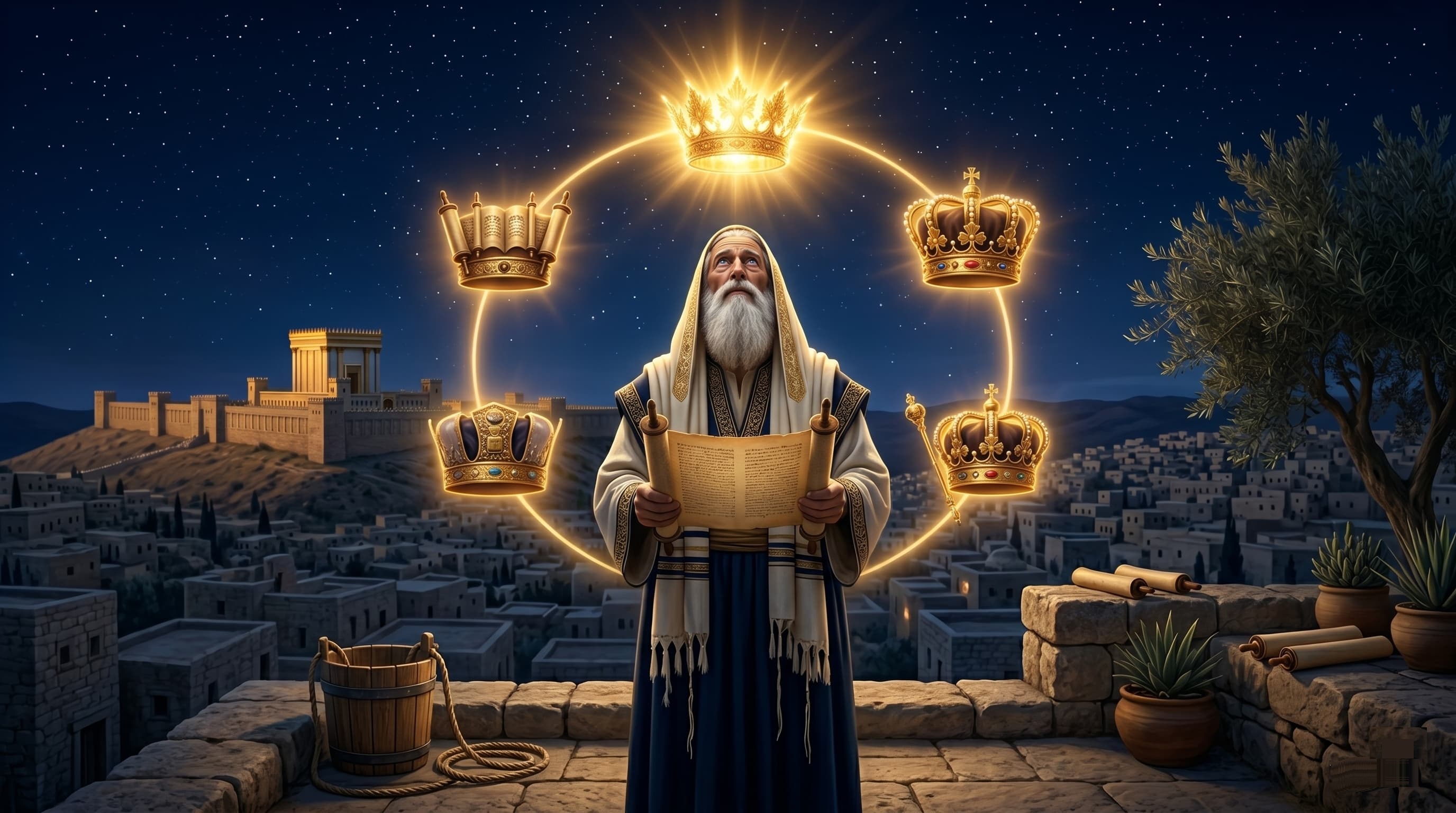
The essence of Chapter 4 in 5 minutes

Chapter 4 redefines four words: wise, strong, rich, honored. Most of the world will tell you these mean degrees, muscles, money, and titles. The Mishnah says the world is wrong.

  • Ben Zoma (4:1): Who is wise? One who learns from every person. Who is strong? One who conquers his impulse. Who is rich? One who rejoices in his portion. Who is honored? One who honors others.
  • Ben Azzai (4:2): Run to a light mitzvah and flee from sin — for one mitzvah leads to another, and one sin leads to another.
  • Rabbi (4:2): Do not despise any person and do not dismiss any thing — for there is no person without his hour and no thing without its place.
  • Hillel (4:5): One who uses the crown of Torah passes away. Torah is not a tool for personal status.
  • Rabbi Yannai (4:15): "It is not in our hands to explain the tranquility of the wicked nor the suffering of the righteous." Some questions stay open.
  • Rabbi Elazar HaKappar (4:21–22): Envy, lust, and honor remove a man from the world. And: born against your will, you live against your will, you die against your will — and you will give account.

This chapter is the antidote to comparison. The four redefinitions of Ben Zoma are enough to live by.

📖 Read the full chapter →

L'essentiel du chapitre 4 en 5 minutes

Le chapitre 4 redéfinit quatre mots : sage, fort, riche, honoré. La plupart du monde te dira que ces mots signifient diplômes, muscles, argent et titres. La Michna dit que le monde se trompe.

  • Ben Zoma (4:1) : Qui est sage ? Celui qui apprend de chacun. Qui est fort ? Celui qui maîtrise son impulsion. Qui est riche ? Celui qui se réjouit de sa part. Qui est honoré ? Celui qui honore les autres.
  • Ben Azaï (4:2) : Cours vers une mitsva légère et fuis le péché — car une mitsva en entraîne une autre, et un péché en entraîne un autre.
  • Rabbi (4:2) : Ne méprise personne et ne dédaigne aucune chose — car il n'y a pas d'homme sans son heure ni de chose sans sa place.
  • Hillel (4:5) : Celui qui se sert de la couronne de la Torah disparaît. La Torah n'est pas un outil de statut personnel.
  • Rabbi Yannaï (4:15) : « Il n'est pas en notre pouvoir d'expliquer la tranquillité des méchants ni la souffrance des justes. » Certaines questions restent ouvertes.
  • Rabbi Elazar HaKappar (4:21–22) : L'envie, le désir et l'honneur retirent l'homme du monde. Et : tu nais malgré toi, tu vis malgré toi, tu meurs malgré toi — et tu rendras des comptes.

Ce chapitre est l'antidote à la comparaison. Les quatre redéfinitions de Ben Zoma suffisent à structurer une vie.

📖 Lire le chapitre intégral →

תמצית פרק ד׳ ב-5 דקות

פרק ד׳ מגדיר מחדש ארבע מילים: חכם, גיבור, עשיר, מכובד. רוב העולם יאמר לך שמילים אלו פירושן תארים, שרירים, כסף וכבוד. המשנה אומרת שהעולם טועה.

  • בן זומא (ד׳:א׳): איזהו חכם? הלומד מכל אדם. איזהו גיבור? הכובש את יצרו. איזהו עשיר? השמח בחלקו. איזהו מכובד? המכבד את הבריות.
  • בן עזאי (ד׳:ב׳): הוי רץ למצווה קלה וברח מן העבירה — שמצווה גוררת מצווה, ועבירה גוררת עבירה.
  • רבי (ד׳:ב׳): אל תהי בז לכל אדם ואל תהי מפליג לכל דבר — שאין לך אדם שאין לו שעה ואין לך דבר שאין לו מקום.
  • הלל (ד׳:ה׳): דאשתמש בתגא — חלף. התורה אינה כלי למעמד אישי.
  • רבי ינאי (ד׳:ט״ו): "אין בידינו לא משלוות הרשעים ואף לא מייסורי הצדיקים." שאלות מסוימות נשארות פתוחות.
  • רבי אלעזר הקפר (ד׳:כ״א–כ״ב): הקנאה, התאווה והכבוד מוציאים את האדם מן העולם. וכן: על כורחך אתה נולד, חי, מת — ועתיד ליתן דין וחשבון.

הפרק הזה הוא התרופה להשוואה. ארבע ההגדרות של בן זומא מספיקות לחיות לפיהן.

📖 קרא את הפרק המלא ←

Why Chapter 4 reorganizes everything

Chapter 4 opens with Ben Zoma's four U-turns — wisdom, strength, wealth, honor — each one inverting common sense. It closes with Rabbi Elazar HaKappar's verbal storm naming God in eight roles and reminding you that you exist, live, and die against your will. In between: Ben Azzai on the chain reaction of mitzvot, Rabbi Yaakov's image of the world as antechamber, and Elisha ben Avuya — the Sage who would later become a heretic — telling us how memory works. This is the chapter that resets your priorities.

Pourquoi le chapitre 4 réorganise tout

Le chapitre 4 s'ouvre par les quatre U-turns de Ben Zoma — sagesse, force, richesse, honneur — chacun inversant le sens commun. Il se ferme par la tempête verbale de Rabbi Elazar HaKappar, nommant D.ieu en huit rôles et te rappelant que tu existes, vis et meurs malgré toi. Entre les deux : Ben Azzaï sur la réaction en chaîne des mitsvot, l'image de Rabbi Yaakov du monde comme antichambre, et Elisha ben Avouya — le Sage qui deviendra hérétique — sur le fonctionnement de la mémoire. C'est le chapitre qui remet à zéro tes priorités.

למה פרק ד׳ מסדר מחדש הכל

פרק ד׳ נפתח בארבע ההיפוכים של בן זומא — חכמה, גבורה, עושר, כבוד — כל אחת היפוך השכל הישר. הוא חותם בסערה המילולית של רבי אלעזר הקפר, המכנה את ה' בשמונה תפקידים ומזכיר לך שאתה קיים, חי ומת על כורחך. בינתיים: בן עזאי על תגובת השרשרת של המצוות, דימויו של רבי יעקב על העולם כפרוזדור, ואלישע בן אבויה — החכם שיהפוך לכופר — על איך הזיכרון עובד. זה הפרק שמאפס את הסדרי העדיפויות שלך.

Avot 4:1
בֶּן זוֹמָא אוֹמֵר, אֵיזֶהוּ חָכָם, הַלּוֹמֵד מִכָּל אָדָם, שֶׁנֶּאֱמַר (תהלים קיט) מִכָּל מְלַמְּדַי הִשְׂכַּלְתִּי כִּי עֵדְוֹתֶיךָ שִׂיחָה לִּי. אֵיזֶהוּ גִבּוֹר, הַכּוֹבֵשׁ אֶת יִצְרוֹ, שֶׁנֶּאֱמַר (משלי טז) טוֹב אֶרֶךְ אַפַּיִם מִגִּבּוֹר וּמשֵׁל בְּרוּחוֹ מִלֹּכֵד עִיר. אֵיזֶהוּ עָשִׁיר, הַשָּׂמֵחַ בְּחֶלְקוֹ, שֶׁנֶּאֱמַר (תהלים קכח) יְגִיעַ כַּפֶּיךָ כִּי תֹאכֵל אַשְׁרֶיךָ וְטוֹב לָךְ. אַשְׁרֶיךָ, בָּעוֹלָם הַזֶּה. וְטוֹב לָךְ, לָעוֹלָם הַבָּא. אֵיזֶהוּ מְכֻבָּד, הַמְכַבֵּד אֶת הַבְּרִיּוֹת, שֶׁנֶּאֱמַר (שמואל א ב) כִּי מְכַבְּדַי אֲכַבֵּד וּבֹזַי יֵקָלּוּ.

Ben Zoma said: Who is wise? One who learns from every person. Who is mighty? One who conquers his impulse. Who is rich? One who is happy with his portion. Who is honored? One who honors others.

Dracha

Four definitions, each a U-turn against common sense. The world says wisdom comes from elite teachers — Ben Zoma says everyone teaches. The world says strength conquers enemies — Ben Zoma says strength conquers yourself. The world says wealth is more — Ben Zoma says wealth is wanting what you have. The world says honor is what you receive — Ben Zoma says it's what you give. Take one inversion into your skull. Live a different life.

Ben Zoma dit : Qui est sage ? Celui qui apprend de chaque personne. Qui est fort ? Celui qui domine son penchant. Qui est riche ? Celui qui se réjouit de sa part. Qui est honoré ? Celui qui honore autrui.

Dracha

Quatre définitions, chacune un U-turn contre le sens commun. Le monde dit que la sagesse vient des maîtres d'élite — Ben Zoma dit que chacun t'enseigne. Le monde dit que la force vainc les ennemis — Ben Zoma dit qu'elle te vainc toi. Le monde dit que la richesse est d'avoir plus — Ben Zoma dit que c'est vouloir ce qu'on a. Le monde dit que l'honneur est ce qu'on reçoit — Ben Zoma dit que c'est ce qu'on donne. Prends une de ces inversions dans le crâne. Tu vis autrement.

בֶּן זוֹמָא אוֹמֵר, אֵיזֶהוּ חָכָם, הַלּוֹמֵד מִכָּל אָדָם, שֶׁנֶּאֱמַר (תהלים קיט) מִכָּל מְלַמְּדַי הִשְׂכַּלְתִּי כִּי עֵדְוֹתֶיךָ שִׂיחָה לִּי. אֵיזֶהוּ גִבּוֹר, הַכּוֹבֵשׁ אֶת יִצְרוֹ, שֶׁנֶּאֱמַר (משלי טז) טוֹב אֶרֶךְ אַפַּיִם מִגִּבּוֹר וּמשֵׁל בְּרוּחוֹ מִלֹּכֵד עִיר. אֵיזֶהוּ עָשִׁיר, הַשָּׂמֵחַ בְּחֶלְקוֹ, שֶׁנֶּאֱמַר (תהלים קכח) יְגִיעַ כַּפֶּיךָ כִּי תֹאכֵל אַשְׁרֶיךָ וְטוֹב לָךְ. אַשְׁרֶיךָ, בָּעוֹלָם הַזֶּה. וְטוֹב לָךְ, לָעוֹלָם הַבָּא. אֵיזֶהוּ מְכֻבָּד, הַמְכַבֵּד אֶת הַבְּרִיּוֹת, שֶׁנֶּאֱמַר (שמואל א ב) כִּי מְכַבְּדַי אֲכַבֵּד וּבֹזַי יֵקָלּוּ.

דרשה

ארבע הגדרות, כל אחת היפוך של השכל הישר. העולם אומר חכמה באה ממורים מובחרים — בן זומא: כל אדם מלמד. העולם: גבורה היא ניצחון אויבים — בן זומא: ניצחון עצמך. העולם: עושר הוא להחזיק יותר — בן זומא: לרצות מה שיש. העולם: כבוד הוא מה שמקבלים — בן זומא: מה שנותנים. קח אחת מההיפוכים בראשך. אתה חי אחרת.

Avot 4:2
בֶּן עַזַּאי אוֹמֵר, הֱוֵי רָץ לְמִצְוָה קַלָּה כְבַחֲמוּרָה, וּבוֹרֵחַ מִן הָעֲבֵרָה. שֶׁמִּצְוָה גּוֹרֶרֶת מִצְוָה, וַעֲבֵרָה גוֹרֶרֶת עֲבֵרָה. שֶׁשְּׂכַר מִצְוָה, מִצְוָה. וּשְׂכַר עֲבֵרָה, עֲבֵרָה.

Ben Azzai said: Run to a light mitzvah as to a serious one, and flee from sin. For a mitzvah leads to a mitzvah, and a sin leads to a sin. The reward of a mitzvah is a mitzvah, and the reward of a sin is a sin.

Dracha

Ben Azzai sees mitzvot as a chain reaction. The light one you do today wires the brain to do the heavy one tomorrow. Same for sin — small lies prepare big ones. The reward isn't external (cookie from heaven). The reward is BECOMING the kind of person who can do more good. Each mitzvah builds the muscle. Each sin atrophies it. Run to the small ones — that's how the big ones become possible.

Ben Azzaï dit : Cours vers une mitsva légère comme vers une grave, et fuis la faute. Car une mitsva entraîne une mitsva, et une faute entraîne une faute. La récompense d'une mitsva est une mitsva, et la récompense d'une faute est une faute.

Dracha

Ben Azzaï voit les mitsvot comme une réaction en chaîne. La légère que tu fais aujourd'hui câble le cerveau pour la grave de demain. Idem pour la faute — les petits mensonges préparent les grands. La récompense n'est pas externe (un biscuit du ciel). La récompense est de DEVENIR le genre de personne qui peut faire plus de bien. Chaque mitsva construit le muscle. Chaque faute l'atrophie. Cours vers les petites — c'est ainsi que les grandes deviennent possibles.

בֶּן עַזַּאי אוֹמֵר, הֱוֵי רָץ לְמִצְוָה קַלָּה כְבַחֲמוּרָה, וּבוֹרֵחַ מִן הָעֲבֵרָה. שֶׁמִּצְוָה גּוֹרֶרֶת מִצְוָה, וַעֲבֵרָה גוֹרֶרֶת עֲבֵרָה. שֶׁשְּׂכַר מִצְוָה, מִצְוָה. וּשְׂכַר עֲבֵרָה, עֲבֵרָה.

דרשה

בן עזאי רואה במצוות תגובת שרשרת. הקלה שאתה עושה היום מחשמלת את המוח לעשות את החמורה מחר. אותו דבר בעבירה — שקרים קטנים מכינים גדולים. השכר לא חיצוני (עוגייה מהשמיים). השכר הוא להפוך לסוג האדם שיכול לעשות יותר טוב. כל מצווה בונה את השריר. כל עבירה מנוונת אותו. רוץ אל הקלות — כך הגדולות נעשות אפשריות.

Avot 4:3
הוּא הָיָה אוֹמֵר, אַל תְּהִי בָז לְכָל אָדָם, וְאַל תְּהִי מַפְלִיג לְכָל דָּבָר, שֶׁאֵין לְךָ אָדָם שֶׁאֵין לוֹ שָׁעָה וְאֵין לְךָ דָבָר שֶׁאֵין לוֹ מָקוֹם.

He used to say: Do not despise any person, and do not dismiss anything as impossible — for there is no person who does not have his hour, and no thing that does not have its place.

Dracha

The cleaning lady you ignored has knowledge no one else has. The detail you dismissed will be the key in five years. Ben Azzai watched too many sages get blindsided by 'unimportant' people and 'irrelevant' things. Every person has an hour when they matter most. Every thing has a moment when it's the only thing that fits. Don't sort the world into 'matters' and 'doesn't.' Everyone has an hour. Treat them like the hour is now.

Il disait : Ne méprise aucun homme, ne déclare rien impossible — car il n'est aucune personne qui n'ait son heure, ni aucune chose qui n'ait sa place.

Dracha

La femme de ménage que tu ignores détient un savoir que personne d'autre n'a. Le détail que tu as écarté sera la clé dans cinq ans. Ben Azzaï a vu trop de sages se faire surprendre par des « gens insignifiants » et des « choses sans importance ». Chaque personne a une heure où elle compte le plus. Chaque chose a un moment où elle est la seule qui convient. Ne trie pas le monde entre « important » et « pas ». Chacun a son heure. Traite-le comme si l'heure était maintenant.

הוּא הָיָה אוֹמֵר, אַל תְּהִי בָז לְכָל אָדָם, וְאַל תְּהִי מַפְלִיג לְכָל דָּבָר, שֶׁאֵין לְךָ אָדָם שֶׁאֵין לוֹ שָׁעָה וְאֵין לְךָ דָבָר שֶׁאֵין לוֹ מָקוֹם.

דרשה

המנקה שאתה מתעלם ממנה יודעת מה שאף אחד לא יודע. הפרט שביטלת יהיה המפתח בעוד חמש שנים. בן עזאי ראה יותר מדי חכמים מופתעים על ידי 'אנשים לא חשובים' ו'דברים לא רלוונטיים'. לכל אדם יש שעה שבה הוא חשוב ביותר. לכל דבר יש רגע שבו הוא היחיד שמתאים. אל תמיין את העולם ל'חשוב' ו'לא'. לכולם יש שעה. התייחס כאילו היא עכשיו.

Avot 4:4
רַבִּי לְוִיטָס אִישׁ יַבְנֶה אוֹמֵר, מְאֹד מְאֹד הֱוֵי שְׁפַל רוּחַ, שֶׁתִּקְוַת אֱנוֹשׁ רִמָּה. רַבִּי יוֹחָנָן בֶּן בְּרוֹקָא אוֹמֵר, כָּל הַמְחַלֵּל שֵׁם שָׁמַיִם בַּסֵּתֶר, נִפְרָעִין מִמֶּנּוּ בְגָלוּי. אֶחָד שׁוֹגֵג וְאֶחָד מֵזִיד בְּחִלּוּל הַשֵּׁם.

Rabbi Levitas of Yavneh said: Be very, very humble in spirit, for the hope of mortal man is the worm. Rabbi Yochanan ben Beroka said: One who desecrates the Name of Heaven in private is punished publicly — whether the desecration is unintentional or intentional.

Dracha

'Very, very humble' — the doubling is intentional. Most religious traditions say: be humble. Levitas says: be humble TWICE. Because the humility you think you have isn't enough. Then Yochanan ben Beroka adds the corollary: God's name desecrated in secret gets punished in public. The accountability is not just to other people — it's to a witness who watches the closed room. Whether you knew or didn't know, the bill arrives. Severe. But also clarifying: there's no truly secret wrong.

Rabbi Lévitas de Yavné dit : Sois très, très humble d'esprit, car l'espérance de l'homme est le ver. Rabbi Yo'hanan ben Beroka dit : Celui qui profane le Nom du Ciel en secret est châtié publiquement — qu'il s'agisse d'une profanation involontaire ou intentionnelle.

Dracha

« Très très humble » — le doublement est intentionnel. La plupart des traditions disent : sois humble. Lévitas dit : sois humble DEUX fois. Parce que l'humilité que tu crois avoir ne suffit pas. Puis Yo'hanan ben Beroka ajoute le corollaire : le Nom de D.ieu profané en secret est puni en public. La responsabilité ne s'arrête pas aux autres — elle est devant un Témoin qui voit la pièce fermée. Que tu aies su ou non, la facture arrive. Sévère. Mais aussi clarifiant : il n'y a pas de vrai mal secret.

רַבִּי לְוִיטָס אִישׁ יַבְנֶה אוֹמֵר, מְאֹד מְאֹד הֱוֵי שְׁפַל רוּחַ, שֶׁתִּקְוַת אֱנוֹשׁ רִמָּה. רַבִּי יוֹחָנָן בֶּן בְּרוֹקָא אוֹמֵר, כָּל הַמְחַלֵּל שֵׁם שָׁמַיִם בַּסֵּתֶר, נִפְרָעִין מִמֶּנּוּ בְגָלוּי. אֶחָד שׁוֹגֵג וְאֶחָד מֵזִיד בְּחִלּוּל הַשֵּׁם.

דרשה

'מאד מאד שפל רוח' — הכפילות מכוונת. רוב המסורות אומרות: היה צנוע. לויטס אומר: היה צנוע פעמיים. כי הצניעות שאתה חושב שיש לך לא מספיקה. ואז יוחנן בן ברוקא מוסיף את המסקנה: שם שמיים שמתחלל בסתר נענש בגלוי. האחריות לא רק לאנשים — היא לעד שצופה בחדר הסגור. בין אם ידעת או לא, החשבון מגיע. חמור. אבל גם מבהיר: אין רע באמת סודי.

Avot 4:5
רַבִּי יִשְׁמָעֵאל בְּנוֹ אוֹמֵר, הַלּוֹמֵד תּוֹרָה עַל מְנָת לְלַמֵּד, מַסְפִּיקִין בְּיָדוֹ לִלְמֹד וּלְלַמֵּד. וְהַלּוֹמֵד עַל מְנָת לַעֲשׂוֹת, מַסְפִּיקִין בְּיָדוֹ לִלְמֹד וּלְלַמֵּד לִשְׁמֹר וְלַעֲשׂוֹת. רַבִּי צָדוֹק אוֹמֵר, אַל תַּעֲשֵׂם עֲטָרָה לְהִתְגַּדֵּל בָּהֶם, וְלֹא קַרְדֹּם לַחְפֹּר בָּהֶם. וְכָךְ הָיָה הִלֵּל אוֹמֵר, וּדְאִשְׁתַּמֵּשׁ בְּתָגָא, חָלָף. הָא לָמַדְתָּ, כָּל הַנֶּהֱנֶה מִדִּבְרֵי תוֹרָה, נוֹטֵל חַיָּיו מִן הָעוֹלָם.

Rabbi Yishmael his son said: One who learns Torah in order to teach is given the means to learn and teach. One who learns in order to do is given the means to learn, teach, observe and do. Rabbi Tzadok said: Do not make Torah a crown to glorify yourself, nor a spade to dig with. As Hillel said: One who exploits the crown of Torah, vanishes. From this you learn — anyone who profits from words of Torah takes his life from the world.

Dracha

The intent of study determines what flows back. Study to teach — you'll be given the ability to teach. Study to DO — you'll be given the ability to do, plus all the rest. The action multiplier compounds the heavenly investment. Then Rabbi Tzadok closes with the warning: don't turn Torah into a personal brand or a money-making tool. The crown you abuse, abandons you. The chain of teachers from Hillel onward all worked trades. Torah pays in coins not minted on earth.

Rabbi Yishmaël son fils dit : Celui qui étudie la Torah pour enseigner reçoit les moyens d'étudier et d'enseigner. Celui qui étudie pour faire reçoit les moyens d'étudier, d'enseigner, de garder et de faire. Rabbi Tsadok dit : Ne fais pas de la Torah une couronne pour te glorifier, ni une pioche pour creuser. Comme Hillel disait : Celui qui exploite la couronne de Torah disparaît. De là tu apprends — quiconque profite des paroles de Torah retire sa vie du monde.

Dracha

L'intention de l'étude détermine ce qui revient. Étudier pour enseigner — on te donne la capacité d'enseigner. Étudier pour FAIRE — on te donne la capacité de faire, plus tout le reste. Le multiplicateur de l'action compose l'investissement céleste. Puis Rabbi Tsadok clôt par l'avertissement : ne fais pas de la Torah une marque personnelle ou un outil de gain. La couronne que tu détournes t'abandonne. La chaîne des maîtres depuis Hillel exerçait tous des métiers. La Torah paie en monnaies non frappées sur terre.

רַבִּי יִשְׁמָעֵאל בְּנוֹ אוֹמֵר, הַלּוֹמֵד תּוֹרָה עַל מְנָת לְלַמֵּד, מַסְפִּיקִין בְּיָדוֹ לִלְמֹד וּלְלַמֵּד. וְהַלּוֹמֵד עַל מְנָת לַעֲשׂוֹת, מַסְפִּיקִין בְּיָדוֹ לִלְמֹד וּלְלַמֵּד לִשְׁמֹר וְלַעֲשׂוֹת. רַבִּי צָדוֹק אוֹמֵר, אַל תַּעֲשֵׂם עֲטָרָה לְהִתְגַּדֵּל בָּהֶם, וְלֹא קַרְדֹּם לַחְפֹּר בָּהֶם. וְכָךְ הָיָה הִלֵּל אוֹמֵר, וּדְאִשְׁתַּמֵּשׁ בְּתָגָא, חָלָף. הָא לָמַדְתָּ, כָּל הַנֶּהֱנֶה מִדִּבְרֵי תוֹרָה, נוֹטֵל חַיָּיו מִן הָעוֹלָם.

דרשה

כוונת הלימוד קובעת מה חוזר. לומד על מנת ללמד — נותנים בידיך ללמוד וללמד. לומד על מנת לעשות — נותנים גם להגן ולעשות. מכפיל המעשה מצרף את ההשקעה השמיימית. ואז רבי צדוק חותם באזהרה: אל תהפוך את התורה למותג אישי או לכלי כסף. הכתר שאתה מנצל נוטש אותך. השרשרת מהלל ואילך — כולם עבדו במלאכות. התורה משלמת במטבעות שלא נטבעו על הארץ.

Avot 4:6
רַבִּי יוֹסֵי אוֹמֵר, כָּל הַמְכַבֵּד אֶת הַתּוֹרָה, גּוּפוֹ מְכֻבָּד עַל הַבְּרִיּוֹת. וְכָל הַמְחַלֵּל אֶת הַתּוֹרָה, גּוּפוֹ מְחֻלָּל עַל הַבְּרִיּוֹת.

Rabbi Yose said: Whoever honors the Torah is himself honored by people. Whoever desecrates the Torah is himself desecrated by people.

Dracha

The world has a strange feedback loop with Torah. The man who treats Torah with awe — even non-religious people sense the weight he carries and respect him. The man who treats Torah cynically — even his own community eventually looks past him. Honor flows downhill from the source. You can't fake reverence; the world reads it instantly. Whatever you bow to, you embody.

Rabbi Yossi dit : Quiconque honore la Torah est lui-même honoré par les gens. Quiconque profane la Torah est lui-même profané par les gens.

Dracha

Le monde a une boucle de rétroaction étrange avec la Torah. L'homme qui traite la Torah avec révérence — même les non-religieux sentent le poids qu'il porte et le respectent. L'homme qui traite la Torah avec cynisme — même sa propre communauté finit par le passer. L'honneur coule de la source vers le bas. On ne simule pas la révérence ; le monde la lit instantanément. Tout ce devant quoi tu t'inclines, tu l'incarnes.

רַבִּי יוֹסֵי אוֹמֵר, כָּל הַמְכַבֵּד אֶת הַתּוֹרָה, גּוּפוֹ מְכֻבָּד עַל הַבְּרִיּוֹת. וְכָל הַמְחַלֵּל אֶת הַתּוֹרָה, גּוּפוֹ מְחֻלָּל עַל הַבְּרִיּוֹת.

דרשה

לעולם יש לולאת משוב מוזרה עם תורה. האיש שמתייחס לתורה ביראה — אפילו לא-דתיים חשים את המשקל שהוא נושא ומכבדים אותו. האיש שמתייחס בציניות — אפילו קהילתו שלו מסתכלת מעבר לו בסוף. הכבוד זורם במורד מהמקור. אי אפשר לזייף יראה; העולם קורא אותה מיד. מה שאתה משתחווה לו — אתה מגלם.

Avot 4:7
רַבִּי יִשְׁמָעֵאל בְּנוֹ אוֹמֵר, הַחוֹשֵׂךְ עַצְמוֹ מִן הַדִּין, פּוֹרֵק מִמֶּנּוּ אֵיבָה וְגָזֵל וּשְׁבוּעַת שָׁוְא. וְהַגַּס לִבּוֹ בַהוֹרָאָה, שׁוֹטֶה רָשָׁע וְגַס רוּחַ.

Rabbi Yishmael his son said: One who refrains from judging is freed from enmity, robbery, and false oaths. One who is arrogant in rendering decisions is a fool, wicked, and arrogant of spirit.

Dracha

There's a cost to being a judge that nobody talks about: every ruling makes someone hate you, every borderline call risks you taking from the wrong side, and every oath you administer might be false. Yishmael says: stay out when you can. Then he turns brutal: the rabbi who decides quickly is not bold, he's three things — fool, wicked, and arrogant. Wisdom in psak begins with the fear of getting it wrong.

Rabbi Yishmaël son fils dit : Celui qui s'abstient de juger se libère de l'inimitié, du vol et du serment vain. Celui qui est arrogant en tranchant est un sot, un méchant et un orgueilleux d'esprit.

Dracha

Il y a un coût à être juge dont personne ne parle : chaque décision te fait haïr par quelqu'un, chaque cas limite te fait risquer de prendre du mauvais côté, et chaque serment que tu fais prêter peut être faux. Yishmaël dit : reste à l'écart quand tu peux. Puis il devient brutal : le rabbin qui tranche vite n'est pas hardi, il est trois choses — sot, méchant, orgueilleux. La sagesse en psak commence par la peur de se tromper.

רַבִּי יִשְׁמָעֵאל בְּנוֹ אוֹמֵר, הַחוֹשֵׂךְ עַצְמוֹ מִן הַדִּין, פּוֹרֵק מִמֶּנּוּ אֵיבָה וְגָזֵל וּשְׁבוּעַת שָׁוְא. וְהַגַּס לִבּוֹ בַהוֹרָאָה, שׁוֹטֶה רָשָׁע וְגַס רוּחַ.

דרשה

יש מחיר להיות שופט שאף אחד לא מדבר עליו: כל פסק עושה ממך שונא, כל מקרה גבולי מסכן אותך לקחת מהצד הלא נכון, וכל שבועה שאתה מנהל עלולה להיות שווא. ישמעאל אומר: הישמר כשאתה יכול. ואז הוא הופך ברוטלי: הרב שמכריע מהר אינו אמיץ, הוא שלושה דברים — שוטה, רשע, גס רוח. החכמה בפסיקה מתחילה בפחד לטעות.

Avot 4:8
הוּא הָיָה אוֹמֵר, אַל תְּהִי דָן יְחִידִי, שֶׁאֵין דָּן יְחִידִי אֶלָּא אֶחָד. וְאַל תֹּאמַר קַבְּלוּ דַעְתִּי, שֶׁהֵן רַשָּׁאִין וְלֹא אָתָּה.

He used to say: Do not judge alone, for none judges alone except the One. And do not say 'accept my view,' for they are entitled to decide, not you.

Dracha

Two warnings against the cult of expertise. Only God judges alone. The rabbi who insists on solo authority is impersonating divinity. And the rabbi who pressures the panel — 'just take my view, I'm the senior here' — has overstepped: the verdict belongs to the deliberation, not to one personality. The Sephardic Beit Din always sits in odd numbers (3, 5, 7) precisely so consensus emerges from collision, not capitulation.

Il disait : Ne juge pas seul, car nul ne juge seul sauf l'Unique. Et ne dis pas « acceptez mon avis », car ce sont eux qui décident, pas toi.

Dracha

Deux avertissements contre le culte de l'expertise. Seul D.ieu juge seul. Le rabbin qui insiste sur l'autorité solo se fait passer pour la divinité. Et le rabbin qui pousse le panel — « prenez juste mon avis, je suis l'ancien ici » — a dépassé : le verdict appartient à la délibération, pas à une personnalité. Le Beith Din séfarade siège toujours en nombres impairs (3, 5, 7) précisément pour que le consensus émerge de la collision, non de la capitulation.

הוּא הָיָה אוֹמֵר, אַל תְּהִי דָן יְחִידִי, שֶׁאֵין דָּן יְחִידִי אֶלָּא אֶחָד. וְאַל תֹּאמַר קַבְּלוּ דַעְתִּי, שֶׁהֵן רַשָּׁאִין וְלֹא אָתָּה.

דרשה

שתי אזהרות נגד פולחן המומחיות. רק ה' שופט יחיד. הרב שמתעקש על סמכות יחיד מתחזה לאלוהות. והרב שדוחק בחבר — 'רק קבלו את דעתי, אני הוותיק' — חצה את הקו: הפסק שייך לדיון, לא לאישיות אחת. הבית דין הספרדי יושב תמיד במספרים אי-זוגיים (3, 5, 7) דווקא כדי שהקונצנזוס יצמח מהתנגשות, לא מכניעה.

Avot 4:9
רַבִּי יוֹנָתָן אוֹמֵר, כָּל הַמְקַיֵּם אֶת הַתּוֹרָה מֵעֹנִי, סוֹפוֹ לְקַיְּמָהּ מֵעשֶׁר. וְכָל הַמְבַטֵּל אֶת הַתּוֹרָה מֵעשֶׁר, סוֹפוֹ לְבַטְּלָהּ מֵעֹנִי.

Rabbi Yonatan said: Whoever fulfills the Torah in poverty will end up fulfilling it in wealth. Whoever neglects the Torah in wealth will end up neglecting it in poverty.

Dracha

A circular law of spiritual economics. The poor man who keeps Torah builds a soul-muscle for prosperity. When wealth comes, it doesn't crush him — he was already disciplined. The rich man who slacked when comfortable has no reserves; when crisis arrives (and it arrives), he finds he has nothing to fall back on. The conditions change. The discipline you built — or didn't — is what you carry through.

Rabbi Yonatan dit : Celui qui accomplit la Torah dans la pauvreté finira par l'accomplir dans la richesse. Celui qui néglige la Torah dans la richesse finira par la négliger dans la pauvreté.

Dracha

Une loi circulaire d'économie spirituelle. Le pauvre qui garde la Torah construit un muscle d'âme pour la prospérité. Quand la richesse vient, elle ne l'écrase pas — il était déjà discipliné. Le riche qui a relâché quand il était confortable n'a pas de réserves ; quand la crise arrive (et elle arrive), il découvre qu'il n'a rien sur quoi se rabattre. Les conditions changent. La discipline que tu as construite — ou non — c'est ce que tu emportes.

רַבִּי יוֹנָתָן אוֹמֵר, כָּל הַמְקַיֵּם אֶת הַתּוֹרָה מֵעֹנִי, סוֹפוֹ לְקַיְּמָהּ מֵעשֶׁר. וְכָל הַמְבַטֵּל אֶת הַתּוֹרָה מֵעשֶׁר, סוֹפוֹ לְבַטְּלָהּ מֵעֹנִי.

דרשה

חוק מעגלי של כלכלה רוחנית. העני שמקיים תורה בונה שריר נפש לשגשוג. כשהעושר בא, הוא לא רומס אותו — הוא כבר ממושמע. העשיר שהתרשל בנוחות אין לו רזרבות; כשהמשבר מגיע (והוא מגיע), הוא מגלה שאין לו על מה לחזור. התנאים משתנים. המשמעת שבנית — או לא — היא מה שאתה לוקח איתך.

Avot 4:10
רַבִּי מֵאִיר אוֹמֵר, הֱוֵי מְמַעֵט בְּעֵסֶק, וַעֲסֹק בַּתּוֹרָה. וֶהֱוֵי שְׁפַל רוּחַ בִּפְנֵי כָל אָדָם. וְאִם בָּטַלְתָּ מִן הַתּוֹרָה, יֶשׁ לְךָ בְטֵלִים הַרְבֵּה כְנֶגְדָּךְ. וְאִם עָמַלְתָּ בַתּוֹרָה, יֶשׁ לוֹ שָׂכָר הַרְבֵּה לִתֶּן לָךְ.

Rabbi Meir said: Cut down on business and immerse yourself in Torah. Be humble before every person. If you neglect the Torah, you will have many neglecters set against you. If you toil in the Torah, He has much reward to give you.

Dracha

Rabbi Meir's brutal trade-off: less business, more Torah. Modern ear: 'But I have a family, bills, ambition.' Meir's answer is in the second half — if you neglect Torah, the neglecters multiply against you. The hours you spent on side hustles produce nothing eternal; the hours in Torah produce a debt the Boss owes you. Then humility before everyone — because the man who chose Torah easily becomes arrogant about that choice.

Rabbi Meïr dit : Réduis les affaires, plonge-toi dans la Torah. Sois humble devant chaque homme. Si tu négliges la Torah, beaucoup de négligents seront contre toi. Si tu peines dans la Torah, Il a une grande récompense à te donner.

Dracha

Le compromis brutal de Rabbi Meïr : moins d'affaires, plus de Torah. Oreille moderne : « Mais j'ai famille, factures, ambition. » La réponse de Meïr est dans la seconde moitié — si tu négliges la Torah, les négligents se multiplient contre toi. Les heures passées en side hustles ne produisent rien d'éternel ; les heures en Torah produisent une dette que le Patron te doit. Puis humilité devant chacun — parce que l'homme qui a choisi la Torah devient facilement arrogant de ce choix.

רַבִּי מֵאִיר אוֹמֵר, הֱוֵי מְמַעֵט בְּעֵסֶק, וַעֲסֹק בַּתּוֹרָה. וֶהֱוֵי שְׁפַל רוּחַ בִּפְנֵי כָל אָדָם. וְאִם בָּטַלְתָּ מִן הַתּוֹרָה, יֶשׁ לְךָ בְטֵלִים הַרְבֵּה כְנֶגְדָּךְ. וְאִם עָמַלְתָּ בַתּוֹרָה, יֶשׁ לוֹ שָׂכָר הַרְבֵּה לִתֶּן לָךְ.

דרשה

החליפין הברוטלי של רבי מאיר: פחות עסק, יותר תורה. אוזן מודרנית: 'אבל יש לי משפחה, חשבונות, שאיפה.' תשובתו של מאיר בחצי השני — אם תזניח את התורה, המזניחים מתרבים נגדך. השעות בעסקים צדדיים לא מייצרות דבר נצחי; השעות בתורה מייצרות חוב שהבוס חייב לך. ואז ענווה לפני כולם — כי האיש שבחר תורה הופך בקלות לגאה בבחירה.

Avot 4:11
רַבִּי אֱלִיעֶזֶר בֶּן יַעֲקֹב אוֹמֵר, הָעוֹשֶׂה מִצְוָה אַחַת, קוֹנֶה לוֹ פְרַקְלִיט אֶחָד. וְהָעוֹבֵר עֲבֵרָה אַחַת, קוֹנֶה לוֹ קַטֵּגוֹר אֶחָד. תְּשׁוּבָה וּמַעֲשִׂים טוֹבִים, כִּתְרִיס בִּפְנֵי הַפֻּרְעָנוּת. רַבִּי יוֹחָנָן הַסַּנְדְּלָר אוֹמֵר, כָּל כְּנֵסִיָּה שֶׁהִיא לְשֵׁם שָׁמַיִם, סוֹפָהּ לְהִתְקַיֵּם. וְשֶׁאֵינָהּ לְשֵׁם שָׁמַיִם, אֵין סוֹפָהּ לְהִתְקַיֵּם.

Rabbi Eliezer ben Yaakov said: Whoever performs one mitzvah acquires one defender. Whoever commits one sin acquires one prosecutor. Repentance and good deeds are a shield against retribution. Rabbi Yochanan the Sandalmaker said: Every assembly that is for the sake of Heaven will endure. One that is not for the sake of Heaven will not endure.

Dracha

Two metaphors for celestial bookkeeping. Each mitzvah is a defense lawyer hired in your name. Each sin is a prosecutor. Repentance and tzedaka are shields you carry. Then Rabbi Yochanan the Sandalmaker — a working man, not a scholar — gives the test for any group, project, organization: is it really for Heaven? If yes, it lasts. If not, it collapses, no matter how impressive at launch. The graveyard of failed Jewish institutions is filled with brilliant people who weren't quite working for the Boss.

Rabbi Eliezer ben Yaakov dit : Celui qui accomplit une mitsva acquiert un défenseur. Celui qui commet une faute acquiert un accusateur. Téchouva et bonnes actions sont un bouclier contre le châtiment. Rabbi Yo'hanan le Sandalier dit : Toute assemblée qui est pour le nom du Ciel finira par tenir. Celle qui ne l'est pas, ne tiendra pas.

Dracha

Deux métaphores pour la comptabilité céleste. Chaque mitsva est un avocat de la défense engagé en ton nom. Chaque faute est un procureur. Téchouva et tsedaka sont des boucliers que tu portes. Puis Rabbi Yo'hanan le Sandalier — un travailleur manuel, pas un érudit — donne le test pour tout groupe, projet, organisation : est-ce vraiment pour le Ciel ? Si oui, ça dure. Si non, ça s'effondre, quel que soit l'éclat au lancement. Le cimetière des institutions juives ratées est rempli de gens brillants qui ne travaillaient pas tout à fait pour le Patron.

רַבִּי אֱלִיעֶזֶר בֶּן יַעֲקֹב אוֹמֵר, הָעוֹשֶׂה מִצְוָה אַחַת, קוֹנֶה לוֹ פְרַקְלִיט אֶחָד. וְהָעוֹבֵר עֲבֵרָה אַחַת, קוֹנֶה לוֹ קַטֵּגוֹר אֶחָד. תְּשׁוּבָה וּמַעֲשִׂים טוֹבִים, כִּתְרִיס בִּפְנֵי הַפֻּרְעָנוּת. רַבִּי יוֹחָנָן הַסַּנְדְּלָר אוֹמֵר, כָּל כְּנֵסִיָּה שֶׁהִיא לְשֵׁם שָׁמַיִם, סוֹפָהּ לְהִתְקַיֵּם. וְשֶׁאֵינָהּ לְשֵׁם שָׁמַיִם, אֵין סוֹפָהּ לְהִתְקַיֵּם.

דרשה

שתי מטאפורות לחשבונאות שמיימית. כל מצווה היא עורך דין הגנה ששכרת בשמך. כל עבירה — קטגור. תשובה וצדקה הם תריסים שאתה נושא. ואז רבי יוחנן הסנדלר — איש עמל, לא חכם — נותן את המבחן לכל קבוצה, פרויקט, ארגון: באמת לשם שמיים? אם כן — מתקיים. אם לא — קורס, לא משנה כמה מרשים בהשקה. בית הקברות של מוסדות יהודיים שכשלו מלא באנשים מבריקים שלא עבדו בדיוק לבוס.

Avot 4:12
רַבִּי אֶלְעָזָר בֶּן שַׁמּוּעַ אוֹמֵר, יְהִי כְבוֹד תַּלְמִידְךָ חָבִיב עָלֶיךָ כְּשֶׁלְּךָ, וּכְבוֹד חֲבֵרְךָ כְּמוֹרָא רַבְּךָ, וּמוֹרָא רַבְּךָ כְּמוֹרָא שָׁמָיִם.

Rabbi Elazar ben Shamua said: Let the honor of your student be as dear to you as your own. The honor of your colleague — like the awe of your teacher. The awe of your teacher — like the awe of Heaven.

Dracha

A four-tier ladder of honor, ascending. The student you teach — treat him like yourself. The colleague you debate — treat him as you'd treat your own teacher. The teacher you learn from — treat him as you'd treat the presence of God. The further up, the more reverence. Most of us collapse this hierarchy: we treat the student carelessly, the colleague competitively, the teacher casually. Elazar ben Shamua restores the architecture.

Rabbi Elazar ben Shamua dit : Que l'honneur de ton élève te soit aussi cher que le tien. L'honneur de ton collègue — comme la révérence pour ton maître. La révérence pour ton maître — comme la révérence pour le Ciel.

Dracha

Une échelle de l'honneur en quatre paliers, ascendante. L'élève que tu enseignes — traite-le comme toi-même. Le collègue que tu débats — traite-le comme tu traiterais ton propre maître. Le maître chez qui tu apprends — traite-le comme tu traiterais la présence de D.ieu. Plus on monte, plus la révérence augmente. La plupart de nous écrasons cette hiérarchie : on traite l'élève à la légère, le collègue en compétition, le maître avec familiarité. Elazar ben Shamua restaure l'architecture.

רַבִּי אֶלְעָזָר בֶּן שַׁמּוּעַ אוֹמֵר, יְהִי כְבוֹד תַּלְמִידְךָ חָבִיב עָלֶיךָ כְּשֶׁלְּךָ, וּכְבוֹד חֲבֵרְךָ כְּמוֹרָא רַבְּךָ, וּמוֹרָא רַבְּךָ כְּמוֹרָא שָׁמָיִם.

דרשה

סולם כבוד ארבע-שלבי, עולה. התלמיד שאתה מלמד — התייחס אליו כעצמך. החבר שאתה מתווכח — התייחס כפי שתתייחס לרבך. הרב שאתה לומד ממנו — התייחס כפי שתתייחס לנוכחות ה'. ככל שעולים, היראה גדלה. רובנו מקפלים את ההיררכיה: מתייחסים לתלמיד ברישול, לחבר בתחרות, לרב בלי גבולות. אלעזר בן שמוע משחזר את הארכיטקטורה.

Avot 4:13
רַבִּי יְהוּדָה אוֹמֵר, הֱוֵי זָהִיר בַּתַּלְמוּד, שֶׁשִּׁגְגַת תַּלְמוּד עוֹלָה זָדוֹן. רַבִּי שִׁמְעוֹן אוֹמֵר, שְׁלשָׁה כְתָרִים הֵם, כֶּתֶר תּוֹרָה וְכֶתֶר כְּהֻנָּה וְכֶתֶר מַלְכוּת, וְכֶתֶר שֵׁם טוֹב עוֹלֶה עַל גַּבֵּיהֶן.

Rabbi Yehuda said: Be careful with study — for an error in study counts as intentional sin. Rabbi Shimon said: There are three crowns — the crown of Torah, the crown of priesthood, the crown of kingship. But the crown of a good name surpasses them all.

Dracha

Yehuda gives the harshest standard: forgetting your Talmud is treated as deliberate sin, because Torah is the foundation that prevents everything else from collapsing. Then Shimon — the architecture of greatness. Three institutional crowns: Torah, Priesthood, Kingship. Ranked, accessible, formal. But above all of them — the crown of a good name. Not bestowed by anyone. Earned by every interaction. The only crown that survives the grave.

Rabbi Yehouda dit : Sois prudent avec l'étude — car une erreur d'étude équivaut à une faute intentionnelle. Rabbi Shimon dit : Il y a trois couronnes — la couronne de Torah, la couronne du sacerdoce, la couronne de la royauté. Mais la couronne du bon nom les dépasse toutes.

Dracha

Yehouda donne la norme la plus dure : oublier ton Talmud est traité comme faute intentionnelle, car la Torah est la fondation qui empêche tout le reste de s'effondrer. Puis Shimon — l'architecture de la grandeur. Trois couronnes institutionnelles : Torah, Sacerdoce, Royauté. Classées, accessibles, formelles. Mais au-dessus de toutes — la couronne du bon nom. Conférée par personne. Gagnée à chaque interaction. La seule couronne qui survit à la tombe.

רַבִּי יְהוּדָה אוֹמֵר, הֱוֵי זָהִיר בַּתַּלְמוּד, שֶׁשִּׁגְגַת תַּלְמוּד עוֹלָה זָדוֹן. רַבִּי שִׁמְעוֹן אוֹמֵר, שְׁלשָׁה כְתָרִים הֵם, כֶּתֶר תּוֹרָה וְכֶתֶר כְּהֻנָּה וְכֶתֶר מַלְכוּת, וְכֶתֶר שֵׁם טוֹב עוֹלֶה עַל גַּבֵּיהֶן.

דרשה

יהודה נותן את הסטנדרט הקשה ביותר: לשכוח תלמודך נחשב לזדון, כי התורה היא היסוד שמונע מכל השאר לקרוס. ואז שמעון — ארכיטקטורת הגדולה. שלושה כתרים מוסדיים: תורה, כהונה, מלכות. ממוסדים, נגישים, פורמליים. אבל מעל כולם — כתר שם טוב. לא מוענק על ידי איש. נרכש בכל אינטראקציה. הכתר היחיד ששורד את הקבר.

Avot 4:14
רַבִּי נְהוֹרַאי אוֹמֵר, הֱוֵי גוֹלֶה לִמְקוֹם תּוֹרָה, וְאַל תֹּאמַר שֶׁהִיא תָבֹא אַחֲרֶיךָ, שֶׁחֲבֵרֶיךָ יְקַיְּמוּהָ בְיָדֶךָ. וְאֶל בִּינָתְךָ אַל תִּשָּׁעֵן.

Rabbi Nehorai said: Exile yourself to a place of Torah. Do not say 'it will come to me' — for your friends will help you keep it in your hand. And do not rely on your own understanding.

Dracha

Three travel rules. First — physically move to where Torah is. Don't try to study by yourself in a city without a real Beit Midrash. Second — when you're surrounded by serious students, your weak moments get caught by friends, your good moments get amplified. Third — stop trusting your gut. Your gut was trained by your environment, and if your environment is wrong, your gut is wrong. A new place builds a new gut.

Rabbi Nehoraï dit : Exile-toi vers un lieu de Torah. Ne dis pas « elle viendra à moi » — car tes amis t'aideront à la garder en main. Et ne t'appuie pas sur ta propre intelligence.

Dracha

Trois règles de voyage. Premièrement — bouge physiquement là où la Torah est. N'essaie pas d'étudier seul dans une ville sans véritable Beith Midrash. Deuxièmement — quand tu es entouré d'élèves sérieux, tes moments faibles sont rattrapés par les amis, tes bons moments amplifiés. Troisièmement — cesse de te fier à ton instinct. Ton instinct a été formé par ton environnement, et si ton environnement est faux, ton instinct est faux. Un nouveau lieu construit un nouvel instinct.

רַבִּי נְהוֹרַאי אוֹמֵר, הֱוֵי גוֹלֶה לִמְקוֹם תּוֹרָה, וְאַל תֹּאמַר שֶׁהִיא תָבֹא אַחֲרֶיךָ, שֶׁחֲבֵרֶיךָ יְקַיְּמוּהָ בְיָדֶךָ. וְאֶל בִּינָתְךָ אַל תִּשָּׁעֵן.

דרשה

שלושה כללי נסיעה. ראשון — זוז פיזית למקום שיש בו תורה. אל תנסה ללמוד לבד בעיר בלי בית מדרש אמיתי. שני — כשאתה מוקף תלמידים רציניים, הרגעים החלשים שלך נתפסים על ידי חברים, הטובים מוגברים. שלישי — הפסק לסמוך על האינטואיציה. האינטואיציה שלך אומנה על ידי הסביבה, ואם הסביבה שגויה — האינטואיציה שגויה. מקום חדש בונה אינטואיציה חדשה.

Avot 4:15
רַבִּי יַנַּאי אוֹמֵר, אֵין בְּיָדֵינוּ לֹא מִשַּׁלְוַת הָרְשָׁעִים וְאַף לֹא מִיִּסּוּרֵי הַצַּדִּיקִים. רַבִּי מַתְיָא בֶן חָרָשׁ אוֹמֵר, הֱוֵי מַקְדִּים בִּשְׁלוֹם כָּל אָדָם. וֶהֱוֵי זָנָב לָאֲרָיוֹת, וְאַל תְּהִי רֹאשׁ לַשּׁוּעָלִים.

Rabbi Yannai said: It is not in our hands to explain the tranquility of the wicked or the suffering of the righteous. Rabbi Matia ben Charash said: Be the first to greet every person. Be a tail to lions rather than a head to foxes.

Dracha

Yannai's stunning admission: we don't know why the wicked thrive and the righteous suffer. Two thousand years of theology haven't cracked it. Stop trying. Then Matia gives the practical: greet first — yield the small ego win. And the strategic line: be the tail of lions over the head of foxes. Surround yourself with the better. You will rise. The opposite — being the smartest in a small room — guarantees decline.

Rabbi Yannaï dit : Il n'est pas en notre pouvoir d'expliquer la tranquillité des méchants ni les souffrances des justes. Rabbi Matya ben 'Harach dit : Sois le premier à saluer chaque personne. Sois une queue aux lions plutôt qu'une tête aux renards.

Dracha

L'aveu stupéfiant de Yannaï : nous ne savons pas pourquoi les méchants prospèrent et les justes souffrent. Deux mille ans de théologie n'ont pas craqué le code. Cesse d'essayer. Puis Matya donne le pratique : salue en premier — cède la petite victoire d'ego. Et la ligne stratégique : sois la queue des lions plutôt que la tête des renards. Entoure-toi des meilleurs. Tu monteras. L'inverse — être le plus malin dans une petite pièce — garantit le déclin.

רַבִּי יַנַּאי אוֹמֵר, אֵין בְּיָדֵינוּ לֹא מִשַּׁלְוַת הָרְשָׁעִים וְאַף לֹא מִיִּסּוּרֵי הַצַּדִּיקִים. רַבִּי מַתְיָא בֶן חָרָשׁ אוֹמֵר, הֱוֵי מַקְדִּים בִּשְׁלוֹם כָּל אָדָם. וֶהֱוֵי זָנָב לָאֲרָיוֹת, וְאַל תְּהִי רֹאשׁ לַשּׁוּעָלִים.

דרשה

הודאה מהממת של ינאי: אנחנו לא יודעים למה רשעים משגשגים וצדיקים סובלים. אלפיים שנה של תאולוגיה לא פיצחו את זה. תפסיק לנסות. ואז מתיא נותן את המעשי: הקדם בשלום — ויתר על ניצחון אגו קטן. והשורה האסטרטגית: זנב לאריות עדיף על ראש לשועלים. הקף את עצמך באנשים טובים יותר. תעלה. ההפך — להיות הכי חכם בחדר קטן — מבטיח דעיכה.

Avot 4:16
רַבִּי יַעֲקֹב אוֹמֵר, הָעוֹלָם הַזֶּה דּוֹמֶה לִפְרוֹזְדוֹר בִּפְנֵי הָעוֹלָם הַבָּא. הַתְקֵן עַצְמְךָ בַפְּרוֹזְדוֹר, כְּדֵי שֶׁתִּכָּנֵס לַטְּרַקְלִין.

Rabbi Yaakov said: This world is like an antechamber before the world to come. Prepare yourself in the antechamber so that you may enter the banquet hall.

Dracha

One image that reorganizes a life. The hotel lobby is not the wedding. The waiting room is not the surgery. This world is a HALLWAY — important, but not the destination. The hallway is where you fix your tie, settle your nerves, rehearse your lines. Most people decorate the hallway like it's the room. Rabbi Yaakov says: don't get comfortable in the antechamber. The doors will open. Be ready when they do.

Rabbi Yaakov dit : Ce monde est comme une antichambre devant le monde à venir. Prépare-toi dans l'antichambre pour entrer dans la grande salle.

Dracha

Une image qui réorganise une vie. Le hall d'hôtel n'est pas le mariage. La salle d'attente n'est pas la chirurgie. Ce monde est un COULOIR — important, mais pas la destination. Le couloir, c'est là où tu rajustes ta cravate, calmes tes nerfs, répètes tes phrases. La plupart des gens décorent le couloir comme si c'était la pièce. Rabbi Yaakov dit : ne t'installe pas dans l'antichambre. Les portes vont s'ouvrir. Sois prêt quand elles s'ouvriront.

רַבִּי יַעֲקֹב אוֹמֵר, הָעוֹלָם הַזֶּה דּוֹמֶה לִפְרוֹזְדוֹר בִּפְנֵי הָעוֹלָם הַבָּא. הַתְקֵן עַצְמְךָ בַפְּרוֹזְדוֹר, כְּדֵי שֶׁתִּכָּנֵס לַטְּרַקְלִין.

דרשה

דימוי אחד שמסדר מחדש חיים שלמים. לובי המלון אינו החתונה. חדר ההמתנה אינו הניתוח. העולם הזה הוא פרוזדור — חשוב, אך לא היעד. הפרוזדור הוא המקום שבו אתה מתקן את העניבה, מרגיע עצבים, חוזר על המשפטים. רוב האנשים מקשטים את הפרוזדור כאילו הוא החדר. רבי יעקב אומר: אל תתנחם באנטיצ'מבר. הדלתות ייפתחו. היה מוכן כשייפתחו.

Avot 4:17
הוּא הָיָה אוֹמֵר, יָפָה שָׁעָה אַחַת בִּתְשׁוּבָה וּמַעֲשִׂים טוֹבִים בָּעוֹלָם הַזֶּה, מִכָּל חַיֵּי הָעוֹלָם הַבָּא. וְיָפָה שָׁעָה אַחַת שֶׁל קוֹרַת רוּחַ בָּעוֹלָם הַבָּא, מִכָּל חַיֵּי הָעוֹלָם הַזֶּה.

He used to say: One hour of repentance and good deeds in this world is more beautiful than all the life of the world to come. And one hour of contentment in the world to come is more beautiful than all the life of this world.

Dracha

Two contradictions resolved by scale. This world's value: one hour of teshuva here outweighs all of olam haba — because here you can CHANGE, choose, act. There you only collect what you've earned. World to come's value: one hour of contentment there outweighs all of this world — because what you taste there is what here only points toward. The two together — life is for action; the prize is for after. Both extreme. Both true.

Il disait : Une heure de téchouva et de bonnes actions dans ce monde est plus belle que toute la vie du monde à venir. Et une heure de plénitude dans le monde à venir est plus belle que toute la vie de ce monde.

Dracha

Deux contradictions résolues par l'échelle. La valeur de ce monde : une heure de téchouva ici l'emporte sur tout l'olam haba — parce qu'ici tu peux CHANGER, choisir, agir. Là-bas tu ne fais que collecter ce que tu as gagné. La valeur du monde à venir : une heure de plénitude là-bas l'emporte sur tout ce monde — parce que ce que tu y goûtes est ce que ce monde ne fait que pointer. Les deux ensemble — la vie est pour l'action ; le prix est pour après. Les deux extrêmes. Les deux vrais.

הוּא הָיָה אוֹמֵר, יָפָה שָׁעָה אַחַת בִּתְשׁוּבָה וּמַעֲשִׂים טוֹבִים בָּעוֹלָם הַזֶּה, מִכָּל חַיֵּי הָעוֹלָם הַבָּא. וְיָפָה שָׁעָה אַחַת שֶׁל קוֹרַת רוּחַ בָּעוֹלָם הַבָּא, מִכָּל חַיֵּי הָעוֹלָם הַזֶּה.

דרשה

שתי סתירות שנפתרות בקנה מידה. ערכו של עולם הזה: שעה אחת של תשובה כאן עולה על כל עולם הבא — כי כאן אתה יכול לשנות, לבחור, לפעול. שם אתה רק אוסף את מה שהרווחת. ערכו של עולם הבא: שעה אחת של קורת רוח שם עולה על כל עולם הזה — כי מה שאתה טועם שם הוא מה שכאן רק מצביע אליו. שניהם יחד — החיים למעשה; הפרס לאחר. שניהם קיצוניים. שניהם אמת.

Avot 4:18
רַבִּי שִׁמְעוֹן בֶּן אֶלְעָזָר אוֹמֵר, אַל תְּרַצֶּה אֶת חֲבֵרְךָ בִשְׁעַת כַּעֲסוֹ, וְאַל תְּנַחֲמֶנּוּ בְּשָׁעָה שֶׁמֵּתוֹ מֻטָּל לְפָנָיו, וְאַל תִּשְׁאַל לוֹ בִשְׁעַת נִדְרוֹ, וְאַל תִּשְׁתַּדֵּל לִרְאוֹתוֹ בִשְׁעַת קַלְקָלָתוֹ.

Rabbi Shimon ben Elazar said: Do not appease your friend at the moment of his anger. Do not console him while his dead lies before him. Do not question him at the moment of his vow. And do not strive to see him at the moment of his disgrace.

Dracha

Four moments of presence that demand absence. The angry man can't hear apology. The mourner can't process consolation. The man making a vow shouldn't be challenged. The disgraced shouldn't be visited as spectacle. Each of these is what GOOD-INTENTIONED people do wrong: rushing in to help when help is harm. Wisdom is knowing when to step back. Wait. The right moment will come. Don't impose comfort on someone who isn't ready to receive it.

Rabbi Shimon ben Elazar dit : Ne tente pas d'apaiser ton ami au moment de sa colère. Ne le console pas tant que son mort gît devant lui. Ne le questionne pas au moment de son vœu. Et ne cherche pas à le voir au moment de sa honte.

Dracha

Quatre moments de présence qui exigent l'absence. L'homme en colère ne peut entendre une excuse. L'endeuillé ne peut traiter une consolation. L'homme qui prête vœu ne doit pas être remis en question. Le honni ne doit pas être visité comme spectacle. Chacun est ce que les gens bien intentionnés font de travers : se précipiter pour aider quand l'aide blesse. La sagesse, c'est savoir reculer. Attendre. Le bon moment viendra. N'impose pas le réconfort à qui n'est pas prêt à le recevoir.

רַבִּי שִׁמְעוֹן בֶּן אֶלְעָזָר אוֹמֵר, אַל תְּרַצֶּה אֶת חֲבֵרְךָ בִשְׁעַת כַּעֲסוֹ, וְאַל תְּנַחֲמֶנּוּ בְּשָׁעָה שֶׁמֵּתוֹ מֻטָּל לְפָנָיו, וְאַל תִּשְׁאַל לוֹ בִשְׁעַת נִדְרוֹ, וְאַל תִּשְׁתַּדֵּל לִרְאוֹתוֹ בִשְׁעַת קַלְקָלָתוֹ.

דרשה

ארבעה רגעי נוכחות שדורשים היעדרות. הזועם לא יכול לשמוע התנצלות. האבל לא יכול לעבד נחמה. הנודר אסור שיואתגר. הנכשל אסור שיבוקר כמופע. כל אחד מהם הוא מה שאנשים בעלי כוונות טובות עושים שגוי: מיהרים לעזור כשהעזרה פוגעת. החכמה היא לדעת מתי להתרחק. לחכות. הרגע הנכון יבוא. אל תכפה נחמה על מי שאינו מוכן לקבל אותה.

Avot 4:19
שְׁמוּאֵל הַקָּטָן אוֹמֵר, (משלי כד) בִּנְפֹל אוֹיִבְךָ אַל תִּשְׂמָח וּבִכָּשְׁלוֹ אַל יָגֵל לִבֶּךָ, פֶּן יִרְאֶה ה' וְרַע בְּעֵינָיו וְהֵשִׁיב מֵעָלָיו אַפּוֹ.

Shmuel HaKatan said: (Proverbs 24) 'When your enemy falls, do not rejoice; when he stumbles, let your heart not be glad — lest the Lord see and be displeased and turn His wrath away from him.'

Dracha

Shmuel HaKatan was so humble he is given no original teaching — just one quoted verse. The verse is harsh: rejoice in your enemy's fall, and God will pull His wrath OFF him and onto you. Karma redirects. Justice prefers the man who refuses to celebrate suffering. The most strategic move when your enemy fails is silence. Not pretended sorrow — actual neutrality. Let the heavens finish what the heavens started.

Chmouel HaKatan dit : (Proverbes 24) « Quand ton ennemi tombe, ne te réjouis pas ; quand il trébuche, que ton cœur ne se réjouisse pas — de peur que l'Éternel ne le voie et n'en soit déplu et ne détourne de lui Sa colère. »

Dracha

Chmouel HaKatan était si humble qu'on ne lui attribue aucun enseignement original — juste un verset cité. Le verset est dur : réjouis-toi de la chute de ton ennemi, et D.ieu retire Sa colère DE LUI vers toi. Le karma se redirige. La justice préfère l'homme qui refuse de célébrer la souffrance. Le mouvement le plus stratégique quand ton ennemi échoue est le silence. Pas une tristesse feinte — une véritable neutralité. Laisse les cieux finir ce qu'ils ont commencé.

שְׁמוּאֵל הַקָּטָן אוֹמֵר, (משלי כד) בִּנְפֹל אוֹיִבְךָ אַל תִּשְׂמָח וּבִכָּשְׁלוֹ אַל יָגֵל לִבֶּךָ, פֶּן יִרְאֶה ה' וְרַע בְּעֵינָיו וְהֵשִׁיב מֵעָלָיו אַפּוֹ.

דרשה

שמואל הקטן היה כה צנוע שלא מיוחס לו לימוד מקורי — רק פסוק מצוטט. הפסוק חד: שמח בנפילת אויבך, וה' מסיר את חמתו ממנו ומכוון אותה אליך. הקארמה מסתובבת. הצדק מעדיף את האיש המסרב לחגוג סבל. המהלך האסטרטגי ביותר כשאויבך נכשל הוא שתיקה. לא צער מזויף — נייטרליות אמיתית. הנח לשמיים לסיים את מה שהשמיים התחילו.

Avot 4:20
אֱלִישָׁע בֶּן אֲבוּיָה אוֹמֵר, הַלּוֹמֵד יֶלֶד לְמַה הוּא דוֹמֶה, לִדְיוֹ כְתוּבָה עַל נְיָר חָדָשׁ. וְהַלּוֹמֵד זָקֵן לְמַה הוּא דוֹמֶה, לִדְיוֹ כְתוּבָה עַל נְיָר מָחוּק. רַבִּי יוֹסֵי בַר יְהוּדָה אִישׁ כְּפַר הַבַּבְלִי אוֹמֵר, הַלּוֹמֵד מִן הַקְּטַנִּים לְמַה הוּא דוֹמֶה, לְאֹכֵל עֲנָבִים קֵהוֹת וְשׁוֹתֶה יַיִן מִגִּתּוֹ. וְהַלּוֹמֵד מִן הַזְּקֵנִים לְמַה הוּא דוֹמֶה, לְאֹכֵל עֲנָבִים בְּשֵׁלוֹת וְשׁוֹתֶה יַיִן יָשָׁן. רַבִּי אוֹמֵר, אַל תִּסְתַּכֵּל בַּקַּנְקַן, אֶלָּא בְמַה שֶּׁיֶּשׁ בּוֹ. יֵשׁ קַנְקַן חָדָשׁ מָלֵא יָשָׁן, וְיָשָׁן שֶׁאֲפִלּוּ חָדָשׁ אֵין בּוֹ.

Elisha ben Avuya said: Studying in youth is like ink written on fresh paper. Studying in old age is like ink written on smudged paper. Rabbi Yose bar Yehuda said: Learning from the young is like eating unripe grapes and drinking wine fresh from the press. Learning from the old is like eating ripe grapes and drinking aged wine. Rabbi said: Do not look at the jar, but at what is in it. Some new jars are full of old wine, and some old jars don't even have new wine.

Dracha

Elisha ben Avuya — later known as Acher, the Other — was the great heretic of the Talmud. But here he was still a Sage, and his metaphor is unforgettable: youth absorbs cleanly, age absorbs over palimpsest. Then Rabbi corrects: but the container deceives. A young teacher can hold ancient wine. An old jar can be empty. Watch what's inside, not the label. Acher's tragedy is exactly that: he became an empty old jar — and yet his image of fresh paper still teaches.

Elisha ben Avouya dit : Apprendre jeune, c'est comme de l'encre écrite sur du papier neuf. Apprendre vieux, c'est comme de l'encre écrite sur du papier effacé. Rabbi Yossi bar Yehouda dit : Apprendre des jeunes, c'est manger des raisins verts et boire du vin tout juste pressé. Apprendre des anciens, c'est manger des raisins mûrs et boire du vin vieux. Rabbi dit : Ne regarde pas la cruche, mais ce qu'elle contient. Il est de nouvelles cruches pleines de vieux vin, et de vieilles qui n'ont même pas de vin nouveau.

Dracha

Elisha ben Avouya — connu plus tard sous le nom d'Aher, l'Autre — fut le grand hérétique du Talmud. Mais ici il était encore un Sage, et sa métaphore est inoubliable : la jeunesse absorbe net, l'âge absorbe sur palimpseste. Puis Rabbi corrige : mais le récipient trompe. Un jeune maître peut contenir un vin antique. Une vieille jarre peut être vide. Regarde le contenu, pas l'étiquette. La tragédie d'Aher est exactement cela : il est devenu une vieille jarre vide — et pourtant son image du papier neuf enseigne encore.

אֱלִישָׁע בֶּן אֲבוּיָה אוֹמֵר, הַלּוֹמֵד יֶלֶד לְמַה הוּא דוֹמֶה, לִדְיוֹ כְתוּבָה עַל נְיָר חָדָשׁ. וְהַלּוֹמֵד זָקֵן לְמַה הוּא דוֹמֶה, לִדְיוֹ כְתוּבָה עַל נְיָר מָחוּק. רַבִּי יוֹסֵי בַר יְהוּדָה אִישׁ כְּפַר הַבַּבְלִי אוֹמֵר, הַלּוֹמֵד מִן הַקְּטַנִּים לְמַה הוּא דוֹמֶה, לְאֹכֵל עֲנָבִים קֵהוֹת וְשׁוֹתֶה יַיִן מִגִּתּוֹ. וְהַלּוֹמֵד מִן הַזְּקֵנִים לְמַה הוּא דוֹמֶה, לְאֹכֵל עֲנָבִים בְּשֵׁלוֹת וְשׁוֹתֶה יַיִן יָשָׁן. רַבִּי אוֹמֵר, אַל תִּסְתַּכֵּל בַּקַּנְקַן, אֶלָּא בְמַה שֶּׁיֶּשׁ בּוֹ. יֵשׁ קַנְקַן חָדָשׁ מָלֵא יָשָׁן, וְיָשָׁן שֶׁאֲפִלּוּ חָדָשׁ אֵין בּוֹ.

דרשה

אלישע בן אבויה — שנודע אחר כך כאחֵר, האחר — היה הכופר הגדול של התלמוד. אבל כאן הוא עדיין חכם, והמטאפורה שלו בלתי נשכחת: הנעורים סופגים בנקיון, הזקנה סופגת על פלימפסט. ואז רבי מתקן: אבל הכלי מטעה. רב צעיר יכול להחזיק יין עתיק. כד זקן יכול להיות ריק. הסתכל בתוכן, לא בתווית. הטרגדיה של אחר היא בדיוק זו: הוא הפך לכד זקן ריק — ובכל זאת התמונה שלו של נייר חדש עוד מלמדת.

Avot 4:21
רַבִּי אֶלְעָזָר הַקַּפָּר אוֹמֵר, הַקִּנְאָה וְהַתַּאֲוָה וְהַכָּבוֹד, מוֹצִיאִין אֶת הָאָדָם מִן הָעוֹלָם.

Rabbi Elazar HaKappar said: Envy, lust, and the pursuit of honor — remove a man from the world.

Dracha

Three killers in eight Hebrew words. Envy — wanting what someone else has — corrodes the soul before any external loss occurs. Lust — wanting what's forbidden — burns through every restraint. Honor — wanting recognition — turns every relationship into theater. Each one alone removes you from the world. The combination removes you from yourself. The Sephardic tradition of mussar has always treated these three as the trinity of self-destruction. Diagnose yours. Treat it now.

Rabbi Elazar HaKappar dit : L'envie, le désir et la poursuite des honneurs — retirent l'homme du monde.

Dracha

Trois tueurs en huit mots hébreux. L'envie — vouloir ce qu'a autrui — corrode l'âme avant toute perte externe. Le désir — vouloir ce qui est interdit — brûle toutes les retenues. L'honneur — vouloir la reconnaissance — transforme chaque relation en théâtre. Chacun seul te retire du monde. La combinaison te retire de toi-même. La tradition séfarade du moussar a toujours traité ces trois comme la trinité de l'autodestruction. Diagnostique le tien. Traite-le maintenant.

רַבִּי אֶלְעָזָר הַקַּפָּר אוֹמֵר, הַקִּנְאָה וְהַתַּאֲוָה וְהַכָּבוֹד, מוֹצִיאִין אֶת הָאָדָם מִן הָעוֹלָם.

דרשה

שלושה רוצחים בשמונה מילים עבריות. הקנאה — לרצות מה שיש לאחר — מחלידה את הנפש לפני כל הפסד חיצוני. התאווה — לרצות את האסור — שורפת כל ריסון. הכבוד — לרצות הכרה — הופך כל יחס לתיאטרון. כל אחד לבדו מוציא אותך מהעולם. הצירוף מוציא אותך מעצמך. מסורת המוסר הספרדית התייחסה לשלושת אלה כשילוש של חורבן עצמי. אבחן את שלך. טפל עכשיו.

Avot 4:22
הוּא הָיָה אוֹמֵר, הַיִּלּוֹדִים לָמוּת, וְהַמֵּתִים לְהֵחָיוֹת, וְהַחַיִּים לִדּוֹן. לֵידַע לְהוֹדִיעַ וּלְהִוָּדַע שֶׁהוּא אֵל, הוּא הַיּוֹצֵר, הוּא הַבּוֹרֵא, הוּא הַמֵּבִין, הוּא הַדַּיָּן, הוּא עֵד, הוּא בַעַל דִּין, וְהוּא עָתִיד לָדוּן. בָּרוּךְ הוּא, שֶׁאֵין לְפָנָיו לֹא עַוְלָה, וְלֹא שִׁכְחָה, וְלֹא מַשּׂוֹא פָנִים, וְלֹא מִקַּח שֹׁחַד, שֶׁהַכֹּל שֶׁלּוֹ. וְדַע שֶׁהַכֹּל לְפִי הַחֶשְׁבּוֹן. וְאַל יַבְטִיחֲךָ יִצְרְךָ שֶׁהַשְּׁאוֹל בֵּית מָנוֹס לְךָ, שֶׁעַל כָּרְחֲךָ אַתָּה נוֹצָר, וְעַל כָּרְחֲךָ אַתָּה נוֹלָד, וְעַל כָּרְחֲךָ אַתָּה חַי, וְעַל כָּרְחֲךָ אַתָּה מֵת, וְעַל כָּרְחֲךָ אַתָּה עָתִיד לִתֵּן דִּין וְחֶשְׁבּוֹן לִפְנֵי מֶלֶךְ מַלְכֵי הַמְּלָכִים הַקָּדוֹשׁ בָּרוּךְ הוּא.

He used to say: The newborn are destined to die, the dead to live again, the living to be judged — to know, to make known, and to confirm that He is God, He is the Maker, He is the Creator, He is the Discerner, He is the Judge, He is the Witness, He is the Plaintiff, and He will judge. Blessed be He — for before Him there is no injustice, no forgetting, no favoritism, no taking of bribes, for all is His. And know that everything is by the reckoning. Do not let your impulse promise you that the grave will be your refuge — for against your will you were formed, against your will you were born, against your will you live, against your will you die, and against your will you will give an account before the King of kings, the Holy One, blessed be He.

Dracha

Rabbi Elazar HaKappar closes Chapter 4 with a verbal storm — the most theologically dense paragraph in all of Pirkei Avot. Eight roles God plays simultaneously: Maker, Creator, Discerner, Judge, Witness, Plaintiff, future Judge, the One blessed. Then five 'against your will' clauses that strip every illusion of autonomy. You did not consent to existing. You will not consent to dying. The accounting happens regardless. The chapter that opened with Ben Zoma's four definitions of greatness ends with HaKappar's hammer: greatness is irrelevant if you forget the Boss. The hallway leads somewhere. Be ready.

Il disait : Les nouveau-nés sont destinés à mourir, les morts à revivre, les vivants à être jugés — pour savoir, faire savoir et confirmer qu'Il est D.ieu, qu'Il est le Façonneur, le Créateur, le Discernant, le Juge, le Témoin, le Plaignant, et qu'Il jugera. Béni soit-Il — devant Lui il n'y a ni injustice, ni oubli, ni favoritisme, ni corruption, car tout est à Lui. Et sache que tout va selon le compte. Ne laisse pas ton penchant te promettre que la tombe sera ton refuge — car malgré toi tu fus formé, malgré toi tu es né, malgré toi tu vis, malgré toi tu meurs, et malgré toi tu rendras des comptes devant le Roi des rois, le Saint, béni soit-Il.

Dracha

Rabbi Elazar HaKappar clôt le chapitre 4 par une tempête verbale — le paragraphe le plus dense théologiquement de tous les Pirké Avot. Huit rôles que D.ieu joue simultanément : Façonneur, Créateur, Discernant, Juge, Témoin, Plaignant, futur Juge, Béni. Puis cinq clauses « malgré toi » qui dépouillent toute illusion d'autonomie. Tu n'as pas consenti à exister. Tu ne consentiras pas à mourir. La comptabilité se fait quand même. Le chapitre qui s'est ouvert par les quatre définitions de Ben Zoma sur la grandeur se ferme par le marteau de HaKappar : la grandeur est sans importance si tu oublies le Patron. Le couloir mène quelque part. Sois prêt.

הוּא הָיָה אוֹמֵר, הַיִּלּוֹדִים לָמוּת, וְהַמֵּתִים לְהֵחָיוֹת, וְהַחַיִּים לִדּוֹן. לֵידַע לְהוֹדִיעַ וּלְהִוָּדַע שֶׁהוּא אֵל, הוּא הַיּוֹצֵר, הוּא הַבּוֹרֵא, הוּא הַמֵּבִין, הוּא הַדַּיָּן, הוּא עֵד, הוּא בַעַל דִּין, וְהוּא עָתִיד לָדוּן. בָּרוּךְ הוּא, שֶׁאֵין לְפָנָיו לֹא עַוְלָה, וְלֹא שִׁכְחָה, וְלֹא מַשּׂוֹא פָנִים, וְלֹא מִקַּח שֹׁחַד, שֶׁהַכֹּל שֶׁלּוֹ. וְדַע שֶׁהַכֹּל לְפִי הַחֶשְׁבּוֹן. וְאַל יַבְטִיחֲךָ יִצְרְךָ שֶׁהַשְּׁאוֹל בֵּית מָנוֹס לְךָ, שֶׁעַל כָּרְחֲךָ אַתָּה נוֹצָר, וְעַל כָּרְחֲךָ אַתָּה נוֹלָד, וְעַל כָּרְחֲךָ אַתָּה חַי, וְעַל כָּרְחֲךָ אַתָּה מֵת, וְעַל כָּרְחֲךָ אַתָּה עָתִיד לִתֵּן דִּין וְחֶשְׁבּוֹן לִפְנֵי מֶלֶךְ מַלְכֵי הַמְּלָכִים הַקָּדוֹשׁ בָּרוּךְ הוּא.

דרשה

רבי אלעזר הקפר חותם את פרק ד' בסערה מילולית — הפסקה הטעונה תיאולוגית ביותר בכל פרקי אבות. שמונה תפקידים שה' ממלא בו זמנית: יוצר, בורא, מבין, דיין, עד, בעל דין, דיין עתידי, ברוך. ואז חמש תניות 'על כורחך' שמפשיטות כל אשליית אוטונומיה. לא הסכמת להתקיים. לא תסכים למות. החשבון מתקיים בכל מקרה. הפרק שנפתח בארבע ההגדרות של בן זומא לגדולה חותם בפטיש של הקפר: הגדולה לא רלוונטית אם שכחת את הבוס. הפרוזדור מוביל למקום. היה מוכן.

🎯 Test your knowledge

5 questions on this chapter. Click an answer to see the explanation.

🎯 Teste tes connaissances

5 questions sur ce chapitre. Clique sur une réponse pour voir l'explication.

🎯 בחן את עצמך

5 שאלות על הפרק. לחץ על תשובה כדי לראות את ההסבר.

Q 1
Ben Zoma (4:1) defines a wise person as:
"Eizehu chacham? Ha-lomed mi-kol adam." A truly wise person is humble enough to learn even from a child. The proof of wisdom is the capacity to receive truth from any source.
Ben Zoma (4:1) définit le sage comme :
« Eizéhou ʼhakham ? Ha-lomed mi-kol adam. » Un vrai sage est assez humble pour apprendre même d'un enfant. La preuve de la sagesse est la capacité à recevoir la vérité de toute source.
בן זומא (ד׳:א׳) מגדיר את החכם כ:
"איזהו חכם? הלומד מכל אדם." חכם אמיתי הוא מספיק עניו ללמוד אפילו מילד.
Q 2
Ben Zoma defines a rich person as:
"Eizehu ashir? Ha-sameach be-chelko." Wealth is not in the bank account; it is in the relationship with what you have. A poor person who is content is rich. A billionaire who envies others is poor.
Ben Zoma définit le riche comme :
« Eizéhou achir ? Ha-saméaʼh bé-ʼhélko. » La richesse n'est pas dans le compte en banque ; elle est dans la relation à ce que tu as. Un pauvre content est riche. Un milliardaire qui envie est pauvre.
בן זומא מגדיר את העשיר כ:
"איזהו עשיר? השמח בחלקו." העושר אינו בחשבון הבנק; הוא ביחס למה שיש לך.
Q 3
Ben Azzai (4:2) teaches: "Run to a light mitzvah because..."
"Mitzvah goreret mitzvah." Each act creates the inner architecture for the next. Skip the light mitzvah, and the heavy one becomes impossible. Run to the light one, and the heavy one becomes natural.
Ben Azaï (4:2) enseigne : « Cours vers une mitsva légère car... »
« Mitsva gorérét mitsva. » Chaque acte crée l'architecture intérieure pour le suivant. Saute la mitsva légère, et la lourde devient impossible.
בן עזאי (ד׳:ב׳) מלמד: "הוי רץ למצווה קלה כי..."
"מצווה גוררת מצווה." כל פעולה יוצרת את הארכיטקטורה הפנימית לבאה.
Q 4
Rabbi Yannai (4:15) admits that we cannot explain:
"Ein be-yadeinu lo mi-shalvat ha-resha'im ve-af lo mi-yisurei ha-tzaddikim." One of the most honest verses in all of Jewish literature. Some things are above us. Faith does not require having the answers; it requires moving forward without them.
Rabbi Yannaï (4:15) reconnaît qu'on ne peut expliquer :
« Eyn be-yadénou lo mi-chalvat ha-réchaïm ve-af lo mi-yissouré ha-tsaddikim. » L'un des versets les plus honnêtes de toute la littérature juive. La foi n'exige pas d'avoir les réponses ; elle exige d'avancer sans elles.
רבי ינאי (ד׳:ט״ו) מודה שאיננו יכולים להסביר:
"אין בידינו לא משלוות הרשעים ואף לא מייסורי הצדיקים."
Q 5
What three things, according to Rabbi Elazar HaKappar (4:21), remove a person from the world?
"Ha-kin'ah, ve-ha-ta'avah, ve-ha-kavod — motzi'in et ha-adam min ha-olam." Three appetites that destroy from within.
Quelles trois choses, selon Rabbi Elazar HaKappar (4:21), retirent l'homme du monde ?
« Ha-kinʼa, ve-ha-taʼava, ve-ha-kavod — motsiʼin et ha-adam min ha-olam. » Trois appétits qui détruisent de l'intérieur.
אילו שלושה דברים, לפי רבי אלעזר הקפר (ד׳:כ״א), מוציאים את האדם מן העולם?
"הקנאה והתאווה והכבוד — מוציאין את האדם מן העולם."

Your score

0 / 5

Ton score

0 / 5

הציון שלך

0 / 5

🎓 Learn from someone "below" you

Ben Zoma's test of wisdom is concrete. You learn from books — but do you learn from the cleaner, the child, the colleague you find irritating?

This week: identify one person you have been dismissing. Ask them a real question. Listen without interrupting.

🎓 Apprends de quelqu'un « en-dessous » de toi

Le test de la sagesse selon Ben Zoma est concret. Tu apprends des livres — mais apprends-tu de la femme de ménage, de l'enfant, du collègue qui t'irrite ?

Cette semaine : identifie une personne que tu rejettes. Pose-lui une vraie question. Écoute sans interrompre.

🎓 למד ממישהו "מתחתיך"

מבחן החוכמה של בן זומא הוא מוחשי. אתה לומד מספרים — אבל האם אתה לומד מהמנקה, מהילד, מהקולגה שמרגיז אותך?

השבוע: זהה אדם שאתה דוחה. שאל אותו שאלה אמיתית. הקשב בלי להפריע.

💪 Conquer one impulse — today

Ben Zoma: "Who is strong? One who conquers his impulse." Strength is not biceps. It is the gap between trigger and reaction.

Today: name one impulse you usually obey (snack, scroll, sharp reply, gossip). Resist it once. Just once.

💪 Maîtrise une impulsion — aujourd'hui

Ben Zoma : « Qui est fort ? Celui qui maîtrise son impulsion. » La force, ce ne sont pas les biceps. C'est l'écart entre le déclencheur et la réaction.

Aujourd'hui : nomme une impulsion à laquelle tu cèdes d'habitude. Résiste-y une fois. Une seule fois.

💪 כבוש דחף אחד — היום

בן זומא: "איזהו גיבור? הכובש את יצרו." הגבורה אינה שרירים. היא הפער בין הטריגר לתגובה.

היום: זהה דחף אחד שאתה נכנע לו. עמוד בפניו פעם אחת. רק אחת.

🏆 Honor someone — without expecting it back

Ben Zoma: "Who is honored? One who honors others." Stop chasing kavod. Give it.

Today: publicly thank or praise one person — colleague, spouse, parent, child. By name. Specifically. Sincerely.

🏆 Honore quelqu'un — sans rien attendre en retour

Ben Zoma : « Qui est honoré ? Celui qui honore les autres. » Cesse de courir après le kavod. Donne-le.

Aujourd'hui : remercie ou loue publiquement une personne — collègue, conjoint, parent, enfant. Par son nom. Précisément. Sincèrement.

🏆 כבד מישהו — בלי לצפות לתמורה

בן זומא: "איזהו מכובד? המכבד את הבריות." הפסק לרדוף אחרי כבוד. תן אותו.

היום: הודה או הלל אדם אחד בפומבי — קולגה, בן זוג, הורה, ילד.

💧 Stop comparing — count your portion

Ben Zoma: "Who is rich? One who rejoices in his portion." Envy is the disease that makes you feel poor while wearing a Rolex.

Tonight before sleep: list five things you have that someone else dreams of. Health, family, a roof, a working mind, Shabbat. Just five.

💧 Arrête de comparer — compte ta part

Ben Zoma : « Qui est riche ? Celui qui se réjouit de sa part. » L'envie est la maladie qui te fait sentir pauvre en portant une Rolex.

Ce soir avant de dormir : liste cinq choses que tu possèdes et dont quelqu'un d'autre rêve. Santé, famille, un toit, un esprit qui fonctionne, le Chabbat. Juste cinq.

💧 הפסק להשוות — ספור את חלקך

בן זומא: "איזהו עשיר? השמח בחלקו." קנאה היא המחלה שגורמת לך להרגיש עני בעודך לובש רולקס.

הערב לפני השינה: רשום חמישה דברים שיש לך שמישהו אחר חולם עליהם.

🤲 Accept what you cannot explain

Rabbi Yannai's confession is permission. You will see the wicked thriving and the righteous suffering. Do not let the question paralyze you.

Right now: name one unfair thing in your life or the world that has been eating you. Say aloud: "I do not understand. I keep going anyway."

🤲 Accepte ce que tu ne peux expliquer

L'aveu de Rabbi Yannaï est une permission. Tu verras les méchants prospérer et les justes souffrir. Ne laisse pas la question te paralyser.

Maintenant : nomme une injustice dans ta vie ou dans le monde qui te ronge. Dis à voix haute : « Je ne comprends pas. Je continue quand même. »

🤲 קבל את מה שאינך יכול להסביר

הווידוי של רבי ינאי הוא רשות. תראה רשעים משגשגים וצדיקים סובלים. אל תיתן לשאלה לשתק אותך.

עכשיו: נקוב באי-צדק שמכרסם בך. אמור בקול: "אני לא מבין. אני ממשיך בכל זאת."