Kabbalah Thriller: Where Ancient Mysticism Meets Modern Terror
The stolen manuscript. The rabbi who sees the future. The Mossad agent who fights in the dream world. Kabbalah thrillers are a genre unlike any other — and almost no one is writing them seriously. Until now.

What exactly is a kabbalah thriller?
A kabbalah thriller is a novel that uses the mystical tradition of Jewish Kabbalah as the engine of its plot — not as decoration, not as exotic atmosphere, but as the actual mechanism by which the story moves. The Kabbalistic concepts are real. The stakes are real. And the tension is unbearable.
Think of it as a collision between two worlds that are rarely allowed to touch: the intelligence thriller — Mossad operations, geopolitical conspiracies, ticking clocks — and the mystical tradition that has been decoding reality for 3,000 years. When they meet on the same page, something extraordinary happens.
"The Torah is not a religion. It is a map of reality. And like every map, it reveals things others cannot see."
Why this genre hits differently
Most mystical thrillers use the supernatural as a plot device: a curse, a prophecy, a relic. The reader is thrilled, then goes to bed. A true kabbalah thriller does something more unsettling — it makes you suspect the mysticism might be real.
The Zohar, the Talmud, the writings of the great Kabbalists: these texts are thousands of years old. They describe structures of reality — dreams, souls, time, the fate of nations — with a precision that is difficult to dismiss. When a thriller grounds itself in these authentic sources, the reader cannot simply close the book and forget. The questions stay.
The three pillars of a great kabbalah thriller
1. Authentic sourcing. The mystical elements must come from real texts — the Talmud, the Zohar, actual Kabbalistic teachings. Not invented mysticism dressed in Hebrew. Real wisdom, faithfully rendered.
2. Irreversible stakes. The threat must be existential — not just for the protagonist, but for a people, a civilization, or the nature of reality itself. Kabbalah deals with ultimate things. The plot must match.
3. The secret that changes everything. At the heart of every great kabbalah thriller is a revelation — something hidden in plain sight for centuries that, once seen, cannot be unseen. The reader finishes the last page different from how they started it.
The kabbalah thriller and the dream world
One of the most powerful settings for a kabbalah thriller is the dream. In Jewish mysticism, dreams are not random neural noise. They are a channel — a space where the soul receives messages it cannot access while awake. The Talmud devotes entire tractates to dream interpretation. Rav Almoli's Pitron Chalomot, written in 1515, remains the definitive classical text on the subject.
What happens when an enemy discovers this channel and turns it into a weapon? That is the premise of The Dream Thief — and it is not science fiction. It is Kabbalistic logic applied to modern warfare.
Kabbalah thrillers and prophecy
Prophecy in a kabbalah thriller is not mystical vagueness. It is precision. The Prophet Ezekiel named the nations. The Zohar dated the events. The rabbis calculated the cycles. When history unfolds exactly as these texts described — and it does, repeatedly — the reader of a kabbalah thriller feels something no other genre can produce: the vertigo of a world that is not random.
The author behind the genre: David Goldberg
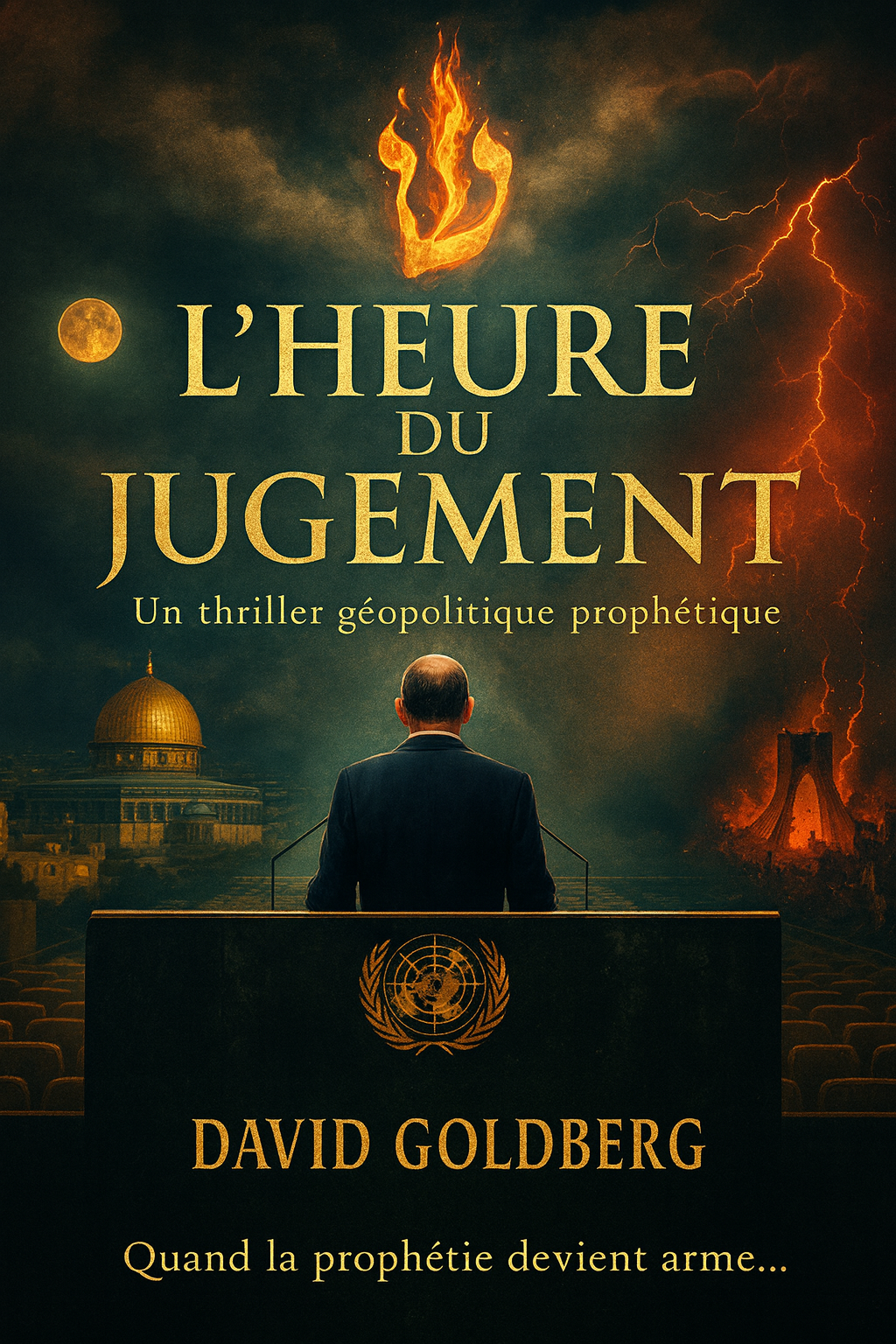
David Goldberg is the pen name of a Franco-Israeli author and publisher who has spent decades at the intersection of Torah scholarship and contemporary fiction. His approach to the kabbalah thriller is what sets the series apart: every mystical element is sourced from authentic texts, every Kabbalistic claim is grounded in classical teaching.
The result is a body of work that operates simultaneously on two levels. On the surface: gripping plots, ticking clocks, life-or-death stakes. Underneath: a transmission of ancient wisdom that slips past the reader's defenses precisely because they are too engrossed in the story to notice.
This is the cheval de Troie — the Trojan horse. The thriller is the vehicle. The Torah is the destination. Readers who would never open a religious text find themselves, three hundred pages later, asking questions they have never asked before.
Start with a free chapter.
Every book in the collection begins with a free chapter — no account, no subscription.
Enter your email on any book page and receive it instantly.
The geopolitical dimension of the kabbalah thriller
Not every kabbalah thriller is set in the dream world or the afterlife. Some of the most powerful entries in the genre are rooted in the most mundane of settings: the UN General Assembly, a Doha hotel room at midnight, the archives of Yad Vashem. What makes them Kabbalistic is not the setting but the lens.
When a 92-year-old rabbi reads the Zohar and understands, on the evening of October 6, 2023, what will happen the next morning — that is a kabbalah thriller. When a forensic pathologist discovers that 2,000-year-old Talmudic text precisely describes what her medical equipment is now recording — that is a kabbalah thriller. The mysticism is not a metaphor. It is the plot.
Why now is the moment for this genre
Readers are hungry for fiction that takes them seriously. They are tired of thrillers where the stakes are borrowed and the worldview is thin. They are drawn, increasingly, to stories that suggest the world is not what it appears — that beneath the surface of current events, something older is at work.
The kabbalah thriller answers that hunger directly. It offers the adrenaline of a ticking clock alongside the vertigo of genuine mystical depth. It entertains without condescending. It reveals without preaching.
There is, at this moment, almost no one writing this genre at this level in English. That gap is an opportunity — for readers ready to discover it, and for the author who has spent decades building the foundation to fill it.
The first chapter is free.
Choose any book. Enter your email. We send the chapter in minutes.
No credit card. No subscription. Just a story that won't let you go.