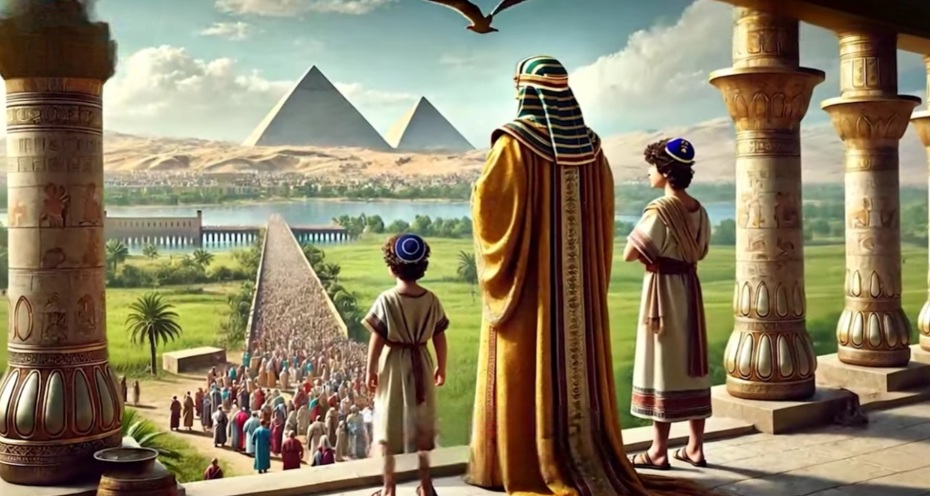
אוי לנו מיום הדין — Woe to Us on the Day of Judgment
Parashat Vayigash · אוי לנו מיום הדין — Woe to Us on the Day of Judgment · Sefer Bereshit · 5786
Yosef's devastating question « העוד אבי חי? », the hidden rebuke behind these simple words, and the tikkun of forgiveness between man and his fellow.
אוי לנו מיום הדין — Woe to Us on the Day of Judgment
Rav Asher Cohen
🎙️
🎙 Listen to the shiur
אוי לנו מיום הדין — Woe to Us on the Day of Judgment
⬇ Download the recording
Yosef's devastating question « העוד אבי חי? », the hidden rebuke behind these simple words, and the tikkun of forgiveness between man and his fellow.
Rav Asher Cohen · אוי לנו מיום הדין — Woe to Us on the Day of Judgment · Sefer Bereshit · 5785

When the brothers find the money they tremble with charada, yet before the far graver goblet accusation that terror vanishes — foreshadowing how hard forgiveness is.

Reuven's reproach did not target the sale (the Shekhinah joined it) but the lack of rachamim: they stayed stone-faced before Yosef's pleas.

Yehuda drops tzedek (justice, already lost) for regesh (emotion), mentioning the living father's suffering eight times.

The question « Ha'od avi chai? » is Yosef's hidden tochacha: you demand of me the compassion you never gave — a mirror of their own inconsistency.

Rabbi Yochanan: if the brothers collapsed before a flesh-and-blood brother's rebuke, what will we say on the Day of Din before Hashem?

Neither does Yosef say « salachti » nor do the brothers ask forgiveness: asking and granting pardon between man and his fellow is the unfinished tikkun.

📖 Full Text
1 Introduction: a troubling question

At the start of our story, when the brothers discover the money returned in their sacks, they are seized with terror: « Ma zot assa lanu Elokim? » — What has G-d done to us? They tremble, they are terrified.

But later, when the goblet is found with Binyamin — a far graver accusation! — where did that terror go? Where is the charada (חרדה)?

A possible answer Perhaps the answer lies in what follows: asking for forgiveness is not simple for anyone. The brothers themselves, throughout this story, never asked Yosef for forgiveness.
2 Reuven's reminder

In the previous Parasha, Reuven reminds the brothers why this calamity has befallen them. But he does not speak about the sale of Yosef! For the Shekhinah had joined them in that decision, and one cannot say they acted wrongly if the Divine Presence was with them.

« Asher ra'inu tzarat nafsho behit'chaneno eleinu velo shamanu » — We saw the distress of his soul when he pleaded with us, and we did not listen.Genesis 42:21
The true reproach The problem was not the sale itself, but the lack of rachamim (compassion). Yosef pleaded with them, he was in distress, and they remained stone-faced. They were not rachmanim — merciful.
3 Yehuda's plea

Our Parasha arrives: « Vayigash elav Yehuda ». Yehuda steps forward and pleads before the viceroy of Egypt. Let us feel the pain in every word.

« Yesh lanu av zaken » — We have an aged father... « Veyeled zekunim katan » — and a child of his old age, a young one... « Ve'achiv met » — his brother is dead... « Vayivater hu levado le'imo » — he alone remains of his mother... « Ve'aviv ahevo » — and his father loves him.Genesis 44:20

Yehuda describes an aging father, broken by the loss of a son, whose entire life hangs on this last child. « Nafsho keshurah benafsho » — his soul is bound to his soul.

4 Yehuda's supplication
« Vehaya kir'oto ki ein hana'ar vamet » — When he sees the boy is not there, he will die... « Vehoridu avadecha et seivat avdecha avinu beyagon she'ola » — and your servants will bring down the white hair of our father to the grave in sorrow.Genesis 44:31

Eight times, eight times in this speech, Yehuda mentions that the father is alive, that he suffers, that his life depends on Binyamin. The father's distress permeates every phrase.

« Eich e'eleh el avi vehana'ar einenu iti? » — How can I go up to my father if the boy is not with me? « Pen er'eh bara asher yimtza et avi » — Lest I see the evil that will befall my father!Genesis 44:34

Yehuda puts his entire soul into this plea. He speaks not of justice nor of rights — he speaks of pain, of suffering, of a father who will not survive this loss.

5 Yosef's impossible question

And then, Yosef can no longer contain himself. He sends everyone out and reveals himself.

« Ani Yosef! Ha'od avi chai? » — I am Yosef! Is my father still alive?Genesis 45:3
The apparent absurdity He was just told eight times that the father is alive! Yehuda's entire plea revolved around it. And Yosef asks: « Is my father still alive? » What kind of question is this? He wants us to understand something.
6 The tochacha — the true rebuke

On this verse, Rabbi Yochanan says a terrible statement:

« Oy lanu miyom hadin! Oy lanu miyom hatochacha! » — Woe to us on the day of judgment! Woe to us on the day of rebuke!

What is Yosef really saying? « You come to speak to me about our father's suffering? Now you care about him? Where were you when you sold me? Where was your compassion when I pleaded with you in the pit? For 22 years the father wept, refused to be comforted, prophecy left him — and now you speak to me of his suffering?! »

7 The mirror of truth

This is the tochacha. Yosef does not shout, he does not insult them. He simply asks a question: « Ha'od avi chai? » And in this question, everything collapses.

Demanding what you haven't given You come demanding compassion from me? But compassion — you didn't have it! You ask me to be a brother to Binyamin? But you weren't brothers to me! You plead that I am cruel? But that's exactly what you did!

The complaint you bring against another is often the mirror of what you yourself have done. This is the tochacha: when you are confronted with your own inconsistency.

8 The brothers' silence
« Velo yachlu echav la'anot oto ki nivhalu mipanav » — And his brothers could not answer him for they were terrified before him.Genesis 45:3

The Midrash says the brothers « died » at that moment. Not physically, but internally. Faced with three words — « Ha'od avi chai? » — they had no defense.

Rabbi Yochanan's conclusion If faced with the rebuke of Yosef — flesh and blood, their younger brother — they could not respond, what will we say on the Day of Judgment before the Holy One, Blessed Be He?
9 Regesh versus tzedek

Yehuda had understood something: on the terrain of justice (tzedek), they could not win. The facts were against them — the goblet had been found with Binyamin. So he changed strategy: he spoke to the heart, to the regesh (emotion).

No legal arguments, no contesting of evidence. Just the pain of a father, the distress of a family, the plea of a brother who had given his guarantee. And it worked — twice Yosef « falls » in the face of emotion. But it did not prevent the tochacha from emerging.

10 The unfinished forgiveness
A disturbing question Did Yosef truly forgive the brothers? Search the text — nowhere is it explicitly written that Yosef salach (forgave).

He says: « Hatachat Elokim ani? » — Am I in the place of G-d? He says: « Atem chashavtem alai ra'ah, Elokim chashavah letovah » — You intended evil against me, G-d intended it for good. He consoles them, he feeds them... but the word « salachti » never appears.

Silence on both sides And on the other hand, the brothers never explicitly asked for forgiveness. Asking for forgiveness is not simple for anyone — neither for the one who must ask, nor for the one who must grant it. Here lies the tikkun of our generation.

🎯 Test yourself

Five questions. Click an answer.

1
Why does Reuven's reproach not concern the sale of Yosef itself?
One cannot say they acted wrongly if the Divine Presence was with them; the reproach targets the lack of rachamim, not the sale.
2
How many times does Yehuda mention in his plea that the father is alive and suffering?
Eight times Yehuda recalls that the father lives, suffers, and that his life depends on Binyamin.
3
Why is the question « Ha'od avi chai? » described as seemingly absurd?
The entire plea revolved around the living father; the apparent absurdity reveals the question is a hidden tochacha.
4
According to Rabbi Yochanan, what is the lesson of the brothers' silence?
« Oy lanu miyom hadin »: if they collapse before a flesh-and-blood brother, how much more so on the Day of Judgment before G-d.
5
What does the shiur conclude about forgiveness in this narrative?
The text contains neither Yosef's « salachti » nor an explicit request from the brothers: asking for forgiveness is not simple for anyone.

Result

📅 7 Days Toward the Tikkun of Forgiveness
Sunday
Sunday — The tikkun of Chava: simply say « sorry » to your spouse, in both directions.
Monday
Monday — Forgive someone without waiting for them to ask: free the other of the debt, and free yourself.
Tuesday
Tuesday — Between siblings: identify a family wound and take the first step toward reconciliation.
Wednesday
Wednesday — Consistency: before complaining about someone, ask « haven't I done the same thing? »
Thursday
Thursday — Regesh before tzedek: in a conflict, speak to the heart before lining up your arguments.
Friday
Friday — Study Yehuda's verses (Genesis 44) and count the eight mentions of the living father.
Shabbat
Shabbat — Prepare for the Day of Din: review one forgiveness given or received this week and thank Hashem.
Four Practical Steps
🏠

Shalom Bayit — The Mouth at Home

My covenant of peace — peace begins at home. Reveal a Shalom Bayit card.

🔢

Gematria — Rav Ménaché

Shalom, Mashiah, Yisamech — secrets of the letters by Rav Ménaché zatsal.

🔢 Gematria Course
📝

Torah Study

Dig deeper into the Baal HaTurim and Rashi on Parashat Devarim.

📝 Beith Hamidrach
📚

All Parashot

All shiurim of M. Yéhouda Himi — from Bereshit to Devarim and the festivals.

📚 All Parashot
📕

Books

Torah wisdom in thriller format — Éditions Gueoula.
🌙

Dream Interpretation

Did you dream? Check the meaning according to Rav Almoli.

🌙 Dreams
🎬

Videos

Video shiurim on the festivals, the Menorah and the secrets of the Mishkan.

🎬 Videos
💡

Idea Box

An idea, a remark, a suggestion for the site? Share it with us.

💡 Idea Box
🤝

Maasser

Give your Maasser and take part in spreading Torah.

🤝 Maasser
📨 Get the Weekly Shiur
Every week, straight to your inbox. No spam. One-click unsubscribe.
🕯️ Dedicate This Shiur
Dedicate this shiur for the days of Bein HaMetzarim — in memory, for healing or for success.
🧱 Wall of Dedications →
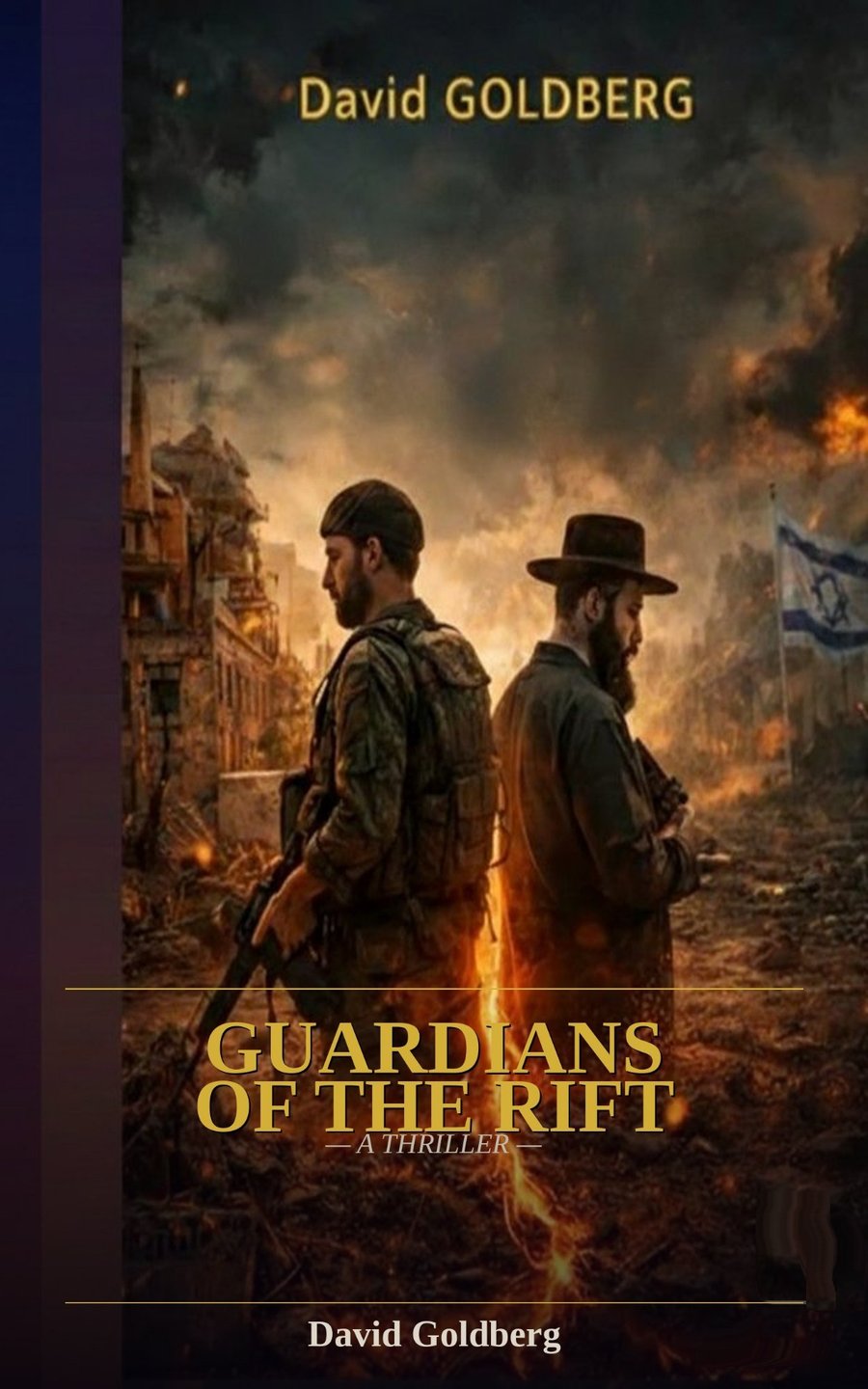
Guardians of the Rift

Guardians of the Rift

A spiritual thriller · David Goldberg

Forty-nine gates open — the fiftieth hides in a single moment. An ancient secret resurfaces, and one man stands between the rift and the world. Drawn from Talmud and Kabbalah.

📖 Read the free excerpt · Book $9.90