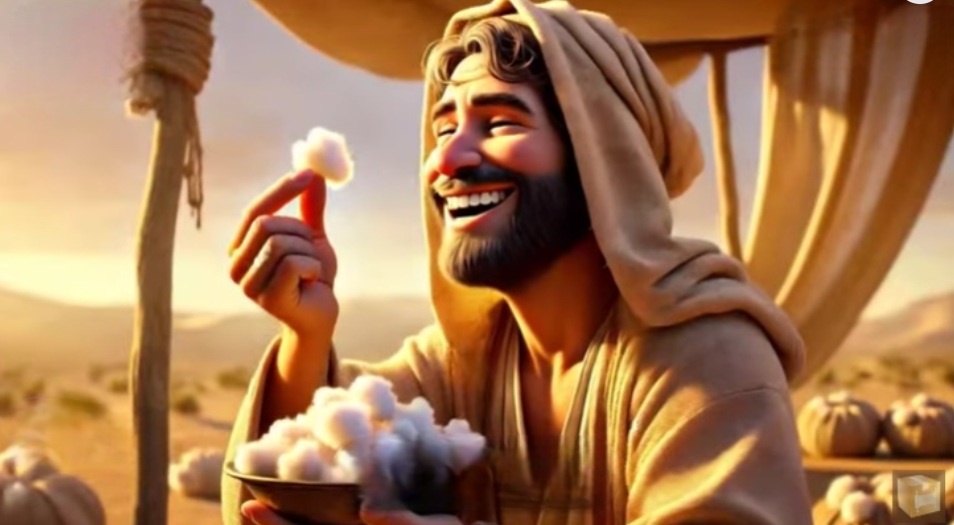
When Beshalach falls on a Tuesday, reading the Manna Portion (Shemot 16:4-36) as Shnayim Mikra Ve'echad Targum is a segulah for livelihood.
The Exodus unfolds in stages: one does not pass from slavery to freedom in a single instant.
Pharaoh crushed Israel with labor precisely so they would have no time to think about freedom.
The pursuit's horses came from God-fearing Egyptians whose animals were spared, kept back to magnify the miracle of the Sea.
A slave mentality lingers after liberation; abandoning a sin, by contrast, must be immediate and not gradual.
When Parashat Beshalach falls on a Tuesday, that day carries a special segulah for parnassa, one's livelihood. The custom is to read the Manna Portion (פרשת המן) on that day.
Moshe Rabbeinu did not ask Pharaoh to free the Bnei Yisrael permanently. He asked only for a three-day journey to serve Hashem in the wilderness.
'A three days' journey into the wilderness' — to go and serve Hashem. Why this partial request rather than a demand for total freedom?
The army illustrates this well: when a person moves from civilian to soldier, he does not become a fighter in one day. A period of training and adaptation is needed before he is truly free and capable.
Pharaoh understood the psychology of control. His method for keeping Israel enslaved rested on a crushing burden of labor.
'Let the work be heavier upon these men.'
The moment a person has a chance to breathe, he begins to ask questions and to long for something more. It was precisely this moment of reflection that Pharaoh sought to eliminate.
The Parasha raises a puzzle: Pharaoh pursues the Bnei Yisrael with six hundred chariots and horses. But hadn't the Egyptians' animals died during the plagues?
The answer: the Egyptians who feared the word of Hashem had brought their livestock inside to safety before the plague of hail. It was these spared animals that served the pursuit.
An astonishing fact: six hundred thousand men of Israel faced only a few thousand Egyptians. Why did they not simply turn and fight?
'Lest the people reconsider when they see war.' This is why Hashem led them around by way of the wilderness rather than the direct, warlike road of the Philistines.
Why do we celebrate Shevi'i Shel Pesach, the seventh day of Pesach, as a festival in its own right? Because it is the day of Kriat Yam Suf, the splitting of the Sea.
The chronology explains the seven-day gap: Pharaoh releases Israel; the Egyptians wait three days for their return; seeing they do not come back, they set out in pursuit; and on the seventh day the sea splits and the Egyptians drown within it.
Why did Israel not receive the Torah immediately after leaving Egypt? Here too, because a process of preparation was indispensable.
A universal principle: every great thing in life demands stages. You cannot obtain everything at once, neither in the material world nor in the spirit.
The teacher clarifies the nature of a segulah to prevent any misunderstanding.
A summary of the Manna's lessons: the segulah is read on the Tuesday of Beshalach; freedom is won in stages; taking time to think is essential; and the Manna taught daily Bitachon, a renewed trust in Hashem each day.
🎯 Test yourself
Five questions. Click an answer.
Result
Shalom Bayit — The Mouth at Home
My covenant of peace — peace begins at home. Reveal a Shalom Bayit card.
Gematria — Rav Ménaché
Shalom, Mashiah, Yisamech — secrets of the letters by Rav Ménaché zatsal.
🔢 Gematria CourseAll Parashot
All shiurim of M. Yéhouda Himi — from Bereshit to Devarim and the festivals.
📚 All ParashotBooks
Torah wisdom in thriller format — Éditions Gueoula.
Guardians of the Rift
Forty-nine gates open — the fiftieth hides in a single moment. An ancient secret resurfaces, and one man stands between the rift and the world. Drawn from Talmud and Kabbalah.
📖 Read the free excerpt · Book $9.90