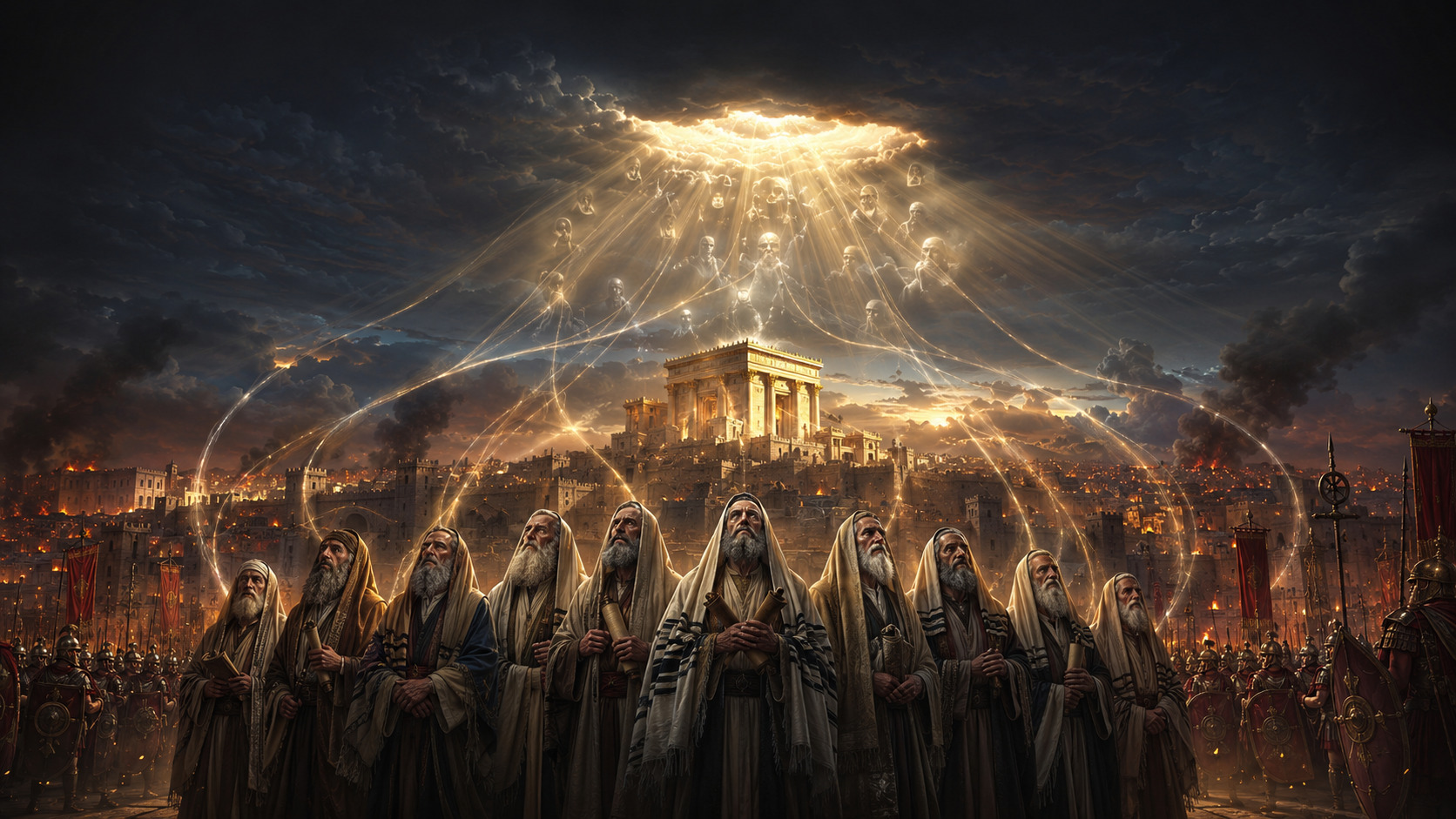
The lament “Eleh Ezkerah” tells how the Roman emperor demanded ten sages as atonement for the sale of Joseph. Yet Joseph forgave his brothers, the sale served the Divine plan, and the sages did not all live in the same generation.
The shiur's key is the distinction between the world of action and the world of thought. A good intention of Israel is counted as an act; among the nations, an evil intention may be charged as performed. The tyrant conceived the massacre, while the sages inwardly accepted kiddush Hashem.
The repair matches the fault: the brothers served Providence, but intended harm to Joseph. Their evil thought was repaired by the martyrs' pure thought. At the roots of souls, beyond time and place, different generations can unite.
The emperor cites the Torah's death penalty for kidnapping and selling a man. Where did Joseph's ten brothers pay? Rabbi Yishmael the High Priest asks for three days, ascends through a unification of the Name, and hears: “By this you are caught.”
Why was atonement needed if Joseph forgave and the descent to Egypt was part of the Divine plan? How can one account join sages separated by roughly 150 years? And how do the lament's tortures fit the Sefer Heikhalot account attributed to Rabbi Yishmael, in which the righteous completed their lives and the persecutors' faces were substituted for theirs?
Torah gives intention genuine weight. A good thought is joined to action: even when prevented from acting, a person may be credited as though the deed were done. The shiur therefore distinguishes what happened visibly from what was accomplished inwardly.
When Moshe sees Rabbi Akiva's terrible end and asks, “This is Torah and this its reward?”, he is answered: “Be silent; thus it arose in My thought.” The shiur reads the wording literally: Moshe sees Rabbi Akiva's inner readiness to surrender his life, already counted in Heaven.
Joseph tells his brothers: “You intended evil against me; God intended it for good.” The outcome was providential and good, but their original intention was to be rid of him. That evil thought—not God's plan—required repair.
The martyrs need not have lived simultaneously. At their root, Jewish souls are not confined by time and place. The inward acceptances of Rabbi Yishmael, Rabbi Akiva, and Rabbi Hanania ben Teradion can form one spiritual repair.
🎯 Test Yourself
Five questions. Click an answer.
Result
Shalom Bayit — The Mouth at Home
My covenant of peace — peace begins at home. Reveal a Shalom Bayit card.
Gematria — Rav Ménaché
Shalom, Mashiah, Yisamech — secrets of the letters by Rav Ménaché zatsal.
🔢 Gematria CourseAll Parashot
All shiurim of M. Yéhouda Himi — from Bereshit to Devarim and the festivals.
📚 All ParashotBooks
Torah wisdom in thriller format — Éditions Gueoula.

Guardians of the Rift
A relic lost since the Temple fell. A widening rift between the worlds. One man who can seal it — before the truth buries him first. Rooted in the deepest wells of Torah and Kabbalah.
📖 Read the free excerpt · $9.90