Pesach · The Humility of Aaron — What Is the Condition for Redemption? · Holidays · 5786
Why did Moses change the order of the doorposts? And what is the connection to the coming of Mashiah?
The Humility of Aaron — What Is the Condition for Redemption?
Based on the teaching of M. Yéhouda Himi
Why did Moses change the order of the doorposts? And what is the connection to the coming of Mashiah?
Based on the teaching of M. Yéhouda Himi · The Humility of Aaron — What Is the Condition for Redemption? · Holidays · 5785
Moses reversed God's own order of the blood on the doorposts and the lintel — a change that reveals a deep secret about humility.
Moses and Aaron are called "equal" in the Torah because both considered themselves as nothing — "What are we?"
On the day the Mishkan was inaugurated, Aaron was ashamed to approach because of the Golden Calf, and Moses told him: "For this you were chosen" — humility itself is the reason for the choice.
In the Midrash, Mashiah calls out "Humble ones, the time of your redemption has come" — it is precisely Israel's sense of unworthiness that is the reason for redemption.
Doorposts = Moses and Aaron, lintel = God; Moses reversed the order out of humility, to put God first.
1 1 — The Great Question: Why Did Moses Reverse the Order?
God said "doorposts first, then lintel" — Moses told the people "lintel first, then doorposts." Who gave Moses the authority to change God's instruction?
In Parashat Bo, when God commands Moses about the Passover offering and the blood, the verse says:
God said: doorposts first, then lintel. Moses reversed it: lintel first, then doorposts. The question is clear: where did Moses get the right to change the word of God?
2 2 — Moses and Aaron: They Were Equal
How can two completely different people — different in age, experience, and role — be absolutely equal?
In Parashat Shemot, two consecutive verses list the genealogy:
Rashi says: "This teaches that they were equal." But how can two people be equal? Moses grew up in Pharaoh's palace; Aaron was with the people throughout. Different ages, different experiences, different qualities. How are they "equal"?
The only way to say two people are equal is if both stand at absolute zero. When a person considers himself nothing — zero equals zero. Only there can two people be completely equal.
The best proof: when the people complained against them, Moses and Aaron said — וְנַחְנוּ מָה (Shemot 16:7) — not "and we" (אנחנו) but without even the opening Alef. What are we? — Nothing. The moment they consider themselves as nothing, they become equal.
3 3 — The Humility of Aaron — Parashat Shemini
On the eighth day — the inauguration of the Mishkan — why didn't Aaron approach the altar on his own?
On the eighth day — Rosh Chodesh Nissan — the Mishkan was inaugurated. Moses called Aaron to come and offer, but the verse says:
Rashi asks: why does Moses need to say "approach the altar" to the High Priest? And Rashi answers: "Because Aaron was ashamed and afraid to approach."
Aaron had taken responsibility for the sin of the Golden Calf. Even though it had "come out on its own," Aaron felt guilty. From that day on, he was haunted by the thought: perhaps I am not worthy to be the High Priest in God's Sanctuary.
Moses said to him: "Why are you ashamed? For this you were chosen!" — Precisely because you are ashamed, you were chosen to offer this sacrifice.
But the drama continued. Aaron performed all the offerings — and still the Divine Presence did not descend. He thought: "I know that God is angry with me — it is because of me that the Shechina has not come down." So Moses and Aaron entered the Tent of Meeting together, prayed for mercy — and the Shechina descended.
See what level of humility: Aaron, who is Torah's equal to Moses, constantly considers himself unworthy. And Moses says to him: for this you were chosen — your humility is precisely why you are worthy.
4 4 — The Midrash: Mashiah on the Roof of the Temple
If Mashiah himself appears and announces "the time of your redemption has come" — why does he need to offer proof through the light? Why would there be any doubt?
Our Sages taught: When King Mashiah is revealed, he comes and stands on the roof of the Temple. He calls out to Israel and says: "Humble ones — the time of your redemption has come!" And if you believe — look at the light shining upon you. As it says: "Arise, shine, for your light has come" (Isaiah 60:1).
The question is strong: Mashiah himself is standing there and proclaiming it. Why does he need additional proof? His very presence is the proof!
The answer lies in one word: humble ones (עניים). Because the Jewish people, out of humility, do not believe they deserve the Redemption. They say to themselves: "Our generation? With all our flaws? We don't deserve Mashiah." — That very humility, and nothing else, is precisely the reason the time of their redemption has come.
Who taught us this? Aaron. Aaron said: I am ashamed. And Moses said: for this you were chosen — precisely because you are ashamed, you were chosen. And so with us: precisely because we feel unworthy — the time of our redemption has arrived.
5 5 — The Answer: Doorposts, Lintel, and the Secret of Redemption
Now we can answer: why did Moses reverse the order? What do the doorposts symbolize, and what does the lintel symbolize?
The hint is simple and brilliant:
The doorposts (mezuzot) — represent Moses and Aaron. Just as doorposts hold up a house, Moses and Aaron held up the Jewish people in Egypt — supporting them, standing by them. The lintel (mashkof) — represents God. As it is written: "Look down (hashkifah) from Your holy dwelling, from heaven" (Devarim 26:15) — the lintel looks down from above.
God wanted to honor Moses and Aaron. So He said: put blood on the doorposts first — it is thanks to your leaders that you are leaving Egypt!
But Moses and Aaron, in their humility, could not put themselves before God. So Moses took it upon himself to reverse the order, telling the people: the lintel first — God comes first! And only then the doorposts — us. Again and again we see: the humility of Moses and Aaron is what gives them their greatest power.
When we reach genuine humility — saying "we do our best, but we are not worthy, and we receive redemption as an act of grace" — with God's help, Mashiah will come soon, this Nissan, amen and amen.
🎯 Test yourself
Five questions. Click an answer.
1
In Parashat Bo, what order did God command Moses regarding the blood on the doorposts and the lintel?
The verse in Shemot 12:7 says to put the blood on the two doorposts and the lintel — doorposts first, then the lintel.
2
According to Rashi, why are Moses and Aaron considered "equal," despite their differences?
Only when two people consider themselves as nothing — zero equals zero — can they be completely equal, as taught by the phrase "What are we?"
3
Why does Rashi say Aaron was "ashamed and afraid to approach" on the day the Mishkan was inaugurated?
Aaron had taken responsibility for the sin of the Golden Calf, and from then on feared he was not worthy to serve as High Priest.
4
In the Midrash of Mashiah standing on the roof of the Temple, what does the word "humble ones" mean in his call to Israel?
It is precisely Israel's humility — the feeling that they do not deserve redemption — that is the very reason the time of their redemption has come, just as with Aaron.
5
According to the shiur's hint, what do the doorposts and the lintel symbolize?
The doorposts symbolize Moses and Aaron who supported the people, and the lintel symbolizes God who "looks down" from above — Moses reversed the order out of humility, to place God first.
Result
📅 Seven-Day Programme — The Humility of Aaron and the Secret of Redemption
Sunday
Erev Pessah: When you think about the blood on the doorposts — remember: God first (the lintel), then us (the doorposts). That is what Moses did.
Monday
Seder Night: When you say "we were slaves" — feel that you are still not entirely worthy. That very humility is the Haggadah — the proclamation of Mashiah.
Tuesday
Chol HaMoed (Day 1): Read the two verses in Bo: God's order (doorposts then lintel) and Moses' order (lintel then doorposts). Feel the humility behind the change.
Wednesday
Chol HaMoed (Day 2): Read "He is Moses and Aaron... He is Aaron and Moses" (Shemot 6:26-27) and "What are we?" (Shemot 16:7). Reflect: in what area of my life could I consider myself as nothing — and find real equality and closeness there?
Thursday
Shabbat Shemini: Read Vayikra 9:7 — "Approach the altar." Feel Aaron's shame and Moses' answer: for this you were chosen. That is for you too.
Friday
Motzaei Shabbat Shemini: Reflect on the Midrash of Mashiah standing on the roof of the Temple — "Humble ones, the time of your redemption has come." Note a moment you felt unworthy, and try to see it instead as an opening to redemption.
Shabbat
Every Day: In every prayer — feel: I am not fully worthy. That very feeling is what draws you closer to God. What are we? — That is the secret.
Four Practical Steps
🏠
Shalom Bayit — The Mouth at Home
My covenant of peace — peace begins at home. Reveal a Shalom Bayit card.
🔢
Gematria — Rav Ménaché
Shalom, Mashiah, Yisamech — secrets of the letters by Rav Ménaché zatsal.
Every week, straight to your inbox. No spam. One-click unsubscribe.
🕯️ Dedicate This Shiur
Dedicate this shiur for the days of Bein HaMetzarim — in memory, for healing or for success.
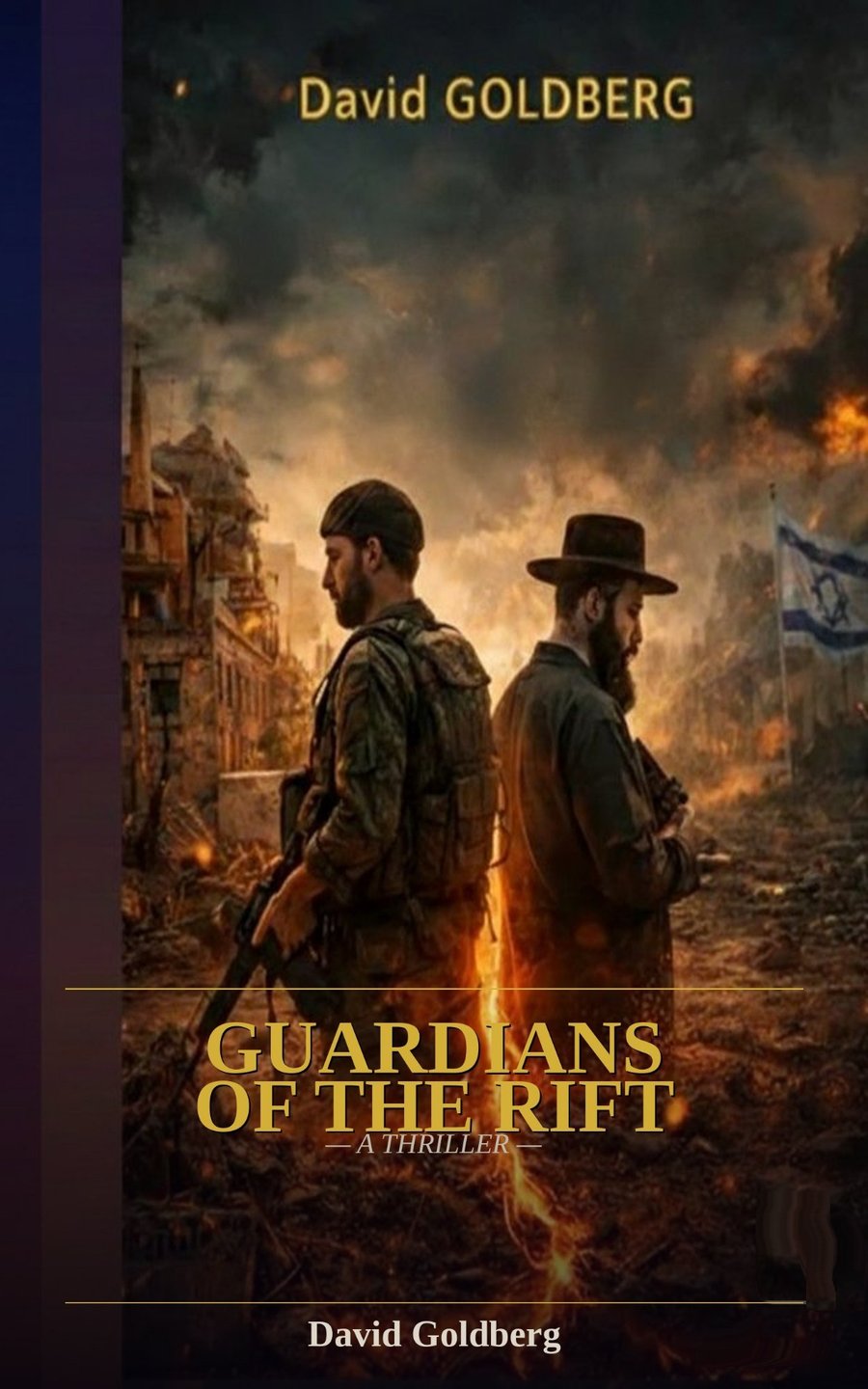
Guardians of the Rift
A spiritual thriller · David Goldberg
Forty-nine gates open — the fiftieth hides in a single moment. An ancient secret resurfaces, and one man stands between the rift and the world. Drawn from Talmud and Kabbalah.