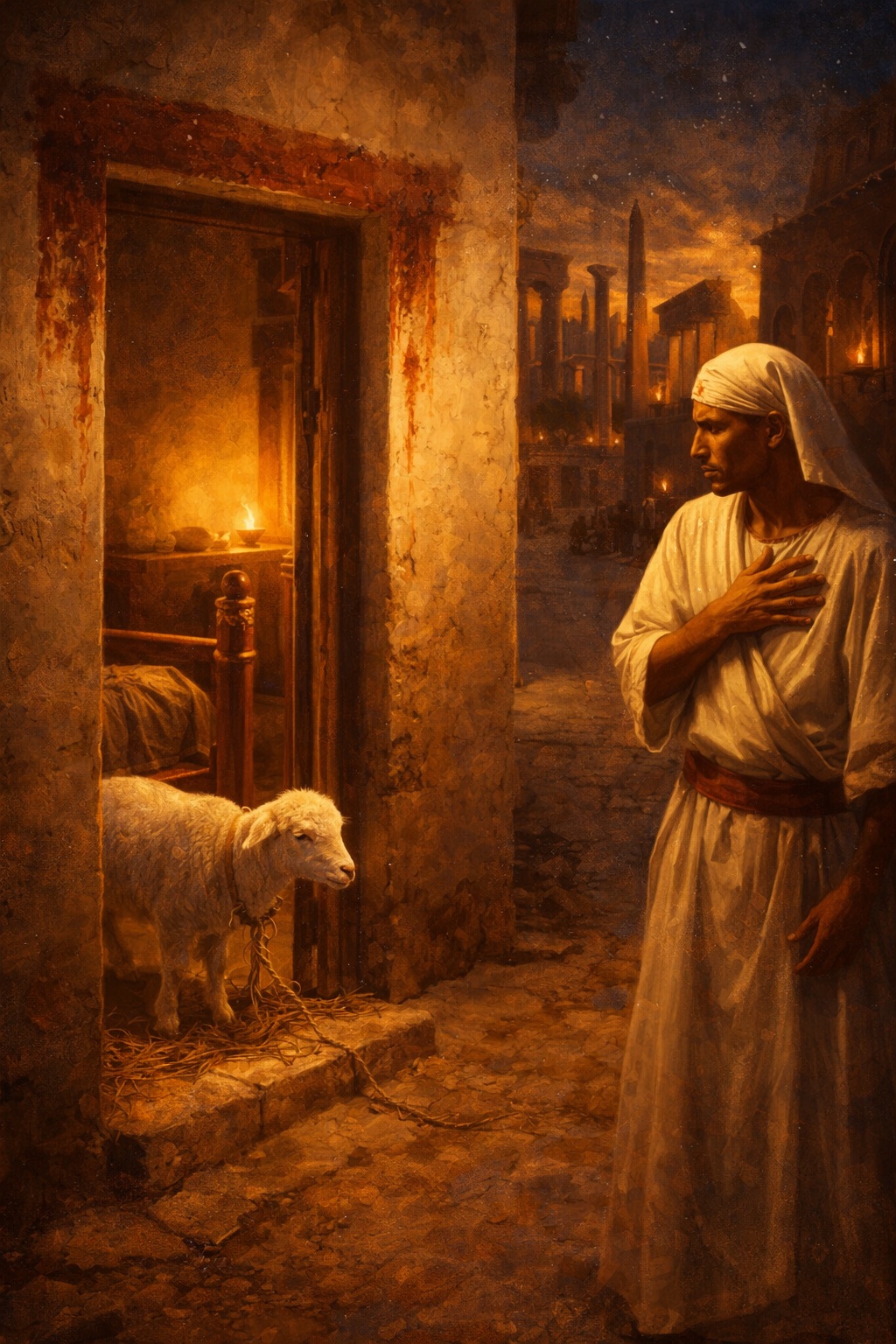
The Shabbat before Pesach is called Shabbat HaGadol — for three reasons: Halakha (the rav reads the maftir), the Haftarah ("the great day of God"), and above all the great miracle: Israel kept the lamb — Egypt's god — for four days, and the Egyptians could do nothing.
The shiur then unfolds the two directions of the Exodus: leaving Egypt, and getting Egypt out of yourself. Mitzrayim = the narrow place, every constraint in life. And the Alef (Aluf shel Olam) turns Galut (exile) into Geula (redemption).
📖 ...Three Reasons for the Name "Shabbat HaGadol"
The Shabbat before Pesach is called Shabbat HaGadol — the Great Shabbat. But "Shabbat" is feminine in Hebrew, so it should be "HaGedola." Why the masculine "HaGadol"?
Three reasons, each pointing to a different kind of greatness:
What is "the great day of God"? After the war of Gog and Magog, as written in Yechezkel, comes a day when God judges all the nations — and complete redemption arrives. In Nissan they were redeemed; in Nissan they will be redeemed again.
Reason 1 — The Halacha: The "gadol" — the senior leader of the Beit Haknesset — ascends to the maftir and reads the Haftara on this Shabbat. HaGadol = the great man of the community.
Reason 2 — The Haftara itself: The final verse of the Haftara reads: "Behold, I will send you Eliyahu the prophet — before the coming of the great and awe-inspiring day of God." Shabbat HaGadol — named after "Yom Hashem HaGadol." The masculine form follows the word "Yom" (day, masculine).
Reason 3 — The Great Miracle: On the Shabbat before the Exodus, God commanded Israel: go to the Egyptian marketplace, buy a lamb — their god — and tie it to your bedpost for four days. Shabbat HaGadol is named for this great miracle.
⬥ This year too, Shabbat HaGadol falls on the 10th of Nissan — exactly as it did in Egypt. And from this Shabbat to Erev Pesach — exactly four days, just as then.
הִנֵּה אָנֹכִי שֹׁלֵחַ לָכֶם אֵת אֵלִיָּה הַנָּבִיא — לִפְנֵי בּוֹא יוֹם ה' הַגָּדוֹל וְהַנּוֹרָא Malachi 3:23
The Great Miracle — Four Days with the Lamb
Why specifically four days? God could have simply said: on the 14th of Nissan, slaughter the lamb. What was the purpose of four days of tying it to the bedpost?
That is the miracle: not that no Egyptian tried to act — but that the Divine hand held them back. And through this, the faith of Israel was forged. They saw that God protected them in the very heart of Egypt.
Reason 1 — Checking for blemishes: The Korban Pesach must be completely unblemished. Four days of daily inspection ensure the animal remains valid and flawless.
Reason 2 — Mesirut nefesh: The Egyptian walks down the street and hears their god — the lamb — crying, tied to the bedpost of the Jewish neighbor. Four days the Egyptian knows: in four days they will slaughter his deity. And he can do nothing.
⬥ And a deeper reason: Four days of living with the lamb — watching it sleep, cry, relieve itself — taught Israel from within: "This is what they worshipped?!" This was essential preparation for the inner exodus from Egypt.
The Egyptian Abomination of Shepherds — Yosef's Advice
When Yosef brings his father and brothers to Egypt, he gives them a strategic tip: tell Pharaoh you are "men of livestock" — because "every shepherd is an abomination to the Egyptians." But this is completely backwards! If the Egyptian god is the lamb, then shepherds should be their high priests! Why the hatred?
Yosef's advice was carefully calculated: if you say you are shepherds, Pharaoh will send you to live in the land of Goshen, far from the palace. Why does this matter? Yosef feared assimilation. He himself withstood the test of Potiphar's wife — but he feared his brothers would be drawn into palace life and lose their identity. Goshen = isolation = preservation.
But the question returns: why do Egyptians truly hate shepherds? Stunning answer: the shepherd is the only one who knows the truth about the Egyptian deity. During the parade honoring the lamb — it is bathed, adorned with jewelry, and everyone prostrates themselves. But the shepherd who returns with it to the pen sees everything: it cries, it relieves itself, it smells, it is just an animal. He knows their god is an absurdity. The Egyptians hate the shepherd because he always smirks at them — knowing that their magnificent, sacred deity is just livestock.
⬥ Yosef knew: say you are shepherds — they will certainly exile you to the margins. Because you are the first to expose the nakedness of their religious empire.
כִּי-תוֹעֲבַת מִצְרַיִם כָּל-רֹעֵה צֹאן Bereishit 46:34
Two Directions of the Exodus
Now that we understand the lamb — why exactly did God want Israel to tie it for four days? What was supposed to happen to them during those four days?
The Exodus from Egypt has two directions:
Therefore: four days with the lamb in your home. Watch it. See what it is. After four days — slaughter it, smear the blood on the doorpost. Nothing happened to you. And the Egypt within you — departs.
Direction 1 — Leaving Egypt: The physical departure. Freedom from slavery. Direction 2 — Getting Egypt out of you: Two hundred and ten years of slavery left deep impressions. You saw the lamb-processions your whole life. You absorbed — without realizing — that the lamb is something great. Leaving Egypt physically is not enough if your mind is still enslaved.
Further proof: after the splitting of the sea — it is written: "And Israel saw the great hand that God had performed in Egypt." God caused the bodies of the Egyptian soldiers to wash up on the shore. Why? Because as long as Israel did not see the Egyptians dead on the shore — there remained the thought: "Maybe they will pursue us again." Only when they saw the bodies did they know: Egypt has left us too.
⬥ "And they believed in God and in Moses His servant" — this came only after seeing the bodies. The physical sight completed the inner exodus.
Egypt in Miniature — Every Constraint in Life
"In every generation, a person is obligated to see himself as if he personally left Egypt." But what is the practical meaning? I am not living in the time of Pharaoh!
The word Mitzraim (Egypt) comes from the root metzar — a narrow place, a constraint. Every moment in life where a person feels pressured, trapped, not in control — that is Egypt in miniature.
You missed the bus — the frustration you feel at that moment, that is Egypt. You went to the clinic and they told you the doctor left — the tightness you feel, that is Egypt. Every place where you feel out of control, lacking, constrained — that is metzar, that is Mitzraim.
What do you do? The same thing we did at the Exodus: Tell yourself: "If we got through Pharaoh — we will get through this too." God brought you to this point — and He knows how to redeem you from it. All our small Egypts are opportunities to see that He redeems us every single day. Our entire life is the tension between exile and redemption.
Geula and Galut — The Alef Makes All the Difference
What is the difference between exile (Galut) and redemption (Geula)? Answer: one letter. Which letter? And what does it say?
What is the Alef? Aluf Shel Olam — the Master of the Universe. He is One, unique, singular. He is what makes the difference between exile and redemption.
If we live with constant awareness that God is with us — we are always in redemption. The moment the Alef is removed — we remain in exile. The Alef is the redemption.
In Nissan they were redeemed — in Nissan they will be redeemed again. This Nissan, with God's help, may we be redeemed with a complete redemption. Shabbat Shalom and Chag Kasher veSame'ach.
🎯 Test Yourself
5 questions on the shiur. Tap an answer.
Result
🐑 Standing up to "Egypt"
Identify a "god" everyone around you fears. This week, dare to hold to the truth like Israel with the lamb.
🔓 Getting Egypt out of yourself
Spot a constraint (meitzar) that boxes you in. What concrete first step out of it this week?
🅰️ The Alef at the center
When a trial comes, remember: place the Aluf shel Olam in the middle — Galut becomes Geula.
🍷 Preparing Shabbat HaGadol
Before Pesach, study one point of the Haggadah with family — turn waiting into building.
Shalom Bayit — The Mouth at Home
What do you whisper to your children? To your spouse? Reveal a Shalom Bayit card.
Gematria — Rav Menashe
Hidden connections in the names according to Rav Menashe zatsal.
🔢 Gematria CourseTorah Study
Dig deeper into the commentary of Rashi and the Zohar on the parashah of the week.
📝 Beith HamidrachAll Parashot
All shiurim of M. Yéhouda Himi — from Bereshit to Devarim and the festivals.
📚 All ParashotBooks
Torah wisdom in thriller format — Éditions Gueoula.
Dream Interpretation
Did you dream of a doe? Of an Ark? Check the meaning according to Rav Almoli.
🌙 Dreams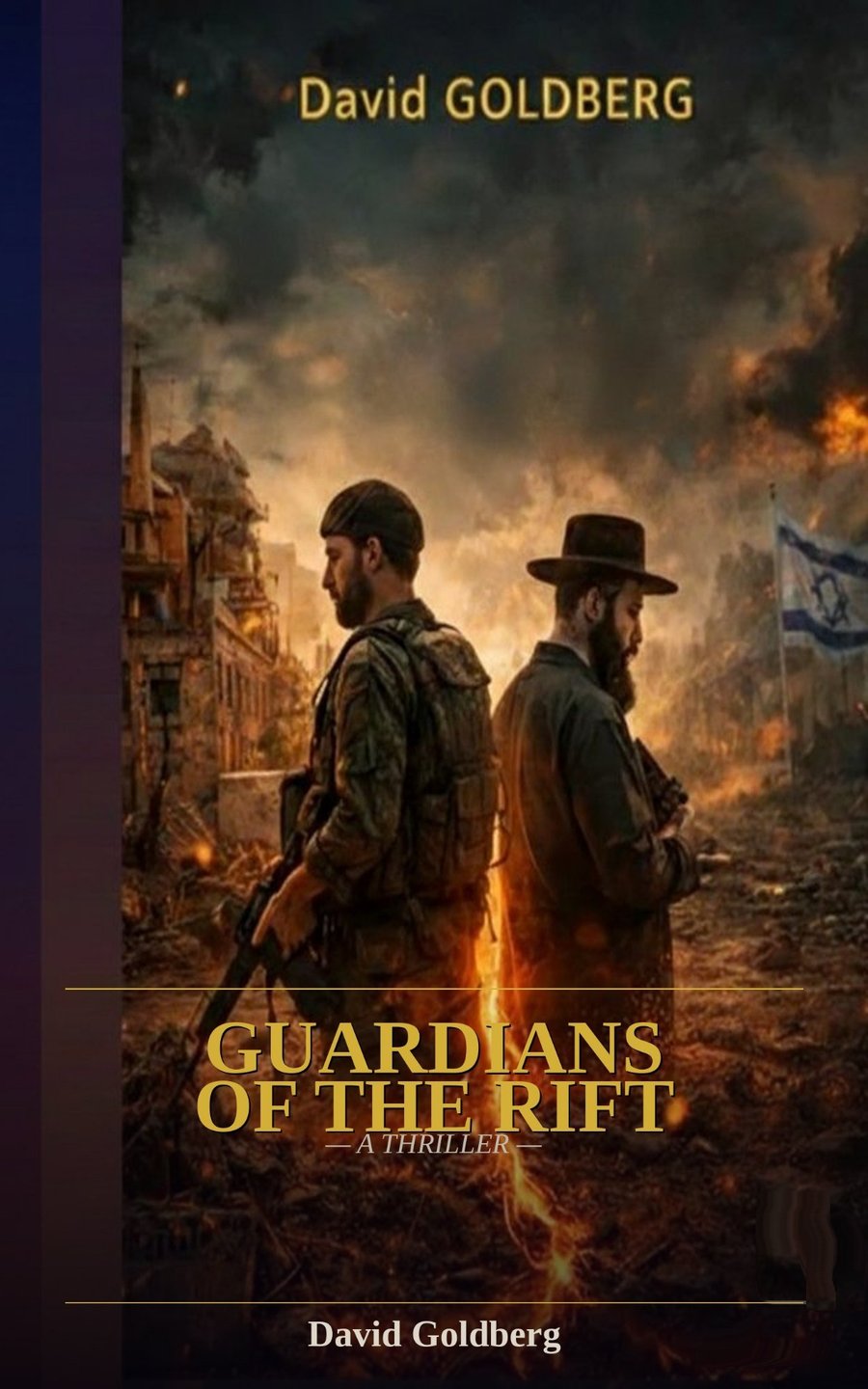
Guardians of the Rift
An ancient secret has surfaced. Forty-nine gates have opened. The fiftieth hides in a single moment — and that moment is here.
📖 Read the Free Chapters