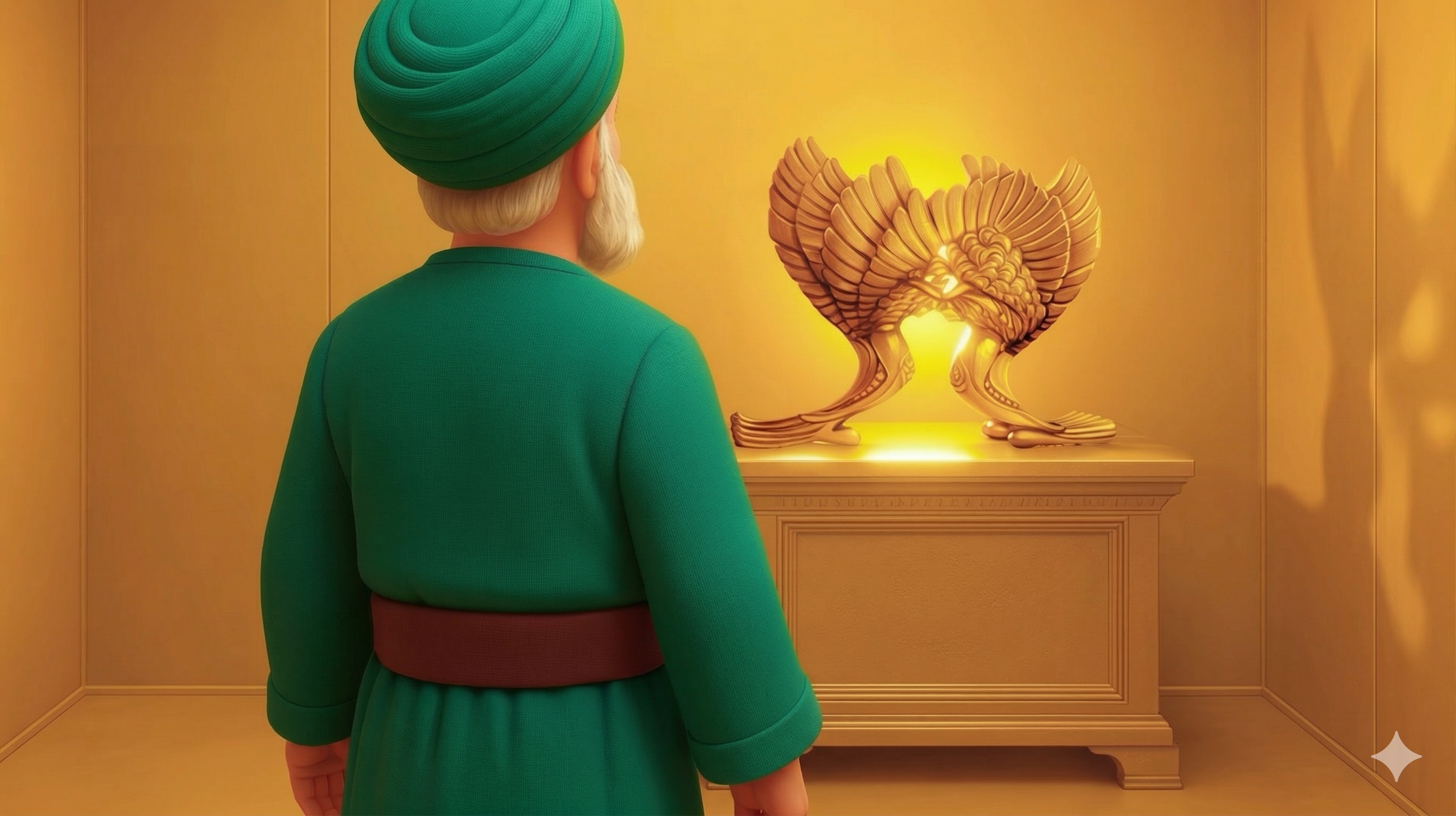
Why did Israel not perform brit milah for 38 years in the desert? And what does circumcision have to do with our right to the Land of Israel? A shiur that changes how you understand this mitzvah forever.
Based on the teaching of Mr. Yéhouda Himi יהודה חימי
The familiar explanation — danger of the north wind — collapses under five pointed questions. This shiur reveals the true reason: brit milah is not merely a religious custom. It is a sacred, bilateral legal covenant between God and the Jewish people over the right to the Land of Israel. And a two-thousand-year-old Zohar predicts the year 1948 with stunning precision.
1 The Missing Sacrifices — Israel Was Uncircumcised in the Desert
Parashat Tzav deals directly with korbanot. But here is a striking question: did the Jewish people bring any korbanot at all during the 40 years in the desert?
The answer is surprising: No. Israel brought neither burnt offerings nor a Korban Pesach for most of their time in the desert. The reason: they were orlim — uncircumcised — and no uncircumcised person may eat from it.
They also had no flocks. Sheep and cattle existed only among the tribes of Gad and Reuven and the Erev Rav — not the nation as a whole. The proof? Their complaint: "Give us meat to eat." And Moses responds: "Shall all the flock be slaughtered for them?" — implying they had none. Without animals and without circumcision, they could not bring korbanot.
כָּל-עָרֵל לֹא-יֹאכַל בּוֹ Shemot 12:48
In the Book of Joshua, upon entering the Land, Joshua circumcises the entire nation — "for they had not circumcised them on the journey." Thirty-eight years without brit milah for all of Israel. Why?
2 The Familiar Explanation — The North Wind — And Five Pointed Questions
The explanation everyone knows: danger of the north wind. The north wind harms someone who has just been circumcised, so they did not circumcise children on the journey. But does this explanation hold up?
Against this explanation, there are five strong questions that require answers:
Question 1 — They were not always traveling! The verse says: "They dwelt in Kadesh for many days." They stayed in the same location for years at a time. If the danger only exists "on the road" — why did they not circumcise when they were settled in Kadesh?
Question 2 — From Moses on his way to Egypt: while Moses was traveling, no one came to demand the circumcision. But the moment he stopped at the inn — the serpent arrived. Meaning: once you are stationary, brit milah becomes obligatory immediately. So why was it not done during years of settlement in one place?
Question 3 — Seven clouds protected Israel in every direction: a cloud before them, a cloud behind, four clouds on the sides, a cloud above, and a seventh cloud leading the way. What north wind could possibly penetrate that protected encampment?
Question 4 — The Leviim! The Levites performed brit milah throughout those thirty-eight years. They served in the Mishkan, entered and exited constantly. Were they immune to the north wind?
Question 5 — the most powerful: At the Exodus from Egypt, Israel performed brit milah on the very same day they ate the Korban Pesach — and the very next day they set out and walked for seven days until the splitting of the Sea of Reeds! They were not afraid of danger even while literally traveling!
⬥ The "north wind" explanation is insufficient. There must be a far deeper reason behind this mystery.
3 The True Reason — Brit Milah = The Covenant Over the Land of Israel
What exactly did God say to Avraham when He commanded brit milah? Let us read the verses simply and carefully.
Notice the structure: "Brit" — the word for covenant — means agreement, contract. God establishes a bilateral agreement with Avraham: I give your descendants the Land of Canaan — and you, in return, keep My covenant by performing brit milah.
BILATERAL COVENANT
🏛
God
gives the Land of Israel
⇄
✡️
The Jewish People
keeps Brit Milah
Brit milah = the title deed of the Jewish people over the Land of Israel
When the Jewish people said "we will not go up to the Land" after the sin of the spies — they breached the contract. God decreed they would not enter the Land — and automatically, the obligation of brit milah lapsed. No Land = no contract. Not the north wind. Not danger. Simply: no agreement in force.
⬥ Conclusive proof: The moment they entered the Land of Israel, the very first thing Joshua did was brit milah. Because now the covenant came back into full force — and you are obligated to honor it.
4 The Zohar — Yishmael, Partial Covenant, and the Year 1948
If brit milah is tied to the right over the Land — what about Yishmael, who also performs brit milah? The Zohar at the end of Parashat Va'era answers with a breathtaking prophecy.
When God commanded Avraham about brit milah, Avraham said: "Would that Yishmael might live before You!" The Zohar comments: Woe to that moment when Avraham said those words. He should have sealed his lips and said nothing.
The moment Avraham spoke up for Yishmael — God said: Very well, Yishmael will also perform brit milah. But the Ishmaelites perform brit at thirteen years, without periah (the inner membrane) — an incomplete brit. Therefore they will receive a share in the Holy Land — but an incomplete share: only as long as Israel is in exile and the Land is desolate.
THE ZOHAR'S CALCULATION
648 CE
Rise of Islam Yishmael enters history
+
1,300
years (13 years of brit × 100)
=
1948
State of Israel declared
Written in the Zohar, Parashat Va'era — two thousand years ago, when the Ishmaelites did not yet exist in history
Rabbi Shimon bar Yochai's prophecy — directly from the Zohar:
"The sons of Yishmael are destined to rule over the Holy Land when it is empty of everything — for a long time — just as their brit milah is empty without completion. And the sons of Yishmael are destined to provoke great battles in the world — one on the sea, one on the land, and one near Jerusalem."
"At that time, a nation from the end of the world will rise against Rome the wicked — and they will wage battle for three months. And afterwards: the sons of Yishmael shall be driven from it — and every heavenly power shall be broken."
In 1948, the Jewish people returned to their land — and Yishmael's allotted time was fulfilled. They cannot accept this — because their brit is incomplete, they feel entitled to the Land. This is the source of every war we fight to this day.
5 The Leviim — Brit Milah Without a Connection to the Land
But the Leviim did perform brit milah throughout all 38 years in the desert! They served in the Mishkan without interruption. How does this fit with our explanation that the obligation lapsed because the Land was withheld?
The answer is simple and profound: the Leviim have no territorial portion in the Land of Israel. Their inheritance is God Himself.
Therefore: the covenant "I give your descendants the Land ↔ you will keep My brit" — does not apply to the Leviim. They receive no land — so the exemption granted to the desert generation simply did not touch them. Their brit is connected directly to God at an entirely different level. That is why they were circumcised throughout the entire desert.
⬥ This is not a mere technicality — it reveals the Leviim's unique spiritual standing: bound directly to the Infinite, not through territorial acquisition. "God is their inheritance" — not the earth.
6 Conclusion — Brit Milah: Our Title Deed to the Land of Israel
Everything now fits. But one more question: why do even non-observant Jews — who keep nothing else — refuse to give up brit milah?
Because deep within the Jewish soul there is an ancient, inarticulate knowledge: brit milah is what connects us to the Land of Israel. It is not merely a religious custom — it is the title deed, the notarized document, the sacred and indestructible contract.
When Israel ate the Korban Pesach at the Exodus from Egypt, they performed brit milah that very same day, and the two bloods mingled. Of this it is written: "And I said to you: By your bloods, live." The word "bloods" is plural — two bloods: the blood of brit milah and the blood of the Korban Pesach. It was by virtue of these two bloods that they were redeemed from Egypt.
The Jewish people are in the Land of Israel by virtue of the covenant. Just as the brit is engraved in the flesh and cannot be erased — so too our right to the Land of Israel is permanent and irrevocable.
This is why those who deny our connection to this Land cannot ultimately prevail: There exists a Divine covenant engraved in the flesh of hundreds of millions of Jews — for over two thousand years — that declares: this Land belongs to this people.
📅 Weekly Plan — Tzav
Sunday
Read Bereishit 17: "To your descendants I give this land — and you shall keep My covenant." Ask yourself: what is your bilateral agreement with God? What do you give in return for everything you have received?
Monday
Study Joshua chapter 5. Ask: what is the first thing you do when you "enter" a new chapter of life — new job, new home, new year? Do you ground it in covenant and commitment?
Tuesday
Reflect on the five questions about the north wind. We often accept shallow explanations for deep matters. Is there something in your life where you've accepted an easy answer that deserves deeper investigation?
Wednesday
Tzav means "command" — with urgency. What is the most pressing commandment or commitment in your life right now? What are you still postponing? Write it down and place it where you will see it.
Thursday
The Zohar's calculation: 648 + 1300 = 1948. A timeline written two thousand years before the fact. Write a three-line timeline of Jewish history. See the Divine hand at work in each turning point.
Friday
If someone asks you "Why do Jews do brit milah?" — answer them. Not: "It's a tradition." But: "It is our covenant, our contract, our title deed to the Land of Israel." See their reaction.
Shabbat
Whether you are in the Land of Israel or in the Diaspora — remember: your connection to this land is engraved in flesh, sealed in blood, and guaranteed by Divine covenant. "And in righteousness I shall behold Your face."
Continue Learning
🏠
Chalom Bayit
20 floors. One question per card. No answers — only mirrors. Click to discover a new Chalom Bayit card.
📖
The Holy Zohar
The Zohar passage we studied is at the end of Parashat Va'era. Read it again and ask: what else does it predict for our generation?
פרשת צו עוסקת כולה בפרטי הקרבנות — חטאת, עולה, שלמים, מנחה. אבל כאן מתעוררת שאלה גדולה שרוב בני אדם אינם שואלים: האם בכלל הקריבו בני ישראל קרבנות בשנות המדבר? התשובה מפתיעה — לא. לא עולות, ולא קרבן פסח — כמעט שלושים ושמונה שנה ללא קרבן. הסיבה הראשונה: בני ישראל לא הקריבו כי לא היה להם צון ובקר — ומשה אומר בעצמו ״הצון ובקר ישחט להם?״ — כלומר אין להם. הסיבה השנייה, והעמוקה יותר: הם היו ערלים. כתוב במפורש: ״כָּל-עָרֵל לֹא-יֹאכַל בּוֹ.״ ובספר יהושע, ברגע שנכנסים לארץ, יהושע מל את כל העם — כי לא מלו אותם בדרך. שלושים ושמונה שנה בלי ברית מילה. למה?
הסיבה המוכרת לכולנו: הרוח הצפונית. רוח שמזיקה למי שעשה ברית מילה, ולכן לא מלו בדרך. אבל — וכאן נתחיל ליל שישי — על הסבר זה יש חמש שאלות שצריכות תשובה. הם לא תמיד היו בדרך. כתוב: ״וַיֵּשְׁבוּ בְקָדֵשׁ יָמִים רַבִּים.״ שנים שלמות ישבו במקום אחד. אם הסכנה היא רק בדרך — מדוע לא מלו בקדש? ועוד: כשמשה רבנו עצר במלון בדרך למצרים — מיד בא הנחש. כלומר, כשאתה עצור ויושב — חייב לעשות ברית. אז למה לא מלו ב-38 שנה? שאלה אחת — ותנוחו עליה בשבת.
שבת צהריים — הטעם האמיתי: ברית מילה = הסכם על ארץ ישראל
ליל שישי שאלנו שאלה אחת. אני מוסיף עוד ארבע. שאלה שלישית: שבעת עננים הקיפו את מחנה ישראל מכל הכיוונים — מלפנים, מאחור, מהצדדים, מלמעלה. איזה רוח צפונית יכולה לחדור לתוך מחנה מוגן כזה? שאלה רביעית: הלויים! הם עשו ברית מילה בכל שלושים ושמונה שנות המדבר. עבדו במשכן. להם לא הייתה סכנה? ושאלה חמישית — הגדולה מכולן: ביציאת מצרים, עשו ישראל ברית מילה באותו היום שאכלו קרבן פסח — ולמחרת יצאו לדרך שבעה ימים עד קריעת ים סוף. לא חששו לסכנה גם כשהלכו בדרך! יוצא: הסבר ״הרוח הצפונית״ אינו מספיק. חייבת להיות כאן סיבה עמוקה הרבה יותר.
בואו נקרא את הפסוקים בפשטות. הקדוש ברוך הוא אומר לאברהם אבינו: ״לְזַרְעֲךָ אֶתֵּן אֶת-הָאָרֶץ הַזֹּאת — וְאַתָּה אֶת-בְּרִיתִי תִשְׁמֹר.״ שימו לב: ברית — מלשון הסכם, חוזה. הקדוש ברוך הוא כורת עם אברהם אבינו הסכם דו-צדדי: אני נותן לזרעך את ארץ כנען — ואתה, בתמורה, תשמור את בריתי. זה לא טקס דתי. זה חוזה. שטר בעלות. כשבני ישראל אמרו ״לא נעלה לארץ״ אחרי חטא המרגלים — הם הפרו את ההסכם. הקדוש ברוך הוא גזר שלא יכנסו לארץ — וממילא, פקעה חובת ברית המילה. אין ארץ — אין חוזה. לא רוח צפונית. פשוט: הצד שלהם בהסכם פג תוקפו.
ומה עם הלויים? ״ה' הוא נַחֲלָתוֹ.״ ללויים אין חלק ונחלה בארץ ישראל — לכן ההסכם ״לזרעך את הארץ ↔ ואתה את בריתי תשמור״ לא חל עליהם! ברית המילה שלהם קשורה ישירות לקדוש ברוך הוא ברמה אחרת לגמרי. ולכן הם מלו בכל המדבר.
ועכשיו — הזוהר. בסוף פרשת וארה, רבי שמעון בר יוחאי כתב לפני אלפיים שנה: ישמעאל יעשה ברית מילה, אבל לשלוש עשרה שנה ובלי פריעה — ברית לא שלמה. לכן יהיה לו חלק בארץ הקדושה — אבל רק כל עוד שישראל בגלות והארץ שוממה. ואז בא החישוב: ישמעאל עולה על במת ההיסטוריה בשנת 648 לספירה. הברית שלו — לשלוש עשרה שנה, כלומר 1300 שנה. 648 ועוד 1300 = 1948. שנת הקמת המדינה. נבואה שנכתבה אלפיים שנה לפני שישמעאל אפילו קיים בהיסטוריה.
נסכם: ברית מילה אינה רק סמל. היא שטר הבעלות של עם ישראל על ארץ ישראל. ולכן יהודים שלא שומרים שום מצוה — לא מוותרים על ברית מילה. כי בעומק הנפש ישנה ידיעה: זה הקשר. כמו שהברית חקוקה בבשר ולא ניתנת להמחיקה — כך זכותנו על ארץ ישראל קבועה ובלתי ניתנת לערעור. שבת שלום.
Parashat Tzav — The Covenant That Binds Us to the Land
Based on the teaching of Mr. Yéhouda Himi · 5786
Friday Night — Opening the Question
Parashat Tzav is entirely devoted to the laws of korbanot — chatat, olah, shelamim, mincha. But here a great question arises, one most people never ask: did the Jewish people actually bring any korbanot during the years in the desert? The answer is surprising — no. No burnt offerings, no Korban Pesach — for nearly thirty-eight years. The first reason: they had no flocks or herds. Moses himself says: "Shall all the flock be slaughtered for them?" — implying they had none. The second, deeper reason: they were uncircumcised. The Torah states explicitly: "No uncircumcised person shall eat from it." And in the Book of Joshua, the moment they enter the Land, Joshua circumcises the entire people — for they had not been circumcised on the journey. Thirty-eight years without brit milah. Why?
The familiar answer: the north wind. A wind that harms someone who has just been circumcised, so they avoided the procedure on the road. But — and here we begin Friday night — there are five questions this answer cannot handle. They were not always traveling. The Torah says: "They dwelt in Kadesh for many days." Years in a single location. If the danger only exists on the road — why did they not circumcise while settled in Kadesh? And further: when Moses stopped at the inn on his way to Egypt, the serpent came immediately. Meaning: the moment you stop moving, brit milah is obligatory. So why did they not perform it during years of settlement? One question — and rest on it through Shabbat.
Shabbat Lunch — The True Reason: Brit Milah = The Covenant Over the Land
Friday night we asked one question. I add four more. Third question: seven clouds surrounded the entire camp of Israel on every side — front, back, flanks, above. What north wind could possibly penetrate that protected encampment? Fourth question: the Leviim! They performed brit milah throughout all thirty-eight years. They served in the Mishkan constantly. Were they exempt from the wind's danger? And the fifth question — the most powerful: at the Exodus from Egypt, Israel performed brit milah on the very same day they ate the Korban Pesach — and the very next morning they set out and traveled for seven days until the splitting of the sea. They were not afraid of danger even while literally on the road! Conclusion: the north wind explanation is insufficient. There must be a far deeper reason.
Let us read the verses simply. God says to Avraham: "To your descendants I give this land — and you shall keep My covenant." Notice: brit — the word for covenant — means agreement, contract. God establishes a bilateral contract with Avraham: I give your descendants the Land of Canaan — and you, in return, keep My brit. This is not a religious ceremony. It is a contract. A title deed. When the Jewish people said "we will not go up to the Land" after the sin of the spies — they breached the contract. God decreed they would not enter the Land — and automatically, the obligation of brit milah lapsed. No Land = no contract. Not the north wind. Simply: their side of the agreement expired.
And the Leviim? "God is their inheritance." The Leviim have no territorial portion in the Land of Israel — so the contract "I give your descendants the Land ↔ you shall keep My brit" simply does not apply to them. Their brit milah is connected directly to God at an entirely different level. That is why they were circumcised throughout the entire desert.
Now — the Zohar. At the end of Parashat Va'era, Rabbi Shimon bar Yochai wrote two thousand years ago: Yishmael will perform brit milah, but at thirteen years and without periah — an incomplete brit. Therefore he will receive a share in the Holy Land — but only as long as Israel is in exile and the Land is desolate. Then comes the calculation: Yishmael enters history in 648 CE. His brit covers thirteen years — meaning 1,300 years. 648 plus 1,300 = 1948. The year the State of Israel was declared. A prophecy written two thousand years before Yishmael even existed in history.
In summary: brit milah is not merely a symbol. It is the title deed of the Jewish people over the Land of Israel. That is why even Jews who observe nothing else refuse to give up brit milah. Because deep in the soul there is a knowledge: this is the connection. Just as the brit is engraved in flesh and cannot be erased — so our right to the Land of Israel is fixed and beyond challenge. Shabbat Shalom.
Paracha Tsav — L'Alliance Qui Nous Lie à la Terre
D'après l'enseignement de M. Yéhouda Himi · 5786
Vendredi Soir — Ouverture de la Question
Paracha Tsav est entièrement consacrée aux lois des korbanot — 'hatat, ola, shelamim, min'ha. Mais ici surgit une grande question que la plupart des gens ne posent jamais : les Enfants d'Israël ont-ils réellement offert des korbanot pendant les années du désert ? La réponse est surprenante — non. Ni offrandes brûlées, ni Korban Pessah — pendant près de trente-huit ans. Première raison : ils n'avaient pas de troupeaux. Moïse lui-même dit : « Tuerait-on pour eux tout le troupeau ? » — sous-entendant qu'ils n'en avaient pas. Deuxième raison, plus profonde : ils étaient incirconcis. La Torah dit explicitement : « Tout incirconcis ne pourra en manger. » Et dans le livre de Josué, dès l'entrée en Terre d'Israël, Josué circoncit tout le peuple — car on ne les avait pas circoncis en chemin. Trente-huit ans sans brit milah. Pourquoi ?
La réponse habituelle : le vent du nord. Un vent qui nuit à celui qui vient d'être circoncis, donc on évitait la procédure en route. Mais — et c'est par là que nous commençons vendredi soir — cette réponse ne tient pas face à cinq questions. Ils n'étaient pas toujours en route. La Torah dit : « Ils demeurèrent à Kadesh de nombreux jours. » Des années au même endroit. Si le danger n'existe que « en chemin » — pourquoi ne pas avoir circoncis lors des séjours prolongés à Kadesh ? Et encore : quand Moïse s'est arrêté à l'auberge en route vers l'Égypte, le serpent est venu aussitôt. Autrement dit : dès qu'on s'arrête, la brit milah redevient obligatoire. Alors pourquoi ne l'a-t-on pas pratiquée pendant des années de séjour fixe ? Une question — reposez-vous dessus ce Chabbat.
Chabbat Midi — La Vraie Raison : Brit Milah = Le Contrat sur la Terre
Vendredi soir nous avons posé une question. J'en ajoute quatre autres. Troisième question : sept nuages entouraient tout le camp d'Israël de tous côtés — devant, derrière, sur les flancs, au-dessus. Quel vent du nord pouvait pénétrer dans ce campement si protégé ? Quatrième question : les Léviim ! Ils ont pratiqué la brit milah tout au long des trente-huit ans. Ils servaient dans le Michkan sans interruption. Étaient-ils immunisés contre le vent ? Et la cinquième question — la plus forte : à la Sortie d'Égypte, Israël a pratiqué la brit milah le jour même où ils ont mangé le Korban Pessah — et le lendemain matin, ils sont partis et ont voyagé sept jours jusqu'à la mer des Joncs. Ils n'ont pas craint le danger même en plein voyage ! Conclusion : l'explication du vent du nord est insuffisante. Il doit exister une raison bien plus profonde.
Lisons les versets simplement. D.ieu dit à Avraham : « À ta descendance Je donne cette terre — et toi tu garderas Mon alliance. » Remarquez : brit — le mot pour alliance — signifie accord, contrat. D.ieu établit un contrat bilatéral avec Avraham : Je donne à ta descendance la Terre de Canaan — et toi, en échange, tu gardes Mon alliance. Ce n'est pas une cérémonie religieuse. C'est un contrat. Un acte de propriété. Quand les Enfants d'Israël ont dit « nous ne monterons pas vers la Terre » après la faute des espions — ils ont rompu le contrat. D.ieu a décrété qu'ils n'entreraient pas en Terre d'Israël — et automatiquement, l'obligation de brit milah est tombée. Pas de Terre = pas de contrat. Pas le vent du nord. Simplement : leur côté de l'accord a expiré.
Et les Léviim ? « Hachem est leur héritage. » Les Léviim n'ont aucune portion territoriale en Terre d'Israël — donc le contrat « Je donne la Terre à ta descendance ↔ tu garderas Mon alliance » ne les concerne tout simplement pas. Leur brit milah est reliée directement à D.ieu à un niveau entièrement différent. C'est pourquoi ils ont continué à pratiquer la brit milah tout au long du désert.
À présent — le Zohar. À la fin de Paracha Vaéra, Rabbi Chimon bar Yohaï a écrit il y a deux mille ans : Yichmael pratiquera la brit milah, mais à treize ans et sans periah — une brit incomplète. Il recevra donc une part de la Terre Sainte — mais uniquement tant qu'Israël est en exil et que la Terre est déserte. Vient ensuite le calcul : Yichmael entre dans l'Histoire en 648 de notre ère. Sa brit couvre treize ans — soit 1 300 ans. 648 plus 1 300 = 1948. L'année de la création de l'État d'Israël. Une prophétie rédigée deux mille ans avant que Yichmael n'existe même dans l'Histoire.
En résumé : la brit milah n'est pas qu'un symbole. C'est l'acte de propriété du peuple juif sur la Terre d'Israël. C'est pourquoi même les Juifs qui n'observent rien d'autre refusent de renoncer à la brit milah. Parce qu'au fond de l'âme se trouve une connaissance : c'est le lien. Tout comme la brit est gravée dans la chair et ne peut être effacée — de même notre droit sur la Terre d'Israël est fixé et indiscutable. Chabbat Chalom.