כל החגים רמוזים בפסוק אחד — ולשם מה היו צריכים מצוות אם הייתה כבר הבטחה לאברהם?
על פי שיעורו של מר יהודה חימי
פסוק אחד בשיר השירים מסתיר בתוכו את כל מחזור החגים. ולמה בכלל ישראל היו צריכים לקחת את השה ולעשות ברית מילה — הרי הקב"ה כבר נשבע לאברהם? הכל מוביל לסוד הקטרוג בקריעת ים סוף — ולמסירות הנפש של יצחק אבינו שהכשירה את ישראל לגאולה.
א שיר השירים — כל החגים רמוזים בפסוק אחד
יש פסוק בשיר השירים שמסכם במכה אחת את כל התהליך מיציאת מצרים עד שמחת תורה. איזה פסוק?
מָשְׁכֵנִי אַחֲרֶיךָ נָּרוּצָה — הֱבִיאַנִי הַמֶּלֶךְ חֲדָרָיו — נָגִילָה וְנִשְׂמְחָה בָּךְ שיר השירים א:ד
ישראל רצו אחרי הקב"ה — ״וְגַם צֵדָה לֹא עָשׂוּ לָהֶם״ — באמונה שלמה, בלי לחשוב
הֱבִיאַנִי הַמֶּלֶךְ חֲדָרָיו
שבועות — מתן תורה
חדרי המלך = חמדה הגנוזה = התורה. הכנסה לחדרי הקב"ה = מעמד הר סיני
נָגִילָה
ראש השנה ויום כיפורים
נגילה ברעדה — שמחה על ההזדמנות לתשובה, עם יראת הדין. ״נגילה״ = נגיל
וְנִשְׂמְחָה
סוכות — ״וְשָׂמַחְתָּ בְּחַגֶּךָ״
חג הסוכות — שמחת החג הגדול
בָּךְ
שמחת תורה — כ"ב = בָּךְ
בָּךְ = בחילוף כפבט = כ"ב = כ"ב אותיות התורה. שמחת תורה — שמחה על כל אותיות התורה
⬥ פסוק אחד בשיר השירים — כל מחזור החגים: פסח → יציאת מצרים → שבועות → ראש השנה ויום כיפורים → סוכות → שמחת תורה. כתוב לפנינו, וחכמינו פתחו לנו את הסוד.
ב השאלה הגדולה — לשם מה מצוות אם יש הבטחה?
למה הקב"ה ציווה את ישראל לקחת שה ולעשות ברית מילה לפני יציאת מצרים? הרי בברית בין הבתרים כבר הובטח לאברהם שישראל ייגאלו!
בברית בין הבתרים אמר הקב"ה לאברהם: ״כִּי-גֵר יִהְיֶה זַרְעֲךָ בְּאֶרֶץ לֹא לָהֶם, וַעֲבָדוּם וְעִנּוּ אֹתָם... וְאַחֲרֵי-כֵן יֵצְאוּ בִּרְכֻשׁ גָּדוֹל.״ לא נאמר שם שצריכים לקחת שה, לא נאמר שצריכים לעשות ברית מילה. לכאורה — הם היו יוצאים גם בלי כל זה!
ועוד שאלה: הכתוב אומר שישבו במצרים שלושים שנה וארבע מאות שנה — אבל בברית בין הבתרים נאמר ארבע מאות שנה בלבד. למה 430? מה ה-30 הנוספות?
ועוד: למה הספירה של 400 שנה מתחילה מיצחק אבינו ולא מאברהם, ולא מיעקב? מה מיוחד ביצחק שממנו מונים?
⬥ שלוש שאלות — תשובה אחת. ונגיע אליה בסעיף ה'.
ג הקטרוג בקריעת ים סוף — גם ישראל עבדו עבודה זרה
כשישראל עמדו על שפת ים סוף — היה ויכוח גדול בשמיים. מה היה טענת המקטרגים?
המקטרגים עמדו בשמיים ואמרו: מה ההבדל בין ישראל למצרים? המצרים עובדי עבודה זרה — ואלה גם. ישראל עבדו עבודה זרה במצרים. המדרש אומר זאת במפורש. אז על איזה זכות אתה קורע עליהם את הים?
אמרו המקטרגים: ״אֵלֶּה עוֹבְדֵי עֲבוֹדָה זָרָה וְאֵלֶּה עוֹבְדֵי עֲבוֹדָה זָרָה!״ המצרים עבדי אלילים — ועם ישראל, מתוך כפייה ושפל המצב, גם הם הושפעו מהתרבות המצרית. כל עוד יוסף היה חי — הכל בסדר. אחרי שנפטר יוסף וכל הדור ההוא — ״וּבְנֵי יִשְׂרָאֵל פָּרוּ וַיִּשְׁרְצוּ״ — ואז הושפעו.
הקטרוג היה אמיתי. ישראל לא היו ״נקיים״ לחלוטין. לכן לא מספיק להגיד ״הבטחתי לאברהם״ — צריך שעם ישראל עצמו יביא משהו מעצמו, זכות שיש בה מסירות נפש אישית שתסתום את פיות המקטרגים.
ד שתי מסירויות הנפש — הג'וקר שסתם את פיות המקטרגים
אז מה עשה הקב"ה? הוא הכין את ה״קלף״ מראש. מה שתי מסירויות הנפש שישראל הביאו מעצמם?
הקב"ה ידע שבקריעת ים סוף יהיה קטרוג. הוא הכין את התשובה מראש — בי' בניסן, ארבעה ימים לפני.
מסירות נפש א — קרבן הפסח: לקחת את אלוהי מצרים — השה — ולקשור אותו לדורבן המיטה. כשמצרי שאל: ״מה אתה עושה עם זה?״ — ישראל ענו: ״בעוד ארבעה ימים אני שוחט אותו.״ זה לא היה בלי סכנה. המצרים יכלו להתקומם ולהרוג. ישראל לקחו סיכון אמיתי.
מסירות נפש ב — ברית מילה: בערב פסח, כל ישראל עשו ברית מילה. ילד בן שמונה ימים — בסדר, האב מל אותו. אבל בן 50, 60, 70 שנה — ברית מילה היא סכנת נפשות ממש! ובכל זאת — הלכו לעשות אותה בלי הרדמה, בלי כלום, לשם שמיים.
״דָּמַיִךְ״ — לשון רבים. שני דמים: דם הפסח + דם המילה. שני הדמים התערבבו. ובזכות שתי מסירויות הנפש האלה — ישראל קיבלו את הגושפנקה לצאת ממצרים.
⭐ עכשיו יש לקב"ה את ה״ג'וקר״: כשהמקטרגים טוענים ״גם הם עובדי עבודה זרה״ — הקב"ה שולף את הקלף: תראו איזה מסירות נפש! תראו מה עשו מעצמם! בלי שאף אחד כפה עליהם — הם לקחו סיכון אמיתי לשם שמיים. ואי אפשר לטעון כנגד זה כלום.
ה יצחק אבינו — מקור המסירות נפש · ולכן 430 שנה
עכשיו ניתן לענות: למה הספירה של 400 שנה מתחילה מיצחק? ולמה בספר שמות כתוב 430 שנה?
מי לימד את עם ישראל את המסירות הנפש? יצחק אבינו — עם עקדת יצחק.
יצחק היה מוכן להיעקד על גבי המזבח כמו כבש — לקדש שם שמיים. ועוד: יש מדרש שאומר שעברם מספיק לעשות בו שני סימנים, ופרחה נשמתו. כמו בברית מילה — קורצים רק חלק — אבל יצחק היה מוכן להיקרת כולו.
שתי המסירויות הנפש של ישראל ביציאת מצרים — קרבן הפסח וברית המילה — הן ישירות מהמסירות נפש של יצחק בעקדה. ולכן:
⬥ הספירה מתחילה מיצחק: 30 שנה מברית בין הבתרים עד לידת יצחק + 400 שנה מיצחק = 430 שנה. מתחילים לספור מיצחק — כי הוא המקור של המסירות הנפש שבזכותה יצאו ממצרים. הגאולה ממצרים היא בזכות העקדה.
ו רש"י: ולא היו בידם מצוות — ״מדלג על ההרים״
רש"י מביא את כל הרעיון הזה בצורה חדה ומדויקת. מה הוא אומר?
שימו לב לנוסח: ״ולא היו בידם מצוות.״ זו לא ביקורת — זו תמיהה. הגיע הזמן לגאולה — אבל מה הכרטיס? עם מה אתה בא? ולכן הקב"ה עצמו הכין להם את שתי המצוות הללו — כדי שיהיה להם במה להיגאל.
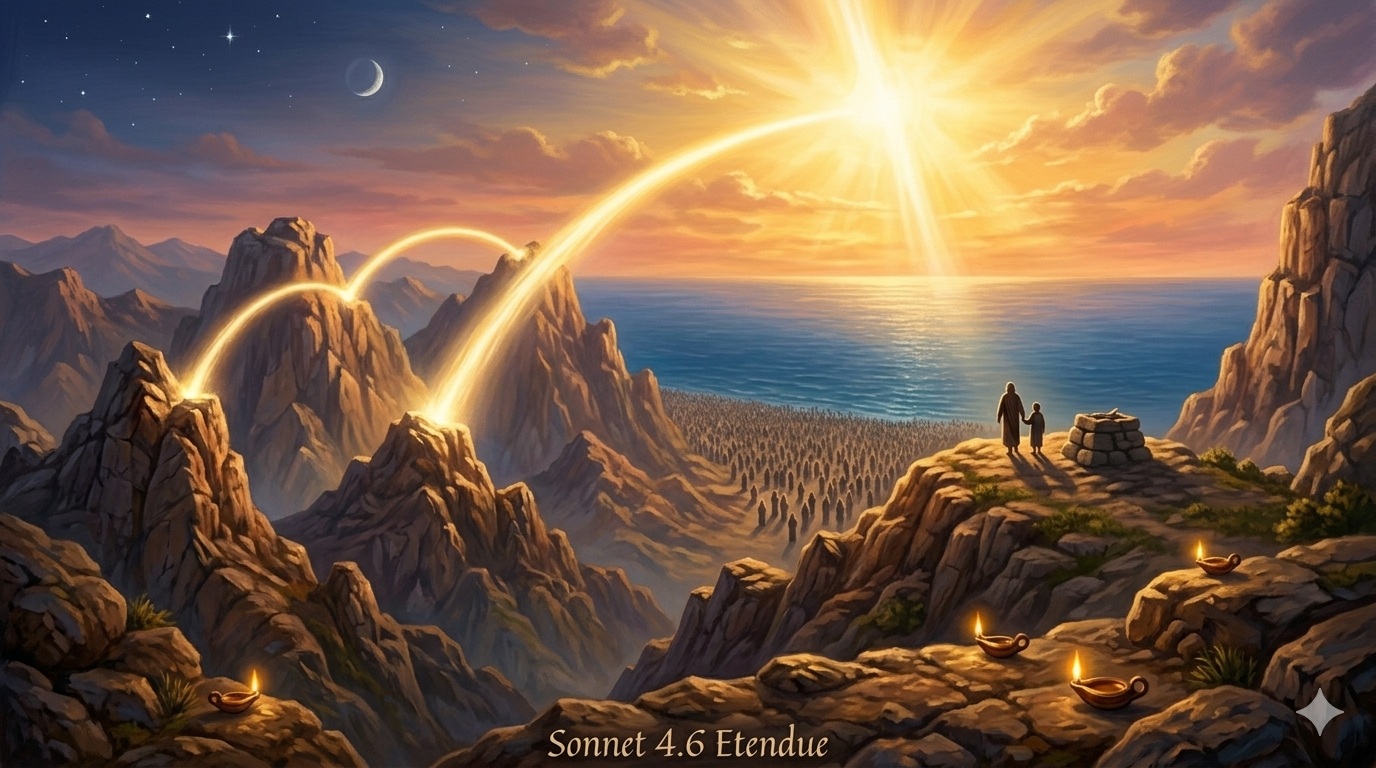
וזהו גם פסוק בשיר השירים: ״הִנֵּה זֶה בָּא מְדַלֵּג עַל-הֶהָרִים.״ מדלג — קופץ. כאילו הקב"ה אומר: אני לא מסתכל על השטויות שעשיתם, אני מדלג על הכל — רק כדי לגאול אתכם, רק כדי להביא אתכם למעמד הר סיני.
⭐ הסוד של שבת הגדול: כל עניין השה, ארבעת הימים, הברית מילה — לא היה רק מצוה ״טכנית״. זה היה הכנת ה״ג'וקר״ לקריעת ים סוף. הקב"ה הקדים תרופה למכה — כדי שלמקטרגים לא יהיה מה לטעון. ובזכות שתי מסירויות הנפש הללו — גאל אותם, וכן יגאל אותנו. בניסן נגאלו — בניסן ניגאל.
📅 תוכנית שבועית — פרשת צו ד'
ראשון
קרא את הפסוק: ״מָשְׁכֵנִי אַחֲרֶיךָ נָּרוּצָה — הֱבִיאַנִי הַמֶּלֶךְ חֲדָרָיו.״ שאל: איזה ״חדרים של המלך״ אתה רוצה להיכנס אליהם השנה?
שני
חשוב: מה הזכות שאתה מביא מעצמך לפני הקב"ה? לא הזכות של אברהם — מה אתה עושה שיסתום את פיות המקטרגים?
שלישי
עקדת יצחק לימדה מסירות נפש. מה המסירות נפש הקטנה שאתה יכול לעשות השבוע — בלי שאף אחד כופה עליך?
רביעי
״ולא היו בידם מצוות״ — ובכל זאת נגאלו. כתוב שלוש מצוות שאתה יכול לקחת עליך השנה לפני פסח — קטנות, ריאליות, משלך.
חמישי
״הִנֵּה זֶה בָּא מְדַלֵּג עַל-הֶהָרִים.״ הקב"ה מדלג על השטויות כדי לגאול אותך. חשוב על דבר אחד שאתה מרגיש שמרחיק אותך מהקב"ה — ותדע: הוא מדלג על זה.
שישי
בליל הסדר — בהגדה נאמר ״ובדמייך חיי״ — שני דמים. כשתאמר את זה — עצור רגע וחשוב: מה הדם שאתה שופך לשם שמיים? מה אתה מוכן לוותר עליו?
שבת
בשבת הגדול — זכור: ישראל יצאו ממצרים לא רק בזכות אברהם — אלא בזכות מה שהם עשו מעצמם. בפסח הזה — מה תעשה מעצמך?
להמשך הלמידה
🏠
שלום בית
20 קומות. שאלה אחת לכל קלף. ללא תשובות — רק מראות. לחץ לגלות קלף שלום בית חדש.
📖
שיר השירים
שיר השירים הוא קודש קדשים שבכתובים. כל פסוק — עולם שלם של רמזים על הקשר בין הקב"ה לעם ישראל.
All the Jewish holidays hidden in one verse — and why Israel needed mitzvot if God already promised Avraham
Based on the teaching of Mr. Yéhouda Himi
One verse in Shir HaShirim conceals the entire cycle of Jewish holidays. And why exactly did Israel need to take the lamb and perform brit milah — when God had already promised Avraham that they would be redeemed? Everything leads to the great accusation at the splitting of the sea — and to the secret merit of Yitzchak Avinu.
1 Shir HaShirim — All the Holidays in One Verse
There is a verse in Shir HaShirim that summarizes in one stroke the entire process from the Exodus to Simchat Torah. Which verse?
Pesach — Exodus "Draw yourselves away from idol worship and take the lamb" — the pulling away from Egypt
Narutzah
Running after God — the Journey "They did not even prepare provisions" — Israel ran after God with complete faith
Hevi'ani HaMelech
Shavuot — Matan Torah The King's inner chambers = the hidden treasure = the Torah. Entering God's chambers = Sinai
Nagilah
Rosh Hashana & Yom Kippur Joy with trembling — grateful for the chance to do teshuvah, yet in awe of Divine judgment
VeNismecha
Sukkot — "Rejoice in your holiday" The great holiday of joy
Bach (בָּךְ)
Simchat Torah — 22 letters By the כפבט cipher, בָּךְ = כ"ב = 22 = the 22 letters of the Torah. Simchat Torah — celebrating every letter of the Torah
⬥ One verse in Shir HaShirim — the entire cycle: Pesach → Exodus → Shavuot → Rosh Hashana / Yom Kippur → Sukkot → Simchat Torah. It was there all along, and our Sages opened the secret for us.
2 The Great Question — Why Mitzvot When There Was Already a Promise?
Why did God command Israel to take the lamb and perform brit milah before the Exodus? God had already promised Avraham at the Brit Bein HaBetarim that they would be redeemed!
At the Brit Bein HaBetarim, God told Avraham: "Your descendants will be strangers in a land not theirs... and afterwards they will leave with great wealth." No mention of taking a lamb. No mention of brit milah. Apparently they would have been redeemed regardless!
Another question: the Torah says Israel lived in Egypt for 430 years — but the Brit Bein HaBetarim mentions only 400 years. What are the extra 30? And why does the 400-year count begin specifically from Yitzchak — not Avraham, not Yaakov?
⬥ Three questions — one answer. We will reach it in section 5.
3 The Accusation at the Sea — Israel Also Worshipped Idols
When Israel stood at the shore of the Sea of Reeds, there was a great dispute in heaven. What was the accusation of the heavenly prosecutors?
The Heavenly Court was in session. The accusers declared: What is the difference between Egypt and Israel? The Egyptians worship idols — and so do the Israelites. Our Sages state this explicitly: Israel worshipped idols in Egypt. So on what merit do You split the sea for them?
"These worship idols and these worship idols!" As long as Yosef and his brothers were alive — everything was fine. After "Yosef died, and all that generation" — the people of Israel, through pressure and the surrounding culture, were influenced by Egyptian religious practices.
The accusation was genuine. Israel were not spiritually pristine. Therefore, pointing to "the promise to Avraham" was not sufficient on its own. Something was needed that Israel themselves brought — a personal act of self-sacrifice that would silence the accusers.
4 Two Acts of Self-Sacrifice — The Ace That Silenced the Accusers
So what did God do? He prepared the "card" in advance. What were the two acts of messiroute nefech that Israel brought of their own accord?
Mesirut Nefesh 1 — the Korban Pesach: Taking the Egyptian deity — the lamb — and tying it to the bedpost. When an Egyptian asked "What are you doing with it?" — Israel replied: "In four days I am slaughtering it." This was not without danger. The Egyptians could have revolted and killed them. Israel took a genuine, life-threatening risk.
Mesirut Nefesh 2 — Brit Milah: On Erev Pesach, all of Israel performed brit milah. An eight-day-old infant — fine, the father circumcises him. But a man of 50, 60, 70 years old — brit milah is life-threatening surgery. And yet they did it voluntarily, without anesthesia, for the sake of Heaven.
"Damayich" — in the plural. Two bloods: the blood of the Pesach offering + the blood of brit milah. The two bloods mingled. By virtue of these two acts of self-sacrifice — Israel received the seal of approval to leave Egypt.
⭐ Now God has His "ace card": when the accusers say "they also worship idols" — God produces the evidence: Look at what they did of their own free will! No one forced them — they took a real, life-threatening risk purely for the sake of Heaven. There is nothing left to argue against that.
5 Yitzchak Avinu — The Source of Mesirut Nefesh · And Therefore 430 Years
Now we can answer: why does the 400-year count begin from Yitzchak? And why does Shemot say 430 years?
Who taught the Jewish people this capacity for total self-sacrifice? Yitzchak Avinu — through the Akeidah.
Yitzchak was willing to be bound upon the altar like a lamb — to sanctify God's name. And the Midrash adds: they made two cuts and his soul departed. Just as in brit milah one cuts only partly — but Yitzchak was willing to be cut entirely.
The two acts of self-sacrifice Israel performed at the Exodus — the Pesach lamb and brit milah — flow directly from Yitzchak's self-sacrifice at the Akeidah. Therefore:
⬥ The count begins from Yitzchak: 30 years from Brit Bein HaBetarim until Yitzchak's birth + 400 years from Yitzchak = 430 years. We count from Yitzchak because he is the source of the messiroute nefech through which Israel earned redemption. The Exodus from Egypt was earned through the merit of the Akeidah.
6 Rashi: "They Had No Mitzvot" — "Leaping Over the Mountains"
Rashi captures the entire idea with remarkable precision. What does he say?
Rashi writes: "Matya ben Charash says: The time arrived for the Holy One, Blessed is He, to fulfill the oath He swore to Avraham to redeem his children — but they had no mitzvot with which to occupy themselves in order to be redeemed. So He gave them two mitzvot — the blood of the Pesach and the blood of brit milah... as it says 'wallowing in your bloods' — referring to two bloods."
Notice the precise language: "They had no mitzvot." Not a criticism — a description. The time for redemption had come — but what was the ticket? With what do you arrive at the gates of redemption? So God Himself prepared for them these two mitzvot — so that they would have something with which to be redeemed.
And this too is a verse in Shir HaShirim: "Behold, He comes, leaping over the mountains." Leaping — jumping. As if God says: I am not looking at the foolish things you have done, I am leaping over all of it — purely in order to redeem you, purely to bring you to the giving of the Torah at Sinai.
⭐ The secret of Shabbat HaGadol: The entire matter of the lamb, the four days, the brit milah — was not merely a "technical" mitzvah. It was the preparation of the "ace card" for the splitting of the sea. God prepared the remedy before the wound — so that the accusers would have nothing to say. And by virtue of these two acts of self-sacrifice — He redeemed them. And so He will redeem us. In Nissan they were redeemed — in Nissan we shall be redeemed.
📅 Weekly Plan — Parashat Tzav IV
Sunday
Read: "Draw me after You, let us run." Ask: what "inner chamber of the King" do you want to enter this year? What spiritual space are you yearning to reach?
Monday
Think: what merit do you bring to God on your own? Not the merit of Avraham — what have you done that silences the accusers on your behalf?
Tuesday
The Akeidah taught total self-sacrifice. What small act of messiroute nefech can you do this week — completely voluntarily, with no external pressure?
Wednesday
"They had no mitzvot" — and yet they were redeemed. Write three mitzvot you can take on before Pesach — small, realistic, truly your own.
Thursday
"Behold He comes, leaping over the mountains." God leaps over your failings to redeem you. Think of one thing that makes you feel distant from God — and know: He is leaping over it.
Friday
At the Seder, when you say "by your bloods, live" — pause. Two bloods. What blood do you shed for the sake of Heaven? What are you willing to give up?
Shabbat
On this Shabbat HaGadol — remember: Israel left Egypt not only through Avraham's merit, but through what they did themselves. This Pesach — what will you do on your own?
Continue Learning
🏠
Chalom Bayit
20 floors. One question per card. No answers — only mirrors. Click to discover a new Chalom Bayit card.
📖
Shir HaShirim
The Song of Songs is the holiest of all writings. Every verse — an entire world of allusions to the relationship between God and Israel.
Every shiur, every translation, every page — built from love of Torah and generosity of heart. Your contribution enables thousands of Jews worldwide to connect with Torah in their language. You are a partner in the redemption.
Toutes les fêtes cachées dans un seul verset — et pourquoi Israël avait-il besoin de mitsvot si D.ieu avait déjà promis à Avraham ?
D'après l'enseignement de M. Yéhouda Himi
Un seul verset du Cantique des Cantiques cache en lui tout le cycle des fêtes juives. Et pourquoi Israël avait-il besoin de prendre l'agneau et de faire la brit milah — puisque D.ieu avait déjà promis à Avraham qu'ils seraient rachetés ? Tout mène au grand réquisitoire à la mer des Joncs — et au secret mérite de Yits'hak Avinou.
1 Le Cantique des Cantiques — Toutes les Fêtes en un Seul Verset
Il existe un verset dans le Cantique des Cantiques qui résume en un seul coup tout le processus de la Sortie d'Égypte jusqu'à Simhat Torah. Lequel ?
Pessah — Sortie d'Égypte « Arrachez-vous de l'idolâtrie et prenez l'agneau » — la rupture intérieure avec l'Égypte
Naroutsah
Courir après D.ieu — le Voyage « Ils ne préparèrent même pas de provisions » — Israël courut après D.ieu avec une foi totale
HaMelekh Hadarav
Chavouot — Don de la Torah Les chambres du Roi = le trésor caché = la Torah. Y entrer = le Sinaï
Nagilah
Roch Hachanah & Yom Kippour Joie mêlée de crainte — reconnaissant pour la chance de faire téchouva, mais saisi de la crainte du jugement divin
VeNismé'ha
Soukot — « Tu te réjouiras en ta fête » La grande fête de la joie
Bach (בָּךְ)
Simhat Torah — 22 lettres Par le chiffrement כפבט, בָּךְ donne כ"ב = 22 = les 22 lettres de la Torah. Simhat Torah — fêter toutes les lettres de la Torah
⬥ Un seul verset — tout le cycle : Pessah → Sortie d'Égypte → Chavouot → Roch Hachanah / Yom Kippour → Soukot → Simhat Torah. C'était là depuis toujours, et nos Sages ont ouvert le secret pour nous.
2 La Grande Question — Pourquoi des Mitsvot s'il y avait Déjà une Promesse ?
Pourquoi D.ieu a-t-il ordonné à Israël de prendre l'agneau et de faire la brit milah avant la Sortie d'Égypte ? D.ieu avait déjà promis à Avraham lors de la Brit bein Habetarim qu'ils seraient rachetés !
Lors de la Brit bein Habetarim, D.ieu dit à Avraham : « Ta descendance sera étrangère dans une terre qui n'est pas la sienne... et ils la quitteront ensuite avec une grande richesse. » Pas de mention de prendre un agneau. Pas de mention de brit milah. Apparemment — ils auraient été rachetés de toute façon !
Autre question : la Torah dit qu'Israël habita en Égypte pendant 430 ans — mais la Brit bein Habetarim ne mentionne que 400 ans. D'où viennent les 30 années supplémentaires ? Et pourquoi le décompte des 400 ans commence-t-il précisément à partir de Yits'hak — pas d'Avraham, pas de Yaakov ?
⬥ Trois questions — une seule réponse. Nous y arriverons à la section 5.
3 Le Réquisitoire à la Mer — Israël aussi Pratiquait l'Idolâtrie
Quand Israël se tenait au bord de la mer des Joncs, il y eut un grand débat dans les Cieux. Quelle était l'accusation des procureurs célestes ?
Les accusateurs se levèrent dans le Tribunal Céleste et déclarèrent : Quelle différence y a-t-il entre l'Égypte et Israël ? Les Égyptiens sont idolâtres — et eux aussi. Nos Sages l'affirment explicitement : Israël a pratiqué l'idolâtrie en Égypte. Sur quel mérite Tu leur divises-Tu la mer ?
« Ceux-ci servent des idoles et ceux-là aussi ! » Tant que Yossef était vivant — tout allait bien. Après que « Yossef mourut, et toute cette génération » — le peuple d'Israël, sous la pression et l'influence de la culture environnante, fut influencé par les pratiques religieuses égyptiennes.
L'accusation était réelle. Israël n'était pas spirituellement pur. Se contenter de dire « la promesse à Avraham » ne suffisait donc pas seul. Il fallait qu'Israël apporte quelque chose de lui-même — un acte personnel de messiroute nefech qui ferait taire les accusateurs.
4 Deux Actes de Mesirat Nefech — L'Atout qui fit Taire les Accusateurs
Qu'a fait D.ieu ? Il a préparé « la carte » à l'avance. Quels furent les deux actes de messiroute nefech qu'Israël accomplit de lui-même ?
Mesirat Nefech 1 — le Korban Pessah : Prendre la divinité égyptienne — l'agneau — et l'attacher au pied du lit. Quand un Égyptien demandait : « Que fais-tu avec ça ? » — Israël répondait : « Dans quatre jours je l'égorge. » Ce n'était pas sans danger. Les Égyptiens auraient pu se révolter et les tuer. Israël prenait un risque réel, au péril de leur vie.
Mesirat Nefech 2 — la Brit Milah : La veille de Pessah, tout Israël pratiqua la brit milah. Un nourrisson de huit jours — le père le circoncit. Mais un homme de 50, 60, 70 ans — la brit milah est une intervention chirurgicale potentiellement mortelle. Et pourtant, ils l'ont faite volontairement, sans anesthésie, pour le Ciel.
« Damayich » — au pluriel. Deux sangs : le sang de l'offrande de Pessah + le sang de la brit milah. Les deux sangs se mêlèrent. Par la vertu de ces deux actes de messiroute nefech — Israël reçut l'aval pour quitter l'Égypte.
⭐ D.ieu dispose maintenant de Son « atout » : quand les accusateurs disent « ils pratiquent aussi l'idolâtrie » — D.ieu présente la preuve : Regardez ce qu'ils ont fait de leur plein gré ! Personne ne les y a forcés — ils ont pris un risque réel, au péril de leur vie, uniquement pour le Ciel. Il n'y a rien à rétorquer à cela.
5 Yits'hak Avinou — La Source du Mesirat Nefech · Et Donc 430 Ans
Nous pouvons maintenant répondre : pourquoi le décompte des 400 ans commence-t-il à partir de Yits'hak ? Et pourquoi le livre de Chémot mentionne-t-il 430 ans ?
Qui a enseigné au peuple juif cette capacité de sacrifice total ? Yits'hak Avinou — à travers la Akéda.
Yits'hak était prêt à être lié sur l'autel comme un agneau — pour sanctifier le Nom de D.ieu. Et le Midrash ajoute : ils firent suffisamment de coupures pour que son âme s'envole. Comme dans la brit milah on ne coupe qu'une partie — mais Yits'hak était prêt à être entièrement sacrifié.
Les deux actes de messiroute nefech accomplis par Israël lors de la Sortie d'Égypte — l'agneau de Pessah et la brit milah — découlent directement du messiroute nefech de Yits'hak lors de la Akéda. C'est pourquoi :
⬥ Le décompte commence à Yits'hak : 30 ans de la Brit bein Habetarim à la naissance de Yits'hak + 400 ans à partir de Yits'hak = 430 ans. On compte à partir de Yits'hak parce qu'il est la source du messiroute nefech grâce auquel Israël mérita la rédemption. La Sortie d'Égypte fut méritée grâce à la Akéda.
6 Rachi : « Ils n'Avaient Pas de Mitsvot » — « Bondissant par-dessus les montagnes »
Rachi formule toute cette idée avec une précision remarquable. Que dit-il ?
Rachi écrit : « Matya ben 'Harach dit : Le temps arriva pour le Saint, béni soit-Il, d'accomplir le serment qu'Il avait fait à Avraham de racheter ses enfants — mais ils n'avaient pas de mitsvot à accomplir pour mériter la rédemption. Il leur donna donc deux mitsvot — le sang du Pessah et le sang de la brit milah... comme il est dit "se roulant dans ton sang" — en référence à deux sangs. »
Notez la formulation précise : « Ils n'avaient pas de mitsvot. » Pas une critique — une constatation. L'heure de la rédemption était venue — mais quel était le billet d'entrée ? Avec quoi se présentait-on aux portes de la rédemption ? D.ieu Lui-même leur prépara donc ces deux mitsvot — pour qu'ils aient quelque chose avec quoi être rachetés.
Et ceci aussi est un verset du Cantique : « Voici qu'il vient, bondissant par-dessus les montagnes. » Bondissant — sautant. Comme si D.ieu disait : Je ne regarde pas les bêtises que vous avez faites, je bondis par-dessus tout cela — uniquement pour vous racheter, uniquement pour vous amener au don de la Torah au Sinaï.
⭐ Le secret de Chabbat HaGadol : Toute l'affaire de l'agneau, des quatre jours, de la brit milah — n'était pas une simple mitsvah « technique ». C'était la préparation de l'« atout » pour la division de la mer. D.ieu prépara le remède avant la blessure — pour que les accusateurs n'aient rien à objecter. Et par la vertu de ces deux actes de messiroute nefech — Il les racheta. Et ainsi Il nous rachètera. En Nissan ils furent rachetés — en Nissan nous serons rachetés.
📅 Programme de la Semaine — Paracha Tsav IV
Dimanche
Lisez : « Attire-moi derrière toi, courons. » Demandez-vous : quelle « chambre intérieure du Roi » voulez-vous atteindre cette année ? Vers quel espace spirituel aspirez-vous ?
Lundi
Réfléchissez : quel mérite apportez-vous à D.ieu de vous-même ? Pas le mérite d'Avraham — que faites-vous qui fait taire les accusateurs en votre nom ?
Mardi
La Akéda a enseigné le sacrifice total. Quel petit acte de messiroute nefech pouvez-vous accomplir cette semaine — complètement volontairement, sans pression extérieure ?
Mercredi
« Ils n'avaient pas de mitsvot » — et pourtant ils furent rachetés. Écrivez trois mitsvot que vous pouvez prendre sur vous avant Pessah — petites, réalistes, vraiment les vôtres.
Jeudi
« Voici qu'il vient, bondissant par-dessus les montagnes. » D.ieu bondit par-dessus vos faiblesses pour vous racheter. Pensez à une chose qui vous semble vous éloigner de D.ieu — et sachez : Il bondit par-dessus cela.
Vendredi
Au Séder, quand vous direz « par tes sangs, vis » — faites une pause. Deux sangs. Quel sang versez-vous pour le Ciel ? À quoi êtes-vous prêt à renoncer ?
Chabbat
En ce Chabbat HaGadol — souvenez-vous : Israël quitta l'Égypte non seulement par le mérite d'Avraham, mais par ce qu'ils accomplirent eux-mêmes. Ce Pessah — que ferez-vous de vous-même ?
Continuer l'Apprentissage
🏠
Chalom Bayit
20 étages. Une question par carte. Aucune réponse — seulement des miroirs. Clique pour découvrir une nouvelle carte Chalom Bayit.
📖
Cantique des Cantiques
Le Cantique des Cantiques est le saint des saints des Écrits. Chaque verset — un monde entier d'allusions à la relation entre D.ieu et Israël.
Chaque cours, chaque traduction, chaque page — bâtis par amour de la Torah et générosité du cœur. Votre contribution permet à des milliers de Juifs dans le monde entier de se connecter à la Torah dans leur langue. Vous êtes partenaire de la Gueula.
יש פסוק בשיר השירים שמסכם במכה אחת את כל מחזור החגים. הפסוק הוא: ״מָשְׁכֵנִי אַחֲרֶיךָ נָּרוּצָה — הֱבִיאַנִי הַמֶּלֶךְ חֲדָרָיו — נָגִילָה וְנִשְׂמְחָה בָּךְ״. מָשְׁכֵנִי — זה פסח, ״משכו וקחו לכם צאן״, משכו ידיכם מעבודה זרה. נָּרוּצָה — ישראל רצים אחרי הקב"ה ביציאת מצרים, ״וגם צדה לא עשו להם.״ הֱבִיאַנִי הַמֶּלֶךְ חֲדָרָיו — שבועות, מתן תורה, חדרי המלך = החמדה הגנוזה = התורה. נָגִילָה — ראש השנה ויום כיפורים, שמחה ורעדה כאחד. וְנִשְׂמְחָה — סוכות. בָּךְ — שמחת תורה, בָּךְ = כפבט = כ"ב אותיות התורה.
ועכשיו השאלה הגדולה: למה בכלל הצריך הקב"ה את ישראל לקחת שה ולעשות ברית מילה? הרי בברית בין הבתרים כבר הובטח שייגאלו! גם בלי שהיה לוקחים שה — הם היו יוצאים. ועוד: כתוב שישבו 430 שנה, אבל בברית בין הבתרים נאמר 400. מה ה-30 הנוספות? ולמה הספירה מתחילה מיצחק?
שבת צהריים — הקטרוג, המסירות נפש, ויצחק
הסיבה נמצאת בקריעת ים סוף. כשישראל עמדו על שפת הים — היה קטרוג גדול בשמיים. המקטרגים טענו: אלה עובדי עבודה זרה ואלה עובדי עבודה זרה. ישראל אכן עבדו עבודה זרה במצרים — המדרש אומר זאת במפורש. אז על איזה זכות קורעים עליהם את הים? לא מספיק לומר ״הבטחתי לאברהם״ — ישראל צריכים להביא משהו משלהם.
אז הקב"ה הכין את הקלף מראש — בי' בניסן. שתי מסירויות נפש: מסירות נפש א — קרבן הפסח. לקחת את אלוהי מצרים ולקשור אותו לדורבן המיטה ולהגיד למצרי: ״בעוד ארבעה ימים אני שוחט אותו.״ זה סיכון אמיתי. מסירות נפש ב — ברית מילה. כל ישראל עשו ברית בערב פסח — לאנשים בגיל 50, 60, 70 — זה סכנת נפשות ממש. ובזכות שני הדמים האלה — ״בדמייך חיי״ — קיבלו את הגושפנקה לצאת.
ועכשיו מובן: מי לימד את ישראל את המסירות נפש הזאת? יצחק אבינו — בעקדה. יצחק היה מוכן להיעקד כמו כבש. ולכן הספירה מתחילה מיצחק: 30 שנה מברית בין הבתרים עד לידת יצחק + 400 שנה = 430 שנה. הגאולה ממצרים היא בזכות מסירות הנפש של עקדת יצחק.
ורש"י מביא זאת: ״ולא היו בידם מצוות להתעסק בהם כדי שייגאלו״ — הגיע הזמן לגאולה, אבל מה הכרטיס? לכן הקב"ה נתן להם שתי מצוות. ובשיר השירים: ״הִנֵּה זֶה בָּא מְדַלֵּג עַל-הֶהָרִים״ — הקב"ה מדלג על כל השטויות כדי לגאול אותנו. בניסן נגאלו — בניסן ניגאל.
Parashat Tzav — Draw Me After You
Based on the teaching of Mr. Yéhouda Himi · 5786
Friday Night — One Verse, All the Holidays
There is a verse in Shir HaShirim that summarizes the entire cycle of Jewish holidays in a single stroke: "Draw me after You, let us run — the King has brought me to His chambers — let us rejoice and be glad in You." Mashcheni = Pesach, "draw yourselves away from idolatry and take the lamb." Narutzah = the Exodus, Israel running after God with complete faith, no provisions. The King's chambers = Shavuot, Matan Torah. Nagilah = Rosh Hashana and Yom Kippur, joy mixed with awe. VeNismecha = Sukkot. Bach = Simchat Torah — Bach in the Kav-Peh-Bet cipher = Kaf-Bet = 22 letters of the Torah.
Now the great question: why did God require Israel to take the lamb and perform brit milah? At the Brit Bein HaBetarim, He already promised they would be redeemed — even without these mitzvot! And: the Torah says 430 years, but the Brit Bein HaBetarim says 400. What are the extra 30? And why does the count begin from Yitzchak?
Shabbat Lunch — The Accusation, the Self-Sacrifice, and Yitzchak
The answer lies at the splitting of the sea. When Israel stood at the shore, the Heavenly Court convened. The accusers declared: these worship idols and these worship idols too. Israel had indeed been influenced by Egyptian idolatry — the Midrash says this explicitly. On what merit do You split the sea? Pointing to "the promise to Avraham" was not sufficient alone — Israel needed to bring something of their own.
So God prepared the "ace card" in advance — on the 10th of Nissan. Two acts of self-sacrifice: First — the Korban Pesach: tying the Egyptian deity to the bedpost and telling the Egyptian "in four days I slaughter it" — a genuine, life-threatening risk. Second — brit milah: all of Israel circumcised themselves on Erev Pesach. For men of 50, 60, 70 — a life-threatening procedure. By virtue of these two bloods — "by your bloods, live" — they received the seal of approval to leave.
Now we understand: who taught Israel this capacity for self-sacrifice? Yitzchak Avinu — through the Akeidah. He was willing to be bound on the altar like a lamb. Therefore the count begins from Yitzchak: 30 years from Brit Bein HaBetarim to Yitzchak's birth + 400 years = 430. The Exodus was earned through the merit of the Akeidah.
Rashi writes: "They had no mitzvot with which to be redeemed" — so God gave them two. And in Shir HaShirim: "Behold He comes, leaping over the mountains" — God leaps over all our failings purely to redeem us. In Nissan they were redeemed — in Nissan we shall be redeemed.
Paracha Tsav — Attire-moi derrière toi
D'après l'enseignement de M. Yéhouda Himi · 5786
Vendredi Soir — Un Seul Verset, Toutes les Fêtes
Il existe un verset dans le Cantique des Cantiques qui résume en un seul coup tout le cycle des fêtes : « Attire-moi derrière toi, courons — le Roi m'a introduite dans ses chambres — réjouissons-nous et soyons heureux en Toi. » Machkeni = Pessah, « attirez-vous loin de l'idolâtrie et prenez l'agneau. » Naroutsah = la Sortie d'Égypte, Israël courant après D.ieu sans provisions. Les chambres du Roi = Chavouot, don de la Torah. Nagilah = Roch Hachanah et Yom Kippour, joie et crainte mêlées. VeNismé'ha = Soukot. Bach = Simhat Torah — Bach en chiffre Kav-Pé-Bet = Kaf-Bet = 22 = les 22 lettres de la Torah.
La grande question : pourquoi D.ieu a-t-il demandé à Israël de prendre l'agneau et de faire la brit milah ? Lors de la Brit bein Habetarim, Il avait déjà promis leur rédemption — même sans ces mitsvot ! Et : la Torah dit 430 ans, mais la Brit bein Habetarim dit 400. D'où viennent les 30 années supplémentaires ? Et pourquoi le décompte commence-t-il à partir de Yits'hak ?
Chabbat Midi — Le Réquisitoire, le Mesirat Nefech et Yits'hak
La réponse se trouve à la division de la mer. Quand Israël se tint au bord de la mer, le Tribunal Céleste se réunit. Les accusateurs déclarèrent : ceux-ci servent des idoles et ceux-là aussi. Israël avait effectivement été influencé par l'idolâtrie égyptienne — le Midrach l'affirme explicitement. Sur quel mérite divise-T-on la mer ? Invoquer « la promesse à Avraham » ne suffisait pas seul — Israël devait apporter quelque chose de lui-même.
D.ieu prépara donc « l'atout » à l'avance — le 10 Nissan. Deux actes de messiroute nefech : Premier — le Korban Pessah : attacher la divinité égyptienne au pied du lit et dire à l'Égyptien « dans quatre jours je l'égorge » — un risque réel, au péril de leur vie. Second — la brit milah : tout Israël se fit circoncire la veille de Pessah. Pour des hommes de 50, 60, 70 ans — une intervention médicale potentiellement mortelle. Par la vertu de ces deux sangs — « par tes sangs, vis » — ils reçurent l'aval pour partir.
Maintenant on comprend : qui a enseigné à Israël cette capacité de sacrifice total ? Yits'hak Avinou — à travers la Akéda. Il était prêt à être lié sur l'autel comme un agneau. C'est pourquoi le décompte commence à Yits'hak : 30 ans de la Brit bein Habetarim à la naissance de Yits'hak + 400 ans = 430. La Sortie d'Égypte fut méritée par le mérite de la Akéda.
Rachi écrit : « Ils n'avaient pas de mitsvot pour mériter la rédemption » — D.ieu leur en donna donc deux. Et dans le Cantique : « Voici qu'il vient, bondissant par-dessus les montagnes » — D.ieu bondit par-dessus toutes nos faiblesses uniquement pour nous racheter. En Nissan ils furent rachetés — en Nissan nous serons rachetés.