Toldot —
The Power of Yitzhak
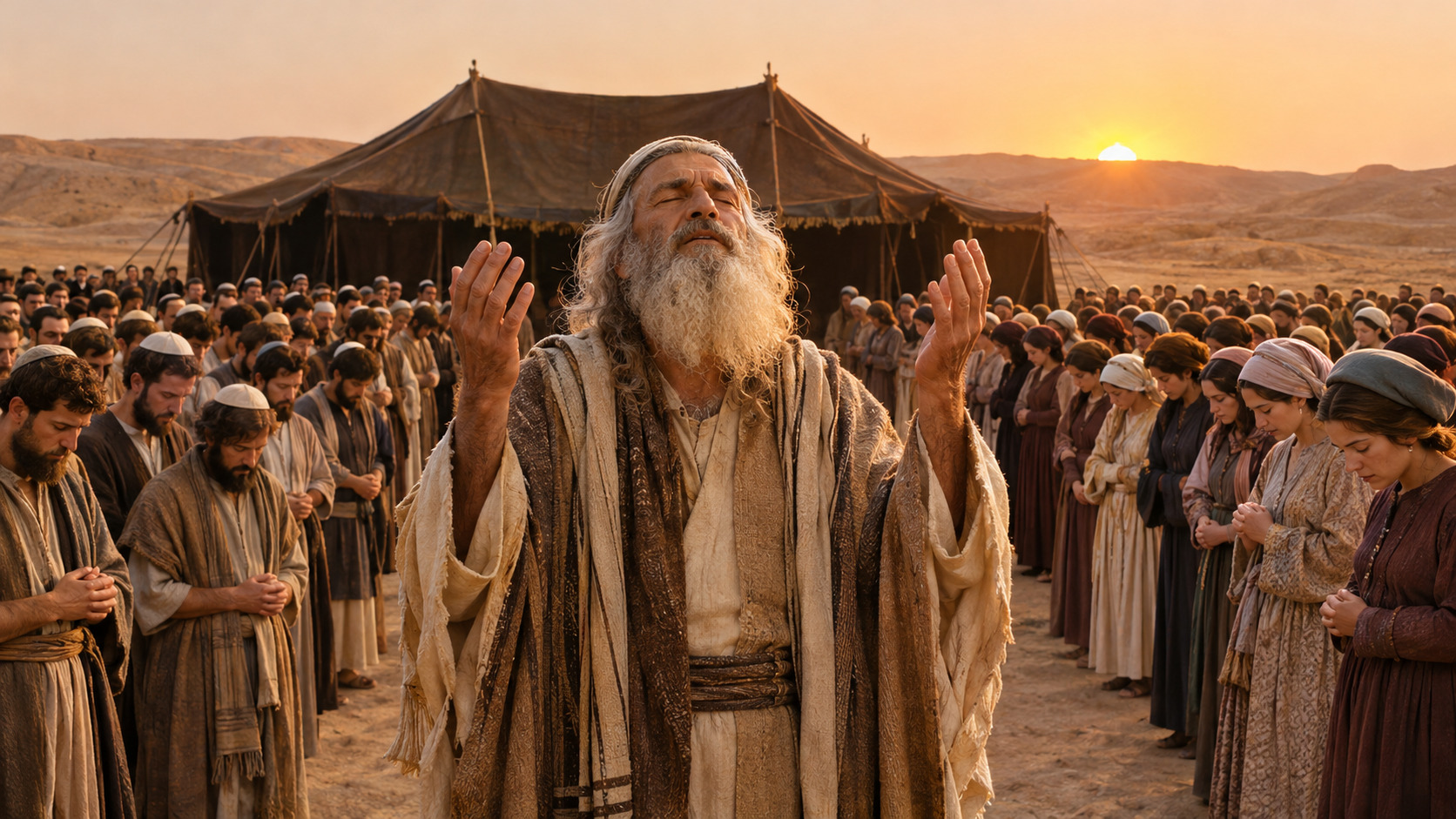
Parashat Toldot is always read close to Rosh Chodesh Kislev, and “Vayazed Yaakov nazid” hints at Yavan — Greece, which wanted to darken the eyes of Israel from the Torah. “Avraham fathered Yitzhak”: the scoffers of the generation said Sarah had conceived from Avimelech. But why is this written here, forty years after the birth? Because the media waited, and when Esav turned to evil they said: there is Avimelech’s husk. So the Torah declares: both sons are Yitzhak’s children. Then “Hashem let Himself be entreated by him — He was urged, appeased and persuaded”: why so much urging? Because on the day of the lentil stew Yaakov and Esav were fifteen, and Avraham died at one hundred seventy-five instead of one hundred eighty, so as not to see Esav turn to evil. Yitzhak’s prayer changed the plan — and “vaye’ater lo Hashem” equals “five years” in gematria. That is the power of Yitzhak: when Hashem says “your children have sinned,” Yitzhak answers “My sons and not Your sons?” and calculates: “half on me and half on You.” He hunts Hashem with his mouth when he pleads for the wicked, and so he does not give up even on Esav. Finally, “Upon me be your curse, my son”: Rivka, a reincarnation of Chava, uses food to repair the eating of Adam’s sin.
Words of Torah do good when they are shared. Send this shiur to your family and friends on WhatsApp.
📲 Send on WhatsApp👥 Join the Gueoula groupGood evening, everyone. With Hashem’s help, today we are learning Parashat Toldot. We are right after Rosh Chodesh Kislev, at the opening of the month of Kislev. And there is a beautiful hint in the parashah: we always read Toldot close to Rosh Chodesh Kislev, and in it is written “Vayazed Yaakov nazid” — “Yaakov cooked a stew.” The initials spell Yavan, Greece: “vayazed” is vav, “Yaakov” is yud, “nazid” is nun.
Why does this matter? Because the month of Kislev revolves around the great miracle of Chanukah, against the Greeks.
What was the plan of the Greeks, may their name be erased? In the second verse of the Torah we see a hint of four exiles: “tohu” is the exile of Babylon, “vohu” the exile of Persia, “choshech” — darkness — the exile of Greece, “on the face of the deep” the exile of Rome. But there is no need to panic, because “the spirit of God” — the spirit of Mashiach — “hovers over the face of the waters.” In the end, with Hashem’s help, we have Mashiach.
“Darkness” is the exile of Greece, which sought to darken the eyes of Israel from the Torah. That was their plan. And Hashem turned it around: a great light was revealed, and we light the Chanukah menorah to say “for a mitzvah is a lamp and the Torah is light.” The plan of the Greeks did not succeed, and it is hinted in Parashat Toldot, always read close to Rosh Chodesh Kislev, in the verse “Vayazed Yaakov nazid.”
That was only an opening. Everyone asks: why the repetition? If you said “these are the generations of Yitzhak son of Avraham,” meaning Yitzhak is Avraham’s son, why do you need to tell me “Avraham fathered Yitzhak”? Of course he did!
One explanation: only after Avraham received the name Avraham — before, he was called Avram — did he father Yitzhak.
And another explanation, Rashi’s: the scoffers of the generation said that Sarah had lived many years with Avraham without conceiving — she conceived at ninety. And in the previous parashah, right after Avraham parted from Avimelech, it is written “and Hashem remembered Sarah as He had spoken.” From this juxtaposition the scoffers began to say: for ninety years she did not become pregnant, one night she was with Avimelech, and suddenly “Hashem remembered Sarah” — surely, God forbid, she conceived from Avimelech.
So that there would be no opening to say such a thing, Hashem made Yitzhak’s facial features resemble Avraham’s, and everyone testified: Avraham fathered Yitzhak.
But what is the problem with this claim? It is an absurd claim. If Avraham really had a problem of infertility, how did he father Yishmael years before? The problem was with Sarah. And if the problem was with Sarah, even if she had spent a thousand days with Avimelech, she would not have conceived.
So why does Hashem make this whole plan, changing Yitzhak’s face to look like Avraham’s? It would have been enough to tell them this logical argument. But Rashi’s emphasis is “the scoffers of the generation” — the media. The influence of the media: it shapes our consciousness, it can convince you and arrange your head to think in a twisted way. People talked so much that they began to believe the lie.
Now the point I want to build: when would this whole teaching have been fitting? When Yitzhak was born! And here, how old is Yitzhak? Forty. The Torah waits forty years to bring this verse here? It should have been written next to “Hashem remembered Sarah… and Sarah bore Yitzhak.” This teaching seems out of place.
But see how the media does not let go. They really did start talking when Yitzhak was born, forty years earlier, and Hashem made the baby Yitzhak’s face like Avraham’s. But they waited around to see what would become of this Yitzhak. And then, in our parashah, Yitzhak at sixty fathers two children, Yaakov and Esav. The media sees that Yaakov is a good child, but Esav has turned to evil, and they say: there is the husk! Avimelech’s husk has remained!
So that there would be no slander about this either — that Yaakov came from Sarah’s side and Esav from Avimelech’s — the Torah says here: know that Avraham fathered Yitzhak. That he had two such different sons is another discussion. But let there be no doubt that both are the children of Yitzhak avinu. That is why it is written in this place.
We once added something else: what does “Avraham fathered Yitzhak” mean? There are situations where a son is ashamed of his father, and situations where a father is ashamed of his son. For example, a father who is an important minister walks down the street with his whole entourage, and at the end of the street they see his son, tattooed, drunk, rolling in the street — and he tells everyone: let’s take the other street, because he is ashamed to be seen. Or the reverse, God forbid: the son is an important minister, and his father is a drunk, and he is ashamed to pass by him.
The Torah tells us: with Avraham and Yitzhak it was not so. “Yitzhak son of Avraham” — Yitzhak said: I am Avraham’s son, he was proud of his father. And Avraham was proud and said: I fathered Yitzhak, this is my son.
Why does this matter to us? Because we are all children of Avraham avinu. It is important that we always hear a heavenly voice in which Avraham says: these are my children, I am not ashamed of them. That is our work. It is not enough for us to say we are proud that our father is Avraham avinu — he too must say: I am proud, these are my children.
This point is what made Avraham avinu the beloved of Hashem. There is one person in all of Tanach called the beloved of Hashem: “Avraham, My beloved.” And where do we see that he was His beloved? When there was a plan to overturn Sedom and Amorah, Hashem says to Himself: “Shall I hide from Avraham what I am doing?” I will share it with him, he is My beloved. Seemingly, why share it with him? Do what You want!
But the Torah gives the reason there: “For I have known him, so that he will command his children and his household after him to keep the way of Hashem, doing charity and justice.” Our whole entry ticket to Hashem is thanks to Avraham — because we received the Torah he passed on to us: to do charity and justice. These are exactly the two things in which Sedom and Amorah sinned. When we keep them, the disaster of Sedom and Amorah is averted, God forbid. Our existence depends on walking in the way of Avraham avinu.
There is another foundation, as part of our warm-up, that I will not give up. “Yitzhak entreated Hashem opposite his wife”: Yitzhak prayed to have children, and Rivka prayed too. What does “opposite his wife” mean? Each one took a corner and prayed. After all, he is already sixty: at forty he married Rivka, she was three, now she is twenty-three and there are no children, and he is sixty — it is time.
“And Hashem let Himself be entreated by him” — whose prayer was answered? Yitzhak’s. And Rashi explains why: because the prayer of a righteous person son of a righteous person is better than the prayer of a righteous person son of a wicked one. Who is the righteous child of a wicked parent? Rivka. She is righteous, but she is the daughter of Betuel the Aramean, an idol worshipper, and the sister of Lavan. And Yitzhak avinu is righteous son of a righteous man.
And this goes against logic. It is not fair. It is no great feat to be righteous son of the righteous: someone who grew up in a house of tzaddikim and is a tzaddik — well done, but that is normal, natural. The greater feat is to grow up righteous in the house of a wicked person. We even have a rule: in the place where baalei teshuvah stand, complete tzaddikim cannot stand. By that rule, one who grew up righteous in a wicked home has the greater merit. So how can the Torah say “He let Himself be entreated by him”?
We answered this once, and I want to repeat the answer because it is very strengthening. Let’s all quietly, quietly approach the corner where Yitzhak stands praying, and try to listen to what he says. Then we will quietly go to the corner where Rivka is praying, and try to hear what she prays.
I am sure Yitzhak prayed like this: Master of the world, I am righteous son of the righteous, it is no great feat for You to hear my prayer. Look at this poor woman, Rivka my wife — twenty-three years she has been waiting for a child. I ask You, I pray to You, hear her prayer.
Now we go to Rivka. She says: what am I worth? I may be righteous, but I am the daughter of a wicked man, my prayer is worth nothing. Please, listen to Yitzhak’s prayer. He deserves a child, because he is righteous son of the righteous.
In his humility Yitzhak says: I may be righteous son of the righteous, but it is fitting that her prayer be heard, because where baalei teshuvah stand, complete tzaddikim cannot stand. And she, in her humility, says: who am I, what is my life?
Whose prayer was accepted? “He let Himself be entreated by him” — Yitzhak’s. But what was Yitzhak’s prayer? That Rivka’s prayer be heard! So in the end — it is Rivka. And we have not lost the principle that where baalei teshuvah stand, complete tzaddikim cannot stand. That is a very great encouragement for us, baruch Hashem.
And now I want us to learn something new, very, very important. Friends, stay with me. Rashi explains “vaye’ater lo”: He was urged, appeased and persuaded by him. Today it is easy for us — a petition is a request. But Rashi says: when Hashem saw that Yitzhak urged Him greatly, He let Himself be urged; when He saw that he appeased Him in prayer, He was appeased; and He was also persuaded to accept his prayer.
And I ask: what was so complicated for Hashem about saying: you are praying, I accept your prayer? With Moshe Rabbeinu, “Va’etchanan el Hashem” — when You do not want to accept, You don’t. When You want to accept — accept, and that’s it. What did Hashem need to be appeased about so much, and why did He need to be urged so much?
And here I want us to learn a line of thought that is a great gift, for me and for you.
Then Esav and Yaakov are born. On the day Esav comes back from the field exhausted and Yaakov cooks the stew — how old were they? Fifteen! Here is the calculation, in slow motion: Avraham fathers Yitzhak at a hundred. “And Yitzhak was sixty years old when she bore them” — so Avraham was a hundred and sixty when Yaakov and Esav were born. And Avraham passed away at a hundred seventy-five.
And we know the midrash: what was the stew? “Pour me some of this red, red stuff” — teaching that he cooked red lentils. From here we learn that lentils are the food of mourners, and also on the eve of Tishah B’Av, because they are round.
At the end of the previous parashah it is written: “Yitzhak and Yishmael his sons buried him in the cave of Machpelah.” And right after, “And these are the generations” — the vav adds, the story continues. “Vayazed Yaakov nazid” was in fact the day Avraham avinu passed away. If Avraham died at a hundred seventy-five, Yaakov and Esav were fifteen.
We have a rule: a father and son fill out their years. If Yitzhak reached a hundred and eighty, Avraham too should have reached a hundred and eighty, and Yaakov as well.
And you remember the calculation: Yaakov had thirty-three years taken off, and he died at a hundred forty-seven. Why? Because he complained before Pharaoh — “How many are the days of the years of your life?”, “few and bad…” — every word in the verse, a year. Thirty-three years.
By this calculation, Avraham should have lived a hundred and eighty years. And he died at a hundred seventy-five. Why?
If you remember our code: there is “toto”! Remember the word toto — chapter 15 (tet-vav), verse 15 (tet-vav).
There, at the Covenant between the Parts, Hashem tells Avraham avinu the whole plan of his life: “Your offspring will be strangers in a land not theirs, and they will enslave them and afflict them four hundred years; and the nation they serve I will also judge, and afterwards they will go out with great wealth.” And then, verse 15: “And you will come to your fathers in peace; you will be buried in a good old age.”
What does “a good old age” mean? Not only that he will be old. Rashi says: “and you will come” — and you will not see all this, all the exiles and troubles. “To your fathers” — his father worshipped idols, and He tells him he will come to him? This teaches that Terach repented. “You will be buried in a good old age” — He told him that Yishmael would repent in his lifetime. We learned this at the end of the previous parashah: “Yitzhak and Yishmael buried him” — Yitzhak is named before Yishmael, showing that Yishmael repented and gave up his place. And our point now: and Esav would not turn to evil in his lifetime!
When did Esav turn to evil? On that very day. It is written: “Esav came in from the field, and he was exhausted.” Exhausted from what? The midrash says: that day he transgressed idolatry, forbidden relations and bloodshed. He was a murderer, it was no problem for him at all. He came in exhausted — but exhausted from sins, not because he learned Torah all night.
But there is a promise here: “you will be buried in a good old age,” and Esav will not turn to evil in his days. And Rashi continues: “Therefore he died five years before his time, and on that very day Esav rebelled.” On the day Esav turned to evil, Avraham passed away — so that the promise would be fulfilled.
What comes out of this? That Avraham avinu’s life was shortened by five years! And why did it need to be shortened by five years? Because of Yitzhak’s prayer!
Yitzhak reached sixty and began to pray: I want a son, I want a son, I want a son! Yitzhak does not know the divine plan, that Avraham avinu has at least five more years to live, because he must reach a hundred and eighty. That is why “He let Himself be entreated by him” — Yitzhak had to urge Him until He agreed, until He was appeased. All these expressions: He was urged, appeased and persuaded. Through the power of Yitzhak avinu’s prayer — see what power Yitzhak has — Hashem was willing to change the divine plan and shorten Avraham avinu’s life by five years.
Had Yitzhak calmed down: in five more years you’ll have a child — sixty, sixty-five, no big deal! Someone asks: Yitzhak is a prophet, how did he not see this? They do not see everything, they do not see everything.
And there is a chiddush of Rav Sonnenfeld — of which Rav Soloveitchik said it was spoken with ruach hakodesh — that finds proof for all this in the verse: the words “vaye’ater lo Hashem” have the gematria seven hundred forty-eight, which is the gematria of the words “chamesh shanim,” five years!
From this we learned, first, ruach hakodesh; and second, the power of prayer — how much the prayer of a tzaddik can change in the world.
And do you know what a year of a tzaddik is? It is written: “And Avraham was old, coming with his days” — he brought all his days with him. Every day, twenty-four hours, seven days a week, was full of content, full of Torah, of acts of kindness, of mitzvot. If we go now to the World to Come, how many days do we bring with us? Lots of holes, like Swiss cheese. And with Avraham — imagine one day of his! Five such years were given up in this world because of Yitzhak avinu’s prayer.
This teaches us the power of Yitzhak. We talk a lot about Avraham, we talk about Yaakov — and Yitzhak, apart from the Akeidah, is less present, although he is very central in the Jewish people. You know this, but it is a pleasure to learn it from the source: Tractate Shabbat, page 89b.
Rabbi Shmuel bar Nachmani said in the name of Rabbi Yonatan: what is meant by “For You are our father, for Avraham did not know us and Israel did not recognize us”? Who is missing here? Yitzhak! At the end of the passage you will understand who “You are our father” is.
In the future Hashem will say to Avraham: your children have sinned against Me. He answers: Master of the world, let them be erased for the sanctification of Your Name! Hashem says: let Me tell Yaakov, who had the pain of raising children — perhaps Yaakov, who raised twelve children and knows what it is, will have mercy on them. He says to Yaakov: your children have sinned. He answers: Master of the world, let them be erased for the sanctification of Your Name! He says: there is no reason in the elders and no advice in the young — not from the grandfather and not from the grandson. Whom do I go to now? To Yitzhak!
He says to Yitzhak: your children have sinned against Me. He answers: Master of the world, my sons and not Your sons? When they put “we will do” before “we will hear,” You called them “My firstborn son”! First of all, they are Your children — let’s start there.
And more: how much have they sinned? Let’s calculate. How long are a person’s years? Seventy. Take off twenty, for which You do not punish — fifty are left. Take off twenty-five of nights — most people sleep at night — twenty-five are left. Take off twelve and a half of prayer, eating and the bathroom — twelve and a half are left.
You know the story of the woman who asked, as a birthday present, to go with her husband to prayers. She went with him to Shacharit, Minchah and Ma’ariv, and in the evening she said: now I know exactly how long you are at prayers!
Yitzhak says: if You bear them all — good. And if not — half on me and half on You! Half and half. For six and a quarter years out of seventy You want to erase them, God forbid?
So the one who pleads the greatest merit for us is Yitzhak avinu! “For You are our father” — who is “You are our father”? Yitzhak.
Avraham avinu, Yaakov avinu — but in the end, Yitzhak avinu above all! We got used to seeing him as a grey figure, not prominent. But look at what is happening here: the one who takes on our case is Yitzhak.
See how beautiful this is in the parashah. “The boys grew up, and Esav was a skilled hunter, a man of the field, and Yaakov a simple man, dwelling in tents. And Yitzhak loved Esav, for the hunt was in his mouth.” What did we always learn? That Esav would trap his father with his mouth: Father, how do we tithe salt? How do we tithe straw? He wanted to show Yitzhak that he was a great tzaddik — a smooth tongue, fine words.
But in Hebrew you can read “in his mouth” as Esav’s mouth, and you can read it as Yitzhak’s mouth! Why does Yitzhak love Esav? “For the hunt was in his mouth” — in Yitzhak’s mouth. Whom does Yitzhak hunt with his mouth? Hashem! That is what we just learned: Yitzhak hunts Hashem with his mouth by pleading merit for the wicked.
Yitzhak knows that Esav is fooling him and trying to impress him. He knows he is a man of the field, that he commits sins — idolatry, forbidden relations, bloodshed. But after all, Esav is also his son, and he does not give up on him.
And there is another explanation: “Yitzhak loved Esav” — because “Rivka loves Yaakov.” Esav feels neglected, deprived, that no one loves him. As a parent, as an educator, Yitzhak says: I must balance this, so as not to lose this child completely. He fights for him to return to the good.
When Yaakov returns, in next week’s parashah: “Yaakov was very afraid and distressed.” Afraid of what? Hashem is with him, twenty years in Lavan’s house and everything was fine! But he knew Esav had two mitzvot more than him: the mitzvah of living in Eretz Yisrael, while Yaakov was in exile; and the mitzvah of honoring father and mother. Who took care of Yitzhak and Rivka all the years Yaakov was in Charan? Esav!
The Sages hold Esav’s honoring of his parents in very high regard. So much so that when Yaakov sends Yosef to see his brothers, Yosef knows he may be going into danger — and indeed they did to him what they did — but Yosef says: shall Esav be greater than me in honoring a father? I am going to Shechem! Even Yosef learns from Esav’s honoring of his father.
You cannot paint Esav only as the bad man. There is a point of light in him. And Yitzhak sees it and says: I will not give up on him, because in the end I need him too.
Why is he needed? When Esav was born, it is written that he was “admoni,” ruddy. About whom else in all of Tanach is “admoni” said? About King David: “ruddy, with beautiful eyes.” Our Sages say that King David had something of Esav’s ruddiness.
King David did not sit all day only writing Tehillim — he fought the wars of Hashem, he cleared the ground so that King Shlomo could build the Beit HaMikdash. And from him will come King Mashiach, who will repair the whole world — not only the Jewish people, all human beings: “Hashem will be King over all the earth.” To have the strength to repair all humanity, you need this ruddiness: the daring, the might, the boldness. Where did it come from? From Esav. And Esav came from Yitzhak!
And David is part of Adam, who gave him seventy years, and the circle will close only if David also contains Esav’s ruddiness. If you cancel Esav completely, you get a soft David, without strength. David is called “ha’Etzni”: when he prayed before Hashem he was like a worm, and when he went out to war he was hard as wood.
And while we are speaking about Yitzhak: on Pesach we have three matzot — the top one for Avraham, the middle one for Yitzhak, the bottom one for Yaakov. Which matzah do we break in two? The middle one — Yitzhak’s! Why? Because he said “half on me and half on You” — half and half. To remind Hashem of Yitzhak’s merit: we are always worthy of redemption thanks to the one who took our case upon himself.
And see how Pesach is connected to Yitzhak. Yitzhak was born on Pesach: when the angels came to announce him, cakes of matzah were baked for them, and they said “at this time next year… Sarah will have a son.” Yitzhak was born on Seder night.
And more: in Tehillim it is written “and His oath to Yischak,” and in the “Hodu” prayer we say in the morning it is written “and His oath to Yitzhak.” What is the difference between the two words? The shin and the tzadi. Shin is three hundred, tzadi is ninety — the difference is two hundred ten.
Yitzhak says to Hashem: at the Covenant between the Parts You decreed four hundred years — start counting them from the moment I was born. How many years did the Children of Israel serve in Egypt instead of four hundred? Two hundred ten — “redu”! Thanks to what You took off my name, from “Yischak” to “Yitzhak,” the Jewish people served two hundred ten years and not four hundred. You see how sweet the Torah is, and how everything is connected.
Do you have strength for one more idea? Rivka tells Yaakov: go bring them, we will make the disguise, don’t worry — “Upon me be your curse, my son.” Yaakov is a simple man, dwelling in tents, and of him it is said “You give truth to Yaakov, kindness to Avraham” — Yaakov is the attribute of truth. How can he do this whole thing, fooling his father? It does not fit Yaakov. Rivka tells him: don’t worry, it’s on me!
It is a bit funny. As they say in Moroccan Arabic: “’ala rqabti” — on my neck. Someone asks: is this kosher? And the answer: eat, it’s on me! What does “on me” mean? You ate it, and he takes the case upon himself? So what does “Upon me be your curse, my son” mean? You are the one acting, you are the one deceiving — how does it help that Rivka says “on me”? Let us go back a little, according to the Arizal.
When was Rivka born? On the day Sarah died. On the very day Sarah’s soul departed, Rivka’s soul came down. And for three years, until Rivka was three, Yitzhak learned in the World to Come with Sarah his mother.
And when Yitzhak brings Rivka into the tent of Sarah his mother, we see that the signs returned: the cloud hovering over the tent, blessing in the dough, and the lamp burning from Shabbat eve to Shabbat eve. That is why it is written “and Yitzhak was comforted after his mother” — he sees that Sarah’s soul has returned.
So Rivka is a reincarnation of Sarah. And Sarah imeinu, we know, is a reincarnation of Chava. Remember this first detail: Rivka is a reincarnation of Chava.
“Yaakov left Be’er Sheva and went toward Charan,” “and behold a ladder set on the ground… and behold angels of God ascending and descending on it.” And when he wakes: “Indeed Hashem is in this place, and I did not know.” When Yaakov’s soul rises above in the dream, it sees the four faces of the supernal Chariot: the face of the eagle, king of the birds; the face of the ox, king of the animals, also called keruv; the face of the lion, king of the beasts; and the face of man — Adam, head of humanity.
“Anochi,” “I,” is an acronym: aryeh (lion), nesher (eagle), keruv — and yud. Who is the yud? Yaakov! He sees that his own face is there, in the supernal Chariot. “Indeed God is in this place” — lion, keruv and eagle — “and I,” that is, that I, Yaakov, am there in the face of Adam — “did not know”! From here our Sages learn that Yaakov’s beauty was like the beauty of Adam: if you wanted to know what Adam looked like, you looked at Yaakov.
So we have a parallel: Rivka is Sarah, is Chava; and Yaakov is Adam. And who is the serpent in our scene? Esav!
The Arizal explains: the garments Yaakov wore when he went in to receive the blessing were Esav’s precious garments. What are these precious garments? Esav took them from Nimrod, and Nimrod took them from Adam. They are the garments of skin: “Hashem God made for Adam and his wife garments of skin and clothed them.” From what skin did Hashem make these garments? From the serpent’s skin! He stripped the serpent, and from its skin He made the precious garments. When Esav wears them, he plays the role of the serpent in our scene.
Someone asks: but Yaakov also wore them! In one sentence: Hashem arranged for Yaakov to wear the precious garments, the serpent’s skin, so that when Yitzhak blessed, the blessing would also take hold of the husk. Because in the end the whole world must be repaired — the nations and Israel alike. The blessing must rest even on the sitra achra.
Now we understand. Chava comes and tells Adam: Hashem said not to eat? Eat, everything is fine! With what did she make him stumble? With food. And now Chava, in her reincarnation as Rivka, tells Yaakov, who is Adam: I made you sin with food — now we repair it. Go bring two kids, and this meal will be the repair of the eating with which I made you stumble. “Upon me be your curse, my son”: the curse you received, Yaakov — Adam — came because of Chava. I take the responsibility upon myself, and I will bring you food again, but food that repairs and does not spoil.
Our Sages say that with the sin of the Tree of Knowledge thirty-nine curses came down to the world: ten Adam took, ten Chava, ten the serpent, and nine the earth. And how do we know it is repaired? Yitzhak blesses Yaakov — Adam — “from the dew of the heavens and the fat of the earth.” If with the sin came down tal — thirty-nine — curses, now in their place: “mi-tal ha-shamayim,” from the dew of the heavens.
Rivka closes a circle. “Upon me be your curse, my son” does not mean “I take on myself what you are doing now,” but: I atone for what already happened in the sin of Adam — and so the whole circle is completed.
Friends, listen, I am finishing — this is the closing sentence. We have in fact one parashah in the Torah in which the three generations appear in succession. In this parashah Avraham is still alive, until Esav reaches fifteen: Avraham and Yitzhak still learn Torah together, and Yaakov too sees Avraham avinu until the age of fifteen. Avraham sees Yitzhak for seventy-five years, and Yaakov sees Avraham for fifteen years — three generations at once.
And we have a secret: if one merits that father, son and grandson learn together, it is assured that this Torah will not be forgotten — “for it shall not be forgotten from the mouth of his offspring.” And the guarantee: “ki lo tishachach mipi zar’o” has the same gematria as “Bereshit bara Elokim…”. What guarantees that the Torah will not be forgotten? That a father passes it to his son, and in his lifetime also learns with his grandson. This chain is the threefold cord that, with Hashem’s help, will never be broken — until the days of Mashiach. And let us say amen!
Genèse / Genesis / בראשית 25,19–34
Rachi sur Genèse / Rashi on Genesis / רש״י על בראשית 25,19
Rachi sur Genèse / Rashi on Genesis / רש״י על בראשית 25,21
Rachi sur Genèse / Rashi on Genesis / רש״י על בראשית 25,28
Genèse / Genesis / בראשית 15,13–15
Rachi sur Genèse / Rashi on Genesis / רש״י על בראשית 15,15
Genèse / Genesis / בראשית 18,17–19
Yechayahou / Isaiah / ישעיהו 63,16
Tehilim / Psalms / תהלים 105,9
Divré Hayamim I / I Chronicles / דברי הימים א׳ 16,16
Genèse / Genesis / בראשית 27,1–29
Genèse / Genesis / בראשית 28,10–16
Genèse / Genesis / בראשית 3,21
Words of Torah do good when they are shared. Send this shiur to your family and friends on WhatsApp.
📲 Send on WhatsApp👥 Join the Gueoula groupTest yourself
Five questions on the shiur. Choose an answer.
Result
Shalom Bayit — The Mouth at Home
My covenant of peace — peace begins at home. Reveal a Shalom Bayit card.
Gematria — Rav Ménaché
Shalom, Mashiah, Yisamech — secrets of the letters by Rav Ménaché zatsal.
🔢 Gematria CourseTorah Study
Go deeper into Rashi on Genesis 15:15 and 25:21, and the Gemara in Shabbat 89b: five years for a prayer, and Yitzhak who pleads for his children.
📝 Beith HamidrachAll Parashot
All shiurim of M. Yéhouda Himi — from Bereshit to Devarim and the festivals.
📚 All ParashotBooks
Torah wisdom in thriller format — Éditions Gueoula.
Guardians of the Rift
Forty-nine gates open — the fiftieth hides in a single moment. An ancient secret resurfaces, and one man stands between the rift and the world. Drawn from Talmud and Kabbalah.
📖 Read the free excerpt · Book $9.90