Vayetze —
Leah, the First to Say Thank You
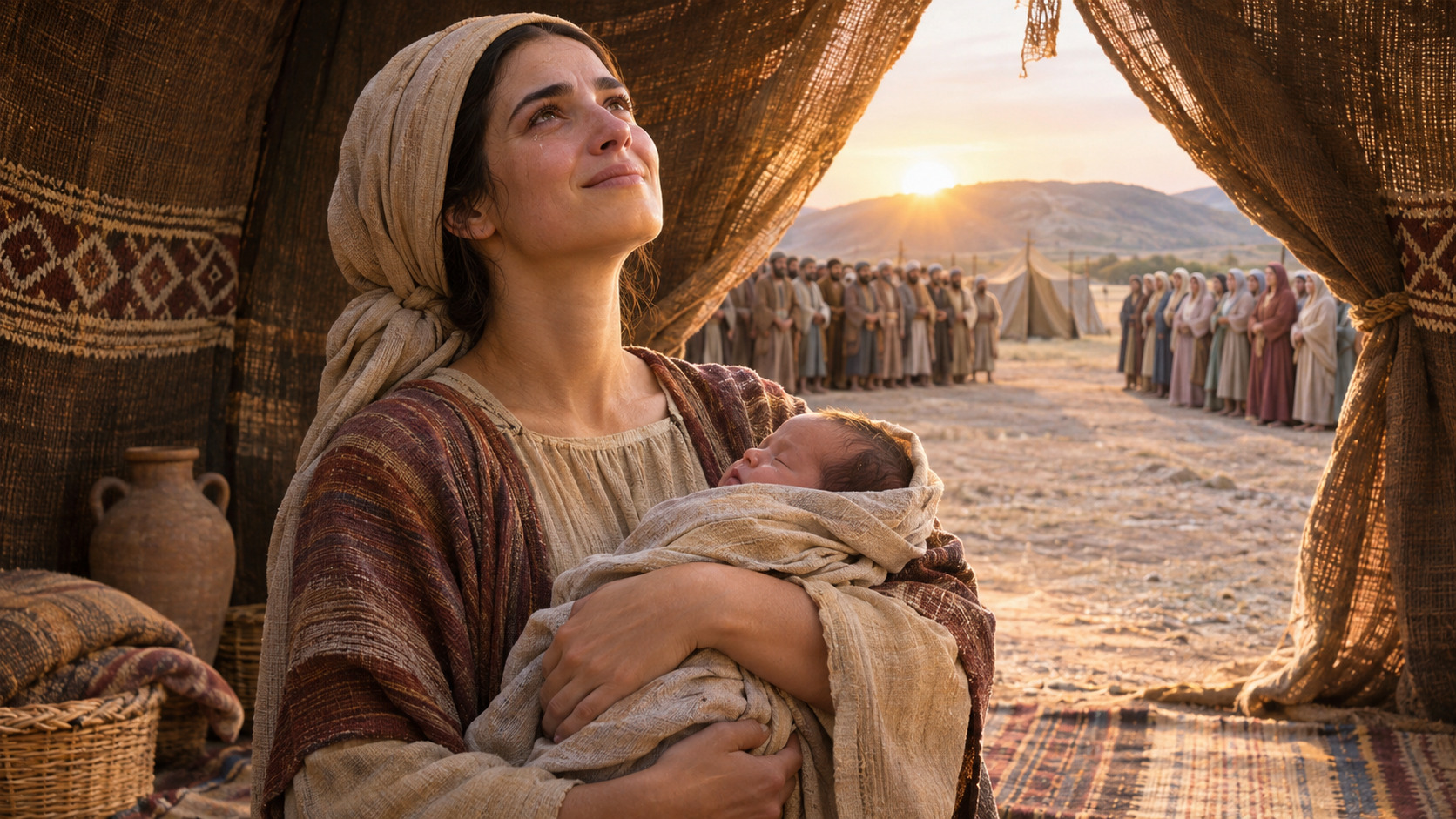
Rav Acher Cohen speaks mainly about Leah and shows her greatness compared with Rachel. When Rachel weeps for Israel, Hashem tells her: “Refrain your voice from weeping, for there is a reward for your work.” But Leah, whose “eyes were tender” from so much crying — she was afraid of falling to Esav’s lot — Hashem never tells to stop. Why? Rachel weeps to stop a calamity; Leah looks at continuity, and she is the first to thank Hashem for the small things: a child being born, what seems natural. Noach gave thanks for a miracle; Leah gives thanks for what we take for granted — and that prayer, Hashem does not stop. Finally, Rashi on “his brothers”: to gather the stones — the sons; to the feast — everyone comes.
Words of Torah do good when they are shared. Send this shiur to your family and friends on WhatsApp.
📲 Send on WhatsApp👥 Join the Gueoula groupToday we will speak mainly about Leah. Even though we are used to speaking about Rachel, we will see Leah’s greatness compared with Rachel.
First, on the basic point: prayer. Rachel prays for the people of Israel. And in the end, what does Hashem tell her? “Refrain your voice from weeping.” Hashem says: listen, Rachel, refrain your voice — there is a reward, don’t worry. You asked? I am doing it, no problem. Stop praying, stop crying.
The strange thing: we read about Leah — “Leah’s eyes were tender,” she cries all the time — and Hashem does not tell her “stop crying.” He does not tell her!
To Rachel He says: stop crying, there is a reward for your work. But with Leah, Hashem lets her pray, cry — He does not hold her back. He does not hold her back. So let us ask: why does Leah cry all the time?
Rivka had two sons, Yaakov and Esav; and Lavan had two daughters. They were supposed to marry each other. So all the time, what would people say? The elder for the elder!
Leah asks: how are things? What about the elder? They tell her: Esav? A great rasha. And she would cry, so as not to fall to his lot. She cried all the time — “Leah’s eyes were tender” from so much crying, so as not to fall into his hands. With Rachel, on the other hand, they asked: and the younger one? A tzaddik! Excellent. No need to pray, no need for anything, everything is fine.
So Leah cries and prays all the time, and we see that Hashem did not hold her back. Why does He not tell Leah, as He tells Rachel: Leah, refrain your voice from weeping, don’t worry, everything will be fine? We do not find it. We find it only with Rachel.
To answer this question, we need to see what Rachel cries about and what Leah cries about.
Pay attention: what does Rachel cry about? About a soul. When Hashem says “refrain your voice from weeping,” she is crying about a soul, or about something happening to the people of Israel, and asking to stop it — the evil, the calamity. “Refrain your voice from weeping, for there is a reward for your work” — don’t worry, everything is fine.
And Leah? She too was concerned with herself. Can you say Leah was not concerned with herself? All the time she prayed not to fall to Esav. She too worried about herself; she too was afraid of falling into the hands of the rasha.
But Leah had a quality — a higher quality than Rachel in prayer. Leah prayed all the time, but she did not pray only for herself. She always looked — pay attention — at continuity. She prays to fall into the hands of a tzaddik. And then, when she prayed, she gives birth to children.
And after that, who comes? Yehuda — she gave thanks to Hashem. And what is written about it? Leah was the first to give thanks. Wait — how can one say such a thing? Noach came out of the ark — did he not offer a sacrifice? And don’t we have Avraham our father? And now Leah comes along, and she is the first to give thanks?
Let us see what Leah actually gives thanks for. What happened, all in all? She gave birth to a son. Fine. Reuven, then Shimon, then Levi, and now Yehuda — half the tribes. What is all the excitement?
And Noach? Noach gives thanks and offers a sacrifice — why? There was a flood, there was a miracle, he was saved. What, not thank Hashem? Of course one must thank Hashem!
But Noach — tell me: when children were born to you, did you thank Hashem? No. Why? It goes without saying. And to the things that go without saying, we pay no attention at all. People pay attention only to the big things.
Leah teaches us a rule: everything that happens to us is a miracle. Even for the small miracles, I thank Hashem. And that is the difference between her and those before her. All those before truly thanked Hashem — for what? For miracles: a miracle happened to me, I was saved from here, I was saved from there; a se’udat hoda’ah, everything as it should be.
But Leah does not look at it that way. Even in the small things: a child is born — it is a natural thing, and it is also a miracle before Hashem; for this too I must give thanks. Leah has a way of being: for the small things too, I thank Hashem. Not only for the big things, or — heaven forbid — when I am barren and Hashem gives me a son, and then I will give thanks. Even when I have things, even when I have everything — I thank Hashem.
That is Leah’s greatness, and in such things Hashem does not hold back the prayer itself. If you know how to give thanks for everything — He does not hold you back. Can He hold you back? You are not asking, as we said, for yourself. You are asking to give thanks for everything that happens to you — not personally, but in general.
She gives birth to a son — and says: how wonderful! I am with Yaakov, everything is going well. She gives thanks for everything.
Our Sages say she is the first to thank Hashem. Everyone thanks Hashem — but she is the first to thank Hashem for the small, basic things, not for the big things everyone gives thanks for: “What luck, the missile fell here, we were saved! Let’s throw a party!”
With Leah it is not like that. It is in the small things that she is tested. In the small things she says: a son was born to me, how wonderful, thank You Hashem; this happened to me — thank You Hashem. That is the prayer Hashem does not stop.
Here we see the difference between Rachel’s prayer, or all prayers, and Leah’s prayer: Leah’s prayer continues, and looks at the small things. That, Hashem does not stop.
Let us say one more small thing — we have two or three more minutes — about Yaakov our father and Lavan. Here too we will see how Rashi teaches us things for life.
Pay attention, at the end of the parasha. In verse 46, when they build a monument: “Yaakov said to his brothers: gather stones.” Rashi explains: who are “his brothers”? His sons. On the other hand, in verse 54: “Yaakov offered a sacrifice on the mountain and called his brothers” — and here Rashi explains “his brothers”: his friends, his relatives.
The same word! Why does Rashi change? Make up your mind: “his brothers” are the sons? Stay on that line. They are friends? Then up above, say friends too!
Rashi teaches us a wonderful rule. Look: at first, what does he do? He comes to build the monument. And for a monument, what do you need? Stones. You have to lift the stones, build. Who will come to help you? Only your children, your close ones — only your children will come to help you.
But once you have finished, and you make a covenant and hold a feast — who comes? Everybody comes! No effort needed, nothing needed; there is a party — everyone comes.
And we have here a lesson for life, in two points. First: those close to you will always help you, in every situation. Call them — they will help you.
And those far from you? Ask — it depends on their mood. Someone distant may truly help you, but the norm, says Rashi: distant people — if you invite them to the wedding, they will come to the wedding, they will come to the event; but they are not the ones who will lift the stones.
In the basic things a person needs, he knows: the one who will stand by him, the one who will help him — those will be the people closest to him. For the rest, everyone will come, and everyone will be like brothers; but they will not help like real brothers.
Yirmiyahou / Jeremiah / ירמיהו 31,14–16
Genèse / Genesis / בראשית 29,16–17
Rachi sur Genèse / Rashi on Genesis / רש״י על בראשית 29,17
Genèse / Genesis / בראשית 29,31–35
Genèse / Genesis / בראשית 31,44–54
Words of Torah do good when they are shared. Send this shiur to your family and friends on WhatsApp.
📲 Send on WhatsApp👥 Join the Gueoula groupTest yourself
Five questions on the shiur. Choose an answer.
Result
Shalom Bayit — The Mouth at Home
My covenant of peace — peace begins at home. Reveal a Shalom Bayit card.
Gematria — Rav Ménaché
Shalom, Mashiah, Yisamech — secrets of the letters by Rav Ménaché zatsal.
🔢 Gematria CourseTorah Study
Go deeper into Rashi on Genesis 29:17 and 31:46–54: “Leah’s eyes were tender,” and who “his brothers” are — and learn from Leah to give thanks for the small things.
📝 Beith HamidrachBooks
Torah wisdom in thriller format — Éditions Gueoula.

Guardians of the Rift
Forty-nine gates open — the fiftieth hides in a single moment. An ancient secret resurfaces, and one man stands between the rift and the world. Drawn from Talmud and Kabbalah.
📖 Read the free excerpt · Book $9.90