Three prophets — Moses, Isaiah and Jeremiah — each used the word Eikha ("How") to describe Israel, from root to vision to destruction.
The order of the Haftarot (speak, hear, see) is the inverted order of catastrophe; the order of creation is the reverse: see, hear, speak.
In chapters 2, 3 and 4 of Lamentations, Jeremiah deliberately inverts the letters Peh (mouth) and Ayin (eye): they spoke before they saw.
This inversion points to the sin of the spies, who spoke before understanding and caused the weeping of the 9th of Av.
Rebuilding means putting the bricks and letters back in order, honoring our synagogues as a "Small Temple."
The Midrash teaches that Israel had three great "shepherds," or prophets, who each perceived the nation at a decisive moment and all used the same piercing word: Eikha (אֵיכָה), "How."
Our Sages find a profound but inverted logic in the order of the Haftarot read during the three weeks of mourning.
The order of catastrophe. The Haftarot follow one another thus: (1) "Divrei Yirmiyahu" (Words of Jeremiah) — we begin by speaking; (2) "Shim'u dvar Hashem" (Hear the word of the Lord) — then we must hear; (3) "Hazon Yeshayahu" (Vision of Isaiah) — finally we reach vision. Speak, then hear, then see: this is the inverted order that leads to destruction.
The order of creation. The correct order, that of building, is the reverse — the secret of wisdom (Chabad: Chochma, Bina, Daat): (1) See (Hazon), the vision, the idea, wisdom (Chochma); (2) Hear (Shim'u), analyze and understand (Bina); (3) Speak (Divrei), act and realize (Daat).
The prophet Jeremiah did not merely weep over the destruction; he ingeniously embedded its deep cause in the very structure of the text of Lamentations.
Chapters 1, 2, 3 and 4 of the Scroll of Eikha are written as an alphabetical acrostic: each verse begins with a successive letter of the Hebrew alphabet, from Aleph (א) to Tav (ת). Jeremiah thus shows that he has perfect mastery of the order.
A unique and unsettling phenomenon occurs in chapters 2, 3 and 4. While the whole alphabet is in order, a disturbance appears. In the normal order, the letter Ayin (ע) precedes the letter Peh (פ).
The correct order — eye then mouth: ע ➡️ פ. Ayin (the eye) comes before Peh (the mouth). One sees before one speaks.
The inverted order in Eikha — mouth then eye: פ ➡️ ע. In Lamentations, Jeremiah deliberately reverses this order: the verse beginning with Peh comes before the one beginning with Ayin. They spoke before they saw.
This Peh-Ayin inversion is no abstraction. It points directly to the original sin that sealed the fate of the 9th of Av: the sin of the spies (Meraglim).
What was their sin? They went to see the land: the mission was to see (Ayin). But on their return, before even letting the people form their own opinion, they spoke (Peh). They gave an evil report and discouraged the people. They put the mouth before the eye.
Because they placed the mouth (Peh) before the eye (Ayin), they caused "weeping for the generations": the destruction of both the First and Second Temples.
Having made his diagnosis, Jeremiah gives us the method of healing in the last chapter of the scroll. Chapter 5 is no longer organized by the alphabet: it is a "scramble" of verses. Why?
Destruction is when all the bricks lie one upon another with no order at all. Chapter 5 presents us with these broken bricks, and the message is clear: "Here are the pieces. Now it is your task to reorganize them."
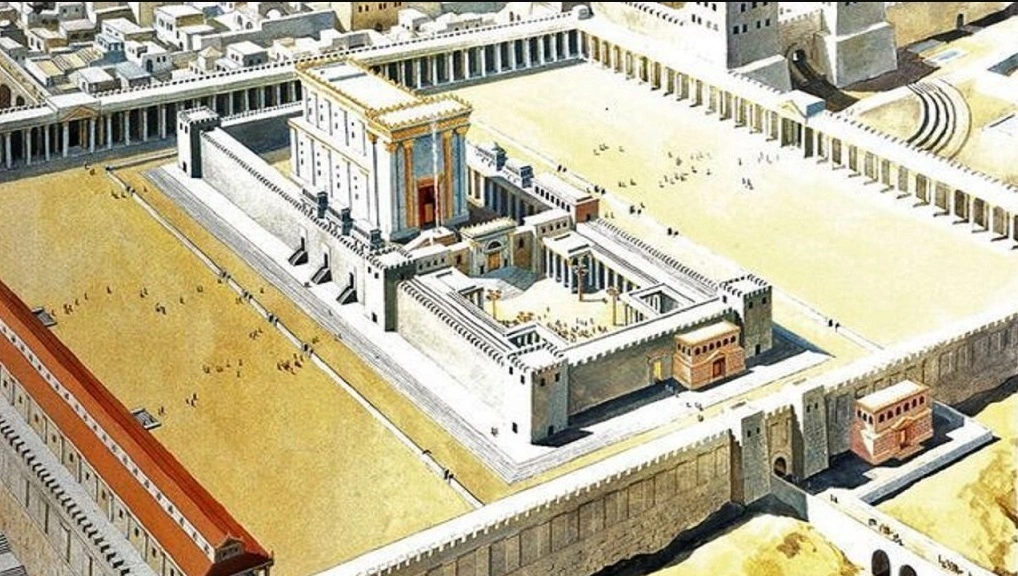
How do we apply this reconstruction today? The text draws a powerful parallel between the destroyed Temple and our present-day synagogues.
Since the destruction, our synagogues have become our "Small Temple" (Mikdash Me'at); the reverence we owe them is immense. When a person speaks of profane matters in a synagogue, the "vapor" leaving his mouth creates a cloud. Our own idle words become the barrier that blocks our own prayers.
The final teaching is a roadmap to Redemption. The path to rebuilding the Third Temple begins here and now, in how we behave within our "small sanctuaries."
By restoring order to our own divine service, by placing vision before speech, and by honoring the holiness of our places of prayer, we dismantle the "cloud" that separates us from God.
If we know how to conduct ourselves properly with synagogues, the "small sanctuaries," we shall merit, with God's help, to receive the great sanctuary: the Third Temple, may it be rebuilt speedily in our days.
Amen. Be strong and blessed!
🎯 Test yourself
Five questions. Click an answer.
Result
Shalom Bayit — The Mouth at Home
My covenant of peace — peace begins at home. Reveal a Shalom Bayit card.
Gematria — Rav Ménaché
Shalom, Mashiah, Yisamech — secrets of the letters by Rav Ménaché zatsal.
🔢 Gematria CourseAll Parashot
All shiurim of M. Yéhouda Himi — from Bereshit to Devarim and the festivals.
📚 All ParashotBooks
Torah wisdom in thriller format — Éditions Gueoula.

Guardians of the Rift
Forty-nine gates open — the fiftieth hides in a single moment. An ancient secret resurfaces, and one man stands between the rift and the world. Drawn from Talmud and Kabbalah.
📖 Read the free excerpt · Book $9.90