🕯️ [[TYPE: In memory of / For the healing of / For the success of / In honor of]]This shiur is dedicated [[detail]] — [[Hebrew name]][[Blessing — e.g.: May the merit of the Torah protect them and all Israel. Amen.]]
Parashat Behaalotcha · 5786
When G-d Comforts the Overlooked
The secret of Guershon and Aharon · Divine tenderness
Divine Tenderness — the Secret of Guershon and Aharon
One-page summary · From the shiur of M. Yéhouda Himi
In the Levite census, the Torah skips Guershon the firstborn and starts with Kehat. Kehat — the middle son — lowers his head: "There's no chance they'll give me the most senior role." G-d says: "Lift up the head of the sons of Kehat" — raise their heads.
And Guershon the firstborn — he sees and feels hurt. He too lowers his head. The Torah says: "Lift up the head of the sons of Guershon — them too.""Them too." Divine sensitivity reaches all the way to the last word.
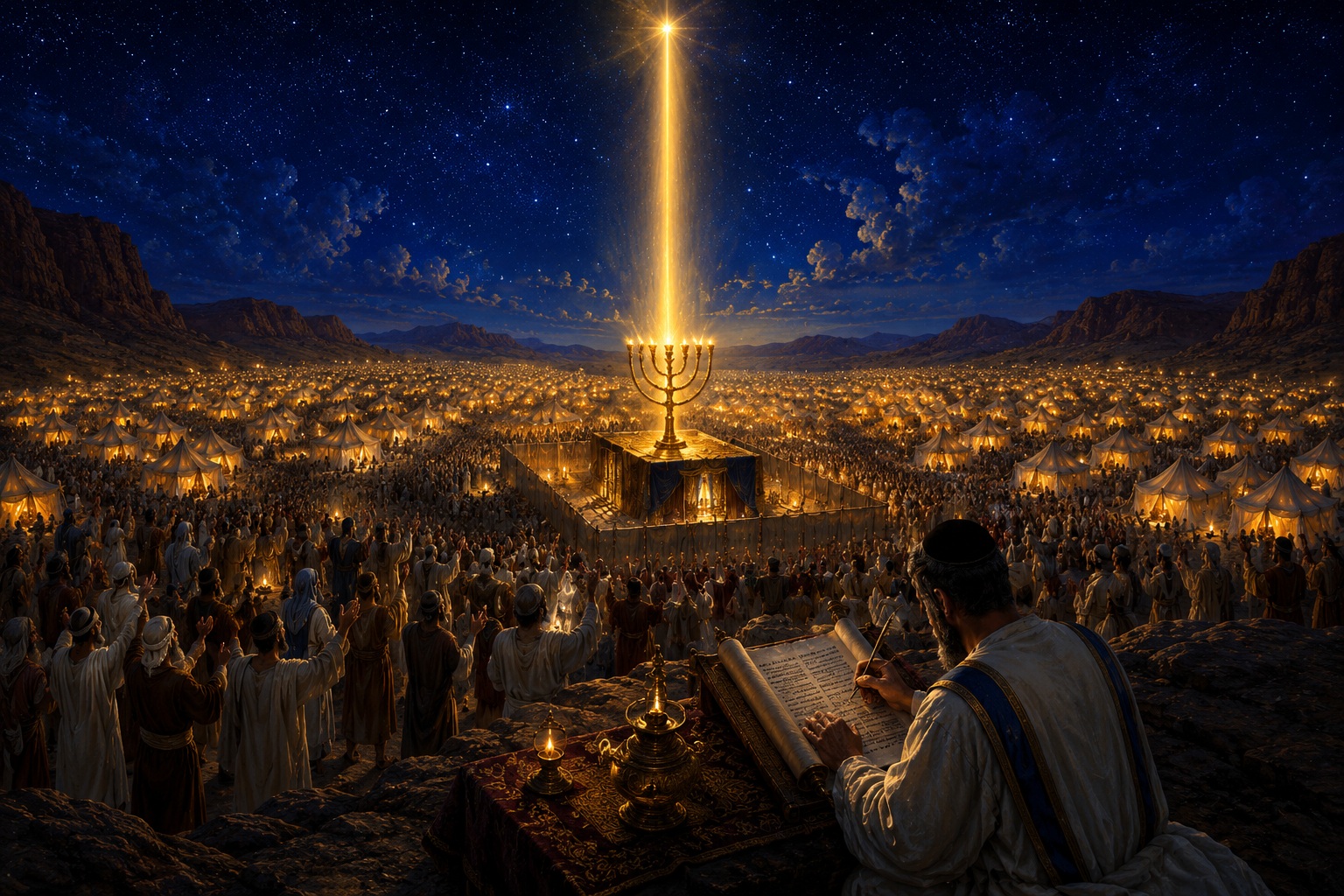
And Aharon sees the princes inaugurate the Mishkan — and he doesn't. His spirit weakens. G-d says: "Yours is greater than theirs" — theirs is 12 days and done. But you? You'll light the menorah. And this mitzvah continues today — through the candles of Hanukkah. Yours is greater than theirs.
Inside: why Kehat before Guershon · why "them too" · the hint in the name "Merari" · why Aharon didn't inaugurate the Mishkan · the link to Hanukkah
1 Why Does the Torah Start with Kehat — not the Firstborn?
In the Levite census, the Torah begins specifically with Kehat — the second son. Why? Why not start with Guershon the firstborn, as everywhere else in the Torah?
And the L-rd spoke to Moshe and Aharon, saying: lift up the head of the sons of Kehat from among the sons of LeviNumbers 4:1-2
Kehat is the middle son. The one in the middle — not the firstborn, not the youngest. What does a middle child feel? That not enough attention falls on him. People usually go to the important firstborn, or to the beloved youngest — and he is in the middle, forgotten.
And he comes to the Mishkan. What is the most senior role in the Mishkan? Carrying the holy vessels — the Ark of the Testimony, the Table, the Menorah. The heart of the Mishkan. And Kehat says to himself: "I'm number two — there's no chance they'll give me this." He lowers his head.
⭐ G-d says to Moshe: "Lift up the head of the sons of Kehat" — raise their heads. Tell them: even if you are number two, the middle son — I am giving you the most honored office in the Mishkan.
2 And Guershon? — "Them Too"
But wait. What about Guershon the firstborn? He sees that although he is the firstborn — the senior role is given to Kehat. What does he feel?
Guershon also lowers his head. "I am the firstborn — and they give me the number-two role in the Mishkan? What is this?"
The Torah says: "Lift up the head of the sons of Guershon — them too." Notice the words — them too.
Lift up the head of the sons of Guershon — them too — by their fathers' house, by their familiesNumbers 4:22
The Torah sees them. Understands that they are hurt. And says explicitly: them too. Lift their head too. Their work too — carrying the curtains, the covering, the tent — is important. Without it, there is no Mishkan.
🔷 What is the Ark of the Testimony worth if there is nothing to wrap and cover it? What is the soul worth without a body? You cannot separate one from the other. Wholeness comes precisely when both are present.
3 And Merari — The Hint in the Name
And who takes the hardest work — carrying the planks? The sons of Merari. Each plank — five cubits. Heavy timber. Real load-bearing labor.
This is the service of the families of the sons of Merari... the planks of the Mishkan, its bars, its pillars, and its socketsNumbers 4:31
Our Sages teach: their name hints at the decree of their fate.Merari — mitmarmer, the embittered one. They would grumble about getting the hardest carrying-work. Even though they were given wagons (the princes donated wagons) — it is still backbreaking labor.
⭐ This hint is no accident. The Torah hints in the very name at what the person feels. The Torah sees emotions. The Torah doesn't hide them. And it gives Merari precisely the work that matches their name — to teach them that even the hardest work is holy.
4 Why Specifically Kehat in the Middle — for the Vessels?
But wait — why didn't they give Guershon the firstborn the work of the vessels? What's wrong with that?
The answer: because Kehat was on a higher spiritual level than Guershon. And the Torah wants to teach us a principle: what counts is not age, not natural birth order — but spiritual essence.
We meet this throughout the Torah. Yaakov and Esav — Esav is the firstborn, but the legacy can't be transmitted through him. Reuven is the firstborn — but Yosef takes the birthright. Birthright counts — but it isn't everything.
But the innovation here is: on the other side, Guershon need not feel hurt. "His honor stands in its place." And without his role — the service of the Mishkan cannot be complete. The Torah explicitly mentions this — "them too".
5 The Inauguration of the Mishkan — and Aharon Doesn't Come
We move to parashat Behaalotcha. The Torah opens: "And the L-rd spoke to Moshe saying: speak to Aharon and say to him, when you light the lamps toward the face of the menorah, the seven lamps shall shine."
Rashi asks the classic question: what is the juxtaposition? Why is the parashah of the menorah placed next to the parashah of the princes? Speak about lighting the menorah in the book of Shemot! Why here?
The answer — back to the end of parashat Naso. At the end of Naso, we read about twelve princes. Each prince brought his offering for the inauguration of the Mishkan. But where is the offering of the tribe of Levi? Where is Aharon and his tribe?
Aharon saw the inauguration of the princes — and his spirit weakened. He didn't say "why them and not me" — he said: "why them and also I not?" I too want to inaugurate the Mishkan. What about me? Neither I nor my tribe celebrated the inauguration of the Mishkan.
6 "Yours Is Greater Than Theirs"
And here — the same divine sensitivity. When the Holy One sees that Aharon feels uneasy — He responds.
⭐ "By your life, yours is greater than theirs — for you light and tend the lamps." G-d says to Aharon: Don't worry. Their inauguration — 12 days. Finished. But yours? Continues all the time.
And not only during the Mishkan era. And not only during the Temple era. It continues to this day — until the building of the Third Temple, with G-d's help.
🔷 How? Even when the service in the Temple ceased — the festival of Hanukkah came. By its power, the people of Israel light eight days of candles, in remembrance of the inauguration of the Mishkan.
7 The Hint in the Hanukkah Torah Reading
And if you pay attention — what do we read during the days of Hanukkah? The inauguration of the princes! On the first day, the second, the third. And on the eighth day of Hanukkah — we read the entire parashah of the inauguration of the Mishkan in full.
The memory of Aharon's mitzvah — continues through the generations. Every year. Eight nights. Until we merit — with G-d's help — that Aharon will light the menorah in the Third Temple, speedily in our days, amen.
⭐ This is the secret of divine sensitivity. When someone feels overlooked, lowers their head, feels forgotten — the Torah sees them. And not only sees — it gives them precisely the longest role. The eternal light.
🎯 Quiz — Behaalotcha
Five questions to check if you grasped the heart of the shiur. No bad score — only a chance to go deeper.
1
Why does the Torah start the Levite census specifically with Kehat, and not with the firstborn Guershon?
✓ Kehat is the middle son and received the work of the vessels — the heart of the Mishkan. The Torah lifts his head precisely because he didn't compete for the role.
2
What does the Torah add in the verse "Lift up the head of the sons of Guershon" that is not said about Kehat?
✓ "Them too" — two simple words that say everything. Divine sensitivity sees that Guershon the firstborn is hurt, and adds these words to comfort him.
3
What does the name "Merari" hint at, according to our Sages?
✓ Merari = the embittered one. The hint in the name reflects what the person feels — and the Torah matches the work to teach that even the hard work is holy.
4
Why did Aharon and his tribe not inaugurate the Mishkan with the princes?
✓ "Yours is greater than theirs" — the princes' inauguration was 12 days and done. The lighting of the lamps continues until the building of the Third Temple.
5
What is the connection between the menorah and the festival of Hanukkah?
✓ We light eight nights — in memory of the inauguration of the Mishkan. And each day of Hanukkah we read the princes' offerings. The memory continues through the generations.
You're done! 🎉
0/5
📅 Weekly Plan — Behaalotcha
Sunday
Read the menorah kindling (Bamidbar 8) — raise the light until it rises on its own.
Monday
Kindle light in one person — strengthen them until they shine alone.
Tuesday
Moshe’s humility — "the man Moshe was very humble". Reflect on it.
Wednesday
They complained about the manna — give thanks for what you have today.
Thursday
"When the Ark traveled" — move forward, don’t stay stuck.
Friday
Pray briefly for someone ill, like Moshe: "Please heal her".
Shabbat
Be light in your family — not a source of complaint.
🗓 Weekly Program — Seven Steps of "Them Too"
SUNDAY · See the Overlooked
Identify today one person in your circle who feels pushed aside, forgotten, or "number two". Send him a 3-line message reminding him he is seen.
MONDAY · "Them Too"
Reflect: who in your home or workplace does not get the recognition they deserve? Tell them face to face: "You too. Your work matters too. Without it, nothing would be whole."
TUESDAY · The Bearer's Act
Today, do one act of Merari — hard work, with no recognition, no honor. Without mentioning it to anyone. That is the work that holds the whole Mishkan together.
WEDNESDAY · Essence Check
Think: do I value people by their age, status, birth order — or by their spiritual essence? Today recognize the essence of one person you usually think of as "number two".
THURSDAY · Aharon and the Lamps
Light one candle tonight — not for Shabbat, just a candle. Reflect: which act I do today will continue for generations? Something eternal, not 12 days.
FRIDAY NIGHT · "Yours Is Greater Than Theirs"
Before Kiddush: identify one woman in your home (wife, mother, sister, daughter) who does something you take for granted. Tell her: "Yours is greater than all of ours."
SHABBAT · At the Torah Reading
When you hear "Lift up the head of the sons of Guershon — them too" — think of one person whose head you need to lift next week. This is the Shabbat of "them too".
📨 Get the Weekly Shiur
Every week, straight to your inbox — a new parashah shiur by M. Yéhouda Himi. No spam. One-click unsubscribe.
🕯️ Dedicate This Shiur
"Them too" — your partnership lights this candle through the generations.
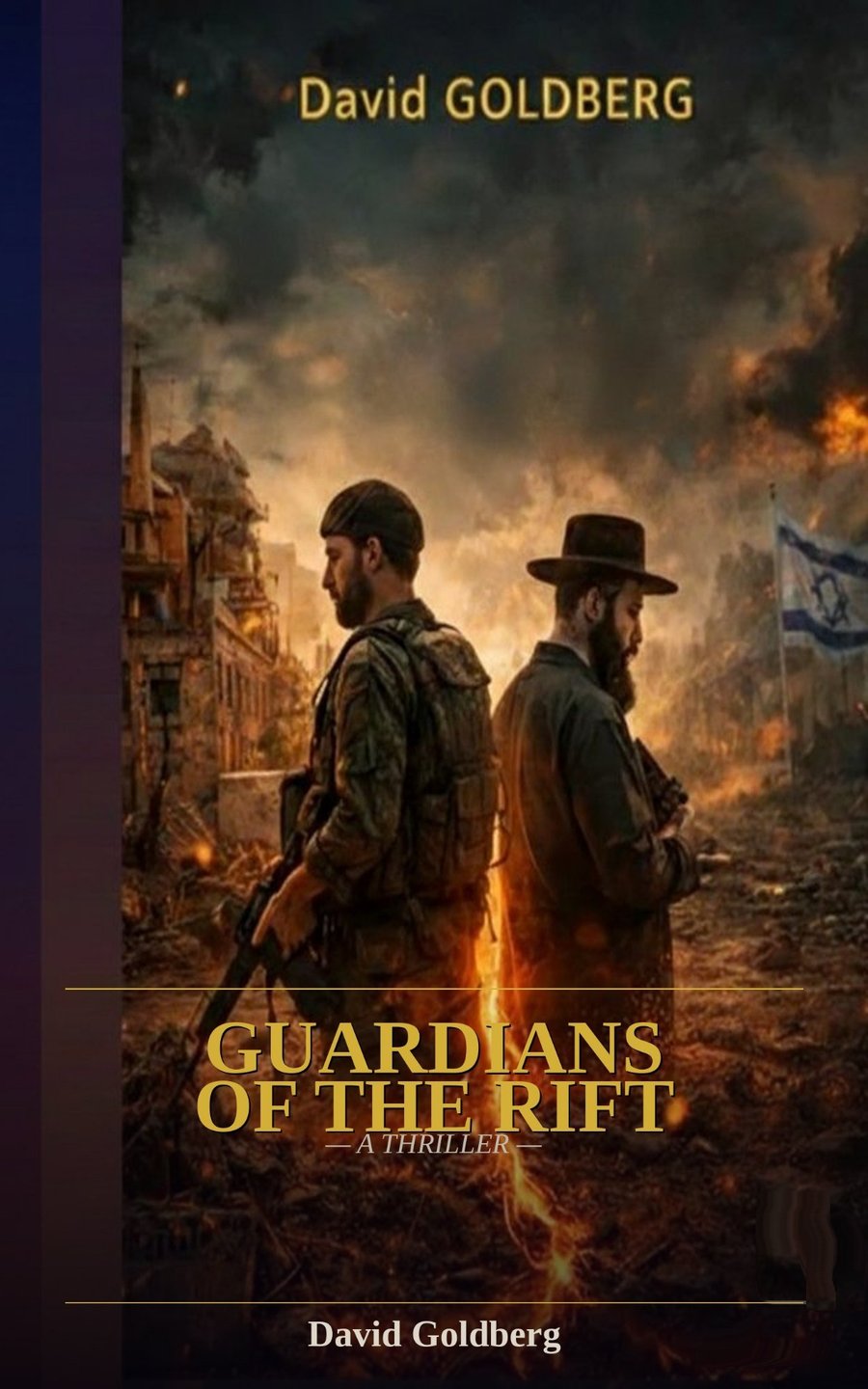
Guardians of the Rift
A spiritual thriller · David Goldberg
Forty-nine gates open — the fiftieth hides in a single moment. An ancient secret resurfaces, and one man stands between the rift and the world. Drawn from Talmud and Kabbalah.
ליל שישי · בהר־בחקתי תשפ"ו · על פי שיעורו של מ. יהודה חימי
פרשת בהר פותחת: "וַיְדַבֵּר ה' אֶל מֹשֶׁה בְּהַר סִינַי לֵאמֹר". רש"י שואל: מה ענין שמיטה אֵצֶל הר סיני? הרי כל המצוות נאמרו בהר סיני. התשובה הקלאסית: שמיטה היא דוגמה מייצגת — חבילה של בין אדם לחברו, בין אדם למקום, ומצוות התלויות בארץ.
בדרך מוסר: מָה בגימטריה 45 = אָדָם. כשמשה אומר "וְנַחְנוּ מָה" — אנחנו אדם, שואלים שאלות. "מה הענין?" התשובה: שמיטה — מלשון שמוט, לעזוב. תפסיק להחזיק. ואיפה כל התשובות באמת? אֵצֶל הַר סִינַי. שבת שלום.
בס״ד
יַעֲקוֹ"ב וְהַוָּ"ו שֶׁל אֵלִיָּהוּ
שבת בוקר · בהר־בחקתי · מ. יהודה חימי
בלב 49 התוכחות, פסוק חיובי: "וְזָכַרְתִּי אֶת בְּרִיתִי יַעֲקוֹב" — יעקב נכתב עם וָא"ו. רש"י: בחמישה מקומות יעקב מלא, ובחמישה מקומות אליה חסר. יעקב לקח את הוָא"ו של אליהו בְּמַשְׁכּוֹן.
פתח אליהו: "אִלֵּין אִינוּן דְּמִיכִין דְּחֶבְרוֹן וְרַעְיָא מְהֵימְנָא". מי מעיר את ישני חברון ומשה? אליהו. רגע אחד: אליהו מגיע, רואה לפניו את אברהם, יצחק, יעקב ומשה. שניה של היסוס — והרכבת של הגאולה עברה. לכן יעקב לקח גָּרְמֵיהּ: "אל תהסס. שניה = דורות." שבת שלום ומבורך.
B”H
What Has Shemita to Do with Sinai?
Friday Night · Behar-Behukotai 5786 · Based on the shiur of M. Yéhouda Himi
Parashat Behar opens: “And the L-rd spoke to Moses at Mount Sinai.” Rashi asks: what has Shemita to do by Sinai? Every commandment was given at Sinai. The classic answer: Shemita is the representative example — a bundle of laws between man and his fellow, between man and G-d, and laws tied to the Land.
By the path of mussar: Mah in gematria is 45 = Adam. When Moses says “And we — what (mah) are we?” — we are man, asking questions. The answer: Shemita — from shamot, to release. Stop trying to hold on. And where are the real answers? By Mount Sinai. Shabbat shalom.
B”H
Jacob and Elijah’s Vav
Shabbat morning · Behar-Behukotai · M. Yéhouda Himi
In the heart of the 49 curses, a positive verse: “And I will remember My covenant with Yaakov” — Jacob is written with a vav. Rashi: in five places Jacob is written full, and in five places Eliyah is written without his vav. Jacob took Elijah’s vav as a pledge.
Patah Eliyahu: “These are the sleepers of Hebron, and the faithful Shepherd.” Who awakens the patriarchs and Moses? Elijah. Imagine the moment: Elijah arrives, sees Avraham, Yitshak, Yaakov, Moshe. One second of hesitation — and the train of Redemption has passed. So Jacob takes a pledge: “Do not hesitate. One second = generations.” Shabbat shalom umevorach.
B”H
Quel rapport entre la Chemita et le Sinaï ?
Vendredi soir · Behar-Behoukotaï 5786 · D’après le shiour de M. Yéhouda Himi
La paracha Behar s’ouvre : « Et l’Éternel parla à Moshé au Mont Sinaï. » Rachi demande : quel rapport entre la Chemita auprès du Sinaï ? La réponse classique : la Chemita est l’exemple représentatif — un paquet de lois entre l’homme et son prochain, entre l’homme et D.ieu, et de lois liées à la Terre.
Par la voie du moussar : Mah en guematria est 45 = Adam. La réponse : Chemita — de chamot, relâcher. Cesse d’essayer de tout retenir. Et où sont les vraies réponses ? Auprès du Mont Sinaï. Chabbat chalom.
B”H
Yaakov et le Vav d’Eliyahou
Chabbat matin · Behar-Behoukotaï · M. Yéhouda Himi
Au cœur des 49 admonestations, un verset positif : « Et Je me souviendrai de Mon alliance avec Yaakov » — Yaakov est écrit avec un vav. Rachi : dans cinq endroits Yaakov est écrit plein, dans cinq endroits Eliyah est écrit sans son vav. Yaakov a pris le vav d’Eliyahou en gage.
Pata’h Eliyahou : « Ce sont les endormis de ’Hevron, et le Berger fidèle. » Qui les réveille ? Eliyahou. Imagine le moment : Eliyahou voit devant lui Avraham, Yitshak, Yaakov, Moshé. Une seconde d’hésitation — et le train de la Délivrance est passé. Yaakov prend donc un gage : « N’hésite pas. Une seconde = des générations. » Chabbat chalom oumévorach.