כשהשם מנחם את הנכלם — פרשת בהעלותך
פרשת בהעלותך · תשפ״ו
כְּשֶׁהַשֵּׁם מְנַחֵם אֶת הַנִּכְלָם
סוֹד גֵּרְשׁוֹן וְאַהֲרֹן · הָרְגִישׁוּת הָאֱלוֹהִית
על פי שיעורו של מ. יהודה חימי
הָרְגִישׁוּת הָאֱלוֹהִית — סוֹד שֶׁל גֵּרְשׁוֹן וְאַהֲרֹן
תקציר בְּאַחַת — לְפִי שִׁעוּרוֹ שֶׁל מ. יְהוּדָה חִימִי

בְּמַפְקַד שֵׁבֶט לֵוִי, הַתּוֹרָה מְדַלֶּגֶת עַל גֵּרְשׁוֹן הַבְּכוֹר וּמַתְחִילָה בְּקְהָת. וְקְהָת — הַבֵּן הָאֶמְצָעִי — מוֹרִיד אֶת הָרֹאשׁ: "אֵין סִכּוּי שֶׁיִּתְּנוּ לִי אֶת הָעֲבוֹדָה הַחֲשׁוּבָה בְּיוֹתֵר". אוֹמֵר ה': "נְשׂוֹא אֶת רֹאשׁ בְּנֵי קְהָת" — תָּרִים אֶת הָרֹאשׁ שֶׁלָּהֶם.

וְגֵּרְשׁוֹן הַבְּכוֹר — רוֹאֶה וְנִפְגָע. מוֹרִיד גַּם הוּא אֶת הָרֹאשׁ. אוֹמֶרֶת הַתּוֹרָה: "נְשׂוֹא אֶת רֹאשׁ בְּנֵי גֵּרְשׁוֹן גַּם הֵם"גַּם הֵם. הָרְגִישׁוּת הָאֱלוֹהִית מַגִּיעָה עַד הַמִּלָּה הָאַחֲרוֹנָה.

וְאַהֲרֹן רוֹאֶה אֶת הַנְּשִׂיאִים חוֹנְכִים אֶת הַמִּשְׁכָּן — וְהוּא לֹא. "חָלְשָׁה דַעְתּוֹ". אוֹמֵר לוֹ ה': "שֶׁלְּךָ גְּדוֹלָה מִשֶּׁלָּהֶם" — הֵם 12 יוֹם וְזֶהוּ. אֲבָל אַתָּה? תַּדְלִיק אֶת הַנֵּרוֹת. וּמִצְוָה זוֹ נִמְשֶׁכֶת עַד הַיּוֹם — דֶּרֶךְ נֵרוֹת חֲנֻכָּה. שֶׁלְּךָ גְּדוֹלָה מִשֶּׁלָּהֶם.

בְּשִׁעוּר: מַדּוּעַ קְהָת לְפָנֵי גֵּרְשׁוֹן · מַדּוּעַ "גַּם הֵם" · הָרֶמֶז בַּשֵּׁם "מְרָרִי" · מַדּוּעַ אַהֲרֹן לֹא חָנַךְ אֶת הַמִּשְׁכָּן · הַחִבּוּר לְחֲנֻכָּה

📖 לקרוא את השיעור המלא ←
א מַדּוּעַ הַתּוֹרָה מַתְחִילָה בְּקְהָת — וְלֹא בַּבְּכוֹר?
בְּמַפְקַד שֵׁבֶט לֵוִי, הַתּוֹרָה מַתְחִילָה דַּוְקָא בְּקְהָת — הַבֵּן הַשֵּׁנִי. מַדּוּעַ? מַדּוּעַ לֹא לְהַתְחִיל מִגֵּרְשׁוֹן הַבְּכוֹר, כְּמוֹ בְּכָל מָקוֹם בַּתּוֹרָה?
וַיְדַבֵּר ה' אֶל מֹשֶׁה וְאֶל אַהֲרֹן לֵאמֹר: נָשֹׂא אֶת רֹאשׁ בְּנֵי קְהָת מִתּוֹךְ בְּנֵי לֵוִיבמדבר ד:א-ב

קְהָת הוּא הַבֵּן הָאֶמְצָעִי. הַבֵּן שֶׁבְּאֶמְצַע — לֹא הַבְּכוֹר וְלֹא הַצָּעִיר. מָה מַרְגִּישׁ בֵּן אֶמְצָעִי? שֶׁלֹּא מַסְפִּיק שָׂמִים לֵב אֵלָיו. שֶׁבְּדֶרֶךְ כְּלָל הוֹלְכִים אֶל הַבְּכוֹר הַחָשׁוּב, אוֹ אֶל הַקָּטָן הַחָבִיב — וְהוּא בְּאֶמְצַע, נִשְׁכָּח.

וְהוּא בָּא אֶל הַמִּשְׁכָּן. מַה הָעֲבוֹדָה הֲכִי בְּכִירָה בַּמִּשְׁכָּן? לָשֵׂאת אֶת הַכֵּלִים הַקְּדוֹשִׁים — אֲרוֹן הָעֵדוּת, הַשֻּׁלְחָן, הַמְּנוֹרָה. הַלֵּב שֶׁל הַמִּשְׁכָּן. וְקְהָת אוֹמֵר לְעַצְמוֹ: "אֲנִי מִסְפַּר שְׁתַּיִם — אֵין סִכּוּי שֶׁיִּתְּנוּ לִי אֶת זֶה." מוֹרִיד אֶת הָרֹאשׁ.
⭐ אוֹמֵר ה' לְמֹשֶׁה: "נְשׂוֹא אֶת רֹאשׁ בְּנֵי קְהָת"תָּרִים אֶת הָרֹאשׁ שֶׁלָּהֶם. תַּגִּיד לָהֶם: גַּם אִם אַתֶּם מִסְפַּר שְׁתַּיִם, הַבֵּן הָאֶמְצָעִי — אֲנִי נוֹתֵן לָכֶם אֶת הַמִּשְׂרָה הֲכִי מְכֻבֶּדֶת בַּמִּשְׁכָּן.
ב וְגֵּרְשׁוֹן? — "גַּם הֵם"
אֲבָל רֶגַע. מָה עִם גֵּרְשׁוֹן הַבְּכוֹר? הוּא רוֹאֶה שֶׁלַּמְרוֹת שֶׁהוּא הַבְּכוֹר — נוֹתְנִים אֶת הַתַּפְקִיד הַבָּכִיר לִקְהָת. מָה הוּא מַרְגִּישׁ?

גֵּרְשׁוֹן מוֹרִיד גַּם הוּא אֶת הָרֹאשׁ. "אֲנִי הַבְּכוֹר — וְנוֹתְנִים לִי אֶת הָעֲבוֹדָה הַמִּסְפַּר שְׁתַּיִם בַּמִּשְׁכָּן? מָה זֶה?"

אוֹמֶרֶת הַתּוֹרָה: "נְשׂוֹא אֶת רֹאשׁ בְּנֵי גֵּרְשׁוֹן גַּם הֵם". שִׂים לֵב לַמִּלִּים — גַּם הֵם.

נָשֹׂא אֶת רֹאשׁ בְּנֵי גֵרְשׁוֹן גַּם הֵם לְבֵית אֲבֹתָם לְמִשְׁפְּחֹתָםבמדבר ד:כב
הַתּוֹרָה רוֹאָה אוֹתָם. מַבִּינָה שֶׁהֵם נִפְגְּעוּ. וְאוֹמֶרֶת בְּפֵרוּשׁ: גַּם הֵם. גַּם לָהֶם תָּרִים אֶת הָרֹאשׁ. גַּם הָעֲבוֹדָה שֶׁלָּהֶם — נְשִׂיאַת הַיְרִיעוֹת, הַמַּסָּךְ, הָאוֹהֶל — הִיא חֲשׁוּבָה. בְּלִי זֶה אֵין מִשְׁכָּן.
🔷 מָה שָׁוֶה אֲרוֹן הָעֵדוּת אִם אֵין מַה שֶּׁיַּעֲטוֹף אוֹתוֹ וְיְכַסֶּה אוֹתוֹ? מָה שָׁוֶה הַנְּשָׁמָה אִם אֵין לָהּ גּוּף? אִי אֶפְשָׁר לְהַפְרִיד אֶחָד מֵהַשֵּׁנִי. הַשְּׁלֵמוּת הִיא דַּוְקָא כְּשֶׁיֵּשׁ אֶת שְׁנֵיהֶם.
ג וּמְרָרִי — הָרֶמֶז בַּשֵּׁם

וּמִי לוֹקֵחַ אֶת הָעֲבוֹדָה הֲכִי קָשָׁה — נְשִׂיאַת הַקְּרָשִׁים? בְּנֵי מְרָרִי. כָּל קֶרֶשׁ — חָמֵשׁ אַמּוֹת. עַל אַמָּה. חֲתִיכַת מִשְׁקָל. עֲבוֹדָה שֶׁל סַבָּלוּת.

זֹאת עֲבֹדַת מִשְׁפְּחֹת בְּנֵי מְרָרִי... קַרְשֵׁי הַמִּשְׁכָּן וּבְרִיחָיו וְעַמּוּדָיו וַאֲדָנָיובמדבר ד:לא
חַזַ"ל אוֹמְרִים: שְׁמָם רוֹמֵז לִגְזֵרַת דִּינָם. מְרָרִי — מִתְמַרְמֵר. הָיוּ מִתְמַרְמְרִים עַל זֶה שֶׁעוֹשִׂים אֶת הַסַּבָּלוּת הֲכִי קָשָׁה. גַּם אִם נָתְנוּ לָהֶם עֶגְלוֹת (הַנְּשִׂיאִים תָּרְמוּ עֲגָלוֹת) — עֲדַיִן זוֹ עֲבוֹדָה קָשָׁה.
הָרֶמֶז הַזֶּה לֹא מִקְרֶה. הַתּוֹרָה רוֹמֶזֶת בַּשֵּׁם עַצְמוֹ אֶת מַה שֶּׁמַּרְגִּישׁ הָאָדָם. הַתּוֹרָה רוֹאָה אֶת הָרְגָשׁוֹת. הַתּוֹרָה לֹא מַסְתִּירָה. וְהִיא נוֹתֶנֶת לַמְרָרִי דַּוְקָא אֶת הָעֲבוֹדָה הַמַּתְאִימָה לִשְׁמָם — לְלַמֵּד אוֹתָם שֶׁגַּם הָעֲבוֹדָה הַקָּשָׁה הִיא קוֹדֶשׁ.
ד מַדּוּעַ דַּוְקָא קְהָת בָּאֶמְצַע מְקַבֵּל אֶת הַכֵּלִים?
אֲבָל רֶגַע — לָמָּה בְּכָל זֹאת לֹא נָתְנוּ לְגֵּרְשׁוֹן הַבְּכוֹר אֶת עֲבוֹדַת הַכֵּלִים? מָה רַע בַּזֶּה?

הַתְּשׁוּבָה: כִּי קְהָת הָיָה בְּדַרְגָּה רוּחָנִית גְּבוֹהָה יוֹתֵר מִגֵּרְשׁוֹן. וְהַתּוֹרָה רוֹצָה לְלַמֵּד אוֹתָנוּ עִקָּרוֹן: מַה שֶּׁקּוֹבֵעַ זֶה לֹא הַגִּיל, לֹא הַסֵּדֶר הַטִּבְעִי — אֶלָּא הַמַּהוּת הָרוּחָנִית.

אֲנַחְנוּ פּוֹגְשִׁים אֶת זֶה לְכָל אֹרֶךְ הַתּוֹרָה. יַעֲקֹב וְעֵשָׂו — עֵשָׂו הוּא הַבְּכוֹר, אֲבָל אִי אֶפְשָׁר לְהַעֲבִיר דַּרְכּוֹ אֶת הַמּוֹרֶשֶׁת. רְאוּבֵן הוּא הַבְּכוֹר — אֲבָל יוֹסֵף לוֹקֵחַ אֶת הַבְּכוֹרָה. הַבְּכוֹרָה נֶחְשֶׁבֶת — אֲבָל הִיא לֹא חֲזוּת הַכֹּל.
אֲבָל הַחִדּוּשׁ פֹּה הוּא: מִצַּד שֶׁנִּי, גֵּרְשׁוֹן לֹא צָרִיךְ לְהִיפָּגַע. "כְּבוֹדוֹ בִּמְקוֹמוֹ מֻנָּח". וּבְלִי הַתַּפְקִיד שֶׁלּוֹ — אִי אֶפְשָׁר יִהְיֶה לִהְיוֹת עֲבוֹדַת מִשְׁכָּן שְׁלֵמָה. הַתּוֹרָה מַזְכִּירָה אֶת זֶה בְּפֵרוּשׁ — "גַּם הֵם".
ה חֲנֻכַּת הַמִּשְׁכָּן — וְאַהֲרֹן לֹא בָּא

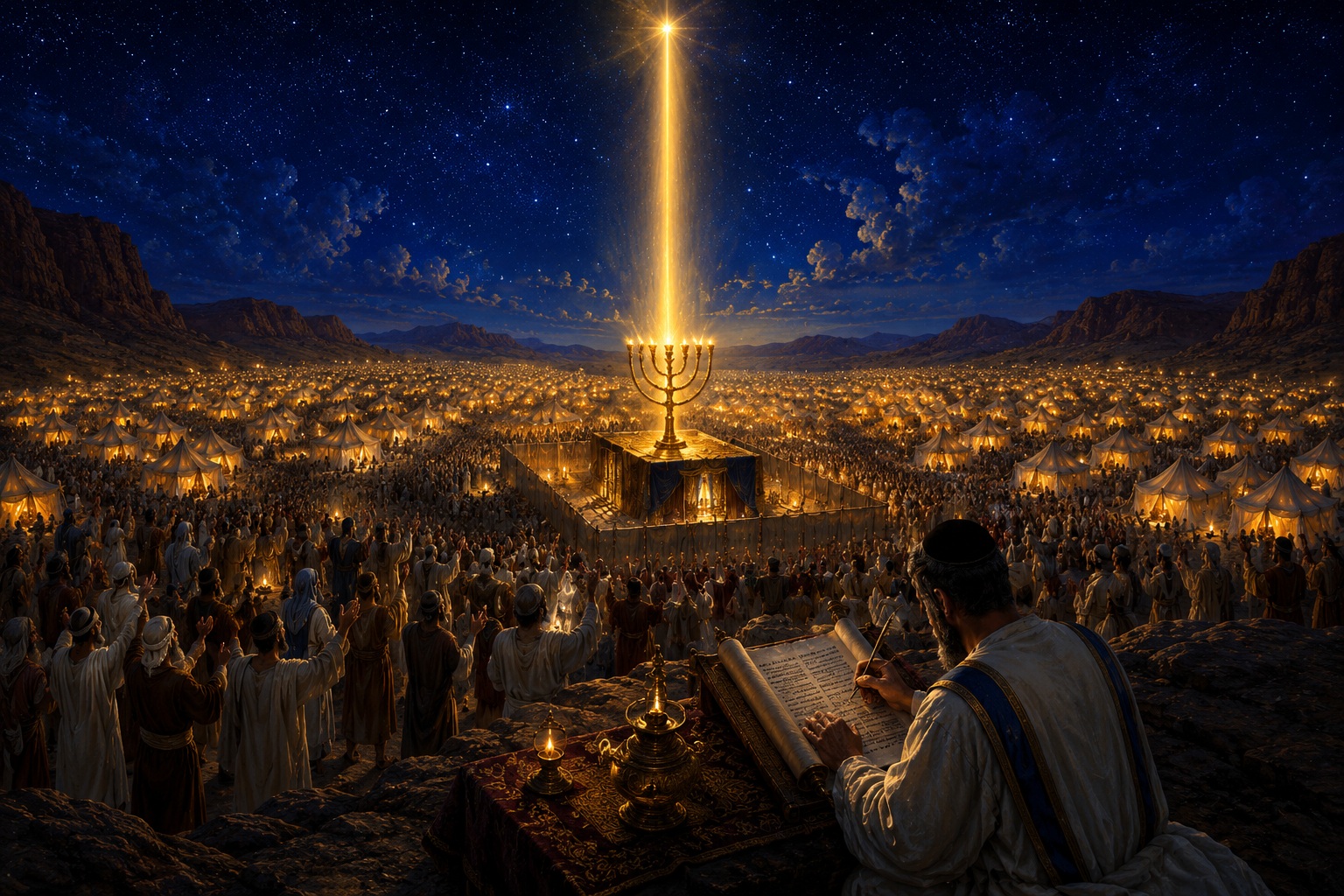
אֲנַחְנוּ עוֹבְרִים לְפָרָשַׁת בְּהַעֲלוֹתְךָ. פּוֹתַחַת הַתּוֹרָה: "וַיְדַבֵּר ה' אֶל מֹשֶׁה לֵּאמֹר: דַּבֵּר אֶל אַהֲרֹן וְאָמַרְתָּ אֵלָיו, בְּהַעֲלֹתְךָ אֶת הַנֵּרֹת אֶל מוּל פְּנֵי הַמְּנוֹרָה יָאִירוּ שִׁבְעַת הַנֵּרוֹת".

רַשִׁ"י שׁוֹאֵל אֶת הַשְּׁאֵלָה הַקְּלָסִית: מָה הַסְּמִיכוּת? מַדּוּעַ נִסְמְכָה פָּרָשַׁת הַמְּנוֹרָה לְפָרָשַׁת הַנְּשִׂיאִים? דַּבֵּר עַל הַדְלָקַת הַמְּנוֹרָה בְּסֵפֶר שְׁמוֹת! מַדּוּעַ פֹּה?

הַתְּשׁוּבָה — חֲזָרָה לְסוֹף פָּרָשַׁת נָשֹׂא. בְּסוֹף נָשֹׂא, קָרָאנוּ שְׁנֵים-עָשָׂר נְשִׂיאִים. כָּל נָשִׂיא הֵבִיא אֶת קָרְבָּנוֹ לַחֲנֻכַּת הַמִּשְׁכָּן. אֲבָל אֵיפֹה קָרְבָּן שֵׁבֶט לֵוִי? אֵיפֹה אַהֲרֹן וְשִׁבְטוֹ?

אַהֲרֹן רָאָה אֶת חֲנֻכַּת הַנְּשִׂיאִים — וְחָלְשָׁה דַעְתּוֹ. הוּא לֹא אָמַר "לָמָּה הֵם וְלֹא אֲנִי" — הוּא אָמַר: "לָמָּה הֵם וְגַם אֲנִי לֹא?" גַּם אֲנִי רוֹצֶה לַחְנֹךְ אֶת הַמִּשְׁכָּן. מָה אִתִּי? לֹא אֲנִי וְלֹא שִׁבְטִי לֹא חַגַּגְנוּ אֶת חֲנֻכַּת הַמִּשְׁכָּן.
ו "שֶׁלְּךָ גְּדוֹלָה מִשֶּׁלָּהֶם"

וְהִנֵּה — אוֹתָהּ רְגִישׁוּת אֱלוֹהִית. כְּשֶׁהַקָּדוֹשׁ בָּרוּךְ הוּא רוֹאֶה שֶׁאַהֲרֹן מַרְגִּישׁ לֹא נוֹחַ — הוּא מַגִּיב.

"חַיֶּיךָ, שֶׁלְּךָ גְּדוֹלָה מִשֶּׁלָּהֶם — שֶׁאַתָּה מַדְלִיק וּמֵטִיב אֶת הַנֵּרוֹת". ה' אוֹמֵר לְאַהֲרֹן: אַל תִּדְאַג. הַחֲנֻכָּה שֶׁלָּהֶם — 12 יוֹם. נִגְמְרָה. אֲבָל שֶׁלְּךָ? נִמְשֶׁכֶת כָּל הַזְּמַן.

וְלֹא רַק בִּתְקוּפַת הַמִּשְׁכָּן. וְלֹא רַק בִּתְקוּפַת הַמִּקְדָּשׁ. נִמְשֶׁכֶת עַד הַיּוֹם — וְעַד בִּנְיַן בֵּית הַמִּקְדָּשׁ הַשְּׁלִישִׁי בְּעֶזְרַת הַשֵּׁם.

🔷 אֵיךְ? גַּם כְּשֶׁפָּסְקָה הָעֲבוֹדָה בְּבֵית הַמִּקְדָּשׁ — בָּא חַג הַחֲנֻכָּה. שֶׁמִּכֹּחוֹ עַם יִשְׂרָאֵל מַדְלִיק שְׁמוֹנָה יָמִים אֶת הַנֵּרוֹת, זֵכֶר לַחֲנֻכַּת הַמִּשְׁכָּן.
ז הָרֶמֶז בִּקְרִיאַת הַתּוֹרָה בַּחֲנֻכָּה

וְאִם תָּשִׂים לֵב — מָה אֲנַחְנוּ קוֹרְאִים בִּימֵי הַחֲנֻכָּה? חֲנֻכַּת הַנְּשִׂיאִים! בְּיוֹם הָרִאשׁוֹן, בַּשֵּׁנִי, בַּשְּׁלִישִׁי. וּבְיוֹם הַשְּׁמִינִי שֶׁל חֲנֻכָּה — קוֹרְאִים אֶת כָּל פָּרָשַׁת חֲנֻכַּת הַמִּשְׁכָּן בְּשָׁלֵם.

הַזֶּכֶר שֶׁל הַמִּצְוָה שֶׁל אַהֲרֹן — נִמְשָׁךְ לְדוֹרֵי דוֹרוֹת. כָּל שָׁנָה וְשָׁנָה. שְׁמוֹנָה לֵילוֹת. עַד שֶׁנִּזְכֶּה — בְּעֶזְרַת הַשֵּׁם — שֶׁאַהֲרֹן יַדְלִיק אֶת הַמְּנוֹרָה בְּבֵית הַמִּקְדָּשׁ הַשְּׁלִישִׁי, בִּמְהֵרָה בְּיָמֵינוּ אָמֵן.
זוֹ הַסּוֹד שֶׁל הָרְגִישׁוּת הָאֱלוֹהִית. כְּשֶׁמִּישֶׁהוּ מַרְגִּישׁ נִכְלָם, מוֹרִיד אֶת הָרֹאשׁ, חַשׁ שֶׁשּׁוֹכְחִים אוֹתוֹ — הַתּוֹרָה רוֹאָה אוֹתוֹ. וְלֹא רַק רוֹאָה — אֶלָּא נוֹתֶנֶת לוֹ דַּוְקָא אֶת הַתַּפְקִיד הָאֲרֻכָּה בְּיוֹתֵר. אֶת הָאוֹר הַנִּצְחִי.

🎯 חידון — בְּהַעֲלוֹתְךָ

חמש שאלות לבדוק אם תפסת את ליבת השיעור. אין ציון רע — רק הזדמנות להעמיק.

1
מַדּוּעַ הַתּוֹרָה מַתְחִילָה אֶת מַפְקַד שֵׁבֶט לֵוִי דַּוְקָא בִּקְהָת, וְלֹא בַּבְּכוֹר גֵּרְשׁוֹן?
✓ קְהָת הוּא הַבֵּן הָאֶמְצָעִי וְקִבֵּל אֶת עֲבוֹדַת הַכֵּלִים — הַלֵּב שֶׁל הַמִּשְׁכָּן. הַתּוֹרָה מַרִימָה אֶת רֹאשׁוֹ דַּוְקָא מִשּׁוּם שֶׁהוּא לֹא הָיָה מַתֲחָר עַל הַתַּפְקִיד.
2
מָה מוֹסִיפָה הַתּוֹרָה בְּפִסּוּק "נְשׂוֹא אֶת רֹאשׁ בְּנֵי גֵּרְשׁוֹן" שֶׁלֹּא נֶאֱמַר אֵצֶל קְהָת?
✓ "גַּם הֵם" — שְׁתֵּי מִלִּים פְּשׁוּטוֹת שֶׁאוֹמְרוֹת הַכֹּל. הָרְגִישׁוּת הָאֱלוֹהִית רוֹאָה שֶׁגֵּרְשׁוֹן הַבְּכוֹר נִפְגַע, וּמוֹסִיפָה אֶת הַמִּלִּים הָאֵלֶּה לְהַרְגִּיעַ אוֹתוֹ.
3
לְמָה רוֹמֵז הַשֵּׁם "מְרָרִי" לְפִי חַזַ"ל?
✓ מְרָרִי = מִתְמַרְמֵר. הָרֶמֶז בַּשֵּׁם רוֹמֵז לְמַה שֶּׁמַּרְגִּישׁ הָאָדָם — וְהַתּוֹרָה מַתֲאִימָה לוֹ אֶת הָעֲבוֹדָה לְלַמֵּד שֶׁגַּם הַקָּשָׁה הִיא קוֹדֶשׁ.
4
מַדּוּעַ אַהֲרֹן וְשִׁבְטוֹ לֹא חָנְכוּ אֶת הַמִּשְׁכָּן עִם הַנְּשִׂיאִים?
✓ "שֶׁלְּךָ גְּדוֹלָה מִשֶּׁלָּהֶם" — חֲנֻכַּת הַנְּשִׂיאִים 12 יוֹם וְזֶהוּ. הַדְלָקַת הַנֵּרוֹת — נִמְשֶׁכֶת עַד בִּנְיַן בֵּית הַמִּקְדָּשׁ הַשְּׁלִישִׁי.
5
מָה הַקֶּשֶׁר בֵּין הַמְּנוֹרָה לְבֵין חַג הַחֲנֻכָּה?
✓ מַדְלִיקִים שְׁמוֹנָה לֵילוֹת — זֵכֶר לַחֲנֻכַּת הַמִּשְׁכָּן. וְקוֹרְאִים בְּכָל יוֹם מִיָּמֵי הַחֲנֻכָּה אֶת קָרְבְּנוֹת הַנְּשִׂיאִים. הַזֶּכֶר נִמְשָׁךְ לְדוֹרֵי דוֹרוֹת.

סיימת! 🎉

0/5

🗓 תָּכְנִית הַשָּׁבוּעַ — שִׁבְעַת צַעֲדֵי "גַּם הֵם"
יום ראשון · רְאֵה אֶת הַנִּכְלָם
תַּזְהֶה הַיּוֹם אָדָם אֶחָד בְּמַעְגַּל שֶׁלְּךָ שֶׁמַּרְגִּישׁ דָּחוּי, נִשְׁכָּח, אוֹ "מִסְפַּר שְׁתַּיִם". שָׁלַח לוֹ הוֹדָעָה אַחַת — 3 שׁוּרוֹת — שֶׁמְּזַכֶּרֶת לוֹ שֶׁהוּא נִרְאֶה.
יום שני · "גַּם הֵם"
תְּהִרְהֵר: מִי בַּבַּיִת אוֹ בָּעֲבוֹדָה לֹא מְקַבֵּל הַכָּרָה שֶׁמַּגִּיעָה לוֹ? תָּגִּיד לוֹ פָּנִים מוּל פָּנִים: "גַּם אַתָּה. גַּם הָעֲבוֹדָה שֶׁלְּךָ חֲשׁוּבָה. בְּלִי זֶה לֹא הָיָה מַשֶּׁהוּ שָׁלֵם."
יום שלישי · מַעֲשֵׂה הַסַּבָּל
הַיּוֹם, תַּעֲשֶׂה מַעֲשֶׂה אֶחָד שֶׁל מְרָרִי — עֲבוֹדָה קָשָׁה, לְלֹא הַכָּרָה, לְלֹא כָּבוֹד. בְּלִי לְהַזְכִּיר אוֹתָהּ לְאַף אֶחָד. זוֹ הָעֲבוֹדָה שֶׁמּוֹשֶׁכֶת אֶת כָּל הַמִּשְׁכָּן.
יום רביעי · בְּדִיקַת הַמַּהוּת
תַּחְשֹׁב: הַאִם אֲנִי מַעֲרִיךְ אֲנָשִׁים לְפִי גִּילָם, מַעֲמָדָם, סְדֵרָם — אוֹ לְפִי הַמַּהוּת הָרוּחָנִית שֶׁלָּהֶם? תָּכִיר הַיּוֹם בְּמַהוּת שֶׁל אֶחָד שֶׁבְּדֶרֶךְ כְּלָל אַתָּה חוֹשֵׁב עָלָיו כְּ"מִסְפַּר שְׁתַּיִם".
יום חמישי · אַהֲרֹן וְהַנֵּרוֹת
תִּדְלִיק נֵר אֶחָד הָעֶרֶב — לֹא לְשַׁבָּת, פָּשׁוּט נֵר. תְּהִרְהֵר: אֵיזוֹ פְּעֻלָּה שֶׁאֲנִי עוֹשֶׂה הַיּוֹם תִּמְשֵׁךְ לְדוֹרֵי דוֹרוֹת? מַשֶּׁהוּ נִצְחִי, לֹא 12 יוֹם.
ליל שישי · "שֶׁלְּךָ גְּדוֹלָה מִשֶּׁלָּהֶם"
לִפְנֵי קִדּוּשׁ: תַּזְהֶה אִישָׁה אַחַת בְּבֵיתְךָ (בַּת זוּג, אֵם, אָחוֹת, בַּת) שֶׁעוֹשָׂה דָּבָר שֶׁאוֹתוֹ אַתָּה לוֹקֵחַ כְּמוּבָן מֵאֵלָיו. תֹּאמַר לָהּ: "שֶׁלָּךְ גְּדוֹלָה מִשֶּׁל כֻּלָּנוּ."
שבת · בִּקְרִיאַת הַתּוֹרָה
כְּשֶׁתִּשְׁמַע "נְשׂוֹא אֶת רֹאשׁ בְּנֵי גֵרְשׁוֹן גַּם הֵם"תַּחְשֹׁב עַל אָדָם אֶחָד שֶׁאַתָּה צָרִיךְ לְהַרִים לוֹ אֶת הָרֹאשׁ הַשָּׁבוּעַ הַבָּא. זוֹ הַשַּׁבָּת שֶׁל "גַּם הֵם".
לְהַעֲמִיק עוֹד
🏠

שלום בית — הפה בבית

מָה אַתָּה מְלַחֵשׁ לִילָדֶיךָ? לְבֶן זוּגְךָ? גַּלֵּה כַּרְטִיס שָׁלוֹם בַּיִת.

🔢

גימטריה — הרב מנשה

קְשָׁרִים נִסְתָּרִים בְּשֵׁמוֹת הַשְּׁבָטִים לְפִי הרב מנשה זצ"ל.

🔢 קורס גימטריה
📝

לימוד תורה

הַעֲמֵק בְּהִלְכוֹת הַמְּנוֹרָה וְהַכֵּלִים שֶׁל הַמִּשְׁכָּן.

📝 בית המדרש
📚

כָּל הַפָּרָשִׁיּוֹת

כָּל שִׁעוּרֵי מ. יְהוּדָה חִימִי — מִבְּרֵאשִׁית עַד דְּבָרִים וְעַד חַגֵּי הַשָּׁנָה.

📚 כל הפרשיות
📕

ספרים

חכמת התורה בפורמט תריילר — הוצאת גאולה.

🌙

פירוש חלומות

חָלַמְתָּ עַל מְנוֹרָה? עַל אַהֲרֹן? בְּדֹק אֶת הַמַּשְׁמָעוּת לְפִי רב אלמולי.

🌙 פירוש חלומות
🎬

סרטונים

שִׁעוּרֵי וִידֵאוֹ עַל הַחַגִּים, הַמְּנוֹרָה וְסוֹדוֹת הַמִּשְׁכָּן.

🎬 סרטונים
✉️

צור קשר

יֵשׁ לְךָ שְׁאֵלָה עַל הַשִּׁעוּר? נִשְׂמַח לִשְׁמֹעַ מִמְּךָ.

✉️ צור קשר
💛

שׁוּתָפֵי הַגְּאֻלָּה

כָּל דַּף, כָּל תַּרְגּוּם — נִבְנֶה עַל אַהֲבַת הַתּוֹרָה. אַתֶּם הַשֻּׁתָּפִים שֶׁלָּנוּ.

💛 רוצה להיות שותף
📨 קַבְּלוּ אֶת הַשִּׁיעוּר הַשְּׁבוּעִי
כל שבוע, ישר לתיבת המייל — שיעור פרשה חדש של מ. יהודה חימי. בלי ספאם. ביטול בלחיצה.
🕯️ הַקְדִּישׁ אֶת הַשִּׁיעוּר
"גַּם הֵם" — שותפותך מאירה את הנר הזה לדורי דורות.
🧱 לְמוּר הַהַקְדָּשׁוֹת ←
שומרי הסדק — דיוויד גולדברג

שומרי הסדק

תריילר רוחני · דיוויד גולדברג

סוד עתיק התגלה. ארבעים ותשע שערים נפתחים. השער החמישים מסתתר ברגע אחד — ורגע זה כבר כאן.

📕 קבל את הספר חינם
When G-d Comforts the Overlooked — Parashat Behaalotcha
Parashat Behaalotcha · 5786
When G-d Comforts the Overlooked
The secret of Guershon and Aharon · Divine tenderness
Based on the shiur of M. Yéhouda Himi
Divine Tenderness — the Secret of Guershon and Aharon
One-page summary · From the shiur of M. Yéhouda Himi

In the Levite census, the Torah skips Guershon the firstborn and starts with Kehat. Kehat — the middle son — lowers his head: "There's no chance they'll give me the most senior role." G-d says: "Lift up the head of the sons of Kehat" — raise their heads.

And Guershon the firstborn — he sees and feels hurt. He too lowers his head. The Torah says: "Lift up the head of the sons of Guershon — them too." "Them too." Divine sensitivity reaches all the way to the last word.

And Aharon sees the princes inaugurate the Mishkan — and he doesn't. His spirit weakens. G-d says: "Yours is greater than theirs" — theirs is 12 days and done. But you? You'll light the menorah. And this mitzvah continues today — through the candles of Hanukkah. Yours is greater than theirs.

Inside: why Kehat before Guershon · why "them too" · the hint in the name "Merari" · why Aharon didn't inaugurate the Mishkan · the link to Hanukkah

📖 Read the full shiur →
1 Why Does the Torah Start with Kehat — not the Firstborn?
In the Levite census, the Torah begins specifically with Kehat — the second son. Why? Why not start with Guershon the firstborn, as everywhere else in the Torah?
And the L-rd spoke to Moshe and Aharon, saying: lift up the head of the sons of Kehat from among the sons of LeviNumbers 4:1-2

Kehat is the middle son. The one in the middle — not the firstborn, not the youngest. What does a middle child feel? That not enough attention falls on him. People usually go to the important firstborn, or to the beloved youngest — and he is in the middle, forgotten.

And he comes to the Mishkan. What is the most senior role in the Mishkan? Carrying the holy vessels — the Ark of the Testimony, the Table, the Menorah. The heart of the Mishkan. And Kehat says to himself: "I'm number two — there's no chance they'll give me this." He lowers his head.
⭐ G-d says to Moshe: "Lift up the head of the sons of Kehat"raise their heads. Tell them: even if you are number two, the middle son — I am giving you the most honored office in the Mishkan.
2 And Guershon? — "Them Too"
But wait. What about Guershon the firstborn? He sees that although he is the firstborn — the senior role is given to Kehat. What does he feel?

Guershon also lowers his head. "I am the firstborn — and they give me the number-two role in the Mishkan? What is this?"

The Torah says: "Lift up the head of the sons of Guershon — them too." Notice the words — them too.

Lift up the head of the sons of Guershon — them too — by their fathers' house, by their familiesNumbers 4:22
The Torah sees them. Understands that they are hurt. And says explicitly: them too. Lift their head too. Their work too — carrying the curtains, the covering, the tent — is important. Without it, there is no Mishkan.
🔷 What is the Ark of the Testimony worth if there is nothing to wrap and cover it? What is the soul worth without a body? You cannot separate one from the other. Wholeness comes precisely when both are present.
3 And Merari — The Hint in the Name

And who takes the hardest work — carrying the planks? The sons of Merari. Each plank — five cubits. Heavy timber. Real load-bearing labor.

This is the service of the families of the sons of Merari... the planks of the Mishkan, its bars, its pillars, and its socketsNumbers 4:31
Our Sages teach: their name hints at the decree of their fate. Merari — mitmarmer, the embittered one. They would grumble about getting the hardest carrying-work. Even though they were given wagons (the princes donated wagons) — it is still backbreaking labor.
This hint is no accident. The Torah hints in the very name at what the person feels. The Torah sees emotions. The Torah doesn't hide them. And it gives Merari precisely the work that matches their name — to teach them that even the hardest work is holy.
4 Why Specifically Kehat in the Middle — for the Vessels?
But wait — why didn't they give Guershon the firstborn the work of the vessels? What's wrong with that?

The answer: because Kehat was on a higher spiritual level than Guershon. And the Torah wants to teach us a principle: what counts is not age, not natural birth order — but spiritual essence.

We meet this throughout the Torah. Yaakov and Esav — Esav is the firstborn, but the legacy can't be transmitted through him. Reuven is the firstborn — but Yosef takes the birthright. Birthright counts — but it isn't everything.
But the innovation here is: on the other side, Guershon need not feel hurt. "His honor stands in its place." And without his role — the service of the Mishkan cannot be complete. The Torah explicitly mentions this — "them too".
5 The Inauguration of the Mishkan — and Aharon Doesn't Come

We move to parashat Behaalotcha. The Torah opens: "And the L-rd spoke to Moshe saying: speak to Aharon and say to him, when you light the lamps toward the face of the menorah, the seven lamps shall shine."

Rashi asks the classic question: what is the juxtaposition? Why is the parashah of the menorah placed next to the parashah of the princes? Speak about lighting the menorah in the book of Shemot! Why here?

The answer — back to the end of parashat Naso. At the end of Naso, we read about twelve princes. Each prince brought his offering for the inauguration of the Mishkan. But where is the offering of the tribe of Levi? Where is Aharon and his tribe?

Aharon saw the inauguration of the princes — and his spirit weakened. He didn't say "why them and not me" — he said: "why them and also I not?" I too want to inaugurate the Mishkan. What about me? Neither I nor my tribe celebrated the inauguration of the Mishkan.
6 "Yours Is Greater Than Theirs"

And here — the same divine sensitivity. When the Holy One sees that Aharon feels uneasy — He responds.

"By your life, yours is greater than theirs — for you light and tend the lamps." G-d says to Aharon: Don't worry. Their inauguration — 12 days. Finished. But yours? Continues all the time.

And not only during the Mishkan era. And not only during the Temple era. It continues to this day — until the building of the Third Temple, with G-d's help.

🔷 How? Even when the service in the Temple ceased — the festival of Hanukkah came. By its power, the people of Israel light eight days of candles, in remembrance of the inauguration of the Mishkan.
7 The Hint in the Hanukkah Torah Reading

And if you pay attention — what do we read during the days of Hanukkah? The inauguration of the princes! On the first day, the second, the third. And on the eighth day of Hanukkah — we read the entire parashah of the inauguration of the Mishkan in full.

The memory of Aharon's mitzvah — continues through the generations. Every year. Eight nights. Until we merit — with G-d's help — that Aharon will light the menorah in the Third Temple, speedily in our days, amen.
This is the secret of divine sensitivity. When someone feels overlooked, lowers their head, feels forgotten — the Torah sees them. And not only sees — it gives them precisely the longest role. The eternal light.

🎯 Quiz — Behaalotcha

Five questions to check if you grasped the heart of the shiur. No bad score — only a chance to go deeper.

1
Why does the Torah start the Levite census specifically with Kehat, and not with the firstborn Guershon?
✓ Kehat is the middle son and received the work of the vessels — the heart of the Mishkan. The Torah lifts his head precisely because he didn't compete for the role.
2
What does the Torah add in the verse "Lift up the head of the sons of Guershon" that is not said about Kehat?
✓ "Them too" — two simple words that say everything. Divine sensitivity sees that Guershon the firstborn is hurt, and adds these words to comfort him.
3
What does the name "Merari" hint at, according to our Sages?
✓ Merari = the embittered one. The hint in the name reflects what the person feels — and the Torah matches the work to teach that even the hard work is holy.
4
Why did Aharon and his tribe not inaugurate the Mishkan with the princes?
✓ "Yours is greater than theirs" — the princes' inauguration was 12 days and done. The lighting of the lamps continues until the building of the Third Temple.
5
What is the connection between the menorah and the festival of Hanukkah?
✓ We light eight nights — in memory of the inauguration of the Mishkan. And each day of Hanukkah we read the princes' offerings. The memory continues through the generations.

You're done! 🎉

0/5

🗓 Weekly Program — Seven Steps of "Them Too"
SUNDAY · See the Overlooked
Identify today one person in your circle who feels pushed aside, forgotten, or "number two". Send him a 3-line message reminding him he is seen.
MONDAY · "Them Too"
Reflect: who in your home or workplace does not get the recognition they deserve? Tell them face to face: "You too. Your work matters too. Without it, nothing would be whole."
TUESDAY · The Bearer's Act
Today, do one act of Merari — hard work, with no recognition, no honor. Without mentioning it to anyone. That is the work that holds the whole Mishkan together.
WEDNESDAY · Essence Check
Think: do I value people by their age, status, birth order — or by their spiritual essence? Today recognize the essence of one person you usually think of as "number two".
THURSDAY · Aharon and the Lamps
Light one candle tonight — not for Shabbat, just a candle. Reflect: which act I do today will continue for generations? Something eternal, not 12 days.
FRIDAY NIGHT · "Yours Is Greater Than Theirs"
Before Kiddush: identify one woman in your home (wife, mother, sister, daughter) who does something you take for granted. Tell her: "Yours is greater than all of ours."
SHABBAT · At the Torah Reading
When you hear "Lift up the head of the sons of Guershon — them too"think of one person whose head you need to lift next week. This is the Shabbat of "them too".
Go Deeper
🏠

Shalom Bayit — The Mouth at Home

What do you whisper to your children? To your spouse? Reveal a Shalom Bayit card.

🔢

Gematria — Rav Menashe

Hidden connections in the names of the tribes according to Rav Menashe zatsal.

🔢 Gematria Course
📝

Torah Study

Dig deeper into the laws of the menorah and the vessels of the Mishkan.

📝 Beith Hamidrach
📚

All Parashot

All shiurim of M. Yéhouda Himi — from Bereshit to Devarim and the festivals.

📚 All Parashot
📕

Books

Torah wisdom in thriller format — Éditions Gueoula.

🌙

Dream Interpretation

Did you dream of a menorah? Of Aharon? Check the meaning according to Rav Almoli.

🌙 Dreams
🎬

Videos

Video shiurim on the festivals, the menorah, and the secrets of the Mishkan.

🎬 Videos
✉️

Contact

Have a question on the shiur? We'd love to hear from you.

✉️ Contact
💛

Partners of the Redemption

Every page, every translation — built on Torah love. You are our partners.

💛 Become a Partner
📨 Get the Weekly Shiur
Every week, straight to your inbox — a new parashah shiur by M. Yéhouda Himi. No spam. One-click unsubscribe.
🕯️ Dedicate This Shiur
"Them too" — your partnership lights this candle through the generations.
🧱 See the Wall of Dedications →
Guardians of the Rift — David Goldberg

Guardians of the Rift

A spiritual thriller · David Goldberg

An ancient secret has surfaced. Forty-nine gates have opened. The fiftieth hides in a single moment — and that moment is here.

📕 Get the Free Book
Quand Hashem console l'oublié — Paracha Behaalotekha
Paracha Béha’alotékha · 5786
Quand Hashem Console l’Oublié
Le secret de Guershon et Aharon · La tendresse divine
D’après le shiour de M. Yéhouda Himi
La Tendresse Divine — Le Secret de Guershon et Aharon
Résumé en une page · D’après le shiour de M. Yéhouda Himi

Dans le recensement des Lévites, la Torah saute Guershon l’aîné et commence par Kehat. Kehat — le fils du milieu — baisse la tête : « aucune chance qu’on me donne le rôle le plus important. » Hashem dit : « Lève la tête des fils de Kehat » — redresse-les.

Et Guershon l’aîné — il voit, et il est blessé. Il baisse la tête lui aussi. La Torah dit : « Lève la tête des fils de Guershon — eux aussi. » « Eux aussi. » La sensibilité divine va jusqu’au dernier mot.

Et Aharon voit les Nessiim inaugurer le Michkan — et pas lui. Son moral fléchit. Hashem lui dit : « Le tien est plus grand que le leur » — eux, 12 jours et c’est fini. Mais toi ? Tu allumeras la Ménora. Et cette mitsva se prolonge aujourd’hui — à travers les bougies de ’Hanouka. Le tien est plus grand.

Dans ce shiour : pourquoi Kehat avant Guershon · pourquoi « eux aussi » · l’allusion dans le nom « Merari » · pourquoi Aharon n’a pas inauguré le Michkan · le lien avec ’Hanouka

📖 Lire le shiour complet →
1 Pourquoi la Torah commence-t-elle par Kehat — et non l’aîné ?
Dans le recensement de la tribu de Lévi, la Torah commence spécifiquement par Kehat — le deuxième fils. Pourquoi ? Pourquoi ne pas commencer par Guershon l’aîné, comme partout ailleurs ?
Et l’Éternel parla à Moshé et à Aharon, en disant : lève la tête des fils de Kehat parmi les fils de LéviBamidbar 4:1-2

Kehat est le fils du milieu. Celui qui est au centre — ni l’aîné, ni le plus jeune. Que ressent un enfant du milieu ? Qu’on ne fait pas assez attention à lui. On va généralement vers l’aîné important, ou vers le petit dernier adoré — et lui est au milieu, oublié.

Et il arrive au Michkan. Quel est le rôle le plus élevé dans le Michkan ? Porter les vases sacrés — l’Arche du Témoignage, la Table, la Ménora. Le cœur du Michkan. Et Kehat se dit : « je suis numéro deux — aucune chance qu’on me donne ça. » Il baisse la tête.
⭐ Hashem dit à Moshé : « Lève la tête des fils de Kehat »redresse-les. Dis-leur : même si vous êtes numéro deux, le fils du milieu — je vous donne la charge la plus honorée du Michkan.
2 Et Guershon ? — « Eux aussi »
Mais attendez. Et Guershon l’aîné ? Il voit que malgré sa primogéniture — le rôle principal est donné à Kehat. Que ressent-il ?

Guershon baisse lui aussi la tête. « Je suis l’aîné — et on me donne le rôle numéro deux du Michkan ? Qu’est-ce que c’est ? »

La Torah dit : « Lève la tête des fils de Guershon — eux aussi. » Regarde les mots — eux aussi.

Lève la tête des fils de Guershon — eux aussi — par leurs maisons paternelles, par leurs famillesBamidbar 4:22
La Torah les voit. Elle comprend qu’ils sont blessés. Et dit explicitement : eux aussi. À eux aussi on lève la tête. Leur travail aussi — porter les tentures, la couverture, l’ohel — est important. Sans cela, pas de Michkan.
🔷 Que vaut l’Arche du Témoignage s’il n’y a rien pour l’envelopper et la couvrir ? Que vaut l’âme sans corps ? On ne peut séparer l’un de l’autre. La perfection vient précisément quand les deux sont présents.
3 Et Merari — L’Allusion dans le Nom

Et qui prend le travail le plus dur — porter les planches ? Les fils de Merari. Chaque planche — cinq coudées. Bois lourd. Vrai travail de portage.

Voici le service des familles des fils de Merari... les planches du Michkan, ses barres, ses colonnes et ses soclesBamidbar 4:31
Nos Sages enseignent : leur nom fait allusion à leur sort. Merari — mitmarmer, celui qui s’amertume. Ils râlaient d’avoir le portage le plus dur. Même si on leur avait donné des chariots (les Nessiim ont donné des chariots) — cela reste un travail éreintant.
Cette allusion n’est pas un hasard. La Torah fait allusion dans le nom même à ce que ressent la personne. La Torah voit les émotions. La Torah ne les cache pas. Et elle donne à Merari précisément le travail correspondant à son nom — pour lui apprendre que même le travail le plus dur est saint.
4 Pourquoi Kehat, spécifiquement, pour les vases ?
Mais attendez — pourquoi n’a-t-on pas donné à Guershon l’aîné le travail des vases ? Qu’est-ce qui est mal dans ça ?

La réponse : parce que Kehat était à un niveau spirituel plus élevé que Guershon. Et la Torah veut nous enseigner un principe : ce qui compte, ce n’est pas l’âge, ce n’est pas l’ordre naturel de naissance — c’est l’essence spirituelle.

On retrouve cela tout au long de la Torah. Yaakov et Esav — Esav est l’aîné, mais l’héritage ne peut pas passer par lui. Reuven est l’aîné — mais Yosef prend la békhora. L’aînesse compte — mais elle n’est pas tout.
Mais l’innovation ici, c’est : de l’autre côté, Guershon n’a pas à être blessé. « Son honneur reste à sa place. » Et sans son rôle — le service du Michkan ne peut pas être complet. La Torah le mentionne explicitement — « eux aussi ».
5 L’Inauguration du Michkan — et Aharon ne vient pas

On passe à la paracha Béha’alotékha. La Torah ouvre : « Et l’Éternel parla à Moshé en disant : parle à Aharon et dis-lui, lorsque tu allumeras les lampes vers la face de la ménora, les sept lampes brilleront. »

Rashi pose la question classique : quelle est la juxtaposition ? Pourquoi la paracha de la ménora a-t-elle été placée à côté de la paracha des Nessiim ? Parle de l’allumage de la ménora dans le livre de Chemot ! Pourquoi ici ?

La réponse — retour à la fin de la paracha Naso. À la fin de Naso, on a lu douze Nessiim. Chaque Nassi a apporté son offrande pour l’inauguration du Michkan. Mais où est l’offrande de la tribu de Lévi ? Où sont Aharon et sa tribu ?

Aharon a vu l’inauguration des Nessiim — et son moral a fléchi. Il n’a pas dit « pourquoi eux et pas moi » — il a dit : « pourquoi eux et moi aussi non ? » Moi aussi je veux inaugurer le Michkan. Et moi ? Ni moi ni ma tribu n’avons fêté l’inauguration du Michkan.
6 « Le tien est plus grand que le leur »

Et ici — la même sensibilité divine. Quand le Saint, béni soit-Il voit qu’Aharon se sent mal à l’aise — Il réagit.

« Par ta vie, le tien est plus grand que le leur — car tu allumes et tu entretiens les lampes. » Hashem dit à Aharon : Ne t’inquiète pas. Leur inauguration — 12 jours. Terminée. Mais la tienne ? Continue tout le temps.

Et pas seulement à l’époque du Michkan. Et pas seulement à l’époque du Temple. Elle continue jusqu’à aujourd’hui — et jusqu’à la construction du Troisième Temple, avec l’aide d’Hashem.

🔷 Comment ? Même quand le service au Temple s’est interrompu — est venue la fête de ’Hanouka. Par sa force, le peuple d’Israël allume huit jours de bougies, en souvenir de l’inauguration du Michkan.
7 L’Allusion dans la lecture de la Torah de ’Hanouka

Et si tu fais attention — que lit-on durant les jours de ’Hanouka ? L’inauguration des Nessiim ! Le premier jour, le deuxième, le troisième. Et le huitième jour de ’Hanouka — on lit toute la paracha de l’inauguration du Michkan en entier.

Le souvenir de la mitsva d’Aharon — se prolonge de génération en génération. Chaque année. Huit nuits. Jusqu’à ce que nous méritions — avec l’aide d’Hashem — qu’Aharon allume la ménora dans le Troisième Temple, prochainement de nos jours, amèn.
C’est le secret de la sensibilité divine. Quand quelqu’un se sent oublié, baisse la tête, se sent ignoré — la Torah le voit. Et pas seulement — elle lui donne précisément le rôle le plus long. La lumière éternelle.

🎯 Quiz — Béha’alotékha

Cinq questions pour vérifier si tu as saisi le cœur du shiour. Pas de mauvaise note — juste une chance d’aller plus loin.

1
Pourquoi la Torah commence-t-elle le recensement des Lévites spécifiquement par Kehat, et non par l’aîné Guershon ?
✓ Kehat est le fils du milieu et reçut le travail des vases — le cœur du Michkan. La Torah lève sa tête précisément parce qu’il ne s’est pas battu pour le rôle.
2
Que rajoute la Torah dans le verset « Lève la tête des fils de Guershon » qui n’est pas dit pour Kehat ?
✓ « Eux aussi » — deux mots simples qui disent tout. La sensibilité divine voit que Guershon l’aîné est blessé, et ajoute ces mots pour le consoler.
3
À quoi fait allusion le nom « Merari » selon nos Sages ?
✓ Merari = celui qui s’amertume. L’allusion dans le nom reflète ce que ressent la personne — et la Torah adapte le travail pour lui apprendre que même le travail dur est saint.
4
Pourquoi Aharon et sa tribu n’ont-ils pas inauguré le Michkan avec les Nessiim ?
✓ « Le tien est plus grand que le leur » — l’inauguration des Nessiim était de 12 jours et c’est fini. L’allumage des lampes continue jusqu’à la construction du Troisième Temple.
5
Quel est le lien entre la ménora et la fête de ’Hanouka ?
✓ On allume huit nuits — en souvenir de l’inauguration du Michkan. Et chaque jour de ’Hanouka on lit les offrandes des Nessiim. Le souvenir se prolonge de génération en génération.

Terminé ! 🎉

0/5

🗓 Programme de la Semaine — Sept Pas de « Eux aussi »
DIMANCHE · Voir l’oublié
Identifie aujourd’hui une personne dans ton cercle qui se sent mise de côté, oubliée, ou « numéro deux ». Envoie-lui un message de 3 lignes pour lui rappeler qu’elle est vue.
LUNDI · « Eux aussi »
Réfléchis : qui à la maison ou au travail ne reçoit pas la reconnaissance qu’il mérite ? Dis-lui face à face : « Toi aussi. Ton travail aussi compte. Sans ça, rien ne serait complet. »
MARDI · L’acte du porteur
Aujourd’hui, accomplis un acte de Merari — un travail dur, sans reconnaissance, sans honneur. Sans le mentionner à personne. C’est ce travail qui maintient tout le Michkan ensemble.
MERCREDI · Vérification d’essence
Réfléchis : est-ce que je juge les gens par leur âge, leur statut, leur ordre de naissance — ou par leur essence spirituelle ? Reconnais aujourd’hui l’essence d’une personne que tu considères habituellement comme « numéro deux ».
JEUDI · Aharon et les lampes
Allume une bougie ce soir — pas pour Chabbat, juste une bougie. Réfléchis : quel acte je fais aujourd’hui se prolongera-t-il de génération en génération ? Quelque chose d’éternel, pas 12 jours.
VENDREDI SOIR · « Le tien est plus grand que le leur »
Avant le Kiddouch : identifie une femme dans ta maison (épouse, mère, sœur, fille) qui fait quelque chose que tu prends pour acquis. Dis-lui : « Le tien est plus grand que celui de nous tous. »
CHABBAT · À la lecture de la Torah
Quand tu entendras « Lève la tête des fils de Guershon — eux aussi »pense à une personne dont tu dois lever la tête la semaine prochaine. C’est le Chabbat de « eux aussi ».
Pour aller plus loin
🏠

Chalom Bayit — La bouche à la maison

Que chuchotes-tu à tes enfants ? À ton conjoint ? Découvre une carte Chalom Bayit.

🔢

Guématria — Rav Menaché

Connexions cachées dans les noms des tribus selon Rav Menaché zatsal.

🔢 Cours de guématria
📝

Étude Torah

Approfondis les lois de la ménora et des vases du Michkan.

📝 Beith Hamidrach
📚

Toutes les Parachiot

Tous les cours de M. Yéhouda Himi — de Béréchit à Devarim et les fêtes.

📚 Toutes les Parachiot
📕

Livres

La sagesse de la Torah en format thriller — Éditions Gueoula.

🌙

Interprétation des rêves

As-tu rêvé d’une ménora ? D’Aharon ? Vérifie sa signification selon Rav Almoli.

🌙 Rêves
🎬

Vidéos

Shiourim vidéo sur les fêtes, la ménora et les secrets du Michkan.

🎬 Vidéos
✉️

Contact

Une question sur ce shiour ? Nous serions ravis de t’entendre.

✉️ Contact
💛

Partenaires de la Rédemption

Chaque page, chaque traduction — construits sur l’amour de la Torah. Vous êtes nos partenaires.

💛 Je veux être partenaire
📨 Recevoir le shiour hebdomadaire
Chaque semaine, dans ta boîte mail — un nouveau shiour de paracha par M. Yéhouda Himi. Pas de spam. Désinscription en un clic.
🕯️ Dédier ce shiour
« Eux aussi » — ton partenariat allume cette bougie de génération en génération.
🧱 Voir le Mur des Hakdashot →
Les Gardiens de la Faille — David Goldberg

Les Gardiens de la Faille

Un thriller spirituel · David Goldberg

Un secret ancien refait surface. Quarante-neuf portes se sont ouvertes. La cinquantième se cache dans un seul instant — et cet instant est arrivé.

📕 Récupérer le livre gratuit