🕯️ Ce cours a été donné la veille du Hilloulah de l'Or HaHaïm HaKadoch — 3 Tamouz 5786Rabbenou Haïm Ben Attar zatsal · Que son mérite nous protège et protège tout Am Israël · Amen
Paracha Pinhas · 5786 · Cours 1
Le Yod Réduit & le Vav en Gage
Yod Zeira · Vav Brisé · Pinhas est Eliyahou
Cours de M. Yéhouda Himi
🕯️ À l’élévation de l’âme de Rav Ron Chaya זצ״לCette étude est également dédiée à la mémoire de Rav Ron Chaya זצ״ל, qui a consacré sa vie à diffuser la Torah, à réveiller la téchouva et à renforcer un véritable shalom — un shalom de vérité, de kedoucha et de responsabilité.Que le mérite du juste nous protège, ainsi que tout Israël. Que son âme soit liée au faisceau de la vie. Amen.
🎙️
🎙 Écouter le cours · M. Yéhouda Himi
Pinhas — Cours 1 · Le Yod réduit et le Vav en gage
À la fin de Balak, le conseil de Bilam mène à l'acte de Zimri et Cozbi. Pinhas se lève, arrête la maguefa (24 000 morts) et reçoit « Mon alliance de paix ».
Le yod réduit de Pinhas signifie réduire le geste. Un feu rouge : c'est une halakha mais on n'enseigne pas ainsi. Juste pour Pinhas — mais pas un précédent.
Le vav brisé de Shalom : la paix n'est pas encore complète. Pinhas est Eliyahou — « j'ai été zélé », présent à chaque brit mila.
Le vav d'Eliyahou (écrit déficient) est pris en gage par Yaakov (écrit plein) jusqu'à la Gueoula. « Yaakov sera délivré » = lettres de Mashiah. Shalom = Mashiah en guimatria (358).
À la fin de la Paracha Balak, Bilam — qui n'a pas réussi à maudire — donne à Balak un dernier conseil : « Le D.ieu d'Israël hait la débauche. » En conséquence, les filles de Midian fondent sur le camp d'Israël.
Israël s'établit à Shittim et le peuple commença à se livrer à la débauche avec les filles de Moav Nombres 25:1
Zimri ben Salou, prince de la tribu de Shimon, prend Cozbi la Midianite aux yeux de Moché et de toute l'assemblée. Celui qui ne perd pas son sang-froid, c'est Pinhas.
Pinhas ben Elazar ben Aharon le Cohen saisit une lance et arrête la maguefa — 24 000 morts de la tribu de Shimon (qui avaient encerclé le couple et permis l'acte). Aussitôt : « Pinhas... a détourné Ma colère... Je lui donne Mon alliance de paix. »
2 Le Yod Réduit — Diminuer le Geste
Dans la Torah, Pinhas s'écrit avec un yod — mais dans notre paracha c'est un yod réduit (yod zeira). Pourquoi ?
À la fin de Balak, « Pinhas » s'écrit avec un yod normal. Mais ici — « Pinhas ben Elazar » (verset 11) — le yod est réduit, comme le alef diminué de « Vayikra ».
⭐ Pinhas a fait le bon geste, au bon endroit, au bon moment. Mais c'est une halakha et on n'enseigne pas ainsi — on ne doit pas en tirer un précédent. Si quelqu'un voit une telle situation et dit « je veux être comme Pinhas » — c'est un feu rouge.
Si cela était passé devant un tribunal — Pinhas aurait été passible : peut-être l'homme n'est-il pas juif, peut-être faut-il un jugement du Sanhédrin. Le yod réduit est la protestation de la Torah — diminuer le geste, montrer qu'il ne faut pas l'imiter.
3 Le Vav Brisé — Une Paix Qui N'est Pas Complète
C'est pourquoi dis : Je lui donne Mon alliance de paix Nombres 25:12
Dans le mot « Shalom » — le vav est brisé (ketia, coupé). Il ressemble à un yod avec un espace. Pourquoi ?
⭐ « Shalom » = plénitude. Mais à l'intérieur de cette plénitude — le sofer fait un vav brisé intentionnellement (pas invalide !) pour montrer que le geste n'est pas complet jusqu'au bout. On ne doit pas en tirer de halakha.
Ce zèle n'est pas bon en tout lieu. Et la Torah l'exprime à travers les petits manques dans les lettres.
4 Pinhas est Eliyahou — Le Zèle
Pinhas est Eliyahou le Prophète. Dans le Livre des Rois, quand D.ieu lui demande « Que fais-tu ici, Eliyahou ? » — il répond :
J'ai été plein de zèle pour l'Éternel, D.ieu des armées, car les enfants d'Israël ont abandonné Ton alliance Rois I 19:10
D.ieu, pour ainsi dire, lui dit : Tu jettes le discrédit sur Israël en disant qu'ils ont « abandonné Ton alliance » ? — Aucun problème. Tu seras présent à chaque brit mila, et tu verras de tes propres yeux que pour toutes les générations ils donnent leur vie pour l'alliance. C'est pourquoi Eliyahou assiste à chaque brit — la « Chaise d'Eliyahou ».
5 Le Vav en Gage — Jusqu'à la Gueoula (Baal HaTourim)
Le Baal HaTourim fait allusion à un lien profond. Eliyahou est écrit 5 fois dans le Tanakh sans vav (Eliyah). Yaakov est écrit 5 fois avec un vav plein (Yaakov).
⭐ Yaakov a pris le vav d'Eliyahou en gage et lui a dit : tant que tu n'annonces pas la Gueoula — ton nom n'est pas complet, et je garde le vav avec moi. « Yaakov sera délivré... Israël s'appuiera (yisamekh) » — Yisamekh = lettres de Mashiah.
Yisamekh
lettres de Mashiah
Shalom
en guimatria = Mashiah (358)
Yod
réduit → complet à la Gueoula
Pinhas = Eliyahou
Le vav et le yod ne sont rendus qu'à la Gueoula complète — la paix sans zèle
C'est pourquoi les Sages écrivent parfois « Pinhas » sans yod — pour dire : on ne rend pas le yod jusqu'à ce que vienne la paix véritable et complète, sans contrainte et sans zèle.
6 La Famille de Yimna — Enveloppée du Nom Y-H
Dans le recensement des familles : HaChanochi, HaPaloui, HaChetzroni — avec un heh et un yod. Mais « la famille de HaYimna » est restée telle quelle. Pourquoi ?
La Torah a enveloppé chaque famille de heh et yod (HaChanochi, HaChetzroni). Yimna — contient déjà yod et heh (Y-H), elle est donc restée inchangée.
⭐ Rachi : les nations méprisaient Israël en disant — « Comment se réclament-ils de leur lignée ? Les Égyptiens n'ont-ils pas dominé leurs corps ! » C'est pourquoi D.ieu a apposé Son Nom sur eux — heh d'un côté, yod de l'autre — pour témoigner qu'ils sont les enfants de leurs pères. « Les tribus de Y-H, témoignage pour Israël. »
De même « Bihossef samo » (Tehilim) : le Zohar dit — quand la femme de Potiphar saisit Yossef, D.ieu lui ajouta un heh de Son Nom (la force de la Chekhina) et il fut sauvé. Ainsi Pinhas reçut le heh (correspondant à la sagesse) pour accomplir son geste — mais un yod réduit pour dire : avec mesure et tradition, et on n'enseigne pas ainsi.
🎯 Teste-toi
Cinq questions. Clique sur la réponse.
1
Que signifie le yod réduit dans « Pinhas » ?
Le yod réduit = la protestation de la Torah. Pinhas a agi avec justesse, mais on ne doit pas en tirer un précédent. Un feu rouge.
2
Que signifie le vav brisé dans « Shalom » ?
« Shalom » = plénitude, mais le vav brisé montre que le geste n'est pas complet jusqu'au bout. Le sofer le fait intentionnellement.
3
Qui est Pinhas selon nos Sages ?
Pinhas est Eliyahou. Pour avoir jeté le discrédit qu'ils « ont abandonné Ton alliance », il assiste à chaque brit mila à travers les générations.
4
Pourquoi Yaakov est-il écrit plein avec un vav et Eliyahou déficient ?
5 fois Yaakov est plein, 5 fois Eliyahou est déficient. Le vav est en gage jusqu'à la Gueoula. « Yisamekh » = lettres de Mashiah.
5
Pourquoi « la famille de HaYimna » est-elle restée inchangée ?
La Torah a enveloppé chaque famille de Y-H pour témoigner de leur lignée. Yimna était déjà enveloppée, elle est donc restée. « Les tribus de Y-H, témoignage pour Israël. »
Résultat
📅 Programme de sept jours — Pinhas Cours 1
Dimanche
Lis Nombres 25:10-12. Observe le yod réduit et le vav brisé. La Torah parle à travers de petites lettres.
Lundi
Réfléchis : « c'est une halakha mais on n'enseigne pas ainsi. » Où dans ta vie quelque chose est-il juste à un endroit mais à ne pas imiter ?
Mardi
Étudie le zèle d'Eliyahou. Quand le zèle construit-il, et quand nuit-il ? Examine ton cœur.
Mercredi
Étudie l'idée du vav en gage (Baal HaTourim). Que gardes-tu « en gage » jusqu'à ce que vienne le moment complet ?
Jeudi
« Shalom = Mashiah » en guimatria. Aujourd'hui, accomplis un acte de paix véritable — sans contrainte.
Vendredi soir
Avant Chabbat : « Les tribus de Y-H, témoignage pour Israël. » Rends grâce pour la lignée et la pureté d'Am Israël à travers les générations.
Chabbat
En l'honneur du Hilloulah de l'Or HaHaïm HaKadoch (3 Tamouz) : étudie son commentaire sur la Paracha Pinhas. Que son mérite nous protège.
Quatre étapes pratiques
🏠
Chalom Bayit — La bouche à la maison
Mon alliance de paix — la paix commence à la maison. Découvre une carte Chalom Bayit.
🔢
Guématria — Rav Menaché
Connexions cachées dans les noms selon Rav Menaché zatsal.
Chaque semaine, directement dans votre boîte. Sans spam. Désinscription en un clic.
🕯️ Dédier ce cours
Dédicace spéciale disponible pour le Hilloulah de l'Or HaHaïm HaKadoch (3 Tamouz).
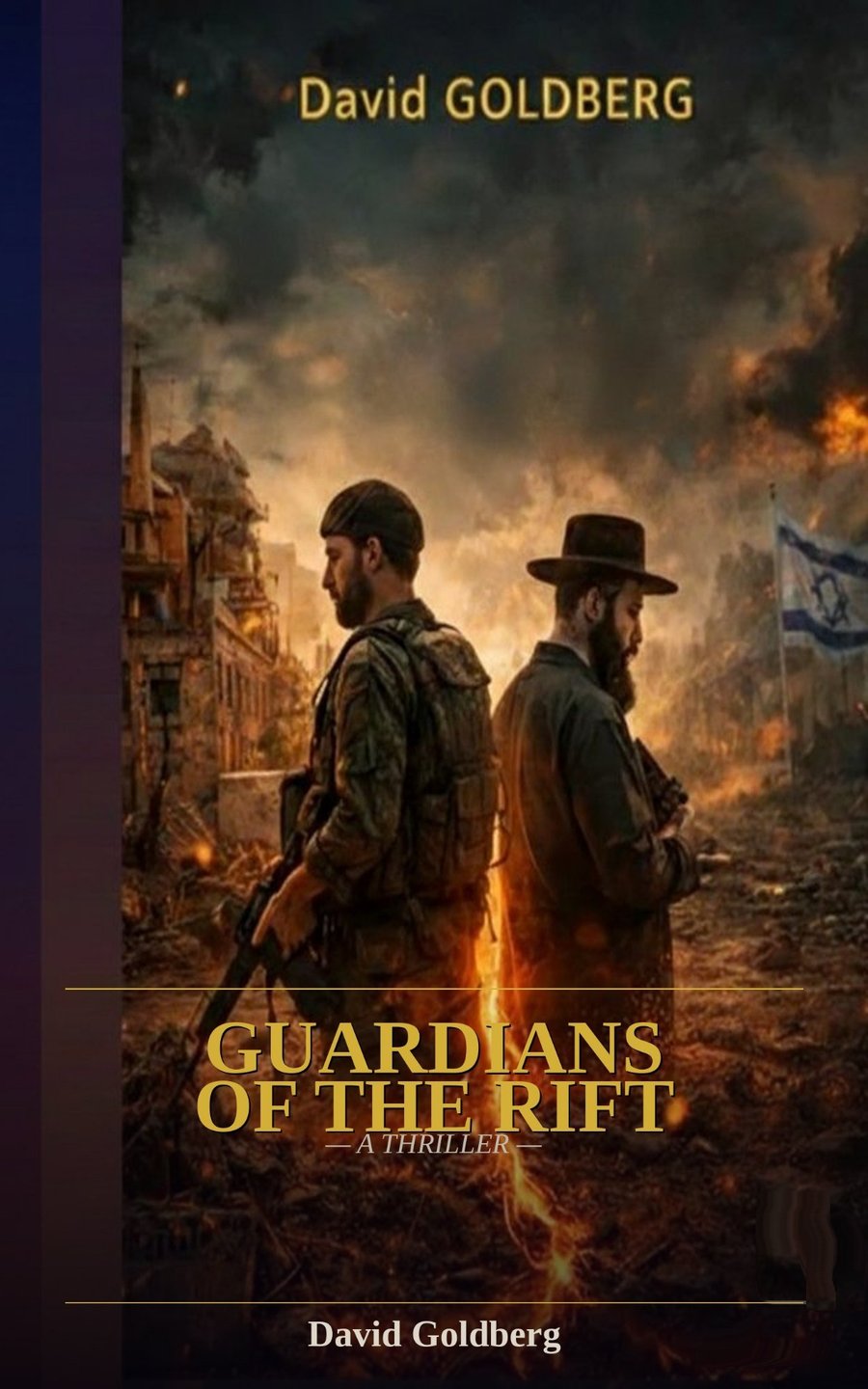
Les Gardiens de la Faille
Un thriller mystique · David Goldberg
Quarante-neuf portes s'ouvrent — la cinquantième se cache dans un seul instant. Un secret ancien resurgit, et un homme se dresse entre la faille et le monde. Puisé dans le Talmud et la Kabbale.