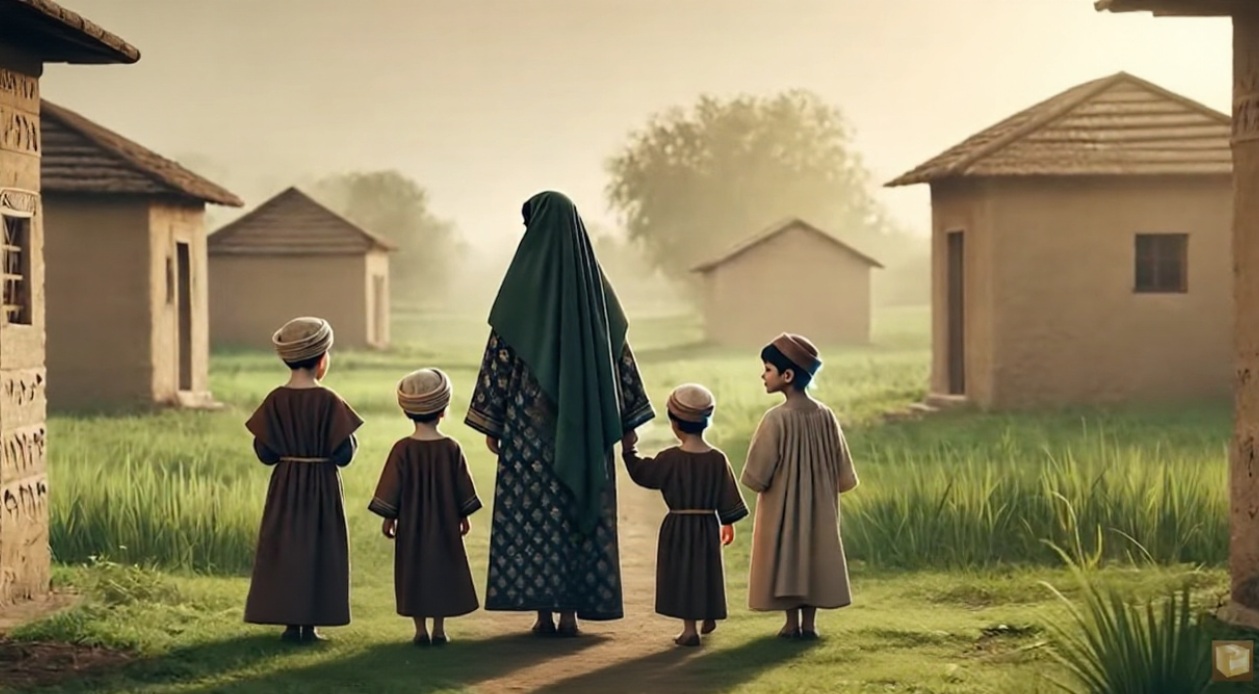
Leah too was barren ("He opened her womb"): both of Yaakov's wives were, and "hated" only means "less loved."
To Rachel's plea "Give me children or I die," Yaakov answers harshly, and Hashem rebukes him: his sons will one day stand before Yosef.
Woman is first "Ishah" (person, intrinsic worth) and only after the sin "Chavah" (giver of life): her value does not depend on motherhood.
The Patriarchs' barrenness was intentional: to draw out their prayers, and so that Israel would begin from a blank page.
Israel's lineage traces neither to Terach nor Lavan but to the Holy One Himself: the world was created "for Israel, called Reshit."
With G-d's help, we continue our study of Parashat Vayetzei. This study is dedicated to the elevation of the soul of Miriam Ikher Feinberg and of all the departed of the people of Israel.
After Yaakov was received by Lavan the Aramean and married Leah and then Rachel, the Torah tells us a moving scene between Yaakov and Rachel that reveals deep secrets about the nature of woman and the role of Israel.
We thus understand that both of Yaakov's wives were barren. Only, there is a barren woman for whom Hashem opens the womb, as compensation for being "hated" — that is, less loved.
Leah gave birth to Reuven, Shimon, Levi, and Yehuda. Then comes this dramatic verse.
A request that seems extreme: if I have no children, I would rather die.
Yaakov stresses: « מִמֵּךְ מָנַע וְלֹא מִמֶּנִּי » — it is from you that He withheld, not from me. "I, Baruch Hashem, already have Reuven, Shimon, Levi, and Yehuda. Why do you come to complain to me?"
The punishment: all the tribes ("your sons") will stand before "her son" — that is, Yosef — when he reveals his identity and the brothers stand confused and ashamed before him. The whole scene of Parashat Vayigash flows from this harsh answer of Yaakov to Rachel.
We put the question to Yaakov Avinu himself: how did you come to answer so harshly? To say « הֲתַחַת אֱלֹקִים אָנֹכִי » (Am I in place of G-d) is acceptable.
To understand Yaakov's thesis and how he views life, let us look at the first woman in the Torah. Is she called Chavah (Eve)? No — she is not called Chavah at first. The opening verses of the creation of Adam and Eve nowhere mention the name "Chavah."
Notice: not "Chavah" but "Ishah" — woman, person — for from man she was taken.
He should have called her "Chayah" (living one), since she is the mother of all living. Why "Chavah"?
The woman was first created and called "Ishah" (woman, person). Only after "in pain you shall bear" does she receive the role of "Chavah," giver of life.
"Ha-chayah" is not an animal: it means the woman in childbirth, in the language of the Mishnah. Likewise Shemot says the Hebrew women "are Chayot (חַיּוֹת)": like does in the field, they give birth vigorously.
The woman was named "Chavah" according to her calling to bring life. But if she does not give birth, is she worth nothing? Wrong! For at the start she was called Ishah: she always has something to give of herself, of her person, quite apart from children.
There are thus two aspects in the woman: the Ishah aspect — the personality, the individual identity — and the Chavah aspect — bringing children.
A young girl before marriage, an older woman past childbearing — are they worth nothing? No! They are "Ishah": to educate, to raise, to transmit the heritage. They have a role in the world.
This is exactly the point that troubled Yaakov Avinu. Rachel had said: « הָבָה לִּי בָנִים וְאִם אַיִן מֵתָה אָנֹכִי » (Give me children, or I am dead).
"Because you have no fruit of the womb, you should die?! You would have no role in this world?!" — that is what angered him. The woman received a bonus: the power to bring life. But failing to bring it does not, G-d forbid, render her life worthless.
Extending this point: the Matriarchs, and also the Patriarchs, were barren — and not by chance. Sarah, Rivka, Rachel, and even Leah (« וַיִּפְתַּח אֶת רַחְמָהּ »).
First reason: Hashem desires (mitaeh) the prayers of the righteous. He made them barren so that they would pray. But there is a second, deeper reason.
Avraham too was barren: he fathered only after the Brit Bein Habetarim. Hashem wanted to form the people of Israel starting from a blank page.
So too with Rachel, Leah, and Rivka — so that Lavan could not say: "I am the grandfather of Yaakov's sons!" His blessing is a zero blessing. Without the intervention of the Holy One blessed be He, there would simply have been no people of Israel.
It emerges that the yichus (lineage) of Israel traces back neither to Terach nor to Lavan, but to the Holy One blessed be He Himself, in person.
This is the uniqueness of Israel. Hence we read « בְּרֵאשִׁית בָּרָא אֱלֹקִים » — "In the beginning G-d created" — for Israel, called "Reshit" (beginning): « רֵאשִׁית תְּבוּאָתֹה » (the first of His harvest).
Everything begins with the Head — which is Hashem — and from there the people of Israel unfold. A vast seed, which we need only merit, bringing, with G-d's help, the Mashiach speedily in our days, Amen.
🎯 Test yourself
Five questions. Click an answer.
Result
Shalom Bayit — The Mouth at Home
My covenant of peace — peace begins at home. Reveal a Shalom Bayit card.
Gematria — Rav Ménaché
Shalom, Mashiah, Yisamech — secrets of the letters by Rav Ménaché zatsal.
🔢 Gematria CourseAll Parashot
All shiurim of M. Yéhouda Himi — from Bereshit to Devarim and the festivals.
📚 All ParashotBooks
Torah wisdom in thriller format — Éditions Gueoula.
Guardians of the Rift
Forty-nine gates open — the fiftieth hides in a single moment. An ancient secret resurfaces, and one man stands between the rift and the world. Drawn from Talmud and Kabbalah.
📖 Read the free excerpt · Book $9.90