1 "And These Are the Laws" — the Connecting Vav
The parasha opens with a loaded word. Where were these laws told to Moshe: on the mountain or below? And why "וְאֵלֶּה" (And these) with a Vav, rather than simply "אֵלֶּה" (These)?
וְאֵלֶּה הַמִּשְׁפָּטִים אֲשֶׁר תָּשִׂים לִפְנֵיהֶםShemot 21:1 — "And these are the laws that you shall place before them"
Rashi's principle Everywhere in the Torah, "אֵלֶּה" (These) excludes what came before; "וְאֵלֶּה" (And these) adds to what came before. The Vav thus links these laws to what was said earlier.
Just as the Ten Commandments come from Sinai, these civil laws also come from Sinai — they hold exactly the same value. All of Torah possesses the same holiness.
A halakhic debate Should one stand in synagogue during the reading of the Aseret HaDibrot (Yitro)? Some communities, notably Moroccan, stand to relive the Ma'amad Har Sinai. Others object: if all Torah is equal, singling out this passage implies it is superior. The custom varies by community.
2 The Hidden Chronology of Sinai
The Torah deliberately scrambled the order of events between the end of Yitro and the start of Mishpatim.
וְכָל הָעָם רֹאִים אֶת הַקּוֹלֹת וְאֶת הַלַּפִּידִם וְאֵת קוֹל הַשֹּׁפָר וְאֶת הָהָר עָשֵׁן וַיַּרְא הָעָם וַיָּנֻעוּ וַיַּעַמְדוּ מֵרָחֹקShemot 20:15 — "All the people saw the voices, the flames, the sound of the Shofar and the smoking mountain; the people saw, trembled and stood at a distance"
A displaced verse This verse describes what happened before the giving of the Torah, yet the Torah places it after the Ten Commandments.
What really happened? After the first two Commandments — "Anokhi" and "Lo Yihyeh Lekha" — the people heard the Divine voice directly. The intensity was unbearable: they fainted. Hashem revived them; they fainted again at the second Commandment, and He revived them once more.
דַּבֵּר אַתָּה עִמָּנוּ וְנִשְׁמָעָה וְאַל יְדַבֵּר עִמָּנוּ אֱלֹקִים פֶּן נָמוּתShemot 20:16 — "Speak to us yourself and we will listen, and let God not speak to us, lest we die"
Chronologically, this verse belongs in the middle of the Ten Commandments: the final eight were transmitted through Moshe, not directly by Hashem. Yet the Torah presents them as one unit, to teach that the entire nation received the whole at Ma'amad Har Sinai.
3 On the Mountain and Below
The final instructions of Yitro ("Mizbeach Adama," the earthen altar) were told to Moshe on the mountain, after he had separated from the people. Then "וְאֵלֶּה הַמִּשְׁפָּטִים": the Mishpatim too were given on the mountain, as a single unit with the Ten Commandments.
At the end of Mishpatim, Moshe descends, seals the covenant (Brit) with the people, then ascends for forty days and forty nights. There he receives Teruma, Tetzaveh, and half of Ki Tisa. Upon descending, he will discover the Chet HaEgel, the sin of the Golden Calf.
The Shekhina remains Throughout those forty days, the cloud (Anan) and the thick mist (Arafel) stayed visible on the mountain. The people below saw the Divine Presence resting upon it, which never departed during that time.
4 Moshe, "Ish HaElohim"
Moshe Rabbenu is called "Ish HaElohim," the Man of God. What does this title mean?
The Midrash's image When Moshe stood in the cloud on Sinai, it rose to his waist. From the waist up — head and torso — he was within the cloud with the Holy One; from the waist down — his feet — he remained on the mountain, in the physical world.
The upper half, "Elohim," the divine part; the lower half, "Ish," the human part. Moshe alone could bear the divine light — the people fainted after just two Commandments.
In this posture, forty days and forty nights, half in the divine and half in the earthly, he received the Torah.
5 The Vision of the Elders
Moshe, Aharon, Nadav, Avihu and the seventy Elders beheld an extraordinary vision:
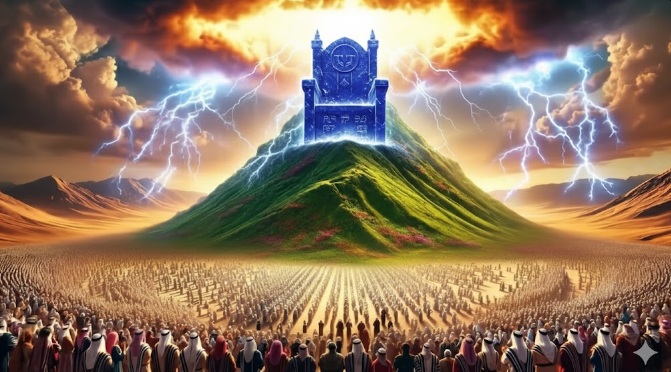
וַיִּרְאוּ אֵת אֱלֹקֵי יִשְׂרָאֵל וְתַחַת רַגְלָיו כְּמַעֲשֵׂה לִבְנַת הַסַּפִּיר וּכְעֶצֶם הַשָּׁמַיִם לָטֹהַרShemot 24:10 — "They saw the God of Israel, and beneath His feet like a work of sapphire brick, like the essence of the heavens in purity"
A veiled vision The verse says "Elokei Yisrael" — the Name Elohim, not the Tetragrammaton — a sign they did not reach the highest level of Revelation, for "לֹא יִרְאַנִי הָאָדָם וָחָי" (no man sees Me and lives). They saw a Hishtakvut, a reflection of the Shekhina, beneath the footstool of the Kisse HaKavod.
וְאֶל אֲצִילֵי בְּנֵי יִשְׂרָאֵל לֹא שָׁלַח יָדוֹ וַיֶּחֱזוּ אֶת הָאֱלֹקִים וַיֹּאכְלוּ וַיִּשְׁתּוּShemot 24:11 — "Upon the nobles of Israel He did not stretch out His hand; they beheld God, and they ate and drank"
The account settled later According to the Midrash, eating and drinking before the Shekhina warranted immediate death; but Hashem would not spoil the joy of the giving of the Torah. The reckoning came later, when Nadav and Avihu offered a strange fire (Vayikra, Shemini).
6 Why Is the Sky Blue?
A simple question What color is the sea? "Blue!" Yet a glass of seawater is transparent. If every drop is colorless, how does the whole become blue? One answers: the sea reflects the sky. But the sky is only air, itself colorless — so why should it be blue?
The blue of the sky is the reflection of the Livnat HaSapir, the Sapphire Brick set beneath the Kisse HaKavod. Sapphire is of Tekhelet color; it radiates and illuminates the heavens, and the heavens are mirrored in the sea.
We reread "וּכְעֶצֶם הַשָּׁמַיִם לָטֹהַר": the Tohar (purity) of the Livnat HaSapir is reflected in the heavens. Twenty-four hours a day, whenever there is light, we see the reflection of the Shekhina through the blue of the sky.
7 Rabbi Meir's Chain
The Gemara confirms this connection through Rabbi Meir's teaching on the Tekhelet, the azure-blue thread of the Tzitzit:
רַבִּי מֵאִיר אוֹמֵר: מָה נִשְׁתַּנָּה תְּכֵלֶת מִכָּל הַצְּבָעוֹנִין? מִפְּנֵי שֶׁתְּכֵלֶת דּוֹמֶה לַיָּם, וְיָם דּוֹמֶה לָרָקִיעַ, וְרָקִיעַ דּוֹמֶה לְאֶבֶן סַפִּיר, וְאֶבֶן סַפִּיר דּוֹמֶה לְכִסֵּא הַכָּבוֹדTalmud Bavli, Chullin 89a — "How does Tekhelet differ from all other colors? Because Tekhelet resembles the sea, the sea resembles the sky, the sky resembles the sapphire stone, and the sapphire stone resembles the Throne of Glory"
The chain of reflections Tekhelet → Sea → Sky → Sapphire stone → Throne of Glory. The Gemara supports it from our verses: "כְּמַעֲשֵׂה לִבְנַת הַסַּפִּיר" (Shemot 24:10) and "כְּמַרְאֵה אֶבֶן סַפִּיר דְּמוּת כִּסֵּא" (Yechezkel 1:26).
Each time we gaze at the blue sky, we are looking, through several layers of reflection, toward the Throne of Glory itself.
8 The Brick's Origin and the Eternal Covenant
What is this Livnat HaSapir made of? The Targum Yonatan ben Uziel reveals a shattering Midrash:
דְּאִתְרְמֵי אַבְנָא דְסַפִּירִינוֹן מִתְּחוֹת כּוּרְסֵי יְקָרֵיהּ, דְּהִיא דוּכְרָנָא דִשְׁעֲבוּדָא דְשַׁעֲבִידוּ מִצְרָאֵי יָת בְּנֵי יִשְׂרָאֵל בְּטִינָא וּבִלְבֵנִיןTargum Yonatan — "The sapphire stone placed beneath the Throne of His Glory is a remembrance of the bondage the Egyptians imposed on Israel, in clay and in bricks"
The Midrash of the brick In Egypt, the women kneaded clay with their feet. A delicate young pregnant woman saw her child fall into the clay as she worked. She tried to stop, but the guard shouted: "We do not stop!" — and the trampling continued. That mixture of flesh, blood and clay became a brick.
The angel Gabriel descended, took this brick, and carried it before the Heavenly Throne. Hashem set it beneath His feet, under the Kisse HaKavod, as an eternal remembrance (Zikaron) of Israel's suffering — and of its faith that never broke: "וַיַּאֲמִינוּ בַּה׳ וּבְמֹשֶׁה עַבְדּוֹ."
אִם לֹא בְרִיתִי יוֹמָם וָלָיְלָה חֻקּוֹת שָׁמַיִם וָאָרֶץ לֹא שָׂמְתִּיYirmiyahu 33:25 — "Were it not for My covenant day and night, I would not have set the laws of heaven and earth"
The blue of the sky reflects the Livnat HaSapir; the Livnat HaSapir is the memorial of Israel's suffering and faith; twenty-four hours a day, Hashem remembers His people. This Covenant upholds the laws of heaven and earth, until the Or Shivat HaYamim, the Light of Mashiach. בִּמְהֵרָה בְיָמֵינוּ אָמֵן.