Mitzva: On Hashem's Team
Parashat Tetzaveh · Mitzva: On Hashem's Team · Sefer Shemot · 5786
The Atbash code, the Mishkan within us, and why the Kohen must carry the pomegranates
Mitzva: On Hashem's Team
A shiur by M. Yéhouda Himi
The Atbash code, the Mishkan within us, and why the Kohen must carry the pomegranates
A shiur by M. Yéhouda Himi · Mitzva: On Hashem's Team · Sefer Shemot · 5785

The word Mitzva comes from "joining the team": every Mitzva binds the Jew to Hashem, and the Atbash code turns מצווה into the Name י-ה-ו-ה.

"I will dwell among them": every Jew is a living Mishkan, and his morning prayer mirrors the Temple service.

Tefilin of the head and arm correspond to the Tzitz and the Choshen — every Jew is a Kohen Gadol.

On the Me'il, the apple symbolizes the Tzaddik and the pomegranate the simple Jew, full of Mitzvot nonetheless.

The bell and pomegranate remind the Kohen to serve also for the "empty" ones — forgetting this is the meaning of "so that he does not die."

We therefore pray "in the name of all Israel," including every Jew, from the greatest to the humblest.

📖 Full Text
1 What Is a Mitzva? Being Part of the Team

Parashat Terumah dealt with the construction of the Mishkan and its major vessels. Parashat Tetzaveh deals with the more subtle elements: pure pressed olive oil for the light, the garments of the Kohanim, and so on.

What is the true meaning of a Mitzva? In Aramaic, the word "Mitzvot" is translated as commands, orders. But the true purpose is not only "I am commanding you to do something." There is also the root to join the team (lehitztavot) — to be part of the same group as Hashem.
The Atbash code In the Atbash technique the alphabet is reversed: under Alef comes Tav, under Bet comes Shin, under Gimel comes Resh. Applied to the word מצווה: Mem→Yod, Tzadi→Hé, Vav→Vav, Hé→Hé. The result is the Divine Name י-ה-ו-ה.

Every Mitzva is therefore an invitation to join the team of Hakadosh Baruch Hu. This is our role in the world: to connect this world with the Divine light that flows into it.

2 The Mishkan: Connecting the Worlds

The most concrete example of connecting the world of action with the Divine light is the Mishkan — because its very name says it: to be a dwelling place (mishkan) for the Shekhinah. All the Mitzvot of the Kohanim were meant to draw the Divine light from the higher worlds down into the world of action.

וְעָשׂוּ לִי מִקְדָּשׁ וְשָׁכַנְתִּי בְּתוֹכָםShemot 25:8
Not "within it" but "within them" It does not say "I will dwell within it" (betokho) but "within them" (betokham). Every Jew is a potential Mishkan unto himself; every act he performs is like the service of a Kohen in the Mishkan that is within him.
"You shall be for Me a kingdom of Kohanim and a holy nation" — each one is potentially a Kohen serving in holiness.

Even without a Temple we are not exempt from being holy. The order of the morning prayer mirrors the order of the Temple service: we begin with the Korbanot, we put on Tefilin. The prayers were instituted to correspond to the sacrifices.

3 The Kohen Gadol's Garments Are Our Tefilin

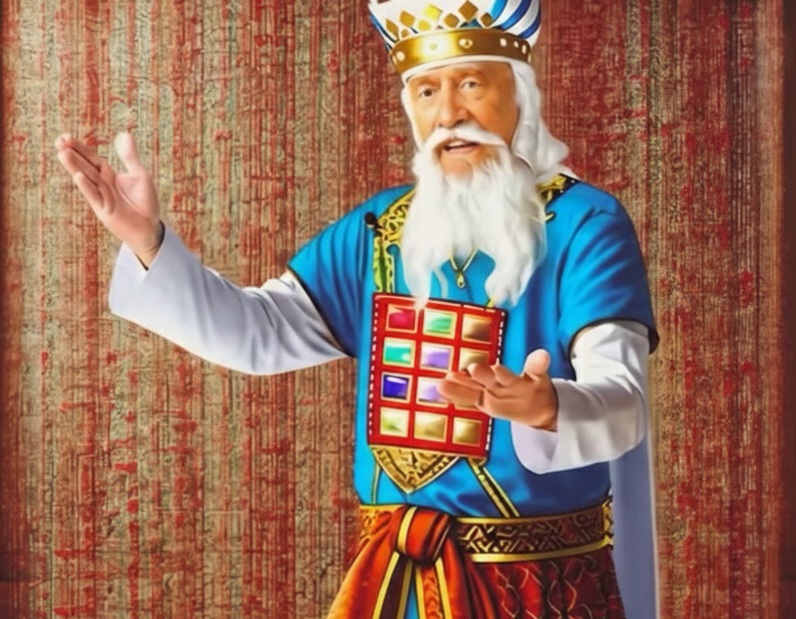
The Kohen Gadol wore special garments. Two are marked by the phrase "before Hashem always": the Tzitz, on his forehead, and the Choshen, on his heart.

וְהָיָה עַל מִצְחוֹ תָּמִיד לְרָצוֹן לָהֶם לִפְנֵי ה׳ ... וְנָשָׂא אַהֲרֹן אֶת שְׁמוֹת בְּנֵי יִשְׂרָאֵל ... עַל לִבּוֹ תָּמִידShemot 28:38; 28:29
A parallel for every Jew Tefilin of the head — on the forehead, corresponding to the Tzitz. Tefilin of the arm — toward the heart, corresponding to the Choshen. Every Jew who wears Tefilin is literally a Kohen Gadol standing before Hashem, every single morning.
4 The Me'il: The Apple and the Pomegranate

Among the Kohen Gadol's garments is the robe (Me'il), entirely of sky-blue wool. Around its hem, alternating, were fixed a golden bell and a pomegranate.

פַּעֲמֹן זָהָב וְרִמּוֹן פַּעֲמֹן זָהָב וְרִמּוֹן עַל שׁוּלֵי הַמְּעִיל סָבִיבShemot 28:34
The apple — the Tzaddik The knobs of the Menorah are shaped like apple blossoms. Song of Songs says "Like an apple tree among the trees of the forest": the apple symbolizes the most distinguished, the righteous one.
The pomegranate — the simple one "Your temple is like a pomegranate slice": the temple of the head is the flattest, emptiest part of the face. Hence the Midrash: "Even the empty ones among them are full of Mitzvot like a pomegranate." The pomegranate symbolizes the simple people, the "empty" ones.

When the Kohen Gadol lights the Menorah he sees the apples — the symbol of the Tzaddikim. So that he not think his service is only for the righteous, the bell, the gold, and the pomegranate are tied to the hem of the Me'il: remember that you also labor for the "empty" ones.

5 "So That He Does Not Die"
וְהָיָה עַל אַהֲרֹן לְשָׁרֵת וְנִשְׁמַע קוֹלוֹ בְּבֹאוֹ אֶל הַקֹּדֶשׁ לִפְנֵי ה׳ וּבְצֵאתוֹ וְלֹא יָמוּתShemot 28:35
What is "its sound"? The Kohen does not sing or speak; he serves in silence. "Its sound" is the sound of the bells heard as he moves — and thus a reminder of the pomegranates that accompany them.
Why would he die? If he enters the sanctuary to serve, why does the verse warn "so that he does not die"?
The secret To serve — whom? All of Israel, from the highest to the lowest. The bell and pomegranate remind the Kohen that he prays also for the "empty" ones, not only for the "apples." A Kohen who forgets this severs part of the connection — that is the danger of "so that he does not die."
6 In the Name of All Israel

Just as the Kohen Gadol had to carry the pomegranates on his hem, every Jew who prays in the morning dons his "uniform" — Tzitz = Tefilin of the head, Choshen = Tefilin of the arm — and should say at the start of the prayer the acceptance of the Mitzva to love his neighbor in the name of all Israel.

Behold, I accept upon myself the positive commandment to love my neighbor as myself — in the name of all Israel.

"In the name of all Israel": not only in our own name, not only in the name of the Tzaddikim, but also in the name of the "empty" ones. This is the true service — the one that connects the worlds and hastens the Redemption.

🎯 Test yourself

Five questions. Click an answer.

1
According to the shiur, what extra root is hidden in the word "Mitzva"?
Beyond "commanding," Mitzva contains the root lehitztavot: being on the same team as Hashem.
2
What does the word מצווה become through the Atbash code?
In Atbash: Mem→Yod, Tzadi→Hé, Vav→Vav, Hé→Hé, which spells the Divine Name י-ה-ו-ה.
3
Why does the verse say "I will dwell among them" and not "within it"?
"Betokham" (among them) teaches that every Jew is himself a dwelling for the Shekhinah.
4
What do the apple and the pomegranate on the Me'il respectively represent?
The apple symbolizes the distinguished righteous one; the pomegranate, the "empty" ones who are full of Mitzvot nonetheless.
5
What is the meaning of the warning "so that he does not die" (ולא ימות)?
The bell and pomegranate remind the Kohen to pray for all; forgetting the "empty" ones severs the connection.

Result

📅 Seven-Day Programme — Parashat Tetzaveh
Sunday
Sunday: Re-read Parashat Tetzaveh and notice the Kohen Gadol's garments — which "garment" corresponds to which Mitzva in my life?
Monday
Monday: Learn the intention of the Atbash code — Mitzva = י-ה-ו-ה — and think of it while putting on Tefilin.
Tuesday
Tuesday: Ask who the "empty ones" are that I tend to forget, and have intention for them in prayer.
Wednesday
Wednesday: Share with the children the apple-and-pomegranate comparison — are we all equal before Hashem?
Thursday
Thursday: Study how the prayers correspond to the sacrifices and feel the priesthood within us.
Friday
Friday: Before Mincha say "Behold, I accept — in the name of all Israel," intending each of the "empty ones."
Shabbat
Shabbat: At the table, ask "Why 'among them' and not 'within it'?" and reveal the Mishkan within each person.
Four Practical Steps
🏠

Shalom Bayit — The Mouth at Home

My covenant of peace — peace begins at home. Reveal a Shalom Bayit card.

🔢

Gematria — Rav Ménaché

Shalom, Mashiah, Yisamech — secrets of the letters by Rav Ménaché zatsal.

🔢 Gematria Course
📝

Torah Study

Dig deeper into the Baal HaTurim and Rashi on Parashat Devarim.

📝 Beith Hamidrach
📚

All Parashot

All shiurim of M. Yéhouda Himi — from Bereshit to Devarim and the festivals.

📚 All Parashot
📕

Books

Torah wisdom in thriller format — Éditions Gueoula.

🌙

Dream Interpretation

Did you dream? Check the meaning according to Rav Almoli.

🌙 Dreams
🎬

Videos

Video shiurim on the festivals, the Menorah and the secrets of the Mishkan.

🎬 Videos
💡

Idea Box

An idea, a remark, a suggestion for the site? Share it with us.

💡 Idea Box
🤝

Maasser

Give your Maasser and take part in spreading Torah.

🤝 Maasser
📨 Get the Weekly Shiur
Every week, straight to your inbox. No spam. One-click unsubscribe.
🕯️ Dedicate This Shiur
Dedicate this shiur for the days of Bein HaMetzarim — in memory, for healing or for success.
🧱 Wall of Dedications →
Guardians of the Rift

Guardians of the Rift

A spiritual thriller · David Goldberg

Forty-nine gates open — the fiftieth hides in a single moment. An ancient secret resurfaces, and one man stands between the rift and the world. Drawn from Talmud and Kabbalah.

📖 Read the free excerpt · Book $9.90