A question had been left hanging: why does the Midrash say "one hundred curses less two" instead of simply ninety-eight? For Torat Kohanim it says forty-nine, not "fifty less one."
The answer is a chidush: counted properly, there are one hundred curses in Ki Tavo. Only, two of them are not curses at all — they are blessings.
The Zohar Chadash reports that Eliyahu HaNavi revealed himself to Rabbi Shimon bar Yochai. Go and find, he told him, the most terrible curse of them all. Rabbi Shimon returns with "your life shall hang in doubt before you… in the morning you will say: who will give the evening." And Eliyahu answers: those two are blessings. For to live knowing this day may be your last is to live fully — "repent one day before your death."
The shiur closes on Elul and Tishrei. "Ani ledodi vedodi li": it is for us to take the first step. And as it says in Tazria, "when a woman sows first, she bears a male" — zachar, whose numerical value, 227, is also that of berachah, blessing.
We turn to parashat Nitzavim, and we will add an idea bound to the days we are in — the month of Elul, as Rosh Hashana draws near.
Rashi, on "you are standing today," explains that Israel turned pale on hearing the curses of Ki Tavo. And Moshe tells them: stand upright, lift your heads, all is well. But the wording of the Midrash is puzzling, and one of you noticed it — I did not answer then.
That is why the Midrash does not say "ninety-eight" but "one hundred less two": they did hear one hundred curses, but they had not understood that two of them were no curses at all.
In the Zohar Chadash, on parashat Ki Tavo, we find that Eliyahu HaNavi revealed himself to Rabbi Shimon bar Yochai and disclosed the promises and consolations the Holy One, blessed be He, made to Israel. Rabbi Shimon asked him:
— I will not tell you, Eliyahu replies. I invite you to examine the curses closely, and you will tell me which is the most terrible of them all.
Homework, then. Rabbi Shimon bar Yochai examines the curses of Ki Tavo, and returns:
It is the worst state there is: you feel your life hanging before you, facing you. In the morning you hope and pray for evening to come, because you are living the day as a nightmare; and when night comes, you say: when will this nightmare of the night end, let the morning come.
And the Zohar adds there: though the companions know their life hangs before them in doubt — you are permanently in uncertainty, not knowing whether this life continues. You no longer want to live that life.
And that is exactly why Rashi places the idea here, on "you are standing today" — for this too is a reading of the verse: a man must feel that this day is his last.
We see it in tractate Shabbat:
Here is what the Yearot Devash writes, and I soften his words: when a man truly thinks he has only this day left to live, all that remains to him he devotes solely to the service of the Lord with a whole heart; and all wealth he scorns — for what profit is there in gain, at the price of his own ruin?
In other words: if we truly lived that way, we would all be tzaddikim. Knowing that every day is the last, you are at your most spiritual, most giving, the best man you can be. Who would waste time on trifles? To know that today is the last day is an enormous blessing.
Why the most important? Because that is the end. And in that feeling, it is as though you had filled your whole life.
That is why the Midrash puts it so: they heard one hundred curses less two. They did hear them — but they had not understood that two of them were no curses at all. And they said: who can stand before these? So Moshe began to comfort them: you are standing today… you have angered the Omnipresent greatly, and He has not made an end of you — and here you are, existing before Him.
Let us speak plainly, without frightening anyone. What do we ask for on Rosh Hashana? Look at the Amida: "remember us for life, King who desires life… inscribe us for life, for Your sake, living God." We ask for life. Give me life, and do not worry: I will be good.
But hear the other side of what I have just said: this is the moment when what the coming year will be is decided. We know that awesome piyut, Unetaneh Tokef: who shall live and who shall die.
Let us add a fine idea in honour of Rosh Hashana. There are two verses in Shir HaShirim, made of the same words in a different order: "ani ledodi vedodi li," I am my beloved's and my beloved is mine — whose initials form Elul — and "dodi li va'ani lo," my beloved is mine and I am his.
In Nisan, indeed, Israel had barely left Egypt; they were still idolaters, sunk to the lowest levels of impurity. But there was a promise, and "my beloved leaps upon the mountains": the Holy One, blessed be He, made no reckonings and redeemed them from slavery to freedom — and only from there did they begin to climb, all the way to Shavuot.
There is a verse we know, in parashat Tazria — the parasha of sowing:
We learned it thus: when the woman sows first, a male is born. And that is exactly our point.
And now the gematria. Zachar, male: zayin seven, kaf twenty, resh two hundred — two hundred and twenty-seven. And the word berachah, blessing: bet two, resh two hundred, kaf twenty, heh five — two hundred and twenty-seven as well.
Let us complete the idea. What is the mazal of the month of Elul? Betulah, the Virgin. And Elul comes before Tishrei.
That is what we say: "let the year and its curses end, let the year and its blessings begin." Those blessings are what the Holy One, blessed be He, pours upon us from the bestowing aspect. May we be inscribed for a good and long life, until the coming of Mashiach and the rebuilding of the Temple, speedily in our days. Amen.
🎯 Test yourself
Five questions. Click an answer.
Result
Shalom Bayit — The Mouth at Home
My covenant of peace — peace begins at home. Reveal a Shalom Bayit card.
Gematria — Rav Ménaché
Shalom, Mashiah, Yisamech — secrets of the letters by Rav Ménaché zatsal.
🔢 Gematria CourseAll Parashot
All shiurim of M. Yéhouda Himi — from Bereshit to Devarim and the festivals.
📚 All ParashotBooks
Torah wisdom in thriller format — Éditions Gueoula.
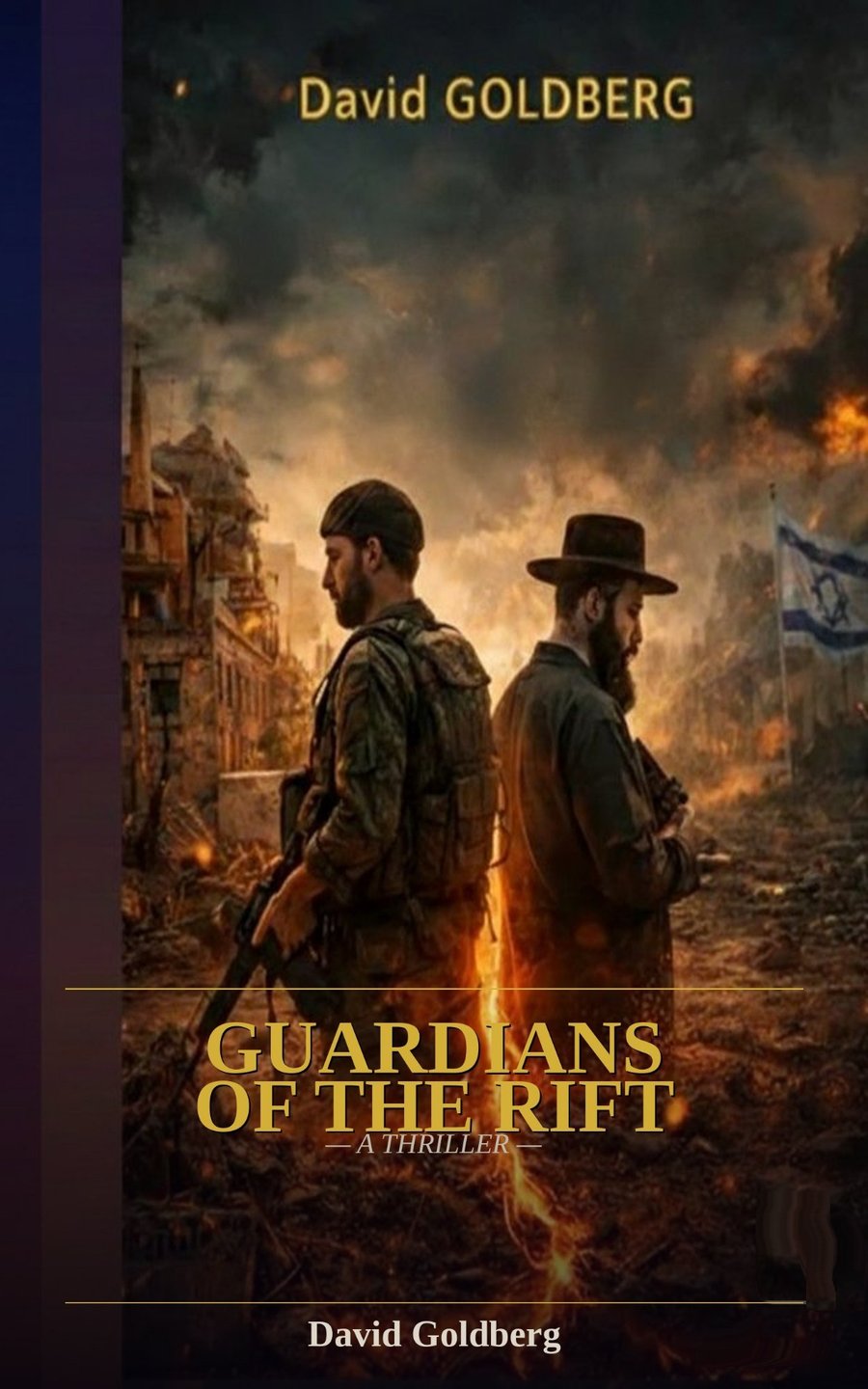
Guardians of the Rift
Forty-nine gates open — the fiftieth hides in a single moment. An ancient secret resurfaces, and one man stands between the rift and the world. Drawn from Talmud and Kabbalah.
📖 Read the free excerpt · Book $9.90