
At the heart of the parasha lies a verse we tend to skip: “You are children of Hashem your God: do not gash yourselves, and do not make a bald patch between your eyes for the dead.” The plain sense, as Rashi explains, targets the mourning rites of the nations — tearing the face, pulling out hair, even striking the forehead until it bleeds. Children of a king do not behave that way.
Yet our Sages, in tractate Yevamot, hear in that same word lo titgodedu an entirely different prohibition: “do not form separate factions” — two courts in one city, one ruling like Beit Shammai, the other like Beit Hillel. The shiur then asks its question: what inner link can there possibly be between a cut in the skin and a split in the community?
The answer runs through the word basar. In Hebrew as in its sister tongues, flesh and bread share a root of welding: lehem, halhama, to weld. We eat together to weld hearts; “they shall become one flesh” describes the union of husband and wife. Along the way the shiur also recovers the verb azov, which does not mean to leave but to help.
Now everything falls into place: a cut separates flesh from flesh, and the face becomes agudot agudot, patches divided by furrows. A divided community is precisely that same tissue, sliced. And the rest of the verse — velo tasimu korha — lets us hear Korach, who took himself to one side and left the people on the other.
The verse appears in chapter 14 of Devarim: “You are children of Hashem your God: do not gash yourselves, and do not place a bald patch between your eyes for the dead.”
Rashi explains: “do not make an incision or a gash in your flesh, as the Emorites do.” Struck by grief, the nations would tear at their faces with their nails; some rites went further still, striking the forehead with a blade until blood ran.
Rashi’s reason is simple and immense: “because you are children of the Omnipresent, and it befits you to be beautiful — not gashed and not shorn.” One may weep, one may grieve — but one does not disfigure oneself. Children of a king do not behave that way.
The next verse gives two grounds. First: “for you are a holy people to Hashem your God.” Where does that holiness come from? Rashi answers: from your fathers. You are the children of Avraham, Yitzchak and Yaakov, and their holiness passes to you.
Second: “and you has Hashem chosen to be His treasured people from among all the peoples on the face of the earth.” You are not like the other nations — not out of contempt for them, but because a particular calling rules out certain gestures.
Tractate Yevamot reads the same word differently: “lo titgodedu — do not make agudot agudot,” separate groupings.
Rav Yehuda specifies the case: two courts in one and the same city, one ruling according to Beit Shammai, the other according to Beit Hillel. A single community then begins to live by two rules, and plurality hardens into a tear.
The point is not to forbid debate — Torah lives by it — but to prevent disagreement from setting into a border drawn inside the people.
Here the shiur pauses and states its difficulty. The plain sense speaks of a cut in the skin. Our Sages speak of factions. How does one get from one to the other?
It cannot be mere wordplay. If they read the verse this way, there must be an inner link between the gesture that scars a face and the gesture that fractures a people. The rest of the shiur goes looking for it.
Before answering, the shiur turns to another verse: “and they shall become one flesh.” But its opening is often misread: “therefore a man ya’azov his father and his mother.”
Does marrying mean leaving one’s parents behind? The shiur answers with another verse: “if you see the donkey of one who hates you crouching under its burden… azov ta’azov with him.” There the root עזב cannot mean to depart — it means to help.
Read it again: “therefore a man shall help his father and his mother, and cleave to his wife, and they shall become one flesh.” The merit of honouring one’s parents becomes the condition of a united home. A marriage is not built on a debt left unpaid to one’s father and mother.
How do husband and wife become “one flesh”? The shiur listens to the word basar across the Semitic languages, where flesh is lahm — the same word as lehem, bread.
And lehem belongs with halhama, welding. That is why bread bears this name: eating together welds hearts. Of a comrade one says that we ate from the same dish.
Two verses confirm it. Yitro’s daughters: “call him, that he may eat bread” — our Sages hear marriage in it. And with Yosef: Potiphar entrusted him with everything “except the bread he ate” — that is, his wife. Bread, flesh and union form one single field of meaning.
Now our Sages’ reading becomes transparent. What does a gash do? It digs a furrow, and separates flesh from flesh. After several cuts the face is no longer one continuous surface: it is made of pieces divided by trenches — agudot agudot.
The word aguda comes from the root “to bind.” A gash binds on one side, binds on the other, and leaves a void between them. That is exactly what happens to a community: one tissue, one flesh, cut into groups bound to themselves and severed from each other.
The rest of the verse confirms it: “and do not place a korha.” The word lets us hear Korach. And what did Korach do? “And Korach took” — he took himself to one side and left the people on the other. Korha is separation.
Finally: “for you are a holy people.” To be kadosh is to be set apart. You are indeed an aguda — one single one, distinct from the nations. Which is precisely why you cannot be agudot set against one another.
Result
Shalom Bayit — The Mouth at Home
My covenant of peace — peace begins at home. Reveal a Shalom Bayit card.
Gematria — Rav Ménaché
Shalom, Mashiah, Yisamech — secrets of the letters by Rav Ménaché zatsal.
🔢 Gematria CourseAll Parashot
All of M. Yéhouda Himi’s shiurim — from Bereshit to Reeh, and the festivals.
📚 All ParashotBooks
Torah wisdom in thriller format — Éditions Gueoula.
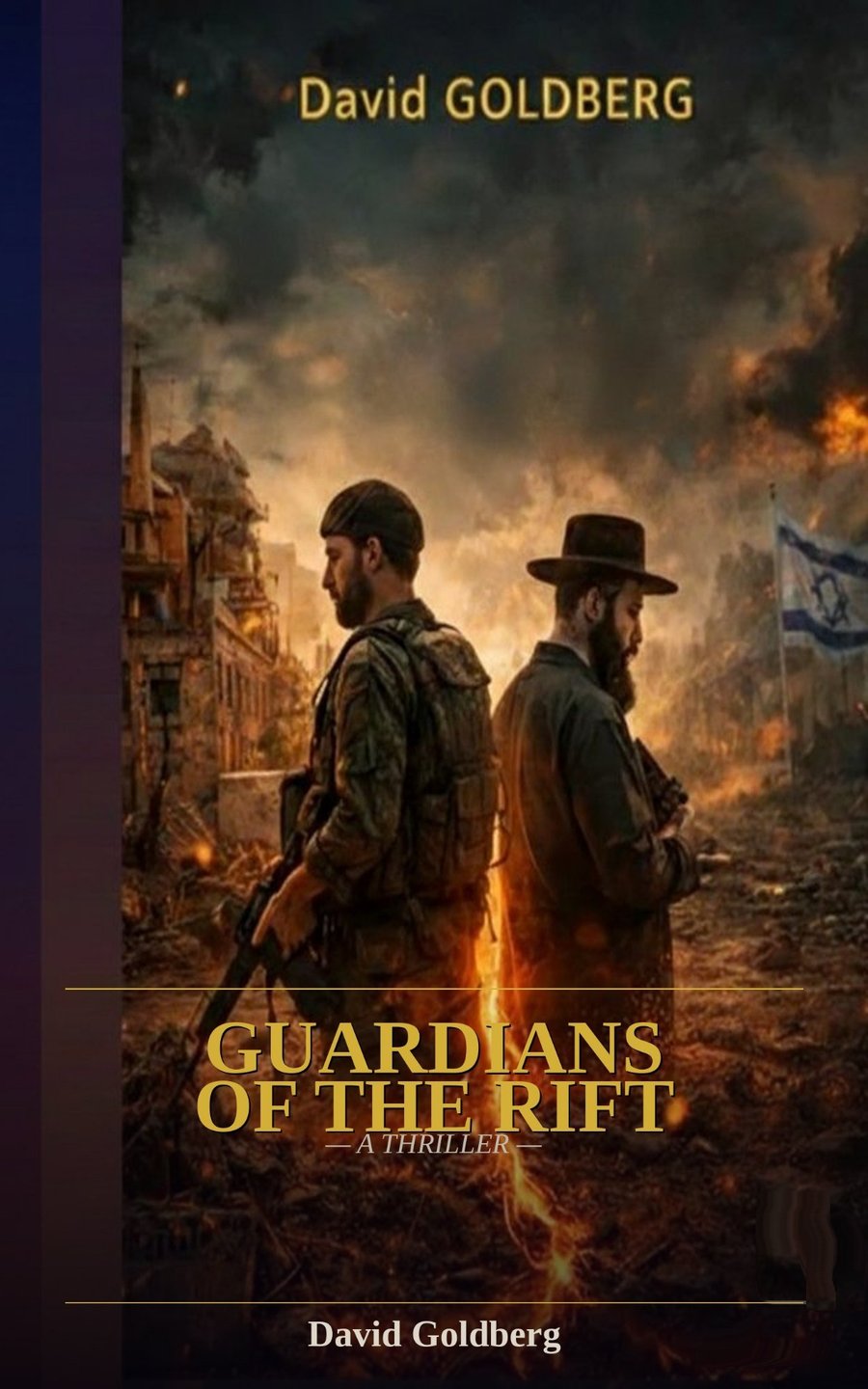
Guardians of the Rift
Forty-nine gates open — the fiftieth hides in a single moment. An ancient secret resurfaces, and one man stands between the rift and the world. Drawn from Talmud and Kabbalah.
📖 Read the free excerpt · Book $9.90