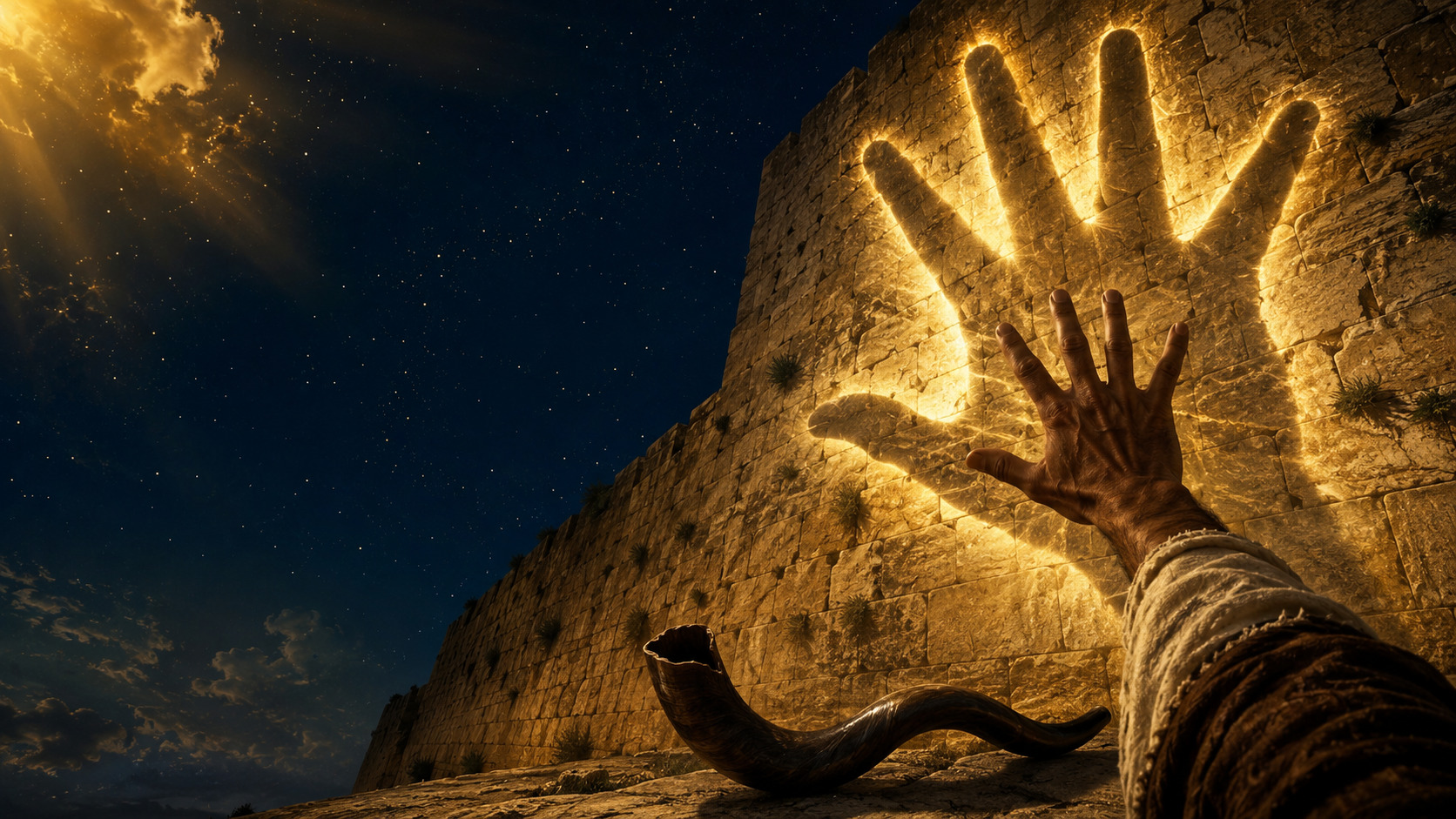
🕯️ 22 Av 5786 · Approaching Rosh Chodesh Elul — the days of return are drawing near Elul in Aramaic means "to search" · "Let us search our ways and examine them, and return to Hashem"
Reeh — Asher and Im · Hashem is your shadow · Elul
Parashat Reeh · Elul · 5786 · Shiur 2
Asher and Im — Hashem Is Your Shadow
The blessing is the strength to listen · Who makes the first move in Elul?
A shiur by M. Yéhouda Himi
🕯️ In memory of Rav Ron Chaya zt”lThis shiur is also dedicated to the memory of Rav Ron Chaya zt”l, who devoted his life to spreading Torah, awakening return, and strengthening a true peace — a peace rooted in holiness, responsibility, and truth.May the merit of the tzaddik protect us and all Israel. May his soul be bound in the bond of life. Amen.
🎙️
🎙 Full recorded shiur · M. Yéhouda Himi
Reeh — Shiur 2 · Asher and Im: Hashem Is Your Shadow
⬇ Download the recording
Asher and Im — Hashem Is Your Shadow
M. Yéhouda Himi · Parashat Reeh · Elul · Shiur 2

The Torah writes "the blessing, asher you will listen" — but "the curse, im you will not listen." Why the inconsistency? Asher carries the sense of strength: "the tablets asher you shattered" = yishar koach; the asherah was the strongest tree in nature; and ishur in modern Hebrew means to give a document force.

The chiddush: the blessing itself is the strength to listen. You woke up this morning, you have eyes, a mouth, a hand — the strength has already been placed inside you. And the curse? The Holy One gives no curse — "from the mouth of the Most High evil does not issue." Hence im: the curse is yours, not His.

Elul is Aramaic for to search (Onkelos renders vayaturu as viyalelun). And who moves first — "I am my Beloved's" or "My Beloved is mine"? Midrash Eikha: Knesset Yisrael says "it is Yours"; the Holy One answers "it is yours."

The answer is reciprocity: "as water reflects face to face." "Hashem is your shadow at your right hand" — extend a finger, you get a finger's shadow; extend the whole hand, you get the whole hand. And at the shofar: He hears through our ears, and blows through our breath.

📖 Read the full shiur
1 The Context — 22 Av, and Reeh Before Elul

Good evening. With God's help, today is the 22nd of Av. Next week I will be away almost the entire week — perhaps Wednesday and Thursday, but not Sunday, Monday or Tuesday. So today I will also speak about the month of Elul and about Rosh Chodesh Elul.

In any case, Parashat Reeh is always read on the Shabbat when the month of Elul is blessed — so Elul already begins to occupy us within Reeh itself. We will take one idea from the parasha, and then speak about Elul and the days of return that are drawing near.

And thank God, we are already in the second half of Av — the good half.

2 The Famous Question — Asher Against Im
See, I set before you today a blessing and a curse. The blessing — asher you will listen to the commandments of Hashem your God which I command you today. And the curse — im you will not listen to the commandments of Hashem your God, and you turn aside from the way Devarim 11:26–28
Everyone asks it: why the lack of consistency? If the Torah chose the word asher, let it use asher for both — "the blessing asher you will listen... and the curse asher you will not listen." Or let both be im. Why asher precisely for the blessing and im precisely for the curse? Is it the same thing? It is not the same thing. What is the Torah actually telling us?
3 Rashi — "On Condition That You Listen"

Rashi does address this question, as many commentators do, and he answers it in a few words:

The blessing — on condition that (al menat asher) you listen Rashi, Devarim 11:27
But how does that help me? One could say Rashi means: as for the blessing, I am certain you will listen; as for the curse — im, if you do not listen, perhaps you will and perhaps you will not. Still, the word asher itself needs explaining. What does asher mean in the holy tongue?
4 What Is "Asher"? — Yishar Koach, and the Asherah Tree

The Sifsei Chachamim gives an example. The word asher appears at the very end of the Torah:

And for all the mighty hand... asher you shattered Devarim 34:12 · Shabbat 87a

And the Midrash reads it: "asher you shattered — yishar kochacha, may your strength be firm, that you shattered them." How do we get from asher to yishar koach? This is not ashrecha, not "well done" — it is strength: you had great strength to shatter them. So asher in the holy tongue flows from the root of power.

You shall not plant for yourself an asherah, any tree, beside the altar of Hashem your God Devarim 16:21

Idolaters used the asherah tree — why? Because its trunk was exceptionally strong. They reasoned: if we are going to worship a tree, let us take the strongest tree in nature. Not some shrub — a tree that is powerful.

⭐ Modern Hebrew preserves it exactly: when I want to give a document force, I issue an ishur, I me'asher it — I authorize it. What does that mean? I give it strength. I give it standing.
5 The Chiddush — The Blessing Is the Strength to Listen

Now see how beautiful this is. "The blessing asher you will listen" — meaning: I am giving you the blessing so that you will have the strength to listen to the commandments of Hashem. Not im, not a chance, not a gamble. The gamble belongs only to the curse.

⭐ Which blessing? Health, livelihood, whatever you want. For what purpose? So that you will have the strength to listen to Me. The blessing itself is that you get up in the morning — you woke up, you are healthy, you have a mouth to speak, you have eyes to see. Why am I giving you all of this? So that you will have the strength asher tishme'u el mitzvot Hashem.

The very fact that a person is alive, rises in the morning, walks and speaks — the Holy One says: I have already given you the blessing, the strength to listen to My commandments. It is already inside you. And that is precisely what Rashi said in a few words: "on condition that you listen" — I give you the blessing so that by its power you will be able to listen.

6 "I Have No Hand" — The Excuse Collapses

A person will say: how am I supposed to put on tefillin? God forbid, my right hand is paralysed — how do I bind them on the left arm? I have no working hand.

⭐ Immediately a blessing, immediately a working hand — what do you want? Then fulfil it, then put on tefillin. "I have no head, how can I put on the head-tefillin?" — you have a head, so put on the head-tefillin. It is very simple: the Holy One gives you everything — and you, what are you doing with it?
7 And the Curse? — The Holy One Gives No Curse

As for the curse — God forbid, the Holy One does not give us a curse. How could it be that the Holy One would hand us a curse?

From the mouth of the Most High evil does not issue, nor good Eikha 3:38
It is impossible. From the Holy One only good comes forth. I am not giving you a curse — im you do not listen, that is your curse. What I gave you was blessing alone; if you do not listen, that is your problem. And therefore the curse is written with im and the blessing with asher — from the language of force and strength to listen to the commandments of Hashem.
8 Elul — An Aramaic Word: To Search

As we said, Parashat Reeh always falls before Rosh Chodesh Elul. Why is the month called Elul? It is an Aramaic word, and it means to search. Where is the proof?

Send for yourself men, and let them scout out the land of Canaan Bamidbar 13:2

Targum Onkelos renders vayaturu as viyalelun — let them search. To scout, to search — that is Elul. And what are we searching for in Elul?

Let us search our ways and examine them, and return to Hashem Eikha 3:40

That is why this is the month of mercy and forgiveness.

9 Who Moves First? — Ani LeDodi Against Dodi Li

And since we are already searching for acronyms — here is the famous one:

I am my Beloved's and my Beloved is mine Shir HaShirim 6:3

Note the order: who begins? I do. Meaning: I must be the one to draw close to the Holy One, and then my Beloved is mine. So what is the difficulty? Shir HaShirim contains the reverse verse:

My Beloved is mine and I am His, who grazes among the roses Shir HaShirim 2:16
So who is first? There is a counter here — one verse says this, one says that. Are we required to draw close to the Holy One first, and only then He draws close to us? Or the reverse?
10 The Dispute in Midrash Eikha — "It Is Yours" / "It Is Ours"

We find this very dispute in Megillat Eikha, which we read this month. How does Eikha end?

Return us to You, Hashem, and we shall return; renew our days as of old Eikha 5:21
Knesset Yisrael said before the Holy One: Master of the World, it is Yoursreturn us. You begin. Give us the strength to return, and we will return.
The Holy One answered: it is yours — you must be first, as it says "Return to Me and I shall return to you."
Knesset Yisrael replied: Master of the World, it is Yours, as it says "Return us, God of our salvation." Therefore it says "Return us to You, Hashem, and we shall return."
Return to Me and I shall return to you Malachi 3:7 · Return us, God of our salvation Tehillim 85:5

Each side, so to speak, throws it back to the other. Israel says: we have no strength to return — draw close to us, give us the strength. And the Holy One says: you begin.

11 The Answer — As Water Reflects Face to Face
As water reflects face to face, so the heart of man to man Mishlei 27:19

If I look into a mirror — what do I see? Myself. If I look into water, into a spring — whom do I see? Myself. And if I move my face away, the face in the spring vanishes. So the heart of man to man: if you want to know whether someone loves you — love him, and you will find that he loves you. Each is the reflection of the other.

⭐ Between people this takes work, and there one may argue. But on one point there is no argument at all — toward the Holy One it is certain: if we open our heart to Him, He opens His heart to us. And so the answer to "who is first" is neither side. The answer is reciprocity.
12 "Hashem Is Your Shadow at Your Right Hand"

Where is the proof? In the chapter we recite — "A song of ascents. I lift my eyes to the mountains; from where will my help come?":

Hashem is your guardian, Hashem is your shadow at your right hand Tehillim 121:5
Who is the shadow here? May one say such a thing? David HaMelech says it, and the Holy One takes no offence: the Holy One is your shadow. (A well-known teaching in the name of the Baal Shem Tov — and as the shiur put it: had I not seen this explanation, I would not have dared to say it.)
⭐ How much shadow do you want? Bring a hand. Put out only a finger, and you will see a finger's shadow. Give the whole hand, and you receive a shadow the size of a hand. How much abundance we receive from the Holy One depends entirely on how much we want to draw close to Him — how much we are willing to invest.
13 "To My Mare Among Pharaoh's Chariots" — The Horses' Self-Sacrifice
To my mare among Pharaoh's chariots I have likened you, my love Shir HaShirim 1:9
Shlomo HaMelech, speaking in the name of the Holy One, compares Knesset Yisrael to Pharaoh's mares. Could you find nothing better? What is so remarkable about Pharaoh's horses?

Those horses carried the Egyptians in pursuit of Israel, just before the splitting of the sea: "He took six hundred chosen chariots... and officers over them all." Galloping, galloping, galloping.

A normal horse — and horses have sense — brakes when it reaches an obstacle it knows it cannot clear. You see it in show-jumping competitions: the horse takes the fence, but if the fence is too high it stops dead, and it does not care that the rider goes flying.
⭐ And Pharaoh's horses? They saw themselves entering the sea, the water closing in, the great wave rolling toward them. The natural thing was to turn around and flee. Instead they made an act of self-sacrifice: they said, we are going into the sea so that the Egyptians riding on us will drown.

And that is the comparison: who is the rider? The Holy One. And the horse — that is us. Wherever you take Me, I go with you. So who, as it were, is steering whom? Hashem is your shadow at your right hand: wherever you go, the Holy One says, I am coming with you. Take Me to good places — I am with you, and the abundance is yours. Go elsewhere — then do not come complaining that there is no abundance. Everything we have depends on us alone.

And there is a deeper point in it: the self-sacrifice buried in every Jew. There are stories from the Shoah — a Jew with no connection at all to Torah and mitzvot, eating pork, Jewish only because his grandmother was Jewish, and they tattooed the number on him for it. The persecutor said to him: what is Judaism to you? Nothing. Spread out a Sefer Torah and step on it. And this man, who by all appearances was connected to nothing, answered: kill me — I will not tread on the parchment of a Sefer Torah. There is a point in the Jewish heart on which he will give his life, no matter what.
14 The Shofar — Who Hears, and Who Blows?

On Rosh Hashana we bless: "Blessed are You, Hashem... who sanctified us with His commandments and commanded us to hear the sound of the shofar." And what does the ba'al toke'a do the instant the blessing ends? He blows.

The rule is that a blessing precedes the act. We bless "on the washing of hands" — and wash; "to lay tefillin" — and lay them; "to kindle the Chanukah light" — and reach for the match. So why not bless "to blow the shofar"? And if the blessing really is "to hear," he should fall silent after it and wait to hear. These are questions we stop noticing from first grade onward.
⭐ Rather — who hears the sound of the shofar? The Holy One does. And what is the proof? What do we say in Musaf: "Blessed are You, Hashem, who hears the sound of the teru'ah of His people Israel with mercy."

Yet halakha states that if you did not hear it, you have not fulfilled the mitzva (we have whole halakhot about one who blows into a pit). So how does it work? The Holy One hears the blast through our ears. He hears the sound only after you have heard it — not the raw blast, but what has passed through our hearing. And that is exactly "Hashem is your shadow."

⭐ And further: what does the ba'al toke'a use to produce the blast? His breath — the hevel of his mouth. And our breath is in truth our neshamaa portion of God from above. So who is blowing the shofar? The Holy One blows through us, and hears through us. "My God, the soul You placed within me is pure" — I blow with a portion of God from above, and You hear the teru'ah of Your people Israel.

And this is "Return us to You, Hashem, and we shall return" — He blows through us, and we return. That is how mercy is awakened. And with God's help, this is the blast of the King Mashiach: the great shofar.

15 "To Hear" — Not to Listen, but to Understand

And with this I will close: what does to hear the sound of the shofar mean? In the holy tongue, "to hear" is not to listen — it is to understand. When you want to say in Hebrew that you have understood, you say shamati, I heard: I heard with my ears, and I also understood.

Give Your servant a hearing heart Melachim I 3:9

Shlomo HaMelech did not ask for hearing ears but for a hearing heart — for the heart is what understands. Binah sits in the heart, and it is the heart that hears and comprehends.

And if we understand the blast of the shofar, then we are not merely hearing it — we also grasp what it is saying. May it be clear, with God's help, that the Holy One will hear our prayer with mercy, accept our prayer with favour, and bring us our righteous Mashiach speedily in our days. Amen.

🎯 Test yourself

Five questions. Click an answer.

1
Why does the Torah write "asher" for the blessing and "im" for the curse?
"From the mouth of the Most High evil does not issue" — He gives only blessing; the curse is yours, hence "im".
2
Where does the sense of "asher" as strength come from?
Modern Hebrew keeps it: an ishur is what gives a document force and standing.
3
What does the word "Elul" mean, and what is the proof?
"Let us search our ways and examine them, and return to Hashem" — Elul is the month of searching.
4
What resolves the dispute over who makes the first move?
Like a mirror: what you bring is what you see. And "Hashem is your shadow at your right hand."
5
Why do we bless "to hear the sound of the shofar" rather than "to blow"?
"Who hears the sound of the teru'ah of His people Israel with mercy" — and our breath is a portion of God from above.

Result

📅 Seven-Day Programme — Reeh · Toward Elul
Sunday
Read Devarim 11:26–28. Notice the difference between "asher" and "im."
Monday
Study Rashi "on condition that you listen," and "asher you shattered — yishar koach."
Tuesday
Count three blessings you received today — then ask what you did with them.
Wednesday
Elul means to search. Write down one thing in your ways that needs repair.
Thursday
"I am my Beloved's" — take the first step today, without waiting to be met.
Friday
"Hashem is your shadow" — extend the whole hand: fix one practical resolution for Elul.
Shabbat
Shabbat Mevarchim — ready your heart for the shofar: to hear means to understand.
Four Practical Steps
🏠

Shalom Bayit — The Mouth at Home

"As water reflects face to face" begins at home. Reveal a Shalom Bayit card.

🔢

Gematria — Rav Ménaché

Hidden connections in the letters according to Rav Ménaché zatsal.

🔢 Gematria Course
📝

Torah Study

Dig deeper into the Baal HaTurim and Rashi on Parashat Reeh.

📝 Beith Hamidrach
📚

All Parashot

All shiurim of M. Yéhouda Himi — from Bereshit to Devarim and the festivals.

📚 All Parashot
📕

Books

Torah wisdom in thriller format — Éditions Gueoula.
🌙

Dream Interpretation

Did you dream? Check the meaning according to Rav Almoli.

🌙 Dreams
🎬

Videos

Video shiurim on the festivals, the Menorah and the secrets of the Mishkan.

🎬 Videos
💡

Idea Box

An idea, a remark, a suggestion for the site? Share it with us.

💡 Idea Box
🤝

Maasser

Give your Maasser and take part in spreading Torah.

🤝 Maasser
📨 Get the Weekly Shiur
Every week, straight to your inbox. No spam. One-click unsubscribe.
🕯️ Dedicate This Shiur
Dedicate this shiur for the days of Elul — in memory, for healing or for success.
🧱 Wall of Dedications →
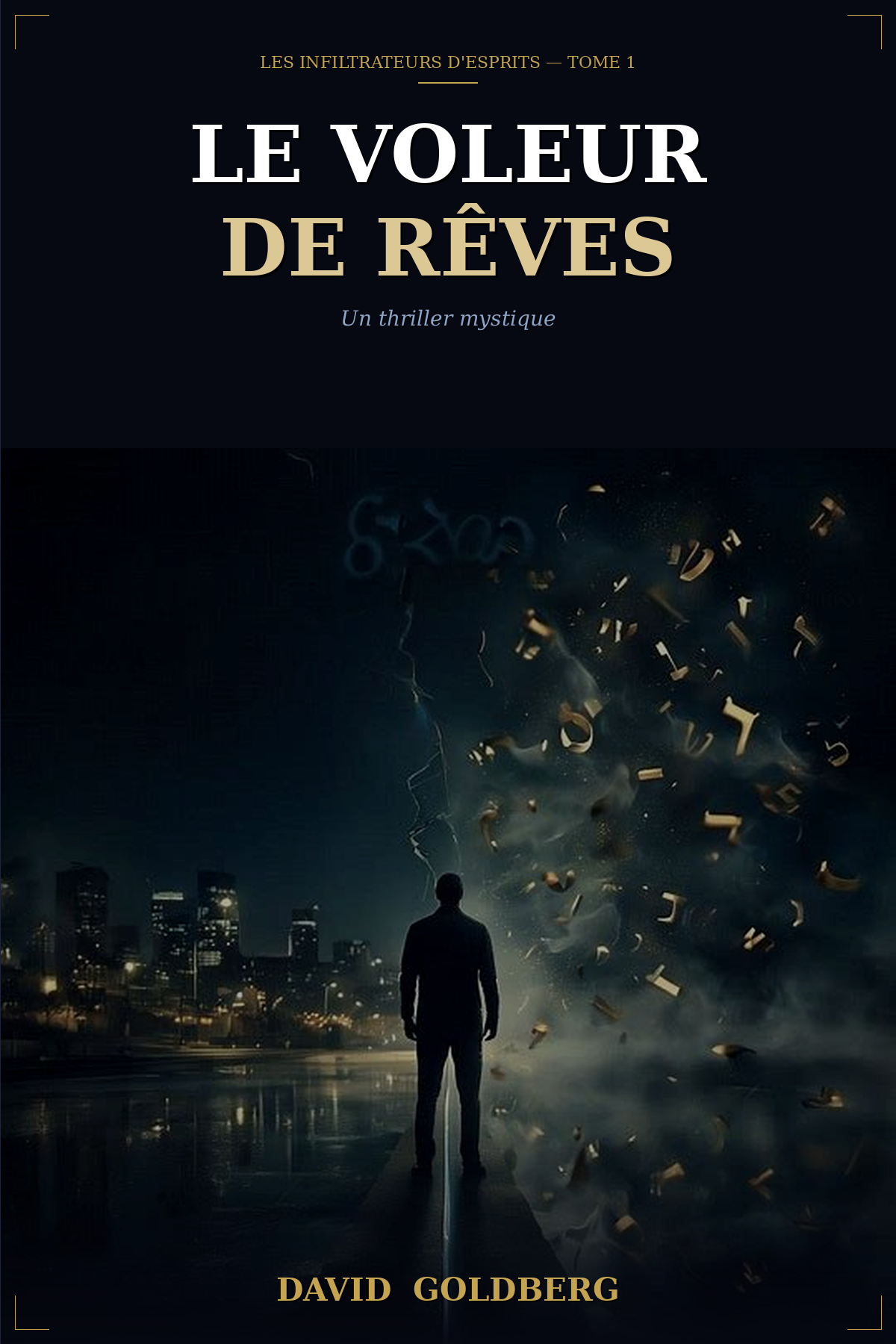
The Dream Thief

The Dream Thief

A spiritual thriller · David Goldberg

David Weiss has not dreamed in seven years. Then he discovers that someone can enter dreams — and steal a man's share in the World to Come. Drawn from Talmud and Kabbalah.

📖 Read the free excerpt · Book $9.90