
The Torah says "the blessing, Asher (אשר) you listen" and "the curse, Im (אם) you do not listen." Rashi flags the shift: why the different word? Answer — Asher does not mean "if" but "power." G-d gives only the blessing — the strength to keep the mitzvot; the curse is never given, it is born of our own choice not to use that strength.
Later, the parasha links joy to livelihood: "You shall rejoice before Hashem your G-d in every undertaking of your hand." A sacred Name hidden inside "You open Your hand and satisfy every living thing" (Tehillim 145) — Chataf Chaf, gematria 428 — is tied to livelihood, and Yosef sent it to Yaakov to restore his prophecy and his joy.
That is why the Rosh Hashanah blessing is "to hear the sound of the shofar" rather than "on the sounding of the shofar" — because it is G-d Himself who "hears" through our ears, and to hear, in Hebrew as in English ("I see" = "I understand"), means to understand. What Hashem listens for is the broken heart returning in teshuva.
Heading into Elul, one question remains: who takes the first step toward the other — man or G-d? The answer: both together, like a shadow that mirrors our own movements exactly.
The parasha opens in the singular — "Reeh" — then shifts to the plural — "lifneikhem." Why? Because in Sefer Devarim, Moshe Rabbeinu wants each person to feel personally addressed — so no one can think "he's not talking to me, I'm already fine." Add one individual to another, one at a time, and in the end you get the collective — exactly as at Har Sinai, where it says "Vayichan sham Yisrael" (singular verb, though the plural "vayachanu" would be expected): to teach that the people encamped as one man, with one heart.
Moshe could have said "Asher" both times, or "Im" both times. Why the switch between blessing and curse? Rashi answers: "the blessing, on condition (al menat) that you listen" — reading "Asher" as pointing to a purpose. But how do we get from the word "Asher" to that idea?
The proof comes from another verse, on idolatry: "Lo tita lecha asheira" ("you shall not plant an asheira tree"). The nations built their idols from a particularly strong wood — the asheira. From there: the word "asher" carries the sense of strength, power. "Asher shibarta" becomes "you had the strength to break." Modern Hebrew keeps the same root: to give a document legal force is "le'asher" it — to empower it.
The Holy One, blessed be He, does not give a curse. He gives only the blessing — the strength to act. That is why the text says "the curse, Im you do not listen": if you fail to use the strength you were given, you yourself turn that unused strength into a curse. As it is written: "Out of the mouth of the Most High neither evil nor good proceeds" — only good goes out from Him.
Later in the parasha comes the mitzvah of joy on Sukkot — "Vehayita akh sameach." Why specifically Sukkot? Because sitting in the sukkah, one realizes that what matters in life is not walls or possessions, but nestling under the shade of the Shechina — just four days after Yom Kippur has cleansed us of our sins. But the Torah draws a broader link: livelihood itself depends on joy.
In the daily blessing of "Shomea Tefilah" appears the verse: "Potei'ach et yadecha, u'masbia lechol chai ratzon" — "You open Your hand and satisfy the desire of every living thing" (Tehillim 145). From this verse the sacred Name Chataf Chaf is derived.
The Gemara (Berachot 4b) asks why "Ashrei yoshvei veitecha" is recited three times daily and earns the World to Come: not because it follows the alef-bet — other psalms do too — but because it uniquely holds both the full alef-bet and this verse of livelihood. No other psalm combines the two.
What exactly did Yosef send his father? Rashi: "Kezot — kemniyan haze" — "as the count of this." The word kezot itself equals 428 in gematria: Yosef sent Yaakov the sacred Name Chataf Chaf, the Name of livelihood.
This Name is not activated for free: one must first give an ayin tova, a generous eye toward others, to merit G-d turning His generous eye toward us.
A curiosity in our blessings: for netilat yadayim, we bless "al netilat yadayim"; for the chanukiah, "lehadlik ner"; but for the shofar, we bless "lishmoa kol shofar" — "to hear the sound of the shofar" — not "al tekiat shofar." Yet it is the one who blows who makes the blessing, while it is the congregation that listens!
The answer: it is the Holy One Himself who "hears" the sound of the shofar — through our ears. If the congregation truly listens, G-d listens with them. And "lishmoa" does not simply mean "to hear": in Hebrew, in French ("entendre" = to understand), or in English ("I see" = "I understand"), lishmoa means to understand. Understanding lives in the heart — "lev shomea," a listening heart. What Hashem truly hears is the broken heart returning to Him in teshuva.
Elul — an acronym from Shir Hashirim: "Ani ledodi vedodi li" — "I am to my beloved and my beloved is to me." "Dodi" doesn't come from "dod" (uncle) but from the root "yadid" — friend, literally one who "gives a hand" (yad). By this verse, we take the first step.
Midrash Tehillim (Shocher Tov) on "Hashem tzilcha al yad yeminecha" (Tehillim 121:5) settles this with an image: "Like a shadow — if you laugh, it laughs with you; if you cry, it cries with you — so does G-d: He treats you according to your own deeds." The same idea appears in the Gemara: "Baderech she'adam rotzeh leilech, molichin oto" — "on the path a person wants to walk, he is led" (Makot 10b), developed further by the Maharal and the Shela HaKadosh: man awakens from below what answers him from above.
As Elul begins: may the strength given as blessing, the joy, and the first step toward Hashem lead us — and all of Israel — to a year of true livelihood and redemption. Amen.
🎯 Test Yourself
Five questions. Tap an answer.
Result
Shalom Bayit — Peace at Home
My covenant of peace — peace begins at home. Discover a Shalom Bayit card.
All the Parashot
Every shiur by M. Yéhouda Himi — from Bereishit to Devarim and the festivals.
📚 All ParashotBooks
Torah wisdom in thriller form — Éditions Gueoula.
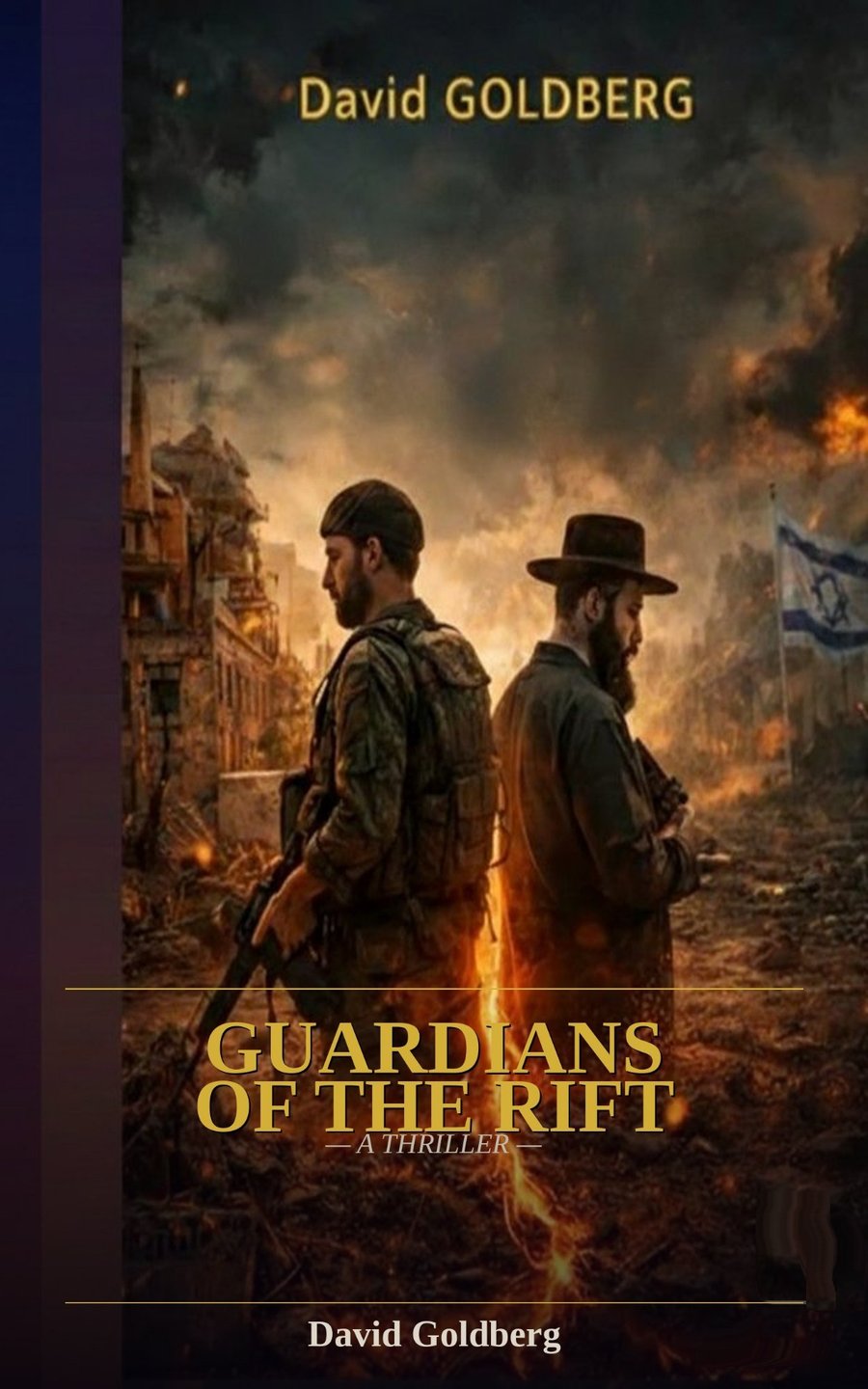
Guardians of the Rift
Forty-nine gates open — the fiftieth hides in a single moment. An ancient secret resurfaces, and one man stands between the rift and the world. Drawn from the Talmud and Kabbalah.
📖 Read the free sample · Book $9.90