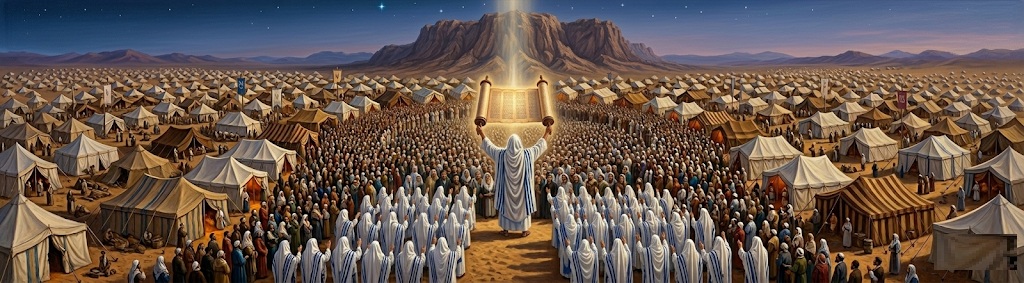
Who Will Testify for Israel?
Shiur de M. Yéhouda Himi · Chag HaShavuot 5786
At the end of days, when Hashem will judge the nations, He will offer to testify Himself for Israel — yet a father is "disqualified to testify for his son." Why does Hashem propose what He knows cannot stand? The answer rewrites everything we thought we knew about receiving the Torah.
שבועות — תקציר
שלוש מקורות נפרדים. רעיון אחד.
סנהדרין צט ע״ב — אומר ריש לקיש: ״כל המלמד את בן חברו תורה, מעלה עליו הכתוב כאילו עשאו.״ אברהם ושרה בחרן — מה הם ״עשו״? נשמות. הם בראו אנשים על ידי שלימדום תורה.
מדרש רבה — אם תשמרו את התורה, מעלה עליכם הכתוב כאילו עשיתם את עצמכם. ״ועשיתם אותם״ — קרי אַתֶּם.
עבודה זרה ב ע״א — לעתיד לבוא הקב״ה מביא ספר תורה. מי שעסק בה — יבוא ויטול שכרו. רומי באה ראשונה. ה׳ דוחה. פרס באה. ה׳ דוחה. האומות מתלוננות: ״האם הצעת לנו אי פעם תורה?״ ה׳ ממנה את נמרוד, לבן, פוטיפר כעדים על ישראל. ואז — הניסיון הסופי: ״עשו מצוה אחת קלה — סוכה.״ הקב״ה מוציא חמה מנרתיקה (כתמוז), והגויים בועטים בסוכתם ויוצאים. ויושב בשמים ישחק.
Shavuot — Summary
Three separate sources. One single idea.
Sanhedrin 99b — Resh Lakish teaches: "Whoever teaches Torah to his neighbor's son, the Scripture considers it as if he had created him." Avraham and Sarah in Charan — what did they "make"? Souls. They created human beings by teaching them Torah.
Midrash Rabbah — If you keep the Torah, the Scripture considers it as if you created yourselves. The verse "va'asitem otam" (you shall do them) is read "atem" (you, yourselves).
Avoda Zara 2a — In the future, Hashem brings forth a Sefer Torah. Whoever engaged with it — come and take your reward. Rome enters first. Rejected. Persia enters. Rejected. The nations protest: "Did You ever offer us Torah?" Hashem summons Nimrod, Lavan, Potiphar as witnesses to Israel. Then — the final test: "Perform one light mitzvah — sukkah." Hashem brings out the sun from its sheath as in Tammuz; the nations kick their sukkah and leave. And He who sits in heaven laughs.
Chavouot — Résumé
Trois sources distinctes. Une seule idée.
Sanhédrin 99b — Rich Lakich enseigne : « Celui qui enseigne la Torah au fils de son prochain, l'Écriture le considère comme s'il l'avait créé. » Avraham et Sarah à H'aran — qu'ont-ils « fait » ? Des âmes. Ils créaient des êtres humains en leur enseignant la Torah.
Midrash Rabba — Si vous gardez la Torah, l'Écriture vous considère comme si vous vous étiez créés vous-mêmes. Le verset « va'assitem otam » (vous les ferez) est lu « atem » (vous, vous-mêmes).
Avoda Zara 2a — Dans le futur, Hashem apporte un Sefer Torah. Qui s'en est occupé — qu'il vienne et prenne son salaire. Rome entre la première. Refusée. La Perse entre. Refusée. Les nations protestent : « Nous as-Tu jamais offert la Torah ? » Hashem convoque Nimrod, Lavan, Potiphar comme témoins sur Israël. Puis — le test final : « Accomplissez une mitsva légère — la soucca. » Hashem fait sortir le soleil de sa gaine comme à Tamouz ; les nations donnent un coup de pied dans leur soucca et sortent. Et Celui qui siège dans les cieux rit.
פתיחה — לשם ההצלחה של חג השבועות
בואו נדבר בענייני חג השבועות. ביום בו ניתנה לנו התורה לפני כשלושת אלפים ושלוש מאות שנים. וכבר מקדימים אנו את החג בלימוד, על מנת לזכות לקבל את התורה ביראה ובאהבה.
חלק א — ״הנפש אשר עשו בחרן״
שאלה פשוטה: איך אפשר ״לעשות״ נפש? בני אדם אינם נעשים — הם נולדים. אז מה היו אברהם ושרה ״עושים״ בחרן?
״כל המלמד את בן חברו תורה — מעלה עליו הכתוב כאילו עשאו, שנאמר: ׳ואת הנפש אשר עשו בחרן׳.״
ריש לקיש פתח בפנינו דלת. אברהם ושרה לימדו תורה לאלפים. כל מי שלמדו ממנו — הוא ״עשה״ אותו. הוא בראו מחדש. הוא לקח אדם שנולד מסביבה אלילית, וברא ממנו אדם של תורה.
זה לא ביטוי פיוטי. זאת אמירה הלכתית. מי שמלמד תורה — בורא נפש.
חלק ב — ״כאילו עשיתם את עצמכם״
אבל יש מקור נוסף, נועז יותר.
״׳ועשיתם אותם׳ — אל תקרי אותם אלא אתם. אמר רבי חנינא בר פפי: אם שמרתם את התורה, מעלה אני עליכם כאילו עשיתם את עצמכם.״
שמיעה את זה. אם תשמור את התורה, הקב״ה אומר לך: ״אני מתייחס אליך כאילו אתה בראת את עצמך.״
זה הופך הכל. בלי תורה, היהודי הוא ילד של אביו שבשמים. קטין. תלוי. עם תורה — היהודי הופך לאישיות עצמאית. הוא מגיע לסטטוס של ״בורא עצמו״.
וכאן עולה השאלה הסודית של החג.
חלק ג — המשפט של אחרית הימים
הגמרא מציירת בפנינו תמונה דרמטית. סוף הזמן. הקב״ה יושב בדין. ספר תורה בחיקו. וקריאה אחת: ״מי שעסק בה — שיבוא ויקבל שכרו.״
רומי באה ראשונה
״עסקנו בשווקים, בנינו גשרים, כיבשנו אומות.״ אומר להם הקב״ה: ״כל מה שעשיתם — לעצמכם עשיתם. גשרים — לגבות מכס. שווקים — להרוויח. לא לשמי.״ נדחים.
פרס באה אחריה
״עסקנו במלחמות, יישבנו ערים.״ אותה תשובה: ״לעצמכם.״ נדחים.
טענת האומות
הן מתלוננות בקול גדול: ״ריבונו של עולם! האם הצעת לנו אי פעם את התורה? אם היית מציע לנו, גם אנחנו היינו מקבלים!״
זאת טענה רצינית. הקב״ה אכן הציע את התורה לכל האומות לפני שנתן אותה לישראל (ספרי דברים שמג). אז למה לא קיבלו?
וכאן — הקושיא הגדולה.
הקושיא הסודית — וההסבר של מרן
הלכה ידועה היא: ״קרוב פסול לעדות״. אב אינו יכול להעיד על בנו. בעל אינו יכול להעיד על אשתו. כי הקרבה יוצרת ניגוד אינטרסים.
ה׳ הוא אבינו. ישראל הם בניו. אז איך הקב״ה מציע להעיד על בניו? הוא יודע את ההלכה — הוא נתן אותה!
אומות העולם הוסיפו בדיוק את הטענה הזו: ״אתה אביהם — אתה פסול להעיד!״
הקב״ה הציע בכוונה בדיוק כדי שייאמר עליו ״פסול לעדות״. כי הוא רוצה להגיע למסקנה הבאה:
״אם אני פסול להעיד עליהם — זה אומר שהם בניי. אבל אם הם בניי — איך הם בניי? כי לימדתי אותם תורה. וכל המלמד תורה כאילו עשאו. וכל השומר את התורה — כאילו עשה את עצמו. אז הם כבר לא רק בניי. הם אישיויות עצמאיות. ואני יכול להעיד עליהם בלי קושי.״
זאת תפנית סודית. הקב״ה ״מודה״ באופן ציבורי שהוא פסול — כדי לחשוף שישראל הוא העם היחיד שלמד תורה והפך להיות עצמאי בקיומו.
אז למה לא קיבלו אומות העולם את התורה? כי הן רצו להישאר תלויות בקב״ה כילדים תלויים. הן רצו ברכה בלי מאמץ. הן רצו אבא בלי תורה. אבל ה׳ אינו רוצה ילדים. הוא רוצה שותפים.
חלק ד — הניסיון הסופי של הסוכה
האומות אינן מוותרות. הן מתלוננות שוב. אומר להן הקב״ה:
שלב את היופי של הסיבוב. הקב״ה אומר: ״ניתן לכם הזדמנות שנייה. מצווה אחת קלה — סוכה. תבנו אותה.״
כל אחד מהם רץ לבנות סוכה על גג ביתו. ואז —
ויושב בשמים — ישחק.
למה הסוכה? אומר מרן: כי הסוכה היא הביטוי הטהור ביותר של אמונה. אדם יוצא מביתו לחדר לא חתום, חשוף לרוחות ולגשם. הוא יושב שם בגלל שהקב״ה אמר. בלי תועלת, בלי רווח, בלי הסבר רציונלי.
היהודי שיושב בסוכה בגשם אינו בועט בסוכתו. למה? כי הוא יודע ש״מצטער פטור מן הסוכה.״ אם הגשם חזק — הוא יוצא בכבוד. אבל לא בועט. הסוכה היא קדושה לעיניו, גם כשהיא אינה נוחה לו.
הגוי שמקבל מצוה ״קלה״ ומיד הסביבה הופכת קשה — אינו רואה את הסוכה כקודש. הוא רואה אותה ככלי. בועט.
סיכום — המסר של החג
שלוש המקורות מתחברים. אברהם ושרה ״עשו נפשות״ בחרן — הם בראו אנשים על ידי תורה. ישראל בסיני ״עשו את עצמם״ — הם בראו את עצמם על ידי קבלת התורה. ובאחרית הימים — ה׳ יוכיח שזאת בריאה אמתית, שישראל אינם רק בניו, אלא שותפיו.
וזאת המתנה של חג השבועות. לא רק לימוד. לא רק ידע. בריאה.
כל פעם שאתה לומד תורה — אתה בורא משהו. את עצמך. את ילדיך. את עם ישראל כולו. וכאשר תיגמר ההיסטוריה ויפתח הספר הגדול — הקב״ה יעיד עליך. כי הוא יכול להעיד. כי אתה כבר לא רק בנו. אתה האדם שבראת.
חג שמח. ויהי רצון שתזכו לקבל את התורה ביראה ובאהבה.
Opening — For a Successful Festival of Shavuot
Let us speak of matters related to the festival of Shavuot. The day on which the Torah was given to us, some three thousand three hundred years ago. And we are already preparing for the festival through study, that we may merit to receive the Torah in awe and in love.
Part I — "The Souls They Had Made in Charan"
A simple question: how can one "make" a soul? Human beings are not made — they are born. So what were Avraham and Sarah "making" in Charan?
"Whoever teaches Torah to his neighbor's son — the Scripture considers it as if he had made him, as it is said: 'and the souls they had made in Charan.'"
Resh Lakish opens a door for us. Avraham and Sarah taught Torah to thousands. Every person they taught — they "made." They created him anew. They took a person born into an idolatrous environment and made of him a person of Torah.
This is not poetic language. It is a halakhic statement. One who teaches Torah — creates a soul.
Part II — "As if you had made yourselves"
But there is another source, bolder still.
"'And you shall do them' — do not read otam (them) but atem (you, yourselves). Rabbi Chanina bar Papi said: If you keep the Torah, I consider it as if you had made yourselves."
Hear it. If you keep the Torah, the Holy One says to you: "I regard you as if you had created yourself."
This changes everything. Without Torah, a Jew is a child of his Father in heaven. A minor. Dependent. With Torah — the Jew becomes an autonomous self. He reaches the status of "creator of himself."
And here rises the secret question of the festival.
Part III — The Trial at the End of Days
The Gemara paints a dramatic picture. The end of time. The Holy One sits in judgment. A Sefer Torah in His lap. And one call: "Whoever engaged with it — let him come and receive his reward."
Rome enters first
"We dealt in markets, we built bridges, we conquered nations." The Holy One says: "Everything you did — you did for yourselves. Bridges — to collect tolls. Markets — for profit. Not for My Name." Rejected.
Persia enters next
"We engaged in wars, we settled cities." The same answer: "For yourselves." Rejected.
The nations' protest
They cry out with one voice: "Master of the universe! Did You ever offer us the Torah? If You had offered it to us, we too would have accepted!"
This is a serious claim. The Holy One did in fact offer the Torah to every nation before giving it to Israel (Sifrei Devarim 343). So why did they not accept?
And here — the great difficulty.
The Hidden Difficulty — and M. Himi's Chidush
There is a well-known halakhah: "a close relative is disqualified as a witness." A father cannot testify for his son. A husband cannot testify for his wife. Because closeness creates a conflict of interest.
God is our Father. Israel are His children. So how can the Holy One offer to testify for His children? He knows the halakhah — He gave it!
The nations of the world add exactly this argument: "You are their Father — You are disqualified!"
The Holy One offered to testify precisely so that it would be said about Him: "disqualified." Because He is leading us to the following conclusion:
"If I am disqualified from testifying about them — that means they are My children. But if they are My children — how are they My children? Because I taught them Torah. And one who teaches Torah is as if he made him. And one who keeps the Torah — is as if he made himself. So they are no longer merely My children. They are autonomous selves. And I can testify about them without difficulty."
This is a secret reversal. The Holy One publicly "concedes" that He is disqualified — in order to reveal that Israel is the only people who studied Torah and became autonomous in their existence.
So why did the nations not accept the Torah? Because they wanted to remain dependent on the Holy One as dependent children. They wanted blessing without effort. They wanted a Father without Torah. But God does not want children. He wants partners.
Part IV — The Final Test of the Sukkah
The nations do not give up. They protest again. The Holy One says to them:
Behold the beauty of the move. The Holy One says: "I will give you a second chance. One light mitzvah — sukkah. Build it."
Each of them runs to build a sukkah on the roof of his house. And then —
And He who sits in heaven — laughs.
Why the sukkah? M. Himi explains: because the sukkah is the purest expression of faith. A person leaves his house for an unsealed room, exposed to wind and rain. He sits there because the Holy One said so. Without benefit, without profit, without rational explanation.
The Jew who sits in his sukkah in the rain does not kick his sukkah. Why? Because he knows that "one who suffers is exempt from the sukkah." If the rain is heavy — he leaves with dignity. But he does not kick. The sukkah is sacred in his eyes, even when it is not comfortable for him.
The gentile who receives a "light" mitzvah and immediately the environment turns harsh — does not see the sukkah as sacred. He sees it as a tool. He kicks.
Conclusion — The Message of the Festival
The three sources connect. Avraham and Sarah "made souls" in Charan — they created human beings through Torah. Israel at Sinai "made themselves" — they created themselves by receiving the Torah. And at the end of days — God will prove that this is true creation, that Israel are not merely His children, but His partners.
And this is the gift of Shavuot. Not only learning. Not only knowledge. Creation.
Every time you learn Torah — you create something. Yourself. Your children. The entire people of Israel. And when history ends and the great book is opened — the Holy One will testify for you. Because He can testify. Because you are no longer merely His son. You are the person you created.
Chag Sameach. May you merit to receive the Torah in awe and in love.
Ouverture — Pour la réussite de la fête de Chavouot
Parlons des sujets liés à la fête de Chavouot. Le jour où la Torah nous fut donnée, il y a quelque trois mille trois cents ans. Et nous nous préparons déjà à la fête par l'étude, afin de mériter de recevoir la Torah dans la crainte et dans l'amour.
Partie I — « Les âmes qu'ils avaient faites à H'aran »
Une question simple : comment peut-on « faire » une âme ? Les êtres humains ne se font pas — ils naissent. Alors que « faisaient » Avraham et Sarah à H'aran ?
« Celui qui enseigne la Torah au fils de son prochain — l'Écriture le considère comme s'il l'avait fait, ainsi qu'il est dit : "et les âmes qu'ils avaient faites à H'aran." »
Rich Lakich nous ouvre une porte. Avraham et Sarah enseignaient la Torah à des milliers. Chaque personne qu'ils ont enseignée — ils l'ont « faite ». Ils l'ont créée à nouveau. Ils ont pris une personne née dans un environnement idolâtre et en ont fait une personne de Torah.
Ce n'est pas un langage poétique. C'est une affirmation halakhique. Celui qui enseigne la Torah — crée une âme.
Partie II — « Comme si vous vous étiez faits vous-mêmes »
Mais il existe une autre source, encore plus audacieuse.
« "Et vous les ferez" — ne lis pas otam (eux) mais atem (vous, vous-mêmes). Rabbi 'Hanina bar Papi a dit : Si vous gardez la Torah, Je vous considère comme si vous vous étiez faits vous-mêmes. »
Entends cela. Si tu gardes la Torah, le Saint béni soit-Il te dit : « Je te considère comme si toi avais créé toi-même. »
Cela change tout. Sans Torah, le Juif est un enfant de son Père céleste. Un mineur. Dépendant. Avec la Torah — le Juif devient un être autonome. Il atteint le statut de « créateur de lui-même ».
Et ici s'élève la question secrète de la fête.
Partie III — Le procès de la fin des temps
La Guemara nous dépeint une image dramatique. La fin des temps. Le Saint béni soit-Il siège en jugement. Un Séfer Torah dans Son giron. Et un seul appel : « Que celui qui s'en est occupé — vienne et reçoive son salaire. »
Rome entre la première
« Nous nous sommes occupés des marchés, nous avons bâti des ponts, nous avons conquis des nations. » Le Saint béni soit-Il leur dit : « Tout ce que vous avez fait — vous l'avez fait pour vous-mêmes. Des ponts — pour percevoir les péages. Des marchés — pour le profit. Pas pour Mon Nom. » Rejetés.
La Perse entre ensuite
« Nous nous sommes engagés dans des guerres, nous avons peuplé des villes. » Même réponse : « Pour vous-mêmes. » Rejetés.
La protestation des nations
Elles s'écrient d'une seule voix : « Maître de l'univers ! Nous as-Tu jamais offert la Torah ? Si Tu nous l'avais offerte, nous aussi nous l'aurions acceptée ! »
C'est une revendication sérieuse. Le Saint béni soit-Il a en effet offert la Torah à chaque nation avant de la donner à Israël (Sifrei Devarim 343). Alors pourquoi ne l'ont-elles pas acceptée ?
Et ici — la grande difficulté.
La difficulté cachée — et le 'hidouch de M. Himi
Il existe une halakhah bien connue : « un proche est disqualifié pour témoigner ». Un père ne peut témoigner pour son fils. Un mari ne peut témoigner pour sa femme. Car la proximité crée un conflit d'intérêts.
D. est notre Père. Israël sont Ses enfants. Alors comment le Saint béni soit-Il peut-Il se proposer comme témoin pour Ses enfants ? Il connaît la halakhah — c'est Lui qui l'a donnée !
Les nations du monde ajoutent exactement cette objection : « Tu es leur Père — Tu es disqualifié ! »
Le Saint béni soit-Il s'est proposé comme témoin précisément pour qu'on Lui dise : « disqualifié ». Parce qu'Il nous conduit à la conclusion suivante :
« Si Je suis disqualifié pour témoigner sur eux — cela signifie qu'ils sont Mes enfants. Mais s'ils sont Mes enfants — comment sont-ils Mes enfants ? Parce que Je leur ai enseigné la Torah. Et celui qui enseigne la Torah est comme s'il l'avait fait. Et celui qui garde la Torah — est comme s'il s'était fait lui-même. Alors ils ne sont plus seulement Mes enfants. Ils sont des êtres autonomes. Et Je peux témoigner sur eux sans difficulté. »
C'est un retournement secret. Le Saint béni soit-Il « concède » publiquement qu'Il est disqualifié — afin de révéler qu'Israël est le seul peuple qui ait étudié la Torah et soit devenu autonome dans son existence.
Alors pourquoi les nations n'ont-elles pas accepté la Torah ? Parce qu'elles voulaient rester dépendantes du Saint béni soit-Il comme des enfants dépendants. Elles voulaient la bénédiction sans l'effort. Elles voulaient un Père sans la Torah. Mais D. ne veut pas d'enfants. Il veut des partenaires.
Partie IV — L'épreuve finale de la soucca
Les nations n'abandonnent pas. Elles protestent à nouveau. Le Saint béni soit-Il leur dit :
Vois la beauté du mouvement. Le Saint béni soit-Il dit : « Je vous donne une seconde chance. Une mitsva légère — la soucca. Construisez-la. »
Chacune d'elles court construire une soucca sur le toit de sa maison. Et alors —
Et Celui qui siège dans les cieux — rit.
Pourquoi la soucca ? M. Himi explique : parce que la soucca est l'expression la plus pure de la foi. Une personne quitte sa maison pour une pièce non hermétique, exposée au vent et à la pluie. Elle s'y assoit parce que le Saint béni soit-Il l'a dit. Sans bénéfice, sans profit, sans explication rationnelle.
Le Juif qui s'assied dans sa soucca sous la pluie ne donne pas de coup de pied dans sa soucca. Pourquoi ? Parce qu'il sait que « celui qui souffre est exempté de la soucca ». Si la pluie est forte — il sort avec dignité. Mais il ne donne pas de coup de pied. La soucca est sacrée à ses yeux, même quand elle n'est pas confortable pour lui.
La nation qui reçoit une mitsva « légère » et dont immédiatement l'environnement devient rude — ne voit pas la soucca comme sacrée. Elle la voit comme un outil. Elle donne un coup de pied.
Conclusion — Le message de la fête
Les trois sources se rejoignent. Avraham et Sarah ont « fait des âmes » à H'aran — ils ont créé des êtres humains par la Torah. Israël au Sinaï s'est « fait lui-même » — il s'est créé en recevant la Torah. Et à la fin des temps — D. prouvera que c'est une véritable création, qu'Israël n'est pas seulement Ses enfants, mais Ses partenaires.
Et c'est le cadeau de Chavouot. Pas seulement l'étude. Pas seulement la connaissance. La création.
Chaque fois que tu étudies la Torah — tu crées quelque chose. Toi-même. Tes enfants. Le peuple d'Israël tout entier. Et quand l'histoire prendra fin et que le grand livre s'ouvrira — le Saint béni soit-Il témoignera pour toi. Parce qu'Il peut témoigner. Parce que tu n'es plus seulement Son fils. Tu es la personne que tu as créée.
'Hag Saméa'h. Puissiez-vous mériter de recevoir la Torah dans la crainte et dans l'amour.
🎯 חידון שיעור שבועות
חמש שאלות. לחץ על תשובה לראות אם צדקת.
1. מה אומר ריש לקיש על המלמד תורה לבן חברו?
2. איך קוראים חז״ל את הפסוק ״ועשיתם אותם״?
3. למה הקב״ה מציע להעיד על ישראל אם הוא ״קרוב פסול לעדות״?
4. מה הגויים עושים כשה׳ מוציא חמה מנרתיקה?
5. למה היהודי לא בועט בסוכתו גם בגשם חזק?
🎯 Shavuot Shiur Quiz
Five questions. Click an answer to see if you got it right.
1. What does Resh Lakish say about one who teaches Torah to his neighbor's son?
2. How do the Sages read the verse "va'asitem otam"?
3. Why does God offer to testify for Israel if "a close relative is disqualified"?
4. What do the nations do when God brings the sun out of its sheath?
5. Why doesn't a Jew kick his sukkah even in heavy rain?
🎯 Quiz Shiur Chavouot
Cinq questions. Clique sur une réponse pour voir si tu as juste.
1. Que dit Rich Lakich de celui qui enseigne la Torah au fils de son prochain ?
2. Comment les Sages lisent-ils le verset « va'assitem otam » ?
3. Pourquoi D. se propose-t-Il comme témoin pour Israël s'Il est « un proche disqualifié » ?
4. Que font les nations quand D. sort le soleil de sa gaine ?
5. Pourquoi un Juif ne donne-t-il pas de coup de pied dans sa soucca même sous une pluie battante ?
קבל · הקדש · תמוך
כל יום שישי — פרשה חדשה לתיבת הדואר שלך. וגם — דרך להקדיש את השיעור הזה לאדם אהוב.
קבל את הפרשה
כל יום שישי לפני שבת — הפרשה החדשה, מלאה, בשלוש שפות, חינם.
הקדש את השיעור
לעילוי נשמת, לרפואת חולה, להצלחת ילד — קבל תעודה מהודרת להדפסה ושמירה.
✦ הצע תפילה ←בחר את הכוונה בעמוד המוקדש. בדיסקרטיות, מאובטח, ללא התחייבות.
Receive · Dedicate · Support
Every Friday, a new paracha in your inbox — and a way to dedicate this shiur to someone you love.
Receive the Paracha
Each Friday before Shabbat — the new paracha in full, trilingual, free.
Dedicate this Shiur
In memory of a loved one, for the healing of a patient, for the success of a child — receive a certificate to print and keep.
✦ Offer a prayer →Choose your intention on the dedicated page. Discreet, secure, no commitment.
Reçois · Dédie · Soutiens
Chaque vendredi, une nouvelle paracha dans ta boîte mail — et un moyen de dédier ce shiur à quelqu'un que tu aimes.
Recevoir la paracha
Chaque vendredi avant Shabbat — la nouvelle paracha en entier, trilingue, gratuite.
Dédier ce shiur
À la mémoire d'un proche, pour la guérison d'un malade, pour la réussite d'un enfant — reçois un certificat à imprimer et conserver.
✦ Offrir une prière →Choisis ton intention sur la page dédiée. Discret, sécurisé, sans engagement.
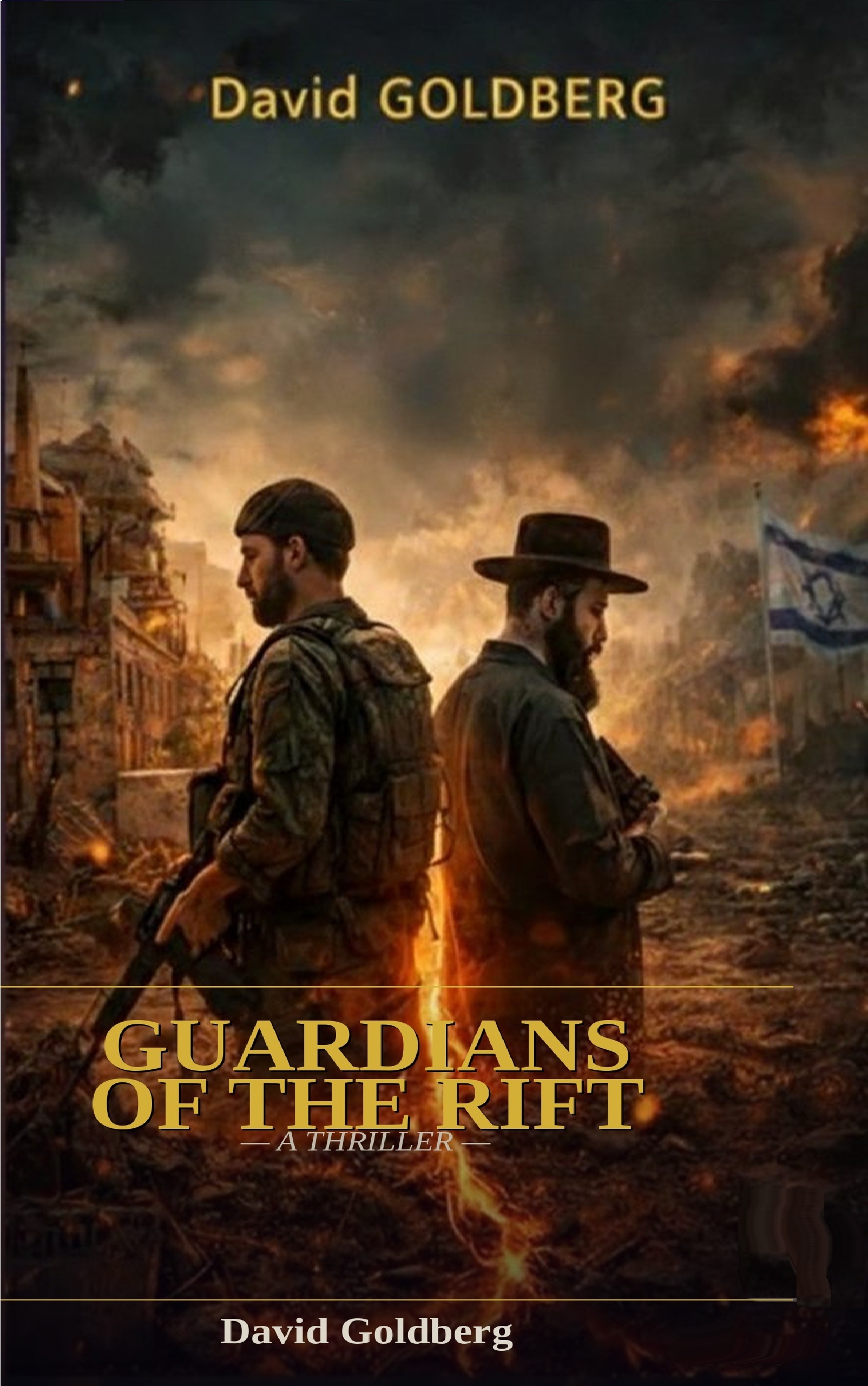
Guardians of the Rift
After October 7th, a hidden fracture opens in the soul of Israel. A spiritual thriller that reads like Dan Brown — and ends like the Zohar. Yours, free, in seconds.
📖 Download free (email required)
Les Gardiens de la Faille
Après le 7 octobre, une faille cachée s'ouvre dans l'âme d'Israël. Un thriller spirituel qui se lit comme Dan Brown — et finit comme le Zohar. À toi, gratuit, en quelques secondes.
📖 Télécharger gratuit (email requis)
Guardians of the Rift
אחרי השביעי באוקטובר, סדק נסתר נפתח בנשמת ישראל. תריילר רוחני שנקרא כמו דן בראון — ומסתיים כמו הזוהר. שלך, חינם, בשניות.
📖 הורד חינם (דרוש מייל)M. Yéhouda Himi · Éditions Gueoula · Chavouot 5786 · gueoula.com