Toldot —
Each Prayed for the Other
Why does the Torah say “Yitzhak son of Avraham,” and then again “Avraham fathered Yitzhak”? A first answer: it was after receiving the name Avraham that he fathered Yitzhak. Rashi gives another: the scoffers of the generation said that Sarah had conceived from Avimelech, and Hashem made Yitzhak’s face resemble Avraham’s. The accusation was absurd, since Avraham had already had Yishmael, but against scoffers there is no counsel. M. Himi adds a third reading: the son is proud of his father, the father is proud of his son. That is why Hashem hides nothing from Avraham, “for I know that he will command his children to do righteousness and justice.” Then prayer: Yitzhak and Rivka each pray in a corner, and Hashem answers “him and not her,” because the prayer of a righteous son of a righteous man is not like that of a righteous child of a wicked one. But doesn’t Rivka, who came out righteous from a house of wicked people, have the greater merit? The chiddush: Yitzhak asked that Rivka’s prayer be answered, and Rivka asked for Yitzhak’s. Hashem answered Yitzhak — that is, his request: that Rivka’s prayer be received.
Words of Torah do good when they are shared. Send this shiur to your family and friends on WhatsApp.
📲 Send on WhatsApp👥 Join the Gueoula groupToday is the first of Kislev; with Hashem’s help, Rosh Chodesh Kislev — the month of lights, as they say. So let us learn a little of the lights of the Torah, let us receive a little of the lights of the Torah.
“These are the generations of Yitzhak son of Avraham: Avraham fathered Yitzhak.” We know the Rashi. The question is famous: why must the Torah repeat itself? If you said “these are the generations of Yitzhak son of Avraham,” if you said that Yitzhak is Avraham’s son, why must you tell me once again “Avraham fathered Yitzhak”?
There is “to father,” and there is “to give birth.” In Hebrew, “holid” is Avraham, the man: the man fathers; the woman gives birth. So this expression is precise.
But here is the difficulty: if you already told me that Yitzhak is Avraham’s son, it is obvious that Avraham fathered Yitzhak. That is the difficulty Rashi raises. And there are two answers.
A first answer: after the Holy One, blessed be He, called him by the name Avraham, then he fathered Yitzhak.
That is: “these are the generations of Yitzhak son of Avraham.” For we know that before, Avraham was called Avram. So the Torah wants to tell you: do you know when Avraham fathered Yitzhak? After he received his name Avraham. When he was Avraham, then he fathered Yitzhak. That is one explanation.
Another explanation — Rashi says: “Because the verse wrote ‘Yitzhak son of Avraham,’ it needed to say ‘Avraham fathered Yitzhak.’ For the scoffers of the generation were saying: Sarah conceived from Avimelech; after all, she lived so many years with Avraham and did not conceive from him.”
Avraham and Sarah live together until ninety, and Avraham has no child from her. But right after the Avimelech story, as soon as they left Avimelech, it is written: “And Hashem remembered Sarah as He had said.” So from this juxtaposition, people said: obviously, she was with Avimelech, so it was from Avimelech that she conceived.
So, to tell you: “What did the Holy One, blessed be He, do? He shaped the features of Yitzhak’s face to resemble Avraham, and everyone testified: Avraham fathered Yitzhak.” That is, Yitzhak’s face was exactly like that of Avraham Avinu. Everyone testified: we see this baby, we look at him, now we are sure that Avraham fathered Yitzhak. There is testimony here, so that you do not think, Heaven forbid, that she conceived from Avimelech.
But pay attention: the Holy One, blessed be He, runs the whole world. He makes sure that Yitzhak’s face is like Avraham Avinu’s, so that this slander does not spread.
But what is absurd about this accusation? The accusation is absurd. Why? Because to say that she conceived from Avimelech, you would, so to speak, have to say that the problem was with whom? With Avraham.
But it is proven that Avraham had no problem of infertility. How do we know? Because thirteen years before that, he had fathered Yishmael with Hagar. So where was the problem? With Sarah. And if Sarah was barren, even if she had stayed a thousand days with Avimelech, it would not have helped at all.
So how can there be a fear that people will say she conceived from Avimelech? How can people think such a thought, when we know this?
That is the precision in Rashi’s words: “the scoffers of the generation” — today we would say: the journalists. Even though there is no logic — it is not logical at all that she conceived from Avimelech, since if the problem was hers, she would not have conceived from Avimelech either — against the scoffers of the generation there is neither counsel nor understanding. When rumors start going around, there is nothing to be done.
That is why the Holy One, blessed be He, to shut the mouths of the scoffers of the generation, made Yitzhak resemble Avraham. And that is why it says: “Avraham fathered Yitzhak.” That is the second explanation, Rashi’s.
With your permission, I would like to add a third explanation. I saw another explanation that says something beautiful. It says: what is this like?
A father and a son. There is a father who has done very well: a minister, a great man, an important person. And, may it not happen to us, he has a son who went astray: drugs, drunkenness, a whole mess. Now this king or minister is walking in the street, and he spots his son in the distance. He is ashamed of his son. It is not pleasant. So what does he do? He crosses to the other side, he goes into another street, so that people won’t say it is his son. The father is ashamed of his son.
It can also be the other way around. The son has done very well, and his father, may it not happen to us, is a drunkard and who knows what. This son passes in the street with his friends, and he sees his father in the distance, not looking respectable. What does he do? He crosses to the other side of the road.
But there is no doubt that the ideal situation is a successful father and a successful son. The father passes in the street: this is my son, meet him! He has something to be proud of. Or the other way around: the son passes in the street: you see, that is my father. That is, the son is proud of his father and glories in him, and the father is proud of his son and glories in him.
That is what the Torah tells us here. “These are the generations of Yitzhak son of Avraham”: Yitzhak would go and say: I am the son of Avraham. He was proud of his father. “Avraham fathered Yitzhak”: the father would go and say: do you know who this is? That is my son, that is my son.
And that is in fact the secret of the people of Israel. Because we are connected like a chain, one to another, one to another, one to another, we must live with the awareness that people will say: “these are the children of Avraham.” And not that Avraham Avinu be ashamed that we are his children.
We must be proud of Avraham Avinu, but he too must be proud of us, and say: these are my children, see how they walk in my way.
And where do we see this secret? Before overturning Sodom and Amorah — the Holy One, blessed be He, had a plan to overturn Sodom and Amorah — what is written there? “And Hashem said: shall I hide from Avraham what I am doing?”
That is, the Holy One, blessed be He, feels so close to Avraham Avinu that He says: there is no way I will not reveal My plans to him. I will reveal to him that I am now going to overturn Sodom and Amorah.
Seemingly, does the Holy One, blessed be He, owe Avraham Avinu anything? No, He does what He wants. You, Holy One, blessed be He, do what You want! Why, nevertheless?
Why? “For I know him: he will command his children after him… to do righteousness and justice.” I know this man, Avraham Avinu: he will give Yitzhak a good education, and Yitzhak will give Yaakov a good education, and Yaakov his children, until the coming of Mashiach.
So to such a father — of whom I am sure that he will raise them this way, and that they will say: we are the children of Avraham Avinu — I can reveal My secret, that I am going to destroy Sodom. And I am sure that he will make sure it never happens again in the people of Israel: he will teach them to do righteousness and justice.
Why? What was the problem of Sodom and Amorah? They did not give tzedakah and did not judge justly. But the children of Avraham Avinu will. So we must live in such a way that Avraham says: I am proud, these are my children. That, in fact, is the matter we have here.
A second point, which I want to continue here. It is written: “Yitzhak entreated Hashem opposite his wife, because she was barren; Hashem accepted his entreaty, and Rivka his wife conceived.”
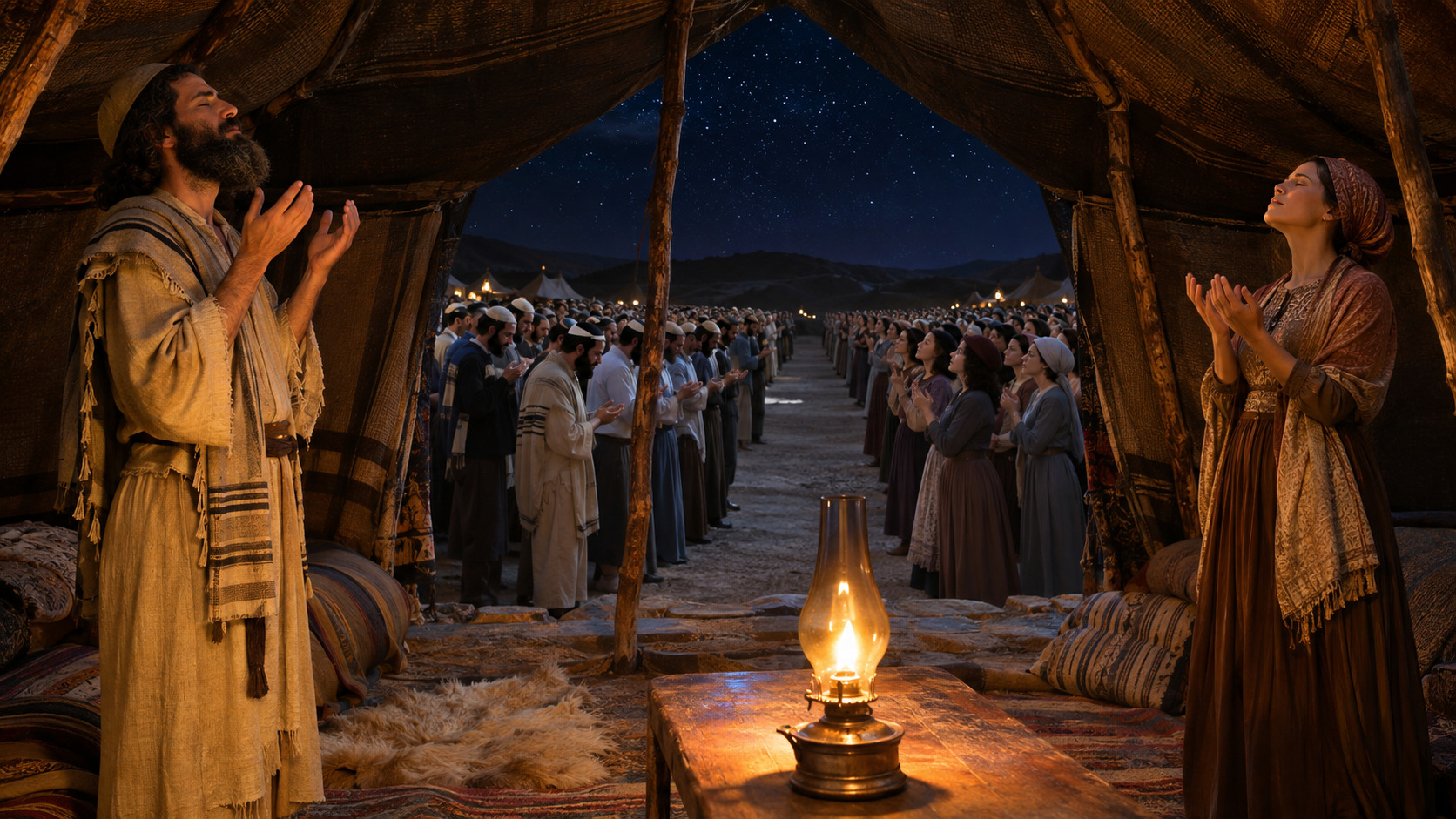
The midrash says: what happened? They saw that they had no children. Each one took a corner of the room and prayed. “Opposite his wife”: that is, Yitzhak took one corner and prayed, and Rivka took one corner and prayed.
What does the verse tell us? Whose prayer was accepted? It is written: “Hashem accepted his entreaty” — his. Whose prayer was accepted? Yitzhak’s.
Now pay attention to what Rashi says. Why “Hashem accepted his entreaty”? Rashi says: “Him and not her; for the prayer of a righteous son of a righteous man is not comparable to the prayer of a righteous child of a wicked man. Therefore: him and not her.”
Who is the righteous child of a wicked man? That is Rivka. Rivka was righteous, but she was the daughter of Betuel, where idolatry was served. And Yitzhak, who is he? The son of Avraham: a righteous son of a righteous man.
So Rashi says why Yitzhak’s prayer was accepted: he has double, he is a righteous son of a righteous man. Whereas Rivka is a righteous daughter of a wicked man; that is why her prayer was not accepted. So far, Rashi.
But here I now want to learn something new. Listen: now comes the chiddush, now comes the point. Is that fair? It is not fair. Why? It should be the other way around!
It is no great feat to be a righteous son of a righteous man. You grow up in a house of tzaddikim; yes, you grow up in the house of a tzaddik, you see mitzvot being kept all around you all the time, you have no trials, everything is fine. It is no great feat to come out a righteous son of a righteous man.
The feat is to grow up in the house of Betuel, with a brother like Lavan the Aramean, in such a house, where idolatry is served: let us see you come out righteous! So whose merit should be greater? Rivka’s, who, although she grew up in the house of a wicked man, came out righteous.
As they say: great is teshuvah. “In the place where ba’alei teshuvah stand, completely righteous people cannot stand,” because it is harder to withstand the trial.
As they say, for example: what is this like? A king who had three ministers and wanted to check which was the most loyal — which was the most loyal, whom one can trust. He gave each of them wine, a bottle of very old wine. And he said: I ask you to keep it for me. Do not touch it, do not open it. In a month I want to see you again.
The first said: I will just open the cork, see what’s in there. He opened it, he smelled the scent; from the scent alone he was already tipsy. He said: I must taste, I must taste. He drank a little glass, and another little glass, and another little glass: the month was over, and so was the bottle.
The second did not touch the bottle at all.
The third opened the cork, smelled and said: wow, this is the taste of Gan Eden, I must taste. He took a little glass. Then he said: well, the king said it must be kept. One day yes, one day no: half a bottle was left.
The thirtieth day arrives. The king says: let us see where things stand. He sees the first one, who drank the whole bottle: well, off with his head, end of story. The second one, who did not touch the bottle at all, was now sure that he was the one who would be appointed chosen minister, viceroy.
So the king says to him: no. The one who drank half — he is the one I want as my trusted man, not the one who did not drink at all. Why? He tasted, he knew it was good, but he also knew how to stop. He knew how to stop. The one who did not taste at all thought: surely the king wants to poison me; maybe if I drink I will die. He takes no chances. The king does not need such a man. The king needs someone who knows how to drink, to know that it is good, and to stop.
So, by this logic, it turns out that Rivka, a righteous daughter of a wicked man — it is precisely her prayer that should have been accepted. Rashi says: “Hashem accepted his entreaty,” because the prayer of a righteous son of a righteous man is not like that of a righteous child of a wicked man.
But in fact, if we now come very quietly, very quietly, close to Yitzhak’s mouth and listen to what he prays, and then come close to Rivka’s mouth and listen to what she prays — what does Yitzhak pray? He says: answer, Hashem, answer, Hashem. Never mind what I pray; it is no great feat to accept my prayer. Why? Because I am a righteous son of a righteous man. And I ask You to accept her prayer, the poor woman: although she grew up in the house of a wicked man, she became righteous.
Very well. Now let us go to Rivka and ask: what does she pray? She says: answer, Hashem. I am indeed righteous, but I come from a house of wicked people. Do not listen to my prayer; listen to his prayer, he who is a righteous son of a righteous man.
What does the Torah tell us? “Hashem accepted his entreaty” — him and not her. Whose prayer was accepted? Yitzhak’s. But what was Yitzhak’s prayer? Accept her prayer, because she is a righteous daughter of a wicked man; accept her prayer.
And so, according to this learning, we see that the Torah too is in fact saying that this is where the merit lies: “in the place where ba’alei teshuvah stand, great tzaddikim cannot stand.” Why? Because it is a great trial to come out of a house of wicked people and become righteous: it is a great feat.
And that is why “Hashem accepted his entreaty.” But what was his prayer? Do not accept my prayer, because I am a righteous son of a righteous man; accept her prayer, because she is righteous even though she grew up in a house of wicked people. And then, in fact, everything is resolved, and everything fits together beautifully.
I think that is all; it is time for Arvit. Blessed is Hashem forever, amen. And may it be His will that we merit the two things we spoke about today.
The first: that we merit to be children of Avraham Avinu, that he be proud of us and say: these are my children. As it is written: “Avraham fathered Yitzhak,” “Yitzhak son of Avraham” — and may Avraham be proud of us: he is the one who fathered us, baruch Hashem.
The second: that we merit to pray, and that our prayers be received with favor. For it is the Holy One, blessed be He, who reigns: “His kingship rules over all.” Blessed is Hashem forever.
Genèse / Genesis / בראשית 25,19–21
Rachi sur Genèse / Rashi on Genesis / רש״י על בראשית 25,19
Rachi sur Genèse / Rashi on Genesis / רש״י על בראשית 25,21
Genèse / Genesis / בראשית 17,5
Genèse / Genesis / בראשית 21,1
Genèse / Genesis / בראשית 16,16
Words of Torah do good when they are shared. Send this shiur to your family and friends on WhatsApp.
📲 Send on WhatsApp👥 Join the Gueoula groupTest yourself
Five questions on the shiur. Choose an answer.
Result
Shalom Bayit — The Mouth at Home
My covenant of peace — peace begins at home. Reveal a Shalom Bayit card.
Gematria — Rav Ménaché
Shalom, Mashiah, Yisamech — secrets of the letters by Rav Ménaché zatsal.
🔢 Gematria CourseTorah Study
Go deeper into Rashi on Genesis 25:19 and 25:21: the scoffers of the generation, and “him and not her.”
📝 Beith HamidrachAll Parashot
All shiurim of M. Yéhouda Himi — from Bereshit to Devarim and the festivals.
📚 All ParashotBooks
Torah wisdom in thriller format — Éditions Gueoula.
Guardians of the Rift
Forty-nine gates open — the fiftieth hides in a single moment. An ancient secret resurfaces, and one man stands between the rift and the world. Drawn from Talmud and Kabbalah.
📖 Read the free excerpt · Book $9.90